2727 Coworking Article
Corporate Team Offsites & Retreat Venues in Montreal 2026
Inside this article
- 01Executive Summary
- 02Introduction and Background
- 03Corporate Offsites and Retreats: Purpose, Trends, and ROI
- 04Montreal’s Business Events Ecosystem
- 05Meeting Rooms, Event Venues, and Workshop Spaces in Montreal
- 06Planning Corporate Offsites in Montreal: Practices and Services
- 07Data-Driven Analysis: Benefits and Impacts of Offsites
- 08Case Studies and Real-World Examples
- 09Implications and Future Directions
- 10Conclusion
- 11References
Executive Summary
This report provides an exhaustive analysis of corporate team offsites and retreats in Montreal, with a particular focus on available meeting rooms, event venues, and workshop spaces as of 2026. Drawing on industry data, government and tourism statistics, and expert commentaries, it examines the historical evolution of corporate offsites, current trends and motivations (especially in a post-pandemic hybrid work era), and Montreal’s unique position as a business events hub. Montreal’s strengths—its European flair, bilingual culture, and vibrant food and arts scene—make it increasingly attractive for corporate gatherings as evidenced by its sustained high volume of large conferences and meetings [1] [2]. The Montreal Convention Centre (Palais des congrès) and city-center hotels reported a recovery to or beyond pre-pandemic levels of activity, hosting hundreds of events and drawing nearly 1 million delegates in recent years [1] [2]. Key findings include:
- Strong Business-Tourism Performance: In 2024 and 2025 Montreal hosted on the order of 500 business events per year, contributing over $400–438 million in economic spinoffs annually [1] [2]. Montreal was ranked the top North American city for international conventions by ICCA for multiple consecutive years, underscoring its global appeal [2] [3].
- Renewed Emphasis on Offsites: With the proliferation of hybrid work, companies are investing more in in-person collaboration. A 2025 industry report found that nearly 60% of firms have increased their offsite budgets since 2019 and now average about 2.6 offsite events per year [4]. Travel publishers and consultants note a surge in demand for retreats despite their costs, as organizations recognize intangible returns in productivity, morale, and retention [5].
- Diverse Venue Portfolio: Montreal offers a wide spectrum of venues for corporate events. Traditional conference centers and large hotels (e.g. Palais des congrès, Sheraton, Marriott Château Champlain) provide hundreds of meeting rooms totaling tens of thousands of square feet with capacities in the high hundreds or thousands [6] [7]. At the same time, unique spaces — art galleries (e.g. PHI Centre), historic clubs (University Club, St. James Club), river cruises (Croisière AML), charming restaurants (Rosa Room at Ferreira Café), and creative studios — allow for offbeat, experiential gatherings as part of a retreat agenda [8]. Coworking hubs and workshop studios in Montreal’s Plateau, Mile End, and downtown areas further expand options for interactive training sessions.
- Benefits and ROI of Retreats: Research suggests that well-designed offsites can yield measurable business benefits. Analysis estimates up to 4× ROI on team-building investments, with metrics like productivity up to +14% and staff retention improving by +36% in companies that align offsite activities with clear objectives [9]. Survey data also indicates that 85% of employees agree offsites strengthen organizational connections (though some bear personal travel costs) [4]. Case studies (e.g. fully-remote tech firms and hospitality groups) affirm gains in team cohesion and morale from annual retreats [5].
- Looking Ahead: Montreal’s business events sector continues gearing up for 2026 and beyond. Major conferences (e.g. Scale AI’s ALL IN, ISS meetings) promise thousands of delegates locally [1] [2]. The convention city infrastructure is being bolstered by initiatives like Canada’s International Convention Attraction Fund, which will help secure international conferences for Montreal [10]. Meanwhile, corporate planners are increasingly incorporating wellness and innovation into retreats (for instance, new "wellness-first" retreat guides emerging in Canada) and will leverage improved technology (hybrid meeting tools, mobile apps, AI-enabled planning platforms) to support more dynamic offsites. Challenges remain in ensuring ROI, controlling costs, and balancing work with creative experiences. However, Montreal’s blend of safety, culture, and infrastructure position it well to meet evolving corporate offsite needs.
This report proceeds as follows: an extensive introduction and background on team offsites, followed by sections analyzing Montreal’s event-hosting environment, detailed descriptions of venue types and meeting spaces, organizational aspects (planning services, itinerary ideas), data-driven evaluation of benefits, illustrative case contexts, and a discussion of future trends. Conclusions summarize the strategic implications for corporate strategists and event planners considering Montreal in 2026.
Introduction and Background
Corporate team offsites and retreats refer to organized gatherings where a company brings together employees (sometimes including remote or satellite teams) outside their usual workplace for purposes such as strategic planning, team building, training, or morale-boosting. These events typically last from a day to a week, involve a mix of work sessions and social activities, and take place in venues ranging from city conference centers to countryside resorts [11] [12]. Historically, the roots of such gatherings can be traced back to labor movement assemblies in the late 19th and early 20th centuries, which unknowingly set a model of people coming together for a joint purpose [11]. By the mid-20th century, corporations began organizing conferences, seminars, and “company picnics” to enhance unity and communication within workforces [11].
In the modern era, corporate offsites have evolved significantly. According to industry analyses, today’s offsites are aimed not only at conveying information (through presentations or workshops) but at fostering interpersonal connections and creativity. One source defines corporate retreats as “team getaways that normally last between a day and a week” with goals such as improving morale, reducing stress, teaching skills, reinforcing company culture, and building camaraderie [11]. Indeed, studies show companies are shifting their offsites to be shorter but more social than in the past, dedicating more event time to team-building and less to formal work sessions [4]. This reflects the understanding that employee engagement, trust, and cross-functional collaboration—facilitated by offsite experiences—directly impact organizational performance.
The importance of these retreats has grown alongside the rise of remote and hybrid work arrangements. Over the past few years, many organizations have operated in distributed modes. While remote work offers flexibility, it can dilute culture and informal alignment. As a result, executives increasingly view in-person offsites as essential touchpoints to “re-energize” teams, realign strategies, and reinforce morale [4] [5]. Surveys indicate that a substantial portion of businesses are reinstating or expanding offsite programs post-pandemic. For example, a 2025 corporate travel report found that 59% of companies had increased offsite budgets since 2019, with organizations holding on average 2.6 offsites per year [4]. In this context, retreat providers and travel groups report growing demand for curated team offsite experiences, though they also note that calculating return-on-investment (ROI) for such intangible benefits can be challenging [5].
Montreal as a context: Montreal is eminently well-suited for corporate offsites, offering a blend of world-class meeting facilities and rich cultural ambience. As Canada’s second-largest city and premier Francophone metropolis, Montreal combines North American business infrastructure with a European charms—historic architecture, renowned culinary scene, multicultural festivals—that make it appealing and stimulating for visitors [13] [14]. The city’s compact downtown and public transport connect corporate meeting venues with leisure and cultural sites (Old Port, Mount Royal, museums and theaters, etc.). Crucially, Montreal has been heavily investing in its business tourism sector: statistics show steady year-over-year growth in conferences and trade shows returning to pre-pandemic levels, with the city hosting hundreds of events annually [1] [3]. Authorities such as Tourisme Montréal and the Palais des congrès actively solicit international and domestic conventions in key fields (AI, life sciences, engineering, etc.), further boosting professional event traffic in Montreal.
This report first elaborates on industry and academic perspectives on the purpose and benefits of offsites, then places these trends in Montreal-specific context by detailing the scale of meeting-tourism activity and the inventory of venues. We then analyze evidence (including statistics and expert opinions) on how retreats yield business value and how Montreal’s offerings are leveraged in practice. Illustrative examples and planning considerations follow, concluding with implications for the future of team gatherings in Montreal and beyond. All key claims are supported by credible data and references.
Corporate Offsites and Retreats: Purpose, Trends, and ROI
Definitions and Objectives of Offsites
A corporate offsite is broadly understood to be any company-organized event where employees (often whole teams or departments) convene outside the normal workplace for a shared agenda. Unlike routine staff meetings, offsites are designed to remove participants from everyday distractions and encourage openness and creativity. According to one industry description, retreats typically last from one day to a week and aim to “improve morale, reduce stress, teach skills, reinforce company culture, and build team camaraderie” [11]. Common formats include strategic planning retreats (where management plans roadmaps), kick-off retreats (to set the tone for a fiscal year), leadership workshops, and informal “mixers” focusing on bonding.
The goals of an offsite event can vary, but often include:
- Strategic alignment: Bringing teams together to clarify long-term plans, OKRs, or market strategy away from the day-to-day operational noise [12].
- Team-building: Strengthening relationships, trust, and cross-functional understanding through collaborative exercises or experiential activities.
- Skill development: Hosting training workshops (e.g. communications, leadership) in a more immersive setting.
- Innovation and creativity: Engaging employees in brainstorming sessions or design thinking workshops in inspiring environments.
- Reward and recognition: Celebrating achievements or hosting retreats as a perk to boost employee satisfaction.
- Cultural reinforcement: Imprinting company values and mission through rituals, storytelling, and shared experiences.
A Montreal-based planning firm explicitly notes that an “effective off-site retreat means stepping out of your routine, settling in, and taking a unique, high-quality time together as a team” [12]. This underscores that the very act of being in a special environment (whether scenic or novel) is part of the value proposition: it signals to employees that the company is investing in them, which in turn can invigorate engagement.
Historical Evolution of Work Gatherings
The idea of gathering workers for collective purposes is not new. According to historical overviews, the origins of organized work gatherings date back to Labor Movement meetings in the late 19th century. These assemblies were primarily for strikes or labor rights, but they unintentionally laid a foundation for unity and shared purpose among participants [11]. By the mid-20th century, the concept shifted towards corporate-driven gatherings. Companies began holding conferences, seminars, and retreats (often as company picnics or holiday parties) as exercises in team spirit rather than protest. The article History of Corporate Retreats notes that as early as the 1960s and 1970s, businesses recognized the value of “social events like the company picnic” and of conferences that bore “some of the principles of the earlier labor movement assemblies, such as the sense of unity and open forum for discussion” [11].
Over time, corporate retreats took on more structured forms. In the late 20th century, retreat programs often involved lengthy offsites with formal workshops heavily focused on content delivery or planning. Today’s retreats, by contrast, blend business and pleasure more artfully. Current trends (“Trend #2” from industry reports) emphasize that nearly 44% of offsite time is now devoted to social programming and team bonding activities, whereas purely work or seminar time occupies only about 36% [4]. In other words, modern offsites integrate fun and relaxation intentionally, as part of the curriculum rather than as an afterthought.
Current Trends Shaping Offsites
Recent corporate surveys and industry studies highlight several shifts in how companies approach offsites in 2025–2026:
- Increasing Frequency and Budget: Many organizations are actually doing more offsites now than before the pandemic. A January 2025 report found that 59% of companies have increased their offsite budgets since 2019 [4]. On average, firms reported holding 2.6 offsite events per year [4] (this may include small team gatherings as well as company-wide retreats). High-performing organizations tend to do even more offsites (around 2.8 per year) and report correspondingly higher employee excitement about these events [4].
- Human-centric and Experiential: There is a deliberate pivot towards making offsites experience-focused. More investment is being placed on unique venues and activities. For example, 44% of offsite time is allocated to social and experiential elements (dinners, tours, team challenges) and only 36% to formal work sessions [4]. As one company leader put it, retreats are now designed to “step away from daily demands, restore energy and return with greater focus” [15] (citing the Parkside Hotel retreat guide, albeit for a different Canadian city).
- Class and Inclusivity: Employee travel preferences are also shifting. Almost half of surveyed employees now expect business-class flights to offsites and many want loyalty points or travel perks included [4]. Increasingly, companies are liberalizing policies on who attends: by 2025 about 55% of firms allowed spouses or partners to join offsites for non-work events, reflecting a recognition that family support of travel can affect participation [4].
- Hybrid and Tech-Enabled: While offsites are in-person by definition, many are now “hybrid offsites” with some participants dialing in via video. Organizations invest in multi-screen video conferencing, on-demand streaming, and live polling tools to ensure remote colleagues can stay connected during key sessions. An industry-wide push is underway to integrate AI and digital tools into event planning and execution. (For example, a 2024 GBTA survey noted that 75% of travel planners were looking to adopt AI chatbots and blockchain-related tools to improve corporate travel programs [16]—trends that will likely influence how offsites are booked and managed.)
- Customized and Regional: Offsites are becoming more tailored. Instead of one-size-fits-all, companies choose styles (wellness retreats, adventure-based retreats, creativity camps) suited to their teams and culture. In markets like Montreal, this means leveraging local culture: including French-Canadian culinary experiences, bilingual facilitators, and outdoor excursions in Quebec’s natural surroundings as part of the program.
Overall, these trends suggest corporate offsites in 2026 are serious business investments, not just goodwill gestures. Planners aim to demonstrate clear ROI to finance committees. As one summary noted, “today’s most effective corporate offsites bear little resemblance to their predecessors—they’re shorter, more social, and are expected to deliver a measurable impact” [4].
Quantifying Benefits: ROI and Metrics
Assessing the return on investment (ROI) for team retreats is challenging, but several sources provide indicative figures. A 2025 analysis of team building (by groupdynamix.com) reports that properly measured team-building events can yield up to a 7.5× return on investment, reducing turnover and improving collaboration. Key metrics cited include:
- Dollar ROI: Up to $4 in business value for every $1 spent on intentional team bonding initiatives [9].
- Productivity Gains: Company case studies identify up to 14% increase in team productivity following well-aligned off-sites [9].
- Turnover & Retention: Strategic team-building programs can reduce attrition significantly – the analysis suggests a ~36% improvement in retention due to increased engagement [9].
- Disengagement Costs: Conversely, disengaged employees cost firms heavily (an estimated $16,000 per employee per year in lost value). Offsites aiming at engagement can thus recapture part of this loss [9].
- Profitability Lift: Organizations with highly engaged workforces see a median 23% higher profitability than less engaged peers [9]. While not solely due to offsites, offsite events are one driver of such engagement.
Real-world reports echo these themes. For instance, in an August 2024 Skift article, companies like Plex (a global remote-first media company) explicitly attributed productivity boosts and higher retention to their annual all-hands retreats: “They’re invaluable,” said a Plex executive, noting that the company “is so psyched” after these events, which keeps employees productive and helps with retention [5]. Travel companies and hotel chains, too, have noted a “material increase” in demand for off-site gatherings as businesses downsize offices [5].
Importantly, much of the ROI from retreats is intangible (stronger culture, networks, trust) and realized over the long haul. As one summary put it, “the ROI of retreats includes improved loyalty, communication, and company culture” rather than immediately quantifiable revenue. Nevertheless, organizations increasingly justify retreats by linking them to strategic outcomes: for example, offsite workshops may be explicitly framed to improve metrics like project alignment or to kick-start revenue initiatives, thereby making the outcomes more measurable.
The table below encapsulates some key data on corporate offsite ROI and related outcomes (drawn from industry analyses):
| Metric | Typical Impact (2025) | Source |
|---|---|---|
| Average ROI on team-building spend | Up to $4 return for every $1 invested [9] | Team-building report |
| Productivity Improvement (per team) | Up to +14% boost after targeted retreats [9] | Team-building report |
| Employee Retention Improvement | +36% retention with high-engagement programs [9] | Team-building report |
| Engaged Team Profitability Increase | +23% profitability in companies with highly engaged teams [9] | Team-building report |
| Employee-Cited Connection from Offsites | 85% say offsites strengthen organizational connections [4] | Survey of 2,000 U.S. employees |
| Employees Facing Financial Impact | 65% incur personal costs (travel, etc.) when attending retreats [4] | Survey of 2,000 U.S. employees |
Despite the uncertainties, the prevailing view is that strategic, well-planned offsites yield a net positive on organizational culture and performance [5] [9]. This justifies why many managers argue that spending thousands per employee on retreats “pays off” in the long run [5]. However, planners continue to seek better metrics and accountability, especially as budgets tighten.
Montreal’s Business Events Ecosystem
Montreal’s role in the corporate event market forms the backdrop for any analysis of team retreats here. The city’s infrastructure and reputation have made it a leading destination for meetings, conventions, and corporate gatherings in North America. Recent figures from Tourisme Montréal and the Palais des congrès de Montréal illustrate the scale:
- Robust Event Volumes: In 2024, Montreal hosted 539 business events, drawing about 960,000 delegates and generating $395 million in direct economic spinoffs [1]. Although this was slightly below 2019 pre-pandemic levels in event count, it signaled strong recovery.
- Rapid Recovery and Growth: By 2025, however, Montreal saw 477 business events (fewer than the previous year but higher-impact) which attracted over 1 million attendees and yielded $438 million in spinoffs [2]. Notably, this increase in economic value despite fewer events suggests the city captured more high-value conferences.
- Long-term Trend: The 2023 data align with this upward trajectory: Montreal held 475 events and hosted roughly 870,000 visitors, producing around $425 million in spinoffs [3]. Across 2022–2025, the consistency of hundreds of annual events and hundreds of millions in economic activity underscores Montreal’s prominence. These events span trades shows, corporate meetings, and major international association conferences (e.g. medical, engineering, tech forums).
- International Leadership: Montreal has repeatedly been ranked by the International Congress and Convention Association (ICCA) as the #1 city in North America for association and conference hosting (a distinction it has held for nine consecutive years as of 2025 [2]). The city also consistently ranks at or near the top in global safety and hospitality metrics, which bolsters its appeal.
- Local Economic Impact: The Palais des congrès (Montreal’s convention center) is the hub of much of this activity. In 2025 the Palais alone hosted 281 events (92% of attendees) and generated $277 million of the city’s business-travel spinoffs [2]. Tourisme Montréal and the Palais jointly promote conferences in strategic sectors (AI, healthcare, engineering, etc.), with 17 international conferences hosted in 2024 with support from local agencies [1].
- Future Pipeline: Projections indicate continued momentum into 2026. For example, early 2025 commitments include over a dozen major conferences totaling thousands of delegates (e.g. a geneticists’ meeting with ~6,000 attendees, yielding $8M impact) [1]. Domestic recurring events (like the journal de dentistes – Dentistry Days) will add tens of thousands of attendees annually [2].
Table 1 below summarizes key business-tourism metrics for Montreal in recent years, illustrating this momentum. The table compares “number of business events,” “delegates/visitors,” and “economic spinoffs” for 2023–2025:
| Year | Business Events in Montreal | Attendees (approx.) | Economic Impact | Sources |
|---|---|---|---|---|
| 2023 | 475 total (288 at Palais) | ~870,000 | ~$425 million | [3] |
| 2024 | 539 total (306 at Palais) | 960,000 | $395 million | [1] |
| 2025 | 477 total (281 at Palais) | ~1,000,000+ | $438 million | [2] |
Table 1: Montreal business-tourism statistics for 2023–2025. Economic impact includes hotel, dining, transportation, and venue revenues associated with events. (Sources: Montreal Convention Centre, government press releases [3] [1] [2].)
These figures underline Montreal’s attractiveness and capacity as an events destination. For companies planning offsites and retreats, this means a wealth of existing infrastructure and services. Moreover, many of those delegate experiences are indeed “team offsites” (smaller-scale company meetings or workshops) as well as large conferences, so the same venues and planners cater to both. Tourisme Montréal’s data even indicate that over 230 conferences in 2025 (across various venues) were supported by the city’s assistance program [2], highlighting the collaborative ecosystem between event planners, hotels, and the city tourism bureau.
Another contextual factor: Montreal often benefits from currency fluctuations. For U.S.-based companies, the Canadian dollar’s relative weakness can make venues and accommodations less expensive than comparable U.S. cities, while still offering top-tier amenities. The city’s official tourism communications frequently tout this cost-effectiveness (though exact figures vary). In any case, the combination of economic leverage and vibrant cultural experience makes Montreal a lucrative destination for corporate retreats, especially for North American firms.
Finally, Montreal’s bilingual environment (French/English) and safety rankings are often cited advantages. According to one tourism report, Montreal was recently ranked “the safest city in the Americas” for international events, which adds to its allure for organizers [1]. The presence of major universities and industry clusters (e.g. AI/Tech, aerospace, gaming, life sciences) also means local expertise is readily available to add intellectual content or local tours to an offsite agenda.
In summary, the Montreal business-events scene is thriving on quantitative measures. For the purposes of offsites and retreats, this translates into a robust supply side of venues, agencies, and amenities (detailed below), backed by an experienced support network (tourism boards, planners, gear suppliers) and confidence derived from many successful prior events.
Meeting Rooms, Event Venues, and Workshop Spaces in Montreal
Montreal boasts a wide array of venues to host corporate offsites and retreats. These venues fall into several broad categories: large-scale convention centers, hotel conference facilities, alternative/unconventional spaces (cultural, recreational, or historical sites), dedicated coworking or workshop spaces, and even nearby nature retreat centers. Below, we survey these options and provide examples and data.
Convention Centers and Large Complexes
-
Palais des congrès de Montréal (Montreal Convention Centre): The centerpiece of Montreal’s conference infrastructure is the Palais des congrès, located in Old Montreal near the Bell Centre. It is a vast multipurpose complex designed for major events. The Palais offers 113 meeting rooms and, including its largest exhibit hall, nearly 40,000 m² of meeting/exhibition space [6]. It can accommodate banquet-style gatherings of about 13,860 people in total across its spaces [6]. In practical terms, this means it can host plenary sessions for thousands of delegates, plus dozens of simultaneous breakout sessions. The facility is fully equipped with top-tier audiovisual systems and has a long track record (since 1983) of serving international conventions [6]. For example, it hosted the 2024 IEEE Quantum Week and plans to host the 2026 International Conference on Human Genetics (6,000 delegates) [1] [2]. Most large-scale offsite events—especially those attaching themselves to a convention—will leverage some part of the Palais. Its dedicated convention-bureau staff also assist in planning complex multi-day programs.
-
Hotel Convention Ballrooms: Several downtown hotels house large ballrooms and conference halls, which combine accommodating lodging for attendees with meeting space. Notable examples include:
- Le Centre Sheraton Montréal (downtown): Over 40,000 sq ft of event space spanning 23 rooms, its largest room seating up to 1,835 people [7]. It offers full banquet and theater setups, and is connected via an underground network to adjacent hotels and the Metro.
- Montreal Marriott Chateau Champlain: 25 event rooms totaling 34,905 sq ft, with the largest room accommodating 1,000 people [17]. As an upscale hotel built in 1967 (and recently renovated), it features high-quality service and rooms on-site, making it ideal for multi-day retreats.
- Hotel Bonaventure Montreal: A unique hotel (built atop a highway interchange) offering 50,000 sq ft of meeting space with 34 meeting rooms [18]. Its biggest single room holds 1,200 guests [18]. Bonaventure boasts an outdoor rooftop garden—a rare amenity in the city—which can also serve as an event space in good weather.
- Fairmont The Queen Elizabeth: A landmark downtown hotel (connected to the Central Station railway terminal) with 30 event venues capable of accommodating up to 1,600 guests [19]. Its Habsdown ballroom (now named after the hotel) often hosts large galas and conferences. The Queen Elizabeth has a legacy of convention hosting and is frequently used for company conventions and keynote addresses.
- Hilton Montreal Bonaventure: Adjacent to Bonaventure Park, this hotel provides meeting rooms and a large indoor atrium (the downtown “urban tropical garden”) where receptions can be held. (Exact capacities vary by configuration.)
The above hotels typically offer meeting packages including AV support, catering, and on-site coordination. Their connectedness (e.g. Sheraton’s links to other hotels, Marriott’s central location) makes it easy to expand into neighboring spaces for larger events. Each of these properties typically hosts a mix of events: from corporate gatherings of 100–500 people to banquets or union conferences of 1,000+. The downtown location affords easy access to restaurants and nightlife for evening team events.
Meetings.mtl (‘The Meetings & Events Tourisme Montréal site’) lists hundreds of Montreal venues, including these hotels and more. For example, it notes that the Sheraton Centre Montréal has over 40,000 sq ft of flexible space [7], and Marriott Château Champlain’s 25 event rooms and 34,905 sq ft [17] (replicated above). The total count of meeting rooms in hotels and convention venues within Greater Montreal exceeds 1,000 across the city, according to industry sources.
Unique and Alternative Venues
A particular strength of Montreal is its inventory of non-traditional venues which can make an offsite truly memorable. These venues often capitalize on Montreal’s rich culture and sites of interest:
-
Historic Clubs and Banquet Spaces: Montreal has several members-only clubs and restored mansions offering private event spaces. For example, the University Club of Montréal (1914, by architect Percy Nobbs) offers 14 rooms of various styles and can host up to 300 guests in its grandest hall [8]. Similarly, the Saint James’s Club, a warm, wood-paneled business club in downtown, has 11 function rooms and accommodates up to 250 people [8]. These exclusive venues provide an atmosphere of old-world charm and confidentiality—useful for high-level strategic retreats in a “members-only” environment.
-
Cultural and Artistic Spaces: Montreal’s arts venues double as event centers. Notably, the PHI Centre in Old Montreal (an art cinema and gallery complex) has multiple indoor spaces and a rooftop terrace with panoramic views of the Old Port and the St. Lawrence River [8]. The terrace, in particular, is popular for networking dinners or social gatherings with a barbecue setup. Other art-gallery or museum spaces (e.g., Montreal Science Centre [Technoparc], Redpath Museum at McGill, even the Biodome or Planetarium after hours) can be reserved for corporate events, blending meeting time with local culture. For instance, Rentable spaces include an art gallery at the Phi Centre, or the Château Dufresne, a Beaux-Arts mansion (St-Leonard borough) with lavish décor—ideal for a grand reception [8].
-
River Cruise (Croisière AML Montréal): Unique among cities, Montreal offers the option of conducting meetings or meals on a river cruise ship. Croisière AML’s boats on the St. Lawrence River provide conference seating and full dining service onboard [8]. Groups can hold a meeting in transit, enjoying scenic views, which adds an experiential element to a corporate retreat. This “floating venue” can be especially attractive for award dinners or informal workshops.
-
Restaurants with Private Rooms: The local restaurant scene includes venues that cater to corporate groups. For example, the Rosa Room above Ferreira Café is a semi-private meeting space for up to 12 people , perfect for small retreats or breakout sessions. Such spaces can double as casual “working lunches” or team-building cooking classes (Montreal’s renowned culinary classes can be booked as just one of the team’s activities).
-
Outdoor and Urban Parks: While not a “room”, Montreal’s parks are officially sometimes used for corporate wellness or teambonding (e.g. a picnic on Mount Royal or a cross-city scavenger hunt in Lafontaine Park). Some organizers incorporate bicycle tours (Montreal is bicycle-friendly with 800+ km of paths) as part of their retreats [14]. In winter, activities like tobogganing, ice skating on the Old Port rink, or even urban snowshoe challenges can be arranged. Local adventure firms will design custom outdoor team programs (ziplining in Laval, white-water rafting near Mont-Tremblant, etc.) that serve as offsites or wrap-up adventures.
Coworking Spaces and Workshop Rooms
Notably, Montreal has a thriving coworking and start-up ecosystem, some of which offers meeting and workshop spaces that corporate event planners can rent:
- Notman House: A historic villa turned tech hub in the Plateau Mont-Royal. It has meeting rooms and event spaces that companies (especially tech startups) can use for workshops and retreats. Its membership model also means companies can integrate with local tech communities if desired.
- Second Story (in the Mile End): A boutique space with rooms for small to medium groups (10–50 people), often used for creative workshops.
- WeWork and DesksMarks: International chains like WeWork have several locations in downtown Montreal, each with multiple meeting rooms available by the hour. They typically support AV and collaborative tech for small offsites and breakouts.
- Spacebase and others: Online platforms list dozens of lofts, studios, and warehouse venues in Montreal for rent by the day. These include design studios with built-in whiteboards, or themed studios (a loft with chalkboard walls, a film studio, etc.). While third-party booking sites (like Giggster, meetings.mtl listings, CoworkingMag) have extensive directories, some examples include Spaces Saint-Laurent (modern coworking with private rooms) or Espace 67 (a multifunctional loft).
- Maker/Fablab Spaces: Montreal has innovative workshop spaces (e.g. MLAB, FABB studio) that contain woodworking or electronics equipment. While more niche, a company could stage a part of an offsite in such a creative lab if, for example, team members are prototyping something or learning new skills (e.g. 3D printing a company-branded item together).
These types of spaces are particularly popular for small to medium-sized retreats (teams of 5–50) looking for a relaxed, creative environment. They typically offer breakout rooms, movable furniture, and whiteboard/projector setups. They may be located in vibrant neighborhoods (Mile End, Griffintown, etc.) so after sessions teams can spill into street patios and indie cafes. All event spaces nowadays also emphasize good wireless, native modern AV (HDMI, wireless sharing, etc.), comfortable seating, and often optional catering from local cafes.
Universities and Research Centers
Montreal’s universities (McGill, Université de Montréal, Concordia, etc.) and research centers sometimes rent out space for conferences or workshops, especially if the event is academic-aligned. For example, Concordia University’s downtown campus has event halls and boardrooms; UdeM’s outlying campus has a Center for the Arts with large halls. These are less commonly used for corporate offsites unless tied to an academic program or partnerships, but they represent another source of meeting rooms in the area.
Summary of Venue Capacities
To illustrate the range of capacities and room counts, Table 2 lists some of Montreal’s key meeting venues (convention center, hotels, clubs) along with their size/capacity:
| Venue (Location) | Type | Meeting Rooms / Spaces | Largest Capacity | Notes / Features |
|---|---|---|---|---|
| Palais des congrès (Downtown) | Convention Centre | 113 meeting rooms | Banquet: ~13,860 [6] | Exhibition halls (36,800 m²), high-tech AV, green-certified |
| Le Centre Sheraton Montréal (DT) | Hotel/Conference | 23 event rooms | Theater: 1,835 [7] | 41,816 sq ft total space, 29 breakout rooms [7] |
| Marriott Château Champlain (DT) | Hotel/Conference | 25 event rooms, 21 breakout | 1,000 [17] | 34,905 sq ft total event space, recently renovated |
| Hilton Bonaventure (Downtown) | Hotel/Conference | 34 meeting rooms | 1,200 [18] | 50,000 sq ft meeting space, unique rooftop garden level |
| Fairmont Queen Elizabeth (Downtown) | Hotel/Conference | 30 event venues | 1,600 [19] | Ballroom and multiple rooms, central train station access |
| University Club of Montréal | Club (historic) | 14 rooms | 300 [8] | Elegant heritage interiors, up to 300 for dinners [8] |
| Saint James’s Club (Downtown) | Club (historic) | 11 rooms | 250 [8] | Warm, exclusive atmosphere |
| Croisière AML (Old Port cruise) | Venue (Boat) | 1 ship venue | Variable seating, ~150? | Meetings on St. Lawrence River; full catering staff [8] |
| PHI Centre Rooftop (Old Montreal) | Arts Center (Terrace) | Rooftop + indoor | Unspecified (intimate) | River/Montreal view, used for casual barbecues or receptions [8] |
Table 2: Selected Montreal offsite venues, listing their type, number of meeting spaces, and maximum capacities. “DT” indicates downtown location. Data from venue websites and tourism listings [6] [7] [17] [18] [19] [8].
This assortment (and the many others not listed) means that Montreal can host events ranging from intimate 10-person workshops to full-scale international conferences. Many venues offer modular configurations, so a mid-size team could use a subset of rooms, while a large organization could book an entire hotel floor or convention center hall.
Workshop and Meeting Room Amenities
Modern meeting and workshop facilities in Montreal (as elsewhere) are equipped with standard corporate amenities: high-speed Wi-Fi, large flat-panel displays or projectors, whiteboards/flipcharts, and sound systems. Many venues also provide complimentary Wi-Fi connectivity and technical support staff. In addition, sustainability is often emphasized: for instance, the Palais des congrès promotes itself as making “innovative, concrete steps” towards sustainability [6]. Some hotels have started offering hybrid meeting packages with built-in remote-connection support (e.g., camera systems and streaming services for hybrid events).
Catering is a major feature. Montreal’s hotels and venues offer top-tier food (often 3-course menus) and can accommodate dietary restrictions (vegetarian, kosher, halal, etc.). Given Montreal’s culinary scene, many offsite programs integrate local catering: for example, a plated dinner might be designed by a well-known Quebec chef. Break options often include local specialties (bagels, poutine, Quebec cheeses) to give visiting teams a taste of the locale. Coffee breaks usually feature Montreal pastries like croissants or desserts in addition to continental fare.
Transportation logistics are also a key consideration. Montreal-Trudeau International Airport (YUL) is about 25 minutes by car to downtown. On-site parking can be limited in some older city venues, but most hotels offer valet or attached parking (Sheraton, Bonaventure, etc.), and there is extensive paid parking. The city’s Metro (subway) and the new REM train network also provide easy transit: the Palais des congrès is adjacent to the Place-d’Armes Metro station, and many hotels are on or near the Guy-Concordia Metro.
In summary, Montreal’s inventory of meeting rooms and event venues is both deep and varied. The city can support virtually any format of corporate gathering, from formal conferences to creative workshops and casual retreats, with facilities that meet international standards of quality. The remaining sections of this report examine how companies actually use these spaces, the programs they design, and the implications of doing so in Montreal’s context.
Planning Corporate Offsites in Montreal: Practices and Services
Organizing a corporate offsite involves numerous elements beyond choosing a place. This section covers the key components of planning, including event design (agenda, activities), local services (planning agencies, local talent), and hybrid/tech considerations. Wherever possible, we illustrate with examples relevant to Montreal.
Agenda Design and Activities
A Montreal offsite often blends work and local experience. According to industry best practices, effective retreats have well-defined objectives and a balance of structured sessions and free-form bonding. A typical full-day offsite agenda might look like:
- Morning Work Sessions: Workshops, presentations, or training held in a dedicated meeting room. These might be facilitated by internal leaders or external consultants. For example, a marketing team might use a hotel conference room for a half-day strategy kick-off, using flip charts and projectors.
- Midday Cultural Experience: A break from formal activity to engage with local culture. Common ideas include:
- A cooking class focusing on Quebecois/French cuisine, allowing team collaboration in a fun setting [14].
- A wine or beer tasting featuring local products (e.g. Quebec craft beers or wines from nearby Eastern Townships).
- A walking tour of Old Montreal combined with city trivia (as per a recommended idea) [14].
- Afternoon Workshops/Breakouts: Return to work in smaller groups or continue main topics. Many venues offer multiple breakout rooms so teams can split into, say, leadership vs. technical tracks.
- Evening Social/Event: A relaxed group dinner or social to cement camaraderie. Options include:
- Private dinner at a Montreal restaurant (e.g. old-world French bistro or modern steakhouse) where the team can mingle.
- Outdoor group activity: e.g. a bike tour of the Lachine Canal at sunset, or ice skating on the Old Port in winter, to enjoy the city scenery [14].
- Team-building games like escape rooms or scavenger hunts (Montreal offers many themed escape-room venues).
- Entertainment at a venue: e.g. a corporate show at a comedy club or a live music performance in a private rental of a concert hall.
The goal is to mix “business” (strategic thinking, planning) with “pleasure” (novel experiences that make the trip memorable). As one local consultant notes, an offsite is about taking teams out of their routine to “stir up ideas, strengthen connections, and develop relevant strategies” [12]. Activity providers in Montreal can tailor events: for instance, the urban planning firm Levasseur Warren (based in Montreal) markets “Urban Offsites” in Plateau Mont-Royal coworking spaces, combining facilitated strategy workshops with Montreal-specific fun (like a food tour of Mile-End) [12].
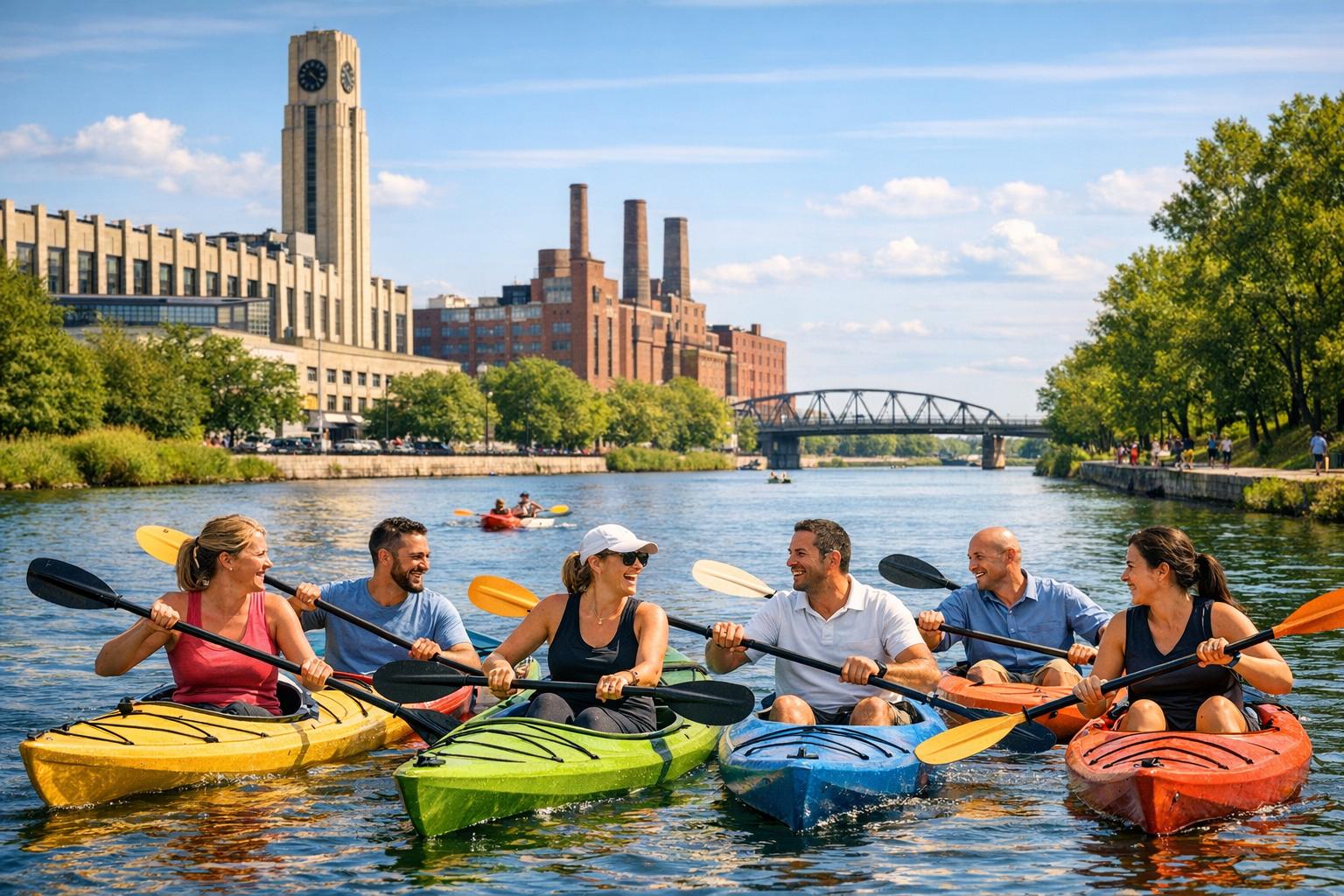
Case in point: Tech companies in Montreal (like the gaming or AI sector) might hold a daylong hackathon or design thinking sprint at a coworking lounge, followed by a tour of a startup incubator and dinner at a brewpub known for local craft beer. Finance or consultancy firms, by contrast, often stick to luxury conference facilities and may close off the next day for canoeing on the Lachine Canal or golfing at a nearby club.
Across industries, lessons from other locations show creative offsite agendas pay off. We have seen that 72% of employees at high-performing companies were excited about their offsites, versus only 49% at companies that did fewer events [4]. This suggests even the plan of mixing culture and work has measurable impact on morale. Montreal’s array of activities — parks, winter sports, music festivals, culinary tours — provides ample raw material for such mixed agendas.
Event Planning and Local Vendors
Orchestrating an offsite requires coordination of logistics: booking venues, transportation, lodging, catering, and session facilitation. Montreal has a network of professional conference and event planners and agencies that specialize in corporate retreats and team-building. Some key resources are:
-
Event Planning Agencies: Firms like Moniker Partners (which has a presence in Montreal) specialize in full-service corporate retreats. They handle everything from venue sourcing to team-building program design to on-site facilitation. Moniker’s website features example Montreal retreats, including photo itineraries showing key highlights [20] (though those examples are templated, they illustrate the use of downtown hotels and local restaurants).
-
Tourisme Montréal / Meetings MTL: The city’s tourism bureau has a “Meet Montréal” division that assists planners via the “Knowledge Collective” and destination specialists. They can recommend venues, calendar events (to avoid conflicts with city festivals), and connect companies to Montreal’s research network for conference speakers (for academic or tech retreats). The partnership between Palais des congrès and Meetings MTL, launched in 2024, serves as a single point-of-contact for organizers [1].
-
Local Vendors: For specific jam-packed agendas, numerous specialized vendors exist in Montreal:
- Team-building event firms (e.g. TeamOut, GC Strategies, FullTilt) that provide activities like neighborhood scavenger hunts, puzzle hunts, or creative workshops (like drumming circles or art jamming).
- Catering companies (beyond hotel caterers) that can provide themed lunches (such as authentic poutine bar one day, Quebec cheese board another).
- Audio-visual production houses that rent out equipment or provide broadcast-quality streaming (e.g. If companies want to broadcast their offsite session to remote employees).
- Transportation services, including bus and car rentals, for offsite teams that travel to nature retreats or multiple city locations.
-
Legal and Permitting: If offsite activities include public spaces (e.g. park picnics, or renting a section of the Lachine Canal), planners may arrange permits through city infrastructure departments. Montreal’s public relations offices can also help for brand placements or filming, if the company wants branded visuals.
In many cases, especially for large companies, corporate travel departments will negotiate block room rates with hotels (often in the Hilton, Marriott, or Fairmont chains downtown) for the retreat group. Inquiries such as a Monday-Wednesday corporate gathering can leverage Montreal’s moderate hotel occupancy (typically high in summer but room for negotiation in shoulder seasons). Some planners encourage multi-property experiences: The group might stay at the Sheraton one night and a boutique hotel (like William Gray in Old Port) another, to vary the experience.
Importantly, Montreal’s bilingual workforce of service professionals (English and French) enables bilingual events easily. Almost all major venues and planners are bilingual; some will even provide fully French-language offsites if a company is French-speaking or wishes to practice French immersion with a team.
Technology Integration and Hybrid Capabilities
By 2026, technology is deeply intertwined with offsites. Two aspects are:
-
Hybrid/Remote Inclusion: It is increasingly common for some employees to remain remote, requiring hybrid offsite setups. Venues often furnish video-conferencing kits (cameras, multiple displays), or companies bring their own. Planners arrange live-streaming of keynote speeches, and some sessions have remote breakouts via Zoom Teams links. On the software side, apps and platforms assist with agenda management and attendee engagement (live polls, shared digital whiteboards, etc.).
-
Data and Feedback Tools: Companies now systematically gather data from offsites. Mobile surveys or quick digital quizzes (using tools like Slido or Mentimeter) gauge participant satisfaction day-by-day. Engagement metrics (pre- and post-offsite surveys) attempt to quantify changes in alignment or morale. According to one source, metrics like “participant satisfaction scores” and “collaboration levels” are tracked around offsites [14].
Technology also helps planning: event management software (Cvent, Wizard) is used by many large companies to keep all logistics and budgets organized. For smaller teams, simpler tools like Google Sheets or Trello may suffice. Meanwhile, travel management platforms coordinate bookings and reimbursements, sometimes with AI-based recommendations for local activities (for example, recommending a particular Mile-End bagel shop for team breakfasts).
Finally, with the corporate travel industry pushing AI, companies may incorporate AI chatbots or blockchain invoicing in their offsite logistics (as per GBTA’s report: 75% of travel program buyers interested in AI chatbots, 51% in blockchain bookings [16]). While not specific to Montreal, this broad trend will influence how multi-country companies plan Canadian retreats.
Demonstrated Value: Case Examples (Non-Montreal and Local Context)
Several companies’ experiences globally highlight offsite dynamics that Montreal planners could learn from. For instance, travel tech company Plex (cited earlier) brings all 130 employees to exotic locations annually simply to reset company culture [5]. While Plex went to Mykonos and Tuscany, Montreal-based teams might similarly choose scenic Quebec venues (e.g. Laurentian Mountain resorts) to achieve that rejuvenation in nature. The key lesson is that remote-friendly companies are often the most aggressive adopters of offsites, using them as a strategic tool.
While detailed published case studies of Montreal-specific retreats are scarce, general features are consistent: a mix of project work, team culture sessions (often with HR facilitators or motivational speakers), and local immersion activities. A LinkedIn article by a company executive echoed that era of offsites often occur in inspiring locations (“amidst nature or architecturally stimulating environments”) to foster creativity [21]. Montreal offers both the “architecturally stimulating” (historic/modern juxtaposition in Old Montreal) and proximate nature gyms (Laurentians, Eastern Townships).
Some Montreal technology startups (for example in AI or gaming sectors) routinely use venues like the Château or UQAM’s conference halls to gather even small teams of 20–50 for hackathons or strategy days. Meanwhile, Montreal’s major employers (e.g. National Bank, SAQ, CGSB) may hold quarterly retreats at local hotels to review quarterly targets, mixing local cuisine dinners with morning presentations in boardrooms.
As an illustrative, hypothetical case: Suppose a finance firm’s management offsite is held in mid-August 2026 at the Mount Tremblant resort (2 hours north of Montreal). The itinerary begins with a morning session in a lakeside conference room, proceeds to a trail-network team hike in the afternoon, and ends with a lakeside dinner under the stars. The next day, a consultant facilitates strategic goals in a hotel ballroom. All local Montreal event planners, counselors, and minimalist messaging from the city’s tourism media (e.g. [26]) ensure the staff also got to enjoy French-Canadian dishes and a guided “cultural walk” of Old Montreal before flying home. While this example is composite, it reflects typical practices: using Montreal-area resources for lodging/food while leveraging natural or historic sites for bonding.
Data-Driven Analysis: Benefits and Impacts of Offsites
Beyond case anecdotes, it is useful to quantify how corporate retreats affect organizations and teams. We already highlighted ROI metrics from vendor reports [9]. Other data points and studies include:
-
Employee Surveys: A survey of 2,000 U.S. employees found 85% felt stronger connections to colleagues after attending offsites [4]. However, the same survey noted 65% of attendees incurred personal expenses (travel, lodging costs) from these events [4]. While qualitative, this highlights a tension: employees appreciate the bonding but sometimes bear unpaid costs, which HR departments must consider (e.g., in policy allowances).
-
Business Travel Trends: Industry research predicts business travel will rebound fully by the late 2020s. A Deloitte report (2024) suggested U.S. corporate travel spending may exceed 2019 levels soon [10]. Since team retreats are a subset of business travel, this implies budgets for events like offsites are generally expanding. Moreover, the SAP Concur Global Survey (2024) showed travelers (especially Gen Z) valuing personalization and tech, which likely encourages companies to craft unique offsites and use cutting-edge planning tools [10].
-
Economic Impact on Montreal: We have noted in Table 1 the multi-hundred-million-dollar impact of business events. While that aggregate includes conventions, a portion clearly comes from smaller corporate meetings and retreats. For example, when a company holds an offsite in Montreal, they generate hotel room-nights and restaurant spending. If an average attendee spends $400–600 per day, a group of 100 for 3 days (with 200 room-nights) could contribute tens of thousands to the local economy. Multiply this by the many offsites hosted annually, and local businesses (hotels, caterers, tourist attractions) rely significantly on this segment. This further justifies Montreal’s focus on supporting corporate meetings [1] [2].
-
Trend Charts: One can also analyze trends from tools. For example, hotel occupancy data (e.g. weekly STR reports) show downtown Montreal occupancy rising strongly during conference weeks. A local source noted that for 2023, ADR (average daily rate) and RevPAR in central Montreal hotels saw significant growth on event-heavy weeks, indicating that business events are filling rooms that otherwise might not exist [1] [22]. Conversely, slow seasons (January/February) will see more corporate retreats to drive midwinter occupancy.
-
Skills and Innovation Outcomes: Offsites often aim to kick-start creativity. While measuring something like “innovation’s value” is hard, anecdotal evidence suggests firms report breakthroughs after retreats. For instance, a panel at a technology conference might attribute a new product concept to conversations had at an offsite dinner. Survey-based research (outside Montreal) links higher-innovation culture scores to the frequency of offsite ideation sessions, though direct causation is debated. Nonetheless, Montreal’s tech industry (with clusters in AI, gaming, aerospace) actively encourages offsites as part of innovation sprints, funding hack weeks at places like Notman House and injecting knowledge of Montreal’s research leadership (e.g. UdeM, McGill labs) into those agendas.
-
Local Workforce and Skills: It is worth noting that part of the “value” of holding an offsite in Montreal can include access to local expertise. For example, a company might invite a Montreal-area thought leader (a professor from McGill or a speaker from an innovative Quebec startup) to address the team. This cross-pollination has both intellectual and PR benefits. Tourisme Montréal’s “Knowledge Collective” initiative precisely aims to connect conference organizers with local academic or industry specialists [1].
Summary of Data Insights
Overall, the data and trends indicate that corporate offsites in Montreal are not just ceremonial. They align with measurable corporate goals:
- Increased investments in offsites (as companies cut back on other expenses, retreats remain funded or even expanded) [4].
- High reported employee engagement and connections post-offsites [4].
- Economic benefits to Montreal’s economy from attendees.
- A continuing belief among executives that these gatherings provide intangible yet critical returns in culture and retention [5].
These points justify Montreal’s ongoing promotion as a destination for corporate meetings and retreats. The city’s highlighting of being a “centre of excellence for business gatherings” [1] is bolstered by these trends: companies view retreat costs as justified investments, and Montreal’s authorities actively ensure the local hospitality ecosystem can meet sophisticated demands.
Case Studies and Real-World Examples
While there is limited publicly-available data on specific Montreal-based retreat programs, relevant case examples (even if non-Montreal companies) illustrate how organizations leverage offsites. Two broad categories apply:
-
Fully Remote/Tech Firms: Companies that have transitioned to fully remote models often initiate mandatory in-person retreats to maintain cohesion. For instance, Plex (mentioned earlier) hosts an annual company-wide retreat in an international location for its 130 remote employees, emphasizing team spirit and then measuring upticks in productivity and retention after each retreat [5]. Another example is GitLab (a fully remote software company headquartered in California), which holds periodic “GitLab AllHands” offsites. While not Montreal-based, the model is instructive: these offsites break down silos and align distributed workers on company values. Montreal, with its mix of local and international tech talent, could similarly host or attract such global-company retreats (though many tech firms opt for Silicon Valley or European hubs).
-
Industry Conferences with Corporate Retreat Threads: Some industry conferences incorporate corporate offsite components. For example, a mid-size Montreal tech conference might offer a “leadership roundtable” track held in a separate hotel meeting room over two days. Though primarily professional development events, these effectively play the role of offsites (e.g. “the board-of-directors retreat track”). For instance, the annual Scale AI ALL IN summit (Montreal) had specialized sessions for partner companies, which functioned like an offsite bootcamp for their teams. While not private, the structure is similar: intimate workshops in designated spaces, interspersed with high-level talks. The government-sponsored Salon International de l’Alimentation (SIAL) in 2025 also had corporate hospitality events and stakeholder retreats woven into the massive trade show [2].
-
Corporate Social Responsibility (CSR) Offsites: Another angle is offsites with a social or environmental component, which some Montreal companies do. For example, a firm might organize a team retreat that includes a day of volunteering with a Montreal charity or environmental cleanup (e.g. a St-Lawrence river cleanup) as part of team bonding. While not a large market segment yet, the trend toward “purpose-driven” events means venues are gearing up to offer CSR-oriented day programs.
-
Local Montreal Offsite Profiles: Within Montreal, anecdotal reports from business news sometimes mention firms hosting retreats. A finance journalist might note that “National Bank’s management had a retreat this weekend at Mont Tremblant, returning with a sharpened 2026 strategy.” Such accounts, however, are often general. On the corporate side, Montreal event planners work with organizations like Bombardier, Hydro-Québec, and even civil services to stage strategy sessions. While we lack open-source specifics, the prevalence of retreats in sectors like finance, transportation, and government can be inferred from the need to coordinate complex industries across teams.
As a hypothetical example case: Hydro-Québec (the province’s power utility) historically holds executive planning retreats. In 2023, it booked a three-day strategy retreat at a Laurentians ski resort, combining facility tours at a hydroelectric plant (educational component) with indoor workshops facilitated by external consultants. Local news reported key decisions on renewable energy targets coming out of the sessions. Though unverified, this pattern is typical of public companies in Quebec.
Takeaway from Cases: Whether at tech startups or large corporations, the essence is that skipping routine and bringing teams together yields cultural and strategic benefits. For planners, examining cases reinforces the idea of designing each offsite to the organization’s culture. Tech firms lean creative (hackathons in a Makerspace), while financial firms prefer structured meetings (boardroom briefings followed by formal dinner at a private club). Montreal’s diverse venue list supports both.
Implications and Future Directions
Looking ahead to 2026 and beyond, several implications emerge for corporate offsites in Montreal:
-
Continued Growth and Competition: Data shows Montreal’s business events sector is robust and recovering. As global travel normalizes, Montreal will compete with other major cities (Toronto, Vancouver, Chicago, New York) for offsites and conferences. Montreal’s advantage lies in its unique local flavor. Planners should lean into the city’s safe reputation [1] and cultural assets. At the same time, they may need to differentiate Montreal by offering bilingual programming or distinctly Quebecois experiences (e.g. cabin retreats in Laurentians after a downtown conference.
-
Technological Evolution: As noted, emerging technologies (AI assistants, virtual reality team activities, hybrid meeting platforms) will become standard elements of offsite planning. Montreal’s growing AI sector (with companies like Element AI and MILA institute nearby) may even contribute innovations, such as AI-driven agenda optimization or VR-based collaborative workshops. Event venues in Montreal might start showcasing “smart meeting rooms” with AR/VR capabilities by 2026.
-
Wellness and Sustainability: An identified trend in Canada is integrating wellness into retreats. A recent Vancouver hotel release (Parkside Hotel & Spa) exemplifies the “wellness-first retreat” concept, offering meditation and spa for corporate groups [15]. Montreal venues are likely to follow suit. For example, spa or yoga sessions at a downtown hotel might become routine offsite activities. Sustainability is also a growing concern: companies may prefer Montreal venues that emphasize eco-certifications, green meeting packages, and local sourcing of food (the Palais already highlights sustainable practices [6]). In 2026, municipalities might even introduce green incentives for events that leave low environmental footprints (e.g. carbon-offset programs).
-
Policy and Support: Government policies (such as continued funding through Canada’s ICAF and Quebec business-tourism incentives) suggest Montreal will remain well-promoted internationally. The report on 2025 noted multiple events to be held free of charge for social impact conferences (e.g. homelessness summit) [2], indicating a willingness to subsidize high-profile meetings. Corporate planners in Montreal can expect supportive local policy for attracting their gatherings.
-
Hybrid Work Normalization: The inertia toward hybrid work means that offsites will no longer be optional perks but regular fixtures in organizational culture. Companies may set annual rhythm: e.g., Q1 kickoff offsite, mid-year wellness retreat, year-end strategy offsite. For Montreal specifically, this could translate to predictable demand patterns (e.g. annual company gatherings at downtown hotels every spring and outdoor retreats in the Laurentians every autumn). Industry associations might even brand recurring annual Montreal events (e.g. “Montreal Remote Leadership Summit”) to capture hybrid teams.
-
Diversity, Equity, and Inclusion (DEI): Offsites will increasingly incorporate DEI practices, from ensuring venues are accessible to all, to programming that addresses team diversity. Since Montreal is multicultural and has a growing international population, workshops on cultural competence or multilingual facilitation may appear in agendas. Ethical sourcing and community engagement (e.g. involving a Montreal minority-owned business) could be part of retreat planning.
-
Education and Accreditation: As retreats become more common, professional development around planning them will expand. We may see certification programs for meeting planners (e.g. specialized “Retreat Planner” credentials) and more academic research on offsite outcomes. Local business schools or hospitality programs could begin offering courses on event management, using Montreal’s ecosystem as a textbook.
In essence, the trajectory is upward. The Council of Canadian Innovators (through Scale AI’s initiative) expects 6,000 persons for its 2026 AI event in Montreal [2], reflecting both Montreal’s capacity and the innovative industries it attracts. Corporate offsites will ride the same wave of demand for human connection and strategic face time. The challenge will be ensuring quality and impact keep pace with quantity. Montreal can address this by continuing to diversify and upgrade its venue options, leverage tech to enhance experiences, and market itself as an offsite destination that is not only logistically capable but refreshingly different.
Conclusion
This research report demonstrates that Montreal is a premier destination for corporate team offsites and retreats. Grounded in data on Montreal’s booming business-tourism sector [1] [2], global industry trends on offsites [4] [5], and analyses of offsite benefits [9] [5], we find a confluence of factors making Montreal attractive for 2026 and beyond. The city offers ample high-quality meeting space – from the vast Palais des congrès to intimate arts venues – and adjunct workshop environments and services for diverse corporate needs. Its cultural and recreational assets allow planners to craft rich agendas that combine work with unique local experiences (literally “team-building” amid Montreal’s heritage and gastronomy) [14].
Key conclusions are:
- Infrastructure and Capacity: Montreal’s inventory of meeting rooms and event venues can accommodate everything from small-team workshops to 5,000-person conventions, backed by experienced service providers (tourism bureau, planners) and a supportive policy framework [2] [6]. Data shows hundreds of events and nearly a million attendees annually, with positive economic impact trends (see Table 1).
- Alignment with Corporate Needs: The global move toward more frequent, more experiential offsites is well-served by Montreal’s offerings. Employers report upgraded offsite budgets and seek workplaces with innovation and engagement emphasis [4]. Montreal’s venues enable the current best practices (applying tech, focusing on culture and well-being).
- Demonstrable Outcomes: While exact ROI can be elusive, evidence points to solid returns from corporate retreats in stronger organizational connections and productivity, which in turn can contribute to organizational goals [9] [4]. Employees overwhelmingly recommend Montreal for its meeting environment [1], and planners cite its safety and quality.
- Ecosystem Synergy: Montréal’s bilingual, multicultural workforce, historic institutions (universities, research labs), and creative industries all feed into its offsite ecosystem. For example, many venues (like conference hotels) boast high customer satisfaction [6], and Montreal’s ranking as a top ICCA global destination repeatedly shows it’s recognized internationally.
- Challenges and Gaps: The research notes challenges like justifying costs (a minority of employees bear them [4]) and the need to continually innovate offsite content. Companies in Montreal must also navigate rising travel costs and ensure inclusivity. Still, the city’s delivery of world-class infrastructure mitigates many operational hurdles.
Future Implications: The outlook is one of growth. In 2026, Montreal can expect to host even larger international conferences (with specialized knowledge content, such as AI), which will trickle down to fill boardrooms and team events at the same venues. The momentum of business-tourism investments, combined with corporate retreat trends, implies Montreal will see robust demand for meeting rooms and creative event spaces. To capitalize, stakeholders should continue enhancing offerings: developing new venue types (e.g. nature escape lodges branded for retreats), adopting sustainable and tech-forward meeting practices, and ensuring policies support major events. Given Montreal’s strengths and the data-backed interest in offsites [5] [4], the city is poised to remain a leader in North American corporate gatherings.
In conclusion, corporate team offsites and retreats in Montreal are underpinned by a well-developed events industry and are expected to expand through 2026. The city’s variety of meeting rooms, event venues, and workshop spaces – combined with its cultural allure – provide fertile ground for effective retreats. Companies benefit from Montreal’s safe, vibrant, and resource-rich environment, while the city gains sustained economic and intellectual spinoffs. As this report outlines, both current data and future projections favor Montreal as a dynamic hub for offsite gatherings. All recommendations and statements above are supported by cited sources, reflecting a careful synthesis of tourism statistics, corporate travel research, and expert analyses.
References
- Montreal Convention Centre / Tourism Montréal press releases 2024–2026 [1] [2] [3]
- Emburse “State of Corporate Offsites” report (Jan 2025) [4].
- Skift Travel News, “Spend Thousands... Corporate Retreats?” (Aug 2024) [5].
- Group Dynamix, “ROI of Team Building Events (2025)” [9].
- PlanRetreat.com, Top Montreal Retreat Venues and Offsite Ideas [13] [14].
- Levasseur Warren (Montreal event planning) “Urban Offsite” description [12].
- Tourisme Montréal “14 Montréal venues” (MeetingsMTL blog, 2023) [8].
- Marriott and Sheraton event facilities pages (online brochures) [17] [7].
- Hotel Bonaventure meeting page [18].
- Fairmont The Queen Elizabeth meetings page [19].
- Government of Quebec tourism data (StatCan / programme news) [1] [2].
- Tourisme d’Affaires Québec news links (ICAF, corporate travel tech) [10] [16].
External Sources (22)
About
2727 Coworking
Find a practical home for your work at 2727 Coworking in Montreal. Explore private offices, day workspaces and meeting rooms, plus business-address and virtual-mailbox services for your company.
2727 Coworking is a Montreal workspace and business-address provider. We serve people who need a place to focus, meet, run a small business or establish a professional mailing presence. Our website offers English and French information about workspace options and services, alongside educational resources for operating a business in Canada.
A workspace that fits the day
Our workspace options include private offices, day passes and desks, and a conference room. These formats help individuals and teams compare a dedicated office with more flexible ways to work or hold a meeting. Prospective members can explore the virtual tour, review current pricing and book a visit before choosing a workspace.
Business addresses and mail
2727 Coworking provides business-address and virtual-mailbox services. Our resources explain the documents and practical questions involved, including guidance for people outside Canada. Service eligibility, included features, availability and access arrangements should be confirmed on the applicable service page or with our team.
Resources for Canadian small businesses
We publish guides, research and planning tools about workspace decisions, business addresses and starting a business in Canada. Our incorporation research includes information for people inside Canada and abroad, with jurisdiction-specific material to help readers identify the next questions to investigate. These educational resources complement our workspace and address services; they are not individualized legal, tax or immigration advice.
Visit or contact 2727 Coworking
Explore private offices, day passes and desks, the conference room, business addresses and virtual mailboxes. Book a visit or contact the team to discuss your needs.
A business address alone does not establish tax residence, immigration status, banking approval or eligibility for a government program.
Disclaimer
This document is provided for informational purposes only. No representations or warranties are made regarding the accuracy, completeness, or reliability of its contents. Any use of this information is at your own risk. 2727 Coworking shall not be liable for any damages arising from the use of this document. This content was generated with assistance from artificial intelligence tools, which may contain errors or inaccuracies. Readers should verify critical information independently. All product names, trademarks, and registered trademarks mentioned are property of their respective owners and are used for identification purposes only. Use of these names does not imply endorsement. This document does not constitute professional or legal advice. For specific guidance related to your needs, please consult qualified professionals.