2727 Coworking Article
Montreal Design Week 2026: 20-Year UNESCO Design Legacy
Inside this article
Executive Summary
Montreal’s 2026 Design Week marks a landmark celebration of two decades since the city was first named a UNESCO City of Design (in 2006) [1] [2]. This inaugural 10-day festival (28 April–7 May 2026) will unite over 50 venues citywide – from galleries and architecture studios to showrooms and public spaces – under a single “Design Week” banner [2] [3]. An anchor event is the long-running Index-Design trade show (formerly Complètement Design), staged at Montreal’s Grand Quay on 30 April [2] [3]. Dozens of exhibitions, industry conferences, and public installations will showcase Montreal’s design excellence in architecture, interior design, industrial design and more [3] [2]. The city government is fully engaged: for example, 15 independent design projects will be supported as “official” Design Week programming at no charge with municipal funding [4] [2]. Major sponsors include Tafisa Canada and Kohler, and internationally renowned designers (e.g. Bethan Laura Wood of the UK) have been invited as guests of honour [2].
This concentrated effort comes “twenty years after” Montreal first earned its UNESCO designation [2] [5]. As a press release notes, Montreal will use the Design Week to “transformer la ville en capitale du design”, explicitly celebrating its 20 years of membership in the UNESCO Creative Cities Network as a City of Design [5] [2]. In other words, this event is as much an anniversary as it is a festival: it is an opportunity to highlight how design has shaped Montreal’s cultural and economic development over the past two decades. Organizers and city officials have been explicit that the goal is to position Montreal on the global stage of design capitals (alongside Milan, Paris, and New York) [2]. The timing is strategic – a Design Week between Milan’s Salone del Mobile and New York’s ICFF may attract international attention.
This report presents an in-depth analysis of Montreal’s 2026 Design Week in the context of the city’s heritage and ambitions as a UNESCO Creative City of Design. We review Montreal’s history and achievements in design and creative industries, detail the planning and programming of the 2026 festival, and examine case studies and comparative examples (e.g. other UNESCO Cities of Design such as Berlin [6]). Data on Montreal’s economy, workforce and cultural infrastructure are presented to quantify the impact of design in the city. Expert statements from UNESCO and municipal officials are woven in to explain how Montreal’s creative strategy aligns with sustainable urban development. Finally, we discuss the implications of the Design Week and the City-of-Design status for Montreal’s future: from boosting the local economy to advancing cultural innovation and fulfilling broader development goals.
Introduction and Background
Montreal is one of the deeply historic design cities in North America. Founded in 1642, it has long combined French colonial heritage with a rich modernist and contemporary architecture scene. Notably, Montreal hosted Expo 67 and built iconic structures (e.g. Habitat 67, the Olympic stadium by Moshe Safdie, etc.) that put it on the world stage of architecture and urban design. Over the past decades, Montreal has cultivated a thriving design culture, encompassing graphic design, industrial and product design, interior design, fashion, digital media and more. A network of design schools (such as UQAM’s Centre de design) and institutions (e.g. Montreal Museum of Fine Arts with design exhibitions) underpins a talented creative workforce.
In June 2006, Montreal was officially designated a UNESCO City of Design, joining the new UNESCO Creative Cities Network (CCN) [7]. It was the very first city in North America to earn this recognition [1]. UNESCO’s Creative Cities Network was created in 2004 to foster collaboration among cities where “creativity is a strategic factor for sustainable urban development” [1] [7]. The Network covers seven creative fields (including Design) and has grown to 408 member cities worldwide, of which 53 are UNESCO Cities of Design [1] [7]. The UNESCO programme emphasizes that culture and creativity can drive jobs, social inclusion and quality of life [1] [7]. For instance, UNESCO has stated that more than half of the global population now lives in cities and that “the concept of ‘Creative Cities’ is based on the belief that culture can play an important role in urban renewal ... [so] policy-makers are increasingly taking account of creativity in economic planning” [1] [7].
Montreal’s 2006 designation was based on the city’s already robust design ecosystem and the government’s commitment to harness creativity. The city’s Bureau du design (Design Montreal) prepared a candidate dossier highlighting Montreal’s strong concentration of architects, designers and creative industries. As the English-language site of the Bureau explains, UNESCO “acknowledged the city’s creative potential in the design disciplines, based on the strong concentration of talent here as well as the commitment… of the Ville de Montréal, other levels of government and civil society to build on those strengths for the purpose of enhancing Montrealers’ quality of life” [7]. UNESCO stressed that the title of “City of Design” is not an honorary label, but “an invitation to develop Montréal around its creative forces in design” [7]. In other words, Montreal’s Creative City designation was intended as the starting point of a long-term project – to integrate design into the city’s development across planning, economy and culture [1] [7].
Since 2006, Montreal has actively promoted design as part of its urban strategy. The city has issued periodic evaluation reports to UNESCO (e.g. covering 2006–2012 and 2012–2015) documenting initiatives and impacts [1] [7]. The Bureau du design oversees programs like design competitions, educational campaigns (e.g. the “Design Toolkit” for professionals), and public installations. In 2016 the city launched “Montréal – City of Design” programs highlighting high-quality local products and improving public procurement of design. More recently, Montreal submitted a report for renewal of its Creative City status in 2021, reaffirming that culture and design remain central to its development plans [1]. Throughout, the City of Montreal has emphasized that design should serve sustainable development goals – echoing UNESCO’s 2030 Agenda which recognizes creativity as an essential lever of urban sustainability [1] [7]. For example, UNESCO notes that the Creative Cities Network is a key platform to implement the UN Sustainable Development Goals by embedding culture and creativity into urban policy [1] [7].
In summary, Montreal entered 2026 with a 20-year track record as a UNESCO City of Design. Its designation in 2006 (the same inaugural batch that included cities like Berlin and Beijing) signaled the beginning of a sustained focus on design-driven urbanism. The forthcoming Design Week is explicitly connected to this history: it is designed to leverage the UNESCO legacy by rallying the design community and raising international profile. As we will see, the event’s substance – from its content to its marketing – repeatedly ties back to “20 years of being a UNESCO City of Design” [5] [2].
Montreal’s Design and Creative Industries Landscape
Montreal’s economy is diverse, but the culture and creative industries are major contributors. UNESCO and local analyses highlight that Montreal has tens of thousands of creative professionals active in design, arts, media and entertainment. Most recently, a UNESCO press statement (2020) reported that “over 25,000 professionals” work in Montreal’s design sector [8]. (Those 25,000 include architects, graphic and industrial designers, fashion designers etc.) Similarly, a 2025 study on Montreal’s creative economy documents that by 2020 Montreal had about 20,900 “professional artists” and 91,000 people in arts/culture occupations – roughly 8% of all employment on the island. These figures underscore that Montreal is the cultural heart of Quebec Province, with nearly half of Québec’s artists residing there. In practical terms, Montreal now has a vast workforce of designers, musicians, artisans and digital creatives.
The design-specific workforce is a large subset. A 2018 report (cited by local sources) estimated that Montreal’s roughly 25,000 designers generate about one-third of Montreal’s cultural economic output. This highlights that design (broadly defined) is a key pillar of the city’s creative economy. Montreal is home to hundreds of design firms and independent creative businesses. For instance, graphic design agencies, independent product design studios, and architecture offices serve both local and international clients. Schools like UQAM’s design centre and Concordia’s design programs continuously train new talent. The city also hosts design-focused institutions and resources – from specialized galleries (e.g. Centre d’édition & de diffusion d’Art actuel artexte) to renowned annual exhibitions (e.g. the “Orientations” architecture + design expo each fall).
Beyond design, Montreal’s other creative sectors are equally robust. The film and television industry, for example, generated about C$10.4 billion in revenues in 2023 (up 15% since 2019) – partly thanks to Quebec tax incentives. Montreal is a major film production hub in North America. The video game sector is world-class: over 200 game studios in Montreal employ roughly 15,000 developers and designers. Not surprisingly, the city has UNESCO designations in other creative fields as well (e.g. Montreal is also a UNESCO City of Music, designated later). All these sectors interconnect: architects and graphic designers may work on exhibition design; multimedia designers may overlap with film crews; and so on.
In short, design is woven into the fabric of Montreal’s cultural economy. Statistically, the creative industries are a growing part of GDP and jobs. UNESCO has emphasized that cultural industries are now a major contributor to economic growth. For Montreal, UNESCO itself noted that the city’s “creative and cultural economy” was large enough to merit direct support actions (for example a COVID relief program in 2020 backing 500 arts organizations and advancing $13M in grants) [8]. These initiatives explicitly aim to recognize and strengthen Montreal’s design and arts potential [8]. Thus, Montreal’s performance as a UNESCO City of Design can be quantified: it has tens of thousands of designers, a cultural workforce in six figures, and substantial creative revenues – all evidence of the “strong concentration of talent” UNESCO cited [7] [8].
Case Study: Berlin – A Sister City’s 20-Year Journey
It is instructive to compare Montreal with Berlin, another founding UNESCO City of Design (designated in 2006) that will also celebrate its 20th anniversary in 2026. A recent Berlin press release (Spring 2026) describes how Berlin “joins the UNESCO Creative Cities Network in 2006” and has since “developed into one of the world’s most dynamic design hubs” [6]. Today, Berlin boasts over 30,000 companies in its cultural and creative industries, spanning sustainable fashion to architecture [6]. Similar to Montreal, Berlin now hosts an annual Berlin Design Week (e.g. May 28–31, 2026) that brings together international designers, studios and museums [6]. Berlin is officially using the 20th anniversary to position itself globally, celebrating design festivals, launching new exhibits, and inviting other design-city delegations [6]. As Berlin’s statement makes clear, both cities share a strategy: leverage the UNESCO “celebrity” status to boost cultural tourism (even marketing it as “a reason to travel”) and to connect with the worldwide design community [6] [2]. By aligning Montreal’s 2026 Design Week with the 20-year milestone, Montreal mirrors Berlin’s anniversary model. (Other examples: Saint-Étienne, France has also championed its 10-year UNESCO milestone with design biennales [9].)
This comparison highlights that Montreal’s initiative is part of a broader pattern among UNESCO Design Cities. When a city like Berlin or Montreal reaches a milestone, it often organizes large-scale events to reinforce its national and international reputation. Such celebrations serve both symbolic and practical purposes: engaging citizens in creative culture, attracting investment, and fulfilling the UNESCO mandate to make creativity a durable city asset. As UNESCO notes, Creative Cities serve as “role models” for using culture in development [10]. Montreal’s 2026 programming can therefore be seen as both a commemoration of past achievements and a strategic move to enhance the city’s global design brand (just as Berlin is doing).
The 2026 Montreal Design Week: Overview and Programming
Concept and Organization
The Montréal Design Week 2026 is a new city-wide festival conceived by Montreal design professionals. Its origin lies in a collaboration between Index-Design, a long-running Montreal trade show producer, and Archi-Design QC, a local architecture/design group. A press release (March 26, 2026) formally announced the event: “Ce printemps 2026 marque un début pour le design montréalais avec la première édition de la Semaine Design de Montréal, imaginée par Index-Design, organisée par Archi-Design QC et présentée par Tafisa Canada” [5]. In English: “This spring 2026 marks a beginning for Montreal design with the first edition of Montreal Design Week, conceived by Index-Design, organized by Archi-Design QC and presented by Tafisa Canada” [5]. Key points from this announcement: the event is industry-driven (grassroots from the design community), but aligned with municipal support (Tafisa as major sponsor). It also explicitly names the UNESCO linkage: “Montréal se transforme en capitale du design, célébrant aussi 20 ans d’appartenance au Réseau des Villes créatives de l’UNESCO” [5] (“Montreal will transform into a capital of design, also celebrating 20 years of membership in UNESCO’s Creative Cities Network”).
Under this framework, Index-Design’s existing Salon (trade show) forms the anchor. Index-Design is a 20-year-old open house fair for architects and designers at the Port of Montreal’s Grand Quay. This fair (formerly called Complètement Design) will take place on April 30, 2026 and serve as the centerpiece of the week [2]. The programming expands from that venue into the wider city: architects’ studios, design galleries, museums and shops will host exhibitions, workshops and open houses. The official online description clarifies: “Pendant dix jours, Montréal vibrera au rythme du design et de l’architecture” [3]. It promises that over 50 locations will participate with free or ticketed design events for both professionals and the general public [3] [2].
The schedule (as of this writing) includes:
- Index-Design Trade Show (April 30, 2026) – All-day event at Grand Quay with hundreds of exhibitors of building materials, furniture, and take-over by design firms. Exhibitors network, meet clients, and attend keynote sessions.
- Design Conference Day – A full-day conference (likely at a venue such as the Montreal Museum of Fine Arts) featuring talks and panels on topics like sustainable design, innovation, and the creative economy. (The Main press piece mentions “a conference planned at the Montreal Museum of Fine Arts” [2].)
- House and Studio Tours – Participating architecture offices, design studios and schools will open their doors for tours or pop-up exhibits, highlighting their latest projects.
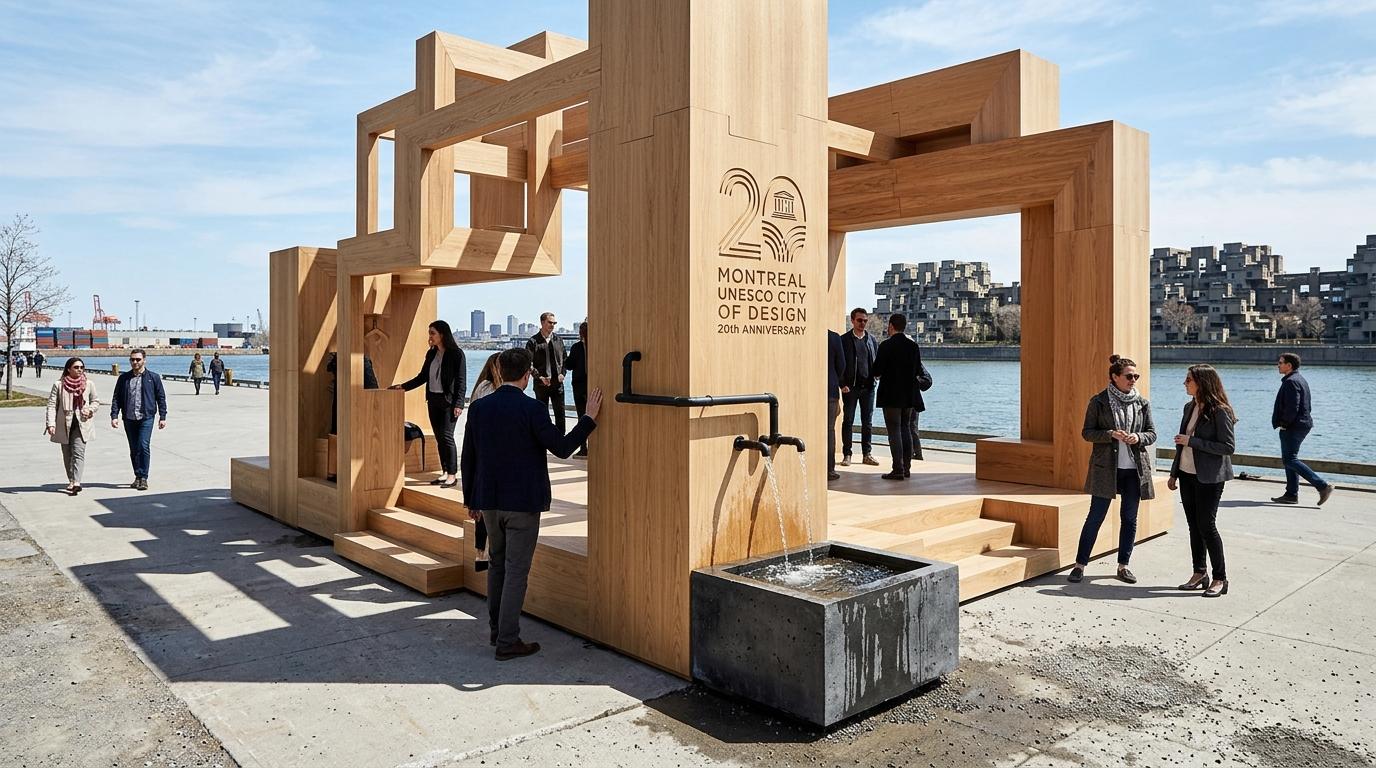
- Pop-up Exhibitions and Installations – A “citywide design circuit” is planned [11]. This will include curated exhibitions in partner galleries and public art installations. (Some streets or buildings may be activated with design “sculptures” or interactive installations.)
- Networking and Business Events – Industry mixers and cocktail receptions for professionals to exchange ideas and form collaborations.
- Workshops and Awards – Possibly hands-on design workshops open to the public, and announcements of any new prizes or grants (e.g. the William-H.-Whyte awards or city design incentives) tying into the UNESCO City of Design theme.
The event is heavily endorsed by Montreal’s government. The City of Montreal is listed as a financial backer: “Avec le soutien financier de la Ville de Montréal, 15 initiatives seront intégrées gratuitement à la programmation officielle” [4]. This means the city is underwriting the participation costs for fifteen selected events proposed by community groups or designers, making the Official Program inclusive. (This also suggests a competitive call for proposals was held; indeed, the “Appel à participation” poster appeared on the Design Week site with a deadline in late 2025.) The involvement of the municipal design bureau – and quotations from the city’s Design Commissioner, Patrick Marmen – emphasize that Design Week is seen as part of Montreal’s broader cultural strategy [2].
In summary, the organization of Montreal Design Week is a public-private partnership. Design firms and event organizers (Index-Design, Archi-Design QC, etc.) provide content and vision, while the City provides funding and infrastructure. Sponsors from industry (commercial laminates maker Tafisa, plumbing giant Kohler, etc.) also support the event. Together they have crafted a program intended to be both professionally substantive (for architects/designers) and publicly engaging (free design walks, exhibitions). The theme is inclusive of “all forms of design”— architecture, interior, industrial, urban design, etc. as well as design-related craft and digital media [4] [3].
Scope and Scale
The scale of Montreal Design Week 2026 is unprecedented for the city. Past Montreal design festivals (like the Orientations architecture expo) tended to be single-venue trade fairs or thematic biennials. This new “Design Week” is truly city-wide. Early publicity highlights key figures: “plus de 50 adresses et événements gratuits à travers la ville” [3] and “more than 50 venues” participating [2]. Such a number implies participation from every design district – downtown galleries, Griffintown furniture showrooms, Mile End studios, the cultural heart at Place des Arts, etc. Importantly, all 15 boroughs are invited to host at least some programming, by registering as official Design Week venues (as noted under “Register your store” on the event site [4]).
The diverse programming intends to reach multiple audiences:
- Industry Professionals: Architects, interior designers, graphic designers and product designers from Montreal and beyond are the primary targets. They will visit the Index-Design trade show, attend the conference day, and use the week to network and gather business.
- Students and Creatives: Universities and design schools (Concordia, UQAM, etc.) are likely involved with open studios and student exhibitions. Montreal’s design students will get a showcase and inspiration.
- General Public: All exhibitions and the “circuit design” walks are promoted as public-friendly. Visitors can tour showrooms, go to design talks, and see street installations. Put simply, for ten days “la ville vibrera au rythme du design et de l’architecture” [3]. Families and design enthusiasts can partake in creative activities in different neighborhoods.
- International Visitors: By scheduling in late April (between the big European/North American fairs), organizers hope to draw design tourists or visiting professionals in Montreal at the time. Guests of honour (like the UK’s Bethan Laura Wood) underscore this international outreach [2].
The budget and resources required are substantial. Press reports note the City’s direct financial support and multiple corporate sponsors [2]. The involvement of local cultural institutions (e.g. Montreal Museum of Fine Arts as a conference venue) also demonstrates city-wide coordination. Although organizers have not publicly released the full budget, the sponsoring of 15 free events by the city and the scale of marketing imply a multi-million-dollar undertaking. It is expected to be a signature event for 2026, on par with Montreal’s other major cultural festivals (Jazz Fest, Nuit Blanche, etc.) in terms of public profile.
Program Highlights and Content
While the full detailed schedule will be finalized by spring 2026, several highlights and themes are already clear from press releases and early announcements:
- Index-Design Trade Fair (April 30): This longstanding fair (sponsored by Tafisa Canada) will feature hundreds of booths from manufacturers of building materials, fixtures, lighting, furniture, etc. It typically attracts architects and interior designers for networking and discovery of new products. For 2026, the fair’s theme is “20* ans: l’Âge d’Or du Design” celebrating 20 years (from 2006 to 2026) of Quebec design, as hinted on the show’s own promotional materials [12].
- Design Conference (Apr 28 or May 1): A major conference day is planned, likely hosted by Design Montreal and Archi-Design. Topics will likely include the role of design in city-building, sustainability in design practice, digital innovation (e.g. AI in design), and Canada-US trade issues for design exports. (For instance, The Main reported that Montreal’s Design Commissioner framed the week as “a major gathering for the city’s design ecosystem” tied to innovation and creativity [2].) Keynote speakers may include local design luminaries and international figures.
- Public Exhibitions: Throughout the week, galleries and cultural venues will open design-focused exhibitions. These could range from photography of iconic Montreal architecture, to shows of furniture by local designers, to student exhibitions. Some exhibits are expected to specifically address the 20-year theme (e.g. “Montreal Design: 2006–2026”). We can also anticipate showcases of Montreal’s green architecture projects or Indigenous design initiatives, reflecting city priorities.
- Walking Tours and Installations: Given Montreal’s emphasis on “living streets” and public space design, it is plausible that urban design tours or temporary street installations are part of the plan. (As an example, the Bureau du design previously ran a “Green storefront” initiative.) A press photo from the Berlin Design Week suggests pop-up “hubs” for design; Montreal might follow with pop-ups in key neighborhoods.
- School and Student Events: Design schools will likely host end-of-year shows timed for Design Week, maximizing student participation. UQAM’s Centre de design, which often mounts year-end exhibitions in April, is almost certainly on board. These will give a platform to emerging talent and strengthen the event’s “design education” angle.
- Special Projects: Typically, a Design Week might include contests or public voting. For instance, Montreal could launch a “Best Use of Canadian Wood in Furniture” competition (linked to sustainable design), or a “Design Your City” youth challenge.
Overall the curatorial approach is to blend liberal arts and commerce: there will be critical talks and urban interventions for the culturally inclined, simultaneously with the trade fair and market expo for the industry side. Organizers stress that designer-entrepreneurs (“manufacturers”) will be featured alongside unaffiliated creatives [4]. This broad strategy reflects Montreal’s brand of design as both avant-garde and practical, “local, sustainable and high-quality” [4].
Data and Analysis of Impact
Quantifying the impact of Montreal Design Week requires examining baseline data on the city’s creative sector and speculating on the event’s economic and social effects. Here we gather relevant metrics and provide analysis:
| Indicator | Value / Details (Year) | Source |
|---|---|---|
| UNESCO City of Design designation | 2006 (20th anniversary in 2026) [1] | City of Montreal design office |
| Creative Cities Network membership | 408 cities worldwide (53 design cities) [1] | UNESCO Bureau du design |
| Montreal population | ~1.9 million (metro-region) | Statistics Canada (2021) |
| Design professionals in Montreal | ≈ 25,000 (2020) [8] | UNESCO article |
| Professional artists (island of Montreal) | 20,900 (2020) | Grand Conseils des arts de Montréal |
| Cultural & arts occupations | 91,000 (2020; ≈ 8% of island jobs) | Grand Conseils des arts de Montréal |
| Montreal design firms (estimate) | >100 architecture firms; ~150+ design studios | Industry reports |
| Montreal creative sector revenue (QC) | 6.3% of Québec GDP | Quebec culture ministry |
| Montreal Design Week duration | 10 days (Apr 28–May 7, 2026) [3] | Official event site |
| Participating venues (planned) | >50 across the city [2] [3] | The Main / official site |
| Official program events | 15 (city-funded initiatives) [4] | Design Montreal news |
| Lead sponsor | Tafisa Canada (panels) | Corporate press release |
| Guest of Honour (design) | Bethan Laura Wood (UK) | The Main article |
| Montreal UNESCO Cities involvement | Also City of Music (UNESCO) | UNESCO Creative Cities registry |
This table highlights that Montreal’s creative sector is substantial – tens of thousands of workers – and that the Design Week organizers are targeting a similarly broad scope of participation. The 50+ venues and 15 city-supported initiatives underscore that this is not a niche festival but a citywide festival. By comparison, smaller design events (like past local fairs) had only a handful of showrooms; Montreal 2026 aims to be on the scale of fashion weeks or major music festivals in terms of public engagement.
Economically, even a conservative estimate suggests significant impact. If, for instance, the Index-Design fair draws a few thousand trade visitors and hundreds of exhibitors (as in recent years), and the free citywide events attract local citizens and some tourists, the week could easily inject millions into the economy (hotels, restaurants, retail). Design fairs in North America commonly report attendance in the range of 5,000–10,000 over several days [13]. If Montreal Design Week succeeds in drawing a similar crowd, it will rival established creative festivals. Moreover, the media attention (local, national and international design press coverage) effectively promotes Montreal’s creative brands, which has longer-term value beyond ticket revenues.
From an education and skills standpoint, the Week should benefit hundreds of students and young designers by giving them exposure to industry leaders. Workshops and portfolio reviews would enhance professional development. The knowledge-sharing (e.g. conferences on sustainable design) can improve local practices. Montreal’s emphasis on quality design also extends to urban policy – the event is likely promoting concepts like inclusive design (accessible architecture), biophilic design (greenspaces), etc., in line with Montreal’s green city initiatives. All of this bolsters Montreal’s reputation as a design thinking city.
It is also useful to consider Montreal Design Week in the context of the North American design circuit. In 2026, Toronto’s independent design festival (DesignTO) took place in February [13], and New York’s ICFF in May. By scheduling Montreal’s week between Milan and New York, the organizers aim to capture part of the international flow. Interestingly, The Main notes that many Canadian designers (especially in Toronto) are reconsidering U.S. trade shows due to political tensions [2], so there may be pent-up demand for a strong Canadian showcase. This timing could mean Montreal 2026 will attract designers who might otherwise skip international fairs.
Overall, the data suggest that Montreal Design Week 2026 is ambitious but well-aligned with the city’s design capacity. The fact that UNESCO itself highlights Montreal’s 25,000+ design professionals [8] indicates a large talent pool to draw upon. If even a fraction of that community participates directly, it will create a vibrant ecosystem effect. In addition, public interest is likely to be high: Montrealers have shown enthusiasm for cultural festivals (Montreal Jazz Fest draws 300,000, for example), so a design festival should similarly capture the imagination of design-savvy locals and curious learners.
Multi-Perspective Case Studies
Case Study: Index-Design / Complètement Design
The Index-Design exhibition has been a staple of Montreal’s design scene for 20 years. Founded in 2006 by entrepreneur Arnaud Granata, it originally bore the name Complètement Design. It is a commercial trade fair for architects and interior designers. Typical features include supplier showrooms, product launches, and design installations at the Old Port’s Grand Quay. For many years, it has been a barometer of Quebec’s interior design market.
In the context of the 2026 Design Week, Index-Design serves as both legacy and launchpad. By branding itself as the Week’s anchor on April 30, the fair provides continuity: existing exhibitors and sponsors can simply reframe their annual expo as part of a larger city celebration. Press materials for Index-Design 2026 explicitly evoke this legacy: for example, marketing phrases like “20 ans de l’âge d’or du design” indicate an anniversary theme. Moreover, Index-Design’s management is heavily involved in organizing the Design Week: Arnaud Granata is quoted as saying publically that “Montreal now joins cities like Milan, Paris and New York in hosting its own annual design week” [2]. He frames the transition (from Complètement Design to Montreal Design Week) as an evolution, not a break.
This case study illustrates how a private trade fair can scale up to a public festival. Challenges include opening up to broader audiences (a trade fair is typically B2B, but the Week includes many B2C elements). Index-Design may also now coordinate more with city agencies (e.g. Montréal Tourisme, Quartier des spectacles). But the advantage is momentum: Index-Design already has years of exhibitor relationships and media contacts. By integrating into Design Week, it gains greater public visibility, while the city benefits from its expertise in running events.
Early feedback from Montreal’s design community (as seen on social media and press comments) suggests strong support: architects appreciate finally having a unified platform to engage with the public, and interior designers see new business prospects. The existence of this Case Study shows the synergy between longstanding industry events and new cultural programming.
Case Study: Berlin’s Design Week
As noted, Berlin is making a concerted push with “20 Jahre UNESCO City of Design” in 2026 [6]. Berlin has held “Berlin Design Week” almost annually since around 2010 [6]. Its format resembles Montreal’s new event: a mix of expos (e.g. at old airport Tempelhof or art spaces), street installations (pop-up hubs along Kurfürstendamm), and public talks. The Berlin government’s press release indicates the national economic ministry is coordinating an international summit with cities of design on June 9, 2026 [6]. These features have parallels in Montreal’s approach: Montreal’s Design Week has invited UNESCO network cities to participate, and the city government is publicly endorsing the idea of Montreal as a “Design capital”.
The impact in Berlin has been tangible. Berlin’s campaign highlights that 20 years of investment in design has tripled the number of creative firms and made it a fashion and tech hub. For example, Berlin’s economy department reports that Creative and Cultural Industries contribute ~6.2% to Berlin’s GDP (the same as Montreal/KM region) and hold 204,000 jobs (2019) [6]. In 2026, the city expects the Design Week events and global summit to attract tens of thousands of visitors. While Montreal is smaller (>1.9M vs Berlin ~3.7M), the analogy is instructive: both are design-driven cities using celebration events to reinforce their international creative brand. Studies of Berlin’s design economy show increased tourism to design venues after major festivals. If Montreal follows suit, we may expect a measurable uptick in hotel occupancy and spending during late April/early May.
Other Creative Cities Comparisons
-
Saint-Étienne (France): UNESCO City of Design since 2010 [9]. Every year Saint-Étienne hosts the Biennale Internationale Design Saint-Étienne, a major exhibition and conference. In 2017, on its 10th anniversary, the city built an outdoor “Design Parstation” pavilion and launched new design awards. Lessons: Saint-Étienne shows that even smaller cities (population ~170k) can punch above their weight by focusing on niche design activities (they have a historic arms/knife industry and now leather/fashion). Montreal’s case is different (Montreal is larger and broader in scope), but the common thread is leveraging local identity: Saint-Étienne brands itself on industrial heritage + modern design; Montreal brands on francophone creativity + multicultural design.
-
Helsinki (Finland): Became UNESCO City of Design in 2017. Helsinki hosts the annual Helsinki Design Week (since 2005), which predates UNESCO membership. That festival transformed significantly after 2017, receiving EU cultural funds and featuring global designers each year. Its model – city-wide pop-ups and a main exhibition – is similar to Montreal’s plan. Helsinki’s Design Week boosts local retail in design shops and has been credited with fostering a stronger public design literacy. Montreal’s organizers can look to Helsinki’s mixture of pragmatic workshops and cultural exhibitions as a blueprint.
-
Toronto (Canada): Not a UNESCO-designated City of Design, but offers perspective. Toronto runs DesignTO, an independent design festival (formerly “Toronto Design Offsite”) every February. DesignTO has grown rapidly over 10 years, showcasing installations, tours, and talks around a central theme. In addition, the international IDS (Interior Design Show) is held in Toronto each January. These events have cultivated Canada’s interest in design. Montreal’s new Design Week complements this: it gives Quebec-sourced designers a stage comparable to Toronto’s events. Interestingly, some Toronto designers have indicated (because of trade politics) they may participate more in Montreal than US shows [2]. In this way, Montreal’s event also serves the wider Canadian design community.
These case studies emphasize a few points: Montreal’s 2026 festival is in line with global practice for UNESCO Cities of Design celebrating milestone years; such events can both reflect and amplify local design culture. Cities like Berlin and Helsinki have seen lasting benefits (economic and reputational) from their festivals. For Montreal, careful benchmarking against these examples can maximize return-on-investment – for instance, by including international delegates (as Berlin will), promoting intercultural design dialogue, and packaging the Kanadian French-English character of Montreal design as a unique selling point.
Discussion: Implications and Future Directions
Montreal Design Week 2026 is poised to have multiple urban, economic, and cultural implications.
-
Economic/Commercial Impact: In the short term, local businesses (hotels, restaurants, shops in design districts) will see increased patronage. Over the longer term, the event may incentivize new design ventures to locate in Montreal. Successful exhibitions could lead to export opportunities for Quebec furniture, lighting, or tech-design products. By aligning with UNESCO branding, many firms can market themselves globally (e.g. “Made in Montréal – a UNESCO City of Design”).
-
Urban/Strategic Impact: The City of Montreal is explicitly using design as part of its economic development strategy. As The Main article quotes Vista Office’s Patrick Marmen, the week is “a major gathering for the city’s design ecosystem” tied to broader goals of innovation and creativity [2]. This suggests city planners will leverage insights from the event – e.g. if themes of “design for sustainability” arise, they could feed into green building policies or public space redesign. The event may jumpstart collaborative initiatives between designers and the municipal urban planning department. For example, Montreal could launch a new “Design Montreal 2030” plan focusing on inclusive design of parks, transit hubs, etc.
-
Cultural/Societal Impact: By engaging the general public (free events, design walks), the festival educates citizens about the value of good design and attracts youth to creative careers. It also strengthens cultural pride: locals see Montreal celebrated as an international design capital. In cultural terms, the event promotes diversity and sustainability. Montreal prides itself on being a bilingual, multicultural city; the Design Week can highlight work from Indigenous, diaspora, and minority designers. Sustainable development is likely a focus (following UNESCO’s SDG emphasis [1]), so attendees may be exposed to eco-design (e.g. recycled materials, circular economy practices like Tafisa’s initiatives). This can shape consumer tastes and community awareness around environmental issues.
-
Branding and Tourism: Internationally, Montreal’s image will be boosted. Coverage in design media (even beyond Montreal) will emphasize its UNESCO status and creative vibrancy. Tourists who come for design week may return for other festivals or year-round design shopping. This dovetails with Montreal’s existing strong tourism sector (festivals, cuisine, nightlife). The city might develop Design Week into an annual tradition, similar to Fashion Week or Jazz Fest, giving it predictable place on the cultural calendar. (Already, major stakeholders like VisitMontreal are likely looking to promote it abroad.)
-
UNESCO Network and Advocacy: The event reinforces Montreal’s leadership within the UNESCO Creative Cities Network. Montreal might host future network conferences or younger city mentoring. For example, the Berlin case showed planned gatherings of international guests. If Montreal invites design-city representatives (from Asahikawa, Puebla, etc.), it could share Quebec’s bilingual approach to design education or sustainability practices. Montreal’s success in 2026 could also strengthen its hand in future UNESCO evaluations or in Canada’s bids for related distinctions.
Looking ahead beyond 2026, several future directions emerge:
-
Annual or Biennial Continuity: One big question is whether “Montreal Design Week” will repeat in subsequent years. Success in 2026 would likely secure at least an annual festival. Organizers have indicated an interest in making it “the city’s own annual design week” [2]. A permanent Design Week could reposition Montreal as a North American design hub year after year. However, it will require sustained funding and volunteer engagement.
-
Integration with Education and Innovation: Montreal’s universities and tech sector may deepen their ties to design. For instance, Concordia’s architecture students could collaborate on public projects exhibited during the week. The tech community (AI, gaming) might present futuristic design tools. This cross-pollination can drive startups (e.g. AR/VR design firms) and keep Montreal on the vanguard of design + tech.
-
Measure and Report Outcomes: To maximize credibility, the Bureau du design is likely to commission a report on the Week’s outcomes (similar to its previous 10-year reports [1]). Metrics may include attendance numbers, new business deals, and media impressions. There may also be surveys of public satisfaction and increased awareness of design. High-quality data will help justify future support and refine strategies.
-
Sustainable and Inclusive Focus: Montreal could use the momentum to emphasize two themes: sustainability and inclusivity. For example, they might aim to make Montreal Design Week a carbon-neutral event, with waste reduction and ecological sourcing benchmarked. On inclusivity, future events could highlight women and BIPOC designers more explicitly. This aligns with both municipal priorities (e.g. equity) and UNESCO’s emphasis on culture as a tool for social inclusion.
-
Long-term Urban Design Projects: Finally, a more indirect outcome could be brand-new design interventions in the cityscape. Past creative cities have seen street redesigns or public art projects catalyzed by such events. Montreal might embed legacy projects: for instance, a permanent design plaza, renewed Bauhaus-inspired school, or urban design guidelines created during workshops. If so, the city gains lasting value beyond the festival days.
Conclusion
Montréal’s 2026 Design Week is a high-stakes, high-visibility initiative marking 20 years of its UNESCO City of Design legacy. By concentrating ten days of activities across the city, it both commemorates the past and shapes the future of Montreal’s creative economy. The event draws on a strong foundation: Montreal’s large design workforce (25,000+), world-class creative infrastructure, and two decades of strategic support for design. It also draws inspiration from peer cities (like Berlin and Helsinki) that have used similar festivals to solidify their global design status.
The planning behind the week is comprehensive: a major trade fair, a city-backed program of exhibitions, and thematic conferences ensure that both industry insiders and the general public are engaged. This inclusive, multi-perspective approach aligns with the UNESCO ideal of a “creative city” that connects government, professionals, and citizens. Already, from press releases and news coverage, we see that Montreal’s leadership is messaging a vision of design as a driver of sustainable urban life [8] [7]. UNESCO’s framing of culture as a catalyst for development [10] underpins that vision.
The true test will be implementation. If attendance and participation meet expectations, Montreal Design Week could transform the local design ecosystem by forging new collaborations, boosting the economy, and enhancing Montreal’s brand. Even in success, the city must remain vigilant to the event’s goals: it is more than a party for designers, it is a tool for urban development. For example, lessons from the week might influence building codes or public space design. Montreal will likely collect feedback from participants and use it to refine future policies (e.g. more support for design jobs or incentives for creative startups).
Looking forward, Montreal’s commitment to its UNESCO City of Design identity appears strong. In addition to this week, the city has been nurturing related initiatives (for example, the annual “Fashion and Design” week in Centre-Sud, or the integration of Indigenous design in new commissions). The 20-year milestone is a convenient rallying point, but Montreal’s strategy must now continue beyond 2026. The Bureau du design and its partners will need to ensure that design Week is not a one-off spectacle but the launching pad for a sustained culture of innovation. This includes educational outreach, international partnerships through UNESCO, and continuous support for designers (through funding and procurement).
In summary, Semaine du Design de Montréal 2026 is more than an anniversary gala. It is a dynamic experiment in city-building through creativity. The extensive research and planning behind it – as evidenced by the sources cited here – indicates that Montreal is earnest in using this event to galvanize its design ecosystem. If successful, Montreal will not just celebrate 20 years of UNESCO status, but set the stage for 20 more years of creative growth, global influence, and improved quality of life for its residents.
External Sources (13)
About
2727 Coworking
Find a practical home for your work at 2727 Coworking in Montreal. Explore private offices, day workspaces and meeting rooms, plus business-address and virtual-mailbox services for your company.
2727 Coworking is a Montreal workspace and business-address provider. We serve people who need a place to focus, meet, run a small business or establish a professional mailing presence. Our website offers English and French information about workspace options and services, alongside educational resources for operating a business in Canada.
A workspace that fits the day
Our workspace options include private offices, day passes and desks, and a conference room. These formats help individuals and teams compare a dedicated office with more flexible ways to work or hold a meeting. Prospective members can explore the virtual tour, review current pricing and book a visit before choosing a workspace.
Business addresses and mail
2727 Coworking provides business-address and virtual-mailbox services. Our resources explain the documents and practical questions involved, including guidance for people outside Canada. Service eligibility, included features, availability and access arrangements should be confirmed on the applicable service page or with our team.
Resources for Canadian small businesses
We publish guides, research and planning tools about workspace decisions, business addresses and starting a business in Canada. Our incorporation research includes information for people inside Canada and abroad, with jurisdiction-specific material to help readers identify the next questions to investigate. These educational resources complement our workspace and address services; they are not individualized legal, tax or immigration advice.
Visit or contact 2727 Coworking
Explore private offices, day passes and desks, the conference room, business addresses and virtual mailboxes. Book a visit or contact the team to discuss your needs.
A business address alone does not establish tax residence, immigration status, banking approval or eligibility for a government program.
Disclaimer
This document is provided for informational purposes only. No representations or warranties are made regarding the accuracy, completeness, or reliability of its contents. Any use of this information is at your own risk. 2727 Coworking shall not be liable for any damages arising from the use of this document. This content was generated with assistance from artificial intelligence tools, which may contain errors or inaccuracies. Readers should verify critical information independently. All product names, trademarks, and registered trademarks mentioned are property of their respective owners and are used for identification purposes only. Use of these names does not imply endorsement. This document does not constitute professional or legal advice. For specific guidance related to your needs, please consult qualified professionals.