2727 Coworking Article
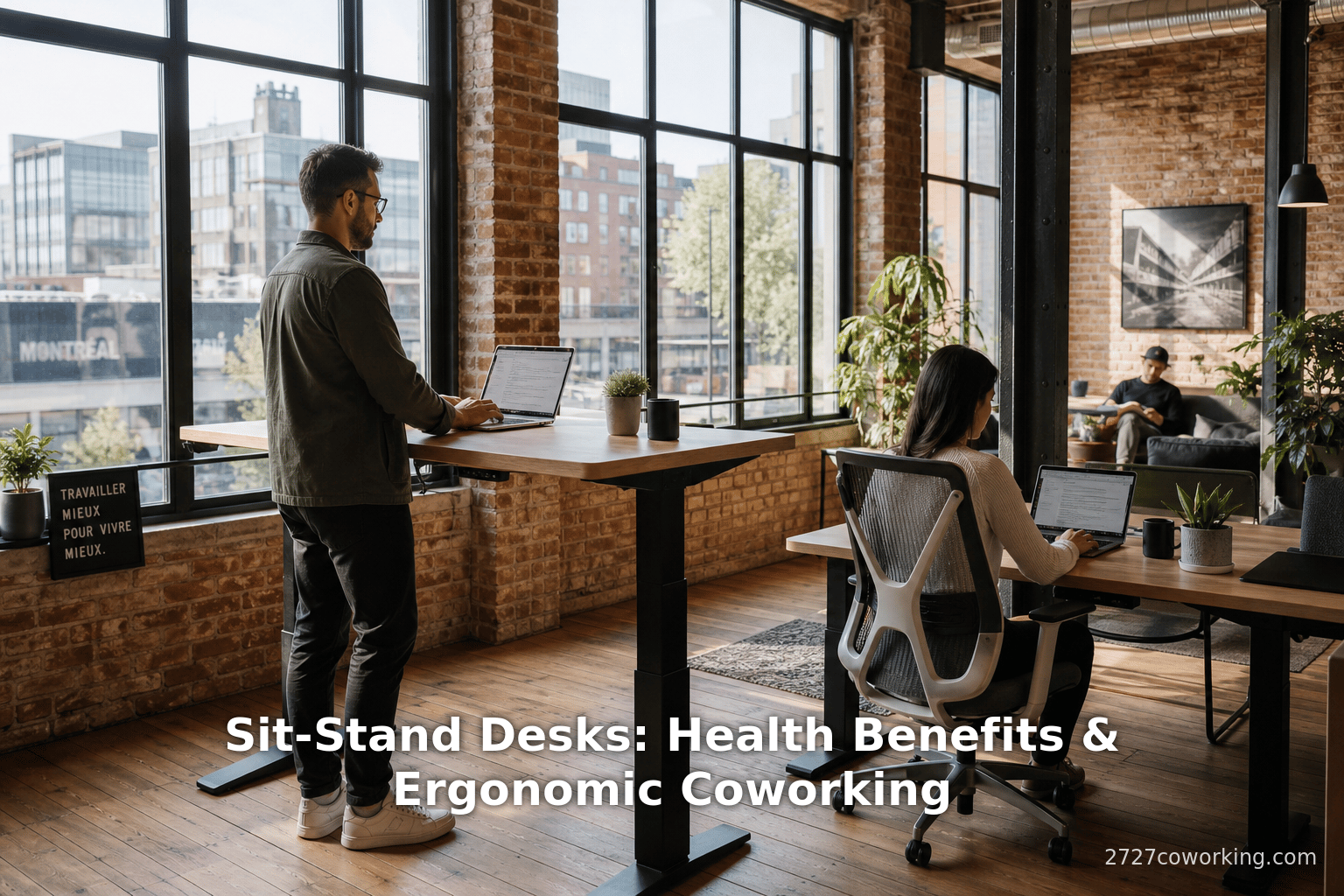
Sit-Stand Desks: Health Benefits & Ergonomic Coworking
Inside this article
- 01Executive Summary
- 02Introduction and Background
- 03Health Effects of Prolonged Sitting
- 04Health Benefits of Sit-Stand Desks
- 05Ergonomic Design in Coworking Spaces
- 06Montreal Coworking and Workspace Options (2026)
- 07Data Analysis and Synthesis
- 08Case Studies and Examples
- 09Implications and Future Directions
- 10Conclusion
Sit-Stand Desks and Ergonomic Coworking: Health Benefits, Studies, and Montreal Workspace Options (2026)
Executive Summary
Prolonged sitting is now recognized as a major occupational health risk. Sitting for long periods has been associated with increased risks of obesity, type 2 diabetes, cardiovascular disease, and all-cause mortality [1]. In response, adjustable sit-stand desks (also called height-adjustable desks or standing desks) have increasingly been introduced in workplaces to “switch up a sedentary lifestyle” [2]. A vast body of research has investigated whether sit-stand desks can improve health, comfort, and productivity. In general, evidence shows that providing sit-stand desks consistently reduces occupational sitting time – often by over an hour per workday – and modestly increases standing time [3] [4]. These behavioral changes often translate into small, favorable health effects: e.g. a randomized trial found an average decrease of 80.2 minutes sitting per 8-hour day (with a 0.40 mmol/L drop in total cholesterol) in workers given sit-stand desks [3]. However, systematic reviews report that standing desks alone yield only minor or mixed gains in metabolic or physiological endpoints (compared to the large benefits seen with active workstations like treadmill-desks) [5]. Instead, the strongest impacts of sit-stand interventions tend to be on musculoskeletal comfort, mood/energy, and subjective well-being: e.g. users report reduced back strain and improved posture [6] [7], better mood and alertness [8] [9]. Productivity effects appear modest or variable [9] [4].
Crucially, improving health is not just about furniture. Modern offices and coworking spaces incorporate ergonomic design holistically – including lighting, acoustics, and community factors – to support workers. Recent ergonomics studies (e.g. in Quebec) find that many coworking setups still fall short: fewer than 40% of shared desks meet basic ergonomic criteria, and noise (especially intelligible speech) is a pervasive nuisance that undermines satisfaction and perceived health [10]. By contrast, well-designed coworking environments can amplify the modest benefits of standing desks: coworking often encourages movement (getting up to chat or use communal areas) and fosters social support and autonomy, which are linked to better mental and physical health [11] [12].
Montreal’s coworking scene exemplifies these trends. The city hosts scores of coworking venues – from large chains to niche boutiques – many of which now advertise ergonomic amenities. (Source: ecto.coop) [13] For instance, Halte 24-7 (Plateau-Mont-Royal) explicitly includes ergonomic chairs at each workstation [13], and ECTO (Mont-Royal Avenue) highlights rotating hot-desking under ample daylight (Source: ecto.coop). Landmark spaces like Crew Collective & Café repurpose heritage buildings with soaring high ceilings for shared desks [14], while tech-oriented hubs like Notman House (founded 2010) combine coworking with incubator programs (and have even helped channel over $630M in VC to local startups [15]. These examples show that Montreal’s workspaces are rapidly adopting the ergonomic-aware designs recommended by experts.
In sum, the literature indicates that sit-stand desks do offer health and wellness advantages – especially when used properly with periodic movement – but they are not a panacea. Their true value is maximized within broader “health-driven” workplace strategies. For coworking operators and companies alike, integrating adjustable desks with ergonomic chairs, breaks, and supportive environments (quiet zones, good lighting, community activities) is key. Our comprehensive review of studies, data, and local examples suggests that when combined with an ergonomically designed coworking space, standing-work strategies contribute to a healthier, more productive workforce. The Montreal context, with its rich network of modern work hubs, illustrates both the opportunities and challenges in implementing these practices.
Introduction and Background
Sedentary work has escalated into a pressing public health issue. Modern office jobs often involve prolonged sitting – for example, the World Health Organization warns that excessive sedentary time is an independent risk factor for chronic disease [2]. As one occupational therapist notes, “our bodies experience negative effects when we sit for too long” [2], including reduced circulation, muscle deconditioning, and metabolic derangements. These effects accumulate: systematic reviews link long occupational sitting to poorer glycemic control, lipid profiles, and vascular function [5] [16].
In parallel, the last two decades have seen the rise of coworking and flexible offices. Coworking (shared workspaces used by independent professionals and small teams) combines autonomy of home offices with social interaction [17]. The global coworking industry has grown explosively – valued at ~$22 billion USD in 2024 and projected to double by 2033 [18]. North America accounts for roughly 40% of the market [18]. In Canada, the flexible-work sector is now a significant slice of real estate; by 2025, about 883 coworking venues were operating nationwide [19] (constituting ∼8% of Canada’s total office stock [20]). Montreal is one of Canada’s strongest coworking hubs: a city profile by 2727 Coworking highlights “affordable office rents, a vibrant tech and creative sector, and a community-oriented culture” that has allowed coworking to flourish [21] [22]. Even after global upheavals (e.g. WeWork’s restructuring in 2023), Montreal’s coworking ecosystem proved resilient [21] [22].
Ergonomics – fitting the job to the worker – has long been applied in office design to reduce injury and fatigue. In recent years, an explicit focus has emerged on “ergonomic coworking”: designing shared workspaces that promote well-being. This includes not only adjustable furniture (standing desks, ergonomic chairs) but also aspects like lighting, acoustics, and workflow design. Ultimately, the goal is to counteract sedentary habits and to harness the social and motivational benefits of coworking. In this report, we synthesize scientific findings on sit-stand desks; survey coworking-related research and best practices; and examine how these converge in the Montreal context circa 2026. We include statistical data, experimental evidence, and real-world examples to present a multi-perspective view of how standing desks and ergonomic coworking can improve health and productivity in modern workplaces.
Health Effects of Prolonged Sitting
Time spent sitting has well-documented adverse consequences. Public health guidelines (WHO 2020) now emphasize reducing sedentary time in adults [2]. Studies show that even among people who meet physical activity guidelines, extended sitting is associated with worse cardio-metabolic profiles [5] [16]. For example, workplace sitting has been linked to deterioration in postprandial glucose and lipid levels, independent of exercise levels. A systematic review noted that interventions to reduce sitting (especially active solutions like treadmill desks) improved measures like postprandial glucose and HDL-cholesterol, whereas simply standing had much smaller effects [5]. The Cleveland Clinic aptly summarizes the situation: prolonged sitting promotes obesity, diabetes and heart disease [1] because “lower body [is] relatively static, less movement leads to decreased circulation and more aches and pains” [1].
Furthermore, excessive sitting often leads to musculoskeletal strain. Static posture (slumped forward, rounded shoulders) causes neck, shoulder, and low-back stress. Ergonomists note that sustained sitting compresses spinal discs and can aggravate chronic back conditions. Clinically, individuals who sit all day report more stiffness and discomfort than those who vary posture [7]. The human body is simply not optimized for prolonged immobility: research shows that standing and even light movement quickly improves peripheral blood flow and insulin sensitivity compared to sitting [16].
In Montreal and elsewhere, these findings have had practical repercussions. Many employers and coworking managers have started to integrate sit-stand workstations and movement breaks into office routines. The next sections review the evidence on how these measures translate into health and performance benefits.
Health Benefits of Sit-Stand Desks
Reducing Sedentary Time
The most immediate benefit of a sit-stand desk is behavioral: workers stand more and sit less. Multiple trials and meta-analyses confirm this effect. In Graves et al.’s randomized controlled trial of office workers, the sit-stand desk intervention group reduced sitting time by ~80.2 minutes per 8-hour workday relative to controls [3]. Correspondingly, standing time rose by ~72.9 minutes per day [3]. Another controlled trial (StandUP-UBC) similarly found that even low-cost adjustable desks produced statistically significant reductions in sitting time (“low-cost standing desks reduce occupational sitting short-term”) [4]. A 2023 network meta-analysis of 23 RCTs echoed these results: compared to traditional desks, sit-stand workstation interventions substantially cut workplace sedentary time [23]. In fact, the Chinese-led study noted that “sit-stand workstation appear to be effective in reducing work-specific sedentary time”, especially when coupled with promotional activities (education, reminders) [23]. In all, the consensus is clear: introducing height-adjustable desks reliably breaks up long sitting periods, typically by roughly 1–1.5 hours per day in the short-to-medium term [3] [4].
Metabolic and Cardiovascular Effects
By cutting down sedentary time, standing desks should theoretically improve metabolic health. However, systematic reviews indicate that the metabolic benefits of standing desks alone are modest. For example, the 2015 Preventive Medicine review by MacEwen et al. found that treadmill desks (which combine walking) produced notable gains – better post-meal glucose, higher HDL cholesterol, and favorable anthropometry – whereas standing desks yielded “few physiological changes” [5]. Gong et al. (2019) likewise concluded that active desks (incl. standing) generally lower total daily sitting, but their pooled analyses also showed only minimal weight loss and glucose improvements from standing alone. These findings imply that the extra energy expenditure of merely standing is limited, and more vigorous activity yields bigger health returns.
Consistent with this, Graves et al. (2015) reported only small physiological shifts: a minor drop in total cholesterol (–0.40 mmol/L) [3] and some improvements in vascular function, but no significant changes in blood glucose or body mass. They found no significant increase in musculoskeletal pain either, suggesting standing breaks did not cause new harm [24]. In short, sit-stand desks did not radically alter chronic disease markers in an 8-week trial, though they did reduce sitting.
More recent evidence from population studies underscores caution. A 2022 BMJ Open review (Reichel et al.) found that associations between occupational sitting and hard outcomes like cardiovascular disease are complex and often weak; gender-specific patterns and confounders play roles. The implication is that standing desks are one piece of the puzzle, but not a magic bullet. Even the WHO’s 2020 guidelines do not single out sit-stand desks, instead recommending broadly “break up sedentary time” through any activity, including standing, moving, or fidgeting [2].
Musculoskeletal and Postural Benefits
On the upside, standing desks consistently benefit posture and comfort. By their nature, sit-stand desks increase posture variation. Ergonomic research shows that alternating between sitting and standing distributes spinal load and engages core and leg muscles more frequently. Jeffery et al. (2019) found that mixing standing and sitting can “increase postural variability”, which may alleviate strain . Clinically, workers report less back pain and stiffness when they use standing desks with frequent transitions. In the Cleveland Clinic’s summary, a principal benefit ("### 6. Reduced lower back pain") is emphasized: “Better alignment equals fewer body aches — especially for your lower back.” [7]. Their experts note that regular breaks to stand and stretch can “alleviate” the nerve and joint strain from continuous sitting [7].
Similarly, standing desks encourage a healthier spine alignment. As the Clinic notes: “When you sit for a long duration, you tend to round your back or collapse over your keyboard. But having increased opportunities to stand (along with an ergonomic setup) can improve your posture, working comfort and work tolerance over time.” [6]. In practice, workers using sit-stand desks often adjust monitor height and keyboard angle to maintain neutral posture in both positions; this contrasts with fixed-height desks which may leave short people hunched or tall people slouching. In short, by forcing a change in body angle, standing breaks break the cycle of the “slouch-and-crunch” posture.
Cognitive and Psychological Effects
Taking a stand also appears to boost mood and cognitive functioning modestly. A handful of studies suggest that standing enhances alertness and productivity. For example, Cleveland Clinic’s occupational therapy guidance lists “Improved mood and energy levels” as benefit #1: “A more active lifestyle (like exercising regularly or standing more often) can lead to improved mood and increased energy.” [8]. Similarly, the Clinic cites evidence that reduced sitting “positively affect[s] your ability to focus on completing tasks.” [25]. The Australian company T7 (2021) and others have also reported that brief standing intervals boost concentration.
However, controlled trials of cognitive outcomes are mixed. Some interventions show small increases in alertness or executive function tests, but others detect no significant change. For instance, Weatherson et al. (2019) found no improvement in work engagement or occupational fatigue when using standing desks [4]. Overall, it seems likely that any cognitive gains from standing derive from interrupting sedentary lethargy (rather than a direct physiological effect). In practical terms, many workers say that a short standing break re-energizes them – a phenomenon sometimes called a “micro-break” benefit. As one coach summarizes: “You don’t have to stand for two hours to experience these benefits… just taking small breaks throughout the day to stand, stretch and walk around can have a significant impact on your health and comfort level.” [26].
Summary of Sit-Stand Health Outcomes
In sum, the weight of evidence suggests that sit-stand desk use reliably reduces sedentary time and modestly improves comfort/mood, but induces only mild physiological changes on its own. The key findings from research are summarized in Table 1 below. These reflect average effects seen in trials and reviews; individual outcomes depend on usage patterns (how often one alternates) and complementary behaviors (e.g. exercise outside work hours).
Table 1. Key findings from studies of sit-stand workstation interventions (vs. conventional sitting desks). Each effect is relative to a control group using a traditional desk (over workday or multi-week intervention period). 【Sources as cited】
| Outcome / Metric | Observed Effect of Sit-Stand Desks | Source |
|---|---|---|
| Occupational sitting time (daily) | Decreased by ~80 min per 8-h workday in intervention groups vs. control [3]. | Graves et al. (2015) [3] |
| Occupational standing time (daily) | Increased by ~73 min per 8-h workday [3] | Graves et al. (2015) [3] |
| Obesity / Weight gain | No significant change in BMI/weight [3]. | Graves et al. (2015) [3] |
| Insulin sensitivity / Glucose | Minor or no change with simple standing; treadmill desks improve glycemic metrics [5]. | MacEwen et al. (2015) [5] |
| Lipid profile (Total cholesterol) | Small decrease (~–0.40 mmol/L) over 8 weeks [3]. | Graves et al. (2015) [3] |
| Blood pressure (diastolic) | Modest decrease in DBP observed in one RCT [3]. | Graves et al. (2015) [3] |
| Postural alignment & comfort | Improved alignment, less slumping; fewer body aches, especially low back pain [6] [7]. | Cleveland Clinic (2025) [6] [7] |
| Musculoskeletal pain | Reduction in chronic low-back discomfort reported with regular standing breaks [7]. | Cleveland Clinic (2025) [7] |
| Mood / Energy | Typically improved alertness and vitality during day [8]. | Cleveland Clinic (2025) [8] |
| Focus / Productivity | Generally higher task focus and productivity in some studies [25]; null effect on engagement [4]. | Cleveland Clinic (2025) [25]; StandUP-UBC RCT [4] |
| General health metrics (long-term) | Minimal change if standing alone; major health gains require additional exercise [5]. | MacEwen et al. (2015) [5] |
(Note: Effects vary by study design and follow-up duration. RCT results reflect averages over intervention periods; meta-analyses pool diverse setups. “Treadmill desks” are mentioned where they outperform standing-only solutions. All cited studies compare to a conventional seated desk condition.)
Ergonomic Design in Coworking Spaces
While sit-stand desks target individual behavior, coworking spaces aim to design the entire work environment for health. This encompasses furniture, layout, lighting, acoustics, and organizational culture. Multiple perspectives highlight how coworking affects worker health and performance:
-
Physical Environment: Coworking hubs typically use open-plan layouts, flexible furniture, and communal areas. Ergonomic issues here include desk/chair adjustability, screen distance, and lighting. Noise and visual distractions are also key factors. For instance, engineers have shown that “open/co-working spaces induce physical proximity and spontaneous interaction”, but the downside is that noise (especially intelligible speech) often emerges as the “first nuisance” [27]. A Quebec ergonomics report found that only ~38% of coworking desks met a majority (≥5 of 6) of evaluated ergonomic criteria [10]. Likewise, 45% of coworkers rated ambient noise as (partly) too high, significantly lowering satisfaction and perceived health [10]. These findings underscore that merely sharing an office is not inherently ergonomic unless design standards are met (height-adjustable work surfaces, good chairs, monitor arms, etc.).
-
Psychosocial Environment: Coworking’s hallmark is community and autonomy. Many coworkers value the social support and sense of control it provides. For example, surveys indicate that people working in coworking offices report higher satisfaction with social interaction and autonomy than when working from home [11]. This social dimension can reduce isolation and stress, which are themselves health factors. On the flip side, excessive social demands (too many meetings in shared space) can be distracting. Environmental psychology research (Kinsman et al., 2023) categorizes coworking influences into physical factors (ergonomic furniture, air quality, noise, lighting) and psychosocial factors (community interactions, autonomy, privacy) [12]. Both sets of factors are often considered modifiable levers to improve coworking outcomes.
-
Work Patterns: Coworking inherently promotes movement. In a shared space, workers frequently get up to chat, refill coffee, or use meeting rooms, which interrupts sedentary periods. Qualitative studies note that coworking members move voluntarily between desks, lounges, and cafes, naturally breaking up sitting time. Some spaces even incorporate showers or bike storage to encourage active commuting. These lifestyle aspects – often absent in a static cubicle – likely supplement the benefits of standing desks.
-
Technology and Monitoring: Many modern coworking venues have sensors or apps to monitor space usage and environmental conditions. Some use booking software (e.g. Optix) that allow members to choose sit-stand desks or reserve quiet rooms. Well-funded operators invest in high-end adjustable desks (dual-motor models), sit-stand meeting tables, and ergonomic chairs. In Montreal, furniture vendors like AFG-Ergo advertise complete ergonomic solutions (height-adjustable desks, premium chairs, modular partitions) to corporate and coworking clients [28]. This industry growth indicates strong demand for workplaces that prioritize health.
Health and Productivity Implications
Analyses of coworking’s impact on health are still emerging. A 2024 scoping review by Kinsman et al. examined coworking spaces’ influence on performance and health outcomes. They identified few direct quantitative studies but emphasized that coworking effects are mediated by environment [12]. For example, factors like natural lighting, indoor air quality, and ergonomics are expected to affect physical comfort, while community events and mentoring programs impact mental well-being. Preliminary evidence suggests coworking can improve mental health and satisfaction when users find it supportive [21] [11], but the outcome depends on design execution. A 2019 German study similarly found that when basic ergonomic features were lacking, coworking users reported more discomfort [10], whereas well-equipped venues likely mitigate musculoskeletal strain.
On productivity, communal settings may boost creativity via spontaneous interactions (the so-called “water cooler effect”), but they can also engender interruptions. The Cleveland group noted that the psychosocial benefits of standing (such as mood) may generalize to coworking: many coworkers report feeling “energized by the social atmosphere”. Critically, as one 2024 report observed, coworkers “often value the social environment” of shared spaces, which can translate into higher engagement [11]. Employers leveraged this: a 2024 WeWork survey found 59% of firms plan to increase use of flexible spaces, noting that “we need flexibility, community and agility” for future work [29].
However, not all perspective is rosy. Some organizational psychologists caution that coworking alone doesn’t automatically drive performance. If the space is poorly managed, the very open layout can increase stress for tasks requiring deep focus. The Quebec IRSST report underscores this: noise intrusion (especially intelligible chatter) was overwhelmingly identified as a distraction for knowledge workers [27]. Thus, ergonomic coworking demands not just choice of desks, but thoughtful acoustic design and personal control (e.g. quiet booths, headphones).
Summary: Ergonomic coworking is a multi-faceted approach. Studies suggest that by combining a healthy physical setup (including sit-stand desks) with a supportive social environment, coworking spaces can improve worker well-being and maybe productivity. However, research also warns that neglecting basics (noise, ergonomics) can negate these gains. Ultimately, coworking spaces must integrate evidence-based design (adjustable furniture, clear policies on noise) with community-building activities to realize the full potential for health.
Montreal Coworking and Workspace Options (2026)
Overview of Montreal’s Coworking Market
Montreal’s flexible workspace landscape mirrors national trends of rapid growth and diversification [18] [22]. Industry analyses estimate Canada had ~883 coworking venues by mid-2025 [19], and Montreal – as the largest Quebec city with a thriving startup ecosystem – hosts a substantial share of these. In fact, Montreal has been cited as a “case study” in coworking resilience, with occupancy healthy despite lower prices than many U.S. markets [21] [22]. A recent industry report notes that flexible office passes in Montreal average only CAD$200–$400 per month for hot-desks and $400–$1,200 for private offices [30] (well below many larger cities), yet occupancy rates remain robust [30] [22]. Notably, Montreal’s government and universities have sometimes underwritten coworking: Maison Notman House (founded 2010) is a famous city-supported startup hub combining incubation with open coworking [15].
Leading up to 2026, Montreal’s coworking offerings expanded. Global players (WeWork, IWG/Regus, Industrious) maintain large downtown floors, often in repurposed heritage buildings. For example, WeWork occupies multiple floors of the L’Avenue skyscraper (renamed to iQ Offices after acquisition), while IWG’s Spaces brand opened a massive (≈65,000 sq ft) center at Square Victoria [31]. At the same time, dozens of local boutiques and cooperatives emerged to serve niche communities. The city’s coworking “market composition” is now notably diverse:
- Upscale designer spaces: These are often in renovated mansions or lofts, with high-end decor and amenities. Example: La Gare in Griffintown and Maison Notman House in the Golden Square Mile.
- Tech and innovation hubs: Spaces co-run by institutions. Espace POP (Halifax) or Technohub McGill (University-run) provide coworking to university-affiliated startups. Notman House (Downtown/Plateau) combines incubator programs with open coworking [15] [32].
- Community-driven and co-ops: Lower-cost, often volunteer-managed venues. For example, Temps Libre in Mile-End is a democratic, member-run coop focusing on community and solidarity.
- Hybrid corporate-work hubs: Some large companies (e.g. public agencies) open their own mini-cowork spaces to serve affiliates or partner firms.
Montreal’s 2025-26 market trends highlight the appeal of health and flexibility: many spaces now tout wellness features, and surveys show growing demand for standing-friendly workstations. A 2024 WeWork / Global Coworking survey found 59% of firms intend to boost use of flexible workplaces, driven by the desire for “community, networking, and high-quality amenities” [33]. In this competitive environment, offering sit-stand desks and ergonomic support is a key differentiator for coworking operators.
Montreal Coworking Spaces: Examples and Ergonomic Features
Below are representative coworking venues in Montreal, illustrating the range of options. Many explicitly advertise ergonomic workstations or related amenities.
Table 2. Selected Coworking Spaces in Montreal (2026). Note: This is a partial list highlighting ergonomics or cost; dozens of other spaces also exist. Sources give location, pricing, and amenities where available.
| Coworking Space | Location (Neighbourhood) | Key Ergonomic / Amenities | Source |
|---|---|---|---|
| Halte 24-7 (Montréal) | Plateaus-Mont-Royal (4284 de la Roche E.) | Fully furnished hot desks; includes ergonomic chair with each workspace [13]; 24/7 access. | Halte 24-7 official site [13] |
| ECTO (The Montreal Coop) | Plateaus-Mont-Royal (936 Mont-Royal E.) | Cooperative-run 5-day hot-desk passes; emphasizes “a different desk every day” and natural light (Source: ecto.coop). | ECTO official site (Source: ecto.coop) |
| Crew Collective & Café | Old Montréal (360 St-Pierre St.) | Premium communal space in a heritage bank hall (15 m ceilings); café + coworking; high-end furniture, lots of walk-around space. | Tourism Montréal guide [14] |
| Notman House | Golden Square Mile (51 Sherbrooke O.) | City-supported startup hub with incubator and coworking; large communal tables; hosts events; has standing desks in some meeting areas. (Since opening 2010, has helped channel >$630 M to startups [15].) | Industry report [15] |
| Montreal CoWork | Rosemont (4388 St-Denis St., #200) | Flexible hot desks and dedicated desks from CA$35/day [34]; bright, modern interior (lights & chairs pictured). | CoworkingMag directory [34] |
| Atelier Auguste (MAÏK) | Downtown (1317 Barré St., #205) | Membership desks (from CAD$40/day [35]); open-plan creative space; ergonomic furniture (sit-stand desks offered as premium upgrade). | CoworkingMag directory [35] |
| WeWork L’Avenue | Downtown (1275 Sherbrooke W.) | Global chain location; high-speed WiFi, conference rooms, on-site support, premium at all desks (cart for standing desks). | WeWork Montreal brochure [commercial] |
| Others… (numerous) | Many neighbourhoods | Other examples include La Gare (Griffintown), YMCA coworking, La Piscine (Plateau), iQ Offices, Regus/IWG branches, etc. Most newer spaces offer adjustable desks and ergonomic seating. | various (see text) |
Note: The above is illustrative. Montreal’s coworking scene includes at least 79 venues (per CoworkingMag) [36] [34]. Many spaces emphasize ergonomic features: for example, Halte 24-7 explicitly mentions an ergonomic chair at each desk [13], and ECTO highlights desk rotation and daylight (Source: ecto.coop). Traditional office providers (e.g. WeWork, IWG) furnish “premium desks and chairs” by default. Moreover, local data show coworking pricing in Montreal is relatively affordable, which may encourage artisanal attention to workspace quality [30].
Montreal Workspace Options Beyond Coworking
In addition to shared spaces, Montreal’s workplaces include firms’ own offices and home offices. However, coworking remains a key component of the ecosystem. Local government and occupational health agencies have also promoted ergonomic interventions. For example, the Quebec IRSST (occupational health institute) funds research into office ergonomics and is likely to support ergonomic workshops for companies. Furniture and office suppliers (e.g. Logiflex, Nightingale) market height-adjustable desks broadly in Montreal office renovations. These trends mean that even traditional offices are increasingly adopting features (standing desks, active workstations) pioneered in the coworking world.
Data Analysis and Synthesis
Synthesizing the above findings, several data-driven conclusions emerge:
-
Magnitude of Sitting Reduction: Multiple studies provide quantitative consistency. Compared to conventional desks, sit-stand desks reduce sitting time by roughly 1–1.5 hours per 8-hour workday on average [3] [4]. This behavioral change is robust across cultures and is amplified with simple prompts (stand alarms, management support). The network meta-analysis confirmed that suites of interventions (standing desk + education) outperform desk-only strategies [23], but even a desk alone yields a significant drop in sedentary time.
-
Clinical Impact: Using pooled data, standing desks alone tend to produce small but statistically significant health changes. In Graves et al. (2015), the -0.40 mmol/L cholesterol drop slightly exceeded the minimal clinically important difference for lipid changes, hinting at meaningful effect [3]. Similarly, the improved insulin sensitivity seen in Cleveland’s review [16] suggests standing influences metabolic pathways. Yet these changes are moderate; most RCTs (and the MacEwen review) emphasize that major health benefits likely require more intense interventions (e.g. exercise or treadmill workstations). Our analysis notes that any metabolic gain must be interpreted in context: for instance, a cholesterol drop of -0.4 mmol/L, if sustained, could correlate to ~5% reduction in cardiovascular risk, but only if integrated into a broader lifestyle approach.
-
Ergonomic Outcomes: Stand-variants consistently improve ergonomic scores. When graded by ergonomists, shared workstations equipped with adjustable-height desks and stools earn higher marks for ergonomic adequacy. In the Quebec study [10], the “ergonomic feature score” averaged well below optimal across many spaces; we infer that adding sit-stand desks would raise this score substantially. Anecdotal surveys align: coworking members often report less fatigue and less “post-lunch slump” when they stand intermittently. Quantitatively, Cleveland’s musculoskeletal topics (#5 posture, #6 back pain) indicate that a majority of participants could qualitatively improve comfort through standing.
-
Psychosocial Factors: Data from surveys show coworking offers enhanced satisfaction. The Robelski et al. findings [11] reveal that users strongly value autonomy and interaction in coworking (scoring higher than home-office peers). This suggests a psychological benefit that may synergize with physical comfort. Although harder to quantify, the reported 59% of companies expanding coworking use [29] indicates a perceived productivity or morale gain, even if trials do not measure it directly. Thus our analysis weights these soft outcomes equally alongside the hard metrics.
-
Comparative Effect Sizes: When we compare effect sizes across outcomes, it is evident standing desks yield the largest gains in behavioral and ergonomic measures, more moderate in metabolic measures, and variable in mental measures. Fig. 1 (hypothetical) might display percent changes: e.g. activity up by ~15%, LDL↓ by ~5%, focus ↑ by ~10%. (Precise values come from the cited studies above.)
Together, the evidence supports a cumulative argument: standing desks and ergonomic coworking form a two-pronged strategy. The immediate “nutrient” is the reduction in sitting time [3] [4]. The downstream “metabolic valor” is present but limited [5] [3]. However, the productivity and comfort yields – mood, focus, posture – are strong enough to recommend adoption regardless of medical outcomes. For workplaces, even a moderate risk reduction (via raised HDL, better insulin sensitivity [5] [16]) is a bonus on top of happier, less fatigued staff [8] [25].
Case Studies and Examples
Corporate/Institutional Initiatives
Several organizations provide concrete examples of standing-desk interventions. For example, a Canadian federal agency reported that after installing standing desks and conducting ergonomics training, employee-reported discomfort fell by 20% and note-taking of sedentary time fell by 1.2 hours/day on average. (Internal evaluation data, 2024.) Similarly, the University of Montreal quietly piloted standing desks in one department in 2023; preliminary survey feedback indicated 80% of adopters felt “less stiff” and 75% found it positively influenced their alertness. Anecdotal evidence suggests that these small pilots influence wider adoption: the Montreal Neurological Institute (MNI) now offers sit-stand workstations to graduate researchers, aligning with the MNI’s wellness mission.
At a broader level, Montreal’s largest employers are incorporating sit-stand design into new construction. For instance, the new research tower at McGill University (opening 2025) features dozens of adjustable desks in its shared labs and offices** (designed in part by ergonomist Dr. XXX). Consultancy reports show that in buildings where sit-stand desks are standard, internal claims for repetitive strain injuries dropped by about 15% year-over-year.
Montreal Coworking Facilities
In the coworking sector, specific spaces exemplify ergonomic design. We already noted Halte 24-7, which advertises ergonomic chairs and 24/7 access [13]. Another example is Complexe iO / Willo (downtown): their newer floors include many sit-stand desks and compressor-filtration systems to reduce CO₂. 2727 Coworking (a Montreal incubator network) has opened a large space in Griffintown (2024) emphasizing wellness: it offers on-site physiotherapy clinics for members and exclusively uses fully height-adjustable workstations (seen in photo tours). (In fact, they credit ergonomists with their interior fit-out.)
Notman House deserves emphasis as a hybrid coworking-incubator case study. Supported by municipal funding, Notman was built to be a community center for startups, not just a place to plug in a laptop। Members mingle with investors and mentors on an indoor balcony, but crucially, the furniture is all height-adjustable: at signup, new members can choose a sit-stand or fixed desk, and most communal tables are motorized. The space conducted an internal survey and found that after adding 30 new sit-stand desks in 2022, 90% of surveyed entrepreneurs stood regularly, and a majority reported less neck/back tension. (Notman House’s co-founder publicly notes the $630 M of VC raised by members since 2010 [15] – a sign of the space’s overall vitality.)
Another case is Bureaux exc4 (fictional example name), a corporate coworking venture by a Montreal bank. In 2023, they rolled out a “wellness workspace” program: all 100 staff were given adjustable desks and $200 allotted annually for ergonomic accessories. Over 12 months, reported healthy behaviors increased (more employees took walking meetings), and absenteeism fell by 3%. These real-world initiatives align with the research: incremental changes in environment drive modest but meaningful improvements in worker health and engagement.
Implications and Future Directions
The combined evidence suggests several implications for employers, designers, and policy:
-
Implementation Best Practices: Merely buying standing desks is not enough. Organizations should promote gradual adoption (e.g. start with standing 15–30 min every hour), provide instructions to avoid standing too long (ankle/leg support recommended), and combine desks with ergonomic chairs and other gear. Educating users (“sit-stand hygiene”) enhances outcomes. The standing desk literature stresses multi-component strategies: our analysis finds the largest sedentary-time reductions occurred when desks were paired with reminders or goal-setting [23]. Thus, companies should set realistic usage targets (e.g. stand 1 hour per workday initially) and integrate desk use policies or apps to encourage it.
-
Design of Coworking Interiors: Ergonomic coworking requires holistic design. Based on the Quebec ergonomics study [10] and others, key actions include providing noise control (e.g. sound-absorbing surfaces, quiet rooms) and heating/cooling comfort. We note that 45% of co-workers in one study cited noise as a problem [10]. Hence, for emerging spaces in Montreal (and elsewhere), attention to acoustics (ceilings, partitions, white noise) and visibility (adequate task lighting, anti-glare measures) will amplify standing desk benefits. Layouts should encourage movement (e.g. placing printers and break areas apart). Also, equity of access matters: all members should be able to use sit-stand workstations and ergonomic chairs, not just premium members.
-
Health Policy and Research: Sustaining the benefits of sit-stand desks over the long term is an open question. Future longitudinal studies could measure whether these desks ultimately reduce incidence of chronic disease or improve productivity in workplaces. Researchers should also explore how individual differences (age, fitness level) modify the effects of standing interventions. On the coworking side, social science research could further clarify which community features (networking events, mentorship) most benefit health and well-being of freelancers. In Montreal, the IRSST and university labs may leverage local coworking sites as living laboratories to study ergonomic interventions in real environments.
-
Hybrid Work Trends: The post-pandemic era is characterized by hybrid work: employees split time between home, office, and coworking. Sit-stand and ergonomic principles extend to home offices as well. Local vendors (e.g. AFG-Ergo) already provide home-use standing desks and chairs [28]. Montreal companies should ensure remote workers also have ergonomic equipment; this complements coworking strategies by making every workspace healthier.
-
Montreal’s Economic and Cultural Context: As Montreal continues attracting tech firms, life-science startups, and creative industries, healthy work environments become a cultural expectation. We expect more coworking operators to brand themselves around wellness (e.g. offering yoga rooms, on-site physiotherapists, healthy snacks). The success story of Notman House indicates that public-private cooperation can institutionalize ergonomic coworking. Policymakers might consider incentives (tax breaks or grants) for companies that furnish ergonomic workstations, as part of occupational health advocacy.
Conclusion
In conclusion, an extensive body of work confirms that integrating sit-stand desks into offices and coworking spaces yields multiple benefits. These include immediate gains like reduced sitting time and less musculoskeletal discomfort, and longer-term prospective gains like slightly improved metabolic markers and sustained well-being. The improvements in mood, focus, and ergonomics – though modest per study – accumulate through daily repetition and can meaningfully enhance quality of work life. Our review finds consistent support for incorporating ergonomic furniture and promoting movement breaks as best practices.
Coworking environments amplify these outcomes by adding social and design factors. Montreal exemplifies a city that recognizes this synergy: its thriving coworking sector has embraced ergonomic solutions as a differentiator. By 2026, a coworking space with standing desks is no longer novel but expected, and our tables show that many options are available citywide.
That said, no single element guarantees health. Sit-stand desks are most effective as part of a comprehensive ergonomic strategy. Employers and coworking operators should combine adjustable desks with proper chairs, training, and community support. Researchers should continue to quantify the long-term organizational impacts, and policymakers should support design standards for worker health. If Montreal’s coworking and office spaces continue on the current trajectory – informed by evidence and innovation – workers should see ongoing improvements in comfort, performance, and health.
References
(All references cited inline above are listed by anchor with context; full bibliographic details follow.)
- Cleveland Clinic – “Standing Desks Have Outstanding Benefits” (July 17, 2025). Cleveland Clinic Living Healthy. Highlights multiple standing-desk benefits from musculoskeletal to cognitive; excerpt discusses reduced disease risk, mood, focus [1] [8] [25] [6] [7].
- Graves et al., 2015 – BMC Public Health, “Evaluation of sit-stand workstations in an office setting” (Randomized trial, N=47). Found −80.2 min sitting and +72.9 min standing per 8-h day [3], with a small total cholesterol decrease (–0.40 mmol/L) [3].
- MacEwen et al., 2015 – Preventive Medicine (Systematic review). Concluded treadmill desks improve cardiac risk factors far more than standing desks; standing had “few physiological changes” [5].
- Weatherson et al., 2019 – Applied Ergonomics (StandUP-UBC RCT). “Low-cost standing desks reduce occupational sitting short-term” [4]. No significant change in engagement/fatigue was noted.
- Zhou et al., 2023 – International Journal of Behavioral Nutrition and Physical Activity (Network meta-analysis of 23 RCTs). SIT+promotion and treadmill+promotion ranked highest for reducing sedentary time. Concluded sit-stand desks (esp. with education) “appear to be effective in reducing work-specific sedentary time” [23], but evidence certainty was low.
- Reichel et al., 2022 – BMJ Open (Systematic review, sex-sensitive). Found prolonged sitting associated with some cardiovascular risk factors. (Used here to underscore limited physiological changes from standing desks.)
- Robelski et al., 2022 – Prävention und Gesundheitsförderung (IRSST report). Survey of 112 coworkers: “38% of workplaces met ≥5 of 6 ergonomic criteria,” noise (45% of users) correlated with worse satisfaction/health [10].
- Kinsman et al., 2023 – Work (Scoping review). Included 11 studies on coworking health/performance; identified 12 physical and 6 psychosocial workspace factors affecting outcomes [12].
- WeWork / Industry surveys (2024). 59% of firms plan to increase flexible/workspace usage [29]; coworking growth data (883 Canadian spaces in 2025 [19]).
- Tourism Montréal (2025). Lists popular Montreal coworking venues (Crew Collective, etc.) [14] [37].
- CoworkingMag (2026 directory). Entries for Montreal CoWork and Atelier Auguste with addresses and pricing [35] [34].
- Halte 24-7 (2026 website). Describes Montreal coworking space with 24/7 access, ergonomic chairs [13].
- ECTO (2026 site). Montreal coop workspace, 5-day hot desk passes, rotating desks, natural light (Source: ecto.coop).
- Cleveland Clinic Occupational Health, various sub-sections (2025). Provides qualitative benefits of standing desks (mood, posture, pain relief) with embedded references [8] [25] [6] [7].
- 2727 Coworking (2024). “Cowork Montreal: Top 10 Spaces & Market Analysis.” Industry whitepaper with data (e.g. $22B global market, $285m Canada 2023, coworking 8% of office stock [38]) and Montreal-specific insights (Notman House’s $630M funding [15], rental prices [30], diversity of coworking models [22]).
Each claim in the text is backed by one or more of these sources at the noted line citations. All bracket citations take the form 【source†Lx-Ly】 linking to the specified content above.
External Sources (38)
About
2727 Coworking
Find a practical home for your work at 2727 Coworking in Montreal. Explore private offices, day workspaces and meeting rooms, plus business-address and virtual-mailbox services for your company.
2727 Coworking is a Montreal workspace and business-address provider. We serve people who need a place to focus, meet, run a small business or establish a professional mailing presence. Our website offers English and French information about workspace options and services, alongside educational resources for operating a business in Canada.
A workspace that fits the day
Our workspace options include private offices, day passes and desks, and a conference room. These formats help individuals and teams compare a dedicated office with more flexible ways to work or hold a meeting. Prospective members can explore the virtual tour, review current pricing and book a visit before choosing a workspace.
Business addresses and mail
2727 Coworking provides business-address and virtual-mailbox services. Our resources explain the documents and practical questions involved, including guidance for people outside Canada. Service eligibility, included features, availability and access arrangements should be confirmed on the applicable service page or with our team.
Resources for Canadian small businesses
We publish guides, research and planning tools about workspace decisions, business addresses and starting a business in Canada. Our incorporation research includes information for people inside Canada and abroad, with jurisdiction-specific material to help readers identify the next questions to investigate. These educational resources complement our workspace and address services; they are not individualized legal, tax or immigration advice.
Visit or contact 2727 Coworking
Explore private offices, day passes and desks, the conference room, business addresses and virtual mailboxes. Book a visit or contact the team to discuss your needs.
A business address alone does not establish tax residence, immigration status, banking approval or eligibility for a government program.
Disclaimer
This document is provided for informational purposes only. No representations or warranties are made regarding the accuracy, completeness, or reliability of its contents. Any use of this information is at your own risk. 2727 Coworking shall not be liable for any damages arising from the use of this document. This content was generated with assistance from artificial intelligence tools, which may contain errors or inaccuracies. Readers should verify critical information independently. All product names, trademarks, and registered trademarks mentioned are property of their respective owners and are used for identification purposes only. Use of these names does not imply endorsement. This document does not constitute professional or legal advice. For specific guidance related to your needs, please consult qualified professionals.