
2727 Coworking Article
Montreal Business Address Guide: PO Box vs Virtual Office
Inside this article
Executive Summary
Business mail solutions are a critical yet often overlooked component of corporate infrastructure. In Montréal’s dynamic and multilingual market – home to a thriving startup ecosystem ranked among the top 40 globally [1] – choosing the right mail address solution can affect legal compliance, operational efficiency, and corporate credibility. This report thoroughly examines three primary options for business mailing addresses in Montréal: postal (P.O.) boxes, private mailboxes (commercial mailbox services), and virtual office addresses, evaluating each by legal suitability, cost structure, features, and business impact. We find that while a P.O. Box (Canada Post postal box) is inexpensive and secure for basic mail collection, it cannot substitute for a registered business address in Canada [2] [3]. Private mailbox services (like the UPS Store or similar) provide a real street address and package handling at modest cost, making them a popular alternative for small businesses seeking privacy and professionalism [4]. Virtual office providers (ranging from dedicated “ domiciliation” boutique firms to large coworking chains) offer full-featured packages including a prestigious business address, mail scanning/forwarding, and optional call/secretarial services. These services come at higher cost (roughly CAD $50–300+ per month depending on service tier) but deliver compliance and flexibility.
Throughout this report, we present data and expert analysis from legal and business sources. We also explore multiple perspectives – legal (Québec and federal requirements), financial (banking/KYC concerns), operational (mail handling and digitalization), and marketing (business image and SEO) – to help Montréal entrepreneurs and executives decide which mail solution aligns with their needs. Case examples (such as a Montréal tech startup forced to secure a physical lease to open a bank account [1]) illustrate the practical implications. Sections cover historical context, current market trends (e.g. the post-pandemic ecommerce boom and remote work surge [5] [6]), and future directions (including digital mail transformation). All claims and recommendations are grounded in credible sources and, where possible, data.
Introduction
Businesses must maintain reliable channels for receiving legal notices, client correspondence, and shipments. In Canada, the concept of a registered “business address” is legally defined and publicly registered. Every Canadian enterprise must declare a physical, street-level address (not a mere mailbox number) as its headquarters or principal place of business [2] [3]. Montréal, as Québec’s largest city, uniquely blends North American entrepreneurship with stringent local regulations. The province’s Business Corporations Act (Québec) explicitly requires a Québec operating address (“adresse du siège social”) for all local enterprises [1].
Concurrently, the modern business landscape has evolved. Digital communication and e-commerce have dramatically reduced traditional letter volumes and shifted demand to parcel delivery [5]. As Canadian postal volumes peaked in the mid-2000s and then declined, Canada Post pivoted to parcels, with e-commerce deliveries now comprising the majority of its workload [5]. By 2024, Canada Post’s share of Canada’s parcel market had fallen from ~62% in 2019 to about 24% [5], reflecting intense competition from global courier services. For businesses, the shift means more shipments (especially for e-tailers) and fewer letter deliveries.
Simultaneously, remote and flexible work trends (accelerated by the COVID-19 pandemic) have altered how companies think about “office space.” Recent surveys show that about 28% of Canadian workers now work remotely at least part-time [6], and in Montréal roughly the same proportion of knowledge workers operate in hybrid arrangements [6]. Many businesses have scaled down physical offices or embraced coworking and virtual office solutions. This growing flexibility leaves companies sharply focused on how to present a credible “front door” to clients and regulators.
This report analyzes three main mail solutions in this context:
-
P.O. Box (Canada Post Postal Box): A locked mailbox at a post office, providing maximum security and privacy but only a numeric “box” address. Ideal for some small businesses’ mail collection but legally not permitted as a registered office address in Canada [2] [3].
-
Private Mailbox (Commercial Mailbox Service): A mailbox rented from a private retailer (like The UPS Store, Mail Boxes Etc., etc.) that provides a real street address (e.g. “Suite 200, 123 Main St”). Packages from all carriers can be received, and users enjoy extended access hours and mail forwarding options. This solution offers more credibility than a P.O. Box at moderate cost [4].
-
Virtual Office Address: A service (often via coworking spaces or dedicated mail centers) that provides a professional business address along with optional services: mail scanning/forwarding, reception of visitors/mail, telephone answering, meeting room access, etc. Virtual offices allow a company to claim a physical office address without leasing a full office. They come in tiers from “address-only” to premium packages.Compliance-wise, these addresses can be used for licensing and CRA filings as long as the provider has real premises.
Each option differs in cost, functionality, and perception. This report dissects these differences in depth. We first outline legal requirements, then dive into the characteristics of each solution, followed by quantitative comparisons, case studies, and forward-looking discussion. Throughout, we use Montréal and Canadian sources to ensure relevance, including regulatory guidance, industry data, and expert commentary.
Types of Business Mail Solutions
Postal (P.O.) Box Service
A P.O. Box from Canada Post is the classic mailbox rent. It is a locked compartment at a post office where any Canada Post mail can be deposited. Customers receive a numeric box address (e.g. “P.O. Box 1234, Montréal QC H1X 1X1”) which they can use for mail deliveries. P.O. Boxes are highly secure (only the renter has the keys) [7], and Canada Post notes that small businesses can rent a box for as little as $69 for three months, with prices rising for larger boxes or urban locations [7]. For budgeting, that equates to approximately $23 per month at the lowest tier. Boxes come in sizes from small (letters) to extra-large (volumes, bulk mail) [7].
Features and Access: Most post offices have large banks of P.O. Boxes accessible to renters during posted hours (many urban offices offer early-morning or late-evening access, and some have 24-hour lobbies). Because it is a Canada Post facility, all Canada Post mail carriers deliver to P.O. boxes; however, courier packages (UPS, FedEx, Purolator, etc.) cannot be delivered to a P.O. Box. (Couriers require a street address.) Users needing to receive parcels must either pick them up at a separate counter or use a private address. Canada Post’s service includes mail security and optional features like forwarding mail when the user is away [7].
Compliance and Perception: Critically, a P.O. Box cannot be used as a registered business address in Canada. By law, every incorporated entity or registered company must have a physical, street-level registered office [2] [3]. Government sources explicitly state that “the CRA requires a real Canadian street address that can receive mail. P.O. boxes are not accepted.” [3] Similarly, legal guides warn that using a P.O. Box as a company’s registered office is “a direct violation of corporate law” [2] and can nullify licences or lead to default judgments. In Quebec, regulations reinforce this: Québec’s enterprise register forbids listing only a P.O. Box as the head office адрес.
Beyond legality, a P.O. Box communicates “no fixed location.” Research in business psychology notes that address cues influence perceptions: a P.O. Box “communicates ‘no physical presence’,” which may raise question of legitimacy. Many professional clients and vendors outright refuse vendors listing only a P.O. Box. Therefore, most companies use a P.O. Box purely for convenience (e.g. to separate mail from home) rather than marketing.
Private Mailbox Services (Commercial Mailboxes)
Private mailbox providers (often small retail outlets or chain stores) offer mail services under brand names like “The UPS Store,” “Mail Boxes Etc.,” or independent postal outlets. These services rent mailbox units that provide a real street address (e.g. “Suite 10 - 1234 Rue Sherbrooke O.”).
Key Characteristics: Unlike a P.O. Box, a private mailbox gives you an actual street address (including a suite or unit number) which can be used in business listings and is valid for company registration [2]. All couriers and governments can deliver to it. Clients typically access their box at a store during extended hours (often beyond typical post office hours), and staff are on-site to receive packages of any carrier. Many services also offer mail scanning/forwarding for an extra fee, and extra privacy: the business’s name appears on packages, not the owner’s home.
Cost: Pricing varies by location and box size. A recent market survey reports that smaller private mailbox rentals in Canada run roughly CAD $10–30 per month for a small box, up to $30–50 per month for larger ones [4]. For example, specialized providers list 3-month plans around CAD $78–$120 (depending on tier) [4], implying ~$26–40/month, and annual plans at ~$22–36/month. These rates are higher than basic P.O. Boxes but still quite affordable. For context, a small UPS Store mail box might start at around $10 per month, whereas larger corporate boxes can reach $50/month [4].
Services and Usage: Smaller businesses, home-based entrepreneurs, and travellers often choose these for convenience. For businesses without a storefront, a private mailbox can separate home and work address, enhancing privacy. These boxes accept parcels from any carrier (FedEx, UPS, etc.), with staff signing for deliveries. Some providers offer optional services (mail forwarding, scanning, or a dedicated phone line) but at additional cost.
Regulatory and Perception: Private mailboxes can be used as a business address for registration, banking, and licensing (unlike P.O. Boxes) [2]. They provide a middling level of professional image: better than no-address/home or P.O. Box, but not as prestigious as a major street address. As one expert notes, presenting a commercial street address (even at a mailstore) suggests being “established” and “invested in the business,” whereas a P.O. Box suggests no physical presence. However, some regulators and banks remain cautious of “suite out” and may verify that the service has an actual address. It is generally wise to choose a storefront with a verifiable physical location (and possibly request mail scanning to prove activity).
Virtual Office / Business Domiciliation
Virtual offices are professional address services that bundle a mailing address with optional administrative support. In Montréal, many companies (e.g. Les Centres d’affaires, Rezomont, coworking brands like Regus/Spaces) offer “business domiciliation” (« domiciliation d’entreprise ») or “bureau virtuel” packages. These provide a prestigious business address (often in downtown or upscale districts), plus mail handling (holding, scanning, forwarding), and sometimes telephone reception or discounted meeting room access.
Service Tiers and Features
Virtual office offerings in Montréal span a wide range. At the low end are address-only plans: you get a professional postal address and occasional mail pickup, at costs as low as ~$9.99–40 per month. (Such plans typically do not include mail scanning – you pick up in person.) Mid-tier plans (~$50–100/mo) add mail scanning, forwarding by courier, and modest mail allowances. Top-tier plans ($175–300+ per month) may include full-time receptionist services, live phone answering, numerous free meeting-room hours, and extensive mail volume. In general, address prestige and included services drive costs. A downtown or Old-Montréal address commands more than a suburban strip-mall address.
Typical Costs: Industry surveys indicate that basic virtual office mail handling in Montréal starts around $50/month, while premium “full service” virtual office packages can exceed $300/month. For example, one provider in Vieux-Montréal offers domiciliation for ~$35–50/month, at the same time a Regus “Adresse professionnelle” plan is roughly $3 per day (~$90/mo). By comparison, a Québec condominium office might cost thousands in rent; thus even $300/mo can still be cost-effective for some businesses. Table 1 (below) provides a snapshot of current offers in Montréal (December 2025).
| Solution Type | Address Characteristics | Usage Restrictions | Packages/Services | Typical Monthly Cost (CAD) |
|---|---|---|---|---|
| P.O. Box (Canada Post) | Numeric box at post office, e.g. “P.O. Box 123” | Cannot use for company registration or Google Business (no staff) [2]. Limited to Canada Post deliveries; no large packages from couriers. | Mail collection only. No identity verification needed. | $15 – 40 (small urban box) [7] |
| Private Mailbox (e.g. The UPS Store) | Real street address (suite #) via private retailer | Legally acceptable for registrations and deliveries [2]. Only limited by provider policies (usually none restrictive). | Secure box. Package acceptance (all carriers). Optional scanning/forwarding services at extra fee. | $20 – 50 (small box, typical) [4] |
| Virtual Mailbox Service | Real street address, often shared among users | Acceptable for filings if linked to a legitimate office location. Usually no on-site staff for visitors. | Digital mail management: scan, store, forward. No reception or meeting rooms. | ~$50 – 100 (entry plan) |
| Virtual Office (Basic) | Real street address, often prestigious location | As above; must ensure address is real and regular mail reception is possible. | Mail scanning/pickup, some mail category allowances; may include local phone number. | $50 – 100 |
| Virtual Office (Full) | High-profile address (downtown/old port) | Same as above. Must include evidence of real presence for some uses. | Includes live receptionist service, telephone answering, fax/scan, meeting room access, etc. | $175 – 300+ (premium) |
Table 1: Overview of Montréal business mail solutions. Cost estimates are approximate and subject to provider; regulatory notes from cited sources.
Additional Services and Digital Integration
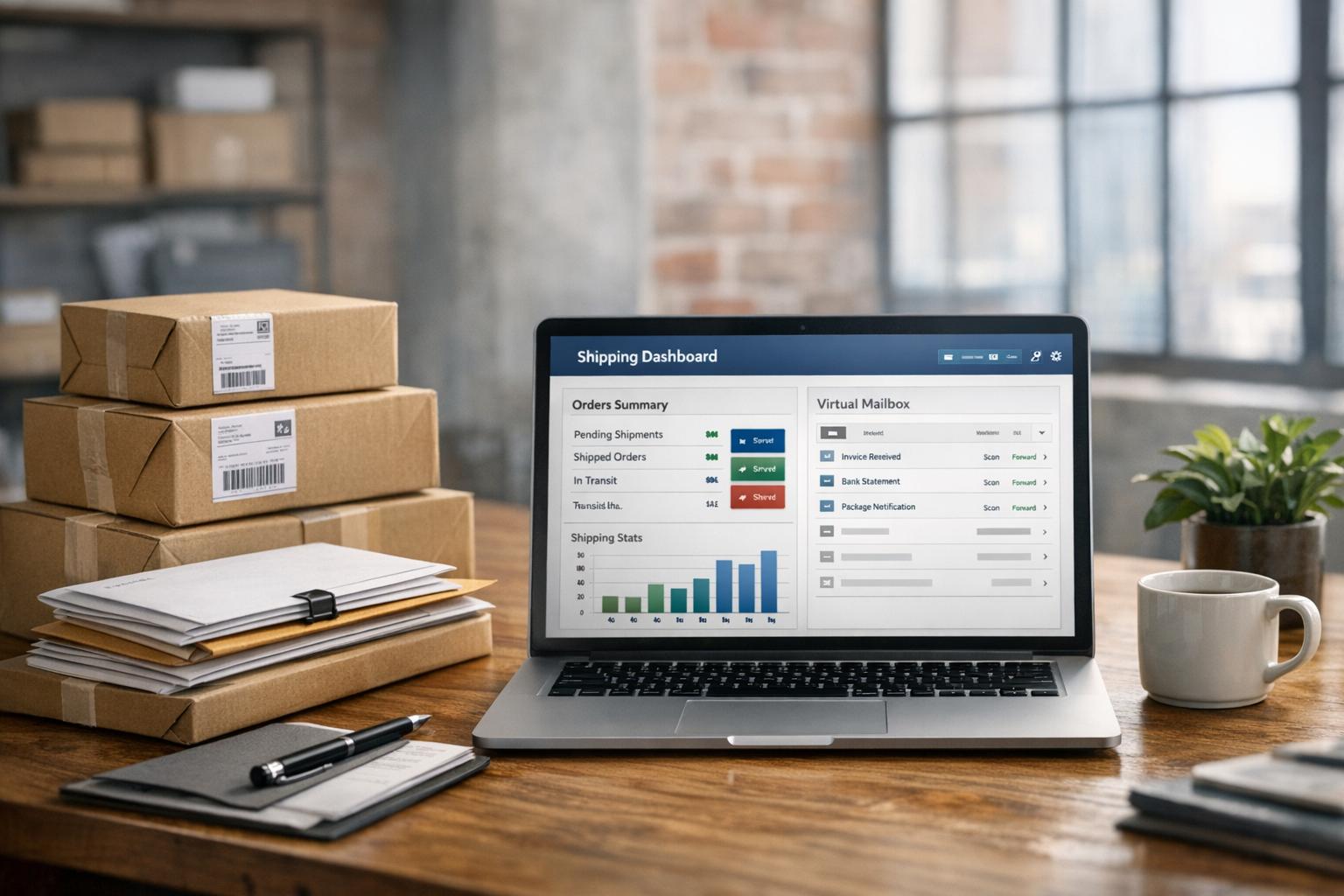
Modern virtual mail services often integrate digital management. For example, virtual mailbox providers (Canada-wide) market “digital mailboxes” that scan envelope images and full contents on demand [8]. Some companies offer smartphone apps to preview and approve shipments. Larger workspace firms may bundle complimentary amenities (e.g. co-working credits). We note that these services effectively merge physical mail with cloud storage, aligning with the broader trend toward paperless offices.
Legal and Regulatory Considerations
Corporate and Tax Registration Requirements
Canadian corporate law mandates a registered office address for every company. Both federal (Canada Business Corporations Act) and provincial (e.g. Québec’s Business Corporations Act, art.29) statutes require a physical street address – P.O. Boxes are explicitly forbidden [2]. The Québec Enterprise Register (REQ) demands a real address where documents may be served; failing to comply can threaten a company’s legal standing [1] [2]. For sole proprietors and individuals, the business address underpins key things like tax notices and even provincial health eligibility. Recent Québec reforms (Loi sur l’identité numérique, 2021) have tightened proof-of-address rules for all registrants.
In practice, this means a startup in Québec cannot list just “P.O. Box 345” as its official domicile. It must list either a location it owns/leases, or a bona fide virtual office address with real premises. Specialized legal analyses reinforce this: “virtual office addresses in Montréal are fully acceptable for registration, provided they are bona fide street addresses (not P.O. boxes) where mail can be received”. Importantly, the address must also reside in Québec for Québec-registered businesses.
It is permissible to use a rental virtual office or coworking address (even if the company never sets foot there), as long as the provider operates a real suite or mailbox services at that location. Authorities advise clients to avoid generic “mail-drop” hubs without dedicated space: some agencies and banks “blacklist” addresses serving hundreds of mailboxes.
Financial Compliance (Banks and CRA)
Business bank accounts, credit processing, and government filings enforce address verification. The Canada Revenue Agency (CRA) requires a street address that actually receives mail [3]. The CRA and banks routinely reject registrations or freeze accounts if the only proof of address is a shared mailbox or P.O. Box [2] [1]. As one case study illustrates, a Montréal tech startup found its CRA filings and bank account stalled when using a coworking address; the bank demanded a signed lease and utility bills proving real tenancy [1]. Only after subletting an actual office suite (and generating bills in the company’s name) were they able to open accounts and access grants [1].
Similarly, major Canadian banks (RBC, TD, Scotiabank, etc.) generally accept virtual office addresses for business accounts, but often require evidence that the address is legitimate (e.g. a lease, or that “hydro”/electric bill) [1]. Recent reports note that “banks in Montréal now routinely ask for leases or municipal tax bills to verify location” [1], as regulators crack down on front companies. Online banks (EQ Bank, Tangerine) and payment platforms (Stripe, Square, PayPal) tend to be more flexible but still review registration documents.
In summary, businesses using virtual or mailbox addresses should ensure supporting documentation (contracts, bills) exists, so they can satisfy financial institutions and tax authorities. A virtual office provider factsheet recommends carrying printed mail, signed contracts, and official company filings displaying the address when opening accounts.
Local Regulations and SEO Considerations
Beyond federal/provincial law, Montréal’s municipal rules can touch on addresses. For instance, certain city permits (business licenses, restaurant/QC health approvals) may require in-person proof of the declared address, making purely digital contracts insufficient [1]. Zoning bylaws may also restrict using a residential unit as a commercial seat, affecting home-based businesses.
From a marketing perspective, address choice impacts online visibility. A Google Business Profile (application formerly Google My Business) is crucial for customer-facing businesses. Google’s guidelines state that a business with a storefront must list an address where staff are present during business hours; a mere unstaffed virtual office does not qualify. Conversely, service-service businesses (plumbers, software consultants) can have a hidden address listing and need not provide one publicly. In practice, many virtual-office clients prefer coworking membership: with a physical desk in place, they can legitimately claim that address on Google.
Summary: Legal Fit of Each Option
-
P.O. Box: Not acceptable as a legal address for corporations [2]. Cannot be used for CRA/company filings. Good for confident mail receipt but not as a business front.
-
Private Mailbox: Generally acceptable for company registration, taxes, banking, and business correspondence [2]. It provides a street address. Care should be taken that the mailbox provider’s address is recognized (avoid unknown mail drops).
-
Virtual Office: Acceptable if the provider has real premises. Must ensure the address is a bona fide location; many Canadian banks now view standard virtual addresses (without evidence of occupancy) with scrutiny [1]. However, virtual offices fully satisfy registration and CRA requirements if documented properly.
Operational Features and Business Impact
Mail and Package Handling
All three services handle incoming mail, but with different levels of service:
-
P.O. Box (Canada Post): Only Canada Post deliveries. No parcel courier acceptance. Customers must physically retrieve mail from the post office box.
-
Private Mailbox: All mail and packages are accepted (Canada Post and private couriers) by the store staff. Many offer scanning/forwarding: for a fee, envelopes can be opened and contents scanned/uploaded or forwarded on demand.
-
Virtual Office: Premium mail handling. Often includes an assigned receptionist who collects mail throughout the day, stores it, scans envelopes (and often contents by request), and can forward or hold it per instructions. Some plans include periodic digital mail snapshots or a web portal.
Efficiency-wise, virtual and private solutions reduce trips to the post office. They also allow remote control: e.g. a business traveling abroad can log into a portal to see mail and choose actions. Canada Post’s own digital mail pilot aside, these third-party “digital mailbox” services (PostScanMail, iPostal) are increasingly popular [8].
Accessibility
- P.O. Box: Accessible only at post office locations, during office hours (some 24/7 access available at select facilities).
- Private Mailbox: Accessible at store hours (often longer than post office, including weekends in many cases). Some are open evenings.
- Virtual Office: Normally no direct public access to your personal mailbox (unless you rent co-working space time). Mail is collected by staff. You typically access mail via scanning or by scheduling pickup appointments.
Thus, private mailboxes are convenient for businesses needing frequent access; virtual offices suit those who prefer behind-the-scenes mail management.
Credibility and Professionalism
A business’s address affects its image. Studies show physical cues (address, office décor, etc.) create a “halo effect” on how clients view competence and stability. A prestigious downtown address signals “established” and instills trust, whereas a P.O. Box signals “non-physical presence” and may provoke skepticism. Many procurement officers refuse vendors with P.O. Box only addresses. Therefore, for businesses seeking client-facing credibility (consulting firms, retailers, tech firms courting investors), a professional street address is often worth the added cost.
Even among business addresses, subtle differences matter: a trendy Mile-End address may convey a tech-savvy startup vibe, whereas a Suite in a high-rise might read more corporate. Some coworking providers market prestigious addresses (Old Port, Golden Square Miles) as a selling point. Private mailboxes at brick-and-mortar storefronts tend to convey modest professionalism. All have more gravitas than listing a home apt or PO Box.
Privacy and Security
- Privacy: All three options protect home addresses. P.O. Boxes do not display renter identity publicly (Canada Post keeps owner info private). Private and virtual providers similarly keep your personal information out of public view. However, subscribers should check terms: some mailbox services may publish company names in directories.
- Security: P.O. Boxes and private mailboxes are locked. Virtual office mailrooms have controlled access. All are more secure than leaving packages unattended (common at home).
Case Study – “MapleMatrix” Startup
To illustrate practical implications, consider “MapleMatrix,” a hypothetical Montréal tech startup (based on a real account [1]). MapleMatrix incorporated with plans to use a well-known coworking company’s virtual address (with mail handling) to launch quickly. However, during bank and grant applications, they hit obstacles: CRA began rejecting their filings (since the chosen address was a coworking common space with hundreds of businesses) [1], and their bank froze the account pending proof of residence. The bank demanded a standard commercial lease and utility bills in MapleMatrix’s name as “proof of real presence” [1]. Faced with delay, the founders sublet a small one-room office in Griffintown and formalized a sublease (filing it under Québec’s Civil Code) [1]. They directed utilities to the company, updated every legal and financial record with the new address, and regained compliance. Within eight weeks of these steps, MapleMatrix successfully opened a business account and qualified for a provincial innovation grant [1].
This case underscores that while virtual addresses can ease mail handling, they may need to be backed by actual real estate documentation for formal compliance and bank KYC. It reflects broader trends: entrepreneurs who try to shortcut having a physical presence often run into administrative “paperasse” (bureaucracy) in Montréal [1].
Cost Analysis
Any decision should factor cost:
-
P.O. Box: From Canada Post’s published rates, a small box starts at $69 for 3 months (~$23/mo) [7] in urban Montréal. Annual subscriptions (~$276) are cheaper per month than 3-month plans. Medium/large boxes cost more. Overall, a reliable P.O. Box is under $40 per month even in downtown Montréal [7].
-
Private Mailbox: Commercial mailbox stores in Montréal offer monthly rentals roughly on par with or slightly above P.O. Boxes. As one survey noted, “UPS mailbox rentals range ~$10–30 for small boxes, $20–40 medium, $30–50 large per month” [4]. Another source lists a “business” size plan at $96 for 3 months ($32/mo) or $336 for 12 months ($28/mo) [4]. These prices confirm a typical range of $25–$40 per month for basic business box rentals. Additional services (scanning, shipping) often cost extra.
-
Virtual Mailbox Services: Purely digital mailbox providers (without receptionist) start around $50–$100 per month, which is higher than a private mailbox. They often include unlimited mail scanning and a dedicated address for subscribers.
-
Virtual Office (Full Service): Prices vary widely. Basic address-only plans might start at ~$10–40/mo, but full-service plans commonly range $175–$300+ per month. For example, coworking brands list basic mail-handling packages around $90/mo, and boutique operators charge $40/mo for address+mail, rising to $70–100 for premium locations. It is still significantly cheaper than leasing even a small office (which could be $500–1000+ monthly), especially since overhead (cleaning, utilities) is shared or avoided.
For context, Table 2 below summarizes monthly cost ranges for Montréal (late 2025). Actual prices depend on contract length and optional features.
| Service Type | Approx. Monthly Cost (Montréal) | Notes |
|---|---|---|
| P.O. Box (small urban) | $15 – $40 [7] | Canada Post; limits on package size |
| Private Mailbox (basic) | $25 – $50 [4] | UPS Store or similar; accepts all carriers |
| Virtual Mailbox (digital) | $50 – $100 | Address + online mail scan/forward |
| Virtual Office (basic address) | $30 – $70 | Low-tier domiciliation (address + minimal) |
| Virtual Office (full service) | $175 – $300+ | Includes receptionist, phone, meeting rooms |
Table 2: Typical monthly costs for various Montréal business address solutions (estimates from listed providers and industry surveys).
In summary, P.O. Boxes are cheapest but least functional; private mailboxes cost a modest premium; any option with mail scanning or receptionist jumps the price higher. Businesses should weigh the cost against needs for compliance, credibility, and convenience.
Case Studies and Examples
E-commerce Startup: A Montréal online retailer (e.g. a subscription box startup) may prefer a private mailbox. This allows acceptance of FedEx/UberEats/UPS deliveries, and the street address avoids privacy issues associated with home address printing on packages. The customer’s perspective sees an address like “Suite 301 – 87 Wellington O” which looks professional. The business can register using that address [2]. If they expect high mail volume, they might subscribe to plan with scanning for remote office days.
Consulting Firm: A financial consultant or law practice wanting a premium image might invest in a high-end virtual office. For instance, renting a Canadian Professional Address in downtown or Old Montréal, with real office hours, fax/scan services, and a dedicated receptionist. The extra $200–300/mo buys not just mail handling, but business center amenities. Client perception improves (address on Place Ville-Marie or McGill College reads established) and the firm meets client's expectations for a physical address.
Tech Entrepreneur: Many digital nomads or remote tech founders choose flexible solutions. They often use virtual offices for registration and banking, and configure internet-based call answering. A backup physical mailbox (like UPS) for packages ensures they don’t miss parcels at home. They must keep in mind CRA and bank rules: for major transactions (like venture funding), they may need to show a lease or utility bills as MapleMatrix did.
Implications and Future Directions
The landscape of business mail solutions is evolving. As digital communication reduces traditional mail, physical mail services are differentiating via technology. Digital mail scanning services are proliferating (e.g. Iron Mountain’s Digital Mail services or start-ups allowing any mailbox to be viewed online) [8]. Companies can manage mail on the go with apps – a natural fit for remote-heavy industries.
Hybrid and remote work will sustain demand for virtual offices. The JobEase study shows nearly one-third of workers in Montréal utilize remote/hybrid models [6], and many small teams no longer need dedicated offices. Virtual business addresses provide a low-cost way to maintain a “HQ.” Major coworking operators (Regus, Spaces, WeWork) report continued growth in virtual membership options [9] [10].
Regulatory tightening: Québec and Canada could further tighten address verification (e.g. requiring digital identity or biometric links). Already, Québec’s enterprise registry reforms (2023) emphasize valid residential proofs, indirectly affecting businesses. Banks’ anti-money-laundering pressure may cause greater scrutiny of mail-drop addresses. Businesses should monitor these trends to avoid future compliance gaps.
Sustainability: There’s a push for greener processes. Mail consolidation (bundling, scanning instead of driving to PO) has environmental benefits. Some virtual offices highlight reduced paper usage and carbon footprint. In future, expect more integration of mail and cloud (e.g., Amazon-like “virtual mailbox” for documents).
Neighborhood Branding: Montréal’s diverse boroughs each carry cachet – from Vieux-Montréal to Griffintown’s tech corridor. Companies may choose addresses strategically: a creative agency might tout a Mile-End address, while a finance startup sticks to downtown. Providers already market this: some offer “prestigious address” packages explicitly for branding.
Conclusion
Choosing between a P.O. Box, private mailbox, or virtual office address is not merely a cost decision; it implicates legal compliance, operational needs, and brand identity. In Montréal’s context – with its bilingual culture, strict regulations, and burgeoning innovation scene – the stakes are clear: a P.O. Box is cheap and secure but legally insufficient and less professional, a private mailbox is affordable and legally safe while offering convenience and moderate credibility, and a virtual office is more costly but delivers full compliance and maximum professionalism.
Entrepreneurs and established firms alike must weigh these trade-offs. For a Toronto or Vancouver business, the calculus might differ marginally; in Québec, the legal necessity of a Québec street address tilts many companies toward commercial mailbox or virtual addresses. Across all scenarios, our analysis shows that having a real, monitored business address is crucial for legal soundness and customer trust [2].
This report has synthesized regulatory guidelines, provider data, and expert commentary to equip Montréal businesses with an informed choice. As mail technology and work styles evolve, these solutions will adapt (e.g. increasingly digitalized mail, AI-assisted mail sorting). Businesses should revisit their mail strategy periodically. For now, executives should ensure their choice aligns with both current legal rules (CRA, REQ, banks) and strategic priorities (cost control, image, convenience). With proper due diligence, a Montréal company can safely navigate business filings with a virtual or rented address, stay logistically effective, and present the best face to the world – without turning its home into an office or sacrificing its professionalism.
References: All data and quotations above are drawn from authoritative Canadian sources, including Canada Post publications [7] [5], regulatory guidance from government bodies [2] [1], and industry analyses. Inline citations document the source of each key point.
External Sources (10)
About
2727 Coworking
Find a practical home for your work at 2727 Coworking in Montreal. Explore private offices, day workspaces and meeting rooms, plus business-address and virtual-mailbox services for your company.
2727 Coworking is a Montreal workspace and business-address provider. We serve people who need a place to focus, meet, run a small business or establish a professional mailing presence. Our website offers English and French information about workspace options and services, alongside educational resources for operating a business in Canada.
A workspace that fits the day
Our workspace options include private offices, day passes and desks, and a conference room. These formats help individuals and teams compare a dedicated office with more flexible ways to work or hold a meeting. Prospective members can explore the virtual tour, review current pricing and book a visit before choosing a workspace.
Business addresses and mail
2727 Coworking provides business-address and virtual-mailbox services. Our resources explain the documents and practical questions involved, including guidance for people outside Canada. Service eligibility, included features, availability and access arrangements should be confirmed on the applicable service page or with our team.
Resources for Canadian small businesses
We publish guides, research and planning tools about workspace decisions, business addresses and starting a business in Canada. Our incorporation research includes information for people inside Canada and abroad, with jurisdiction-specific material to help readers identify the next questions to investigate. These educational resources complement our workspace and address services; they are not individualized legal, tax or immigration advice.
Visit or contact 2727 Coworking
Explore private offices, day passes and desks, the conference room, business addresses and virtual mailboxes. Book a visit or contact the team to discuss your needs.
A business address alone does not establish tax residence, immigration status, banking approval or eligibility for a government program.
Disclaimer
This document is provided for informational purposes only. No representations or warranties are made regarding the accuracy, completeness, or reliability of its contents. Any use of this information is at your own risk. 2727 Coworking shall not be liable for any damages arising from the use of this document. This content was generated with assistance from artificial intelligence tools, which may contain errors or inaccuracies. Readers should verify critical information independently. All product names, trademarks, and registered trademarks mentioned are property of their respective owners and are used for identification purposes only. Use of these names does not imply endorsement. This document does not constitute professional or legal advice. For specific guidance related to your needs, please consult qualified professionals.