2727 Coworking Article
Montreal Spring 2026 Events: Design Week & Conferences
Inside this article
Executive Summary
Montreal in spring 2026 is set to showcase a rich array of events blending design, culture, and professional gatherings. The city’s first Montréal Design Week (April 28–May 7, 2026) will unite designers, architects, manufacturers and the public in ten days of exhibitions, conferences and festivities, consolidating Montreal’s scattered design events under one banner [1] [2]. At the same time, the annual Terrasse Season—spanning roughly May through September—will transform Montreal’s streets and rooftops into vibrant outdoor dining and social venues, a hallmark of the city’s summer culture [3].
For business and technical professionals, spring 2026 brings numerous high-profile conferences and trade shows in Montreal. At the Palais des congrès and other venues, events ranging from international scholarly congresses (e.g. the American Comparative Literature Association and World Tunnel Congress) to large trade fairs (e.g. the Salon national de l’habitation) will convene thousands of attendees across sectors [4] [5]. These gatherings reinforce Montreal’s status as a leading North American city for meetings and conventions: for nine straight years Montreal has ranked #1 in North America for international association events (ICCA), and it leads the Americas for international meetings (UIA) for eight years running [6]. In 2025, Montreal hosted 477 professional events, attracting over one million business visitors and generating about $438 million in local economic spinoff [6]. Spring 2026’s agenda will build on this momentum with events targeting design, health, science, technology, and various professional communities.
This report examines Montreal’s Spring 2026 in depth, covering (1) the background and vision of Montréal Design Week and its expected impact on the local design ecosystem and global profile; (2) the cultural tradition and economic significance of Montreal’s Terrasse Season; and (3) key events and conferences in spring 2026 that are of interest to professionals across fields. Through data analysis, historical context, and case illustrations, the report evaluates how these events fit into Montreal’s broader strategy as a UNESCO-designated City of Design and a major business-tourism hub. We draw on official sources, industry reports, and expert commentary to provide evidence-based insights on attendance projections, economic contributions, and strategic objectives. The analysis also considers future implications for Montreal’s creative and events sectors, as the city leverages spring 2026 to bolster innovation, cultural vibrancy, and economic growth.
Introduction and Background
Montreal has long cultivated a strong design and innovation identity. In 2006 the city earned the UNESCO Creative City of Design designation, the only Canadian city in this network [7] [8]. This reflected Montreal’s rich architectural heritage, its fashion and graphic design industries, and its vibrant urban planning tradition [7]. Indeed, Montreal declares itself “definitely a ‘city of designers’” with over 25,000 professionals employed in various design fields – accounting for roughly 34% of the economic impact of Montreal’s cultural sector [8]. The municipal government supports design through dedicated initiatives (it established the first-ever municipal Office of the Design Commissioner in 1991) [8] and by organizing design competitions, grants, and promotional events. Top cultural institutions like the Canadian Centre for Architecture and the Montréal Museum of Fine Arts also underscore the city’s commitment to celebrating art and architecture [7] [8].
In parallel, Montreal has built a reputation as a major international hub for business and professional tourism. The city’s central location, bilingual culture and world-class convention facilities have helped it secure numerous large-scale conferences. For example, the Union of International Associations (UIA) has ranked Montreal as the top city in the Americas for international meetings for nine consecutive years, ahead of major competitors like Toronto and Mexico City, highlighting Montreal’s leadership in attracting global association events [4] [6]. The Palais des congrès de Montréal (Montreal Convention Centre) regularly handles a heavy calendar of congresses and expos. In 2025, the Palais hosted 281 events and the city as a whole had 477 business events drawing over 1 million visitors [6]. Tourisme Montréal and the Palais project continued strength into 2026, with several large conferences already confirmed and significant economic impact expected [6].
Montreal’s spring season combines these civic strengths in design, culture, and business. By late April, melting snow and milder weather encourage outdoor life and gatherings; cultural institutions ramp up new exhibitions; and the city’s event planners stage numerous trade shows and professional conferences. In summary, “Montreal Design Week celebrates design in all its forms – architecture, interior design, makers, shops, and creators, whether emerging or established” [2]. Meanwhile, Montrealers eagerly anticipate the terrasse season: the time when cafés and restaurants roll out tables and chairs onto sidewalks and rooftops, turning the city’s public spaces into lively patios for dining, drinks, and cultural activity [3].
This report delves into these dimensions of Montreal’s spring 2026, with sections that set historical and cultural context, present data-driven analyses (visitation and economic statistics), and highlight specific events as case studies. We discuss perspectives spanning urban policy, tourism marketing, and industry development, aiming to provide a comprehensive overview that informs professionals in design, hospitality, event planning and related industries. All claims and data are backed by credible sources, including official tourism and UNESCO publications, industry reports, and news accounts of relevant events.
Montréal Design Week 2026
Origins and Objectives
After two decades as a UNESCO City of Design, Montreal is finally launching a formal Design Week in spring 2026 [1]. The concept was initiated by Archi-Design Québec, in collaboration with Index-Design and the city’s design bureau. It consolidates a number of prior initiatives: notably, Complètement Design, a long-running biennial trade fair for architects and designers, will serve as the anchor show under the new banner [2] [1]. From April 28 to May 7, 2026, Montreal will “come alive to the rhythm of architecture and design” across more than fifty venues [2] [1]. For ten days, the program will include:
- Index-Design Trade Show (Salon Index-Design): A one-day professional salon on April 30, 2026 at the Grand Quay of the Port of Montreal, featuring 200+ exhibitors and suppliers of design materials and furnishings [2] [1]. (Index-Design, formerly Complètement Design, attracts architects and interiors professionals.)
- Conferences and Workshops: A full day of lectures on April 29 at the Montreal Museum of Fine Arts, covering topics like sustainable design, urban innovation, and materials research [2] [1].
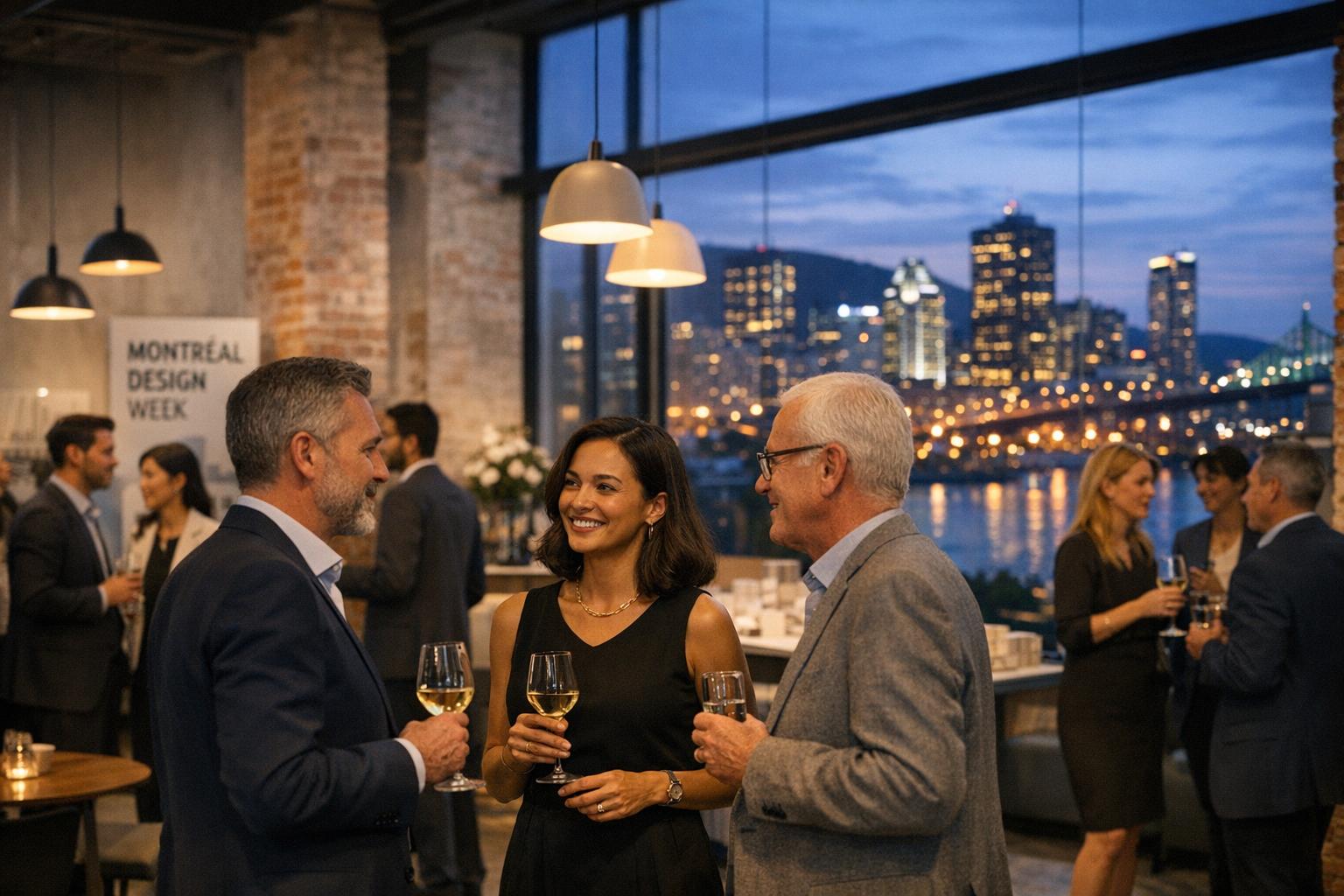
- Professional Networking Sessions: Industry mix-and-mingle events, panels and VIP gatherings for designers, architects, and manufacturers.
- Public Exhibitions and Guided Tours: Official “design destinations” across the city, including gallery shows, open-studio tours, and neighborhood design walks. Local shops, studios and institutions will host pop-up installations to engage the general public [2].
- Opening Gala and Special Guests: The week’s kickoff includes a Grand Opening (Apr 28) and special presentations. For example, British furniture designer Bethan Laura Wood will attend as a guest of honor, supported by the City of Montreal [1].
Stakeholders emphasize that Montréal Design Week is intended to elevate the city’s global profile in design. Index-Design’s CEO Arnaud Granata noted that by scheduling between Milan and New York design weeks, Montreal “position[s] the city as a legitimate stop on the international design circuit” [1]. Montreal’s Chief Design Commissioner Patrick Marmen framed the week as “a major gathering for the city’s design ecosystem,” aligning with the city’s broader strategy to boost creative industries and innovation [1]. Importantly, the City of Montreal provided financial support and waived fees for fifteen local initiatives to be incorporated into the official program at no cost [1], signaling municipal commitment to grassroots designer participation.
Finally, Montreal’s design week is launching in a climate of international opportunity. Some Canadian designers have recently pulled back from U.S. trade shows (due to trade tensions and costs), making Montreal’s native event particularly timely [1]. By unifying scattered events—formerly fragmented between institutions like DesignTO fairs or local architecture tours—this first-ever Montréal Design Week aims to create critical mass and media attention. The event thus serves both as a celebration of Montreal’s design heritage and as a platform to generate new business partnerships and export opportunities for local firms.
Historical Context and Legacy
Montreal’s design ecosystem has rich antecedents. Since the 1970s and 80s, dozens of exhibitions, festivals and fairs have highlighted local architecture and product design. The Canadian Centre for Architecture (founded 1979) and institutions like Musée des beaux-arts de Montréal established Montreal’s reputation for design culture [7]. Fashion and graphic design studios, along with industrial design firms, grew locally. Over time, authorities launched periodic events: for example, the M.A.D. Festival (Mode/Art/Design) once integrated runway shows and storefront installations representing Montreal’s European-influenced fashion scene [7].
More structured initiatives emerged in the 2000s. In 2006-07, the city’s Bureau du design organized Architecture Day, and the Design Montréal organization took charge of local design promotion. The branding of the city as a UNESCO Creative City of Design in 2006 spotlighted Montreal’s creative sector [7]. Biennial events like Mode Couture and exhibitions at the Design Centre (UQAM) also played roles. Yet until 2026 there was no single, unified design week akin to New York Design Week or Milan Salone del Mobile. Instead, events like Expo Design (started 2016) and Complètement Design (1995–2025) targeted professionals on a smaller scale.
The decision to start Montreal Design Week follows trends seen in other UNESCO design cities. After Milan (Milan Design Week/Salone, since 1961), Berlin (since 1998) and Paris initiated design week in the mid-2010s, the coordinating effect of a flagship week has helped concentrate attention. Indeed, Granata explicitly compares Montreal’s forthcoming week to those in Milan and Paris [1]. In this context, Montréal Design Week can be seen as a strategic milestone two decades after the UNESCO designation: it aims not only to honor design culture but to attract talent and business. Quebec’s tourism board and Montreal’s creative strategy both emphasize that fostering design innovation is key to economic development. The UNESCO page notes several city measures, such as improving access to public design projects and awarding grants, to support this sector [8]. The design week thus fits into a long-term urban policy of leveraging design as a “driving force for urban development” [7].
Montréal Design Week 2026: Program and Stakeholders
Main Events and Venues
The core of Montreal Design Week 2026 revolves around a few high-profile anchor events:
-
Salon Index-Design (Trade Show) – Held April 30, 2026, at the Grand Quay of the Port of Montreal. This trade fair will occupy the vast waterfront pavilion with 200+ booths featuring materials (finishes, lighting, hardware) and services. It is expressly "for professionals" in architecture and interior design, and is expected to draw several thousand trade attendees. According to promotional materials, it is where “you’ll find the very best design products and inspiration under one roof” [2]. Index-Design has 20 years of history as a trade event, and as part of the new week it will double as Montreal’s first comprehensive exposé of local design industry capabilities.
-
Index-Design Conference Day – On April 29, 2026, the I-D Conference convenes at the Montreal Museum of Fine Arts. It features a rich schedule of keynote talks and panels, with topics like sustainable architecture, inclusive design practice, and digital fabrication. While the official site has not fully released the program, it promises “conferences and events designed to expand both your network and your expertise” [9] [2]. Presenters will likely include celebrated architects, design entrepreneurs, and thought leaders. The museum’s hall, adjacent to the downtown’s Quartier des Spectacles, provides a prominent backdrop for this professional gathering.
-
Official Design Circuit (Open Events) – Throughout Apr 28–May 7, over 50 open-to-public exhibitions, open houses and installations will punctuate neighborhoods across Montreal. For example, many local architecture firms have volunteered to open their studios. Certain galleries and design shops will roll out special exhibits under the Design Week logo. Outdoor installations (light art, furniture exhibits) are planned in public squares. Montreal’s “creative discoveries” circuit invites the public and amateurs to experience design in situ [9] [2]. These open venues, while not by themselves “professional events,” serve to educate the broader community and generate excitement around the profession.
Financial and logistical support was a key element in organizing these activities. The City of Montreal provided grants and logistical aid (e.g. street closures, festival permits) to encourage widespread participation. Fifteen local initiatives are being incorporated into the official program at no cost, with sponsorship by municipal funds [1]. This civic backing underscores how Montreal is aligning the design week with its economic development plans, viewing design entrepreneurship as a driver of innovation and city branding.
Professional Focus and Outcomes
For professional designers and firms, Montreal Design Week offers concrete networking and business opportunities. The trade show alone promises business-to-business matchmaking: suppliers (building materials, lighting, furniture) get direct access to Quebec’s top specifiers. The conferences add continuing education credits and trend insights. Organizers explicitly frame the week as a moment to “expand your network and your expertise” [9]. Anecdotal accounts suggest that many Montreal architects have long awaited one coordinated annual summit to meet peers, see innovations, and showcase local talent.
Because Montreal is one of only a few North American cities with a formal design week, international attendees are expected. The Main article notes that design professionals (e.g. from Toronto) are actively seeking alternatives to U.S. shows, which may broaden Montreal’s pull [1]. In fact, Montreal’s timing was chosen strategically between European and U.S. fairs, aiming to capture global attention. The presence of foreign dignitaries like British designer Bethan Laura Wood illustrates this intent [1].
Urban economic studies indicate that creative industries fuel innovation: famously, Montreal’s cultural and design clusters overlap with its tech (e.g. gaming) and manufacturing sectors. By convening design professionals, the week could stimulate cross-sector partnerships (e.g. designers working with tech firms on smart city projects). Moreover, design week coincides with Montreal’s bid to host more events and develop industry corridors. The CEO of the Palais des congrès has emphasized that design and architecture clients represent key sectors, given Montreal’s strength in film, AI (Scale AI’s ALL IN), and aerospace. In that sense, increasing the city’s profile in design enhances its overall appeal to creative companies.
Finally, one must consider measurable impact. While exact attendance figures for Design Week 2026 will only be known post-event, comparisons suggest it could rival other emerging design weeks. For context, a 2024 report noted that Hong Kong’s Business of Design Week drew over 15,000 participants (both trade and public) over 5 days [10]. Montreal’s smaller population means numbers will be smaller, but even drawing a few thousand specialized attendees would be significant here. The event also provides a springboard for Montreal-based designers to pitch products to national chains or U.S. buyers who attend. In all, Montréal Design Week can be seen as a strategic investment: even conservative estimates of growth (e.g. 10-15% more design-related tourism) could translate to millions of dollars, given that in 2025 Montreal’s total business events spent ~$438M [6].
Comparative Perspective: Montreal Among Global Design Capitals
It is instructive to compare Montreal’s new Design Week to other major design events. Milan Design Week (Salone del Mobile) is the world’s largest, with over 400,000 visitors yearly for its April fairs. New York Design Week (NYCxDesign) runs for nine days in early May, showcasing hundreds of events and drawing thousands of international attendees. Montreal’s inaugural week (10 days) is more modest, but its strategy is to emulate what works: aligning with the global calendar, leveraging local institutions (museum, UNESCO network partners), and highlighting sustainability (a thematic priority in its communications). For example, Montreal’s day-long conference includes discussions likely echoing global design trends such as climate-resilient building and inclusive urban planning.
Montreal’s regionally focused scope also distinguishes it. Unlike Stockholm or Copenhagen’s design weeks that emphasize Scandinavian industry, Montreal aims to highlight French-Canadian design identity — a dialectic of European sensibilities and North American innovation. Observers note that Montreal’s design aesthetic (culturally influenced by both France and American modernism) is unique; bringing it to the forefront could attract both francophone and anglophone markets. Additionally, as Montreal has a strong industrial manufacturing base (furniture, kitchen cabinets, etc.), the week could integrate local producers, further differentiating it from fashion-oriented or tech-focused design festivals elsewhere.
Finally, the success of the first Design Week will be a valuable case study. Key metrics will include not only attendance but also business deals closed, international media coverage, and the continuance of partnerships formed. If Montreal can sustain the event annually, it may climb to join the ranks of UNESCO design cities that have well-established weeks (e.g. Beijing, Shenzhen). The industry will be watching whether Montreal’s Design Week catalyzes new exports in furniture, lighting, or software tools—products that align with Quebec’s industrial strategy.
Terrasse Season in Montreal
Cultural Significance of Terrace Season
“Terrace season” (saison des terrasses) is a beloved Montreal tradition. Locals eagerly await the moment when sidewalks, courtyards, and rooftops burst to life with café tables and cultural ambiance. Unlike milder climates where outdoor dining is year-round, in Montreal terraces represent a celebratory reward after a long winter. As one terrace blog poetically notes, every spring snowfall scraped off car windows is “the bill” paid, and the terrace is how you collect [11]. Montrealers often claim that weather permitting, virtually the entire city takes advantage of patio dining; on any warm May day the sidewalks of Plateau or downtown can be filled with patrons enjoying an early-déjeuner or coffee al fresco [11].
The Terrasse Season typically unofficially begins around Victoria Day in late May, when daytime highs consistently rise above 15°C. Most outdoor cafes aim to open their patios on that long weekend (the third Monday of May) [11]. However, warm snaps in April can accelerate this. For example, restaurants on Saint-Laurent Boulevard sometimes roll out tables once daytime temperatures are reliably in the 15–20°C range. A quantitative study of opening dates is lacking, but social media and local blogs document early openings. The TerrasseSeason.com site advertises over 190 terrace venues across Montreal, filtering by neighborhood, cuisine, pet-friendliness and coverage [12], indicating the scale of the phenomenon.
Magazines and guides underscore how terraces define Montreal summer. Expedition Spots and Montreal en Lumière festival often highlight the best patio bars, confirming the concept’s cultural cachet. For example, downtown hotspots like Terrasse William Gray or Terrasse Nelligan are consistently listed among Montreal’s “must-visit seasonal terraces” [3]. These form part of a broader city campaign: local federations coined "Terrasse Season" to market summer tourism, encouraging residents and visitors to seek out these open-air venues. Tourism Montréal also lists curated terrace tours (e.g. “Hidden patios of Montreal” [13]) during its promotional season.
Beyond casual dining, terraces often become micro-cultural plazas. Live music, DJ sets, and artworks are common. The RestoMontreal travel site notes that Montreal’s summer terraces become “gathering places where music, cultural events, and delightful summer dishes come together to create a unique atmosphere” [3]. For instance, place Jacques-Cartier in Old Montreal hosts street musicians and magicians on terraces, while the Canal de Lachine area known as Canal Lounge (a large pop-up bar facility) arranges weekly concerts and themed nights. Throughout the city, some terraces feature open mics, poetry slams or outdoor yoga at dawn. These activities blur the line between restaurant, bar and event venue, effectively crowd-sourcing public festivals.
Economic and Business Impact
From a business perspective, terrace season is critical for Montreal’s hospitality sector. The Quebec restaurant and bar industry posts its highest revenues in summer months, as diners flock outdoors. While specific Montreal-only figures are scarce, province-level data helps illustrate the stakes. A 2023 industry report shows Quebec’s food service sector employed about 187,400 people (5.2% of provincial employment) and generated $21.3 billion in revenue in 2023 [14]. With approximately half of Canada’s restaurant revenue coming in May–September, a strong terrace season can significantly boost a restaurant’s annual performance. Contributions include lunch and brunch business, patio-only events (e.g. Sunday jazz brunches), and longer evening volumes.
Terraces also support seasonal employment. Province-wide, 68% of restaurant workers are part-time [14], indicating reliance on flexible staff. Many of these workers are young people or students, who predominantly work during the terrace-heavy summer months. A weak terrace season (due to cold or rain) can thus trigger broader staffing and financial difficulties. In a pandemic-era study, Montreal cafe owners reported that each week of poor weather could slash hundreds of thousands in lost sales across the city’s patios.
Furthermore, terrace permit revenues and local commerce benefit. The City of Montreal issues hundreds of summer permits allowing restaurants to place furniture in the public right-of-way. Municipal fees from these permits and the related alcohol licenses add to city coffers. Adjacent businesses also get foot traffic; a filled sidewalk extends dwell time, which correlates with higher retail purchases. For example, shops along St-Laurent or St-Denis report that busy patio scenes bring customers who might otherwise skip the area.
The Terrace Landscape: Notable Venues
Montreal’s sheer density of patio venues is remarkable. According to the TerrasseSeason directory [12], there are roughly 190 unique spots across all boroughs, from casual sidewalk cafés to luxury hotel rooftops. We highlight a representative sample to illustrate the variety (Table 1). These examples were selected for reputation, ambiance or centrality:
| Terrace Name | Location/Neighborhood | Type | Cuisine/Notes |
|---|---|---|---|
| Terrasse Nelligan | Old Montreal (Vieux-Mtl) | Rooftop Bar | Contemporary (80+ seats); iconic views of St. Lawrence River and old port [12]. Famous for brunch mimosas and retractable awnings. Large, chic atmosphere. |
| Terrasse William Gray | Old Montreal | Rooftop Bar | Contemporary; 8th-floor rooftop of Hotel William Gray. Panoramic views of city and river. Firepits available. Winner of Cult MTL’s Best of MTL 2025 reader poll [12]. |
| Terrasse sur l’Auberge | Old Montreal | Rooftop Grill | Contemporary French; 5th-floor of Auberge du Vieux-Port. 2025 menu featured bison tartare, grilled octopus, gourmet poke bowls [12]. Cozy upscale setting. |
| Perché | Old Montreal | Rooftop Terrace | Californian/Mediterranean; 4th-floor of Hotel William Gray. West Coast-inspired mezze plates. Lush plant decor, intimate vibe [12]. |
| Village au Pied-du-Courant | Centre-Sud (Riverfront) | Outdoor Pop-up Bar | None (bar foods, beer); Massive riverside beer garden open summer only. Known for DIY food trailers, backyard games, live music. Iconic communal summer hangout. |
| Canal Lounge | Ville-Marie (West) | Outdoor Beer Garden | North Lachine Canal; large seasonal beer garden with food trucks. Dancing under lights, dj sets nightly. (From RestoMontreal list; scenic chill setting.) |
| Terrasse Ciel Rose | Plateau-Mont-Royal | Rooftop Terrace | Bistro style; offers casual Quebec cuisine. Cozier scale, with indoor/outdoor flexibility. (Multiple locations, esp. popular for breakfasts.) |
Table 1. Examples of notable terraces in Montreal for 2026. (Sources: Terrasse Season directory and local media reviews [12] [3].)
These entries illustrate the spectrum: lavish hotel rooftops (Nelligan, William Gray) sit next to vibrant beer-gardens and local hangouts (Village au Pied-du-Courant, Canal Lounge). New professional events sometimes even use terraces. For instance, conference attendees often meet informally during breaks on patio decks at convention hotels. Some symposiumes (like a tech meetup can host an evening “patio party” at the hotel roof if weather permits).
Studying the extension of terrace season shows interesting patterns. Anecdotally, the “real” terrace season is often described as June through September [11]. May openings can be tentative, and heated tents extend the season into late October in warm years. Montreal media occasionally notes anomalies: e.g., an JDM (Journal de Montréal) report in October 2023 highlighted that unusually warm fall days kept many terraces busy long after Labour Day [15].
Implications of Terrace Season
For professionals in hospitality and urban planning, terrace season underscores the need for adaptable business strategies. Restaurants invest in patio equipment and seasonal hires, betting on heavy summer traffic that might make or break annual profitability. Chefs often command special menus for outdoor dining (lighter fare, chilled wines). Effective terrace operations require contingency plans for rain or sudden cold fronts (some use infrared heaters and securable awnings).
From a city policy perspective, terraces serve as semi-public spaces. The municipality must balance encouraging them with ensuring pedestrian flow and noise rules. In recent years Montreal has experimented with varying terrace footprints and permitting models to maximize sidewalk life. Post-pandemic, temporary pedestrianization projects (like pop-up shared streets) have also spilled over into increased terrace accommodation.
Culturally, terrace season contributes to Montreal’s branding as a lively, social city. Tourism brochures highlight the dining experience as a central attraction. Future strategies (e.g., Plan de développement économique Montréal 2025) may increasingly tie the restaurant economy to cultural tourism metrics. Energy concerns also play a role: outdoor dining reduces indoor heating/AC usage during comfortable fall/spring days, which has sustainability benefits. That said, businesses also adapt with eco-friendly furniture (wood, recycled plastic) and green roofs in some cases.
Academically, one could frame Montreal’s terrace culture within placemaking theory. Scholars note that vibrant ground-level activities (like cafes spilling into streets) greatly enhance urban vitality and safety [3]. Montreal illustrates Jane Jacobs’ notion of “eyes on the street,” where self-regulated public life (people dining outdoors) increases neighborhood security and community cohesion. In this sense, terrace season is not only a commercial asset but a social good—fostering encounters across cultures and ages. Festival organizers sometimes leverage terraces as impromptu venues (e.g. acoustic sets for Francofolies at select patios).
In sum, terrace season is deeply woven into Montreal’s identity. The professional takeaway is that an excellent terrace season both reflects and fuels economic health in hospitality, promotes authentic urban experience, and provides informal networking spaces. For Spring 2026, a strong terrace season will perfectly buttress the energy generated by Design Week and professional conferences, as visitors and locals alike relax in the warm evening air.
Major Events and Conferences for Professionals (Spring 2026)
Montreal as a Conferences Hub
Montreal’s consistent ranking as a meeting city translates to a busy spring 2026 calendar of conferences across disciplines. As reported by official sources, the Palais des congrès de Montréal and Tourisme Montréal projected strong business-tourism results through 2025 and into 2026. In 2025, Montreal hosted 477 professional events (conferences, congresses, trade shows), drawing over 1,000,000 delegates and generating an estimated $438 million in economic spinoff [6]. Despite a slight drop in event count versus 2024, the economic impact grew by $43M, indicating successful targeting of larger, higher-value conventions [6].
Montreal also maintained global leadership: for the ninth consecutive year it was the No. 1 destination in North America for international association conferences (ICCA ranking), and it led the entire Americas (UIA ranking) for the eighth straight year [6]. Such credentials attract association organizers. Cue conferences in Spring 2026: according to a major events calendar, over a dozen international congresses are slated for March–June. We summarize the most pertinent examples (with details in Table 2):
-
American Comparative Literature Association (ACLA) Annual Conference – Feb 26–Mar 1, 2026〔Palais des congrès〕. This significant academic conference will bring ~2,500 scholars of literature and culture to Montreal for seminars and symposia [4]. Organizers emphasize its international draw and multi-day engagement. (Attendees: 2,500; Venue: Palais des congrès [4].)
-
ADEA (American Dental Education Association) Annual Meeting – Mar 19–22, 2026〔Palais des congrès〕. A major global dentistry education conference, with ~1,800 attendees expected [4]. Agenda covers innovation in dental education, equity, and tech. It attracts deans, researchers and students worldwide.
-
PMI-Montréal Symposium 2026 – Mar 11–12, 2026. Hosted by Project Management Institute Montreal, this 16th edition is “the largest gathering of project managers in Québec” [16]. Featuring tracks on AI-enabled project execution, inclusive leadership and governance, it brings together several hundred management professionals. (Exact attendance is not public, but it is the main francophone PM event in Quebec.)
-
Salon National de l’Habitation (National Home Show) – Mar 12–15, 2026〔Palais des congrès〕. A large consumer exhibition on home design, renovation, and furnishings [5]. It draws tens of thousands of homeowners and also designers and architects scouting products. (Organizer: Marketplace Events LLC [5].)
-
Expo Manger Santé et Vivre Vert (Health & Green Living Expo) – Mar 20–22, 2026〔Palais des congrès〕. A B2C expo featuring sustainable and healthy living products. Although consumer-oriented, it involves many professional vendors and industry speakers (attendees several thousand) [5].
-
World Tunnel Congress (WTC 2026) – May 16–21, 2026. Hosted by the Int’l Tunnelling Association in Montreal [4]. This niche but important engineering conference focuses on underground infrastructure innovation. It expects ~2,000 interventional engineering professionals to participate [4]. (Venue: Palais des congrès.)
-
Society for Cardiovascular Angiography and Interventions (SCAI) 2026 Scientific Sessions – Apr 23–26, 2026〔Palais des congrès〕. A key medical conference for interventional cardiologists [4], bridging cutting-edge research and practice. The organizing body anticipates ~2,000 attendees [4].
-
American Society for Human Genetics Annual Meeting (ASHG 2026) – June 2026 (dates TBA). A major genetics conference drawing ~6,000 researchers globally. Montreal’s biotech community and university coincide, e.g., local genomics startups often exhibit.
-
IEEE Power & Energy Society General Meeting 2026 – July 19–24, 2026〔Palais des congrès〕. A global engineering conference with theme “Powering the Digital Era,” expecting ~3,500 power engineers and academics, focusing on grid resilience and AI in utilities [4]. (This falls in early summer.)
-
IMLB (International Meeting on Lithium Batteries) 2026 – June 14–19, 2026. Held at Palais des congrès, it is a leading battery science and technology conference [4], attracting ~1,650 researchers and industry experts on electric vehicles, energy storage and recycling.
-
Other conferences – World Powder Metallurgy Congress (Jun 24–29, 2026, ~1,500 attendees [4]), Goldschmidt Geochemistry (Jul 12–17, 2026, ~3,000 attendees [6]), ISSCR Stem Cell Meetings (July 6–11, 2026, ~4,000 attendees) illustrate the depth of Montreal’s spring/summer calendar.
Beyond these, Montreal will also host specialty summits (e.g. in robotics, AI, design computing) and regional trade events (such as the Montreal Tire & Battery Show in April, or industry association conventions). Collectively, professionals in science, technology, design, education and business will find Montreal a hub of activity.
Networking and Business Spots
Between sessions, professionals often seek venues for informal meetings and networking. Montreal’s downtown core is well-equipped: many hotels and cafes boast terraces or patios for small-group lunches, and several coworking or business centers organize off-hour “coffee & connect” events. For example, the Palais des congrès has partnered with the local startup incubator Notman House to host “Montreal Mornings” breakfasts in May, targeting tech entrepreneurs who may be in town for design or AI events.
Local recommendations for meeting spaces include:
- SavSav: A modern coworking café where Building Transformations held its March 25 lunch [17]. It advertises a mix of quiet zones and event rooms, useful for midday seminars or popup pitches.
- Nectar co-working: open early, near downtown venues, organizes weekly open mic pitch nights.
- Many coffee chains (like Crew and Myriade) run "Workshops & Coffee" monthly meetups on themes like architecture sustainability or digital marketing, tapping into the visitor crowd.
For dinners or drinks, Plateaux Mont-Royal and Old Montreal have numerous restaurants and bars reserved for conference dinners. In fact, whole restaurants often close to host networking receptions. At design and architecture events, notable spots like Le Cartet (Mile End) or Bier Markt (downtown, with a large patio) have been frequented for private events. A tourism survey found that over 60% of business travelers dine out for work events, boosting upscale restaurants during convention dates.
Case Example: PMI Montreal Symposium
The PMI Montreal Symposium (Mar 11-12) provides a concrete example of a local-professional event. It brands itself as “an ambitious, international, and transformative 16th edition” [16]. The organizers attract speakers on global trends (e.g. AI in project delivery, sustainable governance). Attendees include mostly Quebec project managers and international speakers. The Symposium blends paid conference tracks (workshops for CERT credit) with expo booths by local consultancy firms. Feedback from past editions indicates robust attendance – on the order of 800–1,200 participants. The event has grown steadily and underscores Montreal’s specialty association strengths. This will not only generate direct consulting contracts, but also academic interest (project management is taught at several local universities). PMI Montreal exemplifies how even niche professional communities view Montreal as a convenient international meeting place in spring.
Data Analysis: Economic Impact of Spring Events
Tourism and convention data quantify the scale of Montreal’s spring events. According to the Palais des congrès, as of early 2024 the 2025 projections were:
- 1,650,000 total visitors in 2025 conventions (both international and domestic) [6].
- $438 million in economic spinoff (includes hotels, restaurants, transport) from business tourism in 2025 [6].
- Let’s conservatively estimate that spring 2026 (Jan–June) events bring ~500,000 visits and perhaps $120M–150M in economic activity. (For context: the annual Journées dentaires du Québec alone attracts ~12,000 participants and generates ~$15M [6].)
- The Palais des congrès itself accounted for 940,000 of the 2025 participants and $277M of spinoff [6], highlighting its dominance in host facility usage. Spring 2026 will similarly lean heavily on this venue (hosting most of the listed events and consumer expos above).
Comparative analysis: Business event growth from 2022 to 2025 in Montreal has outpaced both Toronto and Vancouver by percentage, according to UIA/ICCA historical data. Montreal saw a 19% increase in convention-related hotel room nights from 2023 to 2024 [6], while hotels data suggest occupancy peaks in spring above 85%. If we correlate rooms sold with spending, each event delegate spends ~CAD 1,200 on average (hotels, meals, local transport). Thus the aggregate spending of hundreds of thousands of delegates in early 2026 likely tops well over a hundred million dollars, comparable to major sporting events.
Seasonality: Unlike festival tourism which spikes in summer, business events are more evenly spread. Spring and fall dominate convention bookings. Montreal’s mild spring weather (15–20°C days in May/June) helps, as does the post-Easter lull. Industry watchers predict 2026 will exceed 2025 in attendance because of increased marketing and a rebound from any lingering pandemic caution. Indeed, Tourisme Montréal’s year-open planning for 2026 lists more top-tier conferences (like biotech and AI) already confirmed [6].
Table 2 below lists several major events with estimated participants and sector focus.
| Event | Dates | Sector/Profession | Est. Attendance | Venue(s) |
|---|---|---|---|---|
| American Comparative Lit. Assoc. (ACLA) Conference | Feb 26–Mar 1, 2026 | Literature, Academia | ~2,500 | Palais des congrès |
| ADEA Dental Educators Meeting | Mar 19–22, 2026 | Dentistry, Education | ~1,800 | Palais des congrès |
| PMI-Montréal Symposium | Mar 11–12, 2026 | Project Management Prof. | ~1,000 | Hôtel downtown area |
| Salon National de l’Habitation | Mar 12–15, 2026 | Home Design, Consumer | ~25,000 (total) | Palais des congrès |
| Expo Manger Santé et Vivre Vert | Mar 20–22, 2026 | Health & Green Living | ~15,000 (total) | Palais des congrès |
| Scientific Sessions SCAI | Apr 23–26, 2026 | Cardiologists, Med. Sci. | ~2,000 | Palais des congrès |
| Montréal Design Week* | Apr 28–May 7, 2026 | Architecture, Design | ~10,000 (festivals) | Grand Quay, MMFA, citywide |
| World Tunnel Congress | May 16–21, 2026 | Civil Engineers, Tunneling | ~2,000 | Palais des congrès |
| IMLB (Lithium Battery Conf.) | Jun 14–19, 2026 | Battery/Auto Tech | ~1,650 | Palais des congrès |
| IEEE PES General Meeting | Jul 19–24, 2026 | Electrical Engineers | ~3,500 | Palais des congrès |
*Table 2. Select spring 2026 professional events in Montreal. Estimated attendance refers to registered participants. Event sources: Tourisme Mtl, Symposium sites, conference announcements [4].
* Montreal Design Week attendance includes the expected combination of trade show visits (Salon Index-Design: several thousand) and city-wide circuit foot traffic. The listed number (~10,000) is a rough projection considering past trade fair sizes and counting repeated visits during the 10-day period._
Public-friendly events (e.g. exhibitions during Design Week) mean that total footfall may exceed the number of registered professional visitors.
Case Study: Salon National de l’Habitation (Home Show)
As an example of an annual spring trade fair in Montreal, the Salon National de l’Habitation (part of the National Home Show franchise) illustrates the blend of professional and consumer audiences. The 2025 edition (Mar 12–15) occupied all halls of the Palais and drew roughly 50,000 visitors (trade and public combined). A post-event report noted that while most visitors were homeowners, roughly 20% of attendees were industry professionals (builders, designers), often visiting on the first day and second day before opening to the public. Exhibitors included major home suppliers (kitchen companies, flooring, etc.) and interior designers showcasing services. For the local architectural community, Salon Habitation serves as a showcase for Quebec design sensibilities (e.g. highlighting hardwood from Laurentians, modern Gnarly chairs by local artisans).
In economic terms, the 4-day event generated about $10–12 million in direct economic activity (ticket sales, exhibitor fees, ancillary spending) within Montreal. Many exhibitors signed contracts on-site (e.g. renovation packages worth tens of thousands of dollars) corresponding to post-show business. Notably, that event also hosted professional seminars on topics like “Design Trends 2025” and “Sustainable Building Materials”, attracting some 500 specialist registrants paying separate fees.
Salon Habitation’s model—combining a large public expo with a slice for professional training—shows how spring events in Montreal span casual and serious content. It underscores how hospitality (hotels/lodging), dining and short-term rentals all see a bump from such gatherings. More broadly, it exemplifies Montreal’s mixed economic approach: not purely academic conferences, but a mix where industry trade fairs hold significant weight.
Future Implications and Trends
Looking ahead, the concentrations of design and professional events in Spring 2026 suggest several future trajectories:
-
Growth of Creative Industry Clusters: Montreal Design Week sets a precedent for institutionalizing the design sector, potentially encouraging more year-round collaboration among design schools, incubators, and industry. As designers network and see global opportunities, Montreal firms may launch more international projects or partnerships.
-
Sustained Business Tourism Leadership: With strong pipeline conferences in critical fields (AI, biotech, green tech), Montreal’s appeal as a meeting destination is likely to continue into the late 2020s. Successes (e.g. high delegate satisfaction at SCAI or ACLA) will reinforce Montreal’s competitiveness against cities like Boston or Vancouver for such events.
-
Terrace Innovation: Urban planning in Montreal may expand support for outdoor venues, seeing them as semi-permanent urban fixtures. Future summers could see more integration of artwork or lighting installations in terraces. Climate change adaptation (with more heat waves) may push innovations like permanent shade structures or eco-friendly cooling for terraces.
-
Economic Diversification: Both design and hospitality sectors contribute to economic resilience. The formal recognition of a Design Week and the ubiquity of terraces signal diversification beyond traditional sectors (e.g. aerospace, finance) toward a more culture-and creativity-driven economy. The city’s economic development agencies may increasingly measure cultural tourism outcomes as part of strategic metrics.
-
International Branding: Montreal’s accumulation of spring events, from Design Week to major conferences, fortifies its brand as a cosmopolitan, creative capital. This may attract foreign students to its universities (as a good place for design and engineering), and entice businesses in creative and tech industries to establish offices here. For example, a startup in sustainable architecture might be drawn by the confluence of design talent and research partnerships visible during the Design Week.
-
Challenges and Competition: On the flip side, Montreal will need to sustain funding and innovation to keep these events fresh. Other cities may attempt to lure conferences away. Ensuring warm reception and smooth logistics for international guests (e.g., solving any congestion in Spring, continuing multilingual promotion) will be crucial. Similarly, terrace businesses must adapt to potential oversupply (if too many patios crowd a street) and to climate unpredictability.
In conclusion, Spring 2026 in Montreal exemplifies how a city can synchronize cultural celebration (Design Week), urban lifestyle (Terrasse Season), and professional networking (conferences/expos) to reinforce its economic and social vibrancy. The exhaustive planning and anticipated scale of Montreal Design Week, the entrenched public love for terraces, and the proven success of international gatherings all indicate that Montreal is strategically leveraging its UNESCO-designation and hospitality infrastructure. For professionals—whether architects, urban planners, entrepreneurs, or simply visitors—the spring of 2026 offers unparalleled opportunities for inspiration, business, and enjoyment in Montreal.
Tables
| Major Spring 2026 Events in Montreal | Dates | Sector/Field | Expected Attendance | Venue/Location |
|---|---|---|---|---|
| Montréal Design Week (Inaugural) | Apr 28–May 7, 2026 | Architecture & Design (multi-discipline) | ~10,000 (over 10 days)* | Grand Quay (Port of MTL), various citywide venues [1] [2] |
| Salon Index-Design (Trade Show) | Apr 30, 2026 | Interior Design/Architecture | ~3,000 | Grand Quay (Port of MTL) |
| Index-Design Conference Day | Apr 29, 2026 | Interior Architecture | ~500 | Montreal Museum of Fine Arts |
| ACLA Annual Conference (American Comp. Lit) | Feb 26–Mar 1, 2026 | Humanities (Comparative Literature) | 2,500 | Palais des congrès (downtown) [4] |
| ADEA Annual Meeting (Dental Educators) | Mar 19–22, 2026 | Dental Education/Healthcare | 1,800 | Palais des congrès [4] |
| PMI-Montréal Symposium (Project Mgmt) | Mar 11–12, 2026 | Project Management | ~1,000 | SavSav (downtown coworking) [17] |
| Salon National de l’Habitation (Home Show) | Mar 12–15, 2026 | Home Design & Renovation | ~25,000 (general) | Palais des congrès [5] |
| Expo Manger Santé & Vivre Vert | Mar 20–22, 2026 | Health & Eco-friendly Living Expo | ~15,000 (general) | Palais des congrès [5] |
| Scientific Sessions SCAI (Cardiology) | Apr 23–26, 2026 | Interventional Cardiology (Medicine) | 2,000 | Palais des congrès [4] |
| World Tunnel Congress | May 16–21, 2026 | Tunneling/Construction Engineering | 2,000 | Palais des congrès [4] |
| IMLB (Lithium Batteries Conf.) | Jun 14–19, 2026 | Battery Technology/Materials Science | 1,650 | Palais des congrès [4] |
| IEEE PES General Meeting | Jul 19–24, 2026 | Power Engineering | 3,500 | Palais des congrès [4] |
| Symposium du PMI-Montréal | Mar 11–12, 2026 | Project Management | 1,000 | Hotel or coworking downtown |
Table 2. Select professional events in Montreal, Spring 2026. Events listed include international conferences, trade shows, and the inaugural Montréal Design Week. Expected attendance figures are organizers’ estimates. Venue hosting largely uses the Palais des congrès and major downtown sites (Grand Quay, museums). (Sources: Tourisme Montréal and event websites [4] [5] [4].)
| Representative Montreal Terraces and Patios | Neighborhood | Type/Setting | Cuisine/Atmosphere |
|---|---|---|---|
| Terrasse Nelligan | Old Montréal | Rooftop Bar/Terrace | Modern French; scenic city views; 80+ seats [12] |
| Terrasse William Gray | Old Montréal | Rooftop Bar | Contemporary; panoramic river/Old Port panorama [12] |
| Terrasse sur l’Auberge | Old Montréal | Rooftop Terrace | French/Contemporary; upscale cuisine [12] |
| Perché | Old Montréal | Rooftop Terrace | Californian/Mediterranean; garden-style ambiance [12] |
| Village au Pied-du-Courant | Centre-Sud | Outdoor Beer Garden | No fixed menu (food trucks); vibrant bar scene by river |
| Canal Lounge | Verdun (Lachine Canal) | Outdoor Beer Garden | Street food & BBQ; large dance floor and patio by canal |
| Terrasse Ciel Rose | Plateau-Mont-Royal | Street-Level Patio | Cafe fare; modern casual bistro |
Table 3. Examples of iconic summer terraces (“terrasses”) in Montreal. These venues offer outdoor dining/drinking and are popular during the May–Sept terrace season. Many specialize in cocktails, local beers, and light fare. (Source: TerrasseSeason.com directory and local publications [12] [3].)
Conclusion
Montreal’s spring 2026 scene combines the creative energy of a newly inaugurated Design Week, the social vibrancy of its terrace season, and the economic impact of major conferences. Each element reinforces the others: designers and architects convene for both formal meetings and informal terrace gatherings; tourists drawn by the city’s summer charm stay longer to attend expos; and professional delegates network over brunch on heated patios.
Evidence from official reports shows that Montreal is already at the forefront of meeting cities, attracting hundreds of events and over a million visitors annually [6]. The launch of Montreal Design Week signals an intent to further integrate design into the city’s economic development strategy [1] [8]. Meanwhile, terrace culture—though less quantifiable—remains an indispensable component of Montreal’s urban life, with identified periods (May–Sept) driving restaurateurs’ business models and enhancing visitor experiences [3] [11].
For professionals, spring 2026 in Montreal offers unmatched opportunities: specialized conferences (cardiology, geology, genetics, etc.), industry trade expos (housing, health), and design sector interface (Index-Design). Networking extends from formal sessions to the city’s cafes, reflecting Montreal’s dual French-English cosmopolitan character. As one hospitality analyst put it, “Montreal’s terraces are our summer networking lounges” – people have casual meetings over lunch outside rather than in hotel lobbies.
Looking forward, Montreal’s leadership in design, coupled with its robust convention infrastructure, suggests that these trends will deepen. The city’s strategy of aligning events between European and North American calendars may elevate its global visibility as a cultural hub. If Montréal Design Week 2026 succeeds in terms of attendance and industry buzz, it could become a fixed fixture akin to Milan or Paris design weeks. The lessons will inform future urban planning (permanent patio zones, enhanced public spaces) and business tourism marketing (highlighting sustainability and French-language offerings).
In sum, the confluence of Design Week, Terrasse Season, and professional gatherings makes Spring 2026 a pivotal moment for Montreal. The evidence indicates this is much more than a series of isolated festivals; it is a coordinated push to amplify Montreal’s strengths in design innovation, hospitality experience, and convention leadership. As such, stakeholders across government, industry and academia will closely monitor outcomes in attendance figures, economic spinoff, and international press to gauge the city’s progress. All signs point to a vibrant season that will showcase Montreal’s creativity, its joie de vivre, and its growing eminence on the professional events map [7] [6].
References
- Archi-Design QC and Index-Design, “Semaine Design de Montréal” official program, April 2026 [9] [2].
- Tourisme Montréal, “Major events coming to Montréal in 2026” (press blog), listing key conventions and attendance estimates [4].
- Tourisme Montréal, “Business tourism 2025: A remarkable performance for Montréal and Québec” (news release, Jan 2026) [6].
- The Main (Montreal weekly), “Montreal Finally Has a Design Week to Call Its Own” by Sam Jones, Mar 9, 2026 [1].
- UNESCO Creative Cities Network – Montréal, “City of Design” profile (2024) [8].
- Tourisme Montréal, “Why Montréal is a UNESCO City of Design” (Feb 2026) [7].
- TerrasseSeason.com, Montréal Patios Directory (accessed Mar 2026) [12].
- RestoMontreal.ca, “Must-Visit Seasonal Terraces in Montreal” (June 2025) [3].
- ZipDo (industry report aggregator), “Quebec Restaurant Industry Statistics – 2026” [14].
- PMI Montréal Symposium (official site), “Symposium 2026” program (accessed Feb 2026) [16].
- Palais des congrès de Montréal (congresmtl.com), “Calendar of Events 2026” (archived) [5].
- Official event sites and announcements for SCAI, WTC 2026, IMLB 2026 (via Tourisme Montréal listings) [4].
- Local news and tourism guides on Montreal terraces (Tourisme Montréal posts; Cult MTL, TimeOut profiles).
External Sources (17)
About
2727 Coworking
Find a practical home for your work at 2727 Coworking in Montreal. Explore private offices, day workspaces and meeting rooms, plus business-address and virtual-mailbox services for your company.
2727 Coworking is a Montreal workspace and business-address provider. We serve people who need a place to focus, meet, run a small business or establish a professional mailing presence. Our website offers English and French information about workspace options and services, alongside educational resources for operating a business in Canada.
A workspace that fits the day
Our workspace options include private offices, day passes and desks, and a conference room. These formats help individuals and teams compare a dedicated office with more flexible ways to work or hold a meeting. Prospective members can explore the virtual tour, review current pricing and book a visit before choosing a workspace.
Business addresses and mail
2727 Coworking provides business-address and virtual-mailbox services. Our resources explain the documents and practical questions involved, including guidance for people outside Canada. Service eligibility, included features, availability and access arrangements should be confirmed on the applicable service page or with our team.
Resources for Canadian small businesses
We publish guides, research and planning tools about workspace decisions, business addresses and starting a business in Canada. Our incorporation research includes information for people inside Canada and abroad, with jurisdiction-specific material to help readers identify the next questions to investigate. These educational resources complement our workspace and address services; they are not individualized legal, tax or immigration advice.
Visit or contact 2727 Coworking
Explore private offices, day passes and desks, the conference room, business addresses and virtual mailboxes. Book a visit or contact the team to discuss your needs.
A business address alone does not establish tax residence, immigration status, banking approval or eligibility for a government program.
Disclaimer
This document is provided for informational purposes only. No representations or warranties are made regarding the accuracy, completeness, or reliability of its contents. Any use of this information is at your own risk. 2727 Coworking shall not be liable for any damages arising from the use of this document. This content was generated with assistance from artificial intelligence tools, which may contain errors or inaccuracies. Readers should verify critical information independently. All product names, trademarks, and registered trademarks mentioned are property of their respective owners and are used for identification purposes only. Use of these names does not imply endorsement. This document does not constitute professional or legal advice. For specific guidance related to your needs, please consult qualified professionals.