
2727 Coworking Article
Quebec Work-from-Home Deduction 2026: Complete T2200/TP-64.3 Guide
Inside this article
- 01Summary
- 02Introduction and Background
- 03Quebec's Tax Framework for Working from Home: Definitions and Categories
- 04Form T2200: Federal Employer Certification
- 05Form TP-64.3: The Quebec Counterpart
- 06Eligible and Excluded Expenses: A Detailed Comparison
- 07Self-Employed Workers, TP-80/T2125 and the Coworking Space Deduction
- 08Practical Guide: Calculations, Deadlines and Documentation
- 09Analysis of Data and Sources
- 10Examples of Application and Documentation
- 11Investissement Québec: The Tension Between Return-to-Office Mandates and Working from Home
- 12City of Montreal and Quebec Government: Widespread Tightening of Remote Work Policies
- 13Implications and Outlook
- 14Frequently Asked Questions
- 15Conclusion
Quebec Work-from-Home Deduction 2026: Complete T2200/TP-64.3 Guide
Summary
For the 2025 tax year (returns filed in 2026), a Quebec employee who works from home can no longer use the temporary flat rate method: the Canada Revenue Agency (CRA) confirms that “ the temporary flat rate method does not apply to the 2023 and later tax years” (canada.ca), and Revenu Québec applies the same rule, as these measures are “ no longer available for 2023 and subsequent years” (cffp.recherche.usherbrooke.ca). In practical terms, any salaried employee wishing to deduct home office expenses must now use the detailed method at both levels of government, which requires two separate forms signed by the employer: T2200 (federal) and TP-64.3 (Quebec), the latter being explicitly described as the provincial version of the former [1].
Eligibility rests on a simple but strict threshold: the taxpayer must have worked from home more than 50% of the time for at least four consecutive weeks, or use the space exclusively to earn employment income and meet clients there regularly [2] [3]. Eligible expenses for a salaried employee remain limited to electricity, heating, water, a reasonable portion of residential Internet access, minor maintenance and prorated rent for tenants; mortgage interest, mortgage principal repayments, depreciation and capital expenses remain explicitly excluded for all employees [4] [5]. Self-employed workers benefit from a considerably broader regime under forms T2125 (federal) and TP-80 (Quebec): they may include a portion of mortgage interest, property taxes and capital cost allowance, subject to a limit based on net business income, with unused amounts carried forward [6].
Statistically, the home office deduction is far from marginal: Canadian taxpayers claimed $2.08 billion in home office expenses for the 2023 tax year, an increase of 41.4% from $1.47 billion in 2022 [7]. In Quebec, the Institut de la statistique du Québec estimates that 35% of the workforce worked remotely in 2022, with rates reaching 45% in Montreal and the Outaouais [8]. Statistics Canada, for its part, reports that a quarter (25.8%) of the 2.1 million workers in the Montreal metropolitan area reported home as their main place of work in the 2021 census [9].
For self-employed workers and small Montreal businesses, a coworking space membership entirely avoids the complex home office proration calculation: commercial rent is fully deductible on line 8910 of form T2125, a category the CRA explicitly distinguishes from home office expenses [10]. In Montreal, operators such as 2727 Coworking, located in Griffintown, offer all-inclusive memberships ranging from $300 per month for a shared workstation to $3,000 per month for an enclosed office for ten people. The corresponding business rent is deductible only to the extent that it is reasonable and incurred to earn business income, with no home floor-area calculation for this separate commercial space. Finally, recent Tax Court of Canada case law, particularly the Samotus and Paetz cases, confirms that the absence of a properly signed T2200 is fatal to any claim, regardless of the employee's actual experience of working from home [11].
Introduction and Background
Since the COVID-19 pandemic, working from home has become firmly established in Quebec's working practices, but the accompanying tax regime has followed the opposite trajectory: increasingly restrictive. Between 2020 and 2022, the CRA and Revenu Québec offered a simplified method allowing workers to claim a flat amount for each day worked from home, without needing a form signed by the employer. This flexibility ended abruptly: starting with the 2023 tax year, both tax authorities require every salaried employee to use the detailed method, supported by formal employer certification [12].
This shift complicates matters for Quebec workers for two reasons specific to the province. First, Quebec is the only province where residents file two separate income tax returns, one federal and one provincial, which means that the same taxpayer must obtain two forms signed by their employer: T2200 for the CRA and TP-64.3 (“General Employment Conditions”) for Revenu Québec, the latter supporting the detailed calculation on form TP-59 [13]. Second, the very definition of what is deductible differs by employment status: a commission employee has access to expense categories (home insurance, property taxes) unavailable to employees on a fixed salary, while a self-employed worker operates under an entirely different, more generous regime, subject to other constraints.
The scale of the phenomenon warrants this attention. According to Statistics Canada, the proportion of Canadians working most of their hours from home rose from about 7% before the pandemic, in May 2016, to a peak of 41.1% in April 2020, before falling back to about 20% in November 2023 [14]. In Quebec, the Institut de la statistique du Québec (ISQ) puts the rate of remote work at about 35% of the workforce in 2022, lower than Ontario's rate (39.1%) but higher than Alberta's (30.8%) and the rest of Canada's (25.9%) [8]. The Montreal metropolitan area, along with the Outaouais, has the highest rates in the province, at 45% [8].
This guide presents, for the 2025 tax year (returns filed in 2026), the rules applicable to employees (T2200 and TP-64.3) and self-employed workers (T2125 and TP-80), eligible and excluded expenses, and the general tax treatment of a coworking space membership.
Quebec's Tax Framework for Working from Home: Definitions and Categories
Quebec's tax regime for working from home rests on three dimensions that must be distinguished first: the taxpayer's status (salaried employee, commission employee or self-employed worker), the level of government (federal or provincial), and the calculation method (flat rate, now discontinued, or detailed).
The taxpayer's status determines the applicable form. A salaried employee claims employment expenses using federal form T777 and provincial form TP-59, both supported by employer certification (T2200 and TP-64.3, respectively). A self-employed worker, by contrast, reports business income and expenses on federal form T2125 and provincial form TP-80, without needing any employer certification because they have no employer.
The flat rate method (“fixed rate” or “simplified”) was discontinued after the 2022 tax year. Introduced in 2020 during the pandemic, it allowed workers to claim a fixed amount for each day worked from home, capped at $400 for 2020 and $500 for 2021 and 2022, without requiring a form signed by the employer [4]. Revenu Québec offered a parallel measure based on the same principle. Both authorities confirm that this flexibility is over: “ These measures are no longer available for 2023 and subsequent years” (cffp.recherche.usherbrooke.ca), a conclusion repeated word for word at the federal level by the CRA itself.
The detailed method is therefore the only option available for the 2023, 2024 and 2025 tax years. It requires prorating actual expenses based on the floor area of the workspace relative to the total finished area of the home, obtaining documents signed by the employer, and retaining supporting documents for six years in case of an audit. Note that form T2200 itself was revised for the 2024 tax year, with the CRA replacing the previous question about the percentage of duties performed at home with two simpler yes-or-no questions [15], a change that remains in effect for the 2025 tax year.
This classification along three dimensions structures the rest of this guide: the next two sections discuss forms T2200 and TP-64.3 applicable to employees in detail, followed by a comprehensive comparison of eligible expenses, then a section dedicated to self-employed workers and the deductibility of a coworking membership.
Form T2200: Federal Employer Certification
Form T2200, Declaration of Conditions of Employment, is a document that the employer completes and signs to certify that the employee was required, under their employment contract, to cover certain employment-related expenses, including the use of a workspace at home. The CRA is unequivocal: “ The t2200 form must be completed by employers in order for their employees to deduct employment expenses from their income” (canada.ca). For categories of employment expenses whose deduction requires T2200, the employee must obtain the form duly completed by the employer and meet the other applicable conditions.
Eligibility criteria. Form T2200 allows the employee to demonstrate that they meet one of the CRA's two eligibility tests: having worked “ more than 50% of the time from the work space in your home” for at least four consecutive weeks during the year (canada.ca), or using the space exclusively to earn employment income while being required to “ use it regularly and continually for in-person meetings with clients, customers, or other people” (canada.ca). Importantly, the CRA specifies that an employee who voluntarily entered into a formal work-from-home arrangement with their employer is still considered an employee required to work from home for deduction purposes. The CRA's official examples illustrating this criterion are now set in the current tax year, with a fictional employee required under their employment contract to work from home three days a week during 2025.
The documentation process. T2200 is not sent to the CRA with the income tax return: it is “ kept by you and is not included with your tax return” (canada.ca), unlike form T777, which presents the expense calculation and must be attached to the income tax return. The CRA recommends retaining the signed T2200 and supporting documents for six years in case of an audit request. The form differs from the abbreviated T2200S, a version that was never applicable beyond the 2020 to 2022 tax years.
In practical terms, the downloadable federal version of the form for the current tax year remains available on canada.ca alongside archived versions dating back to 2001, confirming that the documentation process has continued uninterrupted since the simplified method was abolished. When a T2200 is required for the category of expense claimed, the employee must retain a version completed by the employer.
Form TP-64.3: The Quebec Counterpart
Because Quebec residents file a provincial return separate from their federal return, obtaining a signed T2200 is not enough: they must also obtain form TP-64.3, General Employment Conditions, from their employer. Quebec's Ministère des Finances confirms that the employee must “ have the General Employment Conditions form sent to you” by their employer (finances.gouv.qc.ca). The firm BDO Canada sums up the relationship between the two forms directly: “ This is Quebec's version of the federal Form T2200” (bdo.ca).
TP-64.3 is not the calculation form. Like federal form T2200, TP-64.3 is limited to certifying employment conditions; the detailed calculation of eligible expenses is done on a separate form, TP-59, Employment Expenses of Salaried Employees and Employees Who Earn Commissions. The Ministère des Finances specifies that TP-64.3 is used to “ help complete Parts 2 and 5 of the Employment Expenses of Salaried Employees and Employees Who Earn Commissions form” (TP-59) (finances.gouv.qc.ca), a two-form documentation structure that H&R Block Canada also confirms for its Quebec clients, who must “ ask your employer to complete form TP-64.3” in addition to attaching TP-59 to their return (support.hrblock.ca).
The eligibility criteria mirror the federal regime. The Quebec government's official portal specifies that the employee must “ perform your work mainly at home (more than 50% of the time)” (quebec.ca), a threshold identical to the CRA's. The alternative, for employees whose space is used exclusively to earn employment income, requires them to “ meet clients or other people regularly and continuously” in the normal course of performing their duties (cffp.recherche.usherbrooke.ca). This Quebec government page, updated on “ January 15, 2026” (quebec.ca), confirms that these rules apply to the 2025 tax year and the 2026 filing season.
There is no simplified version of TP-64.3. Unlike the federal T2200S, which was a separate, streamlined form applicable only from 2020 to 2022, Revenu Québec never created an equivalent version of TP-64.3: BDO Canada notes that “ there is no simplified TP-64.3-V, the form indicates that only certain questions need to be answered” (bdo.ca). However, Quebec did have a streamlined TP-59.S-V during the pandemic years, which BDO describes as “ Quebec's version of the simplified federal Form T777S” (bdo.ca), also discontinued since 2023.
Table 1 below summarizes the practical differences between federal form T2200 and Quebec form TP-64.3 for an employee who works from home.
| Feature | T2200 (federal) | TP-64.3 (Quebec) |
|---|---|---|
| Official name | Declaration of Conditions of Employment | General Employment Conditions |
| Authority | Canada Revenue Agency | Revenu Québec |
| Who completes it | The employer, signed | The employer, signed [13] |
| Associated calculation form | T777 (Statement of Employment Expenses) | TP-59 (Employment Expenses) |
| Submission and retention | With a paper return, attach T777; retain T2200. When filing electronically, retain T777, T2200 and receipts unless requested by the CRA. | Revenu Québec lists TP-64.3 and TP-59 (or a detailed statement of expenses) among the forms to attach. |
| Current simplified version | None since 2023 (T2200S limited to 2020 to 2022) | None has ever existed for TP-64.3 [1] |
| Recent revision | Form revised for the 2024 tax year [15] | No major structural change reported for 2025 |
This table highlights a point that is often overlooked: the two forms are complementary and not interchangeable. An employee who obtains a T2200 but no TP-64.3 will be able to deduct expenses federally but will lose the equivalent deduction on their provincial return, a situation that affects Quebec residents exclusively, since no other province requires a separate certification form for its own income tax return.
Eligible and Excluded Expenses: A Detailed Comparison
Once the employee has forms T2200 and TP-64.3 (or TP-59.S-V for past years) in hand, they must still determine which actual expenses they can include in their calculation. Federal and Quebec rules align almost perfectly on this point, with a crucial distinction between employees on a fixed salary and commission employees.
Eligible expenses for all employees. The CRA allows the deduction of a portion of electricity, heating, water, the utilities portion of condominium fees, residential Internet access fees, maintenance and minor repairs, and rent paid for a rental dwelling [4]. Revenu Québec repeats the same list almost word for word, allowing “ residential Internet service access fees” as well as “ rent paid for a house or apartment where you live” (finances.gouv.qc.ca). The Quebec CPA Order adds “ heating, electricity, cleaning products, light bulbs and minor repairs” to this list as concrete examples (cpaquebec.ca).
Expenses reserved for commission employees. An employee paid, even partly, on commission (generally identifiable by an amount in box 42 of their T4 slip) has access to additional expenses. Quebec's Ministère des Finances specifies that “ commission employees may also deduct the following expenses”, namely property taxes and home insurance premiums related to the office space (finances.gouv.qc.ca). The comparison published by the Université de Sherbrooke's Research Chair in Taxation and Public Finance confirms this differing treatment in a table that indicates “Yes” for commission employees and “No” for other salaried employees with respect to “ Insurance premiums, property taxes related to the office space” (cffp.recherche.usherbrooke.ca).
Expenses excluded for all employees, regardless of commission status. Neither the CRA nor Revenu Québec allows the deduction of mortgage interest, mortgage principal payments, depreciation (capital cost allowance, or CCA) or capital expenses. The CRA is explicit: “ capital expenses (replacing windows, flooring, furnace, etc)” are excluded (canada.ca), and Quebec's Ministère des Finances likewise excludes “ capital expenses (replacing windows, flooring, the furnace, etc.)” as well as “ furniture (desk, chair, etc.)” (finances.gouv.qc.ca). The Quebec CPA Order also confirms the exclusion of “ mortgage interest” (cpaquebec.ca).
Table 2 below summarizes these rules for the three most common taxpayer statuses.
| Type of expense | Employee (fixed salary) | Commission employee | Self-employed worker (T2125/TP-80) |
|---|---|---|---|
| Electricity, heating, water | Eligible (prorated) | Eligible (prorated) | Eligible (prorated) |
| Residential Internet access | Eligible (reasonable portion) | Eligible (reasonable portion) | Eligible (reasonable portion) |
| Rent (tenant) | Eligible (prorated) | Eligible (prorated) | Eligible (prorated) |
| Maintenance and minor repairs | Eligible | Eligible | Eligible |
| Home insurance | Not eligible | Eligible (prorated) | Eligible (prorated) |
| Property taxes | Not eligible | Eligible (prorated) | Eligible (prorated) |
| Mortgage interest | Not eligible | Not eligible | Eligible (prorated) |
| Depreciation (CCA) | Not eligible | Not eligible | Eligible (with caution, reduces the basis for a future capital gain) |
| Rent for a commercial or coworking space | Federally, eligible if the contract requires the employee to rent and pay for the office, the employer does not reimburse the expense and a T2200 is retained; this is not a home office expense | Eligible under the conditions applicable to commission employees | Eligible as business rent to the extent that it is reasonable and incurred to earn business income, with no proration based on the home's floor area |
The interpretation of this table reveals a clear hierarchy of tax generosity: the employee on a fixed salary has the most restrictive regime, the commission employee gains partial additional access, and the self-employed worker benefits from the broadest treatment, particularly when renting a commercial space rather than using their home. However, the overall limit remains common to employees: the deduction cannot exceed “ the employment income you earned for the year” less other employment expenses (finances.gouv.qc.ca), a rule that applies “ both federally and in Quebec” (cffp.recherche.usherbrooke.ca), with no possibility of creating an employment loss.
Self-Employed Workers, TP-80/T2125 and the Coworking Space Deduction
A self-employed worker in Quebec, whether a consultant, freelancer or professional operating a sole proprietorship, falls entirely outside the T2200 and TP-64.3 regime. Instead, they report income and expenses on federal form T2125 (Statement of Business or Professional Activities) and its provincial equivalent, TP-80, intended for anyone operating a business, including practising a profession and self-employment on commission, as a sole proprietor or member of a partnership.
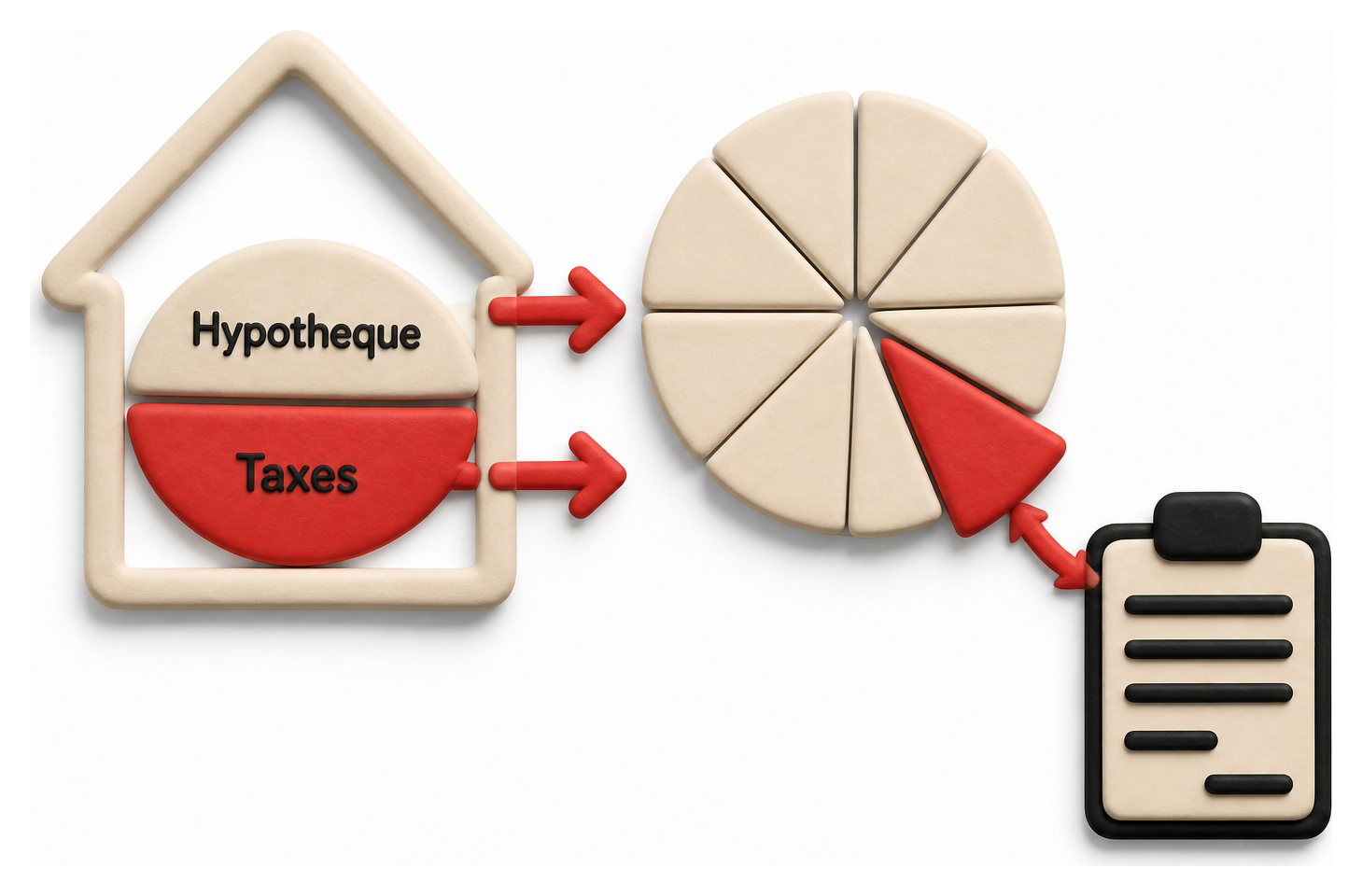
A considerably more generous home office regime. Unlike an employee, a self-employed worker may include a portion of mortgage interest, property taxes and depreciation (capital cost allowance, or CCA) in their home office expense calculation. The CRA confirms this unambiguously: “ You can also deduct part of your property taxes, mortgage interest and capital cost allowance (CCA)” (canada.ca). This calculation is made in Part 7 of form T2125. For income tax purposes, business-use-of-home expenses are eligible if the space is the principal place of business, or if it is used exclusively to earn business income and is used regularly and continuously to meet clients, patients or customers. As with employees, the deduction cannot “ increase or create a business loss”, but the unused excess can be carried forward “ to your next fiscal period” (canada.ca).
A coworking membership is deducted under an entirely different category. When a self-employed worker rents a workstation in a coworking space rather than working from home, this expense no longer falls under the home office calculation but under the standard business rent category, on line 8910 of T2125. The CRA is clear on this point: “ You can deduct rent incurred for property used in your business” (canada.ca), and explicitly distinguishes this treatment from that of a home office, specifying that rent related to the business use of a space located in the home must instead be claimed as home office expenses. In practice, this means that a coworking membership avoids floor-area proration calculations and exclusions specific to the home: commercial rent may be deducted as an operating expense to the extent that it is reasonable and incurred to earn business income. The restriction that prevents creating or increasing a loss, along with the carryforward of the balance, applies to business-use-of-home expenses rather than ordinary business rent.
For a self-employed worker in Montreal, this distinction has practical significance. 2727 Coworking, a space located in the Griffintown neighbourhood, near the Lachine Canal, offers monthly memberships rather than hourly billing: a shared workstation (hot desk) at $300 per month, a dedicated workstation at $450 per month, an enclosed office for one person at $600 per month, and enclosed offices for teams of three to ten people ranging from $1,400 to $3,000 per month. The space describes itself as “ Montreal's premier coworking space located in the heart of Griffintown” (2727coworking.com), offering access 24 hours a day, seven days a week, gigabit Internet and showers, as well as fully furnished private offices for teams of one to ten people. For a self-employed worker, this rent may be deducted as a business expense to the extent that it is reasonable and incurred to earn business income; it does not require the floor-area proration specific to an office located in the home.
Table 3 below compares, for a self-employed worker, the tax treatment of a home office and a membership at a Montreal coworking space.
| Option | Typical monthly cost | Tax treatment | Required form | Main limit |
|---|---|---|---|---|
| Home office (tenant) | Variable, actual rent prorated according to workspace floor area | Partial deduction, prorated by floor area | T2125 / TP-80, Part 7 | Capped at net business income; cannot create a loss |
| Home office (homeowner) | Variable, prorated expenses including mortgage interest, taxes, depreciation | Partial deduction, broader than the employee regime | T2125 / TP-80, Part 7 | Same, with a possible effect on future capital gains if CCA is claimed |
| Coworking space, e.g. 2727 Coworking (Griffintown, Montreal) | All-inclusive membership, starting at $300/month (shared workstation); $450/month (dedicated workstation); $600 to $3,000/month (enclosed office, 1 to 10 people), rather than hourly billing | Business rent deductible to the extent that it is reasonable and incurred to earn business income, with no proration based on the home's floor area | T2125, line 8910 (rent); TP-80, according to its Quebec numbering | The portion actually incurred for the business must be reasonable; the loss restriction applies to business-use-of-home expenses |
This comparison illustrates why a growing number of self-employed workers in Montreal are choosing a shared space rather than setting up a home office: beyond productivity and networking considerations, the tax treatment of commercial rent is administratively simpler, since it avoids floor-area proration calculations, the allocation between personal and business use, and the uncertainties specific to claiming capital cost allowance on a residence. The Canadian coworking space market also reflects this dynamic: research firm Mordor Intelligence values this market at US$1.03 billion in 2025, with projected growth to US$1.15 billion in 2026 and US$2.03 billion by 2031, representing a compound annual growth rate of 11.93% [16], while another firm, Next Move Strategy Consulting, puts the same market at US$285.1 million in 2023, with a projection of US$893 million by 2030 [17], a significant gap between research firms that illustrates the difficulty of precisely measuring this still-young, fragmented sector.
Practical Guide: Calculations, Deadlines and Documentation
Applying the detailed method follows a predictable sequence, identical in structure at the federal and Quebec levels, although it requires two separate sets of forms.
Step 1, confirm eligibility. The employee must check the conditions applicable to each return: the obligation to pay expenses under their employment conditions, expenses used directly for work and not reimbursed, and employer documentation. Federally, the CRA provides for the test of working from home more than 50% of the time for at least four consecutive weeks, or the test of exclusive and regular use for meetings in the course of employment. In Quebec, the official page requires working mainly from home, meaning more than 50% of the time, and TP-64.3; guide IN-118 must be consulted for the other applicable conditions [18] [3].
Step 2, obtain the forms signed by the employer. The employer must be asked to complete and sign T2200 for the federal return, then TP-64.3 for the Quebec return [13]. T2200 is not submitted with the federal return and must be retained. For the Quebec return, TP-64.3 and TP-59, or a detailed statement of expenses, must be attached.
Step 3, measure the workspace. The proration calculation requires dividing the floor area of the designated workspace by the “ total size of all finished areas in your home (including your work space)” (canada.ca). For a shared space (for example, a kitchen table used both for work and family meals), an additional time factor must be applied, generally calculated on the basis of a 168-hour week.
Step 4, add up eligible expenses and exclude ineligible expenses. The taxpayer must gather electricity, heating, Internet and, where applicable, rent bills, while ensuring that mortgage interest, depreciation and capital expenses are excluded [5].
Step 5, complete the calculation forms and file both returns. Federal form T777 and Quebec form TP-59 record the final calculation, while the amount claimed remains capped at net employment income for the year, with the excess eligible to be carried forward to the following year for the same employment [19].
Special case: office shared by two occupants. When two people share the same home workspace equally, each may claim only their proportional share of eligible expenses related to that space. The Quebec CPA Order illustrates this calculation with an example in which, for an office representing 10% of the home's floor area shared equally between two occupants, “ each may deduct 5% of eligible expenses” (cpaquebec.ca).
Special case: moving during the year. A taxpayer who moves during the year must make a separate calculation for each residence, and if they become a homeowner after being a tenant, mortgage interest and payments remain excluded for the homeownership period, while “ rent is eligible for tenants” for the corresponding rental period (finances.gouv.qc.ca).
Analysis of Data and Sources
The available data paints a consistent picture: working remotely remains a structural phenomenon in Quebec, despite a marked decline from pandemic peaks, and the associated tax deduction now represents billions of dollars claimed each year.
Trends in Working from Home in Canada and Quebec. Statistics Canada reports that the proportion of Canadian workers spending most of their working hours at home rose from about 7% in May 2016 to a peak of 41.1% in April 2020 [20], before falling back to about 20% in November 2023 [14]. The 2021 census provides details on the situation in Montreal: a quarter (25.8%) of the 2.1 million workers in the Montreal metropolitan area had their home as their main place of work, a rate similar to the Canadian average of 24.3% [9], with a notable linguistic gap: working from home involved 35.3% of English-speaking workers compared with 23.9% of French-speaking workers [9].
The Institut de la statistique du Québec (ISQ) provides the most precise measure of telework itself, distinct from simply working at home: about 35% of Quebec's workforce teleworked in 2022, mainly under a hybrid model [8]. This rate of 34.6% for Quebec was below Ontario's (39.1%) but above Alberta's (30.8%) and the rest of Canada's (25.9%) [8], with regional peaks of 45% in the Outaouais and Montreal [8]. A more recent ISQ survey, conducted among businesses in the second quarter of 2024, puts the average proportion of staff expected to work remotely, including in a hybrid arrangement, over the following three months at 30% [21], a proportion that rises to 38.9% for businesses in the Montreal metropolitan area [21].
Financial Scale of the Deduction. According to CRA data compiled by the trade press, Canadian taxpayers claimed $2.08 billion in home office expenses for the 2023 tax year, an increase of 41.4% over the previous year [7]. For the 2022 tax year, the last in which the simplified method was still permitted, $1.47 billion was claimed in total, of which more than $863 million, or 59% of the amount, came from the now-discontinued flat rate method [7]. These amounts describe changes in the sums claimed, but cannot on their own establish the effect of the detailed method on taxpayer behaviour.
Self-Employment and the Coworking Market. Statistics Canada counted 2.7 million self-employed workers in the country in March 2025, up 3.0% year over year, although the self-employment rate (13.1% of all workers) remains below the pre-pandemic average of 14.9% observed from 2017 to 2019 [22]. More than four in ten self-employed Canadians (42.6%) usually worked at home at least some of the time in February 2024 [20]. These statistics describe the importance of self-employment and working at home in Canada, without directly measuring Montreal demand for coworking spaces.
Examples of Application and Documentation
For an employment expense claim, employer documentation and supporting records remain essential. The CRA states that an employee who deducts employment expenses must have their employer complete T2200 and retain it; the calculation is made using T777 [18].
Samotus v. The King, 2025 TCC 104
A sales associate at the Holt Renfrew department store chain had her employer refuse to provide the forms needed to support her home office and clothing expense claims, with the employer stating that “ Holt Renfrew refused to issue the forms to the Appellant, stating that it was against company policy” to provide such documents (taxpage.com). The Tax Court of Canada ruled that “ the Tax Court found that the Appellant was not required to incur the expenses and was not permitted to deduct the expenses” (taxpage.com). This judgment illustrates a point often underestimated by employees: even a sincere belief that expenses were necessary for employment is not enough in court without formal employer certification.
Paetz v. The King
In this case, the Court recognized that the appellant's employment agreement contained an implied clause requiring him to work from home, but this was not enough: “ the lack of appropriate T2200 certification proved fatal to the claim” (taxpage.com). The taxpayer had tried to remedy deficiencies in the forms by adding handwritten annotations himself, a strategy the Court rejected because “ Mr. Paetz attempted to self-amend these forms with handwritten notations”, which did not meet the employer certification requirements (taxpage.com). The lesson for Quebec employees working from home is straightforward: neither T2200 nor TP-64.3 can be unilaterally amended by the employee to correct an employer's omission.
Chennenkunnath v. The King, 2026 TCC 112
A commission-based car salesman had his attempt to deduct more than $118,000 in employment expenses, spread across two tax years, rejected by the Court, which found the documentation supporting his expenses, including his home office expenses, insufficient: “ A commission-based car salesman's attempt to deduct over $118,000 in employment expenses across two tax years was blocked in Chennenkunnath v. The King, 2026 TCC 112” (taxlawcanada.com). This recent case, decided in 2026, is a reminder that even a commission employee, despite having broader access to eligible expenses, remains subject to a rigorous burden of documentary proof.
Investissement Québec: The Tension Between Return-to-Office Mandates and Working from Home
Investissement Québec, a Montreal-based Crown corporation, required its employees to return to the office three days a week, a decision that weighed heavily on staff morale according to its President and Chief Executive Officer, Bicha Ngo, during a parliamentary committee hearing: “ The requirement to be in the office three days a week has weighed on the morale of Investissement Québec (IQ) employees” (montreal.citynews.ca). An internal survey collected more than 600 employee comments, almost all of which concerned this requirement: “ 96 per cent of them were related to the return to three days in the office” (montreal.citynews.ca).
City of Montreal and Quebec Government: Widespread Tightening of Remote Work Policies
The City of Montreal announced that approximately 6,000 municipal white-collar employees will have to be in the office at least three days a week starting September 14, 2026, a measure described as a tightening of its remote work policy: “ Montreal is tightening its telework policy, requiring some 6,000 municipal workers to be in the office at least three days a week starting Sept. 14” (cbc.ca). Mayor Soraya Martinez Ferrada publicly defended this decision, stating that “ Three days a week is a good balance” (cbc.ca). The Quebec government had preceded this move in December 2025, with Minister France-Élaine Duranceau ordering a return to the office: “ Quebec followed the lead of other employers across Canada by ordering its employees back to the office three days a week” (ctvnews.ca), while acknowledging that approximately “ 35 per cent of Quebec's labour workforce splits their workweek between the home and the office” (ctvnews.ca) will likely remain hybrid over the long term.
These three institutional announcements align with Tax Court of Canada decisions to paint a consistent picture: even amid a partial retreat from fully remote work, the hybrid model remains the norm in Quebec, maintaining the relevance of the home office deduction for a large share of the workforce while tightening the documentation requirements that employers and employees must meet to claim it.
Implications and Outlook
Three structural trends emerge from this overall tax and statistical picture. First, the permanent discontinuation of the flat rate method after the 2022 tax year has made access to the home office deduction more complex over the long term, particularly in Quebec, where two separate forms (T2200 and TP-64.3) must now be obtained from the employer rather than claiming a single flat amount without documentation. This increased complexity partly explains why, despite a 41% increase in the total amount claimed in 2023 compared with 2022 [7], a segment of employees will likely continue to forgo the deduction because of a lack of employer cooperation, as illustrated by the Samotus case.
Second, eligibility must be checked separately by tax jurisdiction and according to the other applicable conditions. Federally, the time criterion requires, among other things, working from home more than 50% of the time for at least four consecutive weeks during the year. In Quebec, the official page requires working mainly from home, meaning more than 50% of the time, and TP-64.3 from the employer [18] [3].
Third, the distinction between employee and self-employed worker should continue to influence decisions about how work is organized. The self-employed regime allows coworking rent to be treated as a business expense separate from home office expenses, without proration based on the home's floor area, when the expense is reasonable and incurred to earn business income. This distinction can simplify tax administration for freelancers and small businesses that choose a rented workspace rather than a residential setup. The Canadian coworking market is also estimated to be growing by the research firms consulted [16] [17]. Quebec employers, for their part, will have to contend with the growing administrative responsibility of signing two certification forms for each employee working from home, a burden that could prompt some to review their formal remote work policies to limit their tax implications.
Frequently Asked Questions
What is the difference between T2200 and TP-64.3? T2200 is the federal form that the employer completes to allow an employee to deduct employment expenses on their federal return, while TP-64.3 is its exact counterpart for the Quebec provincial return, with an accounting firm explicitly describing it as “ Quebec's version of the federal Form T2200” (bdo.ca). Both forms are necessary because Quebec is the only province where residents file two separate income tax returns.
Must form T2200 be signed by the employer? Yes. The CRA specifies that this form must be completed by the employer for the employee to deduct employment expenses from their income, and recent case law, particularly Samotus v. The King and Paetz v. The King, confirms that no substitute (such as handwritten annotations by the employee) can replace this signature [11].
Which work-from-home expenses can a salaried employee deduct? Electricity, heating, water, a reasonable portion of residential Internet access, maintenance and minor repairs, and prorated rent for tenants are eligible for all employees [5]. Mortgage interest, mortgage principal repayments, depreciation and capital expenses remain excluded, regardless of the employee's status.
What is Revenu Québec's detailed method for working from home? It is the only calculation method available since the 2023 tax year, requiring actual eligible expenses to be prorated according to the workspace's floor area, supported by a TP-64.3 signed by the employer and reported on form TP-59 [13], as the flat rate method is “ no longer available for 2023 and subsequent years” (cffp.recherche.usherbrooke.ca).
Is a coworking space membership deductible for a self-employed worker? Yes, as business rent rather than home office expenses, to the extent that the membership is reasonable and incurred to earn business income. The CRA confirms that rent for property used in the business is deductible on line 8910 of T2125, a category separate from home office expenses and without proration based on the home's floor area.
Can an employee (rather than a self-employed worker) deduct a coworking space membership? Yes, in some cases. A coworking membership is not a home office expense. Federally, an employee, including one on a fixed salary, may deduct office rent if they were required under their employment contract to rent and pay for that office to earn employment income, if their employer has not reimbursed and will not reimburse them, and if they retain a duly completed T2200. In Quebec, the official page on office rent expressly addresses commission employees and requires, among other things, TP-64.3 and TP-59; do not assume that the federal treatment of an employee on a fixed salary applies without confirmation from Revenu Québec. In all cases, rent for a separate commercial office must not be treated as a home office expense.
What is the difference in treatment between a commission employee and an employee on a fixed salary? A commission employee has access to additional expense categories, including home insurance and property taxes prorated for the office space, which the standard regime for employees on a fixed salary excludes entirely [19].
How long should supporting documents be retained? The CRA recommends retaining the signed T2200 and supporting documents for six years in case of an audit request [23].
Conclusion
For the 2025 tax year, with returns filed in spring 2026, Quebec's work-from-home deduction now rests entirely on the detailed method, supported by two separate certification forms, federal T2200 and Quebec TP-64.3, with the flat rate method permanently discontinued after the 2022 tax year at both levels of government. This increased documentation requirement obliges the employee to obtain the form completed by their employer and retain supporting documents. The CRA's public T1 statistics do not break out home office expenses separately; they therefore cannot establish national trends in these claims here.
The substantive rules share similarities, particularly for several expense categories, but eligibility conditions must be checked separately. The CRA sets out a criterion of working from home more than 50% of the time for at least four consecutive weeks, while Quebec's official page indicates working mainly from home, more than 50% of the time, and TP-64.3 [18] [3]. The most significant distinction remains that between an employee and a self-employed worker: the latter reports their activities using forms T2125 and TP-80 and may choose a rented workspace, such as a membership at a Montreal coworking space. The corresponding rent is then treated as a business expense separate from home office expenses, to the extent that it is reasonable and incurred to earn business income. Understanding these tax rules remains relevant for employees and self-employed workers who use a home or rented workspace to earn their income.
External Sources (23)
About
2727 Coworking
Find a practical home for your work at 2727 Coworking in Montreal. Explore private offices, day workspaces and meeting rooms, plus business-address and virtual-mailbox services for your company.
2727 Coworking is a Montreal workspace and business-address provider. We serve people who need a place to focus, meet, run a small business or establish a professional mailing presence. Our website offers English and French information about workspace options and services, alongside educational resources for operating a business in Canada.
A workspace that fits the day
Our workspace options include private offices, day passes and desks, and a conference room. These formats help individuals and teams compare a dedicated office with more flexible ways to work or hold a meeting. Prospective members can explore the virtual tour, review current pricing and book a visit before choosing a workspace.
Business addresses and mail
2727 Coworking provides business-address and virtual-mailbox services. Our resources explain the documents and practical questions involved, including guidance for people outside Canada. Service eligibility, included features, availability and access arrangements should be confirmed on the applicable service page or with our team.
Resources for Canadian small businesses
We publish guides, research and planning tools about workspace decisions, business addresses and starting a business in Canada. Our incorporation research includes information for people inside Canada and abroad, with jurisdiction-specific material to help readers identify the next questions to investigate. These educational resources complement our workspace and address services; they are not individualized legal, tax or immigration advice.
Visit or contact 2727 Coworking
Explore private offices, day passes and desks, the conference room, business addresses and virtual mailboxes. Book a visit or contact the team to discuss your needs.
A business address alone does not establish tax residence, immigration status, banking approval or eligibility for a government program.
Disclaimer
This document is provided for informational purposes only. No representations or warranties are made regarding the accuracy, completeness, or reliability of its contents. Any use of this information is at your own risk. 2727 Coworking shall not be liable for any damages arising from the use of this document. This content was generated with assistance from artificial intelligence tools, which may contain errors or inaccuracies. Readers should verify critical information independently. All product names, trademarks, and registered trademarks mentioned are property of their respective owners and are used for identification purposes only. Use of these names does not imply endorsement. This document does not constitute professional or legal advice. For specific guidance related to your needs, please consult qualified professionals.