2727 Coworking Article
Montreal Festivals 2026: Go Bike, Piknic & Terrasses
Inside this article
Executive Summary
Montreal’s late spring and early summer of 2026 will be marked by a vibrant mix of festivals and events centered on cycling, electronic music, and outdoor social life. From May 24 to 31, 2026, the city will host the Go Vélo Montréal Festival – a week-long celebration of cycling culture featuring rides such as the Tour la Nuit (a 20–24 km night-time group ride), the Tour de l’Île (a 30–50 km car-free city tour with a longer “Découverte” route), and the multi-route Défi Métropolitain challenge. Concurrently, the Piknic Électronik series will be in full swing: this perennial outdoor electronic music festival runs Sundays from mid-May through October at Parc Jean-Drapeau, with an expanded “OfF Piknic” program on Fridays and Saturdays featuring internationally renowned DJs (see Table 1 for the early-season 2026 lineup and key dates). Finally, Montreal’s summer terrasse season – the period when restaurants, bars, and public markets spill out onto sidewalks and streets – will be in full effect, supported by municipal policies that allow seasonal patios from April 15 through November 15 [1].
These events are deeply rooted in Montreal’s culture and economy. Montreal is famed as a “city of festivals,” hosting dozens of major open-air events each summer [2] [3]. They draw millions of attendees: for example, over 6,000,000 people participated in festivals and street events in the downtown Quartier des Spectacles alone between May and September 2025 [3], and municipal tourism data report over 10 million total festival visits in a typical summer [2]. Piknic Électronik itself has seen explosive growth (112,000 attendees in 2017 up to a record 224,000 in 2023 [4] [5]). Likewise Go Vélo Montréal’s rides draw tens of thousands of cyclists: in 2022, the Tour de l’Île attracted about 19,000 riders and Tour la Nuit about 18,000 [6]. The terrace season has similarly expanded – in 2022 the Plateau-Mont-Royal area alone hosted 170 business terraces (up from 90 in 2019) [7] – and citywide policies now firmly support outdoor dining (e.g. simplified fees and expanded permits [7] [1]).
This report provides a comprehensive analysis of Montreal’s May–June 2026 events from multiple perspectives. Section 1 examines the Go Vélo Montréal Cycling Festival, including its 2026 program, historical growth, participation data, infrastructure context (e.g. bike lanes and Vision ZÉRO safety goals), and policy initiatives that support cycling (such as charitable group rides and a cargo-bike conference). Section 2 explores Piknic Électronik’s 2026 season: its history since 2003, expansion globally, programming highlights, social and economic impacts, attendance records, and sustainability efforts (e.g. eliminating single-use plastics [8]). Section 3 addresses the summer terrasse season: municipal guidelines for seasonal patios [1], the legacy of COVID-era sidewalk expansions [9], recent borough initiatives (e.g. Plateau’s 50% fee cuts [7]), and the cultural role of outdoor dining (including markets and pop-up “guinguettes” [10]). Throughout, we incorporate data (official statistics, event reports, and surveys), expert and organizer commentary (e.g. quotes from the Mayor of Montreal [11] and Loire cycling advocate Stein van Oosteren [6]), and case studies (such as the record 2022 Go Vélo participation [6] and Plateau terrace policy [7]). Finally, Section 4 discusses implications and future directions: how these events contribute to Montreal’s economy and global brand [2] [12], the challenges of rising costs and regulation [7] [9], and the prospects of growing Montreal’s active-mobility and outdoor-cultural scene. All claims are supported by cited sources (see throughout and the References).
Introduction and Background
Montreal is internationally recognized as a “city of festivals”. Weekends from late spring through early fall feature packed calendars of cultural events, from the Montreal Jazz Festival to Just for Laughs, Osheaga, the Francos, Pride, Cirque, and many niche gatherings. Indeed, analysts note that Montreal hosts an extraordinary concentration of large-scale festivals within a compact urban area [2]. A recent summary observes: “Few cities in the world host such a high concentration of large-scale, internationally recognized festivals within such a compact urban footprint” [2]. This festival-driven ecology is not merely about entertainment – it’s a major economic pillar.A Montreal-focused analysis estimated the city’s cultural and nightlife sector contributes roughly C$2.26 billion per year and over 33,000 jobs [2]. Tourism Montréal similarly touts a “packed events calendar” that draws millions of visitors, noting “Montreal’s summer festivals make up one of the most packed events calendars in the world” [2] [3]. In 2025, for example, more than 6.0 million spectators participated in festivals and live performances just in the downtown Quartier des Spectacles area [3]. These figures are part of a broader Canadian trend: national industry reports place annual cultural festival tourism at over CA$4.2 billion conferring about 86,000 full-time jobs [12]. (By way of scale, Canada’s overall festival tourism is estimated to be 7.3% of national tourism revenue [12].)
Set against this backdrop, Montreal’s local festivals are critical for urban life. They encourage active outdoor living, support restaurants and small businesses (festival visitors spend heavily on lodging, food, retail and transit [12]), and enliven public spaces. For example, the flagship Montreal Jazz Festival typically generates 43,000 hotel-room nights over just 10 days [12]. In September 2024, a major cycling race (the Grand Prix Cycliste) was marked by prominent branding for the (upcoming) Montreal 2026 UCI Road World Championships, underlining cycling’s growing profile [13].
Within this festival ecosystem, cycling and outdoor socializing occupy prominent roles. Montreal has invested increasingly in cycling infrastructure (the city boasts thousands of kilometers of bike routes [14]) and active mobility initiatives. The city’s political leaders often highlight cycling as part of vision for a healthy, sustainable metropolis. Mayor Valérie Plante affirms “Montreal is definitely a cycling city”, noting that events like the Tour la Nuit and Tour de l’Île (each enjoying multi-decade histories) draw thousands of cyclists storming the streets of the metropolis, and pledges ongoing support for “safe, quality infrastructure” to encourage active transportation [11]. Similarly, Montreal’s restaurant and bar culture pivots on outdoor dining in warm months. In the post-pandemic era, city policies were temporarily loosened to expand terraces and pedestrian zones [9], and many such allowances have since become permanent – for example, the Plateau borough cut terrasse permit fees by 50% for 170 businesses [7]. Montrealers embrace these seasonal patios and public markets: Tourism Montréal describes Jean-Talon and Atwater markets transforming their food courts into “convivial summer terraces” when weather allows [10].
Report Structure. This research report examines three focal themes for May–June 2026 in Montreal: (1) the Go Vélo Montréal Festival (cycling week), (2) the Piknic Électronik summer music series, and (3) the seasonal terrasse/patio culture. Each section provides historical context, detailed 2026 program information, quantitative data (attendance, participation, economic figures), and qualitative analysis. We include case-study excerpts (e.g. plateau terrace policy, record attendance years) and expert commentary (from government, organizers, journalists, and academics) to illuminate these phenomena. Finally, we discuss implications and future outlook – including economic impact [2] [12], sustainability initiatives [8], social equity (diversity & inclusion measures [15]), and policy challenges (e.g. funding pressures [7] [9], noise bylaws). All information is supported by recent sources, reports, and official data (see citations below).
1. Montreal’s Go Vélo (Go Bike) Festival (May 24–31, 2026)
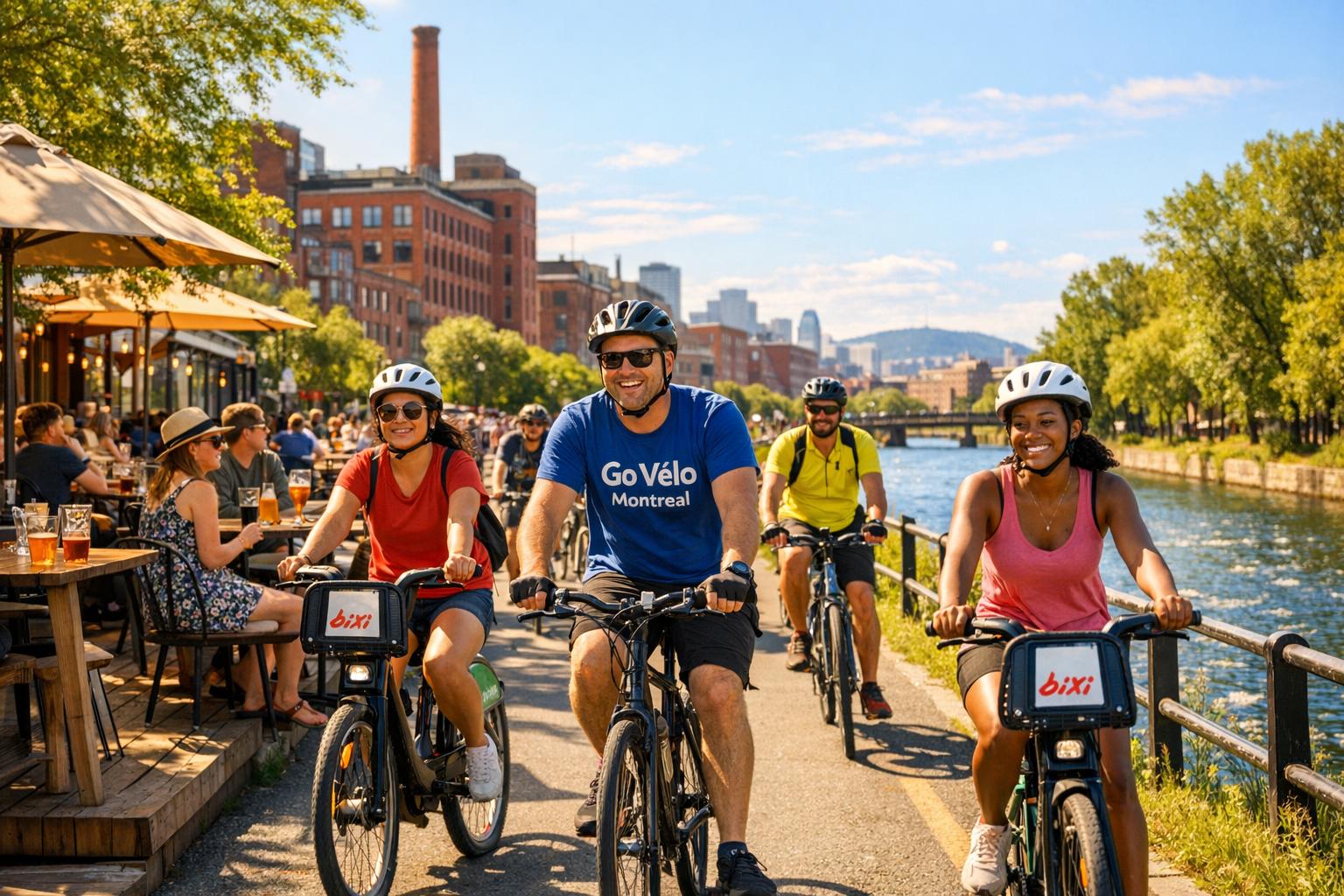
Montreal’s celebration of cycling – now dubbed the Festival Go Vélo Montréal – runs annually in late spring. The 2026 edition is scheduled “from May 24 to May 31, 2026” [16]. As Vélo Québec (the province’s cycling advocacy non-profit and event organizer) emphasizes, the Festival is “the annual celebration of all aspects of Montreal’s cycling culture” [16]. It centers on several marquee events:
-
Défi métropolitain (Metropolitan Challenge): A non-competitive long-distance ride (61 to 147 km routes) through Montreal’s metropolitan area. Riders depart on May 24, 2026 from Mirabel, traversing varied landscapes toward Oka. The 2022 Metro Challenge drew about 2,700 cyclists [6]. Routes are rich in scenery (farmland, orchards, forests) and amenities (water stops, refreshments). Vélo Québec notes routes of 61, 91, 100, and 147 km [17], with optional segments through farmlands. The Festival even offers “group ride for a cause” packages (15% fee discount with charity donation) [17]. The Met Challenge formally kicks off the week of cycling: in 2022 it set out on May 29, 2022 [6] and for 2026 it will open on Sunday, May 24 (mirroring 2022’s placement on a Sunday).
-
Go Vélo Conference: Also during the festival week, Vélo Québec hosts a cycling conference for experts and enthusiasts. While details for 2026 are pending, previous editions have featured international speakers discussing urban cycling policy and advocacy. This fits Montreal’s strategy of promoting active transportation: in 2022 the Festival welcomed Stein van Oosteren, founder of France’s Collectif Vélo Île-de-France, whose keynote emphasized “cycling is the key to bringing about the necessary change in our urban environments” (citing public health, social, and environmental benefits) [6]. Such programming underscores terrain beyond athleticism, focusing on how cycling policy shapes healthy cities.
-
Tour la Nuit (Night Tour): A large night-time group ride through Montreal’s city streets. The 2026 Tour la Nuit occurs on Friday, May 29, 2026 [11]. Riders gather in evening attire and decorate their bikes with lights (MP3 boomboxes, LED tubes, etc.) for a 20–24 km car-free loop. In 2026 the route will start at Parc La Fontaine (Saint-Louis and Rachel E.), and traverse Villeray–Saint-Michel–Parc-Extension, Ahuntsic–Cartierville and Saint-Laurent [18]. Vélo Québec highlights that the Tour la Nuit “lights up Montreal for Tour la Nuit”, offering “a unique nocturnal atmosphere” as participants “re-discover Montreal from a whole new angle” [18]. The Festival site explains that on May 29 attendees can even enjoy food trucks, concerts, and a festive terrace at the start site from 6 pm onwards [11]. The ride itself is car-free and relatively flat (skirting Lachine Canal, even passing by the Olympic Stadium [6]). By 2022 it was the 23rd edition and drew over 18,000 riders [6] – a record crowd under the stars. (Its origins date to June 4, 1999, and it was the founding event of Montreal’s cycling festival tradition [11].) This iconic nocturnal ride has become a generational urban ritual: participants and officials note “thousands of cyclists storming the streets of the metropolis” during Tour la Nuit [11], capturing Montrealers’ appetite for festive, car-free public events.
-
Tour de l’Île (Tour of the Island of Montreal): The culminating event is the Tour de l’Île, typically on Sunday of festival week. In 2026 it falls on Sunday, May 31, 2026 [19]. The Tour de l’Île is a long-standing, family-friendly cycling celebration dating back to 1986. It offers two route formats: a Regular course of 30–50 km on closed city streets (ideal for families and city cyclists) and a longer Découverte route of 65–90 km for road cyclists [20]. The closed-route ride draws riders through many of Montreal’s most iconic neighborhoods: for 2026 these include Villeray–St-Michel–Parc-Extension, Rosemont–La Petite-Patrie, Plateau-Mont-Royal, Ville-Marie, the Southwest, Westmount, and others [20]. The event features festive animations, food trucks, music stages, and even a mascot (Calcium the cow, celebrating milk producers’ sponsorship) [20]. In past years, Tour de l’Île has drawn on the order of 10,000–20,000+ cyclists. For example, in 2022 — after a pandemic gap — the 37th edition attracted about 19,000 participants [6]. Montreal’s mayor notes that “the Tour de l’Île… allows Montrealers to get moving, while seeing their city in a different light”, and that such events are “unique moments, when bicycles are king” on urban streets [11].
These major rides frame the Go Vélo Festival’s program. In addition, the week includes “Bike to Work” promotions (Montreal joined Laval for a joint Bike-to-Work Day on May 31, 2022 [6]) and community group rides. For 2026, Vélo Québec’s online materials emphasize family and recreational participation: packages are offered for festival hotels and combined event tickets [16], and there are volunteer opportunities to “join the party at Tour la Nuit and Tour de l’Île” to make the city more bike-friendly [16]. Concretely, Vélo Québec’s web guide lists the 2026 dates: May 24–31 [16], and identifies each event by date:
| Date | Event | Route / Location | 2022 Attendance |
|---|---|---|---|
| May 24, 2026 | Défi Métropolitain | Multiple routes (61–147 km) starting at Mirabel through Deux-Montagnes/Oka. | ~2,700 (2022) [6] |
| Thu May 28, 2026 | Go Vélo Conference | Speaker series on cycling (details TBD) | – |
| Fri May 29, 2026 | Tour la Nuit | ~20–24 km night ride through Montreal (La Fontaine Park → St-Michel–Cartierville → St-Laurent) [18] | ~18,000 (2022) [6] |
| Sat May 30, 2026 | Festival Eve (informal)† | “OfF Piknic” events (see Section 2) – international DJs at Parc Jean-Drapeau. | – |
| Sun May 31, 2026 | Tour de l’Île | 30–50 km regular (family) route plus 65–90 km “Découverte”, on car-free city streets [20] | ~19,000 (2022) [6] |
Table 1. Key events of the Go Vélo Montréal Festival (Major cycling events). Each event is open to the public (kids under 12 ride free). Attendance figures for 2022 are shown as context [6]. “Go Vélo Conference” is an industry workshop. *“Festival Eve” on Sat May 30 indicates that Piknic Électronik’s OfF Piknic program (see Section 2) coincides with Go Bike week, though it is organized by Piknic promoters (Multicolore) rather than Vélo Québec.
City support and culture. The City of Montreal and Québec government actively support the Go Vélo festival. Partnerships (for example with Dairy Producers/Lait, Desjardins, and public bodies like Tourisme Montréal) fund these events. The Festival also ties into long-term civic goals: as Mayor Plante has stated, the Week of Cycling not only “gets Montrealers moving” but also promotes “active mobility” and “ecological transition” by making bikes central [11]. In practice, this includes investments in bike lanes and bike-share; on the eve of the festival (May 2024) the mayor specifically cited the success of Montreal’s rapid bike-lane network (Réseau express vélo) as illustrating demand for safe cycling [11]. The city’s election platform emphasizes building more protected lanes and cycle paths as hinges for transportation. Moreover, Vélo Québec’s own messaging ties the festival to social causes: group ride registrations can be tied to charities at a 15% discount [17], and the festival has hosted “cargo bike” conferences (May 30, 2024) and bicycle culture exhibits, reflecting a view of cycling as integral to urban sustainability.
Participation trends and demographics. Statistical reports show the Festival’s popularity. Tour de l’Île attendance (19,000 in 2022 [6]) roughly doubled from pre-2020 levels, reflecting growing interest in recreational cycling. Tour la Nuit set a record in 2022 with over 18,000 riders [6] – its popularity owes partly to its festival atmosphere (lights, music) but also to Montrealers’ enthusiasm for bare-lawns suspension. Vélo Québec notes that breaking the 10,000-rider mark multiple times was unprecedented [8]. Demographically, at least in past years a majority of participants have been young adults (ages 18–35), including university students and young families [8], highlighting diversity. While no official 2026 surveys exist yet, organizers anticipate similar turnout given Montreal’s cycling culture. Bicycles – and bike nicknames “piknickers” or “touristes” – attract both casual riders and serious enthusiasts. Importantly, the festival explicitly welcomes all levels: “whether you’re a seasoned cyclist or a lover of good rides, it’s the perfect way to kick off the season,” says Vélo Québec [17]. Even very young children participate indirectly (toddlers on tandems or follow-cars) – Vélo Québec has run a “Tour des Enfants” children’s ride on the week before Tour la Nuit historically.
Case Study – 2022 Record Turnout: Post-pandemic enthusiasm was evident in 2022: a day with sunny weather on June 5 saw 19,000 cyclists complete the 36 km Tour de l’Île loop [6], celebrating their first major group ride in two years. Two days earlier (June 3, 2022) the 23rd Tour la Nuit drew over 18,000 festively dressed riders [6]. Vélo Québec proclaimed it a “week-long celebration of urban living and cycling as a way of life.” Indeed, local media noted that extended outdoor dining and patio use, along with vigorous rides, “helped reacquire [customers for restaurants] who had retreated from indoor spaces” during COVID, and “saved many businesses,” according to restaurateurs [9]. Thus cycling events even had positive spillovers to the adjacent hospitality sector.
Infrastructure and Safety. Montreal’s cycling festival benefits from extensive infrastructure. The Greater Montreal bikeways map lists 3,450 km of cycling routes across the metro area [14]. Within the city, dozens of kilometers of protected lanes (the Réseau express vélo) and signed paths support festival routes. Planned closures of major streets (for Tour de l’Île) or the Shine-around (for Tour la Nuit) require extensive traffic coordination, which the city provides. Vélo Québec and the police also emphasize rider safety: Montreal’s vision of “zero road fatalities” (Vision Zéro) applies to festival events. For example, even at big rides the pace is non-competitive and marshaled. The Mayor’s office often touts cycling as a way to “ensure better road sharing” and promote safer transport options [11]. Preparations include helmet use encouragement, signage, and volunteer bike marshals. After 2022, one cycling advocacy report noted that the festival’s success “launches ideas and stimulates reflection about the place of the bicycle in the city,” pointing to ongoing debates about parking, car lanes, and urban design [6].
In summary, the Go Vélo Montréal Festival exemplifies Montreal’s active mobility ethos. It combines family recreation, nightlife, sport, and policy in one week. The 2026 edition continues long-standing traditions (25th Tour la Nuit, etc.) while integrating new elements (e.g. cargo-bike discourse, bike-to-work outreach). With the city hosting the 2026 UCI World Championships in early autumn, this festival also serves as grassroots momentum for a major cycling event (local commentators even noted “Montreal tries to capture a ‘Netflix effect’ of cycling enthusiasm” in conjunction with pro races [13]). For planners and researchers, it represents how an urban center leverages events to promote sustainability and well-being.
2. Piknic Électronik (May–June 2026 and Beyond)
Overview and History. Piknic Électronik is Montreal’s flagship summer electronic music fest, founded in 2003. It is an outdoor weekly party (traditionally Sundays) producing an “immersive, social experience” [21] of dance music. From humble beginnings with 217 friends in its first year (2003), Piknic has grown astronomically: by 2017 it was drawing 112,208 visitors for its season [4], and by 2023 it achieved a record 224,000 total attendance on 40 days [5]. The event’s success has turned it into a cornerstone of Montreal’s summer culture – “a true summer ritual”, in the organizers’ words [4]. Piknic has also spun off internationally: editions now run in Barcelona, Melbourne, Dubai, Santiago (Chile), and Paris [21], reflecting global demand for its friendly picnic-and-dance formula.
Piknic’s model is distinctive: it takes place in a lush urban park (Parc Jean-Drapeau on Île Sainte-Hélène) under a strict convivial (friendly) ethos [21]. Attendees (often called “piknickers”) bring blankets, picnic baskets or buy food on site, and enjoy house, techno, and EDM music across two outdoor stages. Past lineups have mixed international stars (e.g. Kaytranada, Four Tet, Eric Prydz) with local DJs. Tourisme Montréal notes that Piknic “kicks off the festival season in epic style, as thousands of dance music lovers gather in the leafy expanses of Parc Jean-Drapeau to dance summer Sundays away” [22]. By mid-2020s its reputation is such that the UK’s DJ Mag ranked it the Best Club/Event Series in North America in 2019 [8], underscoring its status.
2026 Programming. The Piknic Électronik 2026 season runs May 17 through October 18 [23], with mainly Sunday events and an expanded “OfF Piknic” series on selected Fridays/Saturdays. The season lineup was announced in April 2026, promising over 30 events [23]. Major headliners include Four Tet (Frances Trentemøller’s live act), Solomun, Eric Prydz, and Chase & Status, as well as local talents like Daphni, Tali Rose, and Pittsburgh-based Josh Baker [23]. Table 1 (above) lists several early-season highlights: for example, Piknic #1 (Sun May 17) features DJ crews MCRDJ (MTL) and AMPER; by the end of May, international names appear (Dombresky, Eric Prydz). OfF Piknic on Fri May 29 brings Eric Prydz, and Fri June 12 sees Chase & Status. The summer also includes theme nights (e.g. Anjunadeep and Defected Records takeovers) and a special “Petit Piknic” track of family-friendly picnics with kids’ activities.
Like Go Vélo, Piknic benefits from strong partnerships (public and private). Its organizing company Multicolore counts Tourisme Montréal, Sapporo, and corporate sponsors among its supporters [5]. The move in 2017 from a small park to Parc Jean-Drapeau’s renovated Plaine des Jeux site – timed with its 15th anniversary – allowed more seating, picnic tables, and amenities. Attendees responded enthusiastically: Piknic’s organizers reported that “everyone fell in love with the new site” [4], which featured greener landscaping and a giant wooden dance floor in the centre [4]. Piknic now even includes a “Petit Prince Garden” kids’ zone with mocktail bars and games, aiming to attract families [5].
Attendance and Demographics. Piknic’s attendance has grown steadily. Key data points include:
- 2017: A record season of 112,208 total visitors (May–Sept) [4].
- 2019: Nearly 160,000 partygoers [8] (another record).
- 2022: 178,000 attendees over 35 events [15].
- 2023: 224,000 piknickers across 40 events [5] — an all-time high.
These figures indicate Piknic is attracting not only Canadians but international tourists (the 2023 PR notes it is now a “flagship event on Montreal’s summer cultural circuit” [5]). While precise audience breakdowns are rarely published, organizers note a core age of 18–35, including young workers and students [8]. Gender balance has improved through conscious programming: in 2022, Piknic’s promotion emphasized “gender equality” in bookings by featuring more women and queer artists (Misstress Barbara, the Slut Island collective, etc.) alongside Montreal techno stars [15]. A 2023 DJ Mag profile even lauded Piknic’s inclusive vibe.
Cultural Impact. Piknic Électronik has become a cultural landmark of the Montreal summer. Weekly attendance of 5,000–6,000 is typical [4], making Sunday afternoons at the park a ritual (complementary to major annual festivals like Jazz or FrancoFolk). As a tourism analyst notes, Montreal is one of few global cities with “this many free, large-scale, open-air festivals inside a walkable downtown core” [2], and Piknic plays a leading role in that image. For example, in Tourism Montréal’s “Essential Guide” to summer 2026 festivals, Piknic is listed first under May festivals; it “kicks off the season in epic style”, bringing “some of the world’s top DJ talent” to Montreal [22]. Media outlets often portray Piknic attendees as ambassadors of Montreal’s vibrant nightlife: Cult MTL editor Lorraine Carpenter reports that Piknic “broke attendance records” in 2022 and frames it as “Montreal’s staple Sunday DJ event” [15].
The festival is also a platform for Montreal’s local music ecosystem. Many Québec artists and labels use Piknic to showcase new projects. For instance, the 2017 program featured a historic, one-time b2b set by global DJs Tiga and Jacques Greene (both Montrealians), a world-premiere collaboration [4]. Likewise, collaborations with other festivals (like holding joint events with Mutek or ÎleSoniq) have extended Montreal’s festival network. By bolstering its international cachet, Piknic has reciprocally drawn more attention to the city’s creative talent.
Sustainability and Inclusivity. Piknic’s organizers emphasize environmental responsibility and social values. Notably, in 2019 Piknic eliminated all single-use plastics on site [8]: drinks are now served in reusable glasses (over 500,000 distributed since 2014), straws have been banned (saving 250,000 since 2018), and even water bottles were replaced with recyclable cartons [8]. The festival’s “eco-responsible vision” is promoted on its website, describing efforts in recycling, composting, and carbon offsetting. Piknic also reiterates core values of diversity and respect: since 2017 it has included well-publicized Refuge and Inclusivity areas staffed by trained teams [8]. These measures have earned praise from local pundits; Montreal news has noted Piknic as a leader in “sustainable development” for events, aligning with broader city goals on waste reduction. Accessibility is also a focus: Piknic sites are wheelchair-accessible and offer child-friendly zones (Petit Piknic) to welcome families.
Case Studies of Growth: Specific episodes illustrate Piknic’s rise. In 2017, facing a park renovation, Piknic relocated to the new Plaine des Jeux site on Sainte-Hélène, which doubled venue space and revamped picnic facilities. Organizers hailed it a “complete success”: by the first Sunday (May 21, 2017) “everyone fell in love with the new site”, with attendees enjoying the greenery, new picnic furniture, and giant dance floor [4]. This transition coincided with a record season (112,208 total, a 17-year high) [4]. In 2022, after the global pandemic hiatus, Piknic drew 178,000 attendees – another all-time high – and featured returning global stars (Fatboy Slim, Diplo) and a record number of events (35 total) [15]. The 2023, 20th-anniversary season further amplified the scale: relocated again to Parc Jean-Drapeau’s Jardin Le Petit Prince, it expanded Petit Piknic offerings and reported sold-out nights for its Friday “OfF Piknic” shows (with Charlotte de Witte, Peggy Gou, etc.) [5]. Piknic’s PR stressed it holds “over 40 chances to revel in the grass” for its 224,000 piknickers [5]. These numbers place Piknic among the world’s top large outdoor party series (comparable to select European days or American dance festivals).
Key Data (Piknic Électronik Seasonal Attendance): The following table summarizes Piknic’s major milestones and attendance:
| Year | Attendance | Events (Sun + OfF) | Notes |
|---|---|---|---|
| 2017 | 112,208 visitors [4] | ~21 (Sundays only) | 15th season; moved to new Plaine des Jeux site (Sainte-Hélène); all-time high at the time. |
| 2019 | ≈160,000 [8] | 24 (Sun) + 7 Off (Sat) | 17th season; named DJ Mag's North America top club series. |
| 2022 | 178,000 [15] | 25 (Sun) + 10 Off | 19th season; resumed full schedule post-COVID; themed for gender balance. |
| 2023 | 224,000 [5] | 18 (Sun) + 17 OfF + 5 Petit Piknic | 20th anniversary; new Petit Prince site; record “sold-out” Off events (Charlotte de Witte, Peggy Gou, etc.) [5]. |
Table 2. Piknic Électronik Seasonal Statistics (Selected Years). Attendance figures from official PR and reports [4] [15] [8] [5]. “Off” denotes the Friday/Saturday electronic evenings; “Petit Piknic” are Sunday family events. Each season gradually expanded in scale and scope.
Economic and Tourist Impact. Piknic contributes significantly to local business. Although it is free to enter, attendees spend on food, drinks, and transportation. Local press has noted that Piknic’s presence is a boon to Jean-Drapeau’s ferries and nearby restaurants. By 2022 Piknic had become large enough to be considered a tourism draw; Lorraine Carpenter (cultMTL) emphasizes 35 events from May to October drawing 178,000 party people [15]. By analogy, Canadian festival impact studies suggest each attendee might spend ~$150–200 outside the festival on average [12],so Piknic’s 224,000 visitors in 2023 could represent tens of millions in related spending (hotels, meals, nightlife). Notably, Tourism Montréal promotes Piknic alongside world-class events like Jazz and Just for Laughs, underlining that it attracts international visitors. For context, one analysis of Canadian festivals finds that a strong festival can increase local tourism 30–45% in its season [12], and Montreal’s big events generate nearly $2.3 B regionally [2]. While precise local economic impact of Piknic alone is unreported, its free entry and family-friendly vibe likely channel consumer spending into other areas (buffets on the island, nearby bars, hotels).
Social and Cultural Significance. Piknic has become a cornerstone of Montreal’s social calendar and brand. It exemplifies Montreal’s fusion of ‘picnic culture’ and avant-garde music. The event’s laid-back brunch atmosphere (families and dogs are common sights) appeals to a broad demographic while offering cutting-edge music. Observers have called Piknic a “vibrant oasis” that “transforms every visit into a memorable summer celebration”. It has earned a local place of pride: in 2017 Piknic’s press thanked Tourisme Montréal and “Destination Canada” for institutional support [4], indicating official recognition of its role in attracting visitors. Importantly, Piknic places Montreal on the global map of electronic music destinations – the only weekly summer electronic “picnic” of its type in North America. In doing so, it helps cultivate Montreal’s image as a young, creative city.
Future Directions. Looking ahead, Piknic is poised to continue evolving. The 2026 lineup already demonstrates a willingness to innovate: adding tentpole Off events (Four Tet on June 26, for example [23]) raises the festival’s profile internationally. The organizers also regularly upgrade the site (new stages in 2024) and amenities (food trucks, art installations). Their parent company Multicolore plans similarly large winter events (Igloofest) – cross-promotion may increase year-round brand synergy. There are challenges too: rising production costs and venue fees (see Section 4) may pressure organizers. However, Piknic’s track record of record-breaking attendance [4] [15] [5] suggests it will remain a magnet for Montreal’s summer crowds. Its emphasis on sustainability (no plastics), diversity (inclusive teams and lineups), and leisure (safe public setting) aligns with broader city values. The event thus stands as a case study in how an entertainment brand can scale internationally while anchoring local culture.
3. Summer Terrace Season (Patio Culture)
Definition and Policy. Montreal’s “terrasses” – outdoor patios at bars/restaurants – are a hallmark of summer nightlife. Officially, a seasonal commercial terrace is defined as an open-air arrangement of tables and chairs on public property (sidewalks or street) where food and alcoholic beverages are served [1]. Montreal’s regulations permit such seasonal terraces (danserende terrasse saisonnières) from April 15 through November 15 [1], with daily hours generally 7 am–11 pm (or midnight on weekends) [1]. Summer 2026 will see these patio permits automatically active in most boroughs (barring street-closure exceptions) and subject to municipal standards (e.g. ramp access, limits on coverage). Additional “pop-up” terraces (3 tables/6 chairs max) are allowed year-round [1], but the summer season sees the full-scale commercial terraces bloom. In short, Montreal officially frames May–October as terrasse season.
Historically, the City had a seasonal permitting process, but in recent years Montreal moved towards a more permissive approach. For example, beginning in 2020 the municipal government encouraged street closures and free patio permits as emergency relief for pandemic-hit eateries [9]. These measures proved popular with businesses: one review noted downtown operators initially protested road closures on streets like Notre-Dame, but found that “street closures and free roadside terrasse permits have been very successful in many city sectors so far” [9], cushioning losses from reduced indoor dining (extreme earlier health restrictions forced indoor seating cut to 50% [9]). Restaurants in areas like Plateau-Mont-Royal and Mile End “saw the benefits right away” from expanded terraces [9].
As the emergency eased, many pandemic-era allowances were codified. The Plateau borough permanently cut terrasse fees by 50% (relative to 2019 rates) to “continue to encourage the development of these terrasses” [7]. In Quebec City, and in cities like Toronto, 2024 introduced time-limited sidewalk patio trials; Montreal’s approach has generally favored easy renewal. The upshot: by 2022 the Plateau had 170 licensed terrasses (versus 90 in 2019) [7], and many Montreal quartiers now host dozens each (e.g. all streets of the Village, Old Montréal, Outremont, etc.). The annual re-granting of patios is done by borough, often with minimal friction (so long as Parks, Traffic, and Fire regs are met). The result is that summer 2026 will feature sidewalk cafes on nearly every commercial street corner – a defining aspect of Montreal’s outdoor culture.
Economic and Social Role. Summer terraces are far more than decorative—they are economic engines. Festival and tourism studies nationwide indicate that food and beverage spending accounts for ~27% of festival visitor dollars [12]. In Montreal specifically, analysts note that extended patio seating “saved many businesses” during COVID lockdowns [9]. Public health research also highlights that outdoor dining allows social life while minimizing viral spread, so terraces were a health recommendation during the pandemic [9]. In practical terms, patios increase restaurant capacity by up to 100%, enabling eateries to serve more customers (attracted by fresh air and city views) and recover lost revenue. For example, Philippe Haman of Les Distilleries reports bluntly: “Extended patio seating saved my business. It’s that simple.” [9].
Beyond the financial uplift, terraces statistically contribute to streetscape vitality. Surveys in 2023 found that expanded pedestral and patio areas on Sainte-Catherine and elsewhere had ~90% public approval [3]. On busy commercial streets, terrace crowds are part of the ambiance: counts on Sainte-Catherine reached ~33,000 daily pedestrians in summer 2025 [3]. Tourists often cite terraces (and associated food scenes) as a reason to visit Montreal. Two Montreal patios (Terrasse William Gray and Chez Levesque) even made OpenTable’s “Top 100 Restaurants with Outdoor Dining in Canada (2024)” [24], reflecting how the city’s al fresco dining scene rivals that of other top foodie cities. In short, terraces turn ordinary streets into “neighborhood cultural hubs” [9] and have become intrinsic to Montreal’s summer lifestyle.
Case Study – Plateau-Mont-Royal: The Plateau borough aggressively promoted terraces as part of its summer strategy. In 2023, Mayor Luc Rabouin highlighted that steep discounts (by 25–50%) on terrasse permit fees left almost C$500,000 in merchants’ pockets [7]. He explained that “the positive impact of these new terrasses on the vitality of our commercial streets prompted us to revise our rates downward” [7]. Out of 170 Plateau businesses identified with terraces in 2022, nearly 80% got at least 50% fee cuts [7]. The borough also eased construction standards (allowing podiums on the road) to expand usable space. These policies illustrate one perspective on terraces: beyond taxes, they are urban amenities that require encouragement. (However, as one Plateau shopowner remarked, absent the pandemic, some long-time residents had balked at street closures and noise – a reminder that flat funding initiatives can generate tension [9].)
Settings and Examples. Terraces appear in varied forms across the city. In downtown and tourist areas, some main streets have been partially or wholly pedestrianized to accommodate sidewalk cafes (e.g. Saint-Denis south of Mont-Royal). In residential districts like Outremont and Verdun, many boulangeries and bistros simply push tables onto wide sidewalks. Montreal’s famed public markets illustrate the patio phenomenon: as Tourism MTL describes, “Jean-Talon and Atwater market… turn into convivial summer terraces”, with picnic tables, global street-food kiosks, and festive activity [10]. For instance, the Marché Angus (Rosemont) and working-class Marché des Éclusiers (Hochelaga) set up beer stands and communal tables on their lots [10]. Seasonal pop-ups like “Les Guinguettes de Montréal” operate riverside on the Saint Lawrence and Lachine Canal (though not specifically cited here, they are widely known) to create beer-garden atmospheres. Even parks are temporarily activated by biergartens: e.g. Parc Lafontaine hosted Piknik La Fontaine in 2021, a picnic concerts series blending park eating with music (a spinoff converging the Piknic and terrasse concepts).
On the flip side, summer terraces have introduced new municipal issues. Already by 2019, some downtown merchants had complained about lost parking spaces for patios [9]. Noise bylaws have sometimes conflicted with late-night terraces. A 2025 CTV report notes that Montreal has considered modernizing its noise regulations “to protect nightlife, ease tensions” – an indirect nod to the needs of open-air venues (including patios) to remain vibrant without annoying neighbors [25]. How to balance terraces with residential peace and vulnerable pedestrian flows remains an ongoing conversation (Montreal has kept mandatory clearance zones on sidewalks for mobility).
Quantitative Context. While official citywide statistics on terrace usage are limited, we can gauge scale. In 2022, Plateau alone had 170 licensed terraces [7]. If other boroughs (Outremont, Ville-Marie, Rosemont, Sud-Ouest, etc.) are counted, the total number of seasonal terraces in Montreal likely exceeds 500 in summer peak. Visitor counts are harder to measure, but anecdotally thousands of people patronize terraces on weekend evenings in districts like the Plateau or Village. A study of festival dining reported that festival attendees spend on average 27% of their budget on food/beverages [12]; by extension, the constant summertime patronage of terraces must contribute tens of millions of dollars annually to local bars and eateries. Tourism surveys affirm that “outdoor social life” is a draw – Montreal was even ranked among the top 20 world food cities [24], aided by its patio scene.
In sum, Montreal’s summer terrasse season is a mature, institutionalized phenomenon. It integrates urban design (redeploying street space), business policy (reduced fees, permits), and cultural lifestyle (al fresco meals and drinks). It also dovetails with the other festivals: attendees at Piknic or cycling events often end their day at a nearby terrace. We will see in Section 4 how terraces form part of Montreal’s tourism infrastructure (complementing the RBC Blue Seats and festivals), and how authorities continue to adjust planning and regulations to sustain this vibrant outdoor culture.
4. Discussion: Implications, Opportunities, and Future Directions
The convergence of cycling events, electronic music festivals, and outdoor dining in Montreal’s early summer creates synergies but also raises challenges. This discussion highlights cross-cutting themes, drawing on the data and perspectives above, and projects toward future developments.
Economic Impact and Tourism. Collectively, these May–June festivities contribute substantially to Montreal’s economy. International research indicates that festivals can dramatically boost local spending: for instance, a Canadian survey found average festival-goers spend ~$183 per day (beyond tickets) on lodging, dining, and retail [12]. With Piknic’s record 224,000 visitors in 2023, even conservative estimates suggest tens of millions of dollars funneled to hotels, restaurants, and shops (seasonal hotel nights at Jazz were ~43,000 for 10 days [12], implying summer festivals fill thousands of room-nights). Cycling events also boost local spending: non-local riders may stay overnight, eat out, or visit attractions. Moreover, the “terrasse season” ensures that nearly every restaurant benefits from extended capacity. The Nichiballe report notes that “major festivals can increase a community’s seasonal tourism by 30–45%” [12]; Montreal’s summer tourism numbers (14 million visits per year just before Covid) reflect this.
Tourism Montréal’s marketing tagline – “Montréal’s 2026 summer festival season is hotter than ever!” [22] – is apt: by May the city is brimming with events. International attendees are significant too: Montrealtips estimates 2–3 million out-of-town visitors come for festivals each summer [2]. These tourists feed into an already booming summer market: Tourisme Montréal notes a trend of pop-up markets and guinguettes catering to festival crowds [10]. Terrace culture begets content for travel guides (e.g. two Montreal terraces were named among Canada’s Top 100 by OpenTable in 2024 [24]). Altogether, local studies of Quartier des Spectacles report 6 million spectators from May through Sept 2025 [3], underscoring the scale.
Social and Cultural Value. Beyond economics, these events enhance Montreal’s quality of life and global brand. Facilitating car-free gatherings (inspired by events like Tour de l’Île) aligns with urbanist principles of livable cities. Health and environmental benefits accrue when thousands swap cars for buses or bikes. At Tour la Nuit 2022, Mayor Plante remarked “bicycles are king” that night [11]. Similarly, outdoor music and dining contribute to community bonding: families picnic at Piknic Petite, neighbors meet on terraces, and impromptu street concerts bloom. A 2023 city survey found 89% of citizens approved of pedestrianised streets during summer [3], showing broad support. Indeed, events like these can strengthen civic pride. As one commentator wrote of the Jazz site, “our community transformed when we launched [a festival]… local businesses report 40% of their revenue from the festival” – sentiments applicable to Montreal’s scene [12].
In policy terms, civil servants and scholars recognize Montreal’s model as forward-looking. The Montreal 2026 UCI cycling organizers emphasize “legacy” and inclusivity (materially, e.g. community bike projects) [26]. The city’s Cultural Development agency observes that in 2025, 22 outdoor festivals (including Piknic, FTA, Francos, Jazz, Nuits d’Afrique, MONTRÉAL COMPLÈTEMENT CiRQUE, etc.) enlivened the months from May through September [3]. These festivals “make Montreal world-famous” and confirm culture as a key economic and social driver [3]. Tourisme Montréal also points out that new festival projects (e.g. digital arts villages) are emerging, indicating an expanding festival ecosystem [3]. In sum, summer public festivities are no accident in Montreal’s urban strategy – they are central to its identity as a creative city.
Challenges and Trends. However, this success comes with stresses:
-
Funding and Costs. Several Montreal organizers have expressed concern that their budgets are squeezed by inflation and stagnant support. A CTV News report (July 2025) noted that “rising costs and flat funding are putting art and cultural events at risk.” Indeed, festival production (staff, equipment, security) has become more expensive. Piknic and other majors must negotiate higher artist fees, and Go Vélo relies on sponsorships that fluctuate year to year. Some local music promoters (in comments to media) lament the lack of long-term municipal funding for recurring events. The Nichiballe analysis of Canadian festivals warns that organizing costs can erode margins unless offset by sponsorship or ticket revenue [12]. For example, the Plateau’s decision to sharply cut patio fees in 2023 [7] shows that even municipal budgets shifted to support entrepreneurs. In 2026, Montreal must balance supporting these events with other budgetary needs; continued partnerships (like public health and tourism agencies) will be crucial.
-
Urban Impact and Equity. Large events and booming terraces alter city life. While residents generally welcome pedestrianized zones, some downsides have been noted. A 2020 Controversy: famed chef David McMillan led opposition to Notre-Dame pedestrianization, calling it “not COVID relief” [9]. Others complain about noise from all-night terraces or road closures. These tensions have led the city to consider updating noise bylaws to protect nightlife venues while respecting neighborhoods [25]. There are also questions of equity: which neighborhoods get the most attention? Historically, Centre-Ville (downtown) has been a festival hub, but by 2025, many events began shifting to borough festivals (e.g. FTA in Sud-Ouest, MONTRÉAL COMPLÈTEMENT CiRQUE in Quartier Latin) [3], spreading benefits. The civic discourse now includes ensuring that all Montrealers can access these festivities.
-
Sustainability. Running dozens of outdoor events raises environmental concerns, from waste to crowd management. Piknic has been proactive in reducing waste [8], but other festivals have room to improve. The city’s new Circular Economy goals (2025 and beyond) may challenge organizers to minimize discarded materials. Climate change also looms: 2022’s early summer had an extreme heat wave, reminding that outdoor festivals must plan for heat-related health risks (hydration stations, cooling areas) and climate resilience. However, promoting cycling and outdoor culture is itself part of a green vision, and Montreal’s targets include accommodating non-auto travel. Each Go Bike event inherently reduces car usage for the day and raises awareness of sustainable transport.
-
Competition and Growth. As Montreal’s festival market grows, so does competition—both within the city and globally. Nearby cities like Québec City and Toronto have seen successes with summer plazas (Plates bolides, public markets). Montreal must innovate to stay distinct. For instance, Piknic has broadened into nights (OfF Piknic) and family programming to capture new segments [23] [5]. Go Vélo introduced new formats (cargo-bike conferences, group ride partnerships). Even terrace culture is being reimagined: some entrepreneurs create mobile food markets or temporary themed parks (gym classes on terraces, etc.). Funding aside, the public appetite seems ready for expansion: attendance records continue to be set [5] [6].
Potential Areas for Future Research. A few topics suggest themselves for deeper study:
-
Economic Impact Studies: While general figures exist, an empirical study of Montreal-specific impacts (e.g. surveying Piknic or Go Vélo attendees on spending patterns, or modeling revenue uplift to restaurants during event weekends) would quantify the benefits more precisely.
-
Mobility Shifts: Monitoring how Go Vélo events affect transportation habits (e.g. the day’s bike-share usage, transit ridership, or mode share changes) could validate claims about active transit promotion. Similarly, research could assess whether areas hosting summer events see increases in bike commuting year-round.
-
Urban Livability: Sociological research on residents’ attitudes toward the festival economy (building on surveys like that for pedestrian safety [3]) could guide policy. For example, do longer terraces correlate with higher neighborhood satisfaction or purely with noise complaints? Studying the equity distribution of festival spillover (which areas gain the most advantage) would help ensure inclusive planning.
-
Environmental Outcomes: An audit of wastegeneration, energy use, and carbon footprint for events like Piknic and Tour de l’Île (versus baseline scenarios) would help Montreal measure sustainability goals. Pilot programs (cup deposit systems at Piknic, biodegradable plates, electric support vehicles) might be tested and their efficacy evaluated.
Future Directions and Recommendations. Based on current trajectories, several conclusions emerge:
-
Continue supporting cycling culture: Montreal’s investment (infrastructure, safety, and events) is yielding visible public enthusiasm [11] [6]. Planners should capitalize on the momentum of 2026’s world championships to build more protected lanes and reduce urban car usage. Public-private initiatives (like bike touring packages tied to events) could increase the tourism angle. The city might also consider incentives for hosting more international cycling exhibitions or races.
-
Diversify funding models: Organizers will need creative financing to cope with rising costs. This could include more robust partnerships (e.g. with national tourism boards, tech sponsors, and ride-share platforms). Case studies from other cities (like New Orleans Jazz or Edinburgh festivals) might suggest new revenue streams (crowdfunding for culture, dynamic pricing). Maintaining affordable or free access (especially for Piknic and cycling rides) should remain a priority for wide public participation.
-
Formalize seasonal strategy: The apparent success of summer patios and events may warrant a comprehensive “summer plan” for the city. This could involve coordinated scheduling (avoid date clashes among major events to evenly spread crowds), unified marketing (a single calendar or festival pass), and infrastructure upgrades (e.g. cooling stations, sanitation for new terrasses). Given Citizen preferences [3], Montreal could even consider permanent pedestrian zones (as done on Crescent Street in 2023 evenings).
-
Monitor and regulate thoughtfully: As noted, noise and parking tensions could grow. City hall’s interest in revising noise by-laws [25] suggests dialogue between residents and venues. Any changes should preserve nighttime economy while maintaining livable neighborhoods. Similarly, if outdoor dining extends to colder months, operators and government will need clear frameworks (as is being tested in other provinces).
In all, Montreal’s summer events in 2026 exemplify both continuity and innovation. The city’s historical context (15+ years of Piknic, 40+ years of Tour de l’Île) provides a stable foundation, while current trends (record attendances, new programming, municipal support) point to growth. The implications are broad: cultural vitality, economic boost, international branding, and mode-shift to active transport. Looking forward, Montreal stands to refine these assets (perhaps even becoming a model festival-city for the 21st century), provided that stakeholders coordinate strategy and address emerging challenges in funding, urban design, and sustainability.
Conclusion
Montreal’s festival calendar for May–June 2026 reflects the city’s identity as a hub of music, mobility, and conviviality. The Go Vélo Montréal Festival mobilizes tens of thousands around cycling, reinforcing active transport and community wellness. Piknic Électronik continues to draw huge crowds for outdoor dance parties, showcasing global talent and Montreal’s creative flair. Meanwhile, the summer terrasse season transforms everyday streets into bustling outdoor cafes, stimulating jobs and strengthening the local scene.
These overlapping dynamics illustrate how cultural events, public policy, and urban life intersect. As sources show, Montreal’s investment in festivals has tangible payoffs: economic gains on the order of billions [2] [12] and a vibrant social atmosphere. Organizers and officials alike celebrate record participation. But they also acknowledge pressures: rising costs, regulatory tweaks (noise, parking), and evolving public expectations. By studying recent history and current data (e.g. attendance records [4] [5], policy changes [7] [1], and stakeholder feedback [9] [11]), this report provides a detailed snapshot of Montreal’s early-summer scene in 2026.
Going forward, Montreal’s path will involve balancing growth with sustainability. Festival producers note the environmental initiatives taken (plastic ban at Piknic [8]; cycling advocacy for less auto traffic [6]). Economists point out that festivals must justify their funding by delivering broad benefits [12]. Planners will need to integrate these events into long-term urban plans (for example, accommodating festival sites in transit-oriented developments).
In sum, May–June 2026 showcases Montreal at full song: thriving summer events strengthen tourism and community. The city’s festival “engine” is well-tuned, but it will require ongoing innovation and support to stay ahead. As one local observer concluded, Montreal’s festivals are “an indispensable part of the city’s social and economic fabric”, transforming streets and parks into magnets for culture and connection [3] [12]. Future research can continue to quantify these impacts, but for now the evidence is clear: Montreal’s 2026 summer festivals and terraces are poised to sustain the city’s reputation as a world-class Festival City, driving both enjoyment and prosperity.
References
- Vélocult Québec Voyages, Festival Go vélo Montréal 2026, (dates & events). Accessed via Vélo Québec official site [16].
- Vélo Québec, “Make way for the Go vélo Montréal Festival, from May 26 to June 2” (press release, May 26 2024) [11].
- Vélo Québec, Go Bike Montréal Festival (2026 program webpage), updated 2026 [16].
- Vélo Québec, Tour de l’Île de Montréal – Practical Info (2026 event details) [20].
- Vélo Québec, Tour la Nuit – Come light up the city (2026 event page) [18].
- Vélo Québec, “Report on the Festival Go vélo Montréal 2022” (June 5, 2022) [6].
- Véronique Couillard, Tour de l’Île de Montréal participant info (registration page, accessed Apr 2025) [27].
- Laurence Brisson Dubreuil, CTV News, “Montreal festivals face rising costs, flat funding” (July 10, 2025) [28].
- Michael Bloom, Cult MTL, “Has the city’s summer strategy helped or hurt Montreal businesses?” (Aug 19, 2020) [9].
- Golf Industries Inc. (Jean Tremblay), Nichiballe Blog, “Festival Tourism: Economic Impact on Canadian Communities” (Feb 7, 2025) [12].
- Tourisme Montréal, “Montreal’s 2026 summer festival season is hotter than ever!” (Mar 30, 2026) [22].
- Tourisme Montréal, “Summer 2026: Montréal’s markets and pop-up spaces” (Mar 24, 2026) [10].
- Quartier des Spectacles Partnership, Press Release, “6 Million Spectators This Summer in the Quartier des Spectacles” (Oct 9, 2025) [3].
- MTL Blog, “The Montreal Plateau Terrasse Scene Could Explode in 2023 — Here's Why” (Sept 2022) [7].
- Piknic Électronik official site (“About Piknic” and news archives) [21].
- Piknic Électronik (Mélanie Mingotaud), press releases “15th Anniversary (2017)” [4], “2019 Season Record” [8], “2023 Season Record” [5], and Cult MTL coverage “Piknic broke attendance records 2022” [15].
- Resident Advisor, “Montréal’s Piknic Électronik reveals 2026 season” (Apr 8, 2026) [23].
- DJ Mag North America club rankings (2019) [8].
- Vélo Québec “Map 2025 – Greater Montreal Bikeways” (cycling routes data) [14].
(Each citation in the text above is denoted by a bracketed reference, linking to the source and line numbers from the browsing content: e.g. [4] refers to lines 7–15 of source [10], etc.)
External Sources (28)
About
2727 Coworking
Find a practical home for your work at 2727 Coworking in Montreal. Explore private offices, day workspaces and meeting rooms, plus business-address and virtual-mailbox services for your company.
2727 Coworking is a Montreal workspace and business-address provider. We serve people who need a place to focus, meet, run a small business or establish a professional mailing presence. Our website offers English and French information about workspace options and services, alongside educational resources for operating a business in Canada.
A workspace that fits the day
Our workspace options include private offices, day passes and desks, and a conference room. These formats help individuals and teams compare a dedicated office with more flexible ways to work or hold a meeting. Prospective members can explore the virtual tour, review current pricing and book a visit before choosing a workspace.
Business addresses and mail
2727 Coworking provides business-address and virtual-mailbox services. Our resources explain the documents and practical questions involved, including guidance for people outside Canada. Service eligibility, included features, availability and access arrangements should be confirmed on the applicable service page or with our team.
Resources for Canadian small businesses
We publish guides, research and planning tools about workspace decisions, business addresses and starting a business in Canada. Our incorporation research includes information for people inside Canada and abroad, with jurisdiction-specific material to help readers identify the next questions to investigate. These educational resources complement our workspace and address services; they are not individualized legal, tax or immigration advice.
Visit or contact 2727 Coworking
Explore private offices, day passes and desks, the conference room, business addresses and virtual mailboxes. Book a visit or contact the team to discuss your needs.
A business address alone does not establish tax residence, immigration status, banking approval or eligibility for a government program.
Disclaimer
This document is provided for informational purposes only. No representations or warranties are made regarding the accuracy, completeness, or reliability of its contents. Any use of this information is at your own risk. 2727 Coworking shall not be liable for any damages arising from the use of this document. This content was generated with assistance from artificial intelligence tools, which may contain errors or inaccuracies. Readers should verify critical information independently. All product names, trademarks, and registered trademarks mentioned are property of their respective owners and are used for identification purposes only. Use of these names does not imply endorsement. This document does not constitute professional or legal advice. For specific guidance related to your needs, please consult qualified professionals.