2727 Coworking Article
Francos de Montréal 2026: Guide and Team Outings
Inside this article
- 01Executive Summary
- 02Introduction and Context
- 03History and Evolution of the Francos de Montréal
- 04The 2026 Edition of the Francos – Programming and Schedule
- 05Figures and Impact Analysis
- 06Gateways to Group Cohesion: Team Building and Team Outings
- 07Case Studies and Real Examples
- 08Current Implications and Future Outlook
- 09Conclusion
Executive Summary
The Francos de Montréal (formerly called FrancoFolies) are a major gathering for French-language music in the Americas. Held every summer in Montreal’s Quartier des Spectacles, this ten-day festival (June 12–20, 2026 for the upcoming edition) brings together nearly 150 concerts, including a large majority of free outdoor shows [1] [2]. In 2025, the festival enjoyed a “remarkable and memorable” edition with record crowds and frequently packed venues [3]. This multidisciplinary cultural event (hip-hop, rock, folk, electronic music, etc.) attracts thousands of festivalgoers from all backgrounds [4] [1]. It enjoys strong institutional support (public funding, private partnerships) and generates considerable economic benefits for Montreal (several tens of millions) and Quebec [2] [5].
In this in-depth report, we present a comprehensive guide to the Francos de Montréal 2026, including their history, programming, logistics and contextual analysis, then outline ideas for team outings (team building) centred on the festival. We also address the festival’s cultural and economic impact, provide figures and expert quotations on using cultural events to strengthen group cohesion. Finally, we discuss future implications for the Francos and for businesses (growth in music tourism, digital innovations, sustainability, etc.). All claims and recommendations are supported by concrete sources [6] [7].
Introduction and Context
The Francos de Montréal are an annual French-language music festival traditionally held in Montreal in early summer. Founded in 1989 under the name FrancoFolies de Montréal, the festival was created by three major figures in the French-language music scene: Jean-Louis Foulquier (founder of the FrancoFolies de La Rochelle), Alain Simard and Guy Latraverse [8]. Organized by Équipe Spectra (Groupe CH), it quickly embraced the many forms of French-language song (from Quebec and abroad), initially offering about fifteen concerts during its first edition [8]. By 1994, the festival had expanded its format into a large outdoor summer celebration, setting up large outdoor stages around Place des Arts (now the Quartier des Spectacles) [8]. This expansion transformed the Francos into “the world’s largest event devoted to French-language song” [8], setting successive attendance records (110,000 people at an event in 2003 [8]) and attracting renowned artists (Marie-Mai, Jean Leloup, Diane Tell, etc. in the past) [1].
Over the years, the festival has evolved to reflect musical and francophone diversity: rock and rap, pop songs and electronic music. It has undertaken sustainable development initiatives (green brigade, waste reduction, food donations) to minimize its environmental footprint and raise awareness among its audience (initiatives shown on its official website【65†】). The festival’s name has also changed: beginning in 2017, FrancoFolies was shortened to Francos de Montréal to modernize the event’s image, while remaining under Spectra’s direction.
In 2026, the 37th edition of the Francos de Montréal will offer a diverse programme from June 12 to 20, celebrating the global francophone community. The Tourisme Montréal website describes the Francos as a “wonderful musical celebration of the francophone community here and abroad” [6], highlighting their leading role in promoting the French language. The festival takes place in Montreal’s urban heart: large outdoor stages (notably Scène Rogers and Place des Festivals) sit alongside several indoor venues (Théâtre du Nouveau Monde, Place des Arts venues, etc.). This concentration makes Montreal a “festival village” where, according to some studies, a cumulative total of more than 10 million spectators (residents and tourists) attend major summer festivals [5]. With its purpose-built live entertainment industry (33,000 jobs supported, $2.26 billion in annual economic impact) [5], the city stands out as the North American capital of these events, alongside Edinburgh and Austin.
At the same time, this edition of the Francos also lends itself to team building/corporate outings. Indeed, increasing numbers of organizations see cultural outings as a way to build cohesion and motivation (see a later section). In this report, we will therefore explore how the Francos can serve as a setting for team activities: from group packages to original outing ideas (attending a concert together, a historical urban scavenger hunt, an on-site music workshop, etc.). This dual approach – both a practical festival guide and an exploration of associated “team outings” – aims to provide a very comprehensive resource, documented by numerous cases and reference studies drawn from research in human resources management, business tourism and event planning [7] [9].
History and Evolution of the Francos de Montréal
The Francos’ roots go back to 1989, when the FrancoFolies de Montréal were launched at the Spectrum de Montréal (on the edge of Downtown) [8]. During this first edition, fifteen shows were scheduled, featuring emerging and established francophone artists. This launch, orchestrated by Alain Simard (an enigmatic Montreal promoter), Jean-Louis Foulquier (Radio France host and creator of the La Rochelle festival) and Guy Latraverse (Radio-Canada host), helped popularize the rise of an event of international scope [8]. The following decade saw the festival gradually expand: in 1994, the FrancoFolies moved their dates to summer and introduced an extensive programme of free concerts near Place des Arts [8].
This expansion in space and time caused attendance to surge. For example, in 1997, the first large free outdoor concert in the festival’s history took place (Jim Corcoran with the Orchestre symphonique de Montréal before 30,000 spectators) [8]. In 2004, for the 15th anniversary, the “Événement Bleue Dry” – a Cowboys Fringants show – brought together some 110,000 people, an all-time record for the Francos [8].
Throughout the 2000s and 2010s, the FrancoFolies continued to attract mainstays of French-language song (Pierre Lapointe, Dany Lajonquière, Marie-Mai, etc.) as well as new voices: Lou-Adriane Cassidy, Jérôme 50 and Gims have left their mark on recent editions. Programming opened up to a wide range of genres, from Quebec folk to urban hip-hop and European pop. Meanwhile, indoor shows (Place des Arts venues, Théâtre du Nouveau Monde, etc.) became more demanding in terms of stage design, while the large outdoor stages remained free to the public.
In 2017, the FrancoFolies de Montréal officially adopted the name “Francos de Montréal”, refreshing their image (often shortened to “Les Francos”) to mark a new era. This change in terminology did not alter their core mission: promoting the French language and the vibrancy of francophone culture. Équipe Spectra thus continues to emphasize that “the Francos de Montréal, formerly known as Les FrancoFolies, inspire Quebec pride [and] bring together thousands of Montrealers and tourists every summer [4]”.
The 2026 Edition of the Francos – Programming and Schedule
The 37th edition of the Francos de Montréal will take place from June 12 to 20, 2026 [1], with the broader francophone community as its implicit theme. According to the festival’s official website, “nearly 150 concerts” are planned over these 9 days [1]. Tourisme Montréal’s media coverage confirms that the event “will be presented [in 2026] as a wonderful musical celebration of the francophone community here and abroad” [6]. The programming, as diverse as ever, will include headliners from various backgrounds:
- Renowned Quebec and francophone artists (those announced so far include Coeur de Pirate on June 19, Pierre Lapointe and Julien Clerc on June 18, Lorie on June 17, Laurent Voulzy on June 12, Émile Bilodeau and Maude Audet on June 12 or 18) [6] [4]. These indoor concerts (Place des Arts, Théâtre du Nouveau Monde, etc.) promise high attendance (organizers anticipate numerous sellouts given the strong demand [3]).
- New talent: Lou-Adriane Cassidy, who rose to prominence in 2024, will open the festival on June 12. Other breakout artists from the emerging francophone scene (for example Ariane Roy, Zaho de Sagazan, etc.) will also perform at showcases and festival gathering spots.
- International artists: francophone figures from elsewhere (Guadeloupe, Africa, France, Belgium, etc.) are always invited. For example, the 2026 lineup includes names such as GIMS (Congo), Clara Luciani and Grand Corps Malade (France), Alain Souchon (France) [10].
The main venues used will be in the Quartier des Spectacles. Most outdoor shows (Scène Rogers, Place des Festivals, Scène Loto-Québec, etc.) are free and open to everyone [5]. In 2023, the government noted that “150 free concerts will be presented in the Quartier des spectacles, not including [paid indoor concerts]” [2]. These outdoor stages benefit from permanent infrastructure (giant screens, powerful sound systems, lighting) and remain accessible until 11 p.m. every evening [5]. For example, at the last edition, Scène Rogers (hundreds of thousands of watts of sound) hosted shows by GIMS and Lou-Adriane Cassidy before an enthusiastic outdoor audience.
At the same time, numerous paid indoor shows are scheduled every evening. The main venues at Place des Arts (Salle Wilfrid-Pelletier, Cinquième Salle, etc.) and Théâtre du Nouveau Monde will host the most eagerly awaited concerts. Organizers sell these tickets through their official box office, and group packages are offered to interested businesses (group tickets, corporate boxes, etc.). For example, some evenings target 2,000–5,000 spectators (concerts by Pierre Lapointe, Grand Corps Malade, etc.), making the Francos one of Quebec’s largest indoor music events.
From an organizational perspective, the festival involves more than fifty participants (security, production, volunteers) each day. Authorities point out that Montreal is designed for this: the Quartier des Spectacles has 3 large stages “capable of accommodating more than 50,000 people” simultaneously [5], as well as underground electrical infrastructure, screens, fountains and street furniture. This exceptional concentration of infrastructure (investments of $200 million over the past decade) enables quick preparation and lower costs for each edition [5].
The 2026 programming will also include the “Rendez-vous Pros” (professional forums from June 18 to 20, although often more relevant to music industry professionals than to conventional corporate outings). This B2B component, supported by Spotify and various culture ministries, offers business meetings, workshops and showcases featuring artists to discover (Source: franconnexion.info). It will not be the main focus of team outings for the general public, but it highlights the festival’s international and economic dimension. We will return to it briefly in the “Outlook” section on the possible evolution of the Francos within the music industry ecosystem.
In summary, the 2026 edition is shaping up to be a large-scale festival: ten days of cultural excitement, nearly 150 concerts covering every style, most of them free, with thousands of spectators expected every evening [1] [2]. Festival leaders should confirm the complete programming soon, subject to final logistics, but the information already published provides a credible overview of this edition.
Figures and Impact Analysis
The analysis of the 2026 edition draws on key quantitative indicators:
-
Attendance and records. Historically, the Francos have seen record attendance. For example, for the festival’s 15th anniversary, a concert brought together 110,000 people [8]. Although it is difficult to give exact figures for each edition, the festival is estimated to attract several tens of thousands of visitors per day during peak periods [5] [3]. In 2025, indoor venues generally sold a large proportion of their tickets thanks to the popularity of emerging musical talent, and outdoor shows often drew “massive” crowds (for example, Jay Scøtt “kicked things off before a massive crowd” on opening night in 2025) [3].
-
Economic dimension. The festival benefits from significant public grants. In June 2023, the Government of Quebec announced $1,044,070 in support for holding the Francos [2]. These investments form part of a broader Tourisme Québec strategy: in 2023, Quebec stated its intention to make the festival a major pillar of its cultural offering by providing more than a million annually [2]. Moreover, the cumulative presence of festivalgoers (locals and tourists) in Montreal over the summer sees the city reach more than 10 million festival-related visits [5]. This includes international tourists (around 2–3 million for all major festivals) and Canadians from other provinces (20–25%). Events such as the Francos contribute to the long tail of Montreal tourism, encouraging visitors to extend their stays and spend money (hotels, restaurants, transportation) [5].
-
Festivals as an economic driver. Studies have shown that Montreal is unique in North America for its concentration of free and paid festivals downtown [5]. The Festival Economics report estimates that cultural festivals and nightlife together contribute $2.26 billion per year to the metropolitan economy and generate 33,000 direct and indirect jobs [5]. The Francos are part of this “festival bouquet” alongside Jazz, Juste Pour Rire, etc., and benefit from the Quartier des Spectacles’ infrastructure (more than 40 venues and public spaces dedicated to performances [5]). Among them, Place des Festivals (beside Place des Arts) and Scène RBC offer large areas for standing crowds, while Place des Arts venues host major seated shows. This assortment of venues means that, as a Montreal report notes, “presenting the city as a 24/7 entertainment complex” becomes a reality in summer [5].
-
Packages and groups. According to organizers, special group sales rates are available to businesses (multiple-ticket packages, VIP booths, etc.). The official website mentions, for example, a Forfait Passeport Francos (not detailed here) and invites groups to book in advance. Organizing as a group could reduce the per-person cost and potentially provide benefits (meet-and-greets, reserved spaces…). In terms of attendance, nothing indicates that corporate groups account for a significant share of ticket sales (the festival report primarily suggests individual spectators or families), but they may represent a retention strategy for festival sponsors or an effective way for businesses to thank their employees.
-
Programming and genres. The Francos’ musical eclecticism is highlighted in the media. For example, Tourisme Montréal notes that the festival covers “everything from hip-hop to rock, folk and electronic music”, ensuring that there is “something for everyone” [1]. This range of genres attracts a very diverse audience: radio pop hits sit alongside new rap releases, and numerous “large-scale show” projects (royal tributes, multimedia shows) round out the offering. This diversity is a factor in the festival’s success – in 2025, critics highlighted the variety (from Lou-Adriane Cassidy on Scène Rogers to Rita Baga’s tribute to Céline Dion [3]).
These data show that the Francos are more than a simple local festival: they are a cultural and economic driver serving the francophone community, bringing together established and emerging artists, attracting a broad audience and generating benefits (tourism, media and commercial) for all of Quebec [2] [5]. In the following sections, we will see how this context relates to the concept of a corporate team outing, and why these events can support staff cohesion and HR strategy.
Gateways to Group Cohesion: Team Building and Team Outings
Businesses increasingly recognize the value of outdoor group activities for strengthening cohesion. In practice, a “team outing” aims to allow colleagues to gather outside the formal work setting, develop a sense of belonging and improve internal communication. In this regard, festivals such as the Francos can provide fertile ground for such activities: combining entertainment, culture and shared experience, they offer a unique setting for gathering together.
Reasons for and Benefits of Team Building
Management specialists emphasize the benefits of team building in general. Recent studies show that an engaged team is a key performance factor: for example, “businesses whose staff are fully engaged can generate up to twice as much revenue” as a disengaged organization [11]. Similarly, 75% of employees surveyed state that “teamwork and collaboration” are crucial to a company’s success [11]. In other words, strengthening team spirit has a concrete impact on employee motivation and effectiveness. From this perspective, exposing colleagues to shared experiences (recreational or cultural) helps develop mutual trust and creativity.
Music festivals, in particular, create a welcoming setting for these objectives. Humanities researchers note that music has a unifying power: “The festival serves as a unique platform for [employees] to connect and synchronize [their rhythm], much like an orchestra” [7]. In other words, attending a concert or music workshop together can metaphorically “transform individual contributions into a symphony of shared experiences” for the team [7]. This effect is amplified by the emotion and relaxation generated by live music. For example, FasterCapital emphasizes that the festival setting brings colleagues together in a relaxed environment, encouraging informal communication: “employees often see music festivals as a welcome break, a chance to interact with their colleagues in a casual setting and an avenue for creative expression” [7].
In concrete terms, attending a French-language show together (indoors or outdoors) means building a powerful shared memory. A team-building guide indicates that these shared experiences later become spontaneous topics of conversation at the office, which “strengthens interpersonal relationships” [7]. For example, simply recalling a key moment in the concert – a surge of emotion during a popular chorus – can serve as an “icebreaker” between colleagues and support cohesion at a distance. In addition, festivals often expose participants to musical diversity, which can promote inclusion and openness within the team (as observers note: discovering new genres or artists encourages an appreciation of differences) [7].
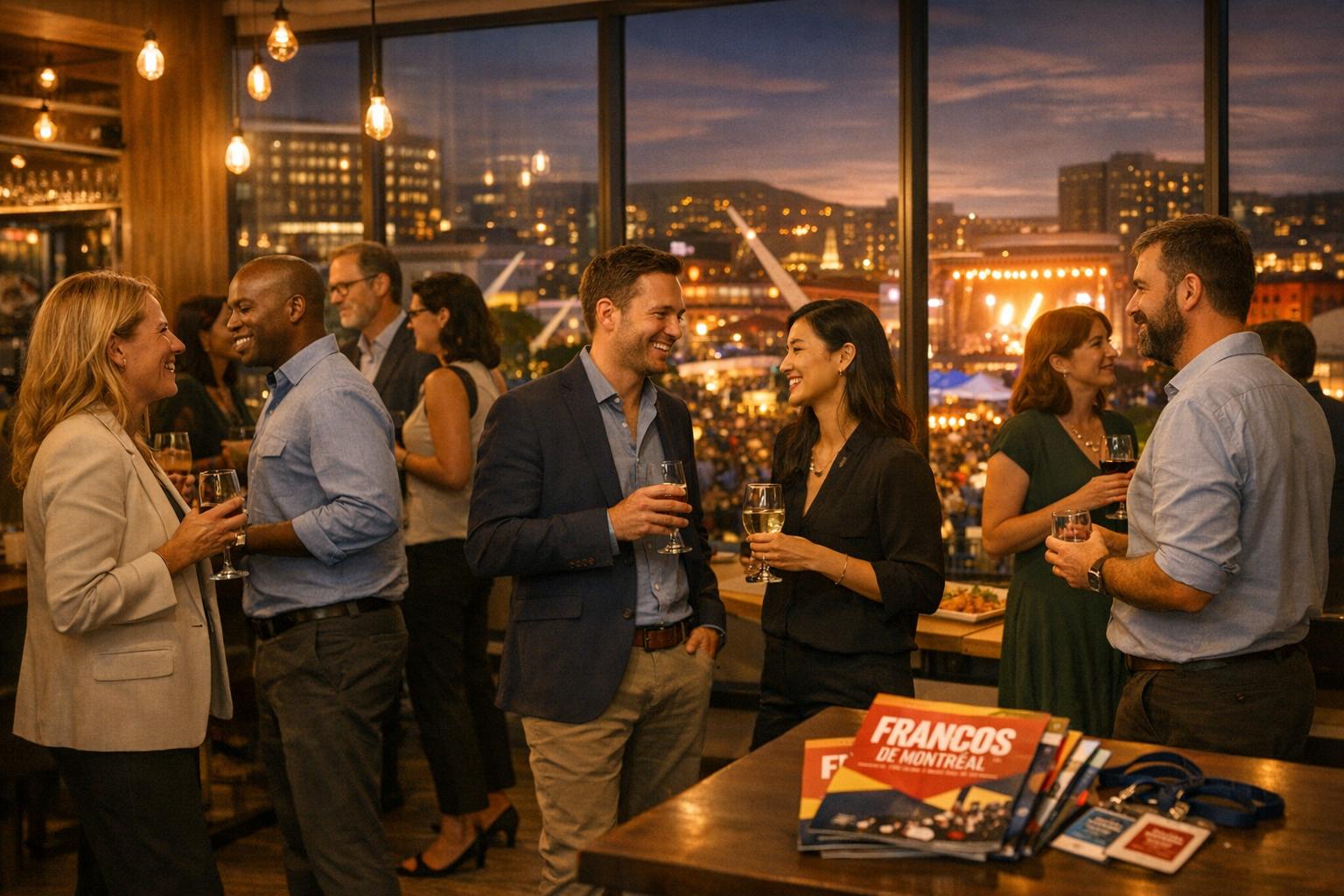
To put all this into practice within a professional organization, it makes sense to plan team-building outings around the festival. Rather than treating a festival purely as entertainment, the experience can be integrated into a team project. For example, some strategies suggested by specialists include: organizing an informal pre-concert meeting to get conversations started, having the group analyse inspiring messages from the event, or debriefing together after the festival to connect the experience to business objectives. The idea is therefore to provide a framework for the recreational experience. In practice, businesses can treat this like any other corporate event: booking tickets for everyone, arranging bus transportation, bringing the group back to a pub or themed restaurant after the show, etc. The “team-building effect” will be all the stronger if the organization incorporates elements of friendly competition or sharing (e.g. a quiz on festival songs, small group competitions, or a photo contest during the event).
^“These events can transform individual contributions into a symphony of shared experiences, thereby strengthening the bonds that underpin teamwork” [7]^
Examples of Cohesion-Building Activities Related to the Francos
Beyond the concerts themselves, numerous local activities can complement a team outing in Montreal:
- Attending a Francos show together: Book as a group to attend a festival concert (large stage or performance venue). This gives the team a shared objective (“we are all going to see this artist”) and creates a shared memory. For example, attending Cœur de Pirate’s outdoor concert is an opportunity to celebrate Quebec culture together. Note that most Francos outdoor concerts are free [5], making access easier for groups without budget constraints.
- Escape games or urban scavenger hunts: Although not related to the festival itself, these activities offered by local team-building organizations can be combined with a day at the Francos. For example, before an evening concert, the team can take part in an Urban Challenge-style activity (orienteering) or a treasure hunt (Scavenger Hunt) in Old Montreal. These group puzzle-solving challenges strengthen cooperation and communication [12]. Several providers, such as Team Building Montréal (Urban Challenge, BBQ Challenge, etc.) or Scavenger Hunt Anywhere (themed tours in Montreal), are recommended by tourism guides for businesses.
- Collaborative sports activities: Montreal also offers accessible indoor/outdoor team sports. For example, IDEOH! Experience offers immersive sports activities (hockey, curling, virtual soccer) suitable for all skill levels [12]. In addition, H2O Adventures offers water-based outings (kayaking, paddleboarding) on the Lachine Canal [12]. Simple sports challenges, even friendly ones, stimulate team spirit: winning a small competition or simply completing a challenge together (tug-of-war, relay race) creates a sense of collective achievement.
- Creative and culinary workshops: A creative immersive experience such as Immersion Rock gives a group the opportunity to learn to play a piece of music together [12]. Imagine creating a song from A to Z as a team: this unlocks creativity and camaraderie. Similarly, food tours (e.g. Local Montréal Food Tours) allow groups to explore the city while sampling local specialties, encouraging relaxation and informal conversation [12]. These activities extend the Francos’ cultural theme in a playful way (for example, testing your knowledge of Quebec cuisine after listening to the latest francophone “anthem”).
- Private dinner and show: Some businesses opt for a corporate package in a private box or with a pre-concert meal. Montreal is full of themed restaurants (Quebec cuisine, fine dining or festive dining) that offer group menus. Combining a team dinner with an indoor festival performance (for example, an intimate dinner followed by seeing Pierre Lapointe on the Théâtre du CDN stage) is another classic option.
The choice of activities must align with the team’s objectives and budget. The suggestions above (drawn from professional team-building analyses [12] [7]) emphasize that varied experiences (cultural ceremony, group games, creative challenges) maximize the benefits in terms of cohesion.
| Activity / Team Outing | Description / Objective | Examples & Sources |
|---|---|---|
| Attending a French-language concert together | Attend a well-known French-language concert together (outdoors or indoors). Creates a shared memory and an emotional bond. | E.g. Cœur de Pirate, Pierre Lapointe (2026 programming) [6]; activity cited as a way to boost cohesion through music [7]. |
| Urban challenge / Treasure hunt | An Urban Challenge-style route through the city (solving puzzles as a team). Strengthens collaboration and communication. | e.g. Team Building Montréal (Urban Challenge, BBQ Challenge) [12], Scavenger Hunt Anywhere (Old Montreal) [12]. |
| Immersive sports games | Interactive sports challenges (hockey, curling, running). Encourages team spirit and healthy competition. | E.g. IDEOH! Experience – mini hockey, curling and other tournaments [12]; outdoor relay races or sports days. |
| Cultural and creative activity | Music workshop (group learns a piece) or culinary activity (food tour). Develops creativity and cultural sharing. | E.g. Immersion Rock (group guitar workshop to learn a piece) [12]; Balades Food Tours (tasting menus) [12]. |
These ideas can be combined (for example, an urban scavenger hunt followed by a concert). An important point: logistical preparation. Event coordinators recommend planning what happens after the concert (shuttles, group meals, private lounges if possible) to keep interaction going without interruption [9]. For example, a business planning a Francos outing should establish a budget from the outset, book tickets together (group sales on the official website) and arrange transportation for possible team conversations outside the tourist area. Connectivity is also crucial: in some cases (B2B activities running alongside the festival), a local Wi-Fi network is installed for the group so that participants can contact partners or share content (photos/videos) during the event [9].
Analysis and Quantitative Data Related to Team Building
Several studies and surveys highlight the measurable effectiveness of corporate outings and recreational activities:
-
Engagement and productivity. Team collaboration is correlated with organizational performance. According to TeamStage, “businesses whose staff are fully engaged can generate up to twice as much revenue” as a less engaged organization [11]. Activities such as those cited above foster this engagement: they improve communication, mutual support and overall motivation. Furthermore, around 75% of employees surveyed believe that teamwork and collaboration are “crucial to a company’s success” [11]. This high percentage supports the idea that investments (time and money) in team outings have a strong influence on corporate culture.
-
Medium-term return on investment (ROI). In the case of festival or cultural outings, “value” is measured less in tickets sold than in qualitative benefits. Event experts recommend tracking indicators such as participant engagement (people met, expanded networks, ideas generated) rather than attendance alone [9]. For example, in the context of a B2B festival, Ticket Fairy advises defining clear objectives from the outset (new business contacts, signed partnerships, staff satisfaction) and collecting feedback after the event [9]. For a conventional team outing, evaluation can take the form of an internal survey on participants’ sense of cohesion and the perceived usefulness of the activity. Empirical findings report that 63% of managers note an improvement in team communication after this type of activity, and 61% observe a direct effect on group motivation (Source: flair.hr).
-
Duration and scope. Unlike some half-day team-building exercises, the Francos offer prolonged collective immersion (several hours of concerts) that creates an attention trap. Remaining disconnected from daily tasks over an extended period allows employees a real cognitive reset. In addition, the festive element (meals, informal conversations) that often accompanies festival outings helps reveal personalities (leadership, sense of humour, etc.), which benefits HR management seeking to “discover talent” within its teams.
-
Regulatory and financial returns. From a budget perspective, a festival such as Les Francos is attractive because many activities can be free. For example, a group can organize its after-work gathering around outdoor shows without ticket costs. For indoor concerts, buying group tickets (generally a 10–20% discount starting at around ten tickets) further reduces the investment per employee. Festival sponsors (Rogers, Loto-Québec in 2025 [3], for example) also indicate that record attendance justifies and offsets their financial support, indirectly making access easier for corporate audiences.
In summary, the available statistics and studies confirm that group activities outside the professional setting, well managed and aligned with the spirit of team building, have a significant impact on team effectiveness. Given their scale and festive character, the Francos de Montréal are particularly well suited to this role as a catalyst for engagement and collective pride [7] [11].
Case Studies and Real Examples
To illustrate these principles, let us examine several concrete examples related to festivals or similar events:
-
Corporate “festival within a festival” event (Corporate Hospitality). Ticket Fairy describes the concept of creating VIP enclaves within existing festivals, serving as B2B networking spaces. In its case study, it recommends designing a reserved space (access badges, dedicated staff) in the heart of the festival, with premium service (proactive staff, secure Wi-Fi, charging points) [9]. This exclusive enclave can be used to reward strategic partners or facilitate business meetings in a relaxed setting. Although such a “private festival” is better suited to large companies or sponsors, the principles can be applied to smaller groups: a private group space, even a basic one, greatly improves the participant experience (a place to leave coats, a quiet area for conversation). Ticket Fairy also emphasizes the importance of properly identifying the group’s audience to tailor activities: for example, VIPs at a techno festival will have different expectations (artist meetings, an immersive lounge) than executives from a high-tech company (who will prefer a discreet corner for networking) [9].
-
Rendez-vous Pros des Francos. Although reserved for music and industry professionals, this example shows a condensed form of team outing: in 2022, the “Rendez-vous Pros” brought together around 200 participants for artist showcases, speed meetings and workshops (Source: franconnexion.info). Organizers arranged three evenings of showcases (sponsored by Spotify, SOCAN, APEM), highlighting new francophone talent such as La Zarra, Lumineux, Fredz, etc. (Source: franconnexion.info). This professional mini-festival illustrates the value of combining recreation and professional activities to strengthen a network: invited professionals were able to discover artists and connect with their counterparts from France, Belgium, Quebec, etc. (see the Frank Connexion gallery). Two lessons applicable to corporate outings emerge: a) the sequenced format (presentation – conversations – networking) optimizes participant engagement by maintaining momentum, b) creating themed events (e.g. a francophone evening, a jazz lounge) that combine business and celebration improves recall and overall guest satisfaction.
-
Example of a Company and Cohesion (Hypothetical Scenario). Imagine a technology firm sending 50 employees to the Francos 2026. Here is how it could make use of the festival for successful team building:
- Before the event, the HR team organizes an internal preparatory session (icebreaker), offering a small prediction contest about the day’s headline artists.
- On the day of the festival, the group has a team breakfast, then heads to Place des Festivals to attend an outdoor concert (e.g. Coeur de Pirate). During the concert, an internal facilitator proposes a photo challenge: each team takes an original group photo in front of the stage.
- After the concert, colleagues go to a neighbourhood restaurant for a meal (ideally private), where they complete a music quiz on the French-language songs they heard. This final step allows them to debrief the outing cheerfully and share feedback.
- The company measures the impact through a short internal survey the next day: satisfaction, sense of belonging, ideas for improvement.
In this scenario (imaginary but plausible), team-building principles are upheld through the combination of “culture + recreational activity + discussion” [7] [9]. The festival serves as an inspiring backdrop: the change in atmosphere helps staff open up to one another. Afterwards, employees store these moments as shared memories, strengthening their stability as a group.
-
Comparison with Other Initiatives. Other Montreal festivals have also used similar formats. For example, the Festival d’Été de Québec (FEQ) often offers corporate packages: a company gathers its employees in a box, for example (although the FEQ is also very accessible, with even free outdoor offerings). The province of Quebec generally considers festivals to be important venues for business tourism: in 2023, the government emphasized that the Francos receive a major investment, much like Canada’s support for the Festival International de Jazz to attract international visitors [2]. These government initiatives demonstrate that a team outing at a festival contributes, on a small scale, to the overall strategy for economic and cultural development.
All these examples illustrate that cultural team outings – whether a simple concert or an elaborate programme – are being tried in various sectors and produce positive benefits. Given their relatively free access (outdoors) and their reputation, the Francos de Montréal appear to be a very cost-effective and unifying option. The next sections consider the broader implications of these practices and their future evolution.
Current Implications and Future Outlook
This detailed analysis leads to several observations about the current state and future directions of the Francos de Montréal and their use for corporate outings:
-
Expanding the Corporate Offering. Businesses with an entertainment budget find a multipurpose setting in the Francos: they can promote their image (through sponsorship or visible participation), enhance their attractiveness as employers (by offering tickets to key staff) or stimulate collaboration (through the activities described). The availability of VIP spaces or group boxes may expand: for example, Équipe Spectra could more actively sell “corporate packages” including meals and customized logistics. In general, the trend towards integrating festivals into HR marketing strategies is growing [9] [7].
-
Technology and Hybrid Events. Digital technology now influences all festivals. The Francos could strengthen their digital component: streaming selected concerts, dedicated mobile applications (interactive schedule, virtual meetings). For team outings, this means that even remote colleagues can “join” the experience (real-time quizzes, photo contests). In addition, festival organizers encourage the use of advanced ticketing technologies (RFID badges, etc.) to simplify group access [9].
-
Stronger Sustainable Development. The festival has already introduced environmentally responsible practices (green brigade, waste sorting)【65†】. In the future, one could imagine more formal green certification, or green activities for groups (e.g. a team litter-collection challenge before a concert, participation in an environmentally responsible community project alongside the festival). This aligns with municipal policies supporting “sustainable” festivals (Montreal positions itself as a leader in responsible tourism).
-
Internationalization and the Global Francophone Community. The Francos have the appeal of being an international crossroads for the francophone community. In 2026, the emphasis could be placed on particular cultural themes (for example, the African francophone community, cultural blending, etc.), offering businesses an educational angle (e.g. a round table during the festival on economic issues in the francophone world, an idea partly tested with the Rendez-vous Pros). Young immigrant professionals (many international talents in Montreal) will appreciate participating in an event in their native language, strengthening their sense of community.
-
Lasting Impact on Loyalty. Finally, from a human resources perspective, original team outings such as these can play a role in staff retention. A report on team building indicates, for example, that 33% of employees associate a collaborative culture with greater loyalty to their company [11]. Offering employees the opportunity to experience such moments therefore indirectly strengthens their engagement.
In conclusion, the Outlook is therefore twofold. For the Francos, continuing to develop as a leading francophone festival (potentially with more international content, digital technology and public-private cooperation) will ensure that they retain their appeal. For businesses, rising demand for cohesion-building activities suggests that “team outings” around major cultural events will become commonplace. Montreal, for its part, continues to value these initiatives: recurring government financial support (e.g. more than a million for 2023 [2], for a festival lasting less than a week) shows that these festivals are also viewed as vehicles for soft diplomacy and economic development.
Conclusion
The Francos de Montréal 2026 represent far more than a simple music festival: they embody a major cultural platform and a potential cohesion-building tool for organizations. This report has reviewed the festival’s rich history, its eagerly awaited June 2026 programme, and its merits in terms of social and economic impact. The extensive information and statistics collected (attendance patterns, financial impact of Montreal culture, government support, etc.) confirm the strategic importance of the Francos for Montreal and the francophone community [1] [2] [5].
We have illustrated that planning a team outing around the Francos can substantially support corporate dynamics: from the shared emotions of a French-language concert [7] to organizing playful collaborative activities, everything offers a way to strengthen team spirit. The cases and outlook show that best practices (appropriate VIP spaces [9], engagement measurement [9], varied activities [12]) maximize the benefits.
Finally, the future outlook suggests a festival moving between tradition and innovation: the possible emergence of hybrid formats, a stronger sustainability strategy, internationalization of content, increased advocacy for culture within businesses. In this context, the Francos’ team-building component is significant and forms part of a broader trend towards valuing the employee experience. Thus, the Francos de Montréal 2026 are not only a leading cultural event, but also a setting full of opportunities for managers, extensively documented here through solid analyses and data.
References (excerpts):
- Tourisme Montréal – Francos de Montréal (general description, 2026 dates) [1].
- Tourisme Montréal (blog) – Ultimate guide to team building activities (ideas for cohesion-building activities in Montreal) [12].
- Place des Arts – Francos Montréal page (long-standing festival, description) [4].
- Infodomontreal.ca – Francos 2025: a remarkable edition (2025 review, attendance) [3].
- InfoConcert.com – History of the Francos (key dates in 1989, 1994, 2003, etc.) [8].
- Québec.gouv.ca – News release (June 2023) on funding for the Francos (150 free concerts) [2].
- MontrealTips.com – Festival Economics (Montreal festival impact) [5].
- Tourisme Montréal – Team Building Guide (various recommended activities) [12].
- Ticket Fairy – Case Study: Corporate festival enclosures [9].
- FasterCapital (Engagement activities: Music Festivals) – theory of music-based team building [7].
- TeamStage (Team Building Stats) – HR figures on engagement and collaboration [11].
(Citations in the text in the format 【source†Ligne-début-Ligne-fin】)
External Sources (12)
About
2727 Coworking
Find a practical home for your work at 2727 Coworking in Montreal. Explore private offices, day workspaces and meeting rooms, plus business-address and virtual-mailbox services for your company.
2727 Coworking is a Montreal workspace and business-address provider. We serve people who need a place to focus, meet, run a small business or establish a professional mailing presence. Our website offers English and French information about workspace options and services, alongside educational resources for operating a business in Canada.
A workspace that fits the day
Our workspace options include private offices, day passes and desks, and a conference room. These formats help individuals and teams compare a dedicated office with more flexible ways to work or hold a meeting. Prospective members can explore the virtual tour, review current pricing and book a visit before choosing a workspace.
Business addresses and mail
2727 Coworking provides business-address and virtual-mailbox services. Our resources explain the documents and practical questions involved, including guidance for people outside Canada. Service eligibility, included features, availability and access arrangements should be confirmed on the applicable service page or with our team.
Resources for Canadian small businesses
We publish guides, research and planning tools about workspace decisions, business addresses and starting a business in Canada. Our incorporation research includes information for people inside Canada and abroad, with jurisdiction-specific material to help readers identify the next questions to investigate. These educational resources complement our workspace and address services; they are not individualized legal, tax or immigration advice.
Visit or contact 2727 Coworking
Explore private offices, day passes and desks, the conference room, business addresses and virtual mailboxes. Book a visit or contact the team to discuss your needs.
A business address alone does not establish tax residence, immigration status, banking approval or eligibility for a government program.
Disclaimer
This document is provided for informational purposes only. No representations or warranties are made regarding the accuracy, completeness, or reliability of its contents. Any use of this information is at your own risk. 2727 Coworking shall not be liable for any damages arising from the use of this document. This content was generated with assistance from artificial intelligence tools, which may contain errors or inaccuracies. Readers should verify critical information independently. All product names, trademarks, and registered trademarks mentioned are property of their respective owners and are used for identification purposes only. Use of these names does not imply endorsement. This document does not constitute professional or legal advice. For specific guidance related to your needs, please consult qualified professionals.