Day Office in Montreal: The Complete Guide to Daily Workspace Rental and Day Passes at Coworking Spaces
The concept of renting a professional workspace for a single day, commonly known as a "day office" or "day pass," has become one of the fastest-growing segments of Montreal's flexible workspace market. As hybrid work models become the norm rather than the exception, and as Montreal's population of freelancers, remote workers, and digital nomads continues to expand, the demand for high-quality, commitment-free professional workspace has surged [1].
This guide provides a comprehensive analysis of the day office market in Montreal, including pricing across neighborhoods, what to expect from a day pass experience, how to choose the right space for your needs, and the economic and practical considerations that make occasional coworking an increasingly rational choice for a wide range of professionals.
Executive Summary
The day office model sits at the intersection of several powerful trends reshaping how and where people work. In Montreal specifically:
Day pass pricing ranges from approximately $20 to $60 across the city's coworking spaces, with significant variation based on location, amenities, and the operator's market positioning [2]
An estimated 77% of companies now operate hybrid work models, creating a large population of employees who work outside traditional offices several days per week [3]
Montreal's severe winters create a unique seasonal driver: remote workers who can comfortably work from home patios in summer often find themselves desperate for alternatives to their apartments by January, making the day office an essential tool for maintaining productivity and mental health [4]
Day pass usage in coworking spaces has grown significantly since 2020, with operators reporting that occasional users now represent a substantial and growing share of their revenue [5]
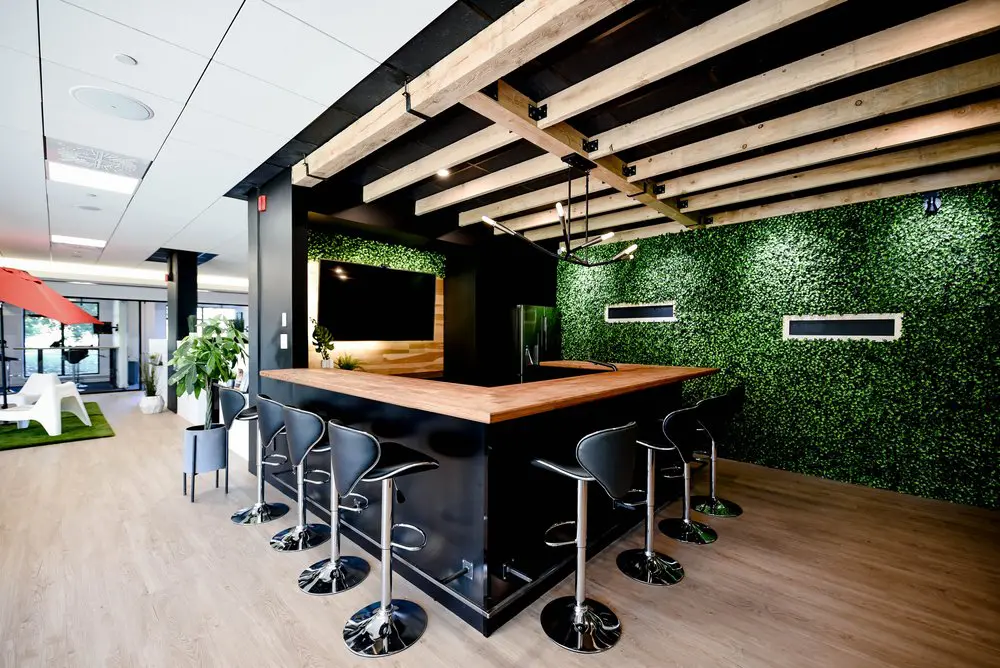
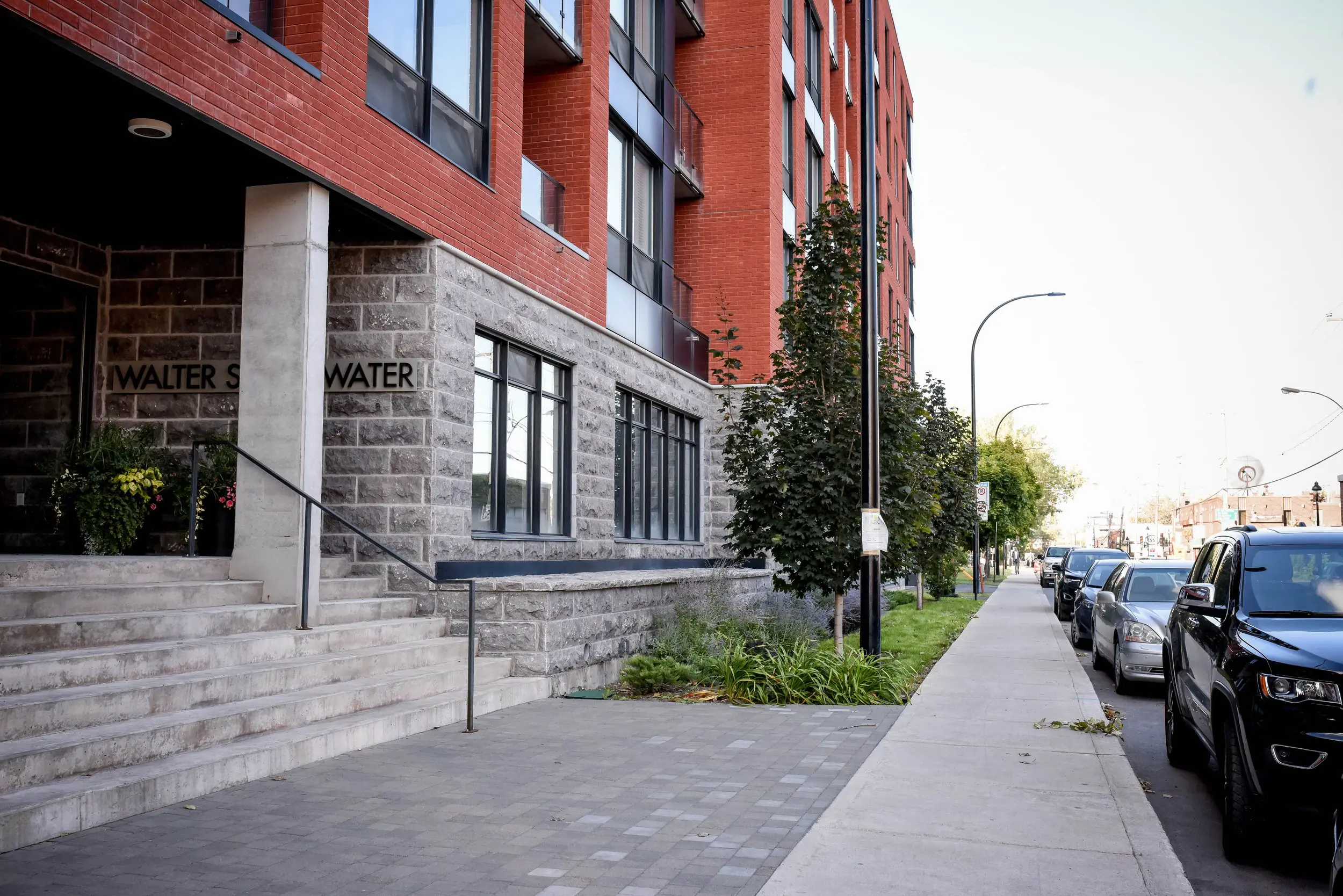
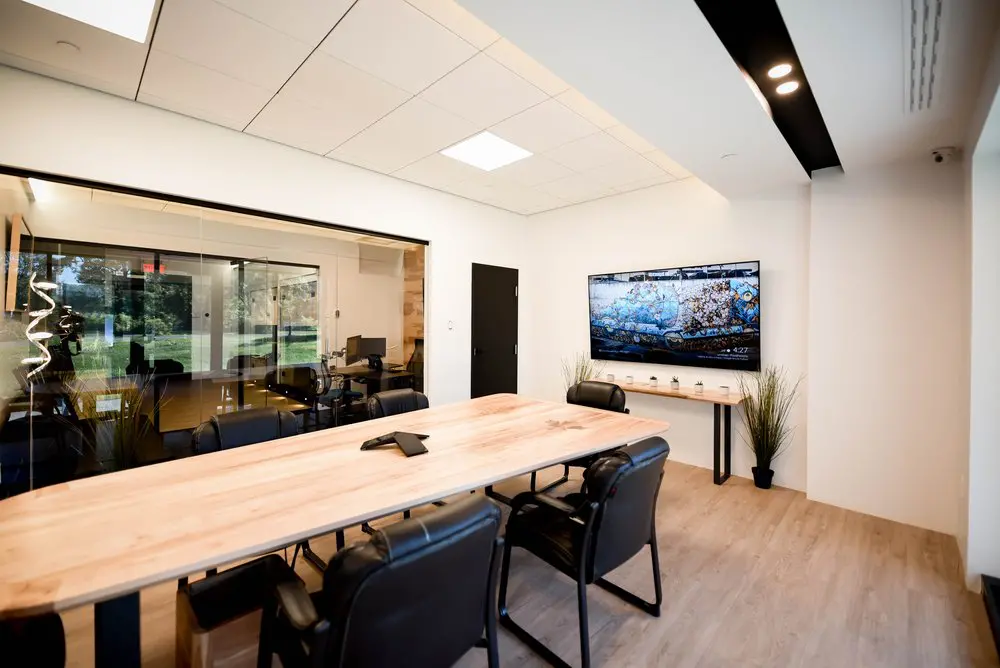
2727 Coworking space, 2727 Saint-Patrick, Montreal
What is a Day Office?
Definition and Concept
A day office is a professional workspace available for single-day rental without requiring a monthly membership, long-term commitment, or lease agreement. The concept encompasses several related offerings:
Day Pass: Access to a shared coworking space (hot desk) for one full business day, typically including WiFi, desk space, power, and access to common areas. This is the most common and affordable entry point.
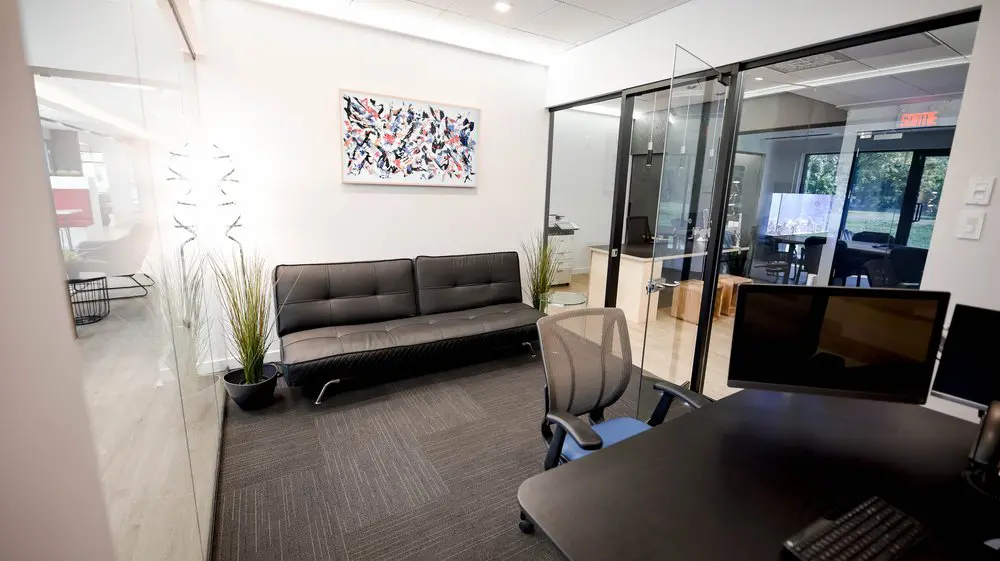
Day Office: A private, enclosed office space rented for a single day, offering greater privacy and often including a door that locks, a phone, and sometimes a monitor. This option is typically more expensive than a hot desk day pass.
Hourly Workspace: Some operators offer workspace by the hour, with minimum booking periods typically ranging from one to four hours. This model is popular with professionals who need a space for a specific meeting or focused work block [6].
Multi-Day Passes: Bundles of day passes (typically 5 or 10) sold at a discount. These are popular with professionals who use coworking space regularly but not frequently enough to justify a monthly membership.
How a Day Pass Works in Practice
The typical day pass experience in Montreal follows this pattern:
Booking: Most spaces allow same-day walk-ins, but booking in advance (via website or app) is recommended during peak periods. Some operators require registration and payment online before arrival.
Arrival: You check in at reception or via an app, receive WiFi credentials and any access codes, and are directed to available workspace.
Working: You have access to a hot desk (any available seat), WiFi, power outlets, kitchen/refreshment facilities, and typically restrooms and common areas. Meeting rooms, phone booths, printing, and locker storage may be included or available at additional cost depending on the operator.
Departure: You pack up your belongings and leave. There is no cleanup obligation beyond basic courtesy (clearing your desk, disposing of food waste).
The History and Evolution of Day Office Space
From Executive Suites to Flexible Passes
The concept of renting office space on a short-term basis is not new, but the modern day pass model represents a dramatic evolution from its predecessors. In the 1960s and 1970s, "executive suite" operators like Regus (founded in Brussels in 1989, now IWG) began offering serviced offices with flexible terms, but these still required monthly or annual commitments and were priced for corporations, not individuals [34].
The coworking movement, which emerged in the mid-2000s with Brad Neuberg's San Francisco Coworking Space (2005) and later popularized by operations like Indy Hall in Philadelphia, introduced the idea that workspace could be community-oriented rather than purely transactional [35]. However, even early coworking spaces typically required monthly memberships.
The day pass as a distinct product category gained traction around 2010-2012, when coworking operators realized that a significant portion of potential users wanted access without commitment. WeWork's introduction of its "On Demand" product and the emergence of aggregator platforms like Croissant, Deskpass, and LiquidSpace created a marketplace that legitimized occasional coworking as a mainstream work arrangement [17][18].
The Post-2020 Acceleration
The pandemic fundamentally accelerated the adoption of flexible workspace, including day passes. Before 2020, the global coworking market was growing steadily but was still considered niche. By 2022, coworking had become mainstream, and the day pass model experienced what industry analysts describe as a paradigm shift [36].
In Montreal specifically, the post-pandemic period saw several developments that boosted day office demand:
Downtown office vacancy rates climbed above 18% as companies reduced their footprints, pushing commercial real estate operators to explore flexible models [37]
Hybrid work policies at major Montreal employers (including Ubisoft, SAP, CGI, and the large banks) created populations of workers who need professional workspace 2-3 days per week but do not have assigned desks at the corporate office
The rise of the "third place" concept, where professionals seek workspace that is neither home nor the corporate office, created demand for neighborhood-based alternatives that offer convenience without commute stress [38]
The Montreal Market in 2025-2026
Montreal's coworking market has matured considerably. The city now hosts over 100 coworking and flexible workspace locations across its boroughs, ranging from large corporate operators like Regus/IWG and WeWork to boutique independent spaces like 2727 Coworking and Halte 24-7 [8]. The total flexible office inventory in Montreal now exceeds 2 million square feet, representing approximately 3-4% of the city's total office stock.
Day pass revenue has become increasingly important for operators. Industry data suggests that occasional users (those purchasing day passes or multi-pass bundles rather than monthly memberships) now account for 15-25% of revenue at spaces that offer both models, up from less than 5% before the pandemic [5].
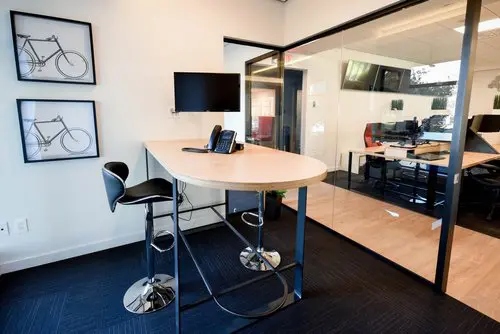
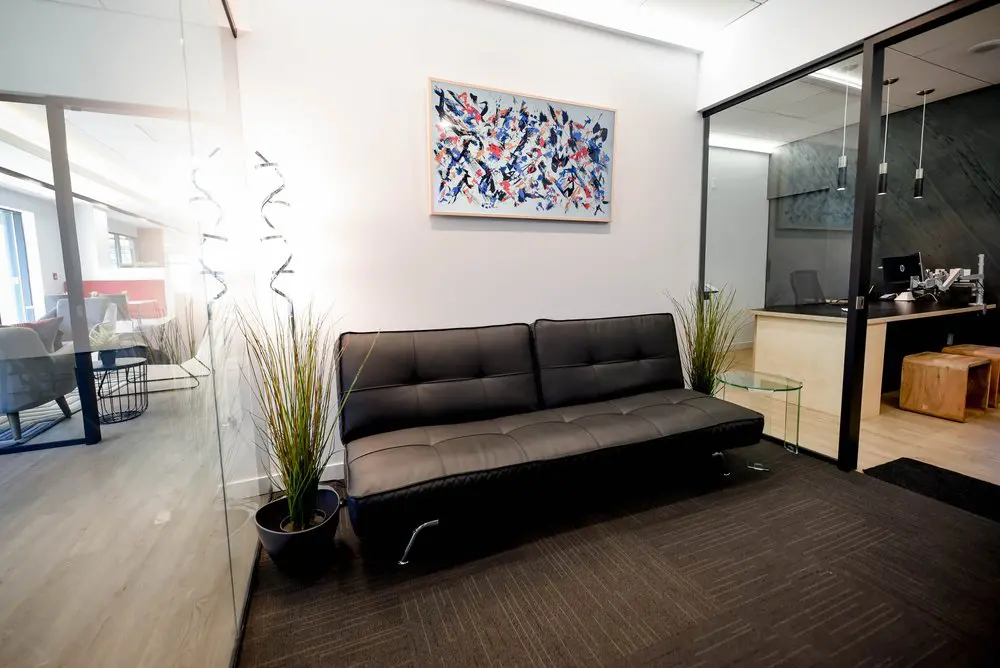
2727 Coworking space, 2727 Saint-Patrick, Montreal
The Montreal Day Office Market: A Pricing Analysis
Pricing Overview by Neighborhood
Day pass pricing in Montreal varies significantly based on location, amenities, and the operator's brand positioning. The following analysis covers the major coworking neighborhoods:
Phone booth usage (increasingly included as video calls have become standard)
Locker or storage (rarely included for day pass users; typically a monthly add-on)
Mail handling (not applicable for day users)
Rarely Included:
Monitor/external display rental
Standing desk access (some spaces reserve these for members)
After-hours access (day passes typically cover business hours only, 9 AM - 6 PM)
Parking
Price Comparison: Day Pass vs. Cafe vs. Home Office
The day pass exists in an economic ecosystem alongside two common alternatives: working from a cafe and working from home. Understanding the true cost comparison helps professionals make informed decisions.
The cafe option, while appearing cheaper on the surface, often approaches or exceeds the cost of a day pass when you factor in the cost of food and drinks over a full day, the productivity loss from unreliable WiFi, the inability to take private video calls, and the implicit social pressure to continue ordering. A study on coworking productivity found that professionals working in dedicated coworking spaces reported higher concentration levels and fewer distractions compared to those working from cafes or home [12].
Who Uses Day Offices in Montreal?
The Hybrid Employee
The largest and fastest-growing segment of day office users is the hybrid employee: someone who is employed by a company but works from a location other than the corporate office several days per week. In Canada, an estimated 77% of companies now operate some form of hybrid model [3]. For many of these workers, the choice is between working from home (which can lead to isolation, distraction, and blurred work-life boundaries) and finding a professional workspace near their home.
A day pass at a neighborhood coworking space solves this problem elegantly: the employee gets a professional environment with none of the commute time to a downtown corporate office, and the employer benefits from increased productivity without the cost of maintaining excess office space.
Some companies now provide coworking stipends as part of their benefits packages, recognizing that giving employees access to professional workspace near their homes is more cost-effective than maintaining large corporate offices with low utilization rates [13].
The Freelancer Between Clients
Montreal's robust freelance economy includes tens of thousands of independent professionals in fields ranging from graphic design and web development to consulting, translation, and content creation [14]. For freelancers who don't need a dedicated workspace every day, a day pass provides access to professional infrastructure when they need it, whether for focused project work, client meetings, or simply a change of environment to break through creative blocks.
The tax deductibility of day pass expenses makes this an even more attractive option. In Quebec, coworking day pass purchases are generally deductible as business expenses for self-employed professionals, reducing the effective cost by the freelancer's marginal tax rate [15].
The Business Traveler
Montreal hosts a significant volume of business travel, driven by its position as a technology hub, a center for AI research, and a popular destination for conferences and trade shows [16]. Business travelers who need a professional workspace between meetings, before a flight, or for a focused work session find that a coworking day pass is far more productive than attempting to work from a hotel room or lobby.
WeWork's "On Demand" product specifically targets this segment, offering pay-per-use access to workspace in cities worldwide [17]. Similarly, platforms like Deskpass and LiquidSpace aggregate day pass availability across multiple operators, making it easy for travelers to find workspace in unfamiliar cities [18][19].
The Startup Team Testing the Waters
For early-stage startups considering a transition from working at home or from a cafe to renting dedicated workspace, day passes serve as a low-risk trial. A founding team can visit multiple coworking spaces over several weeks, testing different neighborhoods, communities, and amenities before committing to a monthly membership [20].
The Remote Worker Fighting Cabin Fever
Montreal's climate makes this a particularly significant use case. With temperatures regularly dropping below -20C in January and February, and with daylight hours reduced to as few as 8.5 hours, remote workers who spend their days in small apartments can experience significant drops in mood, motivation, and productivity [4].
Research on remote work and cabin fever indicates that lack of social interaction and reduced exposure to natural light are primary contributors to seasonal productivity decline [21]. A coworking day pass addresses both: members are surrounded by other professionals, and many Montreal coworking spaces (particularly those in converted industrial buildings) feature large windows that maximize natural light exposure.
This seasonal pattern creates predictable demand cycles for Montreal coworking operators, with day pass usage typically peaking between November and March when the need to "get out of the house" is most acute.
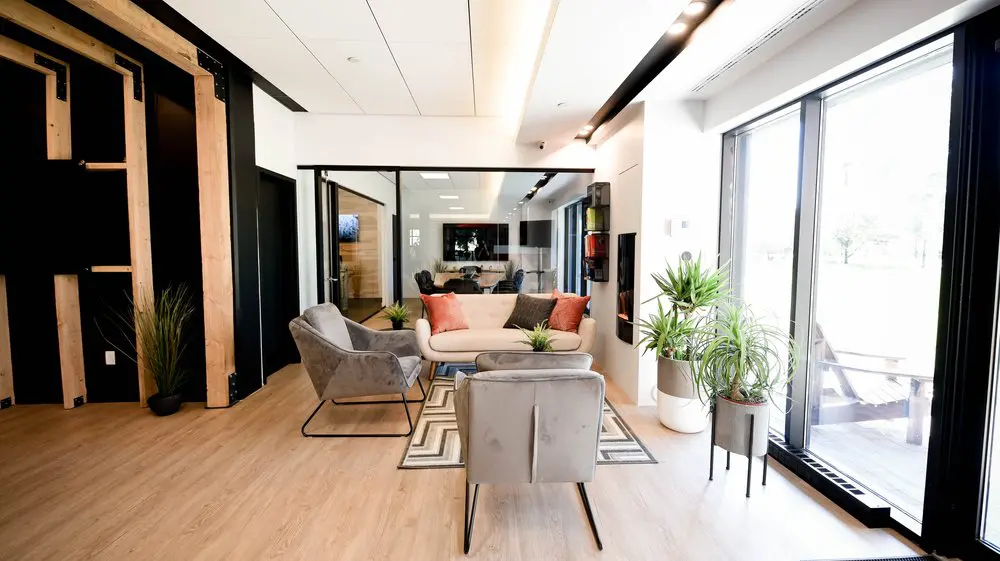
2727 Coworking space, 2727 Saint-Patrick, Montreal
Productivity Science: Why a Change of Environment Works
The Neuroscience of Place-Based Productivity
The productivity boost that many professionals experience when working from a coworking space rather than from home is not merely anecdotal. Research in environmental psychology has identified several mechanisms that explain why a change of workspace can enhance cognitive performance.
Context-Dependent Memory and Focus: Studies in cognitive psychology have demonstrated that our brains form associations between physical environments and mental states. When you work, sleep, relax, and eat all in the same apartment, your brain struggles to maintain clear boundaries between "work mode" and "rest mode." A dedicated workspace, even one used only occasionally, helps activate focused work-related cognitive patterns [39].
Social Facilitation Effect: The presence of other people working around you can enhance performance on familiar tasks, a phenomenon documented by social psychologist Norman Triplett as early as 1898 and extensively studied since. In a coworking context, being surrounded by other focused professionals creates a subtle social pressure to remain productive [40].
The Hawthorne Effect Applied to Self-Employment: When you work in a visible, shared environment, you tend to work more consistently and with fewer breaks than when working alone and unobserved. For freelancers and remote workers who lack the external accountability of a traditional office, a coworking day pass provides a lightweight version of this accountability structure.
Natural Light and Cognitive Performance
One of the most significant environmental factors affecting workplace productivity is exposure to natural light. Research published in the Journal of Clinical Sleep Medicine found that workers with windows in their workplace received 173% more white light exposure during work hours, had 46 minutes more sleep per night, and reported better physical and mental health outcomes than workers in windowless environments [41].
This finding has particular relevance for day office selection in Montreal. Many of the city's coworking spaces are housed in converted industrial buildings with large factory windows that provide abundant natural light. The former industrial corridors along the Lachine Canal, including the Griffintown and Saint-Henri neighborhoods, are particularly well-endowed with these high-ceiling, large-window spaces. At 2727 Coworking, the building's industrial heritage means floor-to-ceiling windows overlooking the Lachine Canal, providing natural light throughout the workday [28].
Air Quality and Cognitive Function
Indoor air quality is an often-overlooked factor in workspace productivity. Research from the Harvard T.H. Chan School of Public Health's CogFx study found that workers in well-ventilated buildings with low levels of CO2 and volatile organic compounds (VOCs) scored 61% higher on cognitive function tests compared to those in conventional buildings [42].
This is relevant to the day office decision because:
Home apartments often have limited ventilation, especially during Montreal's winter months when windows remain closed for five months
Cafes have air quality affected by cooking, steam from espresso machines, and high occupancy density
Professional coworking spaces typically invest in commercial HVAC systems with proper filtration and fresh air circulation, maintaining better air quality than most residential or food-service environments
The Commute as a Transition Ritual
Counter-intuitively, research on remote work satisfaction has found that many remote workers miss their commute, not the commute itself, but the psychological transition it provided between "home mode" and "work mode" [43].
A day pass at a neighborhood coworking space provides a version of this transition: a brief walk, bike ride, or metro trip that signals to your brain that the workday has begun. The return trip provides an equally valuable signal that work is over, helping to maintain the work-life boundaries that remote workers frequently cite as their greatest challenge.
The Montreal Day Office Experience: What to Look For
Internet Speed and Reliability
For any knowledge worker, internet connectivity is the single most important amenity. A day pass at a space with unreliable WiFi is worse than useless; it's a day wasted. When evaluating a day office, look for:
Minimum download speeds of 200 Mbps (sufficient for video calls, cloud-based work, and file transfers)
Upload speeds of at least 50 Mbps (critical for video conferencing and uploading large files)
Wired ethernet options at desks (for users who need maximum reliability)
Redundant connections (dual ISPs so that a single provider outage doesn't shut down the space)
Montreal benefits from a competitive ISP market with several independent providers offering fiber-optic connections, which means well-run coworking spaces can provide enterprise-grade connectivity at reasonable cost [22].
Privacy for Calls and Video Meetings
The rise of video conferencing has made privacy a critical consideration for day office users. In an open coworking environment, a video call with a client or a sensitive internal meeting requires an enclosed space. Look for:
Phone booths: Soundproof, single-occupancy pods designed for calls and video meetings. The best spaces have multiple phone booths to prevent queuing during peak hours [23].
Bookable meeting rooms: For longer sessions or multi-person calls, a meeting room provides a professional backdrop and reliable privacy.
Acoustic management: Spaces that invest in sound-absorbing materials, white noise systems, and layout design that minimizes noise transmission between zones [24].
Ergonomic Comfort
A full day of work demands proper ergonomic support. This is where the day office experience most dramatically outperforms the cafe alternative. Evaluate:
Chair quality: Adjustable office chairs with lumbar support (not cafe chairs or decorative seating)
Desk height: Proper working height (28-30 inches) with enough surface area for a laptop plus notebook
Standing desk options: Increasingly common in premium coworking spaces, these allow users to alternate between sitting and standing throughout the day [25]
Monitor availability: Some spaces offer external monitors for rent, which dramatically improve productivity for extended work sessions
Kitchen and Refreshment Facilities
A full workday requires sustenance. The best day office experiences include:
Complimentary coffee and tea (quality varies widely; some spaces invest in barista-grade machines while others offer basic drip coffee)
Filtered water
Refrigerator access for brought lunches
Microwave for reheating food
Proximity to food options: The surrounding neighborhood matters as much as the internal kitchen. Spaces near Montreal's food corridors (Notre-Dame West, Saint-Laurent, etc.) offer significant lunchtime advantages
Transit Accessibility
Day pass users, by definition, do not develop a daily routine around their commute. They may visit a space once, occasionally, or sporadically. This means transit accessibility is even more important for day users than for regular members, who can optimize their commute route over time.
The most transit-accessible coworking spaces in Montreal are those near major metro stations, particularly transfer stations that serve multiple lines. In the Saint-Henri / Griffintown area, the proximity to Charlevoix (Green Line, 5 minutes walk) and Lionel-Groulx (Green/Orange interchange, 11 minutes walk) makes spaces in this corridor accessible from virtually anywhere on the metro network [26].
For cyclists, BIXI's bike-share system (now operating year-round with a fleet of over 11,000 bikes including 2,600 electric models) provides a convenient last-mile connection between metro stations and coworking spaces [27].
2727 Coworking space, 2727 Saint-Patrick, Montreal
Day Office vs. Monthly Membership: The Economic Calculation
Break-Even Analysis
The fundamental question for any professional considering regular day office use is: at what point does a monthly membership become more economical than buying individual day passes?
The math is straightforward. Consider the following example using typical Montreal pricing:
The break-even point depends on the specific space, but generally falls between 4-8 days per month. At a premium space charging $60/day with a monthly membership of $350, the break-even is just under 6 days. At a more affordable space charging $35/day with a monthly membership of $225, the break-even is between 6-7 days.
The implication is clear: if you expect to use a coworking space fewer than once a week, day passes are more economical. If you plan to use a space more than once a week, a monthly membership is almost certainly a better value.
Multi-Pass Bundles
Many operators offer a middle ground: bundles of 5 or 10 day passes sold at a discount. These typically offer savings of 10-20% compared to individual day pass pricing and do not expire for 3-6 months. For professionals who use coworking space 2-4 times per month, a 10-pass bundle often represents the optimal price point.
The Hidden Cost of Not Having a Workspace
One cost that is rarely discussed in day pass vs. membership analyses is the productivity cost of not having a professional workspace. Research on remote work has found that home-based workers report more interruptions, lower concentration, and longer task completion times compared to those working in dedicated professional environments [12].
For a freelancer billing $75-$150/hour, even a 10% reduction in productive output represents a significant financial loss. If a $60 day pass results in even one additional billable hour of focused work, it has paid for itself.
Montreal-Specific Considerations
The Winter Factor
Montreal's winter is not merely a weather event; it is a defining feature of life in the city that shapes work patterns in ways that professionals in milder climates do not experience. From November through March, several factors converge to make the day office particularly valuable:
Reduced Daylight: By late December, Montreal receives only about 8.5 hours of daylight, with sunrise around 7:30 AM and sunset by 4:15 PM. For remote workers in apartments, this can mean spending the entire workday without meaningful exposure to natural light. Coworking spaces, particularly those in converted industrial buildings with large windows, provide significantly better light exposure during working hours [28].
Cabin Fever: Extended periods of cold weather (Montreal averages approximately 140 days below 0C annually) can lead to a sense of confinement, particularly for those living in smaller apartments. Mental health research has documented the negative effects of prolonged indoor confinement on mood, motivation, and cognitive function [4]. A day pass provides a structured reason to leave the apartment, commute through the city, and interact with other professionals.
Social Isolation: Winter conditions reduce the casual social interactions (sidewalk encounters, patio conversations, park meetups) that contribute to mental wellbeing during warmer months. A coworking space replaces some of this social contact with professional interactions, kitchen conversations, and the ambient sociability of a shared workspace.
The Cafe Culture Comparison
Montreal has a legendary cafe culture, and many professionals have experience working from cafes. However, the cafe-as-office approach has significant limitations:
No guaranteed seating: Popular cafes are often full, especially during peak work hours
WiFi limitations: Many Montreal cafes have implemented time limits on WiFi, bandwidth caps, or have simply unreliable connections
Noise: Espresso machines, conversations, music, and constant foot traffic create an unpredictable acoustic environment
Pressure to consume: The implicit social contract of occupying a cafe table requires regular purchases, which adds up over a full workday
No privacy for calls: Taking a client call in a busy cafe is unprofessional and impractical
Ergonomics: Cafe chairs and tables are designed for short visits, not eight-hour workdays
A day pass resolves all of these issues while often costing less than a full day of cafe purchases [10].
Bilingual Workspace
Montreal's bilingual character is an asset for day office users who operate in both English and French markets. Working alongside other bilingual professionals provides natural opportunities to practice and maintain language skills. For businesses that serve clients in both languages, a Montreal coworking space offers an environment where switching between English and French is entirely natural [29][30].
Transit and Accessibility
Montreal's metro system makes most coworking neighborhoods accessible within 15-30 minutes from anywhere on the island. Key considerations for day office users include:
The Green Line provides direct service from downtown to Griffintown/Saint-Henri (Charlevoix station) and Verdun
The Orange Line connects the Plateau, Mile End, and NDG through Lionel-Groulx (which also serves the Green Line)
BIXI bike-share now operates year-round, with over 11,000 bikes including 2,600 electric models across all 19 Montreal boroughs [27]
Annual BIXI membership costs just $23/month or approximately $90 for the April-November season, making it one of the most affordable last-mile transit options available
For day pass users who may visit different spaces on different days, the combination of metro + BIXI provides flexible, car-free access to virtually any coworking space in Montreal.
2727 Coworking space, 2727 Saint-Patrick, Montreal
Montreal Neighborhoods for Day Office: A Deep Dive
Griffintown / Saint-Henri: The Canal Corridor
The neighborhoods flanking the Lachine Canal have emerged as one of Montreal's most dynamic coworking corridors. What was once the industrial heartland of Canada, home to factories, foundries, and warehouses, has been reimagined as a creative and professional district while retaining the architectural character that makes it unique.
Why it works for day office users:
Industrial-scale natural light: Former factory buildings feature massive windows designed to illuminate manufacturing floors, now providing exactly the kind of light exposure that enhances cognitive performance
Canal-side environment: The Lachine Canal bike path and walking paths provide lunchtime exercise opportunities year-round, and the visual connection to water has documented stress-reduction benefits [44]
Food ecosystem: The proximity to Atwater Market (one of Montreal's premier public markets, operating since 1933) provides fresh, affordable lunch options that most downtown locations cannot match [45]
Transit connectivity: Charlevoix metro (Green Line) is a 5-minute walk from the canal corridor, and Lionel-Groulx (Green/Orange interchange) is reachable in 11 minutes, providing connections to downtown (Guy-Concordia in 8 minutes), the Plateau (Mont-Royal in 15 minutes), and the South Shore via REM
Spaces to consider: 2727 Coworking offers day passes at $60/day with 24/7-access infrastructure, Gigabit internet, soundproof phone booths, and direct canal views from the workspace.
Downtown / Centre-ville
Montreal's downtown remains the largest concentration of coworking space in the city, with major operators (WeWork, Regus/IWG, Spaces) and several independents operating within the bounded area between Atwater, Sherbrooke, Papineau, and the expressway.
Advantages:
Maximum density of meeting and lunch options
Direct metro access from virtually any station
Prestigious business addresses for client-facing professionals
Proximity to major corporate offices for hybrid workers
Considerations:
Higher average pricing ($35-$50 for day passes)
More corporate, less community-oriented atmosphere
Limited natural light in some older buildings
Lunch costs are typically higher than in neighborhood locations
Old Montreal / Vieux-Montreal
Old Montreal offers a unique day office experience in heritage buildings, some dating to the 18th century. Spaces like Crew Collective (located in the former Royal Bank of Canada headquarters, a Beaux-Arts masterpiece) provide an aesthetically remarkable work environment [46].
Best for: Professionals who draw creative inspiration from their surroundings, those hosting clients who would be impressed by the setting, and business travelers staying in Old Montreal hotels.
Limitations: Tourist-heavy foot traffic, limited metro options (Place-d'Armes is the sole nearby station), and premium pricing that reflects the heritage setting rather than the functional workspace quality.
Plateau-Mont-Royal / Mile End
The Plateau and Mile End neighborhoods are the historical heart of Montreal's freelance and creative economy. Day office options here tend to be smaller, more community-oriented, and integrated into the neighborhood fabric.
Best for: Creative professionals, writers, designers, and freelancers who value community and neighborhood character over corporate amenities. The abundance of cafes, restaurants, and cultural venues makes the Plateau/Mile End corridor ideal for professionals who want their workspace integrated into a vibrant urban lifestyle.
Notable characteristics: Strong bilingual culture, walking-distance access to Parc La Fontaine and Mont-Royal Park, extensive BIXI coverage, and a density of independent restaurants and cafes that provides exceptional lunchtime variety [47].
Digital Nomads and International Visitors
Montreal as a Day-Office-Friendly Destination
Montreal has become one of the most popular destinations for digital nomads and location-independent professionals in North America [10]. Several factors contribute to this:
Cost of living: Montreal remains significantly more affordable than Toronto, Vancouver, New York, or San Francisco, particularly for housing [48]
Cultural richness: Bilingual environment, thriving arts scene, exceptional food culture, and a festival calendar that runs virtually year-round
Connectivity: Direct flights to Europe, Latin America, and all major North American cities, plus robust ground transportation
Safety: Consistently ranked among the safest major cities in North America
Healthcare: Quebec's public health system provides emergency coverage, and many nomads appreciate the security of being in a country with universal healthcare
For digital nomads passing through Montreal for weeks or months, day passes provide the ideal workspace solution. They offer professional infrastructure without requiring local identity documents, long-term commitments, or the complexity of arranging a short-term lease.
Visa Considerations for Remote Workers
Canada's immigration framework does not currently offer a dedicated "digital nomad visa," but several pathways allow remote workers to legally work from Montreal:
Visitor visa (up to 6 months): Allows individuals to work remotely for a non-Canadian employer without requiring a work permit, provided they are not entering the Canadian labour market [49]
Working Holiday Visa (IEC): Available to citizens of participating countries (including France, the UK, Australia, and many others), allowing up to 12-24 months of work in Canada
Quebec's startup visa programs: For entrepreneurs building companies while using day office space as their base
These visa pathways, combined with Montreal's affordability and quality of life, make the city an attractive base for international professionals who rely on day offices as their primary workspace.
2727 Coworking space, 2727 Saint-Patrick, Montreal
Tax Implications of Day Office Use in Quebec
Deductibility for Self-Employed Professionals
Day pass expenses are generally deductible as business expenses for self-employed professionals and incorporated businesses in Quebec. The Canada Revenue Agency (CRA) allows deductions for workspace rental that is incurred for the purpose of earning business income [15].
To maximize deductibility:
Keep all receipts: Retain electronic or paper receipts for every day pass purchase
Document business purpose: Maintain records showing that workspace was used for business activities
Track usage patterns: If you mix personal and business use (unlikely but possible), be prepared to calculate the business-use percentage
Day Pass vs. Home Office Deduction
Professionals who both work from home and occasionally use day passes should evaluate which deduction method provides the greatest benefit. The CRA allows two methods for claiming home office expenses: the detailed method (tracking actual expenses and calculating the workspace percentage of your home) and the simplified method (flat rate of $2/day worked from home, up to a maximum).
For many freelancers living in small Montreal apartments, the workspace percentage of their home is low, making the home office deduction relatively modest. In contrast, a day pass deduction is straightforward: the full cost of the pass is deductible as a business expense [31].
How to Choose the Right Day Office in Montreal
A Decision Framework
When evaluating day office options in Montreal, consider the following factors in order of importance:
1. Purpose of the Day
If you need to take multiple video calls: prioritize spaces with phone booths and meeting rooms
If you need deep focus: prioritize spaces with quiet zones and noise management
If you want networking: prioritize spaces with active communities and common areas
If you have client meetings: prioritize spaces with a professional reception area and bookable meeting rooms
2. Location Relative to Your Day
If you have meetings across the city: choose a centrally located space near a metro transfer station
If you are coming from home: choose the highest-quality space within a reasonable commute
If you need to run errands: choose a space in a walkable neighborhood with shops and services
3. Budget
Determine your maximum willingness to pay per day
Factor in the cost of food/coffee (is it included? are there affordable options nearby?)
Consider whether a multi-pass bundle offers better value for your usage pattern
4. Amenities
Internet speed (ask for actual speed test results)
Phone booth availability (critical for call-heavy roles)
Kitchen quality (especially important if you plan to bring lunch)
Ergonomic seating (your back will thank you)
Recommended Approach: The Trial Strategy
Given the variety of coworking options in Montreal, we recommend a systematic trial approach:
Week 1-2: Purchase day passes at 3-4 different spaces across different neighborhoods
Evaluate: Compare the experience across dimensions that matter to you (transit time, noise level, community vibe, internet speed, comfort)
Narrow: Identify your top 1-2 preferences
Optimize: If you plan to use coworking regularly, inquire about multi-pass bundles or monthly memberships at your preferred space
This approach costs approximately $100-$200 but provides invaluable firsthand knowledge that no amount of online research can replace [32].
2727 Coworking space, 2727 Saint-Patrick, Montreal
Frequently Asked Questions
Can I bring my own monitor to a day office?
Most coworking spaces allow you to bring your own equipment, including monitors, keyboards, and mice. However, storage is typically not available for day pass users, so you would need to transport your equipment each day. Some premium spaces offer monitor rentals as an add-on.
Do I need to book in advance for a day pass?
Policies vary by operator. Some spaces accept walk-ins, while others require advance booking, especially during peak periods. We recommend booking at least a day in advance, particularly for spaces that are popular with freelancers (weekday mornings tend to be busiest).
What happens if the WiFi goes down?
Reputable coworking spaces invest in redundant internet connections from multiple ISPs. If the primary connection fails, a backup connection activates automatically. Before committing to a day pass, ask the operator about their internet redundancy setup [22].
Can I use a day pass on weekends?
Some Montreal coworking spaces offer weekend access with day passes, while others restrict day pass usage to weekday business hours. Spaces that offer 24/7 access to monthly members sometimes extend weekend day pass options as well [33].
Are day pass expenses tax-deductible?
For self-employed professionals and businesses, yes. Day pass expenses are generally deductible as business expenses in both federal and provincial tax filings in Quebec. Keep receipts and document the business purpose of each visit [15].
What should I bring for a day pass visit?
Essential items: laptop, charger, headphones (noise-cancelling recommended), water bottle, and any personal items you need for the day. Optional but useful: external mouse, notebook, business cards (if networking is a goal), a lunch or snacks. Most spaces provide WiFi, desk space, power, coffee/tea, and water.
Is a day pass better than working from a library?
Montreal's public libraries (including the stunning Grande Bibliotheque) offer free workspace, but with significant limitations: no phone calls allowed, limited power outlets, no private meeting spaces, and WiFi that may be slower than a dedicated coworking space. For professionals who need to take calls, collaborate with colleagues, or simply enjoy a more social environment, a day pass is the better option.
Can I use a coworking day pass for a job interview?
Yes, and this is an increasingly common use case. Many professionals use coworking day passes to conduct or attend video interviews from a professional environment rather than their apartment. The combination of a neutral background, reliable internet, soundproof phone booths, and no risk of roommate or pet interruptions makes a coworking space the ideal interview location. Some spaces even offer "virtual office" services that provide a professional business address, which can be useful when applying for positions [55].
Do coworking spaces in Montreal offer childcare?
Dedicated childcare facilities in Montreal coworking spaces are still rare, though some operators are exploring this model. However, several spaces are located in neighborhoods with proximity to CPEs (Centres de la petite enfance) and private daycares, which can be convenient for parents who drop off children before heading to work. The combination of a neighborhood coworking space plus a nearby CPE eliminates the need for a downtown commute while keeping parents close to their children [56].
How do day passes work for teams?
Several Montreal coworking spaces offer group day passes or team rates for companies that want to bring multiple employees to work together for a day. This is particularly popular for hybrid teams that want an occasional in-person collaboration day without maintaining dedicated office space. Some spaces offer dedicated team areas or meeting rooms as part of group bookings.
Can I receive mail or packages at a coworking space with a day pass?
Mail handling is typically reserved for monthly members who have a dedicated mailbox or business address. Day pass users generally cannot receive mail or packages. If you need a professional business address for your business, inquire about virtual mailbox services, which are available as a standalone product at many coworking spaces [57].
Sustainability and the Environmental Case for Shared Workspace
The Carbon Footprint of Workspace Choices
The environmental impact of workspace decisions is an increasingly relevant consideration for professionals and companies that prioritize sustainability. Shared workspace models, including day offices, offer significant environmental advantages over traditional office arrangements.
Reduced Per-Capita Energy Consumption: A shared coworking desk consumes far less energy per user than a dedicated corporate office desk. Corporate offices are typically designed for peak occupancy but operate at 40-60% utilization on average, meaning that HVAC, lighting, and equipment are running for substantial amounts of unused space. Coworking spaces, by contrast, achieve higher occupancy rates by design, spreading fixed energy costs across more users [50].
Commute Reduction: For professionals who live in neighborhoods like Griffintown, Saint-Henri, or the Plateau, using a nearby coworking space rather than commuting to a downtown corporate office can reduce commute distance by 50-80%. Given that transportation accounts for approximately 43% of Montreal's greenhouse gas emissions, this is not a trivial impact when aggregated across thousands of day office users [51].
Building Efficiency: Many Montreal coworking spaces occupy repurposed industrial buildings. Adaptive reuse of existing structures avoids the embodied carbon of new construction (which accounts for approximately 11% of global CO2 emissions) while giving new economic life to buildings that might otherwise sit vacant [52].
The Shared Economy Applied to Workspace
The day office model embodies a broader shift toward shared-resource economics. Rather than every professional maintaining a dedicated desk, chair, monitor, printer, and associated infrastructure, day office users share these resources across multiple people, dramatically improving utilization rates. One coworking desk that serves 3-4 different day pass users across a week replaces 3-4 dedicated desks that would each sit empty 60-80% of the time.
This efficiency extends to meeting rooms (shared across dozens of members rather than reserved for one company), kitchen facilities, and even building heating and cooling. The environmental argument for shared workspace is ultimately an argument about resource efficiency: more productivity per square foot, per kilowatt-hour, and per dollar invested [53].
2727 Coworking space, 2727 Saint-Patrick, Montreal
Insurance and Legal Considerations
Liability Coverage in Coworking Spaces
A question that often arises for day office users, particularly freelancers and small business owners, is how insurance coverage works in a coworking environment.
Operator's Insurance: Reputable coworking spaces carry comprehensive commercial general liability insurance that covers the premises, common areas, and shared equipment. This means that if you slip on a wet floor or are injured by a malfunctioning piece of equipment, the operator's insurance provides coverage [54].
Your Equipment: The operator's insurance typically does not cover your personal equipment (laptop, phone, external monitor, etc.). If your laptop is damaged or stolen while at a coworking space, your personal property insurance, renter's insurance, or business equipment insurance would need to cover the loss. Day pass users should verify that their existing insurance policies cover equipment used outside the home.
Professional Liability: If you are a consultant, designer, or other professional providing services to clients, your professional liability (errors and omissions) insurance is not affected by your workspace choice. Whether you work from home, a cafe, or a coworking space, your professional liability coverage remains the same.
Data Security and Privacy
For professionals handling sensitive client data, the security implications of working from a shared workspace deserve consideration:
Network security: Enterprise-grade coworking spaces provide isolated network connections for each user (network segmentation), meaning your traffic is not visible to other users on the same WiFi. Always verify this before connecting to any shared network
Physical security: Look for spaces with access control systems, security cameras in common areas, and lockable storage options
Screen privacy: Consider using a privacy screen filter if you work with confidential information in an open seating area
Document disposal: Some spaces offer secure document shredding, which is essential for professionals handling paper documents containing personal or financial data
The Future of Day Office Usage in Montreal
Trends Shaping the Market
Several trends suggest that day office usage will continue to grow in Montreal:
Hybrid Work Normalization: As hybrid work becomes the permanent standard rather than a temporary pandemic response, the population of workers who need occasional professional workspace will continue to expand [3].
Corporate Coworking Stipends: More companies are providing employees with monthly stipends for coworking space, recognizing that the cost of occasional day passes is far less than maintaining excess office capacity [13].
Technology Integration: Mobile apps and platforms that aggregate day pass availability across operators are making it easier to find, book, and pay for workspace on demand. This reduces the friction that historically discouraged occasional coworking use.
Neighborhood Decentralization: As Montreal's residential development continues to spread beyond the traditional downtown core, demand for neighborhood-based professional workspace is increasing. Professionals who live in Griffintown, Saint-Henri, Verdun, or the Plateau want professional workspace in their neighborhood, not a 30-minute commute to downtown.
The Day Office as Essential Infrastructure
Just as reliable transit and fast internet are considered essential urban infrastructure, the day office is emerging as a fundamental component of the modern professional's toolkit. It is neither a luxury nor a substitute for a "real" office; it is a distinct category of workspace that serves a specific and growing need.
For Montreal professionals navigating the complexities of hybrid work, seasonal climate challenges, and an increasingly flexible economy, the day office is no longer a novelty. It is a practical, economical, and productive solution that deserves serious consideration.
For professionals interested in trying a day office in Montreal's Griffintown/Saint-Henri area, 2727 Coworking offers day passes with 24/7-ready workspace, high-speed WiFi, phone booths, and canal-side views, just 5 minutes from Charlevoix metro.
2727 Coworking space, 2727 Saint-Patrick, Montreal
References
[1] Coworking Statistics And Key Trends Shaping The 2026 Flexible Workspace Industry - Allwork.Space
[37] Montreal Commercial Real Estate 2024 - 2727 Coworking
[38] Third Place Coworking Space Community - 2727 Coworking
[39] The Influence of the Physical Environment on Cognitive Performance - PMC/NIH
[40] Coworking Community Psychological Benefits - 2727 Coworking
[41] Impact of Workplace Daylight Exposure on Sleep, Physical Activity, and Quality of Life - Journal of Clinical Sleep Medicine
[42] Associations of Cognitive Function Scores with Carbon Dioxide, Ventilation, and Volatile Organic Compound Exposures in Office Workers - Environmental Health Perspectives
[43] You May Actually Miss Your Commute - Harvard Business Review
[44] Blue Health: Research into the health benefits of blue spaces - BlueHealth Project