Meeting Room Rental in Montreal: The Complete Guide to Conference Rooms and Meeting Spaces in Coworking
The need for professional meeting space in Montreal has never been greater. As hybrid work models reshape how teams collaborate, as startups scale beyond kitchen-table meetings, and as freelancers and consultants seek to impress clients without the overhead of a traditional office lease, the market for flexible, on-demand meeting room rental has expanded dramatically. Whether you call it a "boardroom," a "conference room," or simply a "meeting room," the core need is the same: a professional, well-equipped, private space where important conversations can happen without compromise.
This guide provides a comprehensive analysis of meeting room rental options in Montreal, covering pricing across neighborhoods, technology and equipment standards, booking models, acoustics and design considerations, and practical advice for choosing the right space for your specific needs.
Executive Summary
Montreal's meeting room rental market has matured into a diverse ecosystem serving everyone from solopreneurs holding client consultations to enterprise teams running quarterly planning sessions. Key findings:
Meeting room pricing in Montreal ranges from approximately $20/hour for basic boardrooms to $150+/hour for premium, fully equipped conference suites with AV production capabilities [1]
Meeting room bookings at coworking spaces surged 21.3% year-over-year in 2024, reflecting the structural shift toward flexible workspace usage [2]
The typical Montreal professional attends 11-15 meetings per week, with an estimated 35-50% now involving at least one remote participant, making hybrid-capable meeting rooms a necessity rather than a luxury [3]
Coworking operators now generate 15-25% of their revenue from meeting room and ancillary service bookings, with strategic operators targeting 30% by 2026 [4]
Montreal's bilingual business environment creates unique demand for meeting spaces that can accommodate presentations, negotiations, and workshops in both French and English [5]
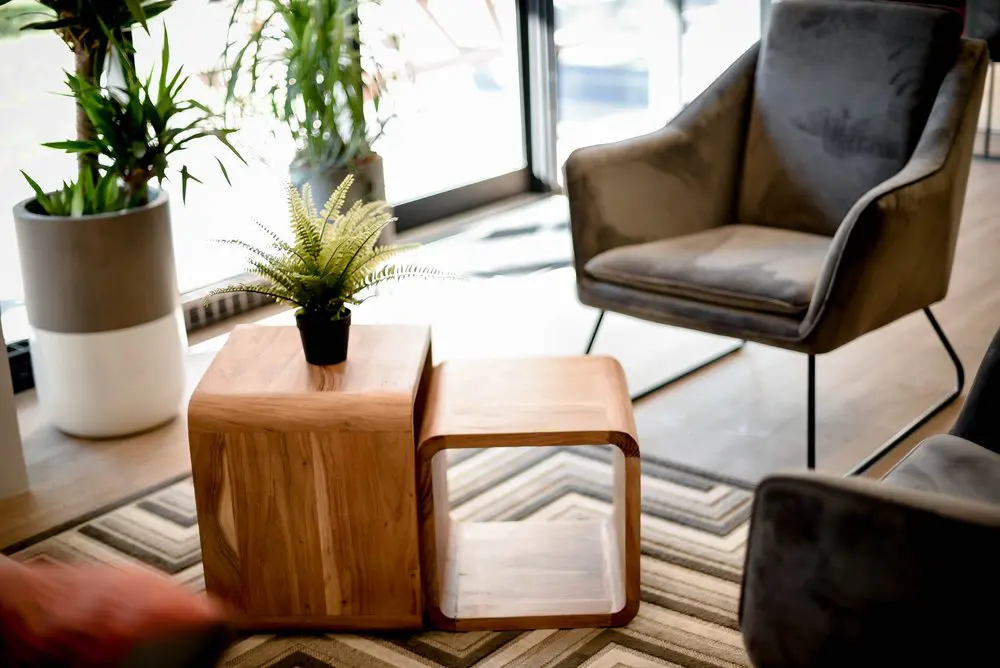
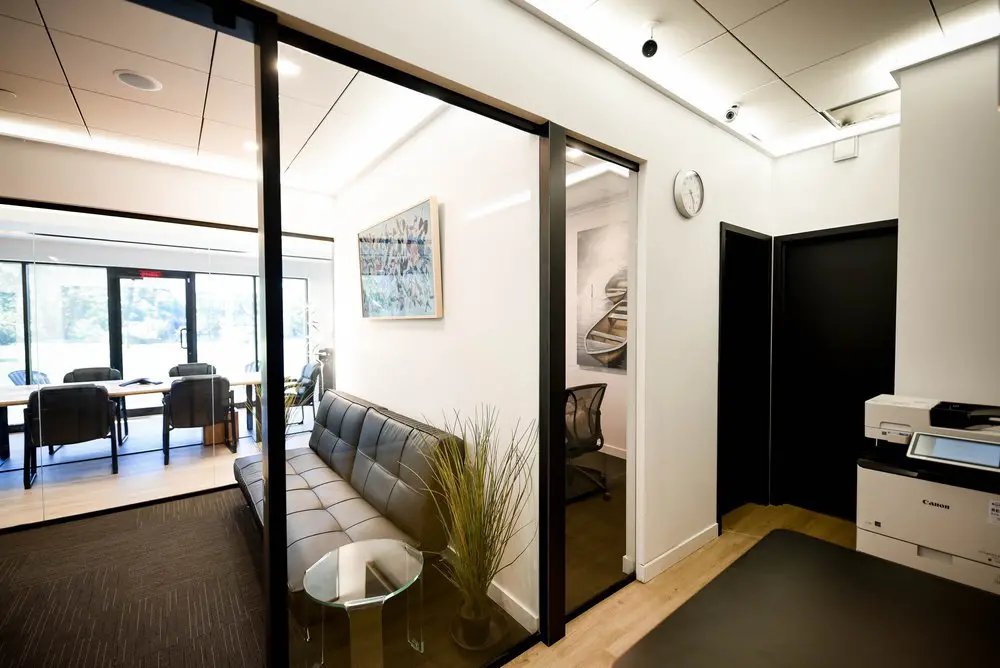
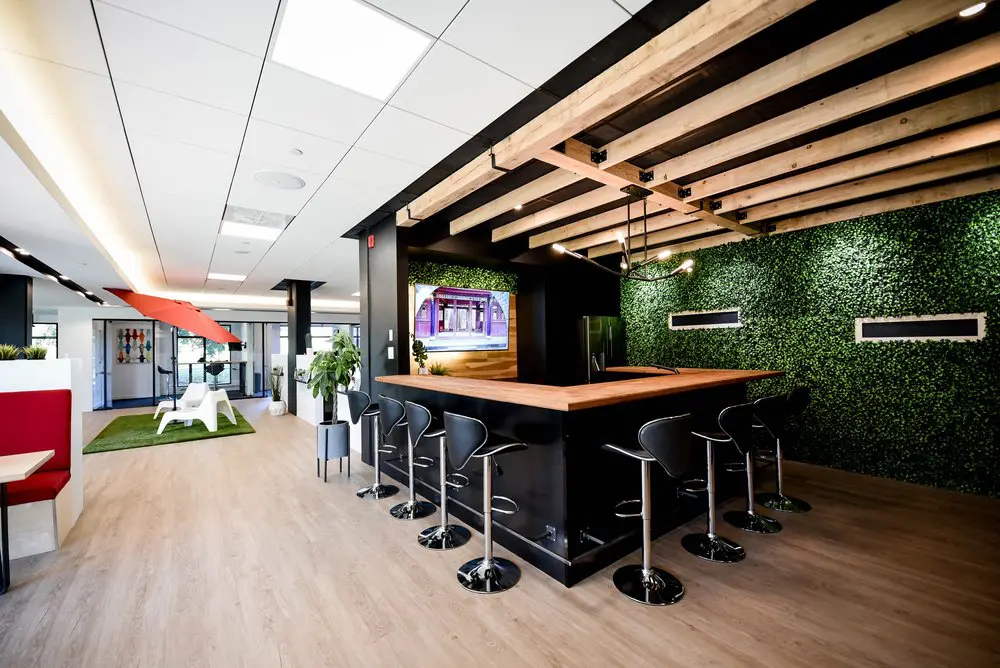
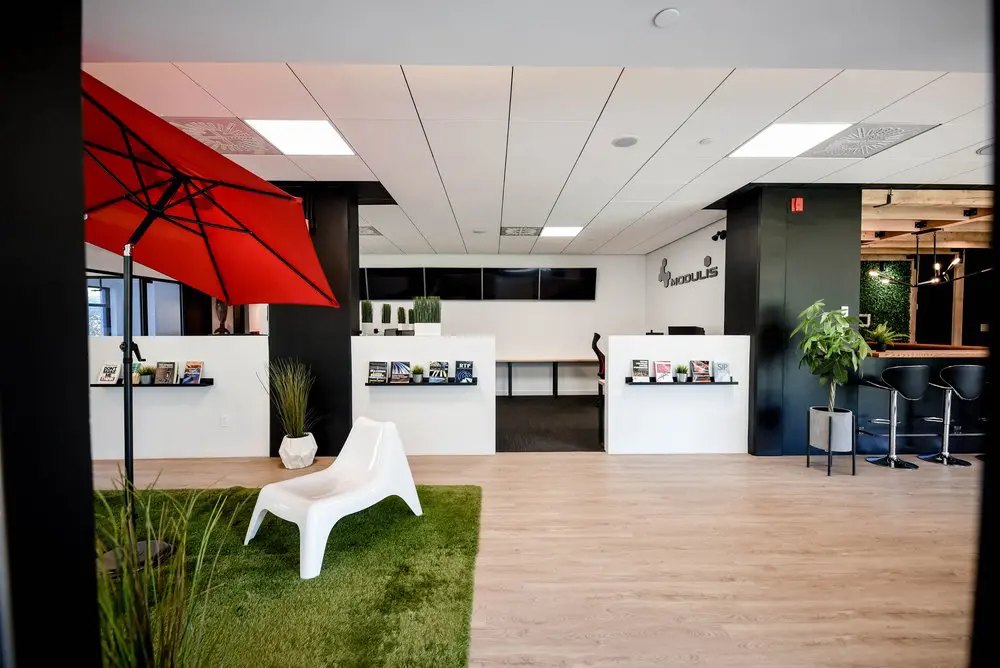
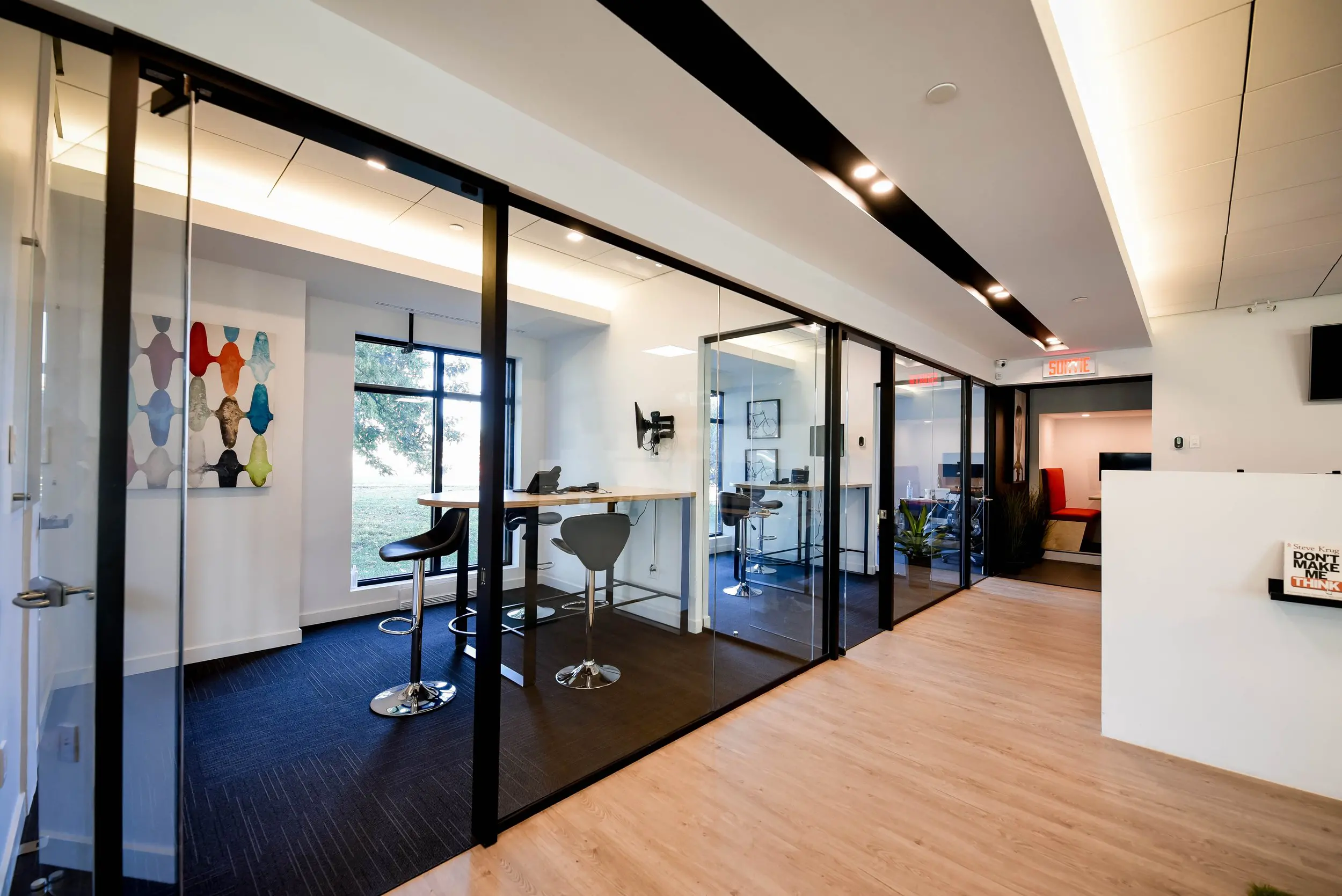
2727 Coworking space, 2727 Saint-Patrick, Montreal
The Evolution of Meeting Space: From Boardrooms to Flexible Conference Rooms
The Traditional Model and Its Decline
For most of the 20th century, meeting space was inextricably linked to office space. Companies leased offices, and within those offices, dedicated conference rooms sat empty for the majority of business hours, waiting for the next scheduled meeting. This model made sense when virtually all employees worked in a single physical location and when the alternative, meeting outside the office, was considered unprofessional or impractical.
The economics of this model were always questionable. Studies on commercial real estate utilization have consistently found that conference rooms in traditional offices are occupied only 15-30% of available hours [36]. For a 12-person conference room in a downtown Montreal office tower consuming approximately 300 square feet at $25-$50/square foot annually, this represents $7,500-$15,000 per year in rent alone, before accounting for HVAC, lighting, cleaning, AV equipment, and furniture depreciation, all for a room that sits empty 70-85% of the time.
The Coworking Revolution and Meeting Space Unbundling
The coworking movement, which began in the mid-2000s and accelerated dramatically after 2020, introduced a radical idea: workspace could be unbundled. Instead of leasing an entire office (desks + meeting rooms + kitchen + reception) as a single package, professionals could purchase each component separately and on demand [37].
Meeting room rental is the purest expression of this unbundling principle. A startup team that needs a meeting room for two hours on Tuesday does not also need to lease the room for the remaining 38 business hours that week. A freelancer who meets clients once a month does not need a conference room sitting empty the other 29 days.
This shift has been accelerated by technology. Platforms like LiquidSpace, Deskpass, and operator-specific booking apps have made finding, evaluating, and booking meeting rooms nearly as simple as booking a restaurant reservation [30].
The Post-2020 Transformation
The pandemic compressed a decade of gradual change into 18 months. Suddenly, the assumption that meetings required physical co-presence evaporated. Teams discovered that many meetings could be held entirely virtually, that others benefited from a hybrid format, and that the remaining truly in-person meetings deserved better, more intentional spaces than the generic corporate conference room.
This realization has permanently reshaped meeting room demand in Montreal and globally:
Fewer but more intentional in-person meetings: Companies that adopted hybrid work discovered that when teams do come together physically, the quality of the meeting space matters more, not less. The meeting room is no longer the default; it is the chosen environment for interactions that justify physical presence
Higher expectations for technology: A meeting room that was acceptable in 2019 (a table, chairs, a projector that might or might not connect to your laptop) is no longer adequate. Hybrid meetings demand professional-grade video conferencing, and in-person meetings demand large, high-resolution displays
Location flexibility: With employees distributed across neighborhoods rather than concentrated downtown, meeting rooms need to be accessible from multiple locations. Coworking spaces in residential-adjacent neighborhoods like Griffintown, the Plateau, and Verdun have seen significant growth in meeting room bookings from teams that no longer default to downtown
The Science of Effective Meetings
Meeting Fatigue and Room Design
The phenomenon of "meeting fatigue," popularized during the pandemic as "Zoom fatigue" but equally applicable to in-person meetings, is supported by substantial research. A Stanford study found that video calls create cognitive load through several mechanisms: the constant need for eye contact, the reduced ability to read body language, the mirror effect of seeing oneself on screen, and the constraint of maintaining a fixed position relative to the camera [38].
Physical meeting room design can mitigate some of these effects:
Natural light exposure: Meeting rooms with windows reduce the claustrophobic feeling that contributes to fatigue, and provide the circadian light cues that maintain alertness during afternoon meetings
Temperature control: A room that is too warm promotes drowsiness; too cold promotes distraction. The ideal meeting room temperature is 20-22C (68-72F), with local thermostat control rather than building-wide HVAC
Air quality: CO2 levels rise rapidly in enclosed meeting rooms with multiple occupants. Research from the Harvard CogFx study demonstrated that cognitive function declines measurably as CO2 levels exceed 1,000 ppm, which can occur within 30-45 minutes in a poorly ventilated meeting room with 6+ occupants [39]
Movement opportunity: Rooms that allow participants to stand, move to a whiteboard, or shift between seated and standing positions reduce the physical stagnation that contributes to meeting fatigue
The Psychology of Meeting Spaces
Research in environmental psychology has demonstrated that physical spaces influence behavior, cognition, and interpersonal dynamics in measurable ways:
Ceiling Height and Creativity: A 2007 study published in the Journal of Consumer Research found that higher ceilings promote abstract, relational thinking (useful for brainstorming and strategic planning), while lower ceilings promote detail-oriented, focused thinking (useful for analytical work and execution planning) [40]. This finding is relevant to meeting room selection: choose high-ceiling industrial loft spaces for creative sessions and standard-height rooms for detailed planning.
Table Shape and Power Dynamics: The shape of the meeting table influences the psychological dynamics of the conversation. Rectangular tables create natural power positions (the heads of the table), while round or oval tables distribute authority more evenly. For negotiations or hierarchical presentations, a boardroom table is appropriate. For collaborative brainstorming among equals, a round table produces better outcomes.
Color and Cognition: Blue environments tend to enhance creative thinking, while red environments enhance attention to detail, according to research published in Science magazine [41]. Many modern coworking meeting rooms incorporate blue accent elements in creative collaboration spaces and warmer, more neutral tones in formal boardrooms.
Biophilic Design: Meeting rooms that incorporate natural elements, whether plants, natural materials (wood, stone), water features, or views of nature, promote reduced stress and enhanced cognitive function. A meta-analysis of workplace biophilic design studies found consistent positive effects on occupant wellbeing, productivity, and creativity [42].
Optimal Meeting Duration and Room Booking
Research on meeting effectiveness provides practical guidance for how long to book meeting rooms:
15-minute meetings: Effective for quick status updates, decisions on a single issue, or brief 1-on-1 check-ins. Only practical in rooms with no setup/teardown time
30-minute meetings: The optimal duration for most routine meetings. Research suggests that meetings expand to fill available time, and shortening the default from 60 to 30 minutes often produces equal outcomes in half the time
60-minute meetings: Appropriate for complex discussions requiring multiple perspectives, brainstorming sessions, and client presentations with Q&A
Half-day (3-4 hours): Strategic planning, workshops, and training sessions. Requires breaks every 60-90 minutes to maintain attention
Full-day (6-8 hours): Team retreats, intensive workshops, and all-day training. Requires catering, multiple breaks, and ideally a change of room layout or activity format mid-day
The implication for meeting room booking: resist the default of booking 60-minute slots for everything. Many meetings that are scheduled for an hour could be accomplished in 30 minutes with better preparation and facilitation, saving both time and room rental costs.
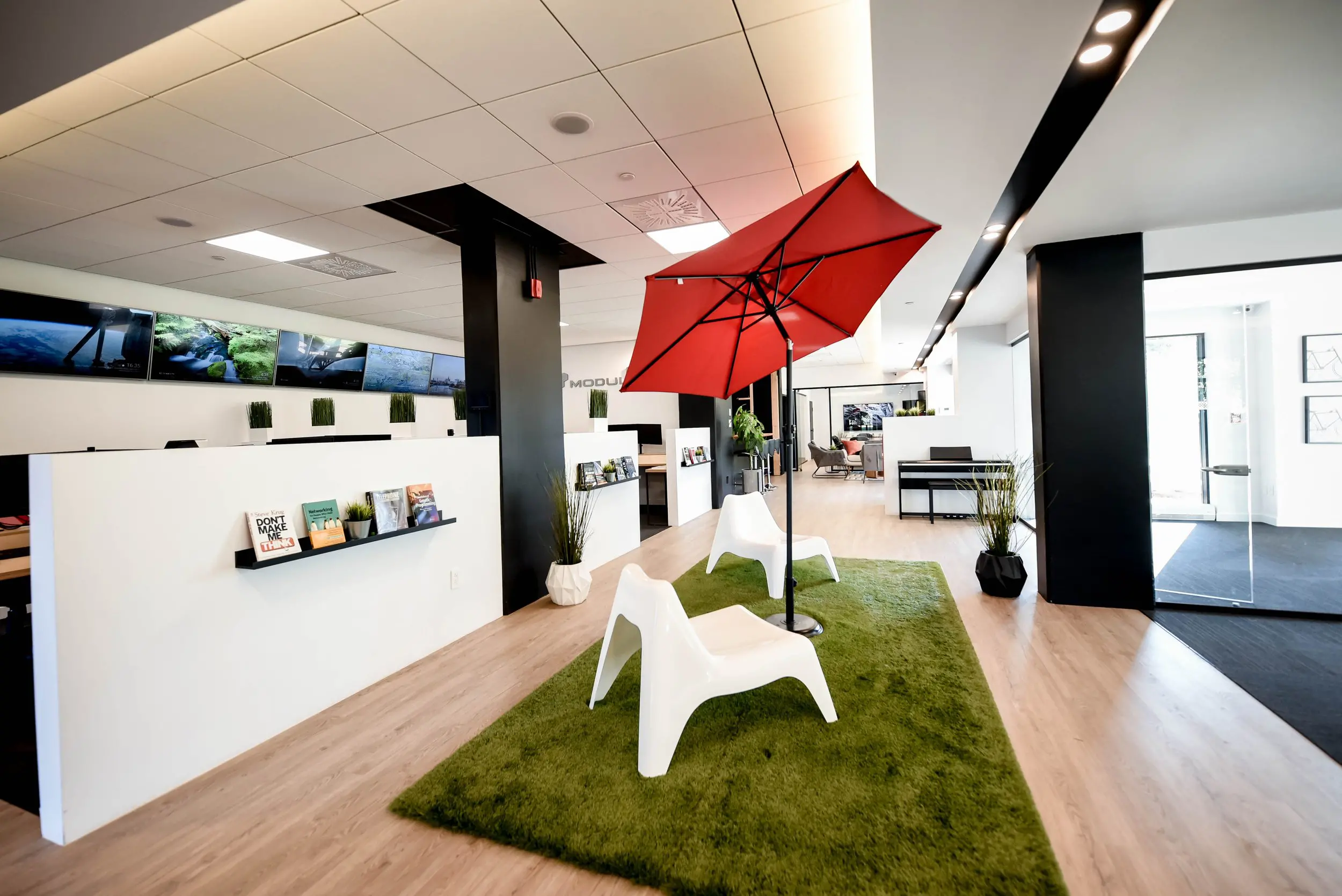
2727 Coworking space, 2727 Saint-Patrick, Montreal
Why Rent a Meeting Room? The Case for External Space
The End of the "We'll Just Meet at the Office" Era
For decades, the question of where to hold a meeting had a simple answer: the office conference room. But the structural transformation of work since 2020 has made this default answer increasingly inadequate for a growing number of professionals:
Hybrid teams have no single "office": When a team of six includes two people working from home in Montreal, one at a client site in Toronto, one at a coworking space in the Plateau, and two at the company's reduced downtown footprint, no single location is convenient for everyone. A centrally-located, bookable meeting room becomes the neutral ground where distributed teams converge [6].
Small businesses and startups outgrow home offices but not enough for a lease: Montreal's thriving startup ecosystem includes thousands of companies with 2-10 employees who need professional meeting space for client presentations, investor pitches, and team planning sessions, but cannot justify the $25-$50/square foot annual cost of a traditional office lease [7].
Freelancers and consultants need credibility: Meeting a prospective client at a Starbucks sends a very different signal than meeting them in a well-appointed boardroom with a presentation screen, whiteboard, and complimentary coffee service. For independent professionals, a meeting room rental is an investment in professional credibility that often pays for itself in the form of won business [8].
Corporate teams need off-site space for focused sessions: Strategic planning retreats, team-building workshops, and confidential discussions (mergers, restructuring, HR matters) often benefit from being held outside the regular office environment, where interruptions are frequent and walls have ears [9].
The Economics of On-Demand vs. Dedicated Meeting Space
The financial case for renting meeting rooms rather than maintaining dedicated conference space is compelling for most organizations:
The math is clear: unless your organization fills a conference room for more than 50% of business hours every month, on-demand rental is more economical. And even for organizations that use meeting space frequently, the operational burden of maintaining AV equipment, managing bookings, and cleaning the room falls on the coworking operator rather than your team.
The Montreal Meeting Room Market: A Pricing Guide
Pricing by Neighborhood and Tier
Meeting room pricing in Montreal varies based on three primary factors: location, capacity, and technology/amenity level. The following analysis categorizes the market into three tiers:
Tier 1: Budget ($20 - $45/hour)
Basic meeting rooms with a table, chairs, whiteboard, and WiFi. These spaces serve the core function of providing a private, professional environment for conversation but may lack sophisticated AV equipment or premium furnishings.
Well-equipped rooms with presentation screens or projectors, video conferencing capability, quality furniture, and professional ambiance. This tier represents the majority of coworking meeting room inventory in Montreal.
High-end meeting suites, boardrooms, and event spaces with premium furnishings, advanced AV systems (multiple screens, dedicated video conferencing hardware, recording capability), catering options, and dedicated reception/concierge service.
Booking Models: Hourly, Credit-Based, and Membership-Included
The way you pay for meeting room access varies by operator:
Pay-Per-Use (Hourly): The simplest model. You book a room for a specific time window and pay by the hour. This is the default for non-members at most coworking spaces and is the most common model at dedicated meeting room providers. Minimum bookings of 1-2 hours are typical.
Credit Systems: Some operators (notably WeWork and Regus/IWG) use credit-based systems where members receive a monthly allocation of meeting room credits as part of their membership. Additional credits can be purchased. This model can be economical for regular users but requires tracking credit balances and expiry dates [14].
Membership-Included Hours: Many coworking spaces include a fixed number of meeting room hours per month with their membership plans. For example, a monthly hot desk membership at $350/month might include 4-8 hours of meeting room time. This is often the best value for professionals who need both regular workspace and occasional meeting room access.
Day/Half-Day Rates: For extended sessions (team workshops, full-day planning sessions), many operators offer discounted day rates that are significantly cheaper than hourly rates multiplied by the number of hours. CAVM offers half-day rates at $40, and Entrepots Dominion offers full-day rates at $500 [1][15].
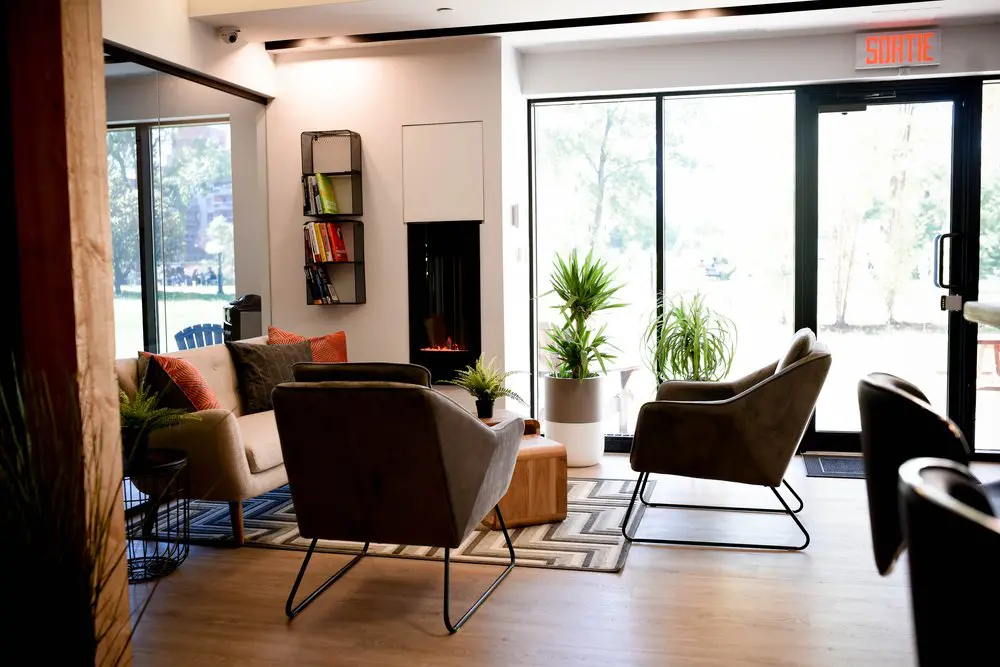
2727 Coworking space, 2727 Saint-Patrick, Montreal
What Makes a Great Meeting Room: Technical and Design Standards
Technology Infrastructure
The quality of a meeting room's technology setup can make or break a meeting. Here is what to evaluate:
Display Systems
The central display is the focal point of most meetings. The industry has largely moved from projectors to large-format screens (55" to 85"), which offer superior brightness, clarity, and reliability in all lighting conditions. Key specifications to look for:
Minimum size: 55" for rooms seating up to 6; 75"+ for rooms seating 8-12; dual screens or a dedicated video wall for rooms seating 12+
Resolution: 4K (3840 x 2160) is now the standard; anything less appears dated and is particularly noticeable during video calls where facial expressions matter
Connectivity: HDMI, USB-C (increasingly the standard for modern laptops), and wireless casting (AirPlay, Miracast, or Chromecast). The best rooms support all three simultaneously, eliminating the "does anyone have an adapter?" problem [18]
Video Conferencing
With hybrid meetings now the norm, dedicated video conferencing hardware is essential rather than optional:
Camera: A wide-angle camera that captures the entire room without requiring manual adjustment. Auto-framing cameras (like those from Owl Labs, Jabra, or Poly) that track speakers and automatically frame the active participant are increasingly common in premium spaces [19]
Microphone: A ceiling-mounted or centralized tabletop microphone array that captures all participants clearly, regardless of where they sit. Poor microphone quality is the single most common complaint about hybrid meetings
Platform compatibility: The hardware should work seamlessly with Zoom, Microsoft Teams, Google Meet, and other major platforms. Purpose-built room systems (like Zoom Rooms or Microsoft Teams Rooms) provide the most reliable experience
Internet Connectivity
Meeting room internet needs exceed general workspace requirements because video conferencing is bandwidth-intensive and latency-sensitive:
Minimum: 50 Mbps download / 20 Mbps upload dedicated to the meeting room (not shared with the entire coworking floor)
Recommended: 100+ Mbps symmetrical for rooms hosting multi-participant video calls
Wired option: A hardwired ethernet connection should be available as a backup for users who need guaranteed stability
Redundancy: The best spaces have dual ISP connections, so a single provider outage does not interrupt your meeting [20]
Acoustics: The Most Underrated Factor
Acoustic quality is arguably the single most important physical characteristic of a meeting room, yet it receives far less attention than visual design or technology. Poor acoustics render even the most expensive AV equipment useless.
Sound Transmission Class (STC) Rating: This rating measures how effectively walls block sound transmission between rooms. The minimum acceptable STC for a meeting room is 45 (normal speech is not audible through the wall); professional-grade meeting rooms should achieve STC 50+ (loud speech is barely audible). For comparison, standard drywall construction achieves STC 33-35, which means conversations are clearly audible in adjacent rooms [21].
Reverberation Time (RT60): This measures how long sound takes to decay by 60 decibels in a room. For meeting rooms, the ideal RT60 is 0.4-0.6 seconds. Rooms with excessive reverberation (hard parallel walls, concrete floors, glass surfaces) create echo that makes speech difficult to understand, particularly for remote participants joining via video call.
Acoustic Treatment Solutions:
Acoustic panels: Wall-mounted panels made of fiberglass, mineral wool, or foam that absorb mid and high-frequency sound reflections
Ceiling treatment: Acoustic ceiling tiles or suspended baffles that reduce overhead reflections
Soft furnishings: Carpet, upholstered chairs, and curtains all contribute to sound absorption
Door seals: Acoustically sealed doors with gaskets and automatic drop seals prevent sound leakage through gaps
White noise: Background masking systems that generate subtle ambient sound to reduce the intelligibility of conversations passing through walls
When evaluating a meeting room, the simplest test is to close the door and clap your hands. If you hear a sharp, ringing echo, the room has insufficient acoustic treatment. If the sound dies quickly and evenly, the room is well-treated.
Layout and Furniture
The physical arrangement of a meeting room significantly impacts the quality of interaction:
Boardroom Layout (Rectangle Table): Best for formal presentations, board meetings, and negotiations. Seats 6-20. Provides clear sightlines to the display screen and a natural hierarchy (head of table positions). The most common layout for rented meeting rooms.
U-Shape Layout: Best for workshops, training sessions, and collaborative discussions with a presentation component. Allows the presenter to move into the center of the group. Requires more floor space per person than boardroom layout.
Round/Oval Table: Best for brainstorming, equal-status discussions, and creative sessions where hierarchy is counterproductive. Eliminates "head of table" power dynamics. King Arthur had the right idea.
Theater/Classroom: For larger presentations or training sessions where interaction is primarily one-directional. Maximizes capacity but minimizes collaboration.
Key Furniture Specifications:
Table: Minimum 24 inches of width per seat; power and data ports integrated into the table surface are increasingly standard; cable management channels prevent the tangle of laptop chargers that plagues poorly designed rooms
Chairs: Ergonomic office chairs (not stacking chairs) for meetings lasting more than 30 minutes. For shorter sessions, contemporary seating is acceptable
Whiteboard/Writing Surface: At least one writable surface (whiteboard, glass board, or digital whiteboard like Microsoft Surface Hub) for spontaneous ideation and note-taking [22]
Lighting
Meeting room lighting affects both in-person comfort and video call quality:
Natural light: Rooms with windows are strongly preferred for extended meetings. Natural light improves mood, alertness, and perceived room quality [23]
Window treatments: Blinds or shades must be available to control glare on screens and to prevent backlighting that makes video call participants appear as silhouettes
Artificial lighting: Dimmable, warm-white (3000-4000K) LED panels. Avoid fluorescent tubes, which produce unflattering light and cause fatigue during long meetings
Video call lighting: Front-facing light (from the screen direction) is essential for good video appearance. Some premium rooms include dedicated video lighting
Hybrid Meetings: The New Standard
The Challenge of the Hybrid Format
The hybrid meeting, where some participants are physically present in a room while others join remotely, has become the dominant meeting format in post-pandemic workplaces. It is also the most technically demanding format, requiring careful attention to equipment, behavior, and room design to ensure that remote participants have an equal experience.
Research on hybrid meetings has consistently found that remote participants feel disadvantaged compared to in-room attendees: they miss visual cues, struggle to interject in conversations, and often cannot see the whiteboard or shared materials clearly [24]. The quality of the meeting room's hybrid infrastructure directly determines whether this participation gap is narrow or wide.
What "Hybrid-Ready" Means for a Meeting Room
A truly hybrid-ready meeting room includes:
180-degree or 360-degree camera: Standard webcams show only a portion of the room. Purpose-built meeting cameras (Owl Labs Meeting Owl, Jabra PanaCast, Poly Studio) capture the entire room and automatically focus on the active speaker
Ceiling or array microphone: Tabletop microphones pick up table tapping and paper shuffling. Ceiling-mounted arrays or multi-element tabletop arrays capture voices clearly while minimizing ambient noise
Dedicated content-sharing screen: In addition to the main display showing remote participants, a second screen dedicated to shared content (presentations, documents, whiteboards) allows in-room participants to see both the people and the materials simultaneously
Digital whiteboard integration: Physical whiteboard content should be capturable and shareable with remote participants in real-time, either through a dedicated camera aimed at the whiteboard or through a digital whiteboard platform
Etiquette for Hybrid Meetings in Rented Spaces
When hosting hybrid meetings in a rented coworking meeting room, several additional considerations apply:
Book the room for 15 minutes before the meeting starts: This gives you time to test the AV equipment, connect your laptop, and troubleshoot any issues before participants arrive
Test the connection before the meeting: Particularly if you are unfamiliar with the room's equipment, a pre-meeting test call with a colleague can prevent embarrassing technical failures
Bring backup connectivity: A mobile hotspot as a backup internet connection can save a meeting if the space's WiFi experiences issues
Designate a "remote participant advocate": One in-room participant should be responsible for monitoring the chat, relaying remote participant questions, and ensuring their voices are heard
2727 Coworking space, 2727 Saint-Patrick, Montreal
Montreal-Specific Considerations for Meeting Room Users
Bilingual Business Environment
Montreal's bilingual character has direct implications for meeting room selection and usage. Unlike most North American cities where English is the default language of business, Montreal operates in a genuinely bilingual environment where meetings may be conducted in French, English, or a dynamic mix of both:
Client-facing meetings: When meeting with Quebec-based clients, government officials, or French-speaking partners, the meeting may need to be conducted primarily in French. Under Quebec's language legislation (Bill 96, which strengthened Bill 101 in 2022), businesses with 25+ employees must demonstrate that French is the normal language of the workplace, including meetings [25]
International meetings: When meeting with clients or partners from outside Quebec, English is typically the working language. Montreal's bilingual workforce makes it easy to switch between languages depending on the audience
Bilingual presentations: Some meetings, particularly in sectors that serve both linguistic communities (real estate, financial services, government contracts), may require presentations and materials in both languages. Meeting rooms with dual-screen setups can display French and English materials simultaneously
This bilingual reality is one of Montreal's unique advantages. Coworking spaces in the city naturally attract a bilingual clientele, which means that the reception staff, the signage, and the general environment are designed to accommodate both language communities seamlessly [5].
Transit Accessibility for Meeting Attendees
When choosing a meeting room location, consider the transit accessibility for all attendees, not just for yourself. The goal is to minimize total travel time across all participants:
Downtown Hub (Best for attendees coming from across the island):
Metro stations: McGill, Peel, Square-Victoria, Place-d'Armes
Served by Green and Orange lines
Maximum accessibility but premium pricing and traffic congestion
Griffintown/Saint-Henri Corridor (Best for West-Side and South Shore access):
Metro: Charlevoix (Green Line, 5 min walk), Lionel-Groulx (Green/Orange interchange, 11 min walk)
REM station at Griffintown planned, connecting to the South Shore and airport
BIXI bike-share stations throughout the corridor
Free parking easier to find than downtown
Proximity to Atwater Market for pre/post-meeting meals [26]
Plateau/Mile End (Best for local creative and tech community):
For meetings lasting more than two hours, providing food and beverages is standard professional courtesy and significantly improves participant engagement and energy:
Catering Options by Area:
Griffintown/Saint-Henri: Proximity to Atwater Market provides exceptional options for fresh pastries, artisanal sandwiches, cheese plates, and seasonal fruit. Several catering companies in the area specialize in office deliveries [27]
Downtown: Maximum delivery options from every cuisine imaginable, but higher prices. Most coworking spaces have partnerships with local caterers
Old Montreal: Upscale catering options that match the premium setting of heritage meeting spaces
Plateau: Independent cafes and bakeries that offer affordable and distinctive catering
Many coworking spaces offer basic refreshments (coffee, tea, water) as part of the meeting room booking. Some provide catering coordination as an add-on service, handling ordering, setup, and cleanup so that the meeting organizer can focus on the agenda.
The Winter Factor
Montreal's winter has practical implications for meeting room logistics:
Allow extra arrival time: Schedule meetings to start 15 minutes after the official time during winter months, accounting for snow-related transit delays
Coat and boot storage: A good meeting room includes a coat rack and ideally a space to remove and store winter boots. Tracking slush into a meeting room is a perennial Montreal complaint
Heated parking: For attendees driving, a meeting location with indoor or heated parking is a significant advantage during winter months
Video call considerations: Winter weather can cause power fluctuations that affect internet stability. Spaces with generator backup or UPS systems provide greater reliability during storms
Industry-Specific Meeting Room Needs
Technology and Startups
Montreal's tech ecosystem, which includes major AI research labs (Mila, IVADO), gaming studios (Ubisoft, EA), and hundreds of startups, has specific meeting room requirements:
High-bandwidth internet: Demo-ing software products, streaming data, or running cloud-based applications during a presentation requires robust connectivity
Dual-screen setups: One screen for the code/demo, one for the video conference participants
Whiteboard space: Technical discussions often require extensive diagramming
Power at every seat: Tech teams bring multiple devices
Startup pitch rooms: Meeting rooms that can double as pitch practice spaces, with timer displays and presentation coaching setups, are increasingly popular in Montreal's startup ecosystem [7]
Legal and Financial Services
Professionals in legal, accounting, and financial services have heightened requirements for privacy and confidentiality:
STC 50+ acoustics: Conversations about mergers, litigation, or financial matters must not be audible outside the room
No recording capability: Some clients or counterparties may require assurance that no recording equipment is present
Document security: Secure printing, shredding services, and clean-desk policies
Professional reception: A staffed reception area that can greet clients and offer refreshments creates the expected experience for high-value professional service meetings
Creative and Design
Creative agencies, architectural firms, and design studios have unique spatial and technical needs:
Large-format display or projector: For reviewing visual work at full scale
Color-accurate screens: Calibrated displays are essential for reviewing design work, photography, or video content
Pin-up space: Walls suitable for tacking up physical mockups, mood boards, and printed designs
Natural light: Creative work benefits from environments that inspire rather than constrain
Real Estate
Montreal's active real estate market generates significant meeting room demand from agents, developers, and property management firms:
Client-facing elegance: The meeting room is part of the sales experience; it must reflect the quality of the properties being marketed
Large display for virtual tours: 4K screens of 75"+ are ideal for presenting property walk-throughs
Central location: Real estate meetings often involve clients from various parts of the city; central or well-connected locations are essential
2727 Coworking space, 2727 Saint-Patrick, Montreal
Legal and Compliance Considerations
Confidentiality in Shared Spaces
Using a meeting room in a coworking space raises legitimate questions about confidentiality, particularly for professionals bound by legal or regulatory confidentiality obligations:
Lawyer-Client Privilege: Quebec lawyers (avocats) and notaries have professional obligations regarding client confidentiality. Meeting with clients in a coworking meeting room does not inherently compromise privilege, provided the room offers genuine privacy (solid walls, acoustic sealing, no recording equipment). The key legal test is whether there was a "reasonable expectation of privacy" in the setting where the communication occurred. A properly enclosed, bookable meeting room in a professional coworking space satisfies this test [43].
Financial Data (PIPEDA Compliance): Under Canada's Personal Information Protection and Electronic Documents Act (PIPEDA), organizations must protect personal financial information. When discussing client financials in a meeting room, ensure the room provides adequate acoustic privacy and that any shared screens are not visible from outside the room.
Healthcare Discussions: While Quebec's health privacy rules (notably under the Act Respecting the Sharing of Certain Health Information) impose strict requirements on how health data is discussed and shared, a properly private meeting room satisfies the physical privacy requirement.
Practical Recommendations:
Choose rooms with STC 50+ walls for confidential discussions
Verify that the room does not have security cameras inside (common areas may have cameras, but meeting room interiors should not)
Use the room's wired internet connection rather than WiFi for any screen-sharing involving sensitive data
Ask the operator about their data retention policy for booking records
Quebec Language Requirements
Under Quebec's Charter of the French Language (Bill 101, as strengthened by Bill 96 in 2022), businesses with 25 or more employees must use French as the "common language of the workplace." This has implications for meeting room usage:
Internal meetings: Companies subject to the law must ensure French is generally used in internal meetings, though bilingual usage is common in practice
Client meetings: There is no restriction on the language used with clients; you may meet in whichever language the client prefers
Signage and booking systems: Coworking spaces in Quebec must ensure that room names, booking systems, and directional signage are available in French
In practice, Montreal's coworking spaces are inherently bilingual environments where switching between French and English is natural and expected. This is actually an advantage for professionals who work across language communities [25].
Insurance and Liability
When hosting external guests (clients, partners, vendors) at a coworking meeting room, liability considerations include:
Operator's liability insurance covers premises liability (slips, falls, building issues)
Your professional liability insurance covers the content of your professional advice regardless of where the meeting occurs
Guest access protocols: Most coworking spaces require meeting organizers to register external guests in advance. This is both a security measure and a liability requirement
Event insurance: For larger events (workshops, networking events, product launches) held in coworking meeting rooms, separate event insurance may be required. The operator will specify this in their booking terms
Sustainability: The Environmental Case for Shared Meeting Rooms
The environmental argument for shared meeting spaces parallels the broader case for coworking: shared resources are more efficient than dedicated ones.
Space Efficiency: A single meeting room in a coworking space that serves 20+ different teams per week replaces 20+ underutilized dedicated conference rooms across individual offices. This translates directly to reduced total commercial real estate demand, and therefore reduced energy consumption for heating, cooling, and lighting unused space [44].
Commute Reduction: When teams meet at a coworking space that is centrally located relative to their distributed members (rather than requiring everyone to commute to one person's office), total travel distance and emissions are reduced. A team of six distributed across Montreal's neighborhoods meeting at a Griffintown coworking space generates less total commuting than requiring all six to travel downtown.
Shared Equipment: AV equipment, whiteboards, printers, and other meeting room resources are shared across many users, reducing the total number of devices manufactured and eventually disposed of. One high-quality 75" 4K display serving 100 different teams per month is far more resource-efficient than 100 mediocre displays sitting in underused corporate conference rooms.
Building Reuse: Many Montreal coworking spaces, including those in the canal-side industrial corridor, occupy repurposed heritage buildings. Adaptive reuse avoids the significant embodied carbon of new construction while preserving architectural heritage [45].
2727 Coworking space, 2727 Saint-Patrick, Montreal
Beyond Meetings: Workshops, Events, and Training Sessions
Workshops and Team Offsites
Montreal coworking meeting rooms are increasingly used for structured workshops and team offsite sessions. These multi-hour or full-day events have different requirements than standard meetings:
Space Configuration: Workshops often require rearranging furniture multiple times throughout the day (from presentation layout to small group clusters to plenary discussion). Choose rooms with lightweight, modular furniture that can be reconfigured quickly. Fixed boardroom tables are unsuitable for dynamic workshops.
Breakout Space: A workshop for 12-20 people benefits enormously from access to a secondary space (a smaller meeting room, a lounge area, or even a cafe area) where small groups can work independently before reconvening. When booking a coworking meeting room for a workshop, inquire about available breakout options.
Materials and Supplies: Workshops often require flip charts, sticky notes, markers, and other materials. Some coworking spaces provide a basic "workshop kit" on request; others expect you to bring your own. Clarify this when booking.
All-Day Booking Considerations: For full-day sessions, negotiate a day rate rather than hourly pricing. Most operators offer significant discounts for full-day bookings (typically 40-60% less than the equivalent hourly rate). Also confirm that the room will be available for your exclusive use during breaks. Nothing disrupts a workshop more than returning from a coffee break to find another group has taken over the room.
Networking Events and Community Gatherings
Montreal's entrepreneur and freelancer communities are active organizers of networking events, speaker series, and community meetups. Many of these events are held in coworking meeting rooms and event spaces:
Capacity: Networking events typically require 30-60% more floor space per person than seated meetings, because attendees stand and circulate
Catering access: Wine, beer, snacks, and finger food are standard for evening networking events. Verify the space's alcohol policy and catering capabilities
AV for presentations: If the event includes speakers, ensure the room has appropriate AV (microphone for the speaker, screen for slides, and ideally a camera for live-streaming or recording)
Registration/check-in area: A reception desk or check-in table near the entrance helps manage event flow
Several coworking spaces in Montreal have become recognized venues for community events. These events serve a dual purpose: they provide value to attendees and they introduce potential new members to the coworking space [46].
Training and Professional Development
Corporate training sessions, professional development workshops, and certification courses are a growing use case for coworking meeting rooms. The advantages over hotel conference rooms (the traditional choice for off-site training) include:
Lower cost: Coworking meeting rooms are typically 30-50% less expensive than equivalent hotel conference facilities
Better technology: Hotel meeting rooms often have outdated AV equipment and unreliable WiFi; coworking spaces invest in current technology
More flexible catering: Rather than expensive hotel catering packages, coworking spaces near food corridors (like Griffintown's proximity to Atwater Market) offer diverse, affordable options
Inspiring environment: Industrial loft spaces, canal views, and creative coworking atmospheres are more stimulating than windowless hotel ballrooms
For recurring training programs, some operators offer discounted rates for long-term booking commitments (e.g., the same room every Tuesday for 12 weeks).
How to Choose the Right Meeting Room in Montreal
A Decision Framework
Step 1: Define the Meeting Type
Meeting Type
Key Requirements
Recommended Tier
1-on-1 client consultation
Privacy, professional atmosphere
Tier 1-2 ($20-60/hr)
Team brainstorm (4-8 people)
Whiteboard, flexible seating
Tier 2 ($45-80/hr)
Client presentation (6-12 people)
AV equipment, professional reception
Tier 2-3 ($60-120/hr)
Board meeting (8-20 people)
Boardroom layout, confidentiality
Tier 3 ($80-150+/hr)
Hybrid team meeting
Video conferencing hardware, good acoustics
Tier 2-3 ($50-100/hr)
Full-day workshop
Catering options, breakout space, flexible layout
Negotiate day rate
Investor pitch
Dual screens, rehearsal time, professional setting
Tier 2-3 ($60-100/hr)
Step 2: Choose the Location
Consider the locations of all attendees and optimize for minimum total travel time. If half your attendees are in the West Island and half downtown, a Griffintown/Saint-Henri location near the Green/Orange Line interchange may be optimal.
Step 3: Verify Technology
Before committing to a space for an important meeting, request a site visit or ask for detailed specifications of:
Screen size and resolution
Video conferencing hardware (camera, microphone, speakers)
Internet speed (ask for a recent speed test, not just "high-speed WiFi")
For any meeting where first impressions matter, book the room for at least 30 minutes beyond your expected meeting duration. Arriving 15 minutes early to set up and having 15 minutes at the end for informal conversation prevents the rushed, harried feeling that undermines professional meetings.
Red Flags to Watch For
No site visit policy: If a space will not let you see the room before booking, question why
"WiFi password at reception": Enterprise-grade spaces provide dedicated, high-speed connections, not a shared password on a whiteboard
No acoustic treatment visible: Glass walls without acoustic seals, concrete floors without carpet or rugs, and parallel hard surfaces all indicate poor acoustic design
Shared booking system with no buffer: If the room is booked back-to-back with no transition time between users, expect to arrive at a messy room with the previous occupant's coffee cups still on the table
No climate control in the room: A meeting room that relies on the building's general HVAC with no local thermostat will inevitably be too hot or too cold for someone
2727 Coworking space, 2727 Saint-Patrick, Montreal
Frequently Asked Questions
How far in advance should I book a meeting room in Montreal?
For standard meeting rooms during weekdays, booking 2-3 business days in advance is typically sufficient. For premium spaces, large rooms (12+ people), or peak periods (Tuesday-Thursday mornings), booking 1-2 weeks ahead is recommended. For full-day bookings or special events, 2-4 weeks advance notice may be required.
Can I book a meeting room for just 30 minutes?
Most operators have a minimum booking of 1 hour. Some spaces offer 30-minute minimums for phone booths or small huddle rooms (2-4 people), but standard meeting rooms are typically available in 1-hour increments.
What happens if my meeting runs over the booked time?
Policies vary. Some spaces allow you to extend on the spot if the room is available, with charges applied to the same payment method. Others enforce strict end times, particularly during peak periods. Always communicate with reception if you anticipate running over.
Do I need to be a member of the coworking space to book a meeting room?
Most coworking spaces in Montreal allow non-members to book meeting rooms, though members typically receive preferential pricing and priority booking. Some premium spaces require advance registration and credit card on file for non-member bookings [28].
Can I host a client event or workshop in a coworking meeting room?
Yes, many coworking spaces welcome external events in their meeting rooms and larger event spaces. Some offer event coordination services, including catering, AV setup, and reception management. For events with more than 20 attendees, inquire about dedicated event spaces rather than standard meeting rooms.
Are meeting room expenses tax-deductible in Quebec?
For self-employed professionals and businesses, meeting room rental expenses are generally deductible as business expenses. The CRA treats meeting room rentals the same as other workspace costs: they must be incurred for the purpose of earning business income, and receipts must be retained [29].
What's the best platform for finding meeting rooms in Montreal?
Several platforms aggregate meeting room availability across Montreal operators:
LiquidSpace: Comprehensive listings with real-time availability and pricing [30]
Deskpass: Curated selection of coworking spaces with meeting room access [31]
Giggster: Focus on creative and unique meeting spaces [32]
Direct booking: Many coworking spaces offer better rates when booked directly through their website
Can I get a virtual business address with meeting room access?
Yes, several Montreal coworking spaces offer virtual office packages that include a professional business address for mail handling and a set number of meeting room hours per month. This is an excellent option for home-based professionals who need a credible business address and occasional client meeting space [33].
How do phone booths differ from meeting rooms?
Phone booths (also called focus pods or privacy booths) are small, single-occupancy enclosed spaces designed for private phone calls, video meetings, or focused individual work. They are typically available on a first-come-first-served basis (no booking required) and are included with workspace access. Meeting rooms, by contrast, are larger spaces designed for multi-person gatherings and are booked in advance for specific time slots [19].
The Future of Meeting Rooms in Montreal
Emerging Trends
AI-Enhanced Meeting Rooms: Artificial intelligence is beginning to transform the meeting room experience. Features currently emerging include automatic meeting transcription and summarization, real-time language translation (particularly relevant in bilingual Montreal), intelligent camera framing that tracks speakers, and ambient intelligence that adjusts lighting, temperature, and screen brightness based on the time of day and number of occupants [34].
Sustainability-Focused Design: Meeting rooms in newer coworking spaces increasingly feature sustainable materials, energy-efficient HVAC, occupancy-sensor lighting, and low-VOC finishes. This reflects both environmental commitments and the documented cognitive benefits of better indoor air quality [35].
Neighborhood Decentralization: As Montreal's residential development continues to push beyond downtown, demand for meeting rooms in neighborhood coworking spaces is growing. The era of requiring every professional meeting to happen in a downtown tower is ending, replaced by a distributed model where meeting space is available where people live and work.
Immersive Collaboration: Extended reality (XR) meeting rooms, where some participants are physically present while others join as avatars in a shared virtual space, are being piloted by technology companies. Montreal's strength in VR/AR (driven by companies like Stingray, Felix & Paul Studios, and research at Concordia) positions the city as an early adopter of this format.
For professionals seeking meeting room space in Montreal's Griffintown/Saint-Henri corridor, 2727 Coworking offers professional meeting rooms with high-speed WiFi, modern AV equipment, and canal-side views, just 5 minutes from Charlevoix metro. Book a room for your next team meeting, client presentation, or workshop.
2727 Coworking space, 2727 Saint-Patrick, Montreal