Shared Office Space in Montreal: The Complete Guide to Coworking, Hot Desks, and Flexible Workspace
The shared office has fundamentally transformed how professionals in Montreal access workspace. No longer confined to the binary choice between a traditional office lease and working from home, today's professionals can choose from an expanding spectrum of shared workspace options that offer professional infrastructure, community, and flexibility at a fraction of the cost of a dedicated office.
This comprehensive guide examines every aspect of shared office space in Montreal: the different models available, pricing across neighborhoods, who benefits most from shared workspace, how to evaluate and compare spaces, and the economic, tax, and lifestyle considerations that should inform your decision.
Executive Summary
Montreal's shared office market is one of the most dynamic in Canada, driven by the city's large freelance population, its status as a technology and AI hub, and a commercial real estate market where traditional office vacancies have created opportunities for flexible workspace operators. Key findings:
Shared office space in Montreal ranges from approximately $225/month for a basic hot desk to $500+/month for a dedicated desk with premium amenities, with significant variation based on location and operator [1]
The term "shared office space montreal" generates over 747 impressions monthly in Google Search, reflecting strong and growing demand from professionals actively seeking flexible workspace [2]
An estimated 5.4 million people will work from coworking spaces worldwide by 2026, up from 3.1 million in 2020, with the Canadian market growing at an estimated 13-15% compound annual rate [3]
Montreal offers a cost advantage over Toronto and Vancouver: shared office pricing in Montreal is approximately 25-40% lower than equivalent space in Toronto's Financial District, while offering comparable or superior amenity levels [4]
The hybrid work revolution has created a new category of shared office user: the corporate employee who needs professional workspace near home rather than commuting to a distant headquarters [5]
Understanding the Shared Office Spectrum
Hot Desk
A hot desk is the most flexible and affordable form of shared office space. The concept is simple: you arrive at the coworking space and sit at any available desk. You do not have an assigned seat; your workspace changes each visit.
How it works:
You have a monthly membership (or day pass) that grants access to the coworking floor
Upon arrival, you choose any available desk, sit down, and work
At the end of your day, you pack up all personal items and leave the desk clean for the next user
You typically have access to shared amenities: WiFi, kitchen, common areas, phone booths, and (depending on the operator) a limited number of meeting room hours per month
Best for:
Professionals who need workspace 2-4 days per week but not every day
Freelancers and consultants who value variety and spontaneous networking over routine
Remote workers who want social interaction and professional atmosphere without a long-term commitment
Professionals who travel frequently and cannot justify paying for a desk that sits empty while they are away
At 2727 Coworking in Griffintown, the hot desk membership is priced at $350/month, which includes access to the workspace, high-speed WiFi, kitchen and refreshment facilities, and the social and professional community of the space [6].
Dedicated Desk
A dedicated desk is a specific workstation that is reserved exclusively for you. Your desk, your chair, your setup. You can leave your monitor, keyboard, plants, and personal items at your desk overnight and over weekends, knowing that no one else will use it.
How it works:
You are assigned a specific desk in the shared workspace
The desk is yours 24/7, whether you are present or not
You can set up your workspace with your own equipment (monitor, keyboard, desk accessories)
You typically have access to all the same shared amenities as hot desk members, often with additional perks (more meeting room hours, priority booking, storage)
Best for:
Professionals who work from the coworking space daily or nearly daily
People who use specialized equipment (external monitors, drawing tablets, reference materials) that cannot be easily transported
Those who prefer routine and consistency in their work environment
Professionals who want the community and infrastructure of a coworking space with the stability of a fixed workspace
At 2727 Coworking, assigned desks start at $400/month, providing a dedicated workspace with 24/7 access in the canal-side Griffintown location [6].
Shared Private Office
A shared private office is an enclosed office room shared by a small team (typically 2-6 people from the same company). The team has a lockable door, dedicated desks, and the privacy of an enclosed space, while still accessing the shared amenities of the coworking floor.
How it works:
Your team occupies a dedicated, enclosed room within the coworking space
The room typically includes desks, chairs, and basic furniture; you add your own equipment and personalization
Access is 24/7 with key card or code entry
You share common areas (kitchen, meeting rooms, phone booths, reception) with other coworking members
Best for:
Small teams (2-6 people) that need privacy for sensitive conversations, phone calls, or focused work
Startups that have outgrown the hot desk model but are not ready for a traditional office lease
Teams that handle confidential information (legal, financial, health-related) and need acoustic privacy
Companies that want the benefits of a coworking community (networking, energy, amenities) while maintaining a distinct team identity
Typical Montreal pricing: $600 - $2,500+/month (depending on size and location) [7]
How the Models Compare
Feature
Hot Desk
Dedicated Desk
Shared Private Office
Fixed workspace
No (choose any available)
Yes (your assigned desk)
Yes (your room)
Leave equipment overnight
No
Yes
Yes
Privacy
Open floor (+ phone booths)
Open floor (+ phone booths)
Enclosed room with door
Acoustic isolation
Shared environment
Shared environment
Wall separation
Storage
Locker (if available)
Desk storage + locker
Room storage
Personalization
None
Desk level
Room level
24/7 access
Varies by operator
Typically yes
Typically yes
Monthly cost (Montreal)
$225 - $400
$400 - $600
$600 - $2,500+
Best for
Flexible, part-time users
Daily users, single professionals
Teams, privacy needs
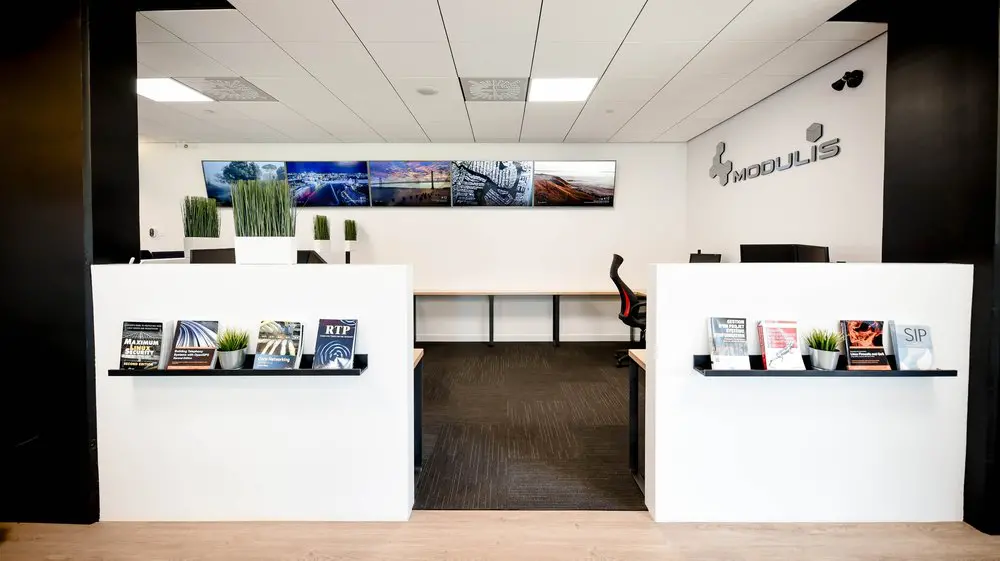
2727 Coworking space, 2727 Saint-Patrick, Montreal
Who Uses Shared Office Space in Montreal?
The Independent Professional
Montreal has one of the largest concentrations of freelancers and independent professionals in Canada. A 2024 analysis estimated that the city is home to tens of thousands of self-employed professionals working in technology, creative services, consulting, translation, and professional services [8]. For these professionals, a shared office provides:
Professional credibility: Inviting clients to a polished coworking space rather than a home office or cafe communicates professionalism and stability
Separation of work and life: The psychological benefits of commuting to a dedicated workspace, even a short commute, are well-documented. Research on remote work has found that professionals who maintain a clear physical boundary between work and home report higher satisfaction and lower burnout [9]
Networking opportunities: The serendipitous connections that occur in shared kitchens, common areas, and community events can lead to client referrals, collaboration opportunities, and business partnerships that do not happen when working in isolation [10]
Infrastructure: Enterprise-grade WiFi, printing, phone booths, meeting rooms, and a professional business address are all included without the capital expense of setting up a home office to the same standard
The Hybrid Corporate Employee
The fastest-growing segment of shared office users is the hybrid employee: someone employed by a company (often headquartered downtown or in another city entirely) who works from a non-corporate location several days per week. In Canada, approximately 77% of companies now operate some form of hybrid work model [3].
For these employees, a shared office near home solves several problems:
Eliminates the commute on work-from-home days: Instead of a 30-45 minute metro ride to downtown, a 10-minute walk or bike ride to a neighborhood coworking space
Provides professional infrastructure: Enterprise-grade WiFi, phone booths for calls, meeting rooms for collaboration, all without the distractions of a home environment
Maintains work-life boundaries: The physical act of "going to work" at a coworking space preserves the separation between professional and personal life that erodes when working from a kitchen table
Some employers now provide coworking stipends as part of their benefits packages, recognizing that paying $350-$500/month for a neighborhood shared office membership is far more cost-effective than maintaining excess downtown office space [5].
The Early-Stage Startup
Montreal's startup ecosystem, fueled by AI research, gaming, fintech, and a deep talent pool from four universities, generates a constant stream of new companies that need workspace but cannot commit to traditional leases. A shared office provides:
Speed to market: A startup can be operational in a shared office within 24 hours of signing up. A traditional lease takes weeks or months to negotiate, furnish, and set up
Scalability: Start with one hot desk, grow to two dedicated desks, then move to a shared private office as the team expands, all within the same coworking space with no lease renegotiation
Professional address: A Griffintown or downtown Montreal business address projects credibility to investors, clients, and potential hires, more so than a residential address
Ecosystem access: Coworking spaces often host startup-focused events, pitch nights, and networking sessions that connect early-stage founders with mentors, investors, and potential collaborators [11]
The International Remote Worker
Montreal's combination of affordability, cultural richness, bilingualism, and quality of life has made it a magnet for digital nomads and international remote workers. For these professionals, a shared office provides the practical infrastructure (reliable internet, professional environment, community) that makes productive remote work possible in a new city [12].
Shared Office Space in Montreal: Neighborhood Guide
Griffintown / Saint-Henri: The Canal Corridor
The neighborhoods along the Lachine Canal have become Montreal's most exciting shared office corridor. Former industrial buildings, with their massive windows, high ceilings, and raw character, have been converted into coworking spaces that offer a unique combination of natural light, architectural character, and canal-side environment.
Why choose Griffintown/Saint-Henri for shared office:
Natural light: Industrial-scale windows provide daylight exposure that research links to improved mood, productivity, and sleep quality [13]
Canal-side lifestyle: The Lachine Canal bike path and green spaces provide lunchtime exercise and relaxation opportunities year-round
Food and amenities: Atwater Market (fresh produce, artisanal bakeries, prepared foods) is steps away, along with a growing corridor of restaurants and cafes on Notre-Dame West [14]
Transit: Charlevoix metro (Green Line) is 5 minutes walk; Lionel-Groulx interchange (Green/Orange) is 11 minutes; future REM station planned
Community: The area attracts a mix of creative professionals, tech workers, and small business owners, creating a dynamic and diverse coworking community
Value: Pricing is typically 15-25% below equivalent downtown spaces
Notable operators: 2727 Coworking (hot desks from $350/mo, assigned desks from $400/mo, private offices available), Entrepots Dominion, IDEAL Coworking.
Downtown / Centre-ville
Montreal's downtown remains the largest market for shared office space, with major operators (WeWork, Regus/IWG, Spaces) and independents concentrated between Sherbrooke and the expressway.
Why choose downtown:
Maximum meeting and networking density
Prestigious business addresses (Place Ville Marie, Square Victoria, etc.)
Extensive metro access (nearly every station on the Green and Orange lines)
Proximity to major clients and corporate headquarters
Considerations:
Higher pricing ($350-$600/mo for hot desks; $500-$800/mo for dedicated desks)
Less community-oriented; many downtown spaces have a more transactional, corporate atmosphere
Limited natural light in some older buildings
Lunch and coffee costs are significantly higher than neighborhood alternatives
Old Montreal offers a premium shared office experience in heritage buildings, with the unique character of cobblestone streets, 18th-century architecture, and proximity to the Old Port.
Why choose Vieux-Montreal:
Architecturally stunning work environments that impress clients and inspire occupants
Walking distance to the Palais des Congres and downtown core
Tourist-area dining and entertainment for after-work activities
Considerations:
Premium pricing reflects the heritage setting
Limited metro access (Place-d'Armes only nearby station)
Tourist foot traffic during summer months
Parking is expensive and scarce
Notable operators: Crew Collective, CAVM (Centre d'Affaires du Vieux-Montreal), Walter.
Plateau-Mont-Royal / Mile End
The Plateau and Mile End are the traditional heartland of Montreal's creative and freelance economy, with a dense concentration of independent cafes, art spaces, and creative studios.
Why choose the Plateau/Mile End:
Strong creative and tech community
Excellent walkability and BIXI coverage
Parks (La Fontaine, Mont-Royal) for lunchtime respite
Authentic neighborhood character that attracts a younger, creative clientele
Considerations:
Smaller spaces with fewer corporate amenities
Orange Line metro only (Mont-Royal, Laurier, Rosemont)
Street parking is difficult; no indoor parking options
Neighborhood is residential-focused, which means fewer business services nearby
Notable operators: Fabrik8, Temps Libre, Halte 24-7, various independents.
Royalmount / Town of Mount Royal
The emerging Royalmount commercial district has attracted attention as a new hub for shared office space, particularly for professionals who commute from the north or west of the island.
Limited dining and cultural offerings compared to older neighborhoods
Community is still developing; less established networking ecosystem
Square Victoria / Quartier International
The area around Square Victoria, at the intersection of Old Montreal and downtown, has become a significant concentration of shared office space, particularly for professionals in financial services, law, and international business.
Why choose Square Victoria:
Central location at the junction of downtown and Old Montreal
Orange Line metro direct access
Professional, corporate atmosphere
Proximity to financial institutions, law firms, and government offices
Notable operators: Regus (multiple locations), iQ Office Suites, various independents.
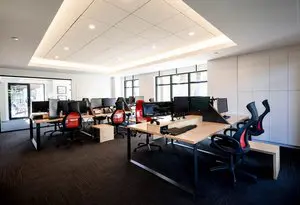
2727 Coworking space, 2727 Saint-Patrick, Montreal
The Economics of Shared Office Space
Total Cost Comparison: Shared Office vs. Traditional Lease vs. Home Office
To make an informed workspace decision, professionals need to compare the total cost of ownership across all options, not just the headline monthly price:
The home office appears cheapest on paper but excludes critical factors: the productivity cost of working in an environment with domestic distractions, the opportunity cost of missed networking, the professional credibility cost of meeting clients at home, and the mental health cost of isolation. Research consistently shows that remote workers in shared coworking environments report higher productivity, greater satisfaction, and lower rates of burnout compared to those working exclusively from home [9].
The Hidden Value of Community
One of the most frequently cited but hardest-to-quantify benefits of shared office space is the community effect. Unlike a traditional office where all colleagues work for the same company, a coworking space brings together professionals from diverse industries, backgrounds, and career stages.
Research on coworking communities has identified several mechanisms through which this diversity creates value:
Referral Networks: Members of coworking spaces frequently refer business to one another. A web developer meets a graphic designer in the kitchen; six months later, they are collaborating on client projects. A consultant mentions over coffee that a client needs legal advice; the lawyer at the next desk gains a new client. These organic connections are the informal economy of coworking [10].
Knowledge Exchange: Working alongside professionals from different fields exposes you to ideas, tools, and approaches you would never encounter in a homogeneous corporate office. The designer learns about SEO from the marketer; the marketer learns about UX from the developer; the developer learns about contract negotiation from the consultant.
Emotional Support and Accountability: Freelancers and remote workers frequently cite loneliness and lack of accountability as their greatest challenges. A coworking community provides the casual social interaction, the "how's your project going?" conversations, and the ambient motivation of being surrounded by other productive people [16].
Talent Recruitment: Startups in coworking spaces have a built-in talent pool. When a growing company needs to hire, the first place many founders look is their coworking community, where they have already had months of informal interaction with potential candidates.
Tax Deductibility in Quebec
Shared office expenses are fully deductible as business expenses for self-employed professionals and corporations in Quebec. The Canada Revenue Agency (CRA) treats coworking memberships the same as any other workspace rental: the expense must be incurred for the purpose of earning business income [15].
For many freelancers, a coworking deduction is more straightforward and often more valuable than the home office deduction:
Home office deduction: Requires calculating the percentage of your home used exclusively for business, tracking proportional utility costs, and maintaining records that demonstrate exclusive business use. For someone working from a one-bedroom apartment, the eligible percentage is often quite small.
Coworking deduction: The full monthly membership fee is deductible. Keep the receipt. Done.
Additionally, related expenses are deductible:
Day passes purchased in addition to a monthly membership
Meeting room bookings at any coworking space
Transit costs incurred commuting to the coworking space (if the space is your primary place of business)
Coffee and meals at the coworking space (subject to the 50% meal deduction rule)
Quebec's provincial deductions mirror the federal treatment, so the effective tax savings of a coworking membership can be 30-50% of the cost depending on your marginal tax rate [17].
The Psychology of Shared Workspace
Social Facilitation and Ambient Productivity
The phenomenon of "social facilitation," first documented by social psychologist Norman Triplett in 1898, describes how the mere presence of others performing similar activities enhances individual performance. In a coworking context, being surrounded by other focused professionals creates a subtle but powerful motivational effect: you work harder, stay on task longer, and take fewer unproductive breaks when you know others around you are similarly engaged.
This effect has been validated in coworking-specific research. A study published in the Harvard Business Review found that people who work in coworking spaces report levels of "thriving" that approach 6 on a 7-point scale, significantly higher than the average for employees in traditional offices. The researchers attributed this to three factors: autonomy in choosing when and how to work, a sense of identity and meaning derived from working alongside diverse professionals, and a heightened sense of community [28].
Combating the Isolation Epidemic
Professional isolation is one of the most significant challenges facing remote workers and freelancers. A landmark study on remote work and social isolation found that workers who lack regular in-person professional contact experience higher rates of loneliness, lower job satisfaction, and reduced cognitive engagement compared to those who work alongside others [9].
In Montreal, where winter conditions can compound isolation by reducing casual outdoor social interactions for five months of the year, the social infrastructure of a shared office becomes even more valuable. The kitchen conversation, the nod of recognition from a fellow member, the after-work drink on Friday, these small interactions form the social fabric that keeps isolated professionals connected.
The Creativity Dividend of Diversity
Working alongside people from different industries exposes you to ideas, vocabularies, and problem-solving approaches that you would never encounter in a homogeneous work environment. Management researchers call this "knowledge spillover," and it is one of the primary mechanisms through which coworking spaces create value that transcends simple desk rental.
A web developer working next to a financial analyst may seem like a random pairing, but when the developer learns about cash flow modeling and the analyst learns about user experience design, both professionals expand their capabilities in ways that make them more valuable to their clients and employers.
Montreal's Winter and the Shared Office Safety Net
Montreal's climate deserves special attention in any discussion of shared office space. From November through March, professionals who work from home face a unique set of challenges:
Reduced daylight: By late December, Montreal has only 8.5 hours of daylight. Remote workers in apartments may go days without meaningful natural light exposure
Physical confinement: Temperatures regularly drop below -20C, making the simple act of leaving the house a significant undertaking
Social withdrawal: The casual street encounters, patio conversations, and park meetups that provide social contact in summer disappear entirely
A shared office membership provides a structured reason to leave the apartment, a destination that offers natural light, social interaction, and professional purpose. For many Montreal remote workers, the coworking membership is not primarily about the desk; it is about maintaining mental health and social connection through the long winter [29].
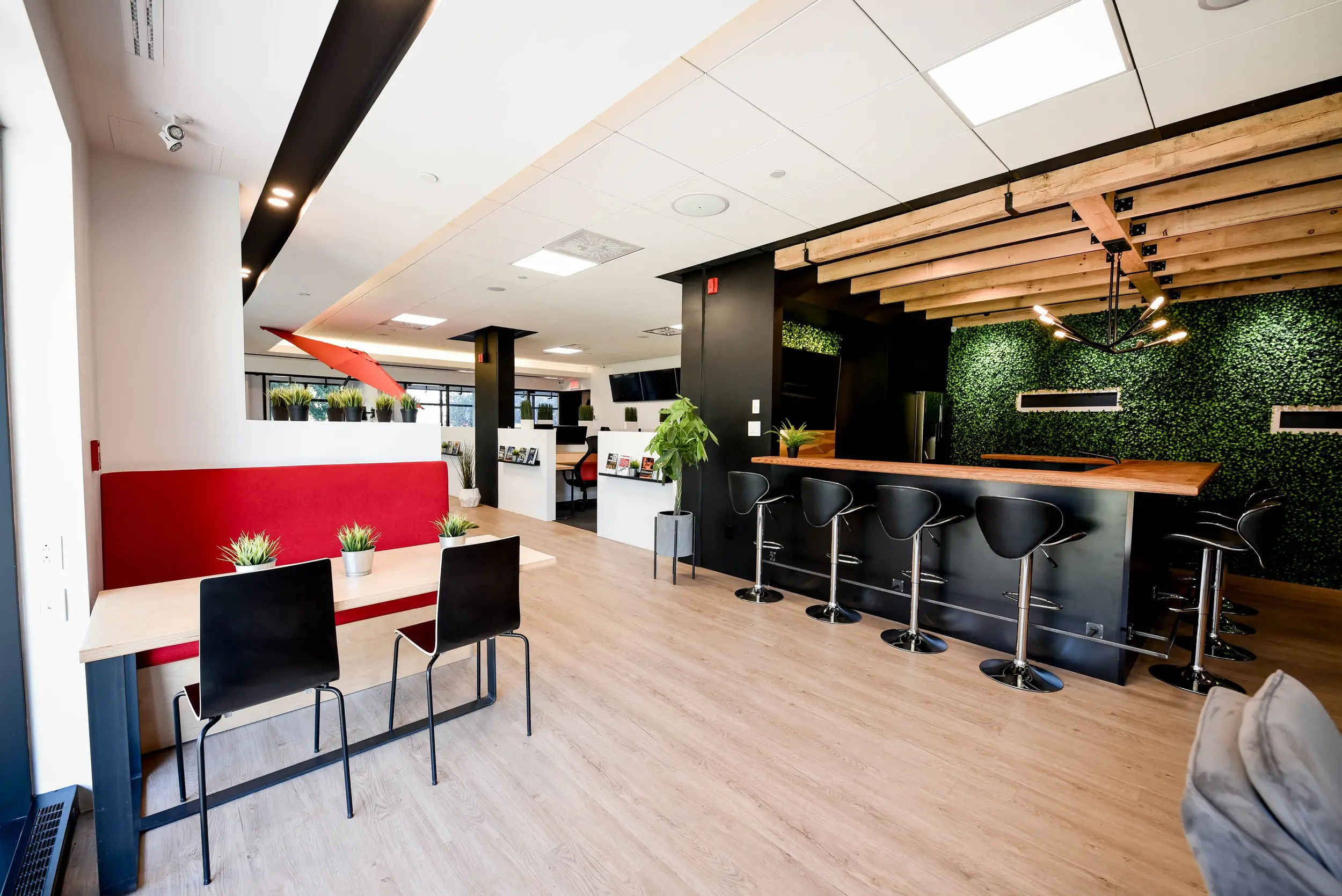
2727 Coworking space, 2727 Saint-Patrick, Montreal
Legal Considerations: License vs. Lease
Understanding the Difference
When you sign up for a shared office membership, you are typically entering into a license agreement, not a lease. This distinction has important legal implications:
Lease: Creates a legal interest in real property. The tenant has exclusive possession of a defined space, rights under Quebec's Civil Code regarding eviction, renewal, and maintenance, and typically a fixed term (1-5 years). Breaking a commercial lease can result in liability for the remaining term's rent.
License: Grants permission to use a space under specific conditions, without creating a property interest. The licensee (you) has a right to use the shared workspace but does not have exclusive possession of any particular area (except in the case of a private office, which may blur the line). License agreements are more flexible, with shorter notice periods and fewer legal protections for both parties.
Why this matters:
Flexibility: License agreements typically allow termination with 30-60 days notice, making it easy to scale up, scale down, or change spaces as your needs evolve
Risk: You have fewer legal protections than a traditional tenant. The operator can typically modify the space layout, change amenities, or adjust pricing with reasonable notice
Tax treatment: Both lease and license payments are deductible business expenses; the legal distinction does not affect tax treatment
Registration: A license does not need to be registered with the Regie du logement (Quebec's rental board), simplifying the administrative process
For most shared office users, the license model's flexibility far outweighs the reduced legal protections. The ability to leave with 30 days notice is precisely the flexibility that makes shared office space attractive compared to a traditional lease [27].
Insurance Considerations
When using shared office space, understand the layers of insurance coverage:
Operator's commercial general liability: Covers premises liability (slips, falls, building issues). This is the operator's responsibility.
Your equipment: Your personal equipment (laptop, phone, monitor) is typically NOT covered by the operator's insurance. Ensure your renter's or homeowner's insurance covers equipment used outside the home, or purchase dedicated business equipment insurance
Professional liability: Your professional errors and omissions coverage is unaffected by your workspace choice
Cyber insurance: If you handle client data, your cyber liability insurance should cover you regardless of location, but verify that it does not have restrictions on network usage (e.g., public WiFi exclusions that might apply to shared coworking networks)
The Physical Environment: What Makes a Great Shared Office
Activity-Based Work Design
The most effective shared office spaces are designed around the concept of activity-based working (ABW): different zones optimized for different types of work, allowing members to move between zones throughout the day based on their current task.
Focus Zones: Quiet areas with individual desks, minimal conversation, and acoustic treatment. These are the "library" of the coworking space, reserved for deep concentration work. Some spaces enforce explicit noise rules in these zones.
Collaboration Zones: Open areas with communal tables, comfortable seating, and a more relaxed noise policy. These are where brainstorming, casual meetings, and social interaction happen.
Phone/Video Call Zones: Enclosed phone booths and small meeting rooms for private conversations. The quality and quantity of these spaces is one of the most important differentiators between coworking operators [18].
Social Zones: Kitchens, lounges, and common areas designed for informal interaction, meals, and relaxation. These spaces are where the community fabric of the coworking space is woven.
Outdoor Zones: For Montreal spaces with access to terraces, balconies, or adjacent outdoor areas (like the Lachine Canal paths), outdoor workspace provides a seasonal bonus that dramatically enhances the work experience during the warmer months.
Internet and Technology Infrastructure
For knowledge workers, internet quality is the single most important amenity. A shared office with unreliable WiFi is worse than a cafe. Minimum standards to expect:
Download: 200+ Mbps (sufficient for video calls, cloud applications, and file transfers)
Upload: 50+ Mbps (critical for video conferencing and uploading large files)
Latency: <10ms (important for real-time collaboration tools)
Redundancy: Dual ISP connections for failover
Ethernet: Wired connections available at desks for maximum reliability
Network segmentation: Each user's traffic should be isolated from other users for security
Montreal benefits from a competitive ISP market with multiple fiber providers, enabling well-run coworking spaces to provide enterprise-grade connectivity at reasonable cost [19].
Ergonomics and Physical Comfort
The quality of the physical workspace directly impacts health and productivity over the long term:
Chair quality: Adjustable task chairs with lumbar support, adjustable armrests, and seat height adjustment. Budget coworking spaces cut costs here; premium spaces invest in quality (Herman Miller, Steelcase, Humanscale)
Desk dimensions: Minimum 48" wide x 24" deep for single-monitor setups; 60" wide for dual-monitor setups. Power outlets integrated into or adjacent to every desk
Standing desk options: Increasingly expected in premium spaces; adjustable sit-stand desks allow users to alternate positions throughout the day, which research links to reduced back pain and improved energy levels [20]
Temperature control: Zone-based HVAC that allows different areas to be maintained at different temperatures
Air quality: Modern HVAC with HEPA filtration, adequate fresh air exchange, and CO2 monitoring
Natural Light and Biophilic Design
Research on workplace design has consistently demonstrated that natural light is among the most valued and impactful environmental factors:
Workers with access to natural light report 15% higher wellbeing and 6% higher productivity compared to those in windowless environments [13]
Exposure to daylight during working hours improves circadian rhythm alignment, leading to better sleep quality
Plants, natural materials (wood, stone), and views of nature or water reduce stress and enhance creative thinking
Montreal's industrial heritage buildings are particularly well-suited to biophilic design. The large windows, high ceilings, and raw materials (exposed brick, timber beams, concrete) of converted factories and warehouses provide a natural aesthetic that purpose-built office towers cannot replicate. At 2727 Coworking, the building's canal-side position and industrial windows deliver abundant natural light and visual connection to the Lachine Canal waterway.
2727 Coworking space, 2727 Saint-Patrick, Montreal
The Montreal Advantage: Why Shared Office Here?
Cost Competitiveness
Montreal offers a compelling value proposition compared to other major Canadian cities:
This price advantage extends beyond the desk: Montreal's lower cost of living means that the lunch, coffee, and transit expenses associated with commuting to a shared office are also lower than in Toronto or Vancouver [21].
Bilingual Business Environment
Montreal's bilingual character is not just a cultural curiosity; it is a genuine business advantage. Working in a shared office alongside bilingual professionals provides:
Access to both linguistic markets: A startup based in a Montreal coworking space can serve English-speaking and French-speaking clients without hiring separate teams
International gateway: French-language capability opens doors to Francophone markets worldwide (France, Belgium, Switzerland, West Africa, North Africa)
Talent pool: Montreal's bilingual workforce is one of its most valuable assets for companies that operate across language boundaries [22]
Technology Ecosystem
Montreal's position as a global AI hub (home to Mila, IVADO Labs, and research teams from Google, Meta, Microsoft, and Samsung) creates a technology ecosystem that benefits all professionals in the city. Coworking spaces in Montreal attract a disproportionate share of tech professionals, creating communities where the ambient level of technical sophistication is high and where exposure to cutting-edge ideas is natural [23].
Transit Infrastructure
Montreal's metro system, combined with the expanding REM, year-round BIXI bike-share (11,000+ bikes including 2,600 electric), and an extensive bus network, makes most coworking spaces accessible without a car. This is a significant advantage for shared office users who may visit different spaces or travel to client meetings across the city [24].
Sustainability and the Environmental Case for Shared Workspaces
Why Shared is Greener
The environmental argument for shared office space is fundamentally about resource efficiency. When professionals share workspace infrastructure rather than each maintaining their own dedicated setup, the aggregate environmental impact decreases significantly:
Energy Efficiency Per Worker: A traditional office designed for 100 people operates at 40-60% average occupancy, meaning that HVAC systems, lighting, and equipment serve 40-60 actual workers while consuming energy sized for 100. A well-managed coworking space operates at 75-90% occupancy, spreading the same fixed energy costs across more actual users. The result: shared offices consume 30-50% less energy per active worker than traditional offices [31].
Commute Reduction: The neighborhood model of shared office space, where professionals work at coworking spaces near their homes rather than commuting to centralized offices, dramatically reduces commute distances. For a Montreal professional living in Griffintown who would otherwise commute to a downtown office (a 30-minute metro ride), switching to a local coworking space (a 10-minute walk) eliminates approximately 80% of their daily commute energy consumption. Scaled across thousands of users, this represents meaningful emissions reduction [32].
Adaptive Reuse: Many Montreal coworking spaces occupy repurposed industrial buildings, avoiding the substantial embodied carbon of new construction. The industrial heritage buildings along the Lachine Canal, with their massive windows and robust construction, are particularly well-suited to workspace conversion. Keeping these buildings in productive use through adaptive reuse aligns with both environmental and heritage preservation goals [33].
Shared Equipment and Resources: One commercial-grade printer serving 50 coworking members replaces 50 home inkjet printers. One commercial HVAC system replaces 50 residential heating units running during work hours. One commercial kitchen replaces 50 home kitchens running throughout the workday. The aggregation of shared resources creates efficiency gains at every level.
Montreal's Climate and Energy Context
Quebec's electricity is over 99% renewable (primarily hydroelectric), which means that the energy consumed by shared office buildings in Montreal has a significantly lower carbon intensity than equivalent space in provinces or countries that rely on fossil fuel generation. This makes Montreal an environmentally advantageous location for any workspace, but the efficiency gains of shared offices compound this advantage further.
2727 Coworking space, 2727 Saint-Patrick, Montreal
Shared Office Etiquette: Thriving in a Communal Workspace
The Unwritten Rules
Every shared office community develops its own cultural norms, but certain etiquette principles are universal:
Noise Management: The single most common source of friction in shared offices is noise. Follow these principles:
Use phone booths or meeting rooms for all calls (voice and video). No exceptions.
Use headphones for any audio (music, podcasts, video content)
Keep conversations in common areas brief and at conversational volume
If the space has a quiet zone, respect it absolutely
Clean up after yourself immediately. Do not leave dishes "to soak."
Label food stored in the shared refrigerator; remove it before it expires
If you use the last of a shared supply (coffee, paper towels), inform staff
Avoid heating foods with strong odors in the microwave
Desk Hygiene (Especially for Hot Desks): When you use a hot desk, leave it as you found it or better:
Clear all personal items at the end of your session
Wipe down the desk surface
Arrange the chair properly
Ensure no power cables are left plugged in across walkways
Community Engagement: The value of a coworking community depends on members' willingness to participate:
Introduce yourself to desk neighbors; a simple "hi, I'm [name], I do [work]" opens the door to future interaction
Attend community events when possible; these are where the networking happens
Be open to helping others when asked; what goes around comes around in coworking communities
Respect boundaries; not everyone wants to chat all the time, and that is perfectly fine
The Future of Shared Office Space in Montreal
Structural Trends Driving Growth
Several irreversible trends suggest that shared office demand in Montreal will continue to grow:
Hybrid Work is Permanent: The debate over whether hybrid work would persist beyond the pandemic is settled. Major Montreal employers, including CGI, SAP, National Bank, and the large insurance companies, have formalized hybrid policies that give employees flexibility to work from locations other than the corporate office 2-3 days per week. This structural shift permanently expands the population of professionals who need shared office infrastructure [5].
Corporate Real Estate Rationalization: Companies that once maintained large corporate offices for peak capacity are systematically reducing their footprints. Montreal's downtown office vacancy rate, which climbed above 18% post-pandemic, reflects this rationalization. As companies shed dedicated space, they increasingly provide employees with coworking stipends or corporate memberships at shared office operators [30].
Freelance Economy Growth: Canada's self-employed workforce continues to grow, driven by platform economics, the gig economy, and a cultural shift toward independent work. Every new freelancer is a potential shared office member [8].
Neighborhood Decentralization: The emerging model is one where every residential neighborhood of significant density also has shared office infrastructure. Just as every neighborhood has a gym, a grocery store, and a pharmacy, the next decade will see shared office space become a standard neighborhood amenity.
Technology Integration
The shared office of 2027 will be significantly more technology-integrated than today's spaces:
App-based access and booking: Members will use smartphone apps for building access, desk booking, meeting room reservation, and community engagement
Occupancy-aware systems: Real-time occupancy data will help members choose less crowded times or quieter zones
AI-powered matching: Coworking platforms will suggest connections between members based on professional interests, industry, and complementary skills
Integrated communication: Community platforms that combine space management with professional networking, event discovery, and service sharing
2727 Coworking space, 2727 Saint-Patrick, Montreal
How to Choose the Right Shared Office
A Step-by-Step Evaluation Process
Step 1: Define Your Requirements
Before visiting any space, clarify your needs:
How many days per week will you use the space?
Do you need a fixed desk or is flexibility acceptable?
Do you need to store equipment overnight?
How important is acoustic privacy (open floor vs. enclosed space)?
What is your monthly budget?
Do you need meeting room access? How often?
Is transit accessibility important? Which routes?
Step 2: Shortlist by Location
Choose 3-4 spaces in neighborhoods that match your commute, lifestyle, and professional needs. Visit each in person; online photos and virtual tours cannot replicate the experience of walking through a space, feeling the energy, hearing the noise level, and assessing the community.
Step 3: Trial Before Committing
Most coworking spaces offer day passes ($20-$60) or trial periods. Use these to work from your shortlisted spaces for a full day each. Pay attention to:
WiFi speed (run a speed test)
Noise level during peak hours (10 AM - 2 PM)
Phone booth availability (try to use one during a busy period)
Kitchen quality and cleanliness
Community vibe (do people interact, or is it silent?)
Commute experience (how did it feel getting there and back?)
Do not accept the listed price as final without asking about available promotions or package deals [25].
Red Flags to Avoid
No day pass or trial option: If a space will not let you try before committing, question why
Long lock-in periods: Be wary of coworking spaces that require 12-month commitments with no early exit clause. The entire value proposition of shared office space is flexibility
Overcrowded common areas: If the kitchen is perpetually full and phone booths are always occupied, the space has sold more memberships than its infrastructure supports
Slow or unreliable internet: Run a speed test during your trial. If the WiFi cannot sustain a video call without buffering, nothing else matters
Non-existent community: A coworking space that is just a room with desks and WiFi is indistinguishable from a library. The community, events, and networking opportunities are what justify the premium over working from home
Frequently Asked Questions
What is the difference between a "shared office" and a "coworking space"?
In practice, the terms overlap significantly. "Shared office" emphasizes the physical workspace component, while "coworking" emphasizes the community and collaborative aspects. Most coworking spaces offer shared office arrangements, and most shared office operators foster some degree of community. The distinction is more about marketing language than fundamental model differences.
Can I use a shared office address as my business address?
Yes, many shared office operators offer virtual mailbox services that allow you to use the coworking space's address as your registered business address for mail, business cards, and corporate registration. This is particularly valuable for freelancers and home-based businesses that want a professional address without the cost of a dedicated office [26].
Is shared office space safe for confidential work?
Yes, with appropriate precautions. Hot desks in open floor plans offer minimal physical privacy, but are suitable for most knowledge work. For confidential conversations, use phone booths or meeting rooms. For confidential screen content, use a privacy filter. For teams handling sensitive data (legal, financial, health), a shared private office with a lockable door provides the necessary level of physical security [27].
Can my employer pay for my shared office membership?
Yes, and an increasing number of employers do. Many companies now offer coworking stipends as part of their remote work benefits. The expense is typically tax-deductible for the employer as a business expense. Ask your HR department about workspace allowances or remote work stipends [5].
Do shared offices in Montreal offer 24/7 access?
Many do, particularly for dedicated desk and private office members. Hot desk access may be limited to business hours (typically 8 AM - 8 PM) at some spaces. If overnight or weekend access is important to you, verify the policy before signing up. At 2727 Coworking, members with dedicated desks and private offices enjoy 24/7 access.
What happens if I need to scale my team quickly?
This is one of the primary advantages of shared office space. If your company grows from 2 to 6 people, you can upgrade from two dedicated desks to a shared private office, typically within the same building and without breaking a lease. Try doing that with a traditional office: you would need to negotiate a new lease, find a larger space, move your equipment, and set up new internet and phone service.
How do I transition from working at home to a shared office?
The transition from a home office to a shared office is typically smoother than expected, but a few strategies help:
Start with day passes: Before committing to a monthly membership, purchase 3-4 day passes at different spaces to find the right fit
Begin with 2-3 days per week: Full-time coworking from day one can feel overwhelming if you are accustomed to the quiet of home. Ease in gradually
Bring comfort items: Noise-cancelling headphones, a favorite notebook, and a reusable water bottle help make any workspace feel more personal
Set a routine: Choose consistent days and times for coworking. Routine builds habit, and habit reduces the decision fatigue of "should I go today?"
Introduce yourself early: The first week is the easiest time to meet people. After that, established members tend to assume you are a regular and stop introducing themselves
Can I use a shared office for a business I am just starting?
Absolutely. In fact, shared offices are ideal for new businesses. You avoid the capital commitment of a lease, you gain a professional address for business registration and client communication, and you access infrastructure (internet, printing, meeting rooms) that would cost thousands to set up independently. Many successful Montreal businesses started at a hot desk and grew into private offices as their revenue increased [11].
What is the cancellation policy for shared office memberships?
Policies vary by operator, but most coworking spaces in Montreal offer monthly memberships with 30-day cancellation notice. Some operators offer discounted rates for 3-month, 6-month, or 12-month commitments, but be cautious about long lock-in periods unless you are confident in your space choice. The flexibility of month-to-month membership is one of the core advantages of shared office over traditional leasing.
How noisy are shared offices? Can I concentrate?
Noise levels vary significantly between spaces and within different zones of the same space. The best shared offices offer a range of acoustic environments: quiet focus zones with low noise, collaborative zones where conversation is welcome, and enclosed phone booths for private calls. During your trial visit, spend time in the quiet zone and assess whether you can concentrate. Bring noise-cancelling headphones as your personal insurance policy against ambient noise.
Do shared offices in Montreal provide ergonomic assessments?
Some premium operators offer basic ergonomic guidance (monitor height, chair adjustment, desk setup), but full ergonomic assessments are rare in shared office settings. If ergonomics are important to you (and they should be for anyone working full-time at a desk), look for spaces with high-quality adjustable chairs and adjustable-height desks, and learn the basics of ergonomic desk setup. The investment in proper posture pays dividends in reduced back pain and sustained productivity over years of desk work.
Are there shared offices in Montreal near the Lachine Canal?
Yes, the Griffintown and Saint-Henri neighborhoods along the Lachine Canal are home to several coworking spaces including 2727 Coworking at 2727 Saint-Patrick Street. The canal corridor offers a unique combination of industrial-heritage architecture, natural light, waterside environment, and transit accessibility that makes it one of Montreal's most desirable shared office locations.
For professionals seeking shared office space in Montreal's Griffintown/Saint-Henri corridor, 2727 Coworking offers hot desks from $350/month and assigned desks from $400/month, with high-speed WiFi, phone booths, meeting rooms, and canal-side views, just 5 minutes from Charlevoix metro.
2727 Coworking space, 2727 Saint-Patrick, Montreal
References
[1] Coworking Pricing US and Canada - 2727 Coworking
[2] 60+ Coworking Industry Statistics & Benchmarks - Optix