Virtual Office in Montreal: The Complete Guide to Business Addresses, Mail Handling, and Professional Mailboxes
The virtual office has evolved from a niche service into an essential business tool for Montreal's growing population of freelancers, remote workers, e-commerce entrepreneurs, and companies seeking a Canadian business presence without the cost of physical office space. Whether you need a professional business address to replace your home address on corporate filings, a mail handling service that scans and forwards correspondence, or meeting room access for occasional client meetings, Montreal's virtual office market offers solutions at every price point and level of service.
This comprehensive guide examines the virtual office market in Montreal: what services are included, how pricing compares across operators, the legal requirements for using a virtual office address for business registration in Quebec, and the strategic considerations that should inform your choice.
Executive Summary
The virtual office is one of the most cost-effective business infrastructure investments available to Montreal professionals. Key findings:
Virtual office pricing in Montreal ranges from approximately $50/month for basic mail handling to $300+/month for full-service packages including live reception, phone answering, meeting room credits, and a premium business address [1]
The Quebec Enterprise Register (REQ - Registraire des entreprises du Quebec) allows businesses to register a virtual office address as their business address, provided the address is a real physical location (not a P.O. Box) and mail can be received there [2]
An estimated 30-40% of new small business registrations in Montreal now use virtual or coworking addresses rather than residential addresses, reflecting the growing normalization of flexible workspace [3]
The search term "virtual office Montreal" generates 107 impressions monthly in French-language queries, indicating strong and growing demand from Quebec professionals actively seeking virtual office solutions
Virtual office expenses are fully deductible as business expenses for self-employed professionals and corporations in Quebec [4]
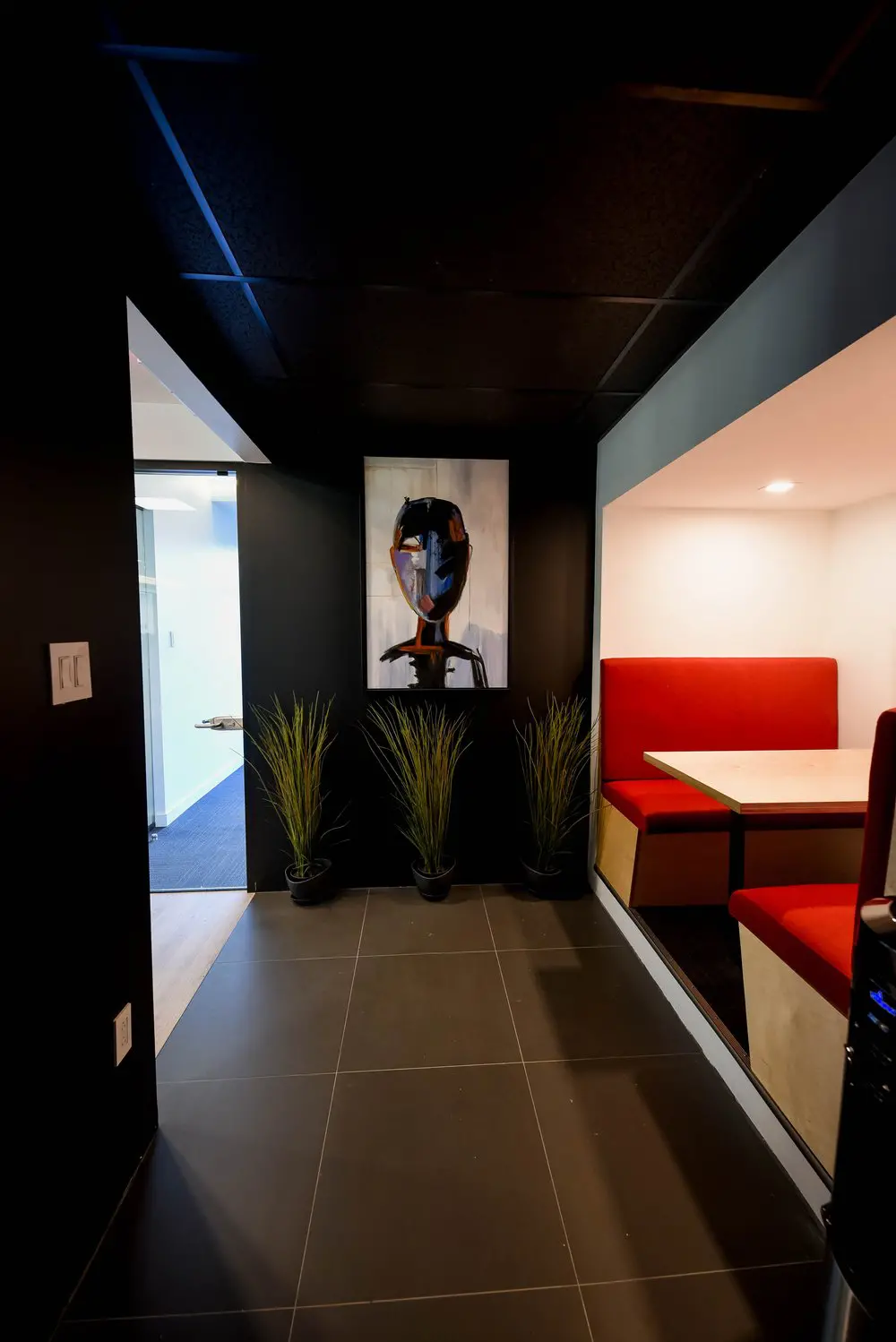
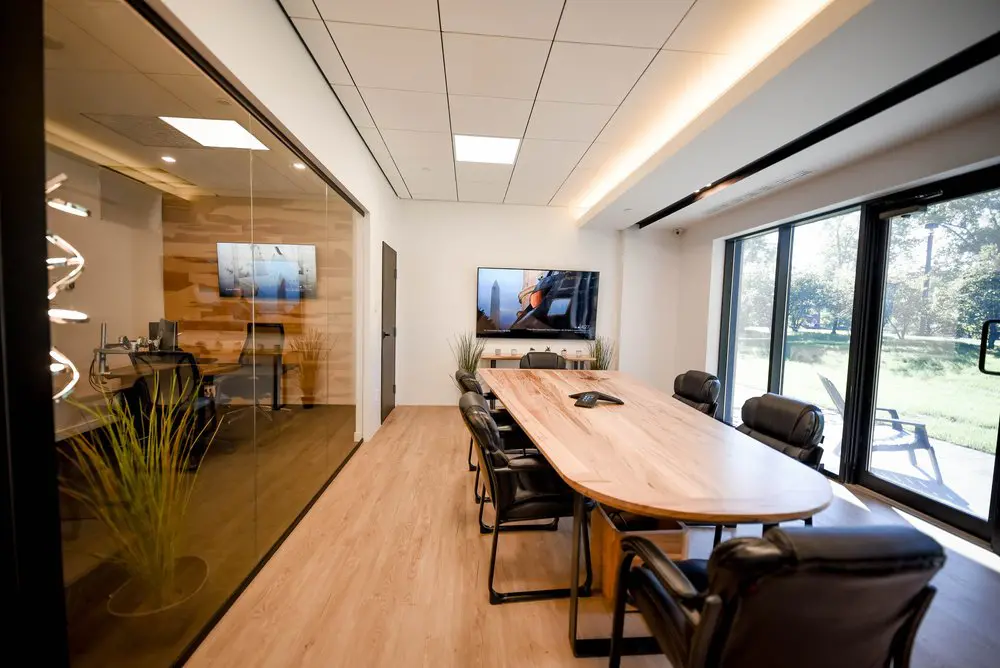
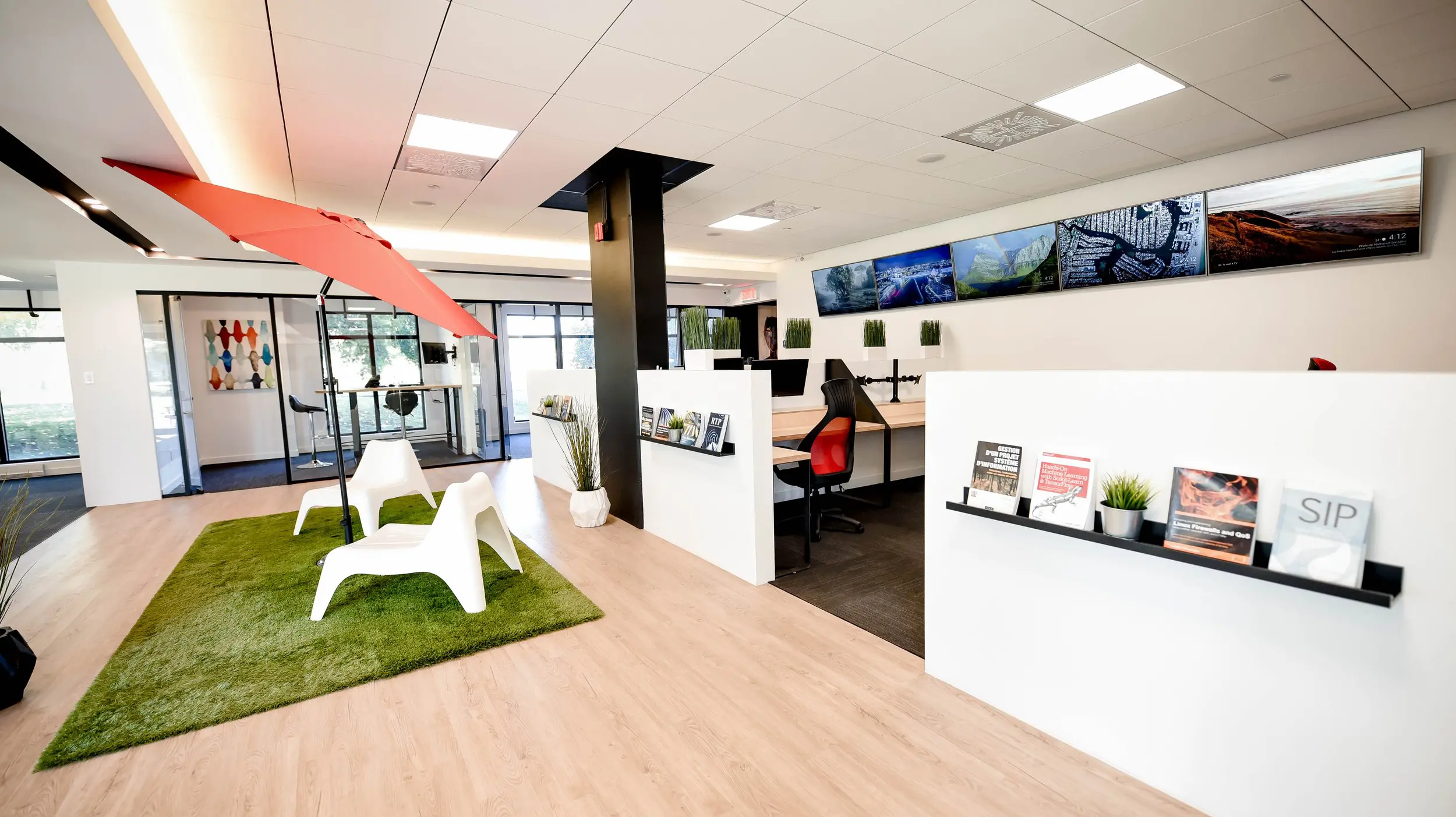
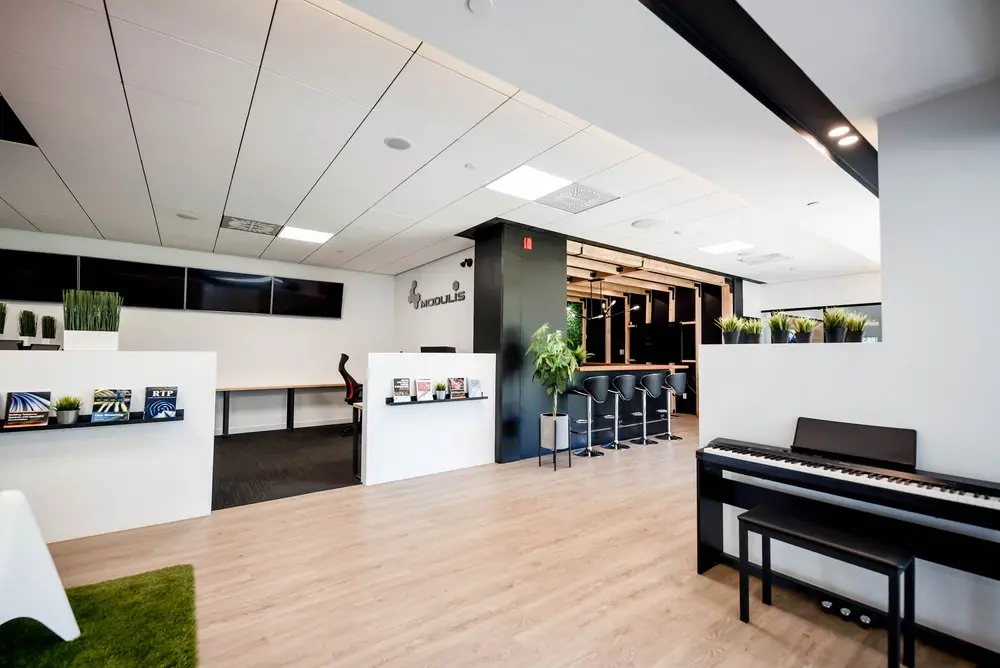
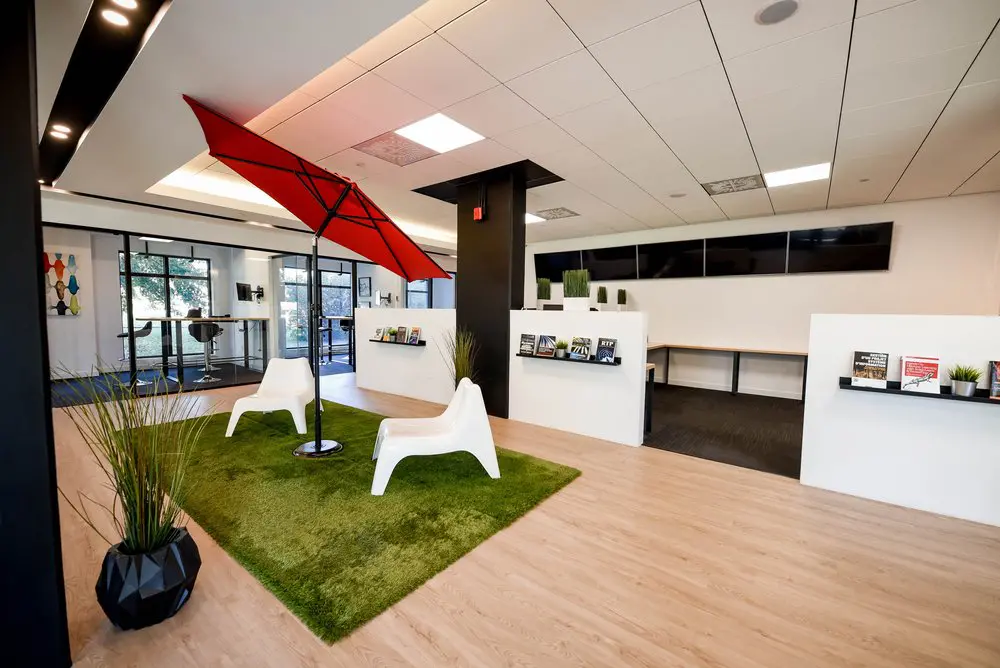
2727 Coworking space, 2727 Saint-Patrick, Montreal
What is a Virtual Office? Understanding the Service Categories
The Core Concept
A virtual office provides the external-facing infrastructure of a traditional office, a professional business address, mail handling, phone service, and meeting room access, without the physical workspace. You work from wherever you choose (home, cafe, client site, beach), while your business presents a professional, established presence at a prestigious commercial address.
The concept is built on a simple insight: most of what makes a business "look" established to clients, partners, and government agencies is the address, phone number, and reception experience, not the physical desk where the owner sits. A virtual office decouples these external-facing elements from the actual workspace, allowing professionals to access the prestige and functionality of a commercial office at a fraction of the cost [1].
Service Tiers
Tier 1: Business Address Only ($50 - $100/month)
The most basic virtual office package provides:
A commercial street address (not a P.O. Box) that you can use on business cards, websites, corporate filings, and marketing materials
Mail receiving (the operator accepts mail and packages on your behalf)
Mail notification (you are notified when mail arrives)
Mail pickup (you visit the location to collect your mail, typically during business hours)
This tier is ideal for professionals who simply need to replace their home address with a commercial one on public-facing documents.
Tier 2: Address + Mail Handling ($100 - $175/month)
Adds more sophisticated mail management:
Everything in Tier 1
Mail scanning: the operator opens your mail, scans it, and emails you a digital copy. This eliminates the need for physical mail pickup and is essential for professionals who travel or live far from the virtual office location
Mail forwarding: physical mail is forwarded to a designated address on a regular schedule (weekly or bi-weekly)
Package notification and holding: larger packages are received, stored, and available for pickup
The comprehensive package for businesses that want the complete experience of a staffed office:
Everything in Tier 2
Live phone answering: calls to your business number are answered by a receptionist using your company name and greeting
Call forwarding and voicemail-to-email
Meeting room credits: typically 4-8 hours/month of meeting room access at the virtual office location
Business lounge access: drop-in workspace access at the virtual office location
Optional add-ons: fax-to-email, courier handling, administrative support
Virtual Office vs. Virtual Mailbox vs. P.O. Box
These three services are frequently confused. Here is how they differ:
Feature
P.O. Box (Canada Post)
Virtual Mailbox
Virtual Office
Address type
P.O. Box number
Street address
Street address
Usable for business registration
No (many jurisdictions reject P.O. Boxes)
Usually yes
Yes
Mail scanning
No
Yes
Yes (Tier 2+)
Phone answering
No
No
Yes (Tier 3)
Meeting room access
No
No
Yes (Tier 3)
Google Business Profile eligible
No
Maybe
Yes
Professional perception
Low
Medium
High
Typical monthly cost
$15 - $40
$50 - $100
$50 - $300
For most Montreal professionals and businesses, the virtual office provides the best combination of functionality, credibility, and value [5].
The Evolution of the Virtual Office
From Mail Drops to Digital Infrastructure
The virtual office concept has evolved through several distinct phases. In the 1990s and early 2000s, "virtual offices" were essentially mail drop services: a physical address where you could receive mail, with perhaps a phone answering service attached. These early services were often associated with business formation agencies and had a somewhat dubious reputation, as they were sometimes used by businesses that wanted to appear more substantial than they were.
The coworking revolution of the 2010s transformed the virtual office into something more legitimate and comprehensive. As coworking spaces proliferated, operators realized that offering virtual office packages was a natural extension of their business: they already had the physical address, reception staff, mail handling infrastructure, and meeting rooms. Adding virtual office members to their roster was essentially zero marginal cost while generating meaningful revenue [16].
The pandemic accelerated this evolution dramatically. As millions of professionals suddenly worked from home, the demand for professional business addresses, mail handling, and occasional meeting room access exploded. Virtual office sign-ups at major operators like Regus/IWG and WeWork grew substantially between 2020 and 2022, and the growth has continued as hybrid work becomes permanent [11].
The Modern Virtual Office Ecosystem
Today's virtual office is best understood not as a single service but as a modular platform that allows professionals to assemble exactly the business infrastructure they need:
Address module: A commercial address for registration, mail, and marketing
Mail module: Physical mail receiving, scanning, forwarding, and notification
Phone module: Business phone number with live or automated answering
Meeting module: On-demand meeting room access at the physical location
Administrative module: Receptionist services, courier handling, administrative support
This modularity is the key innovation. Rather than paying for an entire office when you only need an address, or paying for phone service when you only need mail handling, the modern virtual office lets you purchase only what you use.
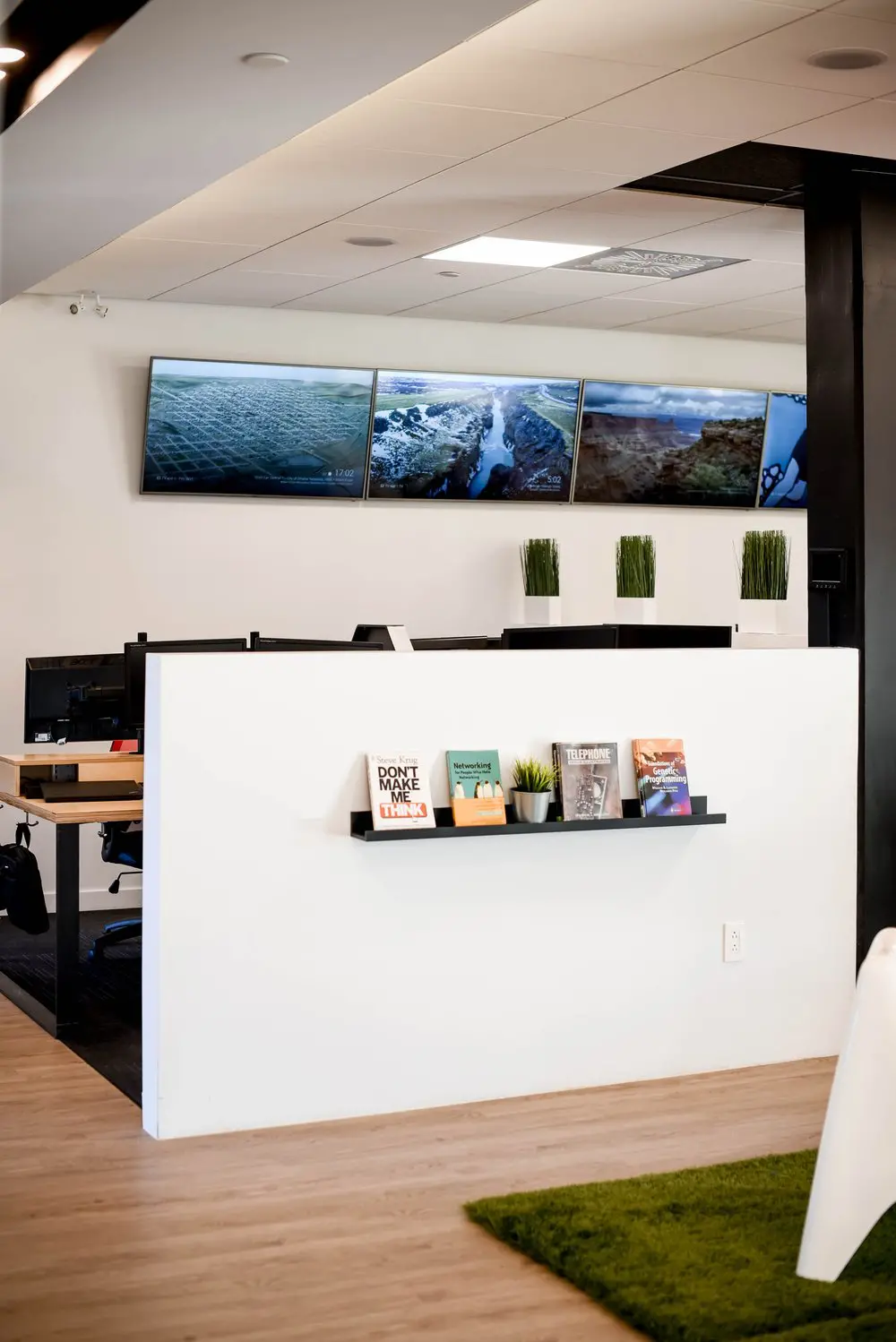
2727 Coworking space, 2727 Saint-Patrick, Montreal
The Quebec Language Dimension
Bill 96 and Business Communication
Quebec's Charter of the French Language, as strengthened by Bill 96 (2022), has implications for virtual office users, particularly those offering phone answering services:
Public-facing business communications must be in French: If your virtual office includes phone answering, the receptionist must be able to answer in French. This is not just a recommendation; it is a legal requirement for businesses operating in Quebec with 25+ employees (and increasingly expected of smaller businesses)
Business documents: Invoices, contracts, and marketing materials must be available in French, though bilingual versions are permitted
Signage: If your virtual office address includes signage with your business name, French must be predominant
For virtual office providers in Montreal, this means that phone answering services must be bilingual (French and English) by default, which is a natural fit for Montreal's bilingual business culture [17].
The Bilingual Advantage
Rather than viewing Quebec's language requirements as a burden, savvy virtual office users recognize bilingualism as a competitive advantage:
A business that can communicate in both French and English serves a larger market
A bilingual receptionist who answers "Bonjour / Hello" in your company name projects cosmopolitan professionalism
Marketing materials in both languages double your organic search visibility (French and English keywords)
Access to the Francophone global market (300+ million French speakers worldwide) is a unique asset that Montreal-based virtual offices provide [7]
Deep Dive: Mail Handling Services
How Digital Mail Processing Works
Modern virtual office mail handling has evolved far beyond simple "we hold your mail for pickup." Here is how the process typically works at a well-run provider:
Receiving: Mail carrier delivers to the virtual office address. Staff sorts incoming mail by recipient (virtual office member).
Notification: You receive a real-time notification (email, app, or SMS) that mail has arrived. The notification typically includes the sender name, the type of item (letter, package, magazine, government correspondence), and an image of the envelope exterior.
Processing decision: You choose what happens next:
Open and scan: Staff opens the envelope, scans the contents, and emails you a high-resolution PDF. Physical mail is then shredded (for sensitive documents) or held for pickup (for documents you need in original form)
Forward: The unopened item is forwarded to an address you specify, typically at the end of the week in a consolidated shipment
Hold for pickup: The item is stored securely until you visit the location to collect it
Recycle/discard: For obvious junk mail, you can instruct staff to dispose of it
Archiving: Scanned mail is typically available in a digital archive for 30-90 days, giving you a searchable digital record of all correspondence.
Package Handling
Package receiving is an increasingly important service as online ordering (both personal and business) continues to grow:
Size limits: Most providers accept packages up to a certain size/weight (typically 20-30 kg). Larger items may require advance notice
Storage duration: Standard is 7-14 days of free storage, after which daily storage fees may apply
Notification: You receive immediate notification when a package arrives
Pickup hours: Packages can typically be picked up during business hours. Some providers offer extended pickup hours or scheduled weekend access
Mail Forwarding Logistics
For virtual office users who live far from the physical address (including international users), mail forwarding is a critical service:
Domestic forwarding: Mail is bundled and sent via Canada Post to your designated address. Weekly or bi-weekly forwarding cycles are standard. Costs are typically $10-$25 per shipment plus postage
International forwarding: For users outside Canada, mail is forwarded via international courier (FedEx, DHL, UPS). Costs are higher ($25-$75 per shipment) but provide tracking and faster delivery
Digital-first: Many providers now default to scanning all mail and forwarding physically only when requested, reducing costs and environmental impact
2727 Coworking space, 2727 Saint-Patrick, Montreal
Phone Services: Beyond the Basic Answering
Live Receptionist vs. Automated Systems
Virtual office phone services range from basic to sophisticated:
Basic (Auto-Attendant): An automated system answers with your company name and a menu of options ("Press 1 for sales, 2 for support..."). Calls are forwarded to your mobile or voicemail. Cost: typically included in basic packages or $20-$40/month as an add-on.
Professional (Live Receptionist): A trained receptionist answers calls using your company name and a custom greeting. They can take messages, forward calls, schedule appointments, and provide basic information to callers. In Montreal, this service is inherently bilingual (French/English). Cost: typically $100-$200/month for a reasonable call volume.
Premium (Dedicated Assistant): A virtual assistant who handles not just call answering but also scheduling, email management, and light administrative tasks. This is beyond traditional virtual office scope but increasingly offered as an add-on by full-service operators. Cost: $300+/month.
For most Montreal professionals, the live receptionist tier provides the best balance of professionalism and cost. A bilingual receptionist who answers "Bonjour, 2727 Coworking, how may I help you?" creates a professional impression that an automated system cannot replicate.
VoIP and Call Forwarding
Modern virtual office phone services leverage VoIP (Voice over Internet Protocol) technology to provide flexible call routing:
Local Montreal number (514 or 438): Essential for businesses serving the local market
Toll-free number (1-800/1-888): Available as an add-on for businesses serving clients across Canada or North America
Call forwarding: Incoming calls are forwarded to your mobile phone, home phone, or another number you specify
Voicemail-to-email: Missed calls generate voicemail recordings that are sent to your email as audio files with transcription
Call screening: The receptionist can ask callers for their name and purpose before connecting them, giving you the option to take or decline calls
Who Needs a Virtual Office in Montreal?
The Home-Based Professional
The most common virtual office user is a professional who works from home but needs a commercial business address for one or more of these reasons:
Privacy: Using your home address on business cards, website, and corporate registration means it is publicly searchable. For freelancers, consultants, and especially home-based professionals who meet clients, this creates a privacy and security concern. A virtual office address separates your business presence from your home address [6].
Credibility: Fair or not, clients, partners, and investors make judgments based on business address. A residential address in a suburban neighborhood communicates differently than a commercial address in Griffintown or downtown Montreal. For professionals in competitive fields (consulting, legal, financial services, architecture), address credibility can influence client decisions.
Business Registration Requirements: When registering a business with the Quebec Enterprise Register (REQ), you must provide a business address. While a home address is legally acceptable, many professionals prefer to keep their residential address off public registries. A virtual office provides a commercial alternative [2].
The E-Commerce Entrepreneur
Montreal's e-commerce sector has grown substantially, and many online businesses operate without any physical retail presence. For these businesses, a virtual office provides:
Return address: A commercial address for product packaging and shipping labels, rather than the founder's apartment
Business registration compliance: E-commerce businesses registered in Quebec need a valid business address
Mail handling: Receiving returned products, supplier correspondence, and business mail at a professional location
Occasional meeting space: For supplier negotiations, investor meetings, or team planning sessions
The International Company Seeking a Canadian Presence
Montreal is an attractive entry point for international companies seeking to establish a Canadian business presence. A virtual office allows a foreign company to:
Register a Canadian business entity with a Montreal address
Receive and process Canadian mail and correspondence
Have a local phone number answered by a bilingual receptionist
Access meeting rooms for occasional in-person meetings with Canadian clients or partners
Project a local presence without the cost of a physical office lease
This use case is particularly relevant for French-speaking companies from France, Belgium, and North Africa that want to enter the Canadian market through Montreal's bilingual business environment [7].
The Extra-Provincial Corporation
Canadian corporations that are registered in one province but do business in Quebec must register as extra-provincial corporations with the REQ. A virtual office in Montreal provides the required Quebec business address without the expense of maintaining physical office space in the province. This is one of the fastest-growing use cases for Montreal virtual offices, as more companies operate across provincial boundaries in the post-pandemic economy [8].
The Startup Conserving Capital
For early-stage startups that need to project professionalism to investors and clients while preserving capital, a virtual office provides the address and meeting room infrastructure at 5-10% of the cost of a traditional office lease. A startup paying $100/month for a virtual office instead of $2,000+/month for a small office preserves $22,800/year in capital, money that can fund product development, marketing, or hiring [9].
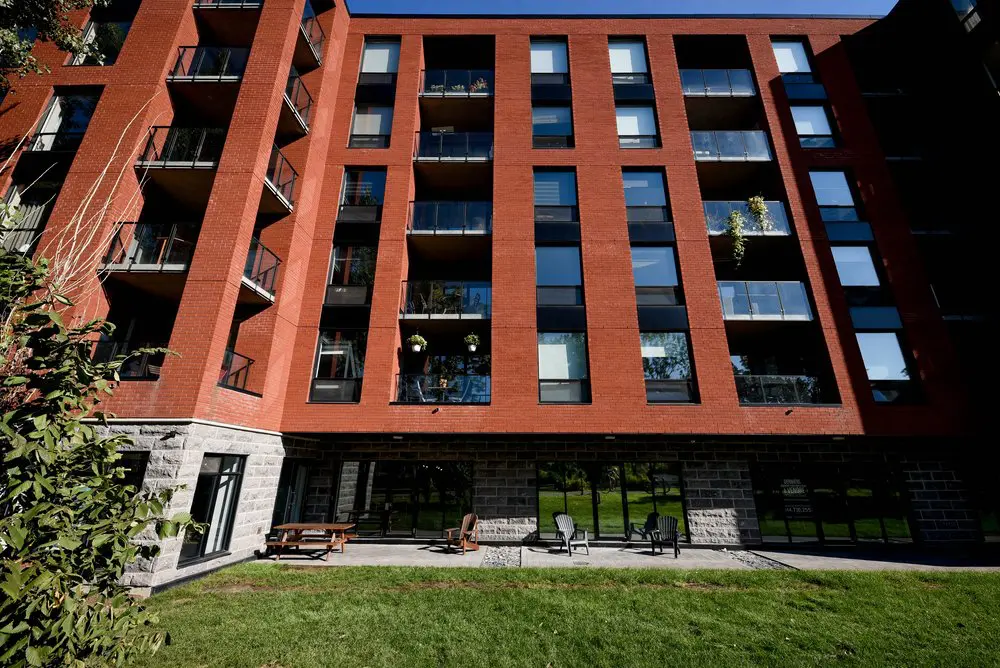
2727 Coworking space, 2727 Saint-Patrick, Montreal
Montreal Virtual Office Market: Pricing and Operators
Address Quality: The prestige and recognizability of the address matters. A Griffintown address (associated with Montreal's creative and tech corridor) or a downtown address (associated with established business) communicates differently than an address in a suburban strip mall. Choose an address that aligns with your business image.
Mail Handling Reliability: Ask about:
How quickly are you notified of received mail? (Same day is standard)
What is the turnaround time for mail scanning? (24-48 hours is typical)
How are packages handled? (Size limits, storage duration, notification process)
What happens to mail if you cancel the service? (Forwarding period, return-to-sender policy)
Phone Service Quality: If the package includes phone answering:
Are calls answered by a live person or a recording?
Can the receptionist answer in both French and English?
What are the hours of phone answering? (Business hours only, or extended?)
How are calls transferred or messages relayed?
Meeting Room Access: If the package includes meeting room credits:
What is the quality of the meeting room? (AV equipment, acoustics, furniture)
Can you book additional hours at a discount?
What is the availability during peak times?
Can you bring clients directly to the meeting room?
Flexibility:
What is the minimum commitment? (Month-to-month is ideal)
Can you upgrade to a physical workspace (hot desk or private office) if your needs change?
What is the cancellation policy?
Legal Requirements: Virtual Office and Business Registration in Quebec
Registering a Business at a Virtual Office Address
Quebec's Enterprise Register (REQ) requires every registered business to provide a "domicile" address (address of the principal establishment). This address becomes part of the public record and is used for official correspondence from government agencies.
Key rules:
The address must be a real physical location: The REQ accepts commercial street addresses but may reject addresses that are clearly P.O. Boxes or virtual-only services that do not have a physical premises where mail can be delivered and a person can be reached during business hours
The address must be in Quebec for Quebec-registered businesses: If your business is registered in Quebec (whether sole proprietorship, partnership, or corporation), the principal establishment address must be in Quebec
You do not need to own or lease the space: Using a virtual office address is legally permissible as long as the address is a real physical location where your business can receive mail and government correspondence
Practical advice: When choosing a virtual office for business registration, select a provider that operates from a physical location with a suite or unit number (e.g., "2727 Saint-Patrick Street, Suite 100, Montreal, QC") rather than a provider that uses a generic address shared by hundreds of businesses. Some government agencies and financial institutions have blacklists of addresses associated with mail drop services, and using such an address can create complications [3].
Google Business Profile and Local SEO
For businesses that rely on local customers, having a Google Business Profile (GBP, formerly Google My Business) is essential for visibility in local search results. Google's policies regarding virtual offices and GBP are strict and important to understand:
Service-area businesses: If your business serves customers at their location (e.g., plumber, consultant, photographer), you can create a GBP without displaying an address. In this case, a virtual office address is not needed for GBP purposes
Storefront businesses: If customers visit your location, you must use an address where you have a staffed presence during stated business hours. A virtual office that is not staffed by your team does not qualify
Hybrid approach: Coworking spaces where you have a physical membership (hot desk or dedicated desk) may qualify for a GBP listing, as you have a physical presence at the location during business hours
The safest approach for local SEO is to use a coworking membership (with physical workspace access) rather than a pure virtual office if you need a GBP listing. This ensures compliance with Google's policies while providing the benefits of a commercial address [12].
Banking and Financial Services
Opening a business bank account in Canada typically requires providing a business address. Most Canadian banks accept virtual office addresses, but policies vary:
Major banks (RBC, TD, Scotiabank, BMO, National Bank): Generally accept virtual office addresses for business account opening, though they may request proof that the address is a real commercial location
Online banks (EQ Bank, Tangerine): Policies vary; some are more flexible about address types
Payment processors (Stripe, Square, PayPal): Generally accept any business address; they focus on business registration documents rather than address type
Recommendation: When opening a business bank account, bring your virtual office agreement, a recent piece of mail received at the address, and your REQ registration showing the address. This documentation package satisfies most banks' verification requirements.
2727 Coworking space, 2727 Saint-Patrick, Montreal
The Professional Credibility Factor
How Address Shapes Perception
Research in business psychology has demonstrated that physical cues, including business address, office appearance, and even the quality of business cards, significantly influence how potential clients, partners, and investors perceive a business's competence, stability, and trustworthiness. This phenomenon, known as the "halo effect," means that a professional business address creates positive associations that extend to perceptions of your work quality, reliability, and business acumen [15].
Consider the implicit messages conveyed by different address types:
Residential address (e.g., "4521 Rue Boyer, Apt 3, Montreal"): Communicates "small," "home-based," "just starting out." Fair or not, many clients associate residential addresses with lower-tier service providers
P.O. Box (e.g., "P.O. Box 1234, Montreal"): Communicates "no physical presence," which can raise questions about legitimacy. Many organizations explicitly reject P.O. Box addresses for vendor registration
Commercial address in a recognized area (e.g., "2727 Saint-Patrick Street, Montreal"): Communicates "established," "professional," "invested in the business." The Griffintown/Saint-Henri address adds associations with Montreal's creative and tech corridor
Prestigious downtown address (e.g., "1 Place Ville Marie, Montreal"): Communicates "corporate," "high-end," "successful." This tier of address carries the highest prestige but also the highest cost
For many professionals, the jump from a residential address to a commercial virtual office address is the single highest-ROI investment they can make in business credibility. At $75-$150/month, a virtual office costs less than a single business lunch but fundamentally changes how the outside world perceives your business.
The Proposal and Pitch Context
The credibility impact of a business address is most acute in competitive situations: proposals, pitches, and bidding processes where you are evaluated alongside other providers:
Government RFPs: When responding to government procurement requests, a commercial business address is often explicitly required or strongly preferred. Quebec government agencies in particular may view residential addresses with skepticism for contracts above certain thresholds
Corporate vendor registration: Large companies that onboard new vendors typically require a commercial business address as part of their compliance and due diligence process
Investor presentations: A startup that presents with a Griffintown or downtown Montreal address on its pitch deck signals investment readiness and operational seriousness. A residential address raises questions about the company's stage and commitment
Partnership agreements: When proposing partnerships with established companies, a commercial address helps position you as a peer rather than a subordinate
The Client Meeting Experience
Virtual office packages that include meeting room access create a particularly powerful credibility effect. When you invite a client to "our offices at 2727 Saint-Patrick in Griffintown," they arrive at a professional coworking space with a reception area, are directed to a well-appointed meeting room with modern AV equipment, and experience the same level of professionalism they would expect from a traditional office. The fact that you use the space for 4 hours per month rather than 40 hours per week is invisible to them.
This "meeting room moment" is often the point where a virtual office pays for itself. A single won client or contract that was influenced (even partially) by the professional meeting experience can generate revenue that exceeds years of virtual office costs.
The Economics of Virtual vs. Physical Office
Total Cost Comparison
For a solo professional or very small business, the cost difference between a virtual office and a physical workspace is substantial:
For businesses that do not need daily physical workspace, the virtual office delivers 80-90% of the external-facing benefits (professional address, meeting rooms, phone service) at 3-10% of the cost.
When to Upgrade from Virtual to Physical
A virtual office works until it doesn't. Consider upgrading to a physical workspace (hot desk, dedicated desk, or private office) when:
You meet clients in person more than 2-3 times per month: Meeting room credits run out quickly, and the friction of booking and traveling to the virtual office location for every meeting becomes burdensome
You need daily workspace outside the home: If working from home is no longer productive (distractions, isolation, lack of routine), a physical coworking membership provides the structure and community that a virtual office cannot
Your team grows beyond 1-2 people: Coordinating a team when everyone works from home becomes difficult; a shared workspace provides the in-person collaboration infrastructure that growing teams need
You need dedicated equipment at a fixed location: If your work requires monitors, printers, or other equipment that cannot be easily transported, a dedicated desk is more practical than a virtual office
The beauty of choosing a virtual office at a coworking space like 2727 Coworking is that the upgrade path is seamless: you can transition from a virtual office to a hot desk, to a dedicated desk, to a private office, all within the same building and community, without changing your business address.
2727 Coworking space, 2727 Saint-Patrick, Montreal
Privacy and Security Considerations
Protecting Your Home Address
One of the primary motivations for a virtual office is address privacy. In Quebec, several types of business filings create public records that include the business address:
REQ registration: Your business address is publicly searchable in the Quebec Enterprise Register
Corporation filings: Annual returns and corporate documents list the registered office address
GST/QST registration: Your business address is associated with your tax accounts (though not publicly visible)
Professional orders: Members of professional orders (lawyers, accountants, engineers) must provide a professional address
For professionals who want to keep their home address private, a virtual office replaces the residential address on all of these filings [6].
Mail Security
When mail is handled by a virtual office provider, security considerations include:
Mail opening: Tier 2+ packages involve the provider opening your mail for scanning. Ensure the provider has clear policies about who handles mail, how scanned copies are stored and transmitted (encrypted email is the standard), and how long physical mail is retained
Package security: Verify that packages are stored in a secure area and that you are notified promptly of arrivals
Confidential documents: For particularly sensitive mail (legal documents, financial statements, medical correspondence), some providers offer enhanced handling procedures. Ask about these options
Service termination: Understand what happens to your mail if you cancel the service. The standard is 30 days of mail forwarding to a new address, after which mail is returned to sender
Tax Implications in Quebec
Deductibility
Virtual office expenses are fully deductible as business expenses for self-employed professionals and corporations in Quebec. The CRA treats virtual office fees the same as any other workspace expense: the cost must be incurred for the purpose of earning business income.
Deductible components include:
Monthly virtual office membership fee
Additional meeting room hours purchased beyond what is included
Phone service and call forwarding fees
Mail forwarding postage costs
Any setup or one-time activation fees
For a freelancer in Quebec's combined federal-provincial tax bracket of approximately 40-50%, a $100/month virtual office effectively costs $50-$60/month after tax savings [4].
Virtual Office vs. Home Office Deduction
An important consideration: if you claim a virtual office deduction AND a home office deduction, the CRA may question whether both are necessary. The general rule is:
If you work primarily from home and use a virtual office for address/mail only: both deductions are legitimate (the virtual office is a business address expense; the home office is a workspace expense)
If you work primarily from the virtual office location (using meeting rooms and lounge access): claiming a home office deduction as well may not be supportable
Consult a Quebec tax professional for advice specific to your situation [14].
2727 Coworking space, 2727 Saint-Patrick, Montreal
Montreal Neighborhoods for Virtual Office Addresses
Griffintown / Saint-Henri
A Griffintown or Saint-Henri address (like 2727 Saint-Patrick Street) communicates a connection to Montreal's creative, tech, and innovation corridor. This area is associated with the Lachine Canal revitalization, the tech startup scene, and a blend of industrial heritage and modern development.
Best for: Creative agencies, tech companies, startups, freelancers, and businesses that want an address associated with innovation rather than corporate formality.
Downtown / Centre-ville
A downtown Montreal address (Place Ville Marie area, Peel Street, Sherbrooke West) communicates corporate establishment and prestige. This is the traditional business address territory.
Best for: Financial services, consulting firms, law practices, and businesses that serve corporate clients who equate downtown with credibility.
Old Montreal / Vieux-Montreal
An Old Montreal address communicates heritage, culture, and premium positioning. Addresses on rue Saint-Paul or in the Port area are recognized internationally.
Best for: Architecture and design firms, luxury brands, international businesses, and professionals who want a distinctive, memorable address.
How Address Choice Affects Perception
Research on business address perception has found that commercial addresses in recognized business districts create stronger first impressions than residential addresses or addresses in unknown locations. In a competitive market like Montreal, where clients may be choosing between several freelancers or agencies, the business address can be a subtle but meaningful differentiator [15].
The Environmental Perspective
Virtual Offices as a Sustainability Choice
The environmental argument for virtual offices is straightforward: if you do not need to be in an office every day, why heat, light, cool, and clean an office every day?
A virtual office user who works from home 90% of the time and visits the coworking space for 4-8 hours per month consumes a tiny fraction of the energy and resources of a traditional office tenant. The aggregate impact is significant:
Reduced building energy consumption: Every virtual office user who avoids leasing dedicated space is one fewer contributor to commercial real estate energy demand. Commercial buildings account for approximately 12% of Canada's greenhouse gas emissions, and much of this energy is spent on heating, cooling, and lighting space that is underutilized [18]
Eliminated commute: A virtual office user who works from home eliminates their daily commute entirely. For a Montreal professional who would otherwise commute 30 minutes each way by metro (which is itself relatively low-carbon), the annual savings are modest. For someone who would drive, the savings are substantial: approximately 2-4 tonnes of CO2 per year depending on distance and vehicle
Paper reduction: Digital mail scanning means that most physical mail is read digitally and never printed. Over the course of a year, this can eliminate hundreds of pages of paper waste
Shared resource efficiency: When virtual office users do visit for meetings, they use shared infrastructure (meeting room, HVAC, lighting) that serves many users rather than dedicated infrastructure for one
Quebec's Green Energy Advantage
Quebec's electricity grid is over 99% renewable (primarily hydroelectric), which means that the marginal environmental impact of a virtual office membership in Montreal is exceptionally low. The building where your virtual office is located runs on clean energy, your digital mail scans are stored in servers that may also run on clean energy, and the transit system you use to visit for meetings is electrified (metro) or on a path to electrification (buses, REM) [19].
For environmentally conscious professionals, a virtual office in Montreal represents one of the lowest-impact ways to maintain a professional business presence.
2727 Coworking space, 2727 Saint-Patrick, Montreal
Common Mistakes When Choosing a Virtual Office
Mistake #1: Choosing the Cheapest Option Without Due Diligence
The lowest-priced virtual office may save $30/month but cost significantly more in complications:
Addresses associated with known mail drop services may be flagged by banks, government agencies, or Google
Bare-bones providers may have slow mail notification (days rather than hours)
No meeting room access means scrambling for space when you need to meet a client
Poor customer service when something goes wrong (lost mail, incorrect forwarding)
The fix: Choose a provider that operates from a legitimate, active coworking space where people actually work. This ensures the address is associated with a real business, mail is handled professionally by on-site staff, and meeting rooms are available when needed.
Mistake #2: Not Reading the Contract Terms
Virtual office agreements may contain terms that create problems:
Auto-renewal clauses: Some providers automatically renew for the same term (6 or 12 months) unless you cancel 30-60 days before expiry
Price escalation: Some contracts allow the provider to increase prices with minimal notice
Address usage restrictions: Some providers restrict how you can use the address (e.g., not for Google Business Profile, not for certain business types)
Exit penalties: Cancellation fees that make leaving expensive
The fix: Read the agreement carefully. Prefer month-to-month terms. Ask about price increase policies. Verify that you can use the address for your intended purposes (business registration, website, marketing).
Mistake #3: Ignoring the Physical Location
Even though you may never work at the virtual office location daily, the physical characteristics of the site matter:
Is the building professional and well-maintained? (A client who decides to visit should find a credible environment)
Is there street-level signage? (Some virtual office providers operate from buildings with no visible indication that businesses are located there)
Is the area safe and accessible? (If you need to pick up packages, you should feel comfortable visiting)
Is there parking or transit access? (For meeting room visits)
The fix: Visit the location before signing up. Verify that the building, reception area, and meeting rooms meet your professional standards.
Mistake #4: Not Planning for Growth
A virtual office is often a transitional phase before graduating to physical workspace. If you choose a standalone virtual office provider that does not offer physical workspace, you will need to change your business address when you upgrade, a process that involves updating government registrations, bank records, client records, and marketing materials.
The fix: Choose a virtual office at a coworking space that also offers hot desks, dedicated desks, and private offices. When you are ready to upgrade, you simply add workspace access to your existing address, with zero disruption to your business.
Montreal vs. Other Canadian Cities for Virtual Office
Montreal offers a meaningful cost advantage over Toronto and Vancouver, which is consistent with the city's broader cost-of-living differential. For businesses that need a Canadian presence but do not require a specific city (Toronto for Bay Street credibility, Vancouver for West Coast markets), Montreal offers excellent value.
Strategic Advantages of a Montreal Virtual Office
Beyond pricing, Montreal offers several strategic advantages as a virtual office location:
Bilingual business environment: A Montreal address signals bilingual capability, which is valuable for businesses serving both English and French-speaking markets across Canada and internationally
Innovation perception: Montreal's reputation as a technology and AI hub lends credibility to tech-oriented businesses
Time zone: Eastern Time (ET) provides convenient overlap with both European and West Coast business hours
International connectivity: Montreal-Trudeau airport offers direct flights to major European, Latin American, and North American cities, making in-person meetings feasible when needed
Cultural capital: Montreal's reputation for creativity, culture, and quality of life enhances the perceived appeal of businesses based there [8]
2727 Coworking space, 2727 Saint-Patrick, Montreal
The Future of Virtual Offices
AI and Automation
Artificial intelligence is beginning to transform virtual office services:
AI phone answering: Systems that can handle routine calls (scheduling, basic inquiries, message taking) with natural-sounding voice AI are emerging. These do not replace live receptionists for complex calls but can handle after-hours and overflow calls
Intelligent mail processing: OCR and AI can automatically categorize incoming mail, extract key information (invoice amounts, due dates, sender names), and route items to appropriate team members
Predictive forwarding: AI systems that learn your patterns and automatically forward or scan mail based on sender, type, and urgency, rather than requiring manual instructions for each item
Virtual receptionist avatars: AI-powered video receptionists that greet visitors at kiosk screens and route them appropriately are being piloted in some forward-looking coworking spaces
The Decentralization of Business Presence
The virtual office points toward a future where business "location" is increasingly decoupled from physical reality. As more business interactions happen digitally, the function of a physical address shifts from "where you work" to "where you are registered, credible, and reachable." This evolution favors cities like Montreal that offer the combination of legitimate business infrastructure, cultural appeal, and cost efficiency that makes them attractive anchor points for location-independent businesses.
Integration with Coworking Ecosystems
The trend toward integrated virtual-to-physical workspace platforms will accelerate. Rather than virtual offices and coworking spaces operating as separate products, the future model is a single membership that provides:
A permanent business address
Mail handling and phone service
Flexible workspace access (day passes, hot desk, dedicated desk) based on current need
Meeting room access across multiple locations
Community and networking events
Administrative and concierge services
This integrated model, already offered by operators like 2727 Coworking, eliminates the need to choose between virtual and physical office; you simply choose the level of physical presence you need at any given time, while your business address and infrastructure remain constant.
The Virtual Office as a Business Foundation
Increasingly, the virtual office is not a compromise or a temporary measure; it is a deliberate strategic choice. Businesses that begin with a virtual office and grow into physical workspace do so on a foundation of flexibility and capital efficiency that traditional office tenants cannot match. The virtual office user who grows from a $100/month address to a $350/month hot desk to a $1,200/month private office has spent a fraction of what a traditional leaseholder would spend, while building a business at the same address throughout the entire journey.
For Montreal professionals navigating the evolving landscape of hybrid work, digital commerce, and global business, the virtual office is not just an alternative to traditional workspace. It is increasingly the smart default, the starting point from which you add physical infrastructure only when and as needed.
Frequently Asked Questions
Can I use a virtual office address on my website and business cards?
Yes, this is one of the primary purposes of a virtual office. You can use the address on all business materials: website, business cards, email signatures, proposals, contracts, and marketing materials.
Will clients know I have a virtual office?
Not unless you tell them. The address is a real physical location (a commercial building in Montreal), and mail is delivered there. If a client visits the address, they will find a professional coworking space with a reception area, not an empty room with a mailbox.
Can I register a Quebec corporation at a virtual office address?
Yes, the Quebec Enterprise Register accepts commercial street addresses for corporate registrations. The address must be a real physical location (not a P.O. Box). Coworking and virtual office addresses meet this requirement [2].
How long does it take to set up a virtual office?
Most providers can activate a virtual office within 1-3 business days. You will receive your address details, mail handling instructions, and any access credentials (for meeting room booking or mail notification systems) during the setup process.
What happens to my mail when I cancel?
Standard practice is 30 days of mail forwarding to a new address you specify. After 30 days, mail is returned to sender. Some providers offer extended forwarding periods for an additional fee. Always provide your new address to important correspondents before cancelling.
Can I receive packages at a virtual office?
Most providers accept packages on your behalf. There may be size or weight limits, and storage duration may be limited (typically 7-14 days before additional storage fees apply). Clarify the package policy before signing up, especially if your business receives frequent shipments.
Do I need a virtual office if I already have a home office?
It depends on your priorities. If you are comfortable with your home address being publicly associated with your business, do not meet clients in person frequently, and do not require phone answering service, a home office may be sufficient. If privacy, professional credibility, or government registration compliance is a concern, a virtual office at $50-$100/month is a relatively small investment for significant peace of mind.
Can I upgrade from a virtual office to a physical desk at the same location?
At many coworking spaces, yes. This is one of the key advantages of choosing a virtual office at a coworking provider rather than a standalone mail service. At 2727 Coworking, for example, you can seamlessly upgrade from a virtual office to a hot desk, dedicated desk, or private office without changing your business address [5].
What industries benefit most from virtual offices in Montreal?
Virtually any service-based business can benefit, but the industries where virtual offices are most common in Montreal include:
Technology and software: Developers, SaaS companies, and IT consultants who work remotely but need a professional Canadian business address
Creative services: Graphic designers, photographers, videographers, and marketing agencies that work from home studios
Consulting: Management, HR, financial, and strategy consultants who meet clients at their offices rather than their own
Legal services: Solo practitioners and small law firms that do not need full-time office space but need a professional address for client correspondence and court filings
E-commerce: Online retail businesses that need a return address and mail handling
Real estate: Independent agents who work in the field but need a professional office address
International business: Foreign companies establishing a Canadian presence, particularly Francophone businesses entering the North American market through Montreal
Healthcare professionals: Practitioners offering virtual consultations who need a professional address for licensing and patient communication
Can I use a virtual office address to register for GST/QST?
Yes, you can use your virtual office address when registering for GST (Goods and Services Tax) and QST (Quebec Sales Tax). The CRA and Revenu Quebec accept commercial business addresses for tax registration. Your virtual office address will appear on any tax correspondence and certificates. Keep your virtual office agreement as documentation in case of audit [4].
How do I receive legal documents (lawsuits, government notices) at a virtual office?
Virtual office staff are trained to identify legal and time-sensitive documents (registered mail, bailiff deliveries, government notices) and notify you immediately by phone and email. Most providers flag these as priority items and require your acknowledgment of receipt. However, if you are involved in litigation or regulatory proceedings, inform your virtual office provider and your legal counsel to ensure proper handling of service of process.
Can multiple businesses share the same virtual office address?
Yes, this is standard practice. Virtual office addresses are shared by multiple businesses, each distinguished by a suite number, unit number, or company name. This is legally equivalent to multiple tenants sharing a commercial building. Banks, government agencies, and other institutions are accustomed to seeing multiple businesses registered at the same commercial address.
Is a virtual office the same as working remotely?
No. "Working remotely" describes where you work (not at a company office). A "virtual office" is a specific service that provides business infrastructure (address, mail, phone, meeting rooms) without requiring you to work at that location. You can work remotely from anywhere while having a virtual office that provides your professional business presence.
For professionals seeking a virtual office in Montreal's Griffintown/Saint-Henri corridor, 2727 Coworking offers virtual mailbox and business address services with optional meeting room access, high-speed WiFi, and canal-side views at 2727 Saint-Patrick Street, just 5 minutes from Charlevoix metro.
2727 Coworking space, 2727 Saint-Patrick, Montreal
References
[1] Virtual Office Space Montreal Business Address - 2727 Coworking