Office Space for Rent in Montreal: The Complete Guide to Flexible vs Traditional Leases in 2026
Finding office space for rent in Montreal has never offered more options, or more complexity. The city's commercial real estate market is undergoing a structural transformation: record-high vacancy in some building classes coexists with tight supply in others, flexible workspace operators are absorbing space that traditional tenants have shed, and the definition of what constitutes an "office" has permanently expanded to include coworking desks, serviced suites, hybrid arrangements, and virtual addresses. Whether you are a freelancer evaluating your first dedicated workspace, a startup founder scaling from five to fifty employees, or a corporate real estate director renegotiating a downtown headquarters lease, the decisions you make about office space in Montreal in 2026 will have significant financial, legal, and operational consequences.
This guide provides a comprehensive, data-driven comparison of every major office space option available in Montreal: traditional commercial leases, serviced offices, coworking memberships, and hybrid models. It covers pricing by neighborhood and building class, the hidden costs that landlords and brokers rarely discuss upfront, Quebec's distinctive commercial lease law, the impact of hybrid work on space demand, and a detailed cost comparison that reveals why the cheapest option on paper is rarely the cheapest option in practice.
Executive Summary
Montreal's office market in 2026 presents a paradox: aggregate vacancy remains elevated at approximately 16.9% across the Greater Montreal Area, yet premium Class AAA space downtown has tightened to 7.6% vacancy and rising rents [1]. This "two markets" dynamic means that tenants seeking top-tier space face competition and rising costs, while those willing to consider Class B or C buildings have extraordinary leverage. Key findings:
Traditional office leases in Montreal require total occupancy costs (rent plus fit-out amortization, operating costs, and overheads) of $35-55 per square foot annually, with upfront capital requirements of $50,000-$175,000+ for a 5-person team depending on fit-out scope [2]
Flexible workspace options (coworking private offices, serviced offices) deliver comparable or superior workspace at $300-800 per person per month with near-zero upfront costs, making them 20-40% cheaper over a 3-year horizon for teams under 15 people [3]
Montreal office rents remain 30-40% below Toronto and 40-50% below Vancouver, making the city one of the most cost-effective office markets among major North American cities [4]
Quebec's Civil Code governs commercial leases with rules that differ significantly from common-law provinces, including no statutory right to break a lease early and widespread use of personal guarantees [5]
The hybrid work revolution has reduced average space-per-employee from 200+ sf to 125-150 sf, fundamentally altering how much office space companies need [6]
Net absorption in Montreal turned positive in mid-2025 for the first time since the pandemic, signaling the beginning of market recovery, though recovery remains uneven across building classes [7]
Montreal's Office Market in 2026: The Two Markets Story
The Headline Numbers
Montreal's office market tells two very different stories depending on which segment you examine. The Greater Montreal Area (GMA) overall vacancy rate stood at approximately 16.9% as of Q4 2025, a level that would have been unthinkable before the pandemic, when vacancy hovered in the 8-10% range [1]. But this headline figure conceals dramatic variation:
Class AAA Downtown: 7.6% vacancy. These are Montreal's trophy towers: Place Ville Marie, 1000 De La Gauchetiere, 1250 Rene-Levesque, Deloitte Tower. Demand for premium space with modern amenities, LEED certification, and prestigious addresses has remained resilient. Some of these buildings have waiting lists [8].
Class A Downtown: 12-15% vacancy. Solid modern buildings that lack the trophy cachet of AAA but offer competitive amenities and locations. Landlords in this segment are offering significant concessions (free rent periods of 6-12 months, generous tenant improvement allowances) to attract and retain tenants [7].
Class B Downtown: 22-24% vacancy. Older buildings with dated mechanical systems, smaller floor plates, and less efficient layouts. This segment has been hardest hit by the flight to quality, as tenants who previously occupied Class B space have used the pandemic as an opportunity to upgrade to Class A at competitive rates [9].
Class C Downtown: 25-30% vacancy. The oldest office inventory, much of it dating from the 1960s and 1970s, is experiencing structural vacancy that may never fully recover. Several Class C buildings have been approved or proposed for conversion to residential use, supported by a $100 million Quebec government fund announced in 2024 to facilitate office-to-housing conversions [10].
Suburban Markets: 14-18% vacancy. Suburban office parks in Laval, the South Shore, and the West Island have experienced a more moderate correction, partly because suburban tenants were already less dense in their space usage and partly because the suburbs have attracted some tenants fleeing high downtown rents [11].
Net Absorption: The Recovery Signal
After nearly four years of negative net absorption (more space being vacated than leased), Montreal's office market turned a corner in mid-2025. Net absorption turned positive in Q3 2025 and accelerated in Q4, driven by a combination of factors: the gradual return of government workers (Quebec mandated 3 days in office for provincial employees), the expansion of AI and technology companies, and the absorption of approximately 3.2 million square feet of sublease space that had flooded the market between 2020 and 2024 [7][12].
The sublease recovery is particularly significant. At its peak in 2022, Montreal had over 5 million square feet of sublease space on the market, representing corporate tenants seeking to offload space they no longer needed. By late 2025, this figure had declined to approximately 1.8 million square feet, as subleases were absorbed by growing companies attracted by below-market rents and pre-built fit-outs [12].
What This Means for Tenants
The "two markets" dynamic creates distinct strategies depending on what you are looking for:
If you want premium space: Act quickly. Class AAA vacancy is tightening, concessions are shrinking, and rents are rising. Waiting may cost you.
If you want good-quality space at a discount: This is the golden era. Class A and B landlords are offering historically generous concessions (12-18 months free rent on 10-year terms, $40-60/sf tenant improvement allowances) to fill space.
If you are a small team (under 15 people): The math increasingly favors flexible workspace. The upfront costs and long-term commitments of a traditional lease rarely make sense when coworking private offices and serviced suites offer comparable space at lower total cost with month-to-month flexibility.
Office Rent by Neighborhood in Montreal
Understanding Montreal's office rental landscape requires looking beyond downtown. Each neighborhood offers a distinct combination of pricing, character, transit access, and tenant community. The following table summarizes asking rents across Montreal's major office submarkets:
One of the most common sources of confusion for first-time commercial tenants in Montreal is the difference between gross and net rent. Understanding this distinction is essential to comparing options accurately:
Net Rent (also called base rent): This is the landlord's rent for the space itself. When a broker quotes "$22/sf," they typically mean net rent. This does NOT include operating costs.
Operating Costs (also called additional rent or CAM charges): These are the tenant's proportionate share of building operating expenses: property taxes, insurance, maintenance, cleaning, security, utilities, and management fees. In Montreal, operating costs typically range from $12-18/sf depending on the building class and location [13].
Gross Rent: Net rent + operating costs. This is your actual annual cost per square foot before any fit-out or overhead expenses. A space quoted at "$22/sf net" with "$16/sf operating costs" costs you $38/sf gross, or approximately $3.17/sf per month.
Example: A 1,000 sf office at $22/sf net with $16/sf operating costs:
Annual net rent: $22,000
Annual operating costs: $16,000
Total annual cost: $38,000 ($3,167/month)
This distinction matters enormously when comparing traditional leases to flexible workspace. A coworking private office at $800/person/month for a 5-person team ($4,000/month, $48,000/year) may seem expensive compared to a "$22/sf" traditional lease. But when you add operating costs, fit-out amortization, furniture, IT, insurance, and cleaning to that traditional lease, the coworking option is often cheaper. We will demonstrate this in detail in the cost comparison section below.
Griffintown and Saint-Henri: Montreal's Emerging Office Corridor
Griffintown and Saint-Henri deserve particular attention as Montreal's fastest-evolving office submarket. The area along the Lachine Canal has attracted significant new development and tenant interest for several reasons:
New Class A inventory: Several new-build office projects have delivered or are under construction, offering modern floor plates, high ceilings, and LEED-certified systems at rents competitive with downtown Class A [14]
Tech and creative cluster: Companies in AI, gaming, digital media, and professional services have gravitated toward Griffintown's combination of modern space, canal-side amenity, and proximity to downtown without the downtown premium
Transit access: Charlevoix metro (Green Line) provides direct downtown access in under 10 minutes. The planned REM de l'Est extension will further improve connectivity
Lifestyle amenity: The Lachine Canal bike path, Atwater Market, Notre-Dame West restaurant corridor, and waterfront green space create a work-life environment that downtown towers cannot match
Value proposition: Net rents in Saint-Henri and the western end of Griffintown remain 10-25% below equivalent downtown space, with lower operating costs reflecting lower municipal tax assessments
For small teams and entrepreneurs seeking office space in Montreal, the Griffintown/Saint-Henri corridor represents an increasingly compelling alternative to downtown, offering superior lifestyle amenity and comparable or better value, particularly in flexible workspace formats.
2727 Coworking space, 2727 Saint-Patrick, Montreal
Major Montreal Office Landlords
Understanding who owns Montreal's office inventory helps tenants negotiate more effectively and understand the market dynamics behind pricing and availability. Montreal's office market is dominated by a relatively small number of institutional and private landlords:
Institutional landlords (Ivanhoé Cambridge, Cadillac Fairview, Oxford) tend to offer more standardized lease terms, professional property management, and premium building quality, but less flexibility on deal structure
Private landlords (Groupe Mach, Groupe Petra) may offer more creative deal structures, faster decision-making, and willingness to negotiate unconventional terms
REIT landlords face public market pressure to maintain occupancy rates and may be more aggressive with concessions during high-vacancy periods
Most Class A and B buildings in Montreal are represented by major brokerage firms (CBRE, Cushman & Wakefield, Colliers, JLL) on a listing basis. Tenants are strongly advised to engage their own tenant representation broker (at no cost to the tenant, as the landlord pays both commissions)
The Hidden Costs of a Traditional Office Lease
The single most important thing to understand about traditional office space for rent in Montreal is this: base rent represents only 45-55% of your total occupancy cost. The gap between the quoted rent and the actual cost of operating an office is substantial, recurring, and frequently underestimated by first-time tenants.
Fit-Out (Tenant Improvements)
Unless you are leasing pre-built or previously occupied space, you will need to build out your office. This means constructing walls, installing flooring, building a kitchen/kitchenette, running data cabling, installing lighting, and creating the physical environment your team will occupy.
Landlords typically provide a tenant improvement allowance (TIA) to offset a portion of this cost, particularly in the current high-vacancy market. In 2026, TIAs in Montreal range from:
Class A downtown: $30-60/sf on a 5-10 year term
Class B downtown: $15-35/sf
Suburban: $10-25/sf
Even with a generous TIA, the tenant typically bears a significant portion of the fit-out cost. On a standard $196/sf fit-out with a $45/sf TIA, the tenant pays $151/sf out of pocket, or $151,000 for a 1,000 sf office.
Furniture
New office furniture for a team of 5 typically costs:
Item
Cost per Employee
5-Person Total
Desk (basic)
$400-800
$2,000-4,000
Desk (sit-stand)
$800-1,500
$4,000-7,500
Ergonomic chair (quality)
$500-1,200
$2,500-6,000
Monitor arm + accessories
$150-300
$750-1,500
Storage/filing
$200-400
$1,000-2,000
Meeting table + chairs
-
$2,000-5,000
Reception/lounge
-
$2,000-5,000
Total (mid-range)
$1,500-3,500
$14,250-31,000
Information Technology
Item
Cost
Business internet (fibre)
$200-500/month
WiFi infrastructure
$2,000-5,000 (one-time)
Network switches/cabling
$1,500-4,000 (one-time)
Server room / cloud setup
$300-800/month
Phones/VoIP
$25-50/user/month
Printer/copier (leased)
$200-500/month
IT support contract
$500-2,000/month
Insurance
Commercial tenants in Montreal are typically required to carry:
Commercial general liability (CGL): $1,500-3,500/year for a small office
Contents insurance: $500-1,500/year
Business interruption: $500-1,500/year
Errors and omissions (professional): $1,000-5,000+/year (industry-dependent)
Cleaning and Maintenance
Professional cleaning (5-person office): $300-600/month
Minor repairs and maintenance: $100-300/month (variable)
Moving Costs
Professional commercial movers (small office): $2,000-5,000
IT migration: $1,000-3,000
Address change costs (signage, business cards, mail forwarding): $500-1,500
Downtime / productivity loss during move: Difficult to quantify but real
The True Cost Picture
When you add all of these costs together, the total occupancy cost for a traditional 1,000 sf office in downtown Montreal looks like this:
Cost Category
Annual Cost
% of Total
Net rent ($22/sf)
$22,000
30%
Operating costs ($16/sf)
$16,000
22%
Fit-out amortization ($150/sf over 5 years)
$30,000
41%
Furniture amortization ($20,000 over 5 years)
$4,000
5%
Insurance
$3,000
4%
Cleaning
$4,800
7%
IT/telecom
$6,000
8%
Total annual occupancy cost
$85,800
100%
Monthly
$7,150
Per person (5 people)
$1,430/month
Note: This does not include one-time costs (fit-out shortfall, furniture, IT installation, moving) which can add $50,000-175,000 upfront.
This analysis demonstrates why base rent alone is a misleading metric for comparing office space options. The $22/sf "rent" becomes $85.80/sf in total occupancy cost, nearly four times the quoted number.
2727 Coworking space, 2727 Saint-Patrick, Montreal
Flexible Workspace Options in Montreal
The flexible workspace market in Montreal has matured significantly since the pandemic. What was once a niche product for freelancers has evolved into a mainstream office solution used by companies of all sizes, from solo professionals to enterprise teams of 50+. Here is a comprehensive overview of every flexible workspace format available:
Hot Desk (Open Coworking Membership)
A hot desk membership provides access to shared workspace on a first-come, first-served basis. You arrive, choose any available desk, work, and leave. No assigned seat, no permanent setup.
What is included: WiFi, desk, chair, access to common areas (kitchen, lounge, phone booths), varying amounts of meeting room credits, printing, coffee/tea.
Best for: Freelancers, consultants, remote employees who need workspace 2-4 days per week. Professionals who value flexibility and community over permanence.
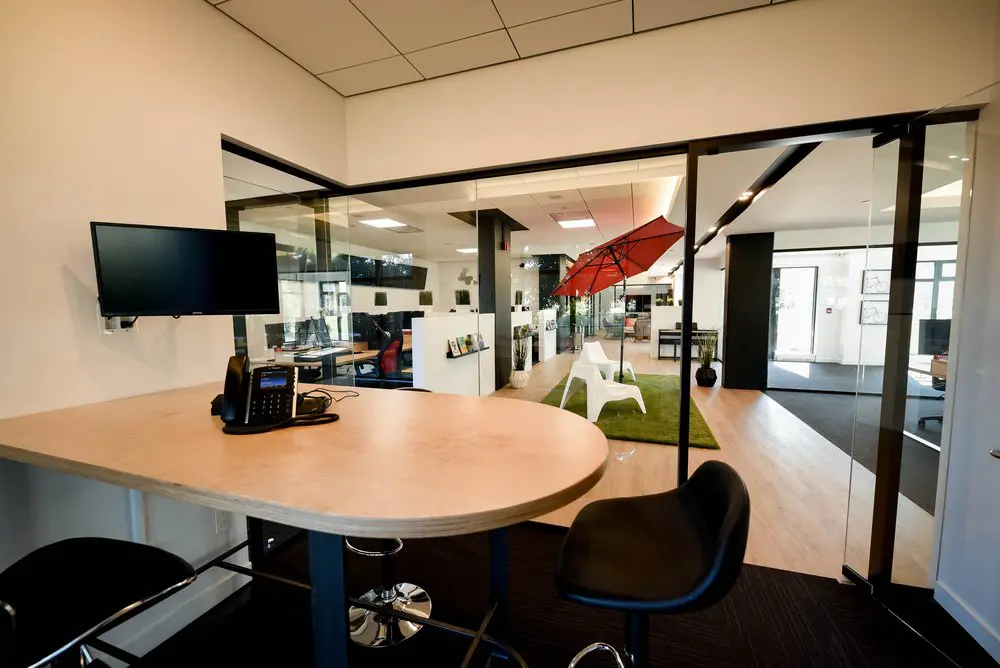
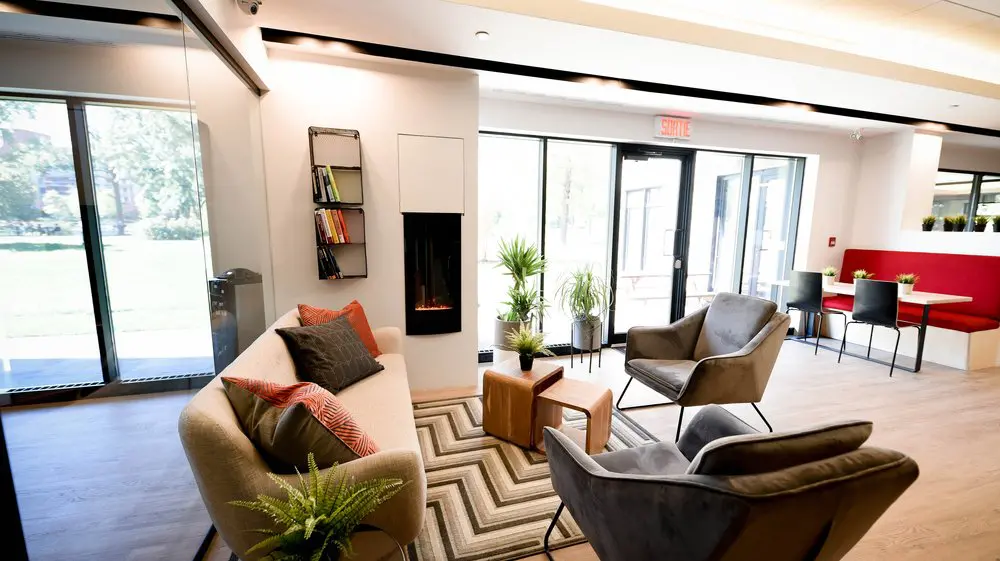
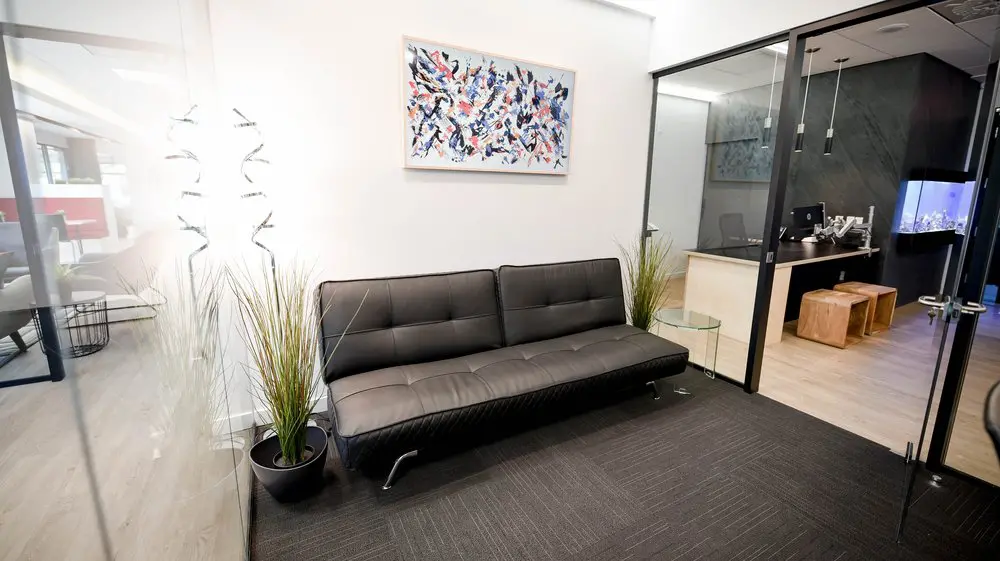
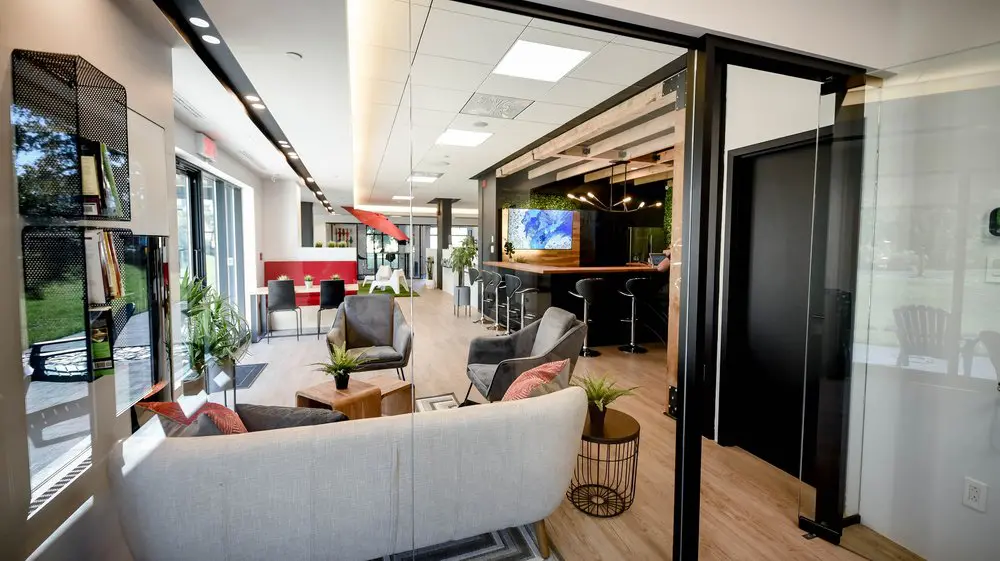
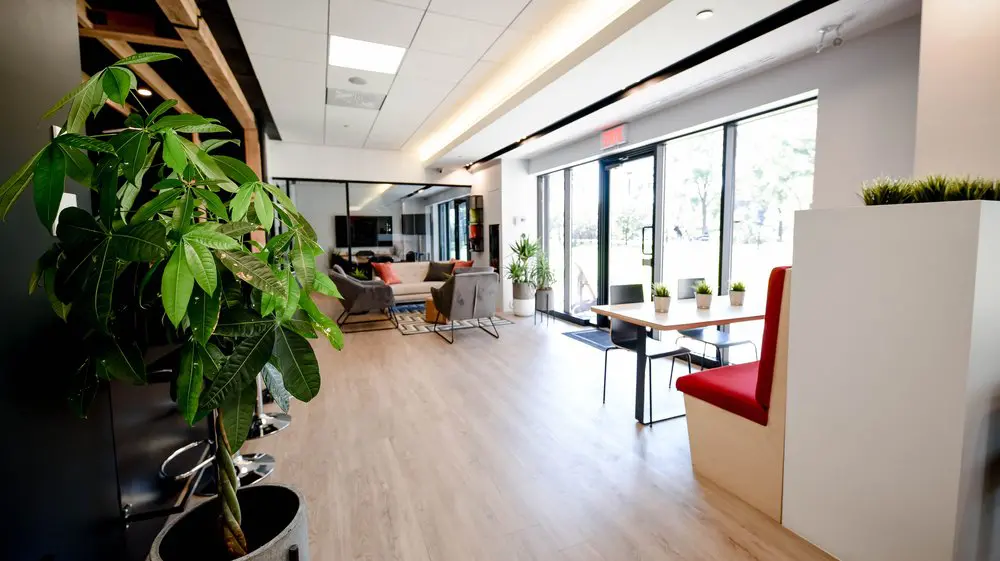
At 2727 Coworking in Griffintown/Saint-Henri, hot desk memberships provide access to the canal-side workspace with high ceilings, natural light, and proximity to Charlevoix metro.
Dedicated Desk
A dedicated desk is your assigned workstation within a shared workspace. Your desk, your chair, your monitor. Leave your setup overnight and over weekends.
What is included: Everything in a hot desk membership plus a fixed, reserved desk, personal storage, and typically more generous meeting room credits.
Best for: Daily users who need a consistent setup, professionals with external monitors or specialized equipment, anyone who prefers routine and personalization.
Private Office (within a Coworking Space)
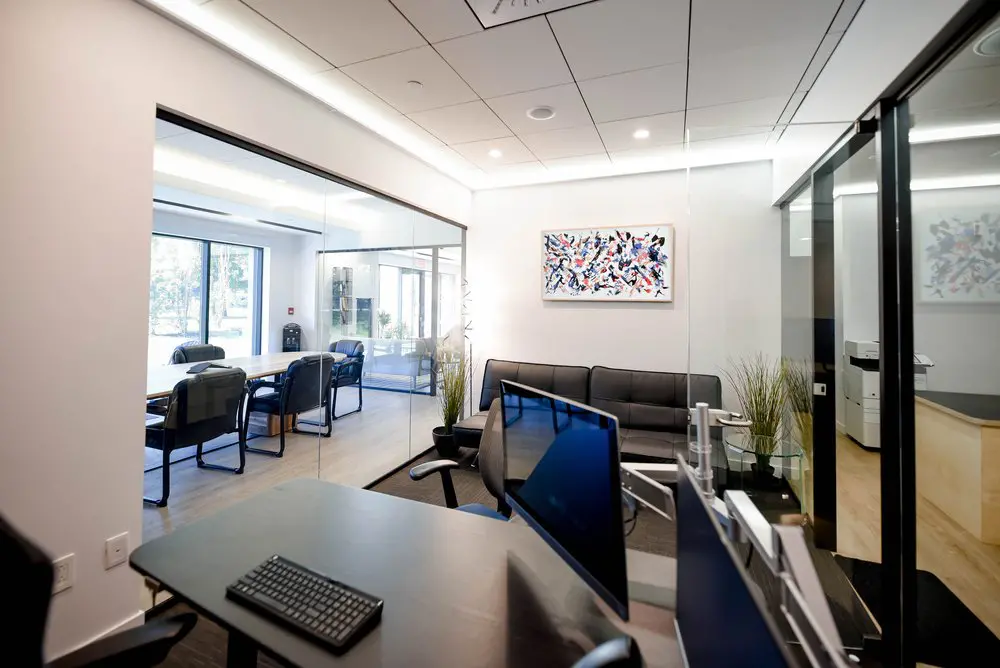
A private, enclosed office room within a coworking facility. Your team has a lockable door, dedicated desks, and acoustic privacy, while accessing shared amenities (kitchen, meeting rooms, phone booths, reception, community events).
Typical Montreal pricing: $600-1,200+/month for 1-3 person offices; $1,500-4,000+/month for 4-10 person offices [17]
What is included: All shared amenities, enclosed private space, 24/7 access, dedicated furniture, meeting room hours, business address, mail handling.
Best for: Small teams that need privacy and identity while benefiting from coworking community and infrastructure. Companies handling sensitive information. Teams that want professional infrastructure without the capital commitment of a traditional lease.
A virtual office provides a professional business address and mail handling without physical workspace. Some packages include meeting room hours, phone answering, and reception services.
What is included: Professional business address, mail receiving and forwarding, business registration address, optional add-ons (meeting rooms, phone answering).
Best for: Fully remote professionals who need a business address for registration, credibility, or legal compliance. Companies expanding into Montreal without immediate physical presence.
A single-day access to a coworking space, typically with all the amenities of a hot desk membership.
Typical Montreal pricing: $15-50/day depending on location and operator [16]
Best for: Occasional users, traveling professionals, anyone who wants to try a space before committing to a monthly membership.
Serviced Office (WeWork, Regus/IWG, and Similar)
Serviced offices are fully furnished, all-inclusive office suites managed by large operators. Unlike coworking private offices (which exist within a coworking community), serviced offices are typically more corporate in atmosphere and priced at a premium that reflects the operator's brand, global network access, and standardized fit-out.
Typical Montreal pricing: $400-800+/person/month [19]
What is included: Fully furnished office, reception, cleaning, utilities, WiFi, phone, building access, typically meeting room credits, access to operator's global network of locations.
Key operators in Montreal: WeWork (multiple downtown locations), Regus/IWG (multiple locations across Montreal), Spaces (multiple locations), iQ Office Suites.
Best for: Companies that want a turnkey, corporate-grade office with minimal setup, global brands that want consistent experience across cities, teams that prioritize brand and polish over community and value.
Important consideration: Serviced office pricing can be 50-100% higher than equivalent coworking private offices for comparable space. The premium buys brand name, standardized quality, and global network access, but for Montreal-focused businesses, this premium may not deliver proportionate value. For a detailed pricing analysis, see: Regus Pricing: Global Analysis.
How Flexible Options Compare
Feature
Hot Desk
Dedicated Desk
Private Office (Coworking)
Serviced Office
Virtual Office
Monthly cost (per person)
$200-400
$350-500
$300-600
$400-800+
$70-200
Physical workspace
Shared, unassigned
Fixed, assigned
Enclosed, private
Enclosed, private
None
Leave equipment overnight
No
Yes
Yes
Yes
N/A
Acoustic privacy
Phone booths only
Phone booths only
Yes (enclosed room)
Yes (enclosed room)
N/A
Business address
Yes
Yes
Yes
Yes
Yes
Meeting rooms
Limited credits
Generous credits
Generous credits
Credits (pay for more)
Pay per use
Commitment
Month-to-month
Month-to-month
1-12 months typical
1-24 months typical
Month-to-month
Upfront costs
Near zero
Near zero
First/last month
First/last month
Near zero
Community
Strong
Strong
Strong
Varies
None
Scalability
Instant
Instant
Subject to availability
Subject to availability
Instant
Best for
Individuals, part-time
Individuals, full-time
Small teams (2-15)
Corporate, brand-conscious
Fully remote, address only
The Real Cost Comparison: A 5-Person Team in Montreal
This section provides the most important analysis in this guide: a direct, apples-to-apples comparison of the total cost of four different office configurations for a 5-person team in Montreal. We account for every cost category, not just rent, including the time value of upfront capital and the economic cost of inflexibility.
Scenario 1: Traditional Lease (1,000 sf downtown Class B)
Cost Component
Monthly
Annual
Notes
Net rent ($18/sf)
$1,500
$18,000
Class B downtown
Operating costs ($15/sf)
$1,250
$15,000
Property tax, insurance, maintenance
Fit-out amortization
$2,500
$30,000
$150/sf over 5 years
Furniture amortization
$333
$4,000
$20K over 5 years
Cleaning
$400
$4,800
Professional cleaning service
Insurance
$250
$3,000
CGL + contents
IT/telecom
$500
$6,000
Internet, phones, support
Supplies
$200
$2,400
Kitchen, bathroom, office
Monthly total
$6,933
$83,200
Per person/month
$1,387
Upfront costs: $50,000-175,000 (fit-out shortfall + furniture + IT setup + legal fees + deposits)
Commitment: 5-10 years (typical Montreal commercial lease)
Flexibility: Very low. Breaking a lease requires landlord consent and typically involves penalties equal to remaining rent.
Risk: High. If you need to downsize, grow, or relocate, you are locked in. Personal guarantees are very common in Quebec commercial leases.
If the team needs Class A downtown space at $24/sf net with $17/sf operating costs and a $196/sf fit-out:
Cost Component
Monthly
Annual
Net rent ($24/sf)
$2,000
$24,000
Operating costs ($17/sf)
$1,417
$17,000
Fit-out amortization ($196/sf over 5 years)
$3,267
$39,200
Furniture + insurance + cleaning + IT + supplies
$1,683
$20,200
Monthly total
$8,367
$100,400
Per person/month
$1,673
Upfront costs in this scenario can reach $125,000-175,000+.
Scenario 2: Serviced Office (WeWork/Regus)
Cost Component
Monthly
Annual
Notes
Serviced office (5 people @ $600/person)
$3,000
$36,000
Mid-range WeWork/Regus pricing
Meeting room overages
$200
$2,400
Beyond included credits
Printing overages
$50
$600
Beyond included credits
Monthly total
$3,250
$39,000
Per person/month
$650
Upfront costs: $3,000-6,000 (first and last month, security deposit)
Commitment: 1-24 months (varies by operator and negotiation)
Flexibility: Moderate. Short-term options available at premium pricing.
Risk: Low-moderate. Operator controls the space, amenity quality, and community.
Upfront costs: $2,000-4,000 (first and last month)
Commitment: Month-to-month to 12 months (most independents offer monthly)
Flexibility: High. Scale up or down with 30-60 days notice.
Risk: Low. Minimal capital at risk, easy exit.
Scenario 4: Hybrid Model (3 Dedicated Desks + 2 Hot Desks)
For teams where not everyone is in the office every day (the reality for most hybrid teams in 2026):
Cost Component
Monthly
Annual
Notes
3 dedicated desks @ $400
$1,200
$14,400
For the 3 daily members
2 hot desk memberships @ $300
$600
$7,200
For the 2 hybrid members
Monthly total
$1,800
$21,600
Per person/month
$360
Upfront costs: Near zero
Commitment: Month-to-month
Flexibility: Maximum. Add or remove memberships monthly.
Risk: Minimal.
Summary Comparison Table
Metric
Traditional Lease (Class B)
Serviced Office
Coworking Private Office
Hybrid Model
Monthly cost
$6,933-8,367
$3,250
$2,100
$1,800
Per person/month
$1,387-1,673
$650
$420
$360
Annual cost
$83,200-100,400
$39,000
$25,200
$21,600
Upfront costs
$50,000-175,000
$3,000-6,000
$2,000-4,000
~$0
Commitment
5-10 years
1-24 months
Month-to-month to 12 months
Month-to-month
Flexibility to scale
Very low
Moderate
High
Maximum
Personal guarantee
Very likely
Unlikely
No
No
Time to occupancy
3-6 months
1-2 weeks
1-7 days
1 day
Risk if business changes
Very high
Low-moderate
Low
Minimal
3-Year Total Cost Comparison (including upfront costs):
Option
Year 1
Year 2
Year 3
3-Year Total
Traditional Lease (Class B)
$133,200-258,400
$83,200-100,400
$83,200-100,400
$299,600-459,200
Serviced Office
$42,000-45,000
$39,000
$39,000
$120,000-123,000
Coworking Private Office
$27,200-29,200
$25,200
$25,200
$77,600-79,600
Hybrid Model
$21,600
$21,600
$21,600
$64,800
The numbers speak clearly: for a 5-person team, flexible workspace options cost 60-85% less than a traditional lease over 3 years, even before accounting for the risk premium of a 5-10 year commitment and personal guarantee.
The traditional lease becomes more competitive as team size increases (above 20-30 people), lease terms align with actual business horizon (10+ year established companies), and the company requires highly specialized fit-out (laboratories, trading floors, broadcast studios) that cannot be accommodated in flexible space.
2727 Coworking space, 2727 Saint-Patrick, Montreal
Quebec Commercial Lease Law: What Every Tenant Must Know
Commercial leasing in Quebec is governed by the Civil Code of Quebec (CCQ), specifically Articles 1851-1891 dealing with the lease of property. Quebec's civil law system differs fundamentally from the common law that governs commercial leases in the rest of Canada, and these differences have practical consequences for tenants [5].
Key Legal Principles
No Statutory Right to Break a Lease: Unlike residential leases in Quebec, commercial tenants have no legal right to terminate a lease early. If you sign a 5-year lease and your business closes after 18 months, you remain liable for the full remaining term unless the lease contains a specific break clause or you negotiate an exit with the landlord [20]. This is one of the most important reasons to carefully consider a flexible workspace alternative before committing to a traditional lease, particularly for startups and growing companies whose space needs may change.
Personal Guarantees Are Very Common: In Quebec, landlords routinely require personal guarantees from company principals, particularly for smaller tenants. This means that if your company cannot pay rent, the landlord can pursue your personal assets: home, savings, investments. The Quebec Civil Code provides strong creditor remedies, and landlords in Montreal use them aggressively [21].
Lease Terms Are Heavily Negotiable: Unlike residential leases, where many terms are set by law, commercial leases in Quebec are almost entirely governed by the contract between the parties. This means everything is negotiable: rent escalation, operating cost caps, renewal options, assignment rights, sublease permissions, and termination provisions [22]. It also means that the tenant's negotiating skill (or their broker's) directly impacts the economic outcome. For guidance on negotiation strategy, see: How to Negotiate a Commercial Lease in Canada.
No Rent Control for Commercial Space: Quebec's rent control provisions apply only to residential leases. Commercial rents are determined entirely by market forces and the lease contract. A landlord can increase rent by any amount at renewal, subject to the terms of the lease.
Sublease Rights Are Not Automatic: The right to sublease is governed by the lease itself. Most standard commercial leases in Quebec require landlord consent for subleasing, and the landlord cannot unreasonably withhold consent (CCQ Article 1870-1871). However, the practical reality is that subleasing requires time, effort, and often the assistance of a broker, and the original tenant remains liable for the full lease obligation even if the sublease tenant defaults [23].
Tax Considerations
GST/QST on Commercial Rent: All commercial office rent in Quebec is subject to GST (5%) and QST (9.975%), for a combined tax rate of 14.975%. This applies to base rent, operating costs, and parking. Businesses registered for GST/QST can claim input tax credits to recover these taxes, but the cash flow impact is real: on a $5,000/month rent, you are paying an additional $749/month in taxes before recovering them in your next filing [24].
Municipal Business Tax: Montreal imposes a non-residential property tax rate that is approximately 2.5-3.5x the residential rate. This tax is embedded in your operating costs (as the building's property tax is allocated among tenants), and it adds significantly to the total cost of occupying traditional office space in Montreal. The exact rate varies by borough and is adjusted annually [25].
Bill 96 Language Requirements: Quebec's Bill 96 strengthened French language requirements for businesses. Commercial leases with companies employing 25+ employees must be available in French. Signage, communications, and certain business operations must comply with Charter of the French Language provisions. For smaller businesses, the practical impact on leasing is limited, but awareness is important [26].
The Flight to Quality: How Class Matters More Than Ever
One of the defining trends in Montreal's office market is the "flight to quality," a phenomenon where tenants abandon older, less-amenitized buildings in favor of newer, higher-quality space, even at higher rents. This trend has accelerated dramatically since the pandemic and shows no signs of reversing.
Why Companies Are Upgrading
The logic behind the flight to quality is straightforward: in a hybrid work environment where employees have the option to work from home, the office must offer something that home cannot. A dated, poorly lit Class C building with mediocre HVAC, no on-site amenities, and a depressing lobby does not motivate anyone to commute. A modern Class A building with natural light, a fitness center, a rooftop terrace, quality food and beverage options, and efficient mechanical systems provides a compelling reason to come in.
The pandemic gave companies a rare opportunity to test this hypothesis. Organizations that upgraded from Class B/C to Class A during the pandemic found that:
Office attendance rates increased by 15-25% compared to their previous space [6]
Employee satisfaction with the workplace improved significantly
The per-square-foot cost increase was partially offset by the reduction in total square footage needed (less space per employee in hybrid configurations)
The Vacancy Gap
The result is a market where vacancy rates diverge dramatically by building class:
The structural vacancy in Class C buildings has prompted a serious conversation about office-to-residential conversions. The Quebec government announced a $100 million fund in 2024 to support conversion of obsolete office buildings to housing, and several projects are underway or in planning stages in downtown Montreal [10].
Conversions are complex and expensive (typically $300-500/sf), and not all buildings are suitable candidates. The most viable conversion projects share certain characteristics: floor plates under 15,000 sf (to allow natural light penetration to all units), operable windows, and locations near transit and amenities [9].
For tenants, the practical implication is that some Class C buildings will be removed from the market permanently, tightening supply in the value segment. Companies currently occupying low-rent Class C space should plan for potential displacement if their building is sold for conversion.
2727 Coworking space, 2727 Saint-Patrick, Montreal
Hybrid Work and Its Impact on Office Space Demand
The hybrid work revolution is not a temporary disruption; it is a permanent structural change in how knowledge workers use office space. Understanding this shift is essential to making informed decisions about office space in Montreal.
The Data
According to Statistics Canada and multiple workforce surveys, the distribution of work arrangements among Canadian knowledge workers in 2025-2026 is approximately:
Fully on-site (5 days/week): 76% (includes many non-knowledge-worker roles)
Hybrid (1-4 days/week in office): 11.5% of all workers, but approximately 40-50% of knowledge workers
Fully remote: 12.5% of all workers, higher among tech and creative professionals
Governments and large employers have been increasing in-office requirements:
Ontario provincial government: Mandated 5 days/week in office for public servants (2025)
Federal government: Increased to 3 days/week minimum (2024), with some departments pushing for 4
Major banks and consulting firms: Generally requiring 3-4 days/week
Technology companies: More varied, with some maintaining full flexibility and others requiring 2-3 days
These mandates have increased demand for office space but have not eliminated hybrid work. Most employees required to be in-office 3 days per week are choosing Tuesday-Thursday, creating a pattern of peak occupancy mid-week and near-empty offices on Mondays and Fridays [28].
Implications for Space Planning
The hybrid work pattern has profound implications for how much and what kind of office space companies need:
Less total space: If half your team is in the office on any given day, you need roughly half the desks. Companies are reducing their footprint by 30-50% compared to pre-pandemic levels [6].
Different space: Less individual desk space, more collaboration space (meeting rooms, huddle rooms, project rooms), more social space (lounges, cafes, town halls), and more focus space (phone booths, quiet rooms).
More flexibility: Companies that do not know their exact headcount 18 months from now (which is most companies) increasingly prefer flexible workspace options that allow them to scale up or down without lease penalties.
Neighborhood distribution: Instead of one large downtown headquarters, some companies are experimenting with a hub-and-spoke model: a smaller downtown presence supplemented by coworking memberships in neighborhood locations, allowing employees to work near home on non-headquarters days.
A Robert Half survey found that 59% of Canadian professionals prefer a flexible workspace arrangement when given the choice between a fixed corporate office and a flexible alternative [29]. This preference is even stronger among workers under 40 and in technology, creative, and professional services sectors.
For a detailed analysis of the return-to-office trend and its implications for Montreal, see: Return to Office in Canada 2026.
When a Traditional Lease Makes Sense vs. When Flexible Wins
The decision between a traditional lease and flexible workspace is not one-size-fits-all. Here is a framework for making the right choice:
A Traditional Lease Makes Sense When:
Your team is 20+ people and stable: At larger sizes, the per-person economics of a traditional lease improve, and the overhead costs (fit-out, furniture, IT) are amortized across more users
Your business horizon is 5+ years: If you are confident you will need similar space for the lease term, the certainty of a fixed rent (with known escalations) has value
You need specialized fit-out: Laboratories, trading floors, call centers, medical offices, and other specialized uses may require custom construction that only makes sense in a long-term lease
You have capital to deploy: The $100,000-200,000+ upfront investment in fit-out and furniture is a meaningful barrier for capital-constrained businesses but may be acceptable for well-funded organizations
Brand identity is tied to physical space: Companies that host frequent client visits, events, or public-facing operations may benefit from a fully branded, custom-designed office
You have experienced commercial lease negotiation: The quality of lease terms varies enormously. A well-negotiated lease with appropriate break clauses, caps on operating cost escalation, and favorable renewal terms can mitigate many of the traditional lease's disadvantages. See: How to Negotiate a Commercial Lease in Canada
Flexible Workspace Wins When:
Your team is under 15-20 people: The economics overwhelmingly favor flexible options for smaller teams
You are growing or contracting: Startups, seasonal businesses, and companies in transition need the ability to scale space up or down without penalty
You are new to Montreal: Companies expanding into the Montreal market benefit from the low-commitment entry of flexible workspace while they assess the market, hire locally, and determine long-term needs
Cash conservation matters: Startups and small businesses that need to preserve capital for operations, hiring, and growth should not lock $100,000+ into office fit-out
Speed matters: A traditional lease takes 3-6 months from search to occupancy. A coworking private office takes 1-7 days
Hybrid work is your reality: If your team is not in the office 5 days/week, paying for dedicated space that sits empty 40-60% of the time is economically irrational
You want to test before committing: Use flexible workspace for 6-12 months to understand your actual space needs before committing to a long-term lease
You value community and networking: The coworking environment provides professional connections that a private office in a traditional building does not [30]
The Hybrid Approach: Best of Both Worlds
Increasingly, companies are adopting a hybrid approach to workspace:
Core office in a smaller traditional lease or serviced office (for team days, client meetings, sensitive work)
Coworking memberships for employees who work remotely 2-3 days/week (allowing them to access professional workspace near home)
Virtual office for remote team members who need a business address but not physical space
This model reduces total real estate costs by 30-50% compared to a traditional headquarters-only approach while providing employees with better access to professional workspace in more locations.
2727 Coworking space, 2727 Saint-Patrick, Montreal
Montreal's Cost Advantage: How the City Compares
Montreal consistently ranks as one of the most cost-effective office markets among major North American cities. This cost advantage extends beyond office rent to encompass the full spectrum of business operating costs:
30-40% below Toronto for equivalent quality and location
40-50% below Vancouver for equivalent quality and location
Comparable to Calgary and Ottawa for traditional space, but with superior transit, talent pool, and urban amenity
Beyond Rent: Total Business Cost
The cost advantage extends to other business expenses:
Salaries: Montreal professional salaries are 10-20% below Toronto equivalents, offset partially by Quebec's higher income tax rates [4]
Talent: Montreal's four major universities (McGill, UdeM, Concordia, ETS) and world-leading AI research ecosystem provide deep talent pools in technology, engineering, and creative fields
Tax credits: Quebec offers generous R&D tax credits (SR&ED federal + Quebec provincial) and multimedia/gaming tax credits that can reduce effective labor costs by 15-30% for qualifying activities [32]
Cost of living: Montreal's cost of living is approximately 25-35% lower than Toronto's, meaning salary dollars go further for employees, which in turn moderates salary expectations
For international companies evaluating Canadian office markets, Montreal offers additional advantages:
Bilingual workforce: Native French and English proficiency for European and North American operations
AI and tech ecosystem: Home to Mila, Element AI's legacy, and a concentration of AI talent that rivals any city globally
Time zone: Eastern Time, overlapping with European and North American business hours
Immigration: Quebec's immigration programs (PEQ, QSWP) facilitate talent attraction from francophone countries
The Decision-Making Checklist
Before signing any lease or membership agreement for office space in Montreal, work through this checklist:
Financial Due Diligence:
Calculate total occupancy cost (not just rent) for all options
Account for upfront capital requirements and opportunity cost
Model scenarios for growth, contraction, and status quo
Understand GST/QST implications and input tax credit recovery
Verify deductibility of all office expenses with your accountant
Legal Due Diligence:
Have a commercial real estate lawyer review any traditional lease before signing (Quebec law specialization required)
Understand personal guarantee obligations and negotiate limitations
Verify sublease and assignment rights
Review operating cost definitions and caps
Understand lease renewal terms and rent escalation mechanisms
Operational Due Diligence:
Visit the space during business hours (noise, light, traffic, community)
Test WiFi speed and reliability
Verify transit access and commute times for all team members
Assess meeting room availability and booking process
Review building security, after-hours access, and parking
Understand cleaning, maintenance, and repair responsibilities
Strategic Due Diligence:
Align space commitment with business planning horizon
Consider your employer brand (what does the office say about your company to candidates and clients?)
Evaluate community and networking value of different options
Plan for the workspace needs of new hires over the next 12-24 months
Consider accessibility requirements (CNESST compliance for Quebec workplaces)
2727 Coworking space, 2727 Saint-Patrick, Montreal
Navigating the Search: Practical Steps
Step 1: Define Your Requirements
Before you begin searching for office space for rent in Montreal, answer these questions:
How many people need workspace today? In 6 months? In 2 years?
How many days per week will team members be in the office?
What is your monthly budget (not just what you want to pay, but the maximum you can sustain)?
What is your time horizon? Are you looking for 6 months or 6 years?
What neighborhood best serves your team's commutes, clients, and lifestyle preferences?
What is non-negotiable (natural light, transit access, parking, meeting rooms, 24/7 access)?
Step 2: Evaluate All Options
Do not default to the traditional lease because it is familiar. For any team under 20 people, you should evaluate at least three flexible workspace options alongside any traditional lease opportunities. The cost comparison section above demonstrates why this analysis is worth your time.
Step 3: Visit in Person
Virtual tours and photos are useful for initial screening, but you must visit any space you are seriously considering, during business hours, on a typical workday. Pay attention to:
Natural light quality at your potential desk location
Noise levels (open plan can be quiet or chaotic depending on the community)
WiFi speed (run a speed test)
Kitchen cleanliness and amenity quality
Bathroom maintenance
General energy and professionalism of other occupants
Commute experience (not just Google Maps distance, but the actual door-to-door journey)
Step 4: Negotiate
Whether you are signing a traditional lease or a coworking membership, terms are negotiable. Common negotiation points:
Traditional lease:
Free rent period (industry standard in 2026: 1 month free per year of term)
Tenant improvement allowance
Operating cost caps
Break clause (even a limited one provides valuable optionality)
Renewal terms
Personal guarantee limitations (time-limited, capped amount)
This step applies to traditional leases (where a lawyer is essential) but also to longer-term flexible workspace agreements (where a lawyer is advisable). Quebec commercial law has nuances that can create unexpected obligations, and the cost of a lawyer reviewing a lease ($1,500-3,000) is trivial compared to the cost of a poorly understood 5-year commitment.
Montreal's Top Neighborhoods for Office Space: A Deeper Look
Downtown Core (Centre-ville)
The downtown core remains the largest office market in Montreal and the default choice for corporate headquarters, financial services firms, law offices, and professional services companies. With approximately 90 million square feet of office inventory, downtown Montreal offers the widest range of options in terms of building class, floor plate size, and amenity level.
Advantages: Maximum transit accessibility (metro, bus, REM, commuter rail), proximity to courts, government offices, and financial institutions, largest restaurant and amenity selection, prestigious addresses.
Disadvantages: Highest rents, limited parking (and expensive when available), crowded during business hours, some areas feel deserted on evenings and weekends.
Best for: Companies that need downtown presence for client access, professional credibility, or employee commute optimization from multiple directions.
Griffintown
Griffintown has transformed from a post-industrial neighborhood into one of Montreal's most desirable mixed-use districts. New Class A office buildings, residential towers, and a growing restaurant and retail scene have created a vibrant work-live environment along the Lachine Canal.
Advantages: New building stock, canal-side environment, proximity to downtown (10-minute metro), strong tech/creative tenant community, excellent cycling infrastructure.
Disadvantages: Limited Class B/C inventory (most space is new and priced accordingly), some parking challenges, neighborhood still developing commercial amenities.
Best for: Tech companies, creative firms, companies that prioritize modern space and lifestyle amenity.
Old Montreal (Vieux-Montreal)
Heritage buildings with character, cobblestone charm, and proximity to the waterfront make Old Montreal a premium office address. The stock is predominantly converted heritage buildings with Class B/C systems but unique architectural character.
Advantages: Architectural character, impressive client-facing environment, walkable to downtown and waterfront, restaurant density.
Disadvantages: Limited modern building stock, expensive parking, tourist congestion in summer, some heritage buildings have HVAC and elevator limitations.
Best for: Creative agencies, architecture and design firms, boutique professional services, companies that use their office as a branding tool.
Saint-Henri / Sud-Ouest
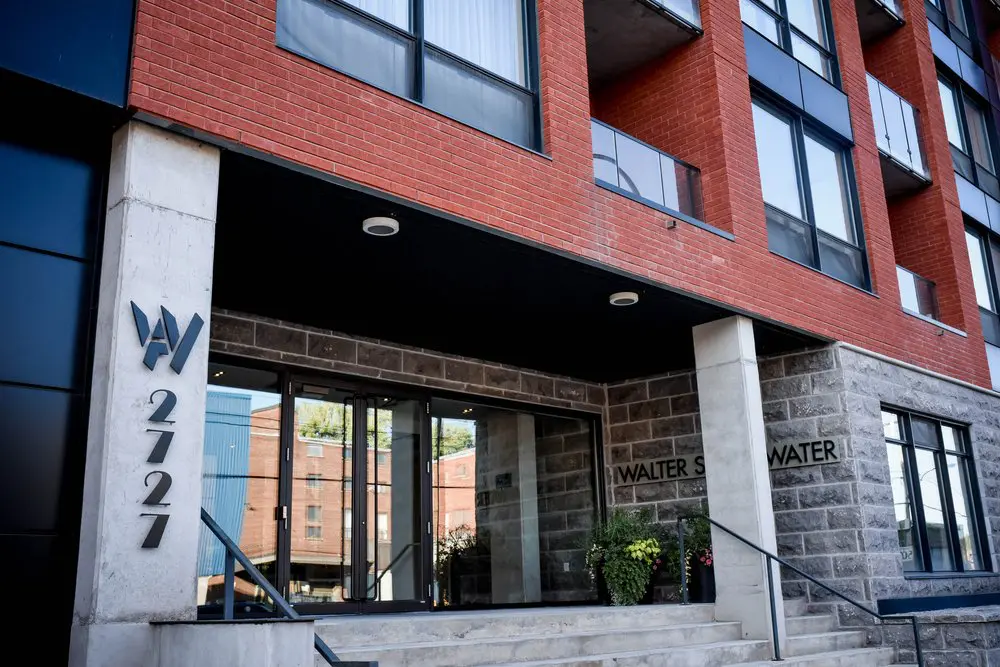
Saint-Henri and the broader Sud-Ouest borough offer Montreal's best value for office space, combining industrial-heritage buildings with excellent transit, canal-side amenity, and an emerging creative economy. This neighborhood is where 2727 Coworking (at 2727 Saint-Patrick) is located, offering flexible workspace in a converted industrial building with canal views, natural light, and direct metro access.
Advantages: Best value in central Montreal, canal-side environment, strong community feel, improving transit, authentic neighborhood character, proximity to Atwater Market and Notre-Dame West commercial corridor.
Disadvantages: Less corporate credibility than downtown (though this is changing rapidly), smaller inventory, fewer large floor plates.
Best for: Small businesses, creative firms, startups, cost-conscious companies that value community and lifestyle over corporate prestige.
Mile End / Mile-Ex
Montreal's original tech and creative hub, where Ubisoft, Google, and dozens of smaller companies established their presence, creating a dense ecosystem of technology and creative firms.
Advantages: Strong tech and creative community, walkable neighborhood, excellent restaurants and cafes, cycling infrastructure, parks.
Disadvantages: Limited modern office stock, smaller floor plates, parking difficulty, transit primarily limited to Orange Line.
Best for: Tech and creative companies that want to be part of the Mile End ecosystem, companies targeting talent in the Plateau/Mile End residential neighborhoods.
2727 Coworking space, 2727 Saint-Patrick, Montreal
Understanding Operating Costs in Detail
Operating costs deserve deeper examination because they represent one of the largest and least understood components of traditional office occupancy cost.
What Operating Costs Include
Operating costs (also called "additional rent" or "CAM charges" in some markets) are the tenant's proportionate share of the landlord's costs to operate and maintain the building. In Montreal, a typical operating cost breakdown looks like this:
Municipal property taxes are the single largest component of operating costs in Montreal, and they are significantly higher than in most other Canadian cities relative to property values. Montreal's non-residential property tax rate is approximately 2.5-3.5 times the residential rate, reflecting the city's historical reliance on commercial property taxes as a revenue source [25].
This has a direct impact on tenants: in a building where property taxes represent $7/sf of operating costs, a 10% municipal tax increase translates to $0.70/sf in additional tenant costs. Unlike rent, which is fixed by the lease, operating costs flow through to tenants annually and can increase unpredictably.
Operating Cost Escalation
Most traditional leases in Montreal include provisions for annual operating cost escalation. Common structures include:
Full pass-through: Tenant pays their proportionate share of actual operating costs, whatever they are. This exposes the tenant to unlimited escalation.
Base year + escalation: Tenant pays a fixed base amount plus their share of increases over the base year. This is more favorable to tenants.
Capped escalation: Operating cost increases are capped at a fixed percentage per year (typically 3-5%). This provides the most predictability for tenants and should be negotiated whenever possible.
In flexible workspace (coworking, serviced offices), operating costs are included in the monthly fee. The operator absorbs the risk of operating cost escalation, which is one of the underappreciated financial advantages of flexible workspace.
Industry-Specific Considerations
Different industries have different office space needs. Here is a brief guide to industry-specific considerations for Montreal tenants:
Technology and AI
Montreal's AI ecosystem (Mila, universities, corporate research labs) has made the city a global hub for artificial intelligence. Tech companies typically need:
Open floor plans with collaboration zones
High-density power and cooling for workstations
Premium internet (redundant fibre, low latency)
Flexible space that can accommodate rapid headcount changes
Best option: Coworking private offices for teams under 20; traditional Class A lease for larger teams. Many tech companies start in coworking and graduate to traditional space as they mature.
Professional Services (Law, Accounting, Consulting)
Professional services firms need:
Private offices for client confidentiality
Meeting rooms for client presentations
Prestigious address for credibility
Proximity to courts, financial institutions, or client headquarters
Best option: Downtown traditional lease for established firms; coworking private office for small practices and solo practitioners.
Creative (Design, Advertising, Media)
Creative firms value:
Unique architectural character (exposed brick, high ceilings, natural light)
Open, collaborative layouts
Proximity to other creative firms and talent pools
Flexible event space for presentations and launches
Best option: Converted industrial space in Griffintown, Mile End, or Saint-Henri, either as a traditional lease or a coworking private office in a character building.
Healthcare and Life Sciences
Healthcare-adjacent businesses (not clinical operations, which have specialized requirements) need:
Privacy compliance (enclosed offices, secure data handling)
Proximity to hospitals, research centers, or pharmaceutical companies
Meeting facilities for research collaboration
Best option: Traditional lease for clinical operations; coworking or serviced office for administrative, research, and consulting functions.
2727 Coworking space, 2727 Saint-Patrick, Montreal
The Coworking Value Proposition Beyond Cost
While cost is the most quantifiable advantage of flexible workspace, several less tangible benefits deserve consideration:
Speed to Market
A traditional office lease in Montreal takes 3-6 months from initial search to occupancy: 4-8 weeks for search and tour, 2-4 weeks for negotiation, 2-4 weeks for legal review, 8-16 weeks for fit-out construction, and 1-2 weeks for furniture delivery and IT installation.
A coworking private office can be occupied in 1-7 days. For a startup that just closed funding, a company expanding into Montreal, or a team that needs to relocate quickly, this speed difference has real economic value.
Risk Elimination
The risk profile of a 5-year traditional lease with personal guarantee is substantially different from a month-to-month coworking membership:
Business downturn: Traditional lease, you still pay. Coworking, you downsize or exit next month.
Growth opportunity: Traditional lease, you are stuck in your current space until the term ends. Coworking, you upgrade to a larger office with 30-60 days notice.
Key client loss: Traditional lease, you absorb the ongoing cost. Coworking, you adjust immediately.
Market downturn: Traditional lease, you pay above-market rent for years. Coworking, your rate adjusts with the market.
Community and Serendipity
Coworking spaces create conditions for professional serendipity that traditional offices cannot replicate. The kitchen conversation that leads to a client referral, the hallway encounter that sparks a collaboration, the community event that introduces you to your next hire: these interactions have genuine economic value, even if they are impossible to predict or quantify.
Research on coworking communities consistently finds that members report higher levels of professional satisfaction, reduced isolation, and more frequent collaborative opportunities compared to occupants of traditional private offices [33].
Searching for "Bureau a Louer Montreal": French-Language Considerations
For francophone professionals and businesses searching for "bureau a louer montreal" or "espace de bureau montreal," the same market dynamics and pricing apply, but several Quebec-specific considerations are relevant:
Language of the lease: Under Quebec law, commercial leases can be in French or English (or both). However, Bill 96 requires that businesses with 25+ employees make French the normal language of operations, including in workplace communications. Smaller businesses have more flexibility but should be aware of the evolving regulatory landscape [26].
Registraire des entreprises: If you are using your office address as your business address registered with the Quebec enterprise registrar, ensure the address format complies with requirements. See: Quebec Business Registration Guide.
French-language search resources: The major brokerage platforms (CBRE, Cushman & Wakefield, Colliers) all offer French-language property listings for the Montreal market. The Centris commercial platform is popular among francophone users for smaller commercial spaces.
Shared office in French: The terms "bureau partage," "espace de coworking," and "bureau a partager" are commonly used in French-language searches for shared office space. See our French-language guide: Bureau Partage Montreal / Shared Office.
2727 Coworking space, 2727 Saint-Patrick, Montreal
Frequently Asked Questions
How much does office space cost in Montreal?
Office space costs in Montreal vary significantly by type, location, and building class. Traditional office leases in downtown Montreal range from $14-28 per square foot net (plus $12-18/sf in operating costs), resulting in total gross rents of $26-46 per square foot annually. For a 5-person team in approximately 1,000 sf, total occupancy costs (including rent, operating costs, fit-out amortization, and overhead) typically range from $6,900-8,400 per month for a traditional lease [1]. Flexible workspace alternatives are significantly cheaper: coworking private offices cost $1,500-3,000/month for a 5-person team, and hot desk memberships start at $200-400/month per person [16]. See the detailed cost comparison section above for a complete breakdown.
What is the average office rent per square foot in Montreal?
The average asking net rent in Montreal varies by building class and location. As of Q4 2025, Class A downtown space averages approximately $20-28/sf net, Class B downtown averages $14-18/sf net, and suburban space averages $10-18/sf net. However, net rent is only part of the total cost. Operating costs add $12-18/sf, bringing total gross rents to approximately $26-46/sf for downtown space [1][13]. See the "Gross vs. Net Rent" section above for a detailed explanation of this critical distinction.
Is it cheaper to rent an office or use coworking in Montreal?
For teams under 15-20 people, coworking is almost always cheaper than a traditional office lease when you account for total occupancy costs (not just rent). Our analysis shows that a 5-person team pays $6,900-8,400/month in total costs for a traditional lease vs. $1,800-3,250/month for various flexible workspace options. Over 3 years, the traditional lease costs $300,000-460,000 vs. $65,000-123,000 for flexible options, a savings of 60-85%. The traditional lease becomes more competitive for larger teams (20+) with stable, long-term space needs [3].
What are the hidden costs of renting office space in Montreal?
The most significant hidden costs of a traditional office lease are: fit-out/tenant improvements (averaging $196/sf nationally, or $150,000+ for a small office) [2], furniture ($1,500-3,500 per employee), operating costs ($12-18/sf annually), cleaning ($300-600/month), insurance ($3,000-6,000/year), IT infrastructure ($500-2,000/month), and the opportunity cost of capital locked into the fit-out. Combined, these hidden costs typically equal or exceed the base rent, meaning the quoted "rent" represents only 45-55% of your total occupancy cost. Flexible workspace eliminates most of these costs because they are included in the monthly fee.
Can I get a short-term office lease in Montreal?
Traditional commercial leases in Montreal typically require 3-10 year commitments. Short-term traditional leases (under 3 years) exist but are uncommon and usually carry premium rents. However, several alternatives provide short-term office space: coworking private offices (month-to-month to 12-month terms), serviced offices from operators like WeWork and Regus (1-24 month terms), and commercial subleases (which sometimes offer shorter remaining terms at below-market rents) [12]. For the most flexibility, coworking spaces like 2727 Coworking offer month-to-month private office arrangements with no long-term commitment.
What is the office vacancy rate in downtown Montreal?
As of Q4 2025, the downtown Montreal office vacancy rate varies dramatically by building class. Class AAA (trophy towers) has tightened to approximately 7.6%, while Class A sits at 12-15%, Class B at 22-24%, and Class C at 25-30%. The overall GMA vacancy rate is approximately 16.9% [1][8]. This "two markets" dynamic means premium space is competitive while value-oriented tenants have significant leverage. For a detailed analysis, see: Montreal Office Vacancy 2025 Market Analysis.
Do I need a personal guarantee for a commercial lease in Quebec?
Personal guarantees are very common in Quebec commercial leases, particularly for small and medium-sized businesses. Under Quebec's Civil Code, landlords can require company principals to personally guarantee the lease obligations, meaning that if the company fails to pay rent, the landlord can pursue your personal assets [21]. You should negotiate to limit the guarantee (time-limited to the first 2-3 years, capped at a fixed dollar amount, released upon demonstrating financial stability). Flexible workspace agreements (coworking, serviced offices) typically do not require personal guarantees, which is one of their significant risk-reduction benefits.
Are there flexible office spaces near the Montreal metro?
Yes, most flexible workspace operators in Montreal have located near metro stations. Downtown locations are served by multiple Green and Orange Line stations. In the Griffintown/Saint-Henri area, 2727 Coworking at 2727 Saint-Patrick is approximately 5 minutes walk from Charlevoix metro (Green Line), providing direct access to downtown in under 10 minutes. The Lionel-Groulx interchange (Green/Orange) is 11 minutes away. Major operators like WeWork and Regus have locations adjacent to or within walking distance of metro stations throughout the city. See: Montreal Coworking Spaces: Metro Proximity.
How does Montreal office rent compare to Toronto?
Montreal office rents are approximately 30-40% below Toronto for equivalent quality and location. Class A downtown gross rents in Montreal average $34-46/sf compared to $55-75/sf in Toronto. Coworking private offices in Montreal cost $300-600/person/month vs. $600-1,200/person/month in Toronto. The cost advantage extends beyond rent: Montreal's overall cost of living is approximately 25-35% lower than Toronto's, salaries are 10-20% lower for comparable roles, and Quebec's R&D and multimedia tax credits can reduce effective labor costs by 15-30% for qualifying companies [4][31].
What is the cheapest area to rent office space in Montreal?
The most affordable areas for office space in Montreal are the suburban markets (Laval, South Shore, West Island) with net rents of $10-18/sf, and the Saint-Henri/Sud-Ouest neighborhoods with net rents of $14-20/sf. For businesses that value central location, Saint-Henri and the western portion of Griffintown offer the best value within the central urban core, with rents 10-25% below equivalent downtown space and significantly lower operating costs due to lower municipal tax assessments. Coworking spaces in these neighborhoods, including 2727 Coworking, offer some of the most competitive pricing in central Montreal [13].
What should I look for when touring office space in Montreal?
During an office tour, evaluate: natural light quality (especially important during Montreal's dark winter months), noise levels during business hours, WiFi speed (run a speed test), HVAC reliability (ask about heating and cooling performance in extreme weather), building security and after-hours access, kitchen and bathroom cleanliness, meeting room availability and booking process, transit accessibility (walk the route from the nearest metro), parking availability and cost, and the general energy and professionalism of the building community. For coworking spaces, also assess the community atmosphere, event programming, and the operator's financial stability.
Can I deduct office space costs on my taxes in Quebec?
Yes, office space costs are fully deductible as business expenses for self-employed professionals and corporations in Quebec. This applies to traditional lease rent, coworking memberships, serviced office fees, virtual office subscriptions, day passes, and meeting room bookings. The deduction applies for both federal (CRA) and provincial (Revenu Quebec) taxes. For many freelancers and small businesses, a coworking deduction is simpler and often more valuable than the home office deduction, which requires calculating the proportionate business use of your home. GST/QST paid on office costs is recoverable through input tax credits for registered businesses [34].
What are the lease terms for commercial office space in Montreal?
Standard commercial lease terms in Montreal are 5-10 years, with 5-year terms being most common for smaller tenants and 10-year terms typical for larger occupancies. Leases almost always include annual rent escalation (fixed percentage or CPI-linked), provisions for operating cost pass-through, and options for renewal (typically at market rent). Shorter terms (1-3 years) are possible but uncommon in traditional leases and usually carry premium rents. For short-term flexibility, coworking and serviced offices offer terms from month-to-month to 24 months [5][22].
Conclusion
The office space market in Montreal in 2026 offers unprecedented choice. The old binary of "sign a 10-year lease or work from home" has been replaced by a spectrum of options that range from $15 day passes to $30/sf Class A towers, from month-to-month coworking memberships to decade-long institutional leases.
The data is clear on several points: for teams under 15-20 people, flexible workspace options deliver comparable or superior workspace at 60-85% lower total cost with dramatically less risk and commitment. The hidden costs of traditional leases (fit-out, furniture, operating costs, insurance, IT, cleaning) approximately double the quoted rent, making the true cost of a traditional office far higher than most tenants expect. And Montreal's market, with its elevated vacancy and aggressive landlord concessions, provides exceptional leverage for tenants of all types.
The right choice depends on your specific circumstances: team size, growth trajectory, capital availability, space needs, and risk tolerance. But in almost every scenario, the informed decision requires a comprehensive cost comparison that goes beyond headline rents to account for the full economic picture.
For professionals seeking office space in Montreal's Griffintown/Saint-Henri corridor, 2727 Coworking at 2727 Saint-Patrick Street offers hot desks, dedicated desks, and private offices with canal-side views, natural light, high ceilings, and direct metro access, all on flexible terms with none of the hidden costs that characterize traditional leases. Visit 2727coworking.com or book a tour to experience the space.
This guide is updated regularly as market conditions change. Last updated: February 2026.
2727 Coworking space, 2727 Saint-Patrick, Montreal