Coworking Montreal: The Complete Guide to Flexible Workspaces in 2026
Montreal's coworking landscape has grown into one of the most diverse and competitive markets in North America. With approximately 100 coworking spaces spread across neighborhoods from downtown Ville-Marie to the creative corridors of Mile End and the canal-side innovation district of Griffintown, the city offers flexible workspace solutions for every budget, work style, and professional ambition. Whether you are a freelancer searching for a productive alternative to your kitchen table, a startup founder scaling a team without the burden of a five-year commercial lease, or a remote corporate employee seeking a professional environment closer to home, Montreal's coworking ecosystem has a space designed for you. This guide provides a comprehensive, data-driven analysis of every major coworking neighborhood, operator, pricing tier, and decision factor you need to find the right coworking space in Montreal.
Executive Summary
Montreal's flexible workspace market reflects broader shifts in how Canadians work, where they work, and what they expect from their professional environments. Key findings:
Canada's coworking market is valued at approximately USD $1.03 billion in 2025, projected to reach USD $1.83 billion by 2030, growing at a compound annual growth rate (CAGR) of 12.12% [1]
Montreal hosts approximately 80 to 100 coworking spaces across its neighborhoods, ranging from hourly-rate cafes to full-service enterprise campuses, making it Canada's third-largest flexible workspace market behind Toronto and Vancouver [2][3]
Montreal's overall office vacancy rate has risen to approximately 18.5-19.8%, roughly double pre-pandemic levels, driving commercial landlords toward flexible workspace conversions and making coworking an increasingly attractive alternative to traditional leases [4]
Monthly hot desk pricing ranges from $150 at the lowest end to $450 at premium downtown locations, with a Montreal average of $200-$400 per month, while day passes range from $15 to $40 at most independent operators [5]
As of late 2024, 12.5% of employed Canadians work fully remotely and 11.5% work in hybrid arrangements, with 30% of the Canadian workforce projected to work remotely in some capacity by 2026 [6][7]
The Montreal coworking market has demonstrated resilience through global operator upheavals, with all four WeWork locations surviving the company's Chapter 11 bankruptcy, and IWG announcing 13 new flexible workspace locations across Canada [8]
Transit infrastructure supports coworking accessibility: Montreal's metro system covers 68 stations across 4 lines, the REM opened 14 new stations in November 2025, and BIXI bike-share logged 13 million trips in 2024 across 12,600 bikes [9][10][11]
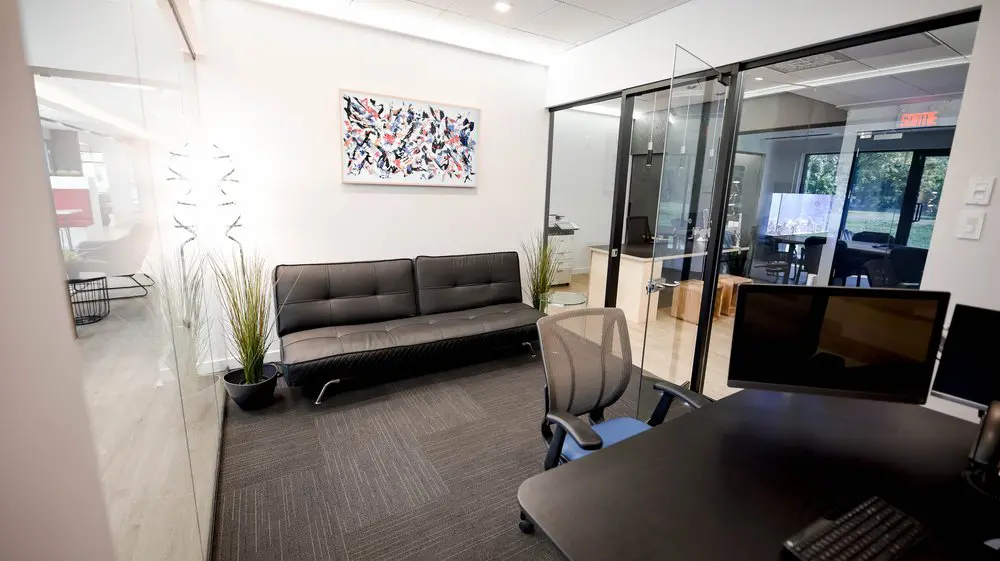
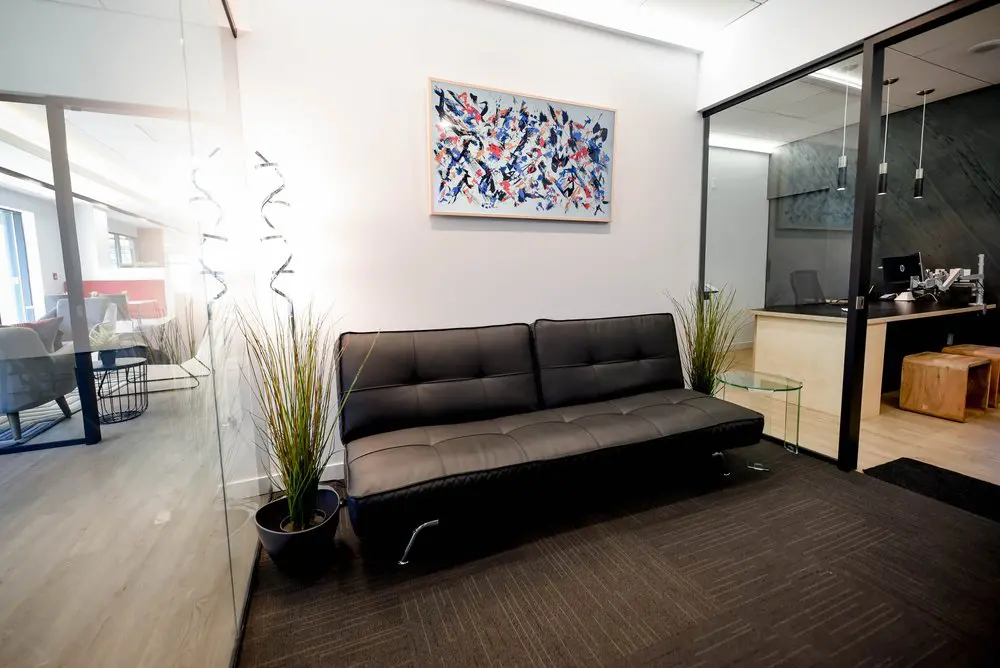
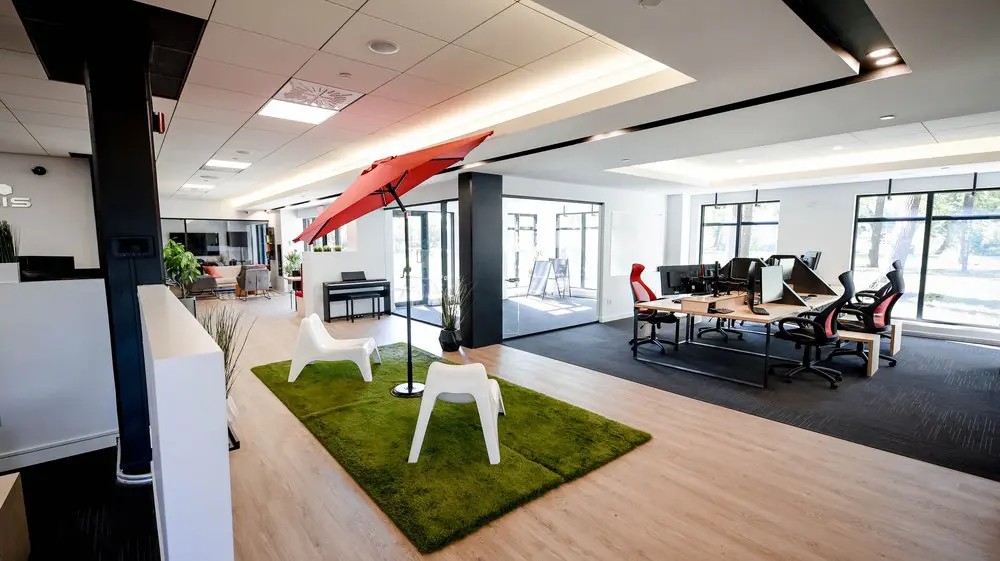
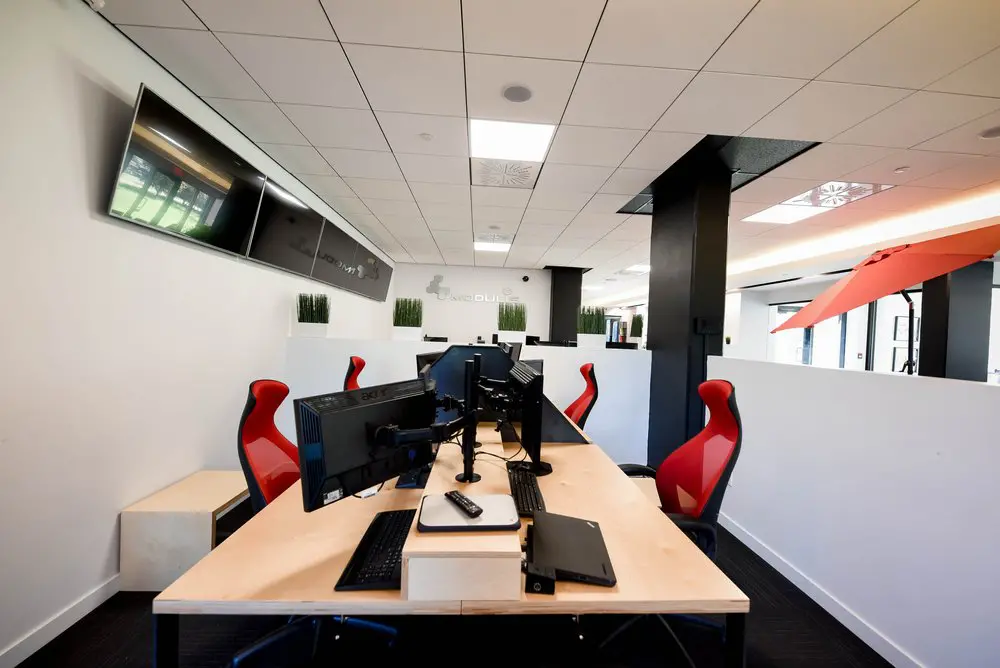
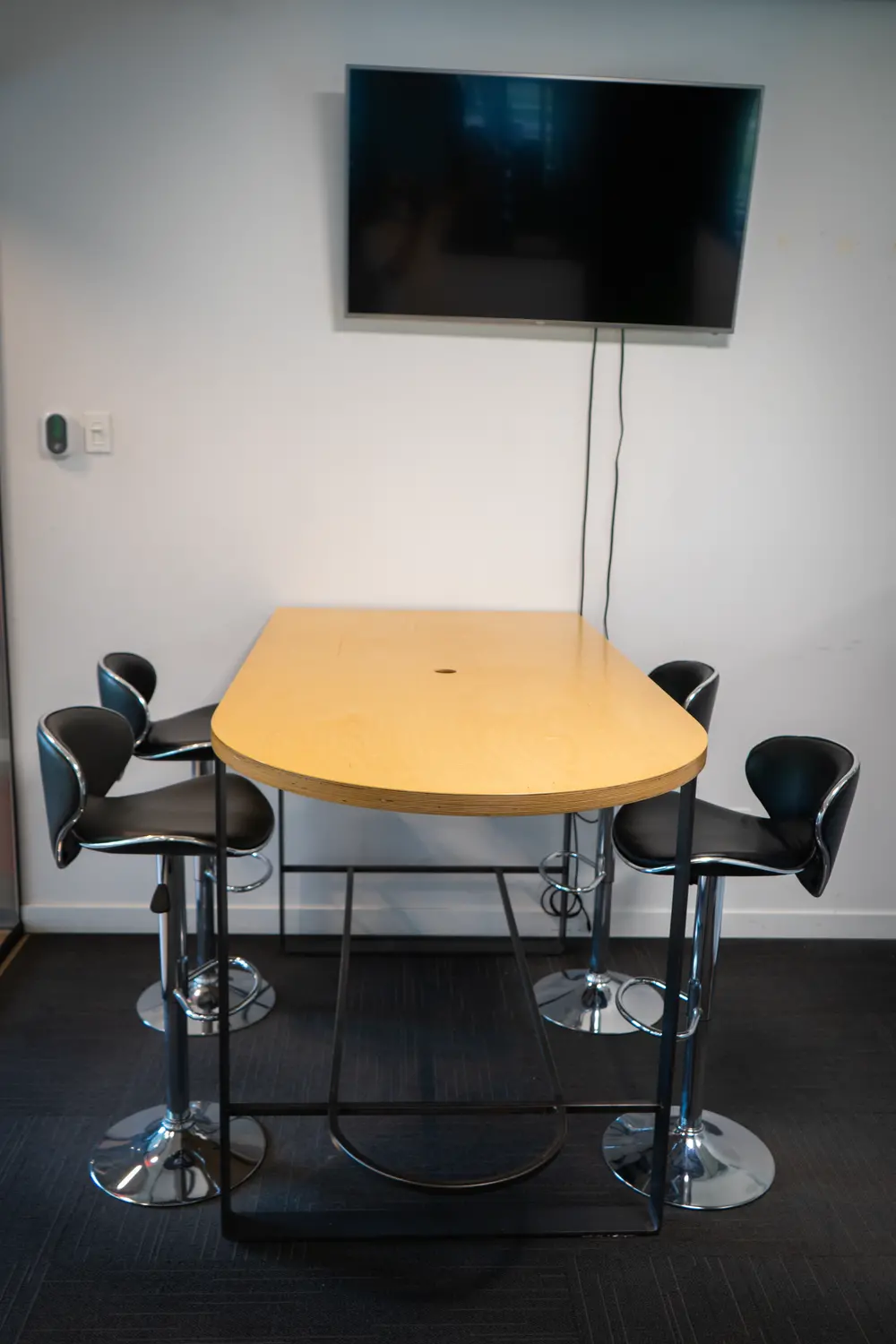
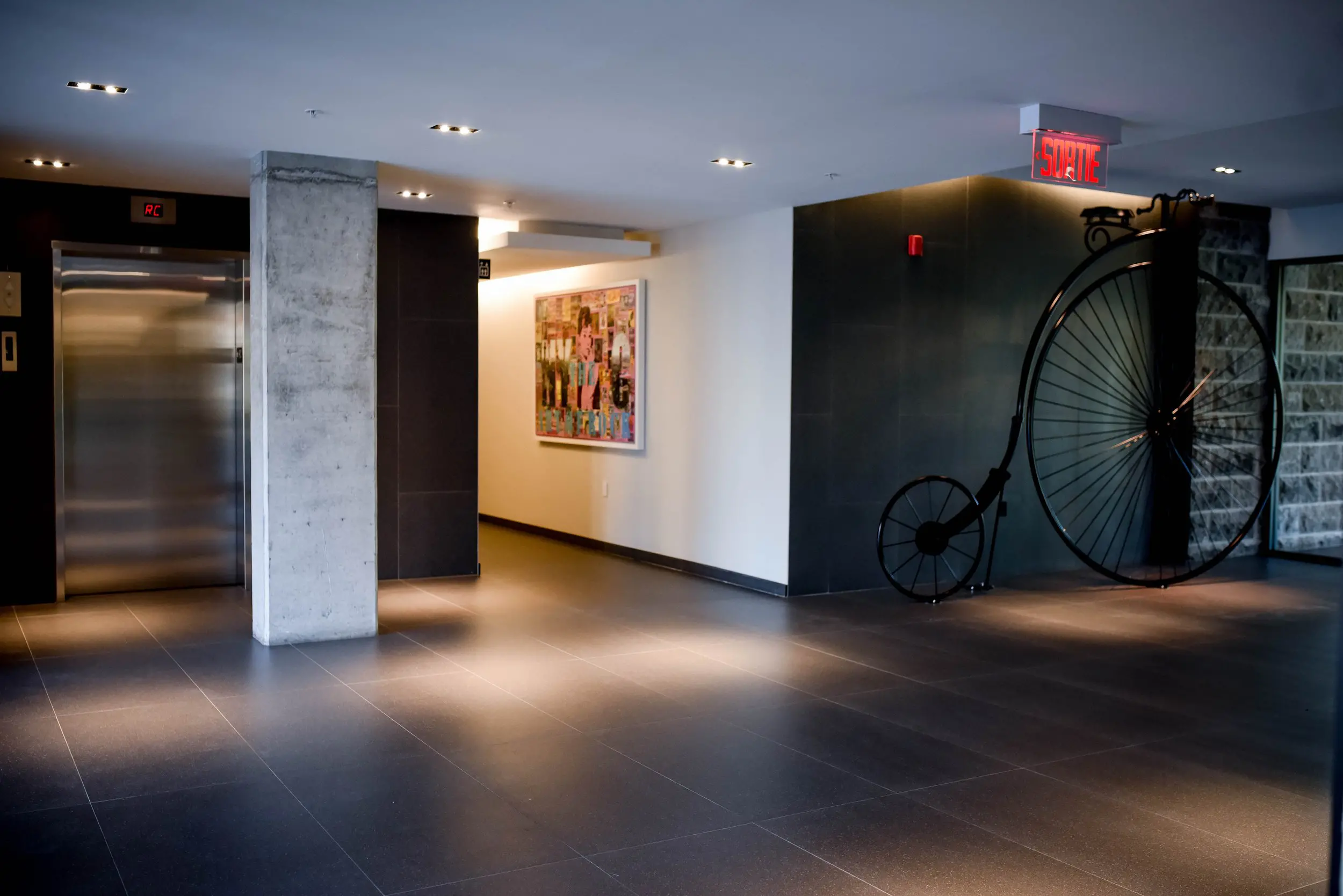
2727 Coworking space, 2727 Saint-Patrick, Montreal
Montreal's Coworking Revolution: Market Context
A Billion-Dollar Industry Takes Root
The Canadian coworking industry has matured from a niche offering for freelancers into a mainstream commercial real estate category. According to Mordor Intelligence, the Canadian market is on track to nearly double in size by 2030, driven by corporate adoption of flexible workspace, the permanence of hybrid work models, and the growing freelance and self-employment economy [1]. Globally, approximately 42,000 coworking spaces serve millions of members, with 2,500 new spaces opening in 2025 alone [12].
Montreal occupies a distinctive position within this market. The city combines relatively affordable commercial rents with a highly educated, bilingual workforce, a concentration of technology and creative industries, and a cultural appetite for independent and alternative work arrangements. Montreal, Toronto, and Vancouver collectively capture 88% of Canadian venture capital investment, and the startup ecosystems in these cities drive much of the demand for flexible workspace [1].
One of the most significant forces shaping Montreal's coworking landscape is the elevated vacancy rate in the traditional office market. According to CBRE's Q4 2025 Canada Office Figures, Montreal's office vacancy sits at approximately 18.5-19.8%, a level that would have been unthinkable before the pandemic [4]. Class AAA buildings maintain healthier occupancy at approximately 8.5% vacancy, but Class B buildings are struggling at over 24% vacancy [13].
This structural shift has profound implications for coworking. Landlords with empty floors are increasingly willing to offer space to coworking operators on favorable terms, reducing the capital required to open and operate a flexible workspace. Meanwhile, the same forces that have emptied traditional offices, namely remote and hybrid work adoption, are filling coworking spaces with professionals who want a dedicated workspace without the rigidity of a multi-year lease. For a detailed examination of this dynamic, our Montreal office vacancy market analysis and Montreal's office rental market trends provide extensive data and context.
Corporate Adoption Accelerates
Coworking is no longer the exclusive domain of freelancers and small startups. According to industry data, 55% of corporations now use some form of flexible workspace, and 60% of Fortune 500 companies incorporate coworking solutions into their real estate strategies [12]. In Montreal, this trend is visible in the growth of both global operators and boutique spaces catering to corporate satellite teams. IWG, the parent company of Regus and Spaces, operates 19 centres across the Montreal region and recently announced plans for additional Canadian locations, including the World Trade Centre Montreal [8]. Our analysis of top flex workspace providers examines how these global operators compete with independent Montreal spaces.
Neighborhood Guide to Coworking in Montreal
Montreal is a city of neighborhoods, each with a distinct character, demographic profile, and coworking personality. The neighborhood you choose will shape your daily experience far more than any single amenity or price point. This section profiles every major coworking neighborhood, covering the spaces, pricing, transit access, and culture that define each area.
Downtown (Ville-Marie)
The corporate core. Maximum connectivity, maximum cost.
Downtown Montreal, centered on Sainte-Catherine Street and the underground city (RESO), is the traditional hub of commercial activity and the densest concentration of coworking spaces in the city. The neighborhood houses the largest global operators and commands the highest prices.
Key operators:
WeWork operates four Montreal locations, all downtown or adjacent: Place Ville Marie (3 Place Ville Marie), L'Avenue (1275 Avenue des Canadiens-de-Montreal), 1010 Sainte-Catherine Ouest, and 455 Rue Saint-Antoine Ouest (bordering Old Montreal). Hot desks start at approximately $275-$450/month, dedicated desks at $450-$600/month, and private offices from $600-$1,600+/month. WeWork emerged from Chapter 11 bankruptcy in late 2023, and all four Montreal locations survived the restructuring [14]
Regus / IWG operates the largest flexible workspace footprint in Montreal with 19 centres across multiple brands (Regus, Spaces, HQ), including the newly opened Spaces Square-Victoria at 747 Rue du Square-Victoria (34,807 sq ft). Hot desk pricing starts at $195-$385/month on 24-month contracts, with day offices from $129/day. Our Regus pricing analysis breaks down the full cost structure [15]
Halte 24-7 offers a stylish downtown option with hot desks from $199/month and dedicated desks at $399/month, plus a credit-based system for occasional users and a rooftop terrace [16]
Anticafe provides an accessible entry point with time-based pricing: $4.95 for the first hour, $3.00 for the second, and $2.00/hour after that, with a daily maximum of $14.94. All coffee, tea, and biscuits are included. The 4,000 sq ft space has 12 private rooms and 45 individual workstations [3]
Zu (Maison Alcan, 1188 Sherbrooke Ouest) is a creative hub founded by Guy Laliberte of Cirque du Soleil, focusing on creative industries and innovation rather than traditional coworking [17]
Maison Notman House (51 Sherbrooke Street West) is a legendary startup hub in a 19th-century stone mansion, with hot desks from approximately $150-$250/month, dedicated desks around $300/month, and private offices from $855/month. The space has faced uncertainty since the building went up for sale [18]
Transit access: Downtown is unmatched for connectivity. McGill, Peel, Place-des-Arts, Bonaventure, and Square-Victoria metro stations serve the area, and the REM's Gare Centrale connection (opened November 2025) adds rapid transit links to the South Shore, West Island, and eventually the airport. The 33 km RESO underground pedestrian network connects major buildings without exposure to weather.
Average pricing: Hot desks $300-$500/month. Day passes where available: $15-$189.
Best for: Professionals who need a prestige address, maximum transit connectivity, or frequent client-facing meetings. Corporate satellite teams and international businesses establishing a Canadian presence.
Trade-offs: Highest prices in Montreal. The elevated office vacancy rate (approaching 20%) has left some downtown streets feeling emptier than they once did. Large-operator spaces can feel impersonal compared to boutique alternatives. For a comprehensive comparison of the top downtown spaces, see our analysis of Montreal's highly rated coworking spaces.
Old Montreal's cobblestone streets and historic stone buildings provide arguably the most visually stunning coworking settings in the city. The neighborhood attracts creative professionals, designers, and media companies who draw inspiration from the heritage architecture.
Key operators:
Crew Collective & Cafe (360 Rue Saint-Jacques) occupies the 1926 Royal Bank of Canada headquarters, frequently described as the most beautiful coworking space in the world. The soaring vaulted ceilings, marble columns, chandeliers, and ornate detailing create a workspace that is genuinely breathtaking. Day passes are $20, monthly hot desk memberships start at $100, and dedicated desks from $300/month with 24/7 access. The hybrid cafe/coworking model means the ground floor is open to the public, while the coworking area is members-only. Amenities include a balcony lounge, private bunks, zen room, and complimentary coffee [19]
WeWork (455 Rue Saint-Antoine Ouest) occupies a heritage building at the edge of Old Montreal, bridging the neighborhood with downtown
Transit access: Place-d'Armes and Champ-de-Mars metro stations (Orange Line). More limited than downtown, with only Orange Line service.
Average pricing: Hot desks $100-$450/month. Day passes $20-$40.
Best for: Creative professionals, designers, architects, and anyone who values an inspiring aesthetic environment. The neighborhood is also strong for client-facing roles where bringing visitors to an impressive space matters.
Trade-offs: Tourist congestion can be significant, especially in summer. Metro access is limited to the Orange Line. Street-level noise from tourism and hospitality can affect concentration during peak seasons.
Griffintown
Innovation district. Canal-side creative energy with industrial architecture.
Griffintown has transformed from abandoned industrial lots into one of Montreal's most dynamic neighborhoods for technology, creative industries, and coworking. The former factories and warehouses that line the Lachine Canal have been converted into workspaces with soaring ceilings, massive windows, exposed brick, and the kind of natural light that purpose-built office towers cannot replicate.
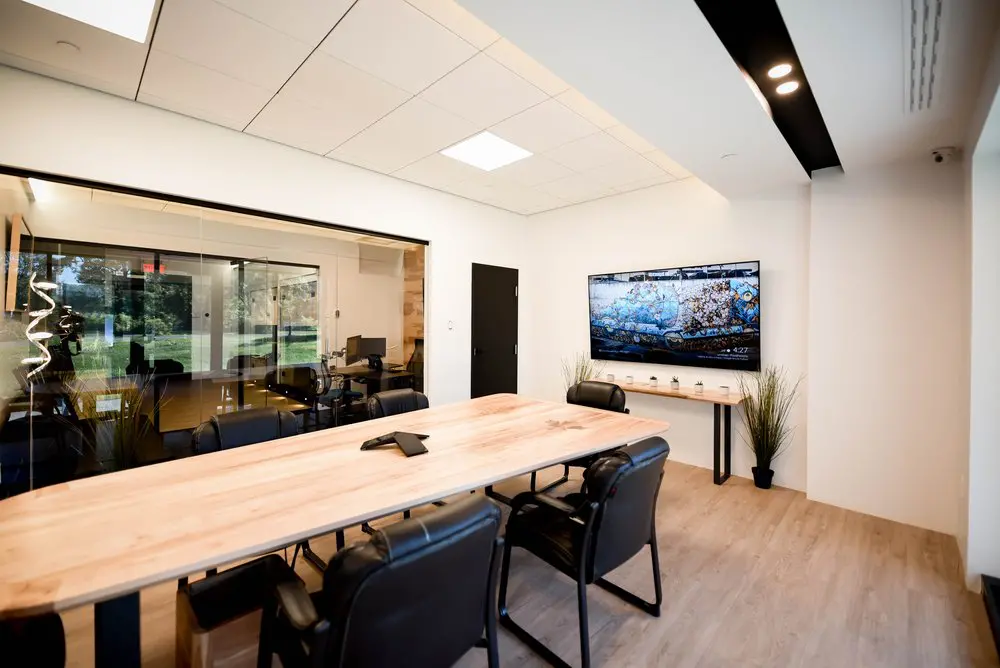
2727 Coworking (2727 Saint-Patrick Street) is a boutique coworking space in a converted industrial building directly on the Lachine Canal. Day passes are $25/day, hot desks from $215/month, with dedicated desks and private offices also available. All members receive 24/7 access, Gigabit fiber internet, free access to a 9-seat conference room, a fully equipped kitchen with specialty coffee and tea, private showers, bike racks, outdoor terraces, and lockers. The space is 100 meters from Charlevoix metro (Green Line), giving it one of the highest transit accessibility scores of any coworking space in Montreal. Walk Score: 88, Transit Score: 83, Bike Score: 96 [20]
Fabrik8 (7236-7240 Waverly Street, Mile-Ex area) operates a 120,000 sq ft lifestyle campus with coworking, a gym, rooftop terrace (basketball in summer, ice rink in winter), on-site restaurant, nap rooms, and urban agriculture garden. Hot desks from approximately $300/month, private offices from $450-$3,700/month depending on size [21]
Transit access: Charlevoix metro (Green Line) within a 5-minute walk of most Griffintown coworking spaces. Lionel-Groulx interchange (Green/Orange Lines) is an 11-minute walk. The future REM Griffintown-Bernard Landry station will add rapid transit connections, though the opening date remains uncertain [22]. Our analysis of the REM's impact on Montreal real estate and commuting explores what this station will mean for the neighborhood.
Average pricing: Hot desks $215-$400/month. Day passes $25. Significantly less expensive than downtown.
Best for: Tech professionals, startup founders, creative workers, and anyone who values natural light, canal-side environment, and industrial architectural character. Griffintown is the neighborhood of choice for those who want to work in an environment that inspires rather than merely functions. Our deep dive into Griffintown as Montreal's premier innovation district covers the neighborhood's tech ecosystem in detail.
Trade-offs: Fewer retail amenities than established neighborhoods (though Atwater Market is a 10-minute walk). The REM Griffintown station remains delayed.
Saint-Henri
Creative neighborhood. Notre-Dame West restaurant scene meets industrial lofts.
Saint-Henri, the historic working-class neighborhood on the north side of the Lachine Canal, has undergone a creative transformation that mirrors but differs from Griffintown's tech-oriented evolution. Where Griffintown skews toward technology and innovation, Saint-Henri retains a more artistic, community-oriented character anchored by the legendary Notre-Dame Street West restaurant corridor.
2727 Coworking sits at the border of Saint-Henri and Griffintown, serving both communities. Its position at 2727 Saint-Patrick Street places it within the Saint-Henri postal area while providing direct canal access that connects both neighborhoods [20]
IDEAL Coworking (Chateau Saint-Ambroise complex) offers hot desks at approximately $20-$25/day or $225-$250/month, and dedicated desks from $225-$355/month, in a historic factory building near the Lachine Canal and Atwater Market [23]
Nuage B (4020 Rue Saint-Ambroise) provides coworking in a converted factory loft with high-speed fiber WiFi and strong community focus
Le Tableau Blanc (1001 Rue Lenoir) positions itself as the most creative coworking space in Montreal, with a 200-person event space, freelancer and designer community, and natural light through expansive industrial windows [24]
Transit access: Place-Saint-Henri metro (Orange Line) is the primary station. Lionel-Groulx interchange (Green/Orange) provides connections to virtually all parts of the metro network. Charlevoix metro (Green Line) is accessible from the canal-side portions of the neighborhood.
Average pricing: Hot desks $215-$350/month. Day passes $20-$25. Among the most affordable central neighborhoods for coworking.
Best for: Creative professionals, independent consultants, artists, and professionals who value an authentic neighborhood atmosphere and access to one of Montreal's best dining corridors. The demographic skews young, with 27.1% of residents aged 25-34, compared to the Montreal average of 17%.
Trade-offs: Fewer coworking options than downtown or the Plateau. Some spaces are smaller and less polished than premium alternatives.
Mile End
Startup culture. Ubisoft, bagels, and independent creative energy.
Mile End is Montreal's creative epicenter, the neighborhood where Ubisoft built its headquarters, where the city's indie music scene was born, and where startup culture and artistic ambition intersect over St-Viateur bagels and strong espresso. The area has a dense concentration of game developers, musicians, tech startups, and independent creatives.
Key operators:
La Gare (5333 Avenue Casgrain) is one of Montreal's most established independent coworking hubs, with founding partners including Deloitte, Ubisoft, and Telus. Day passes are $20, private offices from $275/month, and conference rooms at $40/hour. The space is known for supporting tech startups and fostering a genuine entrepreneurial community [25]
Temps Libre (5605 Avenue de Gaspe, Space 106) is a cooperative coworking space with award-winning interior design, 24/7 access, and a pet-friendly policy. Day passes are $21, week passes $84, and monthly memberships from $305. Its location near cafes and St-Viateur Bagels embodies the Mile End lifestyle [26]
Ideal Coworking (8815 Avenue du Parc, Suite 402) offers affordable coworking with day passes at $20-$25, hot desks at approximately $250/month, and dedicated desks at $355/month with 24/7 access. Private offices for 2-6 people start at $945/month [23]
Transit access: Laurier metro (Orange Line) is the primary station, with Rosemont metro nearby. Bus routes along Saint-Laurent Boulevard and Mile End provide additional connections.
Average pricing: Hot desks $250-$350/month. Day passes $20-$25.
Best for: Game developers, musicians, artists, writers, tech startup founders, and anyone who thrives in a creative, independent atmosphere. The Mile End vibe is hard to replicate elsewhere in the city. For more context on the tech ecosystem driving demand in this area, see our analysis of Montreal's AI ecosystem and the Montreal tech salary guide.
Trade-offs: Limited parking. Some spaces are smaller and less corporate than downtown options. The neighborhood's popularity means certain cafes and spaces can be crowded.
The Plateau is Montreal's most recognizable residential neighborhood: colorful spiral staircases, tree-lined streets, Parc Lafontaine, and a bohemian atmosphere that has attracted artists, writers, and freelancers for decades. The coworking options here tend to be smaller, community-oriented, and affordably priced.
Key operators:
ECTO (936 Avenue du Mont-Royal Est) is one of Montreal's oldest coworking spaces (operating since 2008) and operates as a cooperative. Day passes are $15 (the cheapest in the city among established spaces), hot desks at $250/month, dedicated desks at $350/month, and flexible offices from $250-$350/month. A one-time cooperative membership of $350 unlocks discounts. ECTO was renovated in 2023 and has a network of 200+ members. The cooperative model means members participate in managing and developing the space, creating an unusually engaged community [27]
Montreal Cowork (4388 St-Denis Street) offers hot desks from $255/month in a space with a rooftop terrace, meeting rooms, bike storage, showers, and a notable mission to integrate newly arrived immigrant entrepreneurs. The space has a 4.7 Google rating [28]
Transit access: Mont-Royal, Sherbrooke, and Laurier metro stations (all Orange Line). Multiple bus routes serve the neighborhood's commercial streets.
Average pricing: Hot desks $250-$350/month. Day passes from $15.
Best for: Freelancers, writers, graphic designers, consultants, and student entrepreneurs who value artistic community and affordable pricing. ECTO's cooperative model is particularly attractive for those who want a deeper relationship with their workspace than a standard membership provides.
Trade-offs: Limited parking (this is largely a car-free neighborhood by design). The residential atmosphere means fewer corporate amenities and less of the "business" feel that some professionals require. For context on how this neighborhood stacks up, see our comparative analysis of Montreal coworking spaces.
Sud-Ouest (Broader Borough)
The canal corridor. Five metro stations, industrial heritage, and the Lachine Canal.
The Sud-Ouest borough encompasses Saint-Henri, Griffintown, Pointe-Saint-Charles, Little Burgundy, and Ville-Emard, unified by the Lachine Canal and a shared industrial heritage. As a coworking destination, the borough offers a combination of transit connectivity, architectural character, and value that is difficult to match elsewhere in central Montreal.
Five metro stations on two lines: Lionel-Groulx (Green/Orange interchange), Place-Saint-Henri (Orange), Charlevoix (Green), Jolicoeur (Green), and LaSalle (Green) [9]
The Lachine Canal bike path: 14.5 km of car-free cycling and walking infrastructure connecting all five neighborhoods, maintained year-round with snow removal and de-icing
Industrial architecture: Converted factories and warehouses offering high ceilings, massive windows, exposed brick, and abundant natural light
The Atwater Market: One of Montreal's premier public markets, providing fresh food, specialty coffee, and a daily lunch destination for coworking members
Average pricing: Hot desks $215-$400/month across the borough. Among the best value for central Montreal coworking.
Best for: Professionals who want to be centrally located without paying downtown prices, cyclists who use the canal path for commuting, and anyone drawn to the character of converted industrial spaces. Our analysis of Montreal traffic congestion explains why canal-corridor commuting is increasingly attractive.
Rosemont-La Petite-Patrie
Emerging neighborhood. Family-friendly, affordable, and growing.
Rosemont is Montreal's emerging coworking frontier. The neighborhood is less established than the Plateau or Mile End for flexible workspace, but its family-friendly character, affordable rents, and community orientation are attracting a growing number of remote workers and small business owners.
Coworking options: Fewer dedicated coworking spaces than central neighborhoods, though cafe-based and hybrid models are growing. The broader Little Italy area hosts some emerging spaces, and the Angus Technopole development has introduced newer workspace concepts.
Transit access: Rosemont and Beaubien metro stations (Orange Line). Bus routes along Masson Street and Saint-Laurent Boulevard provide additional connectivity.
Average pricing: Hot desks $200-$300/month where available. The most affordable central option, though with fewer established choices.
Best for: Neighborhood-based remote workers, small business owners, and professionals who prioritize affordability and a community-oriented environment over a buzzy coworking scene.
Trade-offs: Fewer coworking options. Less transit connectivity than central neighborhoods. The emerging market means less variety and fewer specialized amenities.
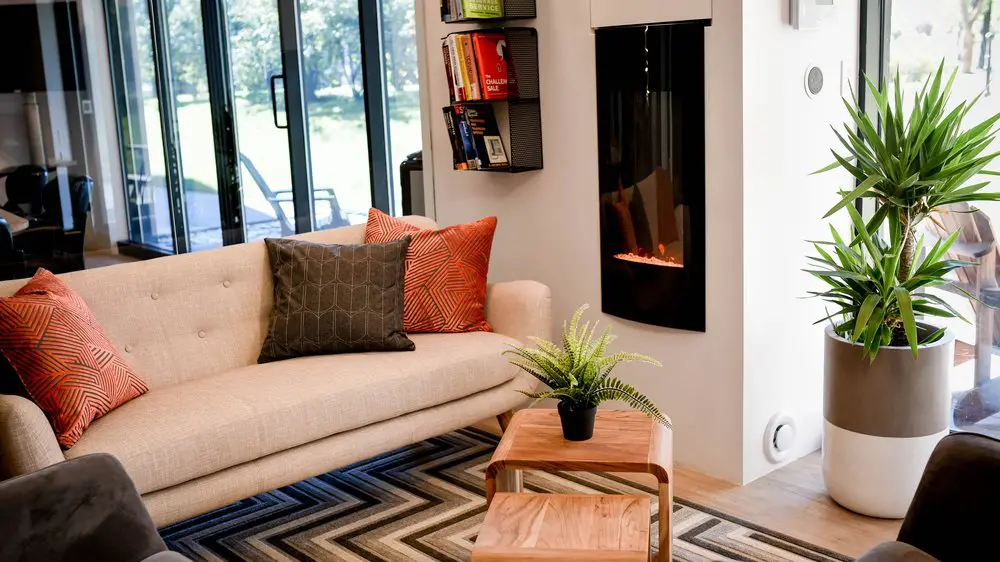
2727 Coworking space, 2727 Saint-Patrick, Montreal
Complete Pricing Comparison: Montreal Coworking Spaces
Pricing is often the first filter professionals apply when choosing a coworking space, and Montreal's market offers something at nearly every price point. The following table provides a comprehensive comparison of published rates across Montreal's major operators. All prices are in Canadian dollars (CAD) per month unless otherwise noted.
Pricing transparency varies significantly across Montreal's coworking market. When comparing spaces, it is critical to understand what is and is not included in the quoted price. Most boutique operators include the following in their base pricing:
High-speed internet
Coffee, tea, and filtered water
Printing (typically with a monthly page allowance)
Kitchen access
Common area amenities
Items that may carry additional fees depending on the operator:
Meeting room hours (free at some spaces, $20-$50/hour at others)
24/7 access (included at most spaces, but some charge a $30/month premium)
How to Choose the Right Coworking Space in Montreal
Selecting a coworking space involves balancing multiple factors, and the optimal choice depends entirely on your specific professional situation, priorities, and daily habits. Based on extensive research into what businesses should evaluate when choosing coworking, the following framework will help structure your decision.
Budget and Total Cost of Workspace
Start with an honest assessment of what you can afford to spend monthly on workspace. Include not only the membership fee but also additional costs that may apply: meeting room overages, transit fares to reach the space, lunch expenses in the neighborhood, and any paid add-ons (parking, extra storage, business address services).
A freelancer earning $60,000-$80,000/year should typically budget 5-10% of gross income for workspace, which translates to $250-$667/month. At that range, a hot desk at most Montreal spaces or a dedicated desk at more affordable operators is comfortably within reach.
Location and Commute
The best coworking space in the world is one you will not use if the commute is painful. Prioritize spaces that are accessible by your preferred transportation mode, whether that is metro, bicycle, car, or walking. A space that is 10 minutes from home by bike will deliver more value than a premium downtown space that requires a 45-minute commute each way.
Our comprehensive analysis of Montreal coworking spaces and metro proximity maps every major coworking space to its nearest metro station, including walking times. The data shows that transit-accessible spaces achieve significantly higher member satisfaction and retention rates.
For those who drive, Montreal's traffic congestion makes car-based commuting to downtown increasingly costly in both time and money. Our commuting cost and carbon footprint analysis quantifies the savings from choosing a neighborhood coworking space.
Amenities That Matter vs. Amenities That Look Good
Not all amenities are created equal. Research consistently shows that the amenities most correlated with member satisfaction are:
Reliable, fast internet (non-negotiable for knowledge workers)
Quiet zones or phone booths for calls and focused work
Meeting rooms available when needed, ideally included in the base price
Quality coffee and kitchen facilities (eliminating the need to leave the space for caffeine)
Natural light and workspace ergonomics
Amenities that look impressive in marketing but matter less in daily use include rooftop terraces (used occasionally), game rooms (rarely used by serious professionals), and branded swag. Our article on how workspace design affects mental health and productivity examines which design elements genuinely improve the work experience.
Community and Professional Network
For freelancers and entrepreneurs, the community within a coworking space can be as valuable as the physical workspace. A space where you regularly interact with professionals in complementary fields, a web developer sitting near a graphic designer sitting near a marketing consultant, creates organic networking opportunities that are difficult to manufacture elsewhere.
Ask potential spaces about the composition of their community: What industries are represented? How many members are there? Are there regular events, workshops, or social gatherings? A space with 200 members but no community programming may be lonelier than a boutique space with 30 highly engaged members.
Hours and Access
Your work schedule should determine your access requirements. If you work standard business hours (9 AM to 6 PM, Monday to Friday), business-hours-only memberships are usually the most affordable option. However, if you work with clients in different time zones, keep late hours, or want weekend access, 24/7 availability becomes essential.
Most Montreal coworking spaces offer 24/7 access for desk-level memberships and above. Some, like Halte 24-7, charge a modest premium ($30/month) for after-hours access on basic plans [16]. Others, like 2727 Coworking and ECTO, include 24/7 access in all membership tiers.
Contract Flexibility
One of the primary advantages of coworking over a traditional commercial lease is flexibility. Most Montreal coworking spaces offer month-to-month agreements, allowing you to scale up, scale down, or exit without penalty. Be cautious of operators that require 12 or 24-month commitments to access their best pricing, as this reduces the flexibility that makes coworking attractive in the first place. For a detailed comparison of flexible versus locked-in contracts, see our analysis of private office versus coworking in Montreal.
Internet Speed and Reliability
For professionals whose work depends on reliable connectivity, including video calls, cloud-based applications, large file transfers, and software development, internet speed is not a luxury but a hard requirement. Enterprise-grade coworking spaces invest in Gigabit fiber connections with redundant failover, ensuring that connectivity remains stable even during peak usage periods. Ask potential spaces about their internet infrastructure: What is the download and upload speed? Is there a backup connection? What is the typical speed per member during peak hours?
2727 Coworking space, 2727 Saint-Patrick, Montreal
The Economics of Coworking vs. Traditional Office Space in Montreal
For small businesses and growing teams, the financial comparison between coworking and a traditional commercial lease is one of the most consequential business decisions they will make. The numbers consistently favor coworking for teams under 10-15 people, with the advantage growing as team size decreases.
Traditional Office Lease: Full Cost Breakdown for a 5-Person Team
IT infrastructure (router, switches, access points): $2,000-$5,000
Kitchen equipment: $1,000-$3,000
Upfront total: $36,000-$88,000
Total first-year cost: $76,200-$147,800Total ongoing annual cost: $40,200-$59,800
Additionally, traditional leases in Quebec typically require 3 to 10-year commitments with limited exit provisions [29]. If your business needs change during the lease term, you face the costly process of subleasing or negotiating an early termination. Our analysis of the Montreal commercial sublease market illustrates the challenges businesses face when locked into long-term commitments.
Coworking Alternative for a 5-Person Team
Option A: 5 hot desks at a mid-range space
Monthly cost: $1,250-$2,000/month (5 x $250-$400)
Meeting rooms: Included or $50-$200/month for additional hours
Annual total: $15,000-$26,400
Option B: 5 dedicated desks at a mid-range space
Monthly cost: $1,750-$2,500/month (5 x $350-$500)
Meeting rooms: Included
Annual total: $21,000-$30,000
Option C: Small private office (5 person)
Monthly cost: $1,500-$3,000/month
All utilities, internet, furniture, and amenities included
Annual total: $18,000-$36,000
The Savings
Scenario
Traditional Lease (Annual)
Coworking (Annual)
Savings
Savings %
Year 1 (with upfront costs)
$76,200-$147,800
$15,000-$36,000
$41,200-$132,800
54-90%
Ongoing (Year 2+)
$40,200-$59,800
$15,000-$36,000
$4,200-$44,800
10-75%
Beyond raw cost savings, the flexibility value is substantial. A coworking membership can be adjusted monthly. If your team grows from 5 to 8, you add 3 desks. If a recession forces you to downsize to 3, you drop 2 desks. This optionality has real financial value that traditional lease analysis typically ignores.
One of Montreal's most significant advantages as a coworking city is its public transit infrastructure. The combination of a comprehensive metro system, the newly operational REM rapid transit network, and North America's most successful bike-share system means that coworking spaces throughout the city are accessible without a car.
The Metro System
Montreal's metro, opened in 1966, operates 68 stations across 4 lines covering 69.2 km of track. It is the second-busiest rapid transit system in Canada after Toronto's TTC. For coworking users, the metro provides reliable, weather-independent transportation to every major coworking neighborhood [9][30].
Line
Color
Stations
Key Coworking Neighborhoods
Line 1
Green
27 stations
Griffintown/Sud-Ouest (Charlevoix, Lionel-Groulx), Old Montreal (Place-d'Armes), Downtown (Peel, McGill)
Key interchange for coworking: Lionel-Groulx station, where the Green and Orange lines intersect, is the most important transit node for Montreal's coworking community. From Lionel-Groulx, you can reach virtually any coworking neighborhood in the city within 15-25 minutes. Its proximity to both the Saint-Henri and Griffintown coworking corridors (11-minute walk to 2727 Coworking) makes it the transit hub of the Sud-Ouest borough.
The Reseau express metropolitain (REM), Montreal's automated light metro system, opened its first 14 stations in November 2025, connecting Gare Centrale (downtown) to Deux-Montagnes on the North Shore [10]. Additional branches are extending to Sainte-Anne-de-Bellevue (expected spring 2026) and eventually to Montreal-Trudeau International Airport (scheduled for 2027) [31].
For coworking users, the REM's most significant impact is the Gare Centrale connection, which provides a direct rapid transit link from the West Island and North Shore to downtown Montreal, where connections to the Green and Orange metro lines provide onward access to coworking neighborhoods throughout the city.
The planned Griffintown-Bernard Landry station remains the only unopened station in the system. Originally planned for 2024, it has been linked to the broader Bridge-Bonaventure redevelopment project, and no firm opening date has been announced [22]. When it opens, this station will provide Griffintown coworking users with direct rapid transit connections to the South Shore, North Shore, West Island, and eventually the airport. Our analysis of the REM's impact on Montreal real estate and commuting models what this will mean for the neighborhood.
BIXI Bike-Share: Montreal's Two-Wheeled Transit System
Montreal's BIXI system has evolved from a seasonal curiosity into a genuine year-round transportation network. In 2024, BIXI riders logged 13 million trips, a 15% increase over 2023, across a fleet of 12,600 bicycles (including 3,200 electric BIXIs) deployed at over 1,000 stations [11][32].
The system now operates year-round, with 234 stations maintained through the winter months. Winter ridership has surged, growing 27% between November 2024 and March 2025 compared to the prior year, with 61% of annual subscribers using winter BIXI, nearly double the previous year [33]. The 2025 season saw BIXI's largest expansion ever, with 1,600 new bikes and 130+ new stations added to the network.
For coworking users, BIXI provides a flexible, inexpensive "last mile" solution that complements the metro. A coworking member commuting from Verdun to Griffintown, for example, might take the metro to Charlevoix and BIXI the final kilometer, or simply BIXI the entire 15-minute canal-side route. Our coverage of Montreal's bike-to-work boom and winter cycling infrastructure examines how cycling has become a legitimate year-round commuting option.
The Lachine Canal Bike Path
The 14.5 km Lachine Canal bike path is Montreal's premier cycling corridor and one of the most significant infrastructure assets for Sud-Ouest coworking spaces. Running from the Old Port to Lachine, the fully car-free path connects Griffintown, Saint-Henri, Pointe-Saint-Charles, and Verdun in a continuous green corridor that is maintained year-round with snow removal and de-icing.
For a coworking member at 2727 Coworking (which sits directly on the canal path), the infrastructure enables zero-emission, zero-cost commuting from a wide radius of neighborhoods. Practical cycling times along the canal path:
From
To 2727 Coworking
Distance
Old Port / Old Montreal
15 minutes
~4 km
Verdun (De l'Eglise)
10 minutes
~3 km
LaSalle
20 minutes
~6 km
Lachine
30 minutes
~10 km
Pointe-Saint-Charles
8 minutes
~2 km
The canal path's Bike Score of 96 for the 2727 Coworking location reflects this exceptional cycling infrastructure [20]. For context on how cycling fits into Montreal's broader transportation picture, see our analysis of Montreal commuting costs and carbon footprint.
2727 Coworking space, 2727 Saint-Patrick, Montreal
Remote Work and Hybrid Trends Driving Coworking Demand
The Numbers Behind the Shift
The post-pandemic transformation of work is not a temporary disruption but a structural change in how Canadians approach their professional lives. The data tells a clear story:
12.5% of employed Canadians were working fully remotely as of November 2024, according to Statistics Canada's Labour Force Survey [6]
11.5% were working in hybrid arrangements, splitting time between home and an office or other location [6]
30% of Canadian workers are projected to work remotely in some capacity by 2026, according to Robert Half research [7]
56% of Canadian workers rank hybrid work as their top preference, with 32% preferring 1-2 days in office and 24% preferring 3-4 days [7]
28% of new job postings in Q3 2025 were for hybrid positions, while 11% were fully remote [7]
Toronto, Vancouver, and Montreal see higher rates of hybrid and remote work than smaller Canadian cities, driven by high office rents, long commute times, and knowledge-economy concentration
The Return-to-Office Paradox
A growing number of employers are mandating in-office work. The Ontario provincial government, for example, required its employees to return to the office five days per week starting in January 2026 [34]. Other Canadian provinces, including Manitoba, British Columbia, and New Brunswick, have retained hybrid policies.
Paradoxically, these return-to-office mandates are actually driving coworking demand. Professionals who are required to work from a non-home location but do not want to commute to a downtown corporate office are discovering that neighborhood coworking spaces offer the best of both worlds: a professional, structured work environment within walking or biking distance of home. The return to office trends in Canada for 2026 are reshaping workspace demand in ways that directly benefit the flexible workspace industry.
Quebec and Montreal as Remote Work Hubs
Montreal and Quebec have positioned themselves as particularly attractive for remote and distributed work. The province's relatively affordable cost of living (compared to Ontario and British Columbia), bilingual workforce, concentration of technology talent, and robust digital infrastructure make it a magnet for both individual remote workers and companies building distributed teams. Our analysis of Montreal and Quebec as remote work talent hubs explores why the region is attracting an increasing share of Canada's remote workforce.
The Self-Employment Engine
Beyond traditional remote employees, Canada's large and growing self-employment sector provides a structural base of coworking demand. As of 2023, there were 2,652,600 self-employed individuals in Canada, representing 13.2% of the employed population [35]. Quebec alone hosts 228,716 small employer businesses, the second-highest count among Canadian provinces [36].
Montreal's coworking community is diverse, but several distinct user profiles account for the majority of members. Understanding which profile describes your situation can help you choose the space that best serves your needs.
Freelancers and Travailleurs Autonomes
Montreal has a vibrant freelance economy spanning graphic design, web development, copywriting, translation, photography, consulting, accounting, and dozens of other professional disciplines. For freelancers, coworking solves the twin problems of working from home: social isolation and the lack of a professional environment for client meetings.
A freelancer earning $50,000-$80,000/year might spend $215-$350/month on a hot desk membership, which works out to $10-$17/working day for a professional workspace with reliable internet, coffee, meeting rooms, and a community of peers. This is often less than the combined cost of cafe purchases and lost productivity from working in noisy, inconsistent environments.
For startups at the pre-seed or seed stage, coworking eliminates one of the most dangerous early expenses: a long-term commercial lease. A three-person startup can operate from a coworking space for $750-$1,500/month, with the flexibility to add desks as the team grows or reduce them if fundraising takes longer than expected.
Montreal's startup ecosystem is particularly strong in artificial intelligence, gaming, fintech, and health technology, sectors that are well-represented in the city's coworking communities. Spaces like La Gare in Mile End and Notman House downtown have historically served as launching pads for startups that later grew into significant companies. Our guide to Montreal startup accelerators, incubators, and grants maps the support infrastructure available to early-stage founders, and our overview of Montreal's tech ecosystem provides broader context.
Remote Corporate Employees
A growing segment of coworking users are employees of large companies who work remotely or in hybrid arrangements. These professionals have the financial backing of their employer (many companies offer remote work stipends) but need a workspace closer to home than the corporate office.
For this profile, the key requirements are: reliable high-speed internet for video calls and cloud applications, phone booths or quiet spaces for confidential conversations, and a professional environment that supports sustained focus. Spaces with Gigabit fiber, soundproof phone booths, and ergonomic furniture are particularly attractive to this segment.
Digital Nomads and International Workers
Montreal's combination of cultural richness, bilingual environment, affordable cost of living, and strong digital infrastructure has made it one of North America's most popular destinations for digital nomads and international remote workers. Our digital nomad's guide to Montreal covers the full range of work-friendly venues, and our analysis of Montreal's multilingual edge in global business explains why the bilingual environment is a professional asset.
Day passes and weekly rates make coworking accessible to nomads on short stays, while monthly memberships serve those planning longer residencies. The day office guide for Montreal covers options for those who need occasional workspace without a monthly commitment.
Creative Professionals
Montreal's creative industries, spanning gaming, film, animation, music, fashion, and visual arts, generate significant coworking demand. Creative professionals often need workspace that provides both the practical infrastructure (fast internet, meeting rooms) and the aesthetic environment (natural light, architectural character, creative community) that supports their work.
Neighborhoods like Mile End, Saint-Henri, and Griffintown are particularly popular with creatives, as their converted industrial buildings and artistic communities provide an environment that generic office space cannot replicate.
2727 Coworking space, 2727 Saint-Patrick, Montreal
The Coworking Experience: What to Expect
For those new to coworking, knowing what a typical experience looks like can reduce the uncertainty of making the switch from a home office or traditional office.
Physical Environment and Amenities
A well-run Montreal coworking space typically provides:
Workspace: Open-plan desks (hot desk or dedicated), ergonomic chairs, monitor arms or risers, and adequate power outlets. Some spaces offer standing desks as an option or standard feature. Natural light varies dramatically by space and neighborhood, with canal-side and industrial-building spaces offering significantly better daylighting than spaces in conventional office buildings.
Technology: Enterprise-grade internet (speeds vary from 100 Mbps to Gigabit fiber depending on the space), WiFi coverage throughout, and typically a wired ethernet option at dedicated desks. Printing and scanning equipment with a monthly page allowance.
Meeting rooms: Most spaces include one or more bookable meeting rooms, ranging from 4-person huddle rooms to 10+ person boardrooms with video conferencing equipment. Policies vary: some include unlimited meeting room access in the base price, others allocate a monthly credit with additional hours available for purchase. Our guide to meeting room rentals in Montreal covers options for those who need meeting space without a full coworking membership.
Phone booths: Soundproof individual pods for phone and video calls. This is an essential amenity for any space serving remote workers who spend significant time in video meetings.
Kitchen and refreshments: A fully equipped kitchen with refrigerator, microwave, dishwasher, and typically complimentary coffee, tea, and filtered water. Some spaces offer specialty coffee machines; others provide a more basic setup.
Storage: Personal lockers for hot desk members, typically included in the membership or available for a small monthly fee.
Community and Social Life
The social dimension of coworking is what distinguishes it from simply renting a desk. Coworking communities in Montreal tend to include:
Informal daily interactions: The kitchen, common area, and shared spaces create natural opportunities for conversation. Over time, regular members develop relationships that often extend beyond the workspace.
Community events: Many spaces organize regular events such as lunch-and-learns, networking mixers, guest speaker sessions, and social gatherings. The frequency and quality of these events varies significantly between operators.
Professional collaboration: Members working in complementary fields (a developer and a designer, a consultant and a marketer) frequently discover opportunities to collaborate on projects.
Internet Speed and Reliability
Internet connectivity is the backbone of any coworking space, and quality varies enormously. At the low end, some spaces provide standard residential internet connections shared among dozens of users, resulting in unreliable speeds during peak hours. At the high end, spaces invest in dedicated enterprise fiber connections with redundant failover, delivering consistent Gigabit speeds regardless of how many members are online.
When evaluating a space, ask: What is the dedicated bandwidth? How many users share the connection? Is there a backup connection? Can you do a speed test during a tour?
Globally, the average coworking member age is 36, millennials represent 61% of members, and the gender split is approaching 50/50 [12][37]. Montreal's market broadly mirrors these demographics, though with a younger average age in creative neighborhoods like Mile End and the Plateau, and a more corporate demographic in downtown locations.
Virtual Office Services
Many coworking spaces in Montreal offer virtual office services for professionals who need a business address and mail handling without a physical desk. This is particularly relevant for freelancers who want to keep their home address private and small businesses that need a professional address for incorporation and client correspondence. Our dedicated guide to virtual office services in Montreal covers the available options, and our articles on using a home address for business and the legal risks of a home business address explain why a virtual office is often the better choice.
Tax Considerations for Coworking in Quebec
For freelancers and self-employed professionals in Quebec, coworking expenses are generally tax-deductible as a business expense. This can significantly reduce the effective cost of a coworking membership. However, Quebec's tax system has specific rules about workspace deductions that differ from other provinces.
Key considerations include:
Coworking membership fees are deductible as an office expense (not as rent, which has different rules for home-based workers)
Meeting room charges are deductible as a business expense
Internet access at a coworking space is included in the membership and does not need to be claimed separately
The deduction applies to both federal and provincial income tax
For a thorough analysis of how coworking tax deductions work in Quebec, our guide on remote work taxation in Quebec provides detailed guidance. This is a meaningful benefit: a freelancer in Quebec paying a combined marginal tax rate of 40-45% effectively reduces the net cost of a $300/month coworking membership to $165-$180/month after tax deductions.
2727 Coworking space, 2727 Saint-Patrick, Montreal
Industry Verticals and Montreal's Coworking Ecosystem
Montreal's coworking spaces serve professionals across a range of industry verticals, and the city's particular economic strengths shape the composition of its coworking community.
Artificial Intelligence and Deep Learning
Montreal has emerged as one of the world's leading hubs for artificial intelligence research and development. MILA, the Quebec AI Institute co-founded by Turing Award winner Yoshua Bengio, anchors an ecosystem that includes AI labs from Google, Meta, Microsoft, Samsung, and dozens of startups. This AI concentration creates significant demand for flexible workspace from researchers, engineers, and AI startup founders. Our deep dive into Montreal's AI ecosystem profiles the key players and the workspace they require.
Gaming and Interactive Entertainment
Montreal is one of the world's largest gaming hubs, home to Ubisoft Montreal (3,500+ employees), Warner Bros. Games, Eidos-Montreal, and hundreds of smaller studios. The gaming industry's blend of creative and technical talent makes it a natural fit for coworking, particularly in neighborhoods like Mile End where Ubisoft's presence has seeded a broader game development community.
Technology and SaaS
Beyond AI and gaming, Montreal's tech scene encompasses fintech, health tech, cleantech, SaaS, and e-commerce. Companies like Lightspeed Commerce, Coveo, and Element AI (now part of ServiceNow) have contributed to a startup culture that values the flexibility and community of coworking. Our Montreal tech salary guide provides salary benchmarks for the tech professionals who populate these spaces.
Creative Industries
Film, animation, design, architecture, and media form a substantial portion of Montreal's economy and coworking demand. The city's generous tax credits for creative industries attract productions and studios from around the world, and many of the professionals working on these projects use coworking spaces as their home base.
Coworking Etiquette and Best Practices
Working in a shared environment requires a degree of social awareness that private offices do not. Here are the unwritten rules that govern most Montreal coworking communities:
Noise management: Use headphones when listening to audio. Take phone and video calls in designated phone booths, not at open desks. Keep conversations at a reasonable volume in shared areas.
Shared kitchen courtesy: Clean up after yourself immediately. Label food in the refrigerator. Do not leave dishes in the sink.
Hot desk respect: If you are on a hot desk plan, do not leave personal items at a desk overnight unless you have a locker. Do not monopolize the best desks day after day; rotate to allow others access.
Meeting room discipline: Start and end meetings on time. Do not occupy a meeting room beyond your booking. Cancel bookings you will not use so others can access the space.
Community engagement: Say hello. Introduce yourself to new members. Participate in community events when you can. The community is what makes coworking more than just a desk.
2727 Coworking space, 2727 Saint-Patrick, Montreal
Frequently Asked Questions
How much does coworking cost in Montreal?
Coworking costs in Montreal range widely depending on the type of membership and location. Day passes range from $15 (at ECTO on the Plateau) to $40 or more at premium downtown locations. Monthly hot desk memberships average $200-$400, with budget options starting at approximately $100 at Crew Collective and going up to $500+ at premium downtown WeWork locations. Dedicated desks typically range from $235 to $600/month, and private offices from $275/month for a single-person office at budget operators to $1,600+/month for team offices at premium spaces [5]. For a comprehensive breakdown, see our comparative analysis of Montreal coworking pricing.
What is the cheapest coworking space in Montreal?
The most affordable options in Montreal include Anticafe downtown, where time-based pricing caps at $14.94/day with all beverages included; ECTO on the Plateau, which offers $15 day passes and hot desks from $250/month as a cooperative; and Crew Collective in Old Montreal, which offers hot desks from $100/month in a stunning heritage setting. For monthly memberships, 2727 Coworking in Griffintown/Saint-Henri offers hot desks from $215/month, among the most competitive rates for a full-service space with 24/7 access and Gigabit internet [20][27].
Are there 24/7 coworking spaces in Montreal?
Yes. Many Montreal coworking spaces offer 24/7 access, including 2727 Coworking (all membership tiers), WeWork (all Montreal locations), Crew Collective (monthly members), Ideal Coworking (dedicated desk members), ECTO (dedicated desk members), and Temps Libre (all members). Halte 24-7 offers 24/7 access as a $30/month add-on to its base plans. 24/7 access is particularly important for professionals working with international clients across multiple time zones or those who prefer non-traditional working hours.
Can I try a coworking space for one day in Montreal?
Absolutely. Day passes are widely available across Montreal's coworking market. Operators offering day passes include ECTO ($15/day), La Gare ($20/day), Ideal Coworking ($20-$25/day), Crew Collective ($20/day), Temps Libre ($21/day), 2727 Coworking ($25/day), and Anticafe ($14.94/day maximum). A day pass is the best way to evaluate a space's atmosphere, internet quality, noise levels, and community before committing to a monthly membership. For a comprehensive guide to day-use workspace options, see our day office Montreal guide.
Is coworking tax deductible in Quebec?
Yes. For self-employed professionals and incorporated businesses in Quebec, coworking membership fees are deductible as a business expense against both federal and provincial income tax. This includes the base membership fee, meeting room charges, and any additional business services purchased from the coworking space. The deduction effectively reduces the net cost of a coworking membership by your marginal tax rate. For a freelancer in a 40-45% combined marginal tax bracket, a $300/month membership has an after-tax cost of approximately $165-$180/month. Our guide on remote work taxation in Quebec provides detailed guidance on eligible deductions and filing requirements.
What coworking spaces are near the Montreal metro?
Nearly every major coworking space in Montreal is within walking distance of a metro station. The closest include: 2727 Coworking (100 meters from Charlevoix, Green Line, ~5-minute walk), Halte 24-7 (downtown, adjacent to multiple stations), WeWork Place Ville Marie (connected to Bonaventure via the underground city), Regus/Spaces locations (throughout downtown, all metro-adjacent), ECTO (near Mont-Royal, Orange Line), and Montreal Cowork (near Sherbrooke, Orange Line). For a detailed transit accessibility analysis of every major space, see our article on Montreal coworking and metro proximity.
Which Montreal neighborhood is best for coworking?
The best neighborhood depends on your priorities. Downtown is best for maximum transit connectivity, client-facing prestige, and the largest selection of spaces. Old Montreal is best for visual inspiration and creative atmosphere. Griffintown is best for natural light, canal-side environment, tech/innovation culture, and strong value relative to downtown pricing. Saint-Henri is best for food scene, creative community, and neighborhood authenticity. Mile End is best for startup culture and the indie/creative vibe. Plateau is best for budget-conscious freelancers and cooperative community models. Our comparative analysis of Montreal coworking and top 10 coworking spaces in Canada provide additional perspective.
Do coworking spaces in Montreal have meeting rooms?
Yes, meeting rooms are a standard feature of Montreal coworking spaces. Policies vary: some spaces (like 2727 Coworking) include meeting room access in the base membership price, while others allocate a monthly credit of meeting room hours with additional time available at $20-$50/hour. Most meeting rooms accommodate 4-10 people and include video conferencing equipment, a display screen or projector, and whiteboard. For those who need meeting room access without a coworking membership, many spaces allow non-member bookings. Our meeting room rental guide for Montreal covers the full range of options.
What internet speed do Montreal coworking spaces offer?
Internet speed varies significantly across Montreal's coworking market. At the entry level, some spaces provide standard business internet connections (100-300 Mbps shared among all members). Mid-range spaces typically offer dedicated fiber connections with 500 Mbps to 1 Gbps speeds. Premium spaces like 2727 Coworking invest in Gigabit fiber with enterprise-grade networking equipment and redundant connections to ensure consistent speeds even during peak usage. When evaluating a space, ask for a live speed test during your tour, and specifically ask whether the quoted speed is shared or dedicated bandwidth.
Are there pet-friendly coworking spaces in Montreal?
Some Montreal coworking spaces welcome pets, though policies vary. Temps Libre in Mile End is explicitly pet-friendly [26], and 2727 Coworking in Griffintown also accommodates pets. Neighborhood-based spaces in areas with good outdoor access (particularly canal-side spaces with easy access to walking paths) tend to be more accommodating of pets than downtown tower spaces. Always confirm the pet policy directly with the space before bringing a pet, as policies may have size or breed restrictions.
How does coworking compare to renting a traditional office in Montreal?
For teams of 1 to 10 people, coworking is typically 40-80% less expensive than a traditional commercial lease when all costs are considered (base rent, taxes, utilities, internet, furniture, cleaning, insurance, and upfront capital expenditure). A 5-person team might spend $40,000-$60,000/year on a traditional office versus $15,000-$36,000/year in coworking, with zero upfront capital requirement and month-to-month flexibility. The financial analysis becomes more nuanced for larger teams (15+ people), where the per-person cost of traditional office space begins to converge with or undercut coworking rates. For a detailed comparison with Montreal-specific data, see our analysis of private office versus coworking costs in Montreal.
Can I use a coworking space address for business registration in Quebec?
Yes. Most coworking spaces in Montreal offer virtual office or business address services that can be used for provincial and federal business registration. This provides freelancers and small businesses with a professional business address without the need to use a home address on public registrations. Quebec's business registration requirements (through the REQ, Registraire des entreprises du Quebec) accept commercial addresses, including coworking-based virtual offices. Our guides on Quebec business registration, using a home address for business, and our dedicated virtual office guide for Montreal cover this topic comprehensively.
Conclusion
Montreal's coworking market has reached a level of maturity and diversity that makes it possible for virtually any professional to find a workspace that fits their budget, location preferences, work style, and community needs. The structural forces driving this market, remote and hybrid work adoption, elevated traditional office vacancy, a growing self-employment economy, corporate adoption of flexible workspace, and municipal investment in transit and cycling infrastructure, show no signs of reversing.
The choice between downtown prestige, Old Montreal heritage, Griffintown's canal-side innovation, Saint-Henri's creative energy, Mile End's startup culture, or the Plateau's cooperative spirit is ultimately a reflection of what kind of professional life you want to build. The data in this guide, from pricing comparisons to transit maps to demographic profiles, provides the foundation for an informed decision.
What the data cannot capture is the feeling of walking into a space that fits. The best advice for anyone exploring Montreal's coworking landscape is to use the day passes and tours that most spaces offer, visit at least two or three options in your preferred neighborhoods, and trust your instinct about where you will do your best work.
For those drawn to the canal-side corridor, 2727 Coworking at 2727 Saint-Patrick Street offers day passes, hot desks, dedicated desks, and private offices in a converted industrial building with Gigabit internet, 24/7 access, and a location 100 meters from Charlevoix metro, directly on the Lachine Canal bike path. But the most important thing is not where you cowork. It is that you find a space that makes you want to show up, sit down, and do meaningful work.