Hub and Spoke Coworking for Remote Teams in Montreal
Plan a Montreal hub and spoke workspace network around real attendance, access rights, total cost, transit, security and a measured 90-day pilot.
Plan a Montreal hub and spoke workspace network around real attendance, access rights, total cost, transit, security and a measured 90-day pilot.
A hub and spoke workspace network combines a central gathering place with smaller work locations closer to employees. The hub may be a headquarters, a private office in a coworking centre or simply the place where the largest local group meets. A spoke may be a dedicated office, assigned desk, flexible coworking membership, day pass or bookable meeting room. The useful decision is therefore not whether a company is "hybrid." It is which people need which rights, in which places, on which days, for which work.
In Quebec French, the Office québécois de la langue française recommends cotravail for the shared-workspace concept often called coworking in English [24].
That distinction matters because a membership is a right to use space, not a promise that every member can occupy the same type of seat at the same time. A company with 30 employees and 12 memberships may have enough access over a month but still fail on a Tuesday when 18 people arrive. Conversely, buying 30 permanently assigned seats for a group whose verified peak is 12 creates unused capacity. Procurement should model both monthly rights and peak physical attendance, then contract for the tighter constraint.
Canadian evidence supports experimentation rather than a universal answer. In November 2023, 11.7% of Canadian workers had a hybrid arrangement and 12.6% worked exclusively from home. Preferences differed according to workers' current arrangements and the jobs that could be done remotely [1]. In Quebec, about 35% of the workforce teleworked in 2022, mostly in a hybrid form, with about 45% in Montreal and Outaouais [2]. These are dated, descriptive findings. They do not prove that every occupation should offer remote work or that a coworking network will improve performance.
The strongest operating approach is modest. Map where people actually live without exposing home addresses unnecessarily. Identify tasks that benefit from quiet individual work, confidential calls, equipment, client meetings or planned collaboration. Choose a small set of approved providers. Centralize purchasing and security rules while letting local teams choose appropriate days. Run a 90-day pilot. Measure access failures, attendance overlap, room use, employee travel, cost, incidents and work outcomes. Review each node quarterly and change or exit it when the evidence changes.
This guide supplies that decision system. It compares a centralized office, home-only work, individual reimbursements and a managed network. It includes Montreal transport criteria, a total-cost model, three fictional budgets, contract questions, staffing profiles, limited applied health and privacy guidance, and an employer-led onboarding plan. The worked numbers are illustrations, not quotes or prospect stories. Current provider terms must be confirmed in writing.
Remote work did not begin with the pandemic. Organizations had long used home work, satellite offices, client sites and flexible schedules. What changed in 2020 was scale and speed. Many employers moved whole workforces away from offices without time to redesign management, equipment, security or collaboration. Results from that emergency period should not be treated as a clean test of a mature hub and spoke system.
Later evidence is more useful when its limits are explicit. Statistics Canada's 2021 Census found that 25.8% of 2.1 million workers in the Montreal metropolitan area reported working from home, almost four times the 2016 share [3]. That was an exceptional pandemic snapshot. The study also found differences by home language, occupation, industry, bilingualism and geography. It cannot tell a workplace team that one neighbourhood or language group prefers a particular policy.
By 2022 and 2023, hybrid arrangements had gained ground as workers returned to offices [1]. The shift is relevant because it creates a recurring planning problem. A company may retain employees across several regions while needing less daily space at any one address. Yet national percentages remain context, not a seat forecast. Every employer must measure its own attendance by day, role, team and event.
Research often appears contradictory because studies ask different questions. A Statistics Canada time-use study covering July 2022 through July 2023 found no adjusted difference in paid work time among non-teleworkers, teleworkers working on site that diary day and teleworkers working from home that diary day. On home-work diary days, participants reallocated more than an hour otherwise used for commuting, and both men and women reported more unpaid housework [4]. It was an observational study based partly on a single diary day, so it does not establish what caused the differences.
A randomized experiment conducted from August 2021 to January 2022 involving 1,612 graduate employees at Trip.com compared two home days plus three office days with five office days. Hybrid work improved job satisfaction and reduced quit rates from 7.2% to 4.8%, with no detected effect on performance grades, promotion or engineer code output [5]. The study concerned one Chinese travel technology company, excluded interns and probationary rookies, and tested one schedule. It is good evidence that a carefully designed hybrid policy can work in that context. It is not proof that coworking causes retention or that two home days suit every team.
Collaboration metadata for 61,182 US Microsoft employees from the first six months of 2020 showed that firm-wide remote work made collaboration networks more static and siloed, with fewer bridges, less synchronous communication and more asynchronous communication [6]. This was a sudden full-remote shift in one US technology firm. It supports monitoring cross-team connections. It does not show that occupying the same coworking building automatically creates useful collaboration.
Experiments on paired idea generation found that videoconferencing pairs produced fewer creative ideas than in-person pairs, while researchers found no evidence that video pairs selected ideas less effectively [7]. That distinction is operationally useful. Teams might schedule discovery, complex sense-making and relationship building in person while keeping selection, documentation and individual production remote. They should not turn every office day into a calendar of video calls.
Other work shows why remote options remain valuable. A natural experiment at the United States Patent and Trademark Office found that moving from work from home to work from anywhere increased examiner output by 4.4% without increasing rework [8]. Patent examination is specialized, individually measurable work in a mature federal program. It is evidence for geographic flexibility in that setting, not a general productivity promise.
The historical lesson is simple: location effects depend on task, implementation and population. A hub and spoke network is infrastructure. Management still has to decide why people meet, protect focused work, include remote participants and review whether the network solves the intended problem.
Telework can reduce commuting and office energy, but the result depends on travel mode, distance, home energy, office utilization and extra travel. A US modelling study estimated that one home day per week produced only about a 2% emissions benefit, while two to four days could produce larger reductions under its assumptions [9]. The International Energy Agency similarly warns that home work can increase emissions for short car commutes or public-transit commutes when added residential energy exceeds avoided travel and office energy [10]. Neither source establishes a Montreal coworking carbon saving.
An employer making an environmental claim should measure actual kilometres, modes, building demand and rebound trips. A spoke near a useful transit line may reduce a long car commute. A spoke that prompts an extra drive while the main office remains fully heated and occupied may not. Treat emissions as a measured pilot outcome rather than a marketing assumption.

The phrase hub and spoke can describe several different systems. A company may have one formal headquarters and regional coworking nodes. It may use a central coworking office with occasional passes elsewhere. It may have no permanent hub but nominate one location for quarterly gatherings. It may reimburse individuals for whatever workspace they choose. These arrangements have different liabilities, costs and employee experiences.
Write a one-page decision statement before requesting proposals. It should answer five questions:
A precise statement might say: "Provide 30 employees in three metropolitan areas with a reliable professional workspace for two planned team days per month and optional focused work, while limiting the maximum commute for participating employees and avoiding a long lease." This creates testable requirements. "Improve culture" does not.
Policy states who may work where, expected availability, expense rules and health, security and privacy requirements. Product defines the purchased right, such as a named membership, day pass, assigned desk, private office or room credit. Capacity describes what the building can physically support at the relevant time. Program is how the company coordinates days, meetings, onboarding and review.
Problems arise when one layer is assumed to cover another. A policy allowing all employees to use coworking does not mean the purchased plan permits sharing. A contract for 20 memberships does not mean a room for 20 exists. A private office does not mean visitors can use common areas. A building that is open around the clock does not mean every product provides round-the-clock access.
Create a requirements register with one row per employee group. Include city, approximate travel catchment, work pattern, required hours, accessibility, acoustic needs, privacy level, equipment, visitor needs, planned team overlap and fallback. Use ranges where attendance is uncertain. Avoid keeping exact home addresses in the procurement file when postal-code or transit-catchment analysis is enough.
The hub does not have to be the largest or most prestigious address. It needs to perform the functions assigned to it. These may include leadership days, client meetings, secure equipment, records, onboarding, training or social gatherings. If the hub exists mainly for collaboration, room availability and acoustic quality may matter more than the number of permanent desks. If it stores equipment, storage and after-hours access matter. If it is a registered office, legal delivery and records rules require separate analysis.
This guide does not repeat the legal and tax details of business addresses. Use the virtual office versus coworking membership guide to separate workspace from address services, and the Quebec business address guide before relying on a location in a government or banking field.
A spoke should answer a proven local need. One employee who wants occasional variety may need a day-pass allowance. Three employees with a planned weekly overlap may need three simultaneous seats and a room for several hours. A client service team handling confidential calls may need a lockable office. An employee who works early mornings across time zones may need access outside ordinary day-pass hours.
Do not use a universal threshold such as "three employees means a spoke." Instead, compare expected visits with plan cost and operational value. A simple demand forecast uses employee-days by weekday. For each person, record likely visits per month and whether visits must coincide with colleagues. Add expected client, training and onboarding events. Then model a low, expected and high month.
Central procurement creates one accountable owner for contracts, approved providers, invoices, renewals and cancellations. It also avoids inconsistent reimbursements and prevents employees from accepting terms the company has not reviewed. The central owner need not choose every chair. Local users should participate in testing commute, noise, accessibility and room quality.
Keep a provider register containing legal entity, location, product, named users, term, notice deadline, setup and deposit amounts, taxes, permitted hours, booking rules, guest rules, security controls, incident contact and exit steps. Record the source date for price and policy information. A public webpage can change after purchase, while the signed agreement governs the account.
Assign one company administrator and one backup. Their tasks include adding and removing users, monitoring booking failures, reconciling invoices, recovering keys or fobs, closing access promptly and collecting quarterly data. For a multi-city network, document local escalation contacts so an employee locked out at 7:00 does not have to guess which vendor invoice contains a phone number.
An access matrix translates contracts into usable instructions. For each product, list:
| Question | What the employee needs to know |
|---|---|
| Who may use it? | Named member, transferable pass, invited guest or booked team |
| When? | Days, hours, holidays and after-hours procedure |
| Where? | Exact building, floor, room and permitted common areas |
| What must be booked? | Seat, office, room, parking, visitor or equipment |
| What is included? | Internet, furniture, coffee, printing, room time and mail, if any |
| What is restricted? | Calls, visitors, confidential work, food, storage and equipment |
| How is access obtained? | App, QR code, fob, reception, intercom or host |
| What is the fallback? | Alternate site, home work, day pass or support contact |
This matrix should state whether each membership belongs to one person. Never assume a team can rotate one credential. If a plan allows pooled access, obtain that permission in the agreement. If it does not, procure one right per authorized person or use transferable products that expressly permit the intended pattern.
Coffee, design and a desirable address may influence experience, but reliable operation depends on service levels. Track whether a seat can be booked when needed, whether internet meets the company's measured needs, how fast access incidents are resolved, whether rooms start on time and whether accessibility information is current.
Do not require a provider to promise what it cannot control. A provider can describe access hours and booking rules. It may not be able to guarantee a favourite open seat, street parking or uninterrupted public transit. Write fallbacks for critical days. A team presentation may justify a confirmed private room. Ordinary focused work may tolerate a choice of two approved sites.
For every node, compare paid rights, unique users, visit-days, peak attendance, room hours, failed bookings, access incidents, commute pattern, employee feedback and cost. Review data by purpose. Ten visits for a critical client project may have more value than 30 unplanned drop-ins. Low use can mean the product is unnecessary, poorly located, badly onboarded or unavailable at the required time.
At each quarterly review, keep, resize, change or exit the node. Document the reason. Check notice dates before the meeting so a decision can be implemented. Include one-time setup and exit costs, since frequent switching can erase monthly savings.

Coworking products can be confusing because three numbers coexist:
A network needs all three. A plan might authorize 20 named employees but permit only five concurrent bookings. A private office might permit six occupants but the provider may restrict guest access. A day-pass product might offer sufficient building supply most days without guaranteeing 12 adjacent seats for a team event.
Ask providers to explain the contract in a worked example: "If 14 named employees are enrolled and eight want to attend next Tuesday from 9:00 to 17:00, what must we book, what can be refused and what extra charges apply?" Put the answer in the order form or an attachment.
Monthly utilization hides congestion. A group that averages six people per day may have 16 on Tuesday and two on Friday. Use a table with weekdays as columns and teams as rows. Estimate low, normal and high attendance. Mark mandatory overlap events separately from optional individual use.
For each node, calculate:
required concurrent seats = highest planned attendance + reasonable operating buffer
The buffer is a policy choice, not a universal percentage. A customer support team with fixed schedules may forecast closely. A voluntary collaboration day with travel may need more protection against booking failure. The company can also reduce required space by staggering teams, but only if staggered days still achieve the intended collaboration.
People do not gain much from commuting to sit on separate video calls all day. Name the purpose of each coordinated day. Examples include project kickoff, pair work, creative exploration, onboarding, retrospectives, training and client workshops. Move individual updates and document review to asynchronous channels where practical.
Use an overlap calendar visible at least four weeks ahead. Avoid making local employees absorb all inconvenience while distant colleagues remain remote. If a meeting includes remote participants, assign a facilitator, provide a digital agenda and capture decisions in a shared record. A physical room is useful only when the meeting practice keeps remote colleagues able to contribute.
Fallback is part of the design. Define what happens if a site is full, transit is disrupted, weather makes travel unsafe, internet fails or a room becomes unavailable. Suitable fallbacks may include an alternate approved location, home work, a reserved room at another node or rescheduling noncritical overlap. Critical client meetings deserve confirmed space and a tested connection.
| Decision factor | Centralized office | Home-only policy | Individual reimbursements | Managed hub and spoke network |
|---|---|---|---|---|
| Capacity | Fixed and directly controlled within the premises | Depends on each home | Depends on employee purchases | Contracted rights plus provider supply |
| Commitment | Often longer, with fit-out and exit exposure | Low real-estate commitment | Low, but recurring expense variance | Varies by provider and product |
| Geographic reach | Best near one location | Broad | Broad | Broad where approved sites exist |
| Collaboration | Easy for co-located staff when schedules align | Requires remote practice | Local access may be fragmented | Can coordinate local and cross-city gatherings |
| Focus and privacy | Can be designed, at a cost | Uneven home conditions | Uneven provider quality | Standards can be set across approved nodes |
| Administration | Lease and facilities workload | Equipment and home-work policy | Many receipts and exceptions | Vendor, user and booking administration |
| Equity | Commute burden concentrated geographically | Home conditions differ | Budget may buy different quality by city | Common standards, with local adaptations |
| Scalability | Slow to resize | Easy geographically | Easy to start, hard to govern | Moderate, if terms and access are explicit |
| Best use | Stable concentrated attendance | Roles and people well supported at home | Very small or exploratory demand | Recurring distributed demand needing control |
No column is universally superior. A centralized office may be cheapest per physical seat when attendance is high and stable. Home-only work may suit mature individual workflows but leave some people without an appropriate setting. Reimbursements are quick for a pilot yet can create tax, privacy and security ambiguity. A managed network adds vendor administration but can create consistent rules and negotiated service.
The decision should be made at the portfolio level. Compare how much usable capacity each strategy supplies when needed, including rooms and privacy. A cheap seat unavailable on the required day has little value. A premium private office may be economical for a team handling confidential work every day.
Provider pages are snapshots, not interchangeable quotes. Products can differ in term, taxes, access hours, booking, membership transfer, room inclusion and cancellation. Ask for a written proposal using the same scenario.
| Provider | Official page supports | Public price evidence retrieved | Procurement caveat |
|---|---|---|---|
| 2727 Coworking | Hot desks, dedicated desks, private offices, day passes and room booking | See the short 2727 section below | Confirm current availability on the booking page |
| Crew Collective and Cafe | Meeting rooms, day passes and 24/7 memberships [35] | No price was visible in the fetched page | Ask for the exact plan, term, access and tax treatment |
| Regus Montreal | Dedicated desks, day coworking, access plans, hourly coworking and private offices [36] | No decision-ready price was established from the fetched page | Request a dated written quote with currency, taxes and term basis |
Do not rank providers from this table. It shows which questions official pages can answer. A proper comparison sends each provider the same headcount, locations, attendance days, hours, privacy needs, room hours, visitors and term. Normalize responses into monthly recurring cost, one-time cost, concurrent capacity and exit cost.
For wider membership definitions, see the coworking pricing article, but verify every current price with the operator. Historical editorial figures are not live quotations.
A downtown or Griffintown address is not equally convenient for every employee. Map origin areas to the node by typical mode and time of day. Ask employees for a nearby transit station or coarse postal-code area rather than exact home address if that is sufficient. Test winter and accessibility routes, not only a pleasant summer trip.
| Mode or network | Official fact | Procurement question |
|---|---|---|
| STM Metro | Charlevoix is on the Green Line, its entrance is at 2600 rue Centre, and STM lists 21 bicycle stands [25] | How long and accessible is the complete door-to-door route? |
| Elevator access | STM lists 30 stations with elevators. Charlevoix is absent from the fetched list, while Atwater and Lionel-Groulx appear [26] | Does the route meet each user's current mobility needs? Check live service before travel |
| Regional fares | ARTM divides the metropolitan area into Zones A, B, C and D. Montreal is A, while Laval and Longueuil are B [27] | Which zones and modes does the commute cross? |
| Fare products | All Modes fares cover metro, REM, train and bus within the valid zones [28] | Which current fare applies? Use the live selector rather than an evergreen price |
| REM | The official map distinguishes operating, construction, planned and soon-in-service stations [29] | Is a route available now, or merely planned? |
| Griffintown REM planning | The launch of planning for Griffintown-Bernard-Landry was announced on June 16, 2026. Planning and construction together were estimated at about four years [30] | Do not base today's node on a promised opening year |
| BIXI in winter | The year-round network had 234 stations in a concentrated area including Le Sud-Ouest in the fetched snapshot [31] | Is a useful station present and stocked on the actual travel day? |
| Seasonal BIXI | Seasonal service reported more than 1,000 stations across Montreal, with a season from April 15 to November 15 [32] | What is the winter alternative? |
| Street parking | Rules depend on the zone, day and time [33] | What restrictions apply on the intended block? Do not budget one citywide rate |
| Cycling | Montreal reports 1,083 km of cycling routes and describes the REV as the network backbone [34] | Is the exact route comfortable, maintained and usable for the rider? |
Transit proximity should be assessed with a door-to-door test. Walking distance from a station is only one component. Transfers, elevator availability, snow clearing, bicycle storage, late service, safety after dark and the employee's abilities can change the answer. The Montreal metro proximity article offers a method, while the urban cycling guide covers route planning. For parking detail, use the Griffintown parking guide.
Do not claim a network reduces commute time until origins, schedules and modes have been measured. A spoke can shorten one employee's route and lengthen another's. Report distributions, such as median and longest reasonable trip, rather than one average that hides outliers.

The useful formula is:
annual network cost = 12 x recurring monthly cost + expected variable use + setup cost + expected change and exit cost
Recurring cost includes memberships, offices, administration software and any minimum room commitment. Variable cost includes day passes, rooms, visitors, printing, travel and event catering. One-time cost includes setup fees, deposits that may be at risk, equipment, security configuration, training and internal labour. Change and exit cost includes notice-period overlap, lost deposits, equipment removal, access recovery and a replacement site.
Compare prices before recoverable taxes, then show cash paid including taxes. Quebec GST is 5% and QST is 9.975% on the pre-GST price [21]. Eligible registrants may claim input tax credits or refunds for qualifying commercial-use operating expenses, including office rental, but eligibility and allocation are not automatic [22]. Finance should determine the correct treatment.
Use at least four views:
A high cost per visit-day may still be rational for a secure client room or a location needed for retention. A low cost per visit-day can conceal overcrowding or unproductive visits. Pair financial measures with access quality and work outcomes.
Do not compare a 30-person lease with six flexible seats and call the lower total a saving. First state what each option provides. Normalize private rooms, assigned storage, access hours, visitors, internet, furniture, cleaning and staffing. For a lease, include rent, operating charges, utilities, fit-out amortization, furniture, network, insurance, cleaning, repairs, security, management and exit obligations. For home work, include equipment, support and any allowances. For a network, include memberships, rooms, booking overages, setup, travel and administration.
An employee expense deduction depends on the expense category and employment conditions. The CRA's 2025 guide requires an employer-completed T2200 for the deductions it describes; the form alone does not establish deductibility. Eligible office rent can include amounts paid personally or paid for the employee and included in income, subject to the relevant conditions [19]. Employer-paid benefits and allowances are fact-specific, including who is the primary beneficiary [20]. Do not promise that an employee-paid coworking membership is deductible or that a reimbursement is tax-free. Ask payroll or a tax adviser to classify the actual program.
The following examples are arithmetic tools. They are not quotes, customer cases or recommended prices. All amounts are assumed Canadian dollars before tax. Replace every input with written provider proposals and internal labour estimates.
Assume 12 employees receive a monthly right priced at $375 per user. The team expects a six-person overlap day and budgets $600 monthly for rooms plus $250 for administration. It estimates $6,000 of one-time setup for equipment, onboarding and internal work.
| Item | Assumption | Monthly cost |
|---|---|---|
| User rights | 12 x $375 | $4,500 |
| Meeting rooms | Allowance | $600 |
| Administration | Internal and vendor work | $250 |
| Recurring total | $5,350 | |
| Annual recurring total | $5,350 x 12 | $64,200 |
| First-year total | $64,200 + $6,000 setup | $70,200 |
The company must still verify that the 12 rights support six concurrent users. If they are named plans with no sharing, each employee may need an individual right even though only six attend together. If the provider sells a six-seat private office, the company must confirm whether all 12 may rotate through it. The budget intentionally distinguishes authorization from capacity.
A pilot could compare this with day passes, but the comparison requires expected visit-days. At 60 visits per month, the recurring example costs about $89 per visit-day. At 24 visits, it costs about $223. Those figures do not establish value. They show why attendance assumptions should be recorded before purchase.
Assume the company buys rights averaging $350 for 30 people, allocates $200 for each of 12 peak concurrent seats, budgets $1,200 for rooms, $2,000 for intercity travel and $600 for administration. Setup across three nodes is estimated at $15,000.
| Item | Assumption | Monthly cost |
|---|---|---|
| User rights | 30 x $350 | $10,500 |
| Peak capacity allocation | 12 x $200 | $2,400 |
| Rooms | Allowance | $1,200 |
| Intercity travel | Allowance | $2,000 |
| Administration | Internal and vendor work | $600 |
| Recurring total | $16,700 | |
| Annual recurring total | $16,700 x 12 | $200,400 |
| First-year total | $200,400 + $15,000 setup | $215,400 |
The separate capacity allocation is a modelling device. A real provider may bundle capacity into memberships or offices. Keeping the line visible forces procurement to ask what simultaneous use is actually purchased. Travel is also visible because a distributed network does not eliminate the need for occasional cross-city meetings.
Test the model against two changes. If actual peak is eight rather than 12, can capacity be reduced without cancelling user rights? If quarterly gatherings require everyone in one city, are travel and event space sufficient? The network should be flexible in the dimensions that are uncertain, not merely advertised as flexible.
Assume an average right cost of $300 for 60 employees, an additional capacity allocation of $225 for 20 peak seats, $2,000 in rooms, $5,000 in travel and $1,000 in administration. One-time setup is $30,000.
| Item | Assumption | Monthly cost |
|---|---|---|
| User rights | 60 x $300 | $18,000 |
| Peak capacity allocation | 20 x $225 | $4,500 |
| Rooms | Allowance | $2,000 |
| Travel | Allowance | $5,000 |
| Administration | Internal and vendor work | $1,000 |
| Recurring total | $30,500 | |
| Annual recurring total | $30,500 x 12 | $366,000 |
| First-year total | $366,000 + $30,000 setup | $396,000 |
At this scale, governance matters. A 5% billing error is $18,300 per year on the recurring total. Unused rights, forgotten departing employees and room overages can outweigh a small negotiated discount. The company should reconcile the provider register to HR changes monthly and perform a formal node review quarterly.
For each fictional budget, add an exit horizon. If a node requires 30 days' notice, budget at least one overlap month when moving. If a setup fee equals one month, a one-month experiment may cost twice the displayed monthly rate. If deposits are refundable only after equipment return, assign ownership for recovery.
Confirm whether the company signs one agreement or each employee signs individually. An individual agreement can expose employees to payment, renewal or conduct obligations. A corporate agreement should identify authorized users, administrator powers and responsibility for guests. Check whether users must accept app terms separately.
Ask whether memberships are named, transferable or pooled. Obtain the provider's definition of a guest. A colleague without their own membership may be treated as a guest, and guest rights may be limited to meeting rooms. Do not design a rotating-seat policy around an individual membership unless sharing is expressly allowed.
Request recurring fees, taxes, setup charges, deposits, cards or fobs, room rates, printing, parking, storage, mail, late cancellation and after-hours charges. Ask when the first billing period begins and whether a partial month is prorated. Check annual increases and promotional expiry.
The lowest advertised rate may require a long term or a limited product. Normalize every quote to the planned pilot and a 12-month scenario. Report a monthly effective cost that includes unavoidable setup fees over the expected use period, but keep the cash timing visible.
Document ordinary hours, holidays, emergency closures and after-hours eligibility. Ask how far ahead seats and rooms can be booked, when cancellation becomes chargeable, whether repeated no-shows trigger restrictions and whether adjacent seats can be requested. Confirm capacity for planned overlap dates before announcing them to employees.
Accessibility cannot be reduced to an elevator icon. Ask about step-free path, door operation, washrooms, desk clearance, emergency evacuation and accommodation contacts. Test the actual route with affected employees where appropriate.
Put notice deadlines in a shared calendar. List keys, fobs, devices, stored materials and data to recover. Define how a departing employee is removed promptly. Ask what happens to booking history, visitor records and account data after closure.
For every node, write a fallback and replacement procedure. Exit should not depend on one administrator remembering a password. A concise closure checklist includes written notice, final invoice review, access termination, property return, deposit reconciliation, mail or address change if applicable, data export or deletion, and employee communication.
Software, analysis, writing and similar work may need long uninterrupted periods, an external monitor and reliable calls. A shared hot desk can work if noise and equipment are suitable. A dedicated desk may be better when the employee attends frequently or stores approved equipment. Measure whether commuting improves or reduces focused time.
Advisers, recruiters, salespeople and consultants may need confidential calls, visitor access and a professional meeting setting. Ask whether calls are permitted at open desks, whether booths can be reserved, how guests enter and whether rooms have the required display or videoconference equipment. A general coworking membership is not automatically a confidential meeting solution.
Customer support or global operations may work early, late or on holidays. Product hours matter more than building hours. Test internet redundancy, emergency support and safe arrival. A day pass limited to business hours cannot support an overnight shift even if another member can enter the building at night.
Managers need rooms for one-to-ones and sensitive discussions. Cross-functional teams need spaces that support shared work rather than rows of isolated calls. Schedule overlap around decisions and dependencies. Train managers to evaluate outcomes without using physical attendance as a proxy for contribution.
New employees often need more planned contact, rapid feedback and context. The Trip.com experiment excluded interns and probationary rookies, so its result should not be generalized to them [5]. Give new hires named mentors, explicit overlap days, documented workflows and quick access to help. Do not assume proximity to unrelated coworking members replaces team onboarding.
Some people benefit from reduced commuting, predictable sensory conditions, accessible routes or specialized equipment. Others may need separation from the home. Handle accommodation individually and confidentially. A standard network rule should leave room for approved exceptions without forcing employees to disclose medical details to vendors or colleagues.
For workplaces governed by Quebec occupational health and safety law, CNESST explains that workers' and employers' rights and obligations generally continue in telework, with shared prevention responsibilities [23]. CNESST guidance reminds employers of their prevention duty and identifies ergonomic and psychosocial risks in telework [13]. These sources support a program, not a claim that choosing coworking transfers the duty to the operator.
The Canadian Centre for Occupational Health and Safety recommends that a home office meet workplace health and safety requirements where possible and that a written agreement address ergonomics, equipment, utilities, workload and working alone [11]. Its office-space guidance also emphasizes safe movement, privacy, natural light, interpersonal contact, equipment and concentration needs rather than one universal dimension [12].
For the pilot, give employees a short workstation check, a way to report hazards, emergency instructions and a clear incident contact. Confirm how the provider reports building hazards. Avoid declaring a location ergonomically suitable based only on a photograph.
The network creates data: employee location, access logs, room bookings, visitors, video, Wi-Fi identifiers and expense records. List each data flow, why it is needed, who receives it, retention and deletion. Collect the minimum location detail needed for planning.
Quebec's privacy authority says businesses subject to the private-sector privacy law must publish detailed information about their privacy policies and practices, including governance, retention, destruction, roles and complaint handling [15]. For organizations subject to the applicable Quebec privacy law, it requires a privacy impact assessment before communicating personal information outside Quebec, adequate protection and a written agreement [14]. The same authority requires reasonable safeguards proportionate to the sensitivity, purpose, quantity, distribution and format of the information [16]. Legal counsel or the privacy lead should apply the current law to the actual vendor flow.
Public or shared workspaces change visual, acoustic, network and device exposure. The Canadian Centre for Cyber Security advises avoiding sensitive information over public Wi-Fi and recommends employer-approved devices, secure Wi-Fi, multifactor authentication and VPN use [17]. Its organization guidance adds encryption, backups, policies and least privilege [18].
Set data classifications that employees can understand. Specify which work is permitted at an open desk, which requires a booth or room, and which must remain on controlled premises. Use screen locks and privacy screens where appropriate. Prohibit unattended sensitive papers and unapproved storage. Give employees a rapid incident-reporting channel.
The provider's Wi-Fi does not replace endpoint security. Ask about network segregation and incident contact, but maintain company-managed identity, device, encryption and backup controls. Security review should be proportionate to the data and task.
A network can accidentally create three classes: people at the hub, people at spokes and people at home. Prevent this by making digital records authoritative. Publish agendas before meetings, give everyone access to the same documents, capture decisions and owners, and avoid side decisions that never reach remote participants.
For mixed meetings, a remote-first format is often more inclusive than a single laptop at the end of a room. Ensure each participant can hear and be heard. Use a facilitator who watches both the room and remote queue. Put collaborative material in a shared workspace rather than only on a physical whiteboard.
Choose in-person work selectively. Paired experiments suggest physical presence can help creative idea generation, while researchers found no evidence that video groups were less effective at selecting an idea [7]. Microsoft data suggests abrupt remote work can narrow cross-group collaboration [6]. Use these findings to form hypotheses, such as whether quarterly cross-team workshops create new working ties. Measure them rather than promising an effect.
The employer should introduce the network, not leave employees to discover it. Onboarding should cover purpose, eligibility, approved sites, booking, hours, access, equipment, visitors, expenses, safety, privacy, security, incident reporting and fallback. Include a live or recorded demonstration of the booking and entry process.
For each new user:
Removing access is part of onboarding design. Link HR departure and role-change processes to the provider register. Recover physical credentials and remove app rights promptly.
Write the decision statement. Record current workspace costs, attendance, commute patterns, room demand, collaboration problems, access incidents and employee needs. Select a representative group rather than only enthusiasts. Include people with different roles, schedules and travel origins.
Define success before procurement. Suitable measures include booking success, attendance against forecast, room availability, travel time distribution, employee ability to focus, delivery outcomes, access incidents, security events and total cost. Avoid a single satisfaction score.
Send the same scenario to candidate providers. Test the route and site. Review agreement, access, capacity, data, safety, tax and exit. Build the access matrix and provider register. Provision only the pilot population. Train managers and employees.
Run a tabletop exercise: a room is unavailable on a mandatory day, an employee loses a fob, a device is stolen, transit stops, and the local administrator is absent. Confirm who acts and how employees learn the fallback.
Schedule purposeful overlap. Collect lightweight usage data without unnecessary surveillance. Record failed bookings and friction as carefully as successful visits. Check invoices against enrolled users and bookings. Resolve simple onboarding gaps during the pilot rather than waiting for the final review.
At day 45, hold a short interim review. Correct operating issues, but avoid changing the core design so often that the pilot becomes impossible to evaluate. Record every material change.
Compare results with the baseline and success criteria. Separate adoption from effect. Low attendance may explain why collaboration did not change. High attendance with repeated room failures may show a capacity problem. Strong satisfaction with no operational value may not justify the cost.
Decide whether to continue, resize, change or exit each node. If continuing, set the next quarterly review. Record assumptions that remain untested. Publish a short employee update explaining what changed and why.
The quarterly review should answer:
Keep the process short enough to repeat. The purpose is active portfolio management, not a quarterly report no one uses.
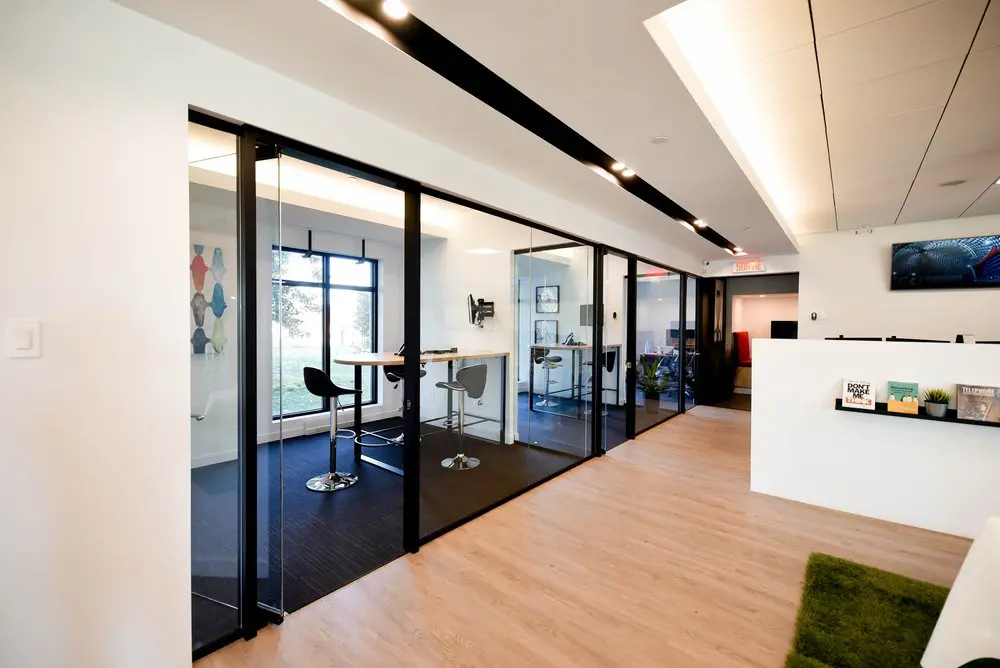
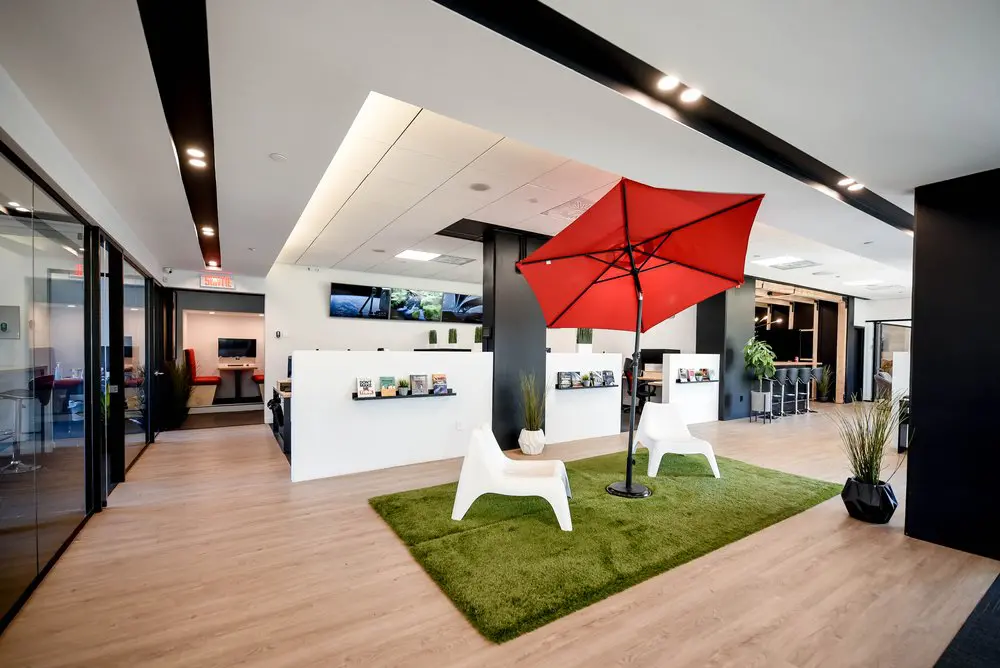
2727 Coworking is at 2727 Rue Saint-Patrick, Suite 109, Montreal, near Charlevoix metro, Atwater Market and the Lachine Canal. For a network, the relevant products are individual hot desks, dedicated desks, private offices, day passes and a conference room. Private offices seat 1 to 10. Every membership is for one person and cannot be shared.
As of October 2026, prices in Canadian dollars are from $350 per month before taxes for a hot desk, from $400 per month before taxes for a dedicated desk, from $55 before taxes for a one-person day pass, and from $300 before taxes for the eight-person conference room for a full day from 9:00 to 17:00. Check booking.2727coworking.com for current prices, the lowest available private-office rate and availability. Availability is not guaranteed.
Private offices and dedicated desks include 24/7 access. Hot desks and day passes are available Monday to Friday from 8:00 to 18:00 and are closed on weekends and holidays. Office and hot-desk agreements are month to month with no commitment and can be cancelled anytime; dedicated desks have a 3-month minimum. Online checkout for a month-to-month private office adds a setup fee equal to one month's rent (hot desks and dedicated desks have none). For a one-month office stay purchased through that checkout, rent plus setup therefore costs two monthly payments before taxes; any required refundable deposits are additional cash outlay.
Office and desk members may book the conference room free when it is available, but there is no availability guarantee. The room seats eight and has a TV with HDMI and a whiteboard, without a videoconference kit. There is no reception or organized networking program. The space is self-serve, so companies must greet their own visitors and run their own team program. See the Griffintown coworking guide for neighbourhood context.
It is a managed network with a central gathering place and smaller work locations closer to employees. The hub may be an owned office, leased office or coworking private office. Spokes may be offices, desks, memberships, day passes or meeting rooms. The model is defined by coordinated policy and procurement, not by a particular product.
No. The hub can be the location used most often for leadership, onboarding, client work or large gatherings. Some companies use a coworking private office. Others nominate a different meeting location for each quarterly gathering. The legal registered office is a separate decision.
There is no universal threshold. Forecast visit-days, simultaneous attendance, room needs and business purpose. One frequent user with confidential calls may justify dedicated space, while five occasional users may be better served by day passes. Compare expected total cost and booking reliability.
Only if the provider's written terms permit pooled or transferable use. Many memberships are personal and named. A company policy cannot override the contract. Ask the provider to describe what happens when different employees attend on different days.
Not always. A membership may grant booking rights or entry while seats remain subject to supply. Ask about simultaneous bookings, reservation windows and fallback when full. For mandatory team days, reserve confirmed capacity.
Forecast attendance by weekday and team, then find the highest planned overlap. Add a justified buffer and account for rooms, privacy and visitors. Monthly averages are insufficient because they hide Tuesday peaks and Friday vacancies.
Yes, if visits are infrequent, hours fit the schedule and enough passes can be confirmed together. Model total visit-days and cancellation risk. Monthly rights may become more economical or operationally reliable when use grows.
Only if the agreement authorizes every person and allows the rotation. Confirm maximum occupancy, named users, access credentials, guest treatment and storage. A six-person room does not automatically authorize an unlimited roster.
Request memberships or office, simultaneous capacity, rooms, access hours, taxes, setup, deposits, credentials, visitors, printing, parking, cancellation, renewal and exit. Give every provider the same scenario so the responses are comparable.
No. Terms vary by provider and product. Some public rates may depend on a longer commitment. Read the signed agreement, notice requirement, renewal and early-exit provisions. Include setup and overlap in the effective cost.
A corporate agreement usually gives the company clearer control over payment, standards and access removal. Some providers require each user to accept separate app or conduct terms. Review both layers and avoid placing unintended payment obligations on employees.
It can create such a policy, but it should address eligible expenses, tax treatment, safety, security, privacy, receipts and approval. CRA treatment depends on the facts. A managed provider list often gives more consistent controls.
Do not assume so. CRA guidance says the primary beneficiary and value are fact-specific [20]. Payroll or a tax adviser should classify the actual arrangement.
Not automatically. Employment-expense deductions depend on employment conditions, reimbursement and supporting forms [19]. Employees should use current CRA guidance and professional advice for their facts.
Show prices before tax and cash paid with tax. GST is 5% and QST is 9.975% [21]. Input tax credits or refunds depend on registration, documentation and commercial use.
There is no universal answer. Assess ergonomics, movement, privacy, noise, equipment, emergency procedures and the individual's home conditions. Applicable health and safety duties still need assessment; choosing coworking does not automatically transfer the employer's responsibilities to the provider.
That depends on company data classification and the environment. Sensitive calls usually require an appropriate private room or approved alternative. Use managed devices, secure connections, screen protection and clear document rules. Never treat public Wi-Fi as the only security control.
Ask what personal information is collected, purposes, access, location, retention, subcontractors, incident response, export and deletion. Include access logs, visitor records, video and app analytics. Route the answers to the company's privacy lead.
No. It supplies a place. Teams still need planned overlap, useful agendas, facilitation, shared documents and decision records. Measure whether cross-team work improves rather than inferring it from attendance.
Make digital documents authoritative, publish agendas, provide good audio, assign a facilitator and record decisions. Avoid side decisions in the room. For some mixed meetings, having everyone join the digital workspace individually improves access.
Choose activities where physical presence has a plausible advantage: relationship building, onboarding, creative exploration, complex coordination, hands-on training or client work. Keep routine updates and individual production remote when that works better.
Transit is one criterion. Test complete routes, transfers, service hours, accessibility, winter conditions and the distribution of employee origins. A station nearby does not guarantee a practical commute for everyone.
Charlevoix is absent from STM's fetched elevator-equipped station list, while Atwater and Lionel-Groulx are listed [26]. Treat this as an inference and check live STM information before accessible travel.
No for today's access plan. REM announced the launch of planning on June 16, 2026, and said planning plus construction would span about four years [30]. That is not a guaranteed opening date.
Use actual provider offers and the rules for the intended street and time. Montreal says on-street permission depends on zone, day and hours [33]. Do not use one general Griffintown rate. See the detailed parking guide.
Potentially, but winter coverage is smaller than the seasonal network and stations can change. Check the BIXI app for the actual origin, destination and availability [31]. Define a winter fallback.
The proposed 90-day schedule allows time for setup, repeated use and a decision cycle; it is a planning choice rather than a validated minimum. It may not capture all seasons or annual workload peaks. Record that limitation and continue quarterly review if the program proceeds.
Measure enrolled and active users, visits, peak attendance, booking failures, room use, travel, cost, incidents and work outcomes tied to the original problem. Combine operational data with concise employee feedback. Avoid invasive surveillance.
Investigate before renewing. The cause may be location, hours, poor onboarding, unsuitable space, remote preference or weak business purpose. Fix a clear operating problem once, then resize or exit if demand remains absent.
Review users and invoices monthly, and each node formally every quarter. Quarterly review is frequent enough to respond to headcount and attendance while allowing enough use to observe a pattern. Put notice deadlines before the meeting.
Assign a manager and mentor, provision approved access, explain booking and security, schedule a purposeful first team day and identify support contacts. Confirm that the product supports the employee's hours and role before promising access.
Sometimes, but workspace access and address eligibility are separate. The answer depends on legal structure, address role, provider agreement and delivery capability. Use the Quebec business address guide rather than relying on a workspace product name.
There is no default. A co-located team attending often may need one private office. A geographically dispersed group may need individual rights and occasional rooms. Build the attendance matrix, obtain comparable quotes and test the smallest design that meets the requirement.
It can, but the result depends on avoided travel, travel mode, home energy, office energy and rebound trips [9]. Measure the network rather than claiming an automatic reduction.
Usually compare the discount with the value of exit flexibility. If attendance is uncertain, a modest discount may not justify a long commitment. Calculate the break-even point including setup, notice and unused months, then choose deliberately.
A hub and spoke network works when it is treated as an operating system rather than a collection of discounted desks. The company must join policy, named access rights, simultaneous capacity, purposeful attendance, secure work practices and active vendor management. The decisive evidence comes from its own pilot, not from national averages or a provider's general claims.
Start with the smallest design that can deliver the required work. Centralize procurement and standards, make local experience part of selection, and preserve a clear fallback. Measure use and outcomes for 90 days. Then review every node quarterly, including setup and exit costs, and change the network when people, work or geography change.

[1] Statistics Canada
[2] Institut de la statistique du Quebec
[3] Statistics Canada
[4] Statistics Canada
[5] Nature
[6] Nature Human Behaviour
[7] Nature
[8] Strategic Management Journal
[9] PNAS
[10] International Energy Agency
[11] Canadian Centre for Occupational Health and Safety
[12] Canadian Centre for Occupational Health and Safety
[13] CNESST
[14] Commission acces information du Quebec
[15] Commission acces information du Quebec
[16] Commission acces information du Quebec
[17] Canadian Centre for Cyber Security
[18] Canadian Centre for Cyber Security
[19] Canada Revenue Agency
[20] Canada Revenue Agency
[21] Revenu Quebec
[22] Revenu Quebec
[23] CNESST
[24] Office quebecois de la langue francaise
[25] Societe de transport de Montreal
[26] Societe de transport de Montreal
[27] Autorite regionale de transport metropolitain
[28] Autorite regionale de transport metropolitain
[29] Reseau express metropolitain
[30] Reseau express metropolitain
[31] BIXI Montreal
[32] BIXI Montreal
[33] Ville de Montreal
[34] Ville de Montreal
[35] Crew Collective and Cafe
[36] Regus