How Much Notice Do You Actually Need to Move Into (or Out of) Coworking Space? A Montreal Guide
"How much notice do I need?" turns out to be two different questions depending on which direction you're moving. Giving notice on your way into coworking is usually the easy part — most flex-space operators can get you in the door quickly. The harder, more overlooked question is how much notice you owe on your way out, and how that interacts with whatever you're leaving behind. This guide walks through both directions gently: what's typical across the coworking industry, why Quebec law doesn't hand you a simple answer, what tends to go wrong when the timing gets rushed, and how one Montreal operator — 2727 Coworking, in Griffintown on the Lachine Canal — actually handles it in practice, tier by tier, as a real-world anchor point for the more general advice.
If you're anywhere in the process of thinking about this move, take a breath first. This isn't a decision that punishes small delays the way people sometimes fear, and there's more room to get it right than the anxiety around "did I give enough notice" usually suggests.
Executive Summary
Coworking notice periods industry-wide tend to run 15 to 60 days, with 30 days being the most common figure — this is the general pattern to keep in mind before looking at any single operator's numbers.
Quebec commercial law doesn't set a blanket notice period for coworking the way some provinces' residential codes do for apartments. The specifics are set by whatever agreement you sign, not handed down by statute.
The timing mistake that trips people up most often isn't about coworking's notice period at all — it's underestimating how much longer notice a traditional lease or sublease requires on the way out, and starting that clock too late.
A second, quieter risk is the auto-renewal clause: some agreements renew automatically if you don't give notice by a specific date, which can trap you in another term you didn't mean to sign up for.
2727 Coworking is used throughout as a concrete example of how one operator answers these questions: roughly one week of notice going in, about one month going out, and three different commitment lengths depending on which product you book (hot desk, dedicated desk, private office).
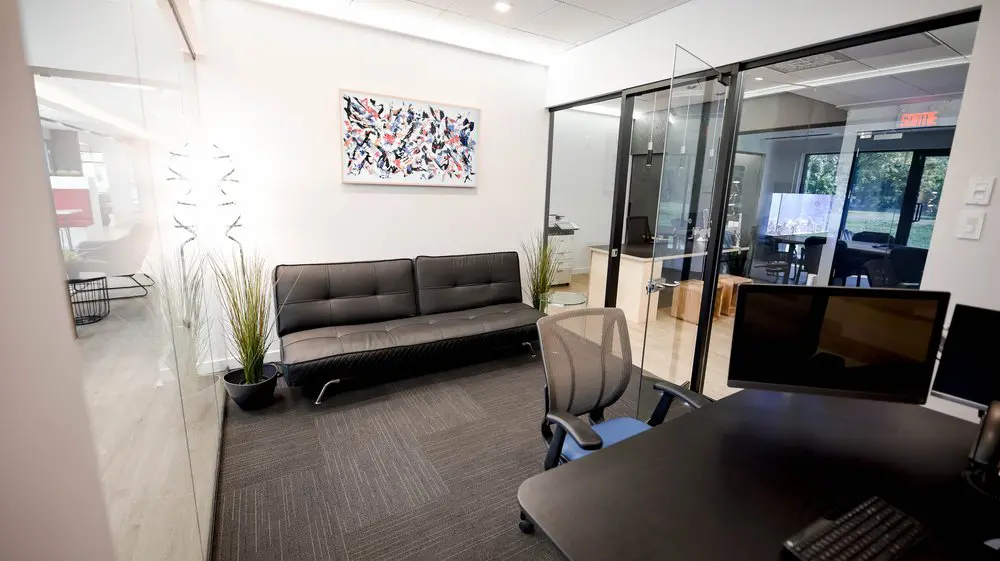
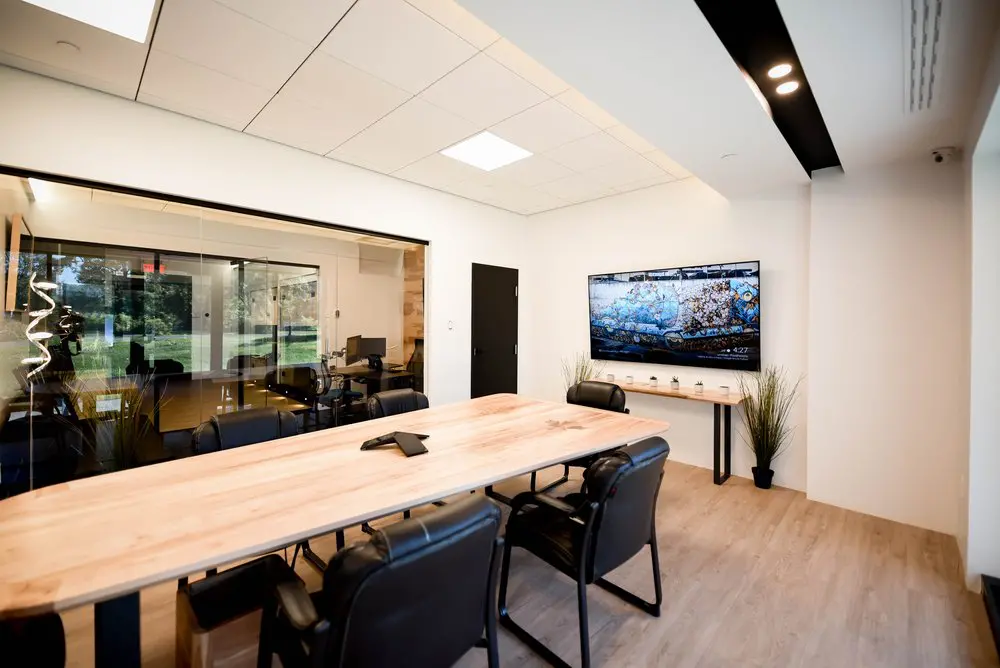
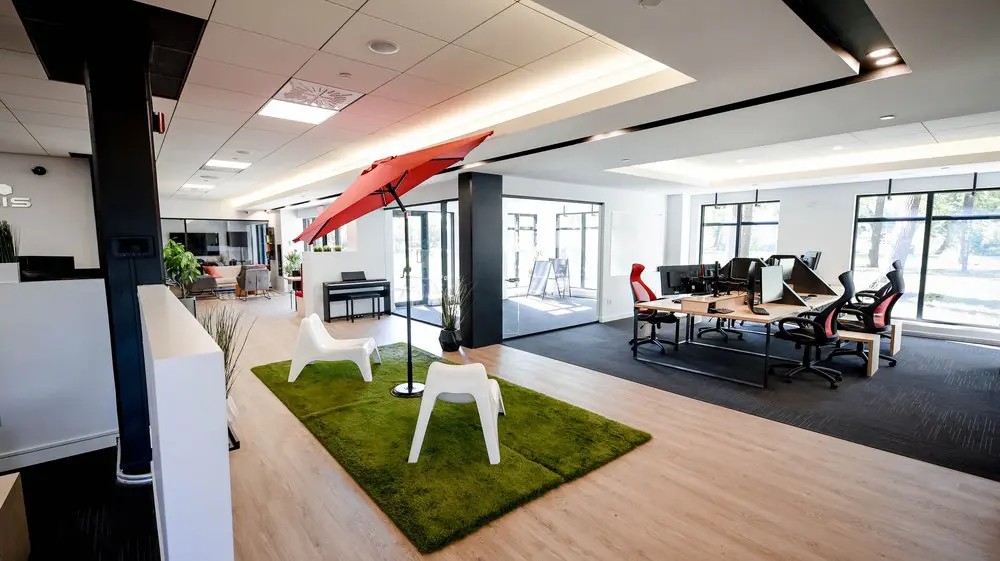
2727 Coworking space, 2727 Saint-Patrick, Montreal
The Two Ways Timing Can Go Wrong (and a Quieter Third One)
Most people thinking about a coworking move worry about one thing: not giving enough notice to whoever they're leaving. That's a real risk, but it's not the only shape this problem takes, and it might help to separate the different ways timing tends to go sideways before working out what to do about any of them.
Giving Notice Too Late: The Overlap Problem
This is the most talked-about version. If you give notice on your old space too close to your planned move date, you can end up paying for two spaces at once — your old lease or membership, and your new coworking spot — for longer than you'd like. General moving guidance describes this plainly: the aim is to coordinate the end of your current arrangement to land close to your new space's start date, so you're not double-paying for weeks on end.[10]
Here's the part that's easy to miss, though: a small overlap isn't actually a failure. If you're coming out of a traditional office lease specifically, a couple of weeks of overlap can be a kindness to yourself — it gives you room to move equipment, set up the new space, and settle in without the pressure of a hard cutover date. The problem isn't overlap itself; it's unplanned overlap that runs for months because the old lease's notice clock started too late.
Giving Notice Too Early: The Gap Problem
The mirror-image risk is less commonly discussed, but it matters just as much: giving notice on your current space too early, and ending up with nowhere to work while you wait for the new place to be ready. This tends to worry people more than it probably should when the destination is a hot desk or dedicated desk, since those usually move at booking speed rather than construction speed. It matters more, and is worth double-checking, if you're heading into a private office, where availability or any office-specific setup could add some lead time. If a firm deadline matters to you, it's worth just asking directly rather than assuming either way.
The Quieter One: Auto-Renewal Clauses
There's a third failure mode that doesn't get talked about nearly as much as the first two, and it's worth naming gently because it can catch people off guard in a way that feels unfair after the fact: some coworking and traditional lease agreements include automatic renewal clauses that kick in if notice isn't given by a specific date.[21] If you assume you can give notice "whenever you're ready" and the agreement actually required notice by a fixed date to avoid rolling into another term, you can find yourself committed to another few months (or longer) without having decided that on purpose. It's a small thing to check, and checking it early costs nothing — but it's the kind of detail that's easy to overlook when you're focused on the bigger question of "when do I actually want to move."
There's also a distinction worth sitting with if you're leaving a traditional commercial lease rather than a coworking membership: simply not showing up anymore, without formal notice, is usually treated as abandonment rather than termination, which can push things into the lease's default-and-remedies territory rather than a clean exit.[22] None of this is meant to alarm you — it's simply a reason to give notice formally and in writing, even when it feels like a formality, rather than letting a lease trail off on its own.
A Gentle Playbook for Getting the Timing Right
None of this needs to be a source of stress, and there's no single "correct" way to sequence a move — but a few small habits seem to help people avoid the worst versions of the problems above.
Start with whichever side is slower, not whichever side is more top-of-mind. It's natural to focus on the new space you're excited about and treat the old one as an afterthought, but the slower-moving side of any transition is usually the one that should set your timeline. If you're coming out of a traditional office lease that needs three to six months' notice through a break clause, that clock needs to start long before you'd think to touch base with a coworking operator, whose own notice window is measured in weeks, not months.
Consider a short, deliberate overlap rather than a hard cutover. One piece of general moving advice that seems to hold up well: rather than resigning your old space on a Friday and starting fresh somewhere new on Monday sight-unseen, it can help to have a short window — even a single day pass at the new space — where both are technically active. That gives you a chance to see the new environment for real, with your old option still there as a safety net, rather than betting everything on a single clean handoff.
Beyond the notice period itself, it's worth checking whether your specific city or region has its own moving "season" that could quietly complicate your timeline. Every place tends to have some version of this, and Montreal's is unusually pronounced, so it's worth knowing about even if it doesn't change the coworking notice period directly: most Quebec residential leases traditionally end on June 30th, which turns July 1st into a province-wide "Moving Day" — an estimated 200,000 to 250,000 households move that week, with 30,000 to 40,000 moves happening simultaneously in the Montreal area alone.[28] Moving companies and truck rentals get booked out weeks in advance around it, and rates can double or triple right around that date.[29] This is rooted in residential custom rather than commercial leasing, so it won't touch your coworking agreement directly — but if you're also timing a home move, or you simply need to hire movers to shift office equipment or furniture around the same week, it's the kind of local pattern worth checking for and booking well around, rather than assuming a truck will be available on short notice.
If your team's size is the uncertain variable, build in more room than feels strictly necessary. This shows up often enough to be worth naming on its own: teams that are growing, or might grow, sometimes feel pressure to lock in a lease length based on hope rather than confidence. General startup-office guidance suggests treating your commitment length as a function of how sure you are about your headcount over the next while, with something like a 15–20% buffer built in, rather than a function of how much you like the space right now.[23] That's headcount guidance specifically, not a timing rule, but the underlying instinct — leave yourself more slack than feels urgent in the moment — applies just as well to the notice-period side of the decision.
Check for renewal dates and prepaid balances before you assume you're free to leave whenever. Beyond the auto-renewal risk above, it's worth a quick look at whether you have any unused meeting-room credits, printing balances, or deposits sitting with your current space — these are easy to forget about and even easier to lose if you leave without checking.
Don't assume your own insurance travels with you automatically. This one's easy to overlook because it doesn't feel like a "moving" problem at all. Coworking spaces generally insure the building and common areas, not your laptop, your files, or your clients' data — that coverage gap exists on a normal day, but it gets more pointed during a move, when equipment is briefly split between two locations, sometimes sitting in a car or a storage unit overnight.[26][27] It's worth a quick check with whoever handles your business insurance before the move date, not after something goes missing.
If your business address is doing double duty, set up mail continuity before the old address goes cold, not after. If you're using your current space's address for mail, deliveries, or registration, it's worth arranging forwarding or a transition period with whoever handles it — ideally overlapping with your new address rather than leaving a gap where something important could land at a place you no longer have access to. This is a small, boring task that's easy to let slide next to the bigger logistics of an actual move, which is exactly why it's worth naming here.
One option worth knowing about, if this is a recurring worry for you: a standalone mailbox subscription can decouple your business address from whichever workspace tier you're actually using at a given moment. 2727's own Mailbox plan, for instance, is a simple monthly subscription — separate from any desk or office booking — so it keeps running quietly in the background even while you're changing tiers, changing locations, or in the middle of a move.[31] It's not a fix for every mail-continuity situation, but it's a gentle option if the address itself is the thing you don't want to have to think about during a transition. 2727's fuller guide to virtual offices in Montreal goes into more depth on how mail handling, forwarding, and business-address registration fit together.[32]
When in doubt, just ask. This is true on both sides of any move — your current space and wherever you're headed next. Coworking operators, 2727 included, tend to be far more flexible in practice than their published terms might suggest, and a quick, honest conversation about your actual situation usually goes further than trying to reverse-engineer the "rules" from a policy page.
2727 Coworking space, 2727 Saint-Patrick, Montreal
Why Quebec Law Doesn't Hand You a Simple Answer
It's worth taking a moment to understand why there isn't one tidy legal number to point to here, because a lot of the uncertainty around notice periods comes from assuming there must be a hidden minimum somewhere, the way many provinces set out clear notice rules for residential tenancies. Commercial space in Quebec just doesn't work that way.
As legal commentary on the subject puts it, in Quebec only the basic rules of the Civil Code of Quebec apply to commercial leases, with everything else left to be negotiated between the parties.[1] The Chambre des notaires du Québec's own guidance on registering a commercial lease points the same way — the specifics are a matter of agreement, not something handed down by a fixed statute.[2]
There's a related but distinct piece worth being careful about, since it's easy to conflate the two: under Civil Code of Quebec articles 1870 and 1871, a tenant who wants to sublease or assign a traditional commercial lease has to notify the landlord of that intent, and the landlord generally has about 15 days to respond before consent is treated as given.[11] That's notice tied to subleasing or assigning a lease — a different mechanism entirely from the move-in/move-out notice on a coworking membership, even though the two can sound similar in passing conversation. What it does reliably confirm is the broader point: Quebec commercial-lease notice generally is a negotiated, interpretive matter, not a fixed period — which is exactly the backdrop that lets a coworking operator set its own terms rather than being bound to something rigid.
That's possible in the first place because coworking agreements are typically structured as license or service agreements rather than real-estate leases in the strict legal sense. CBRE's own commentary — titled, fittingly, "Is a Coworking Agreement a 'Lease'?" — walks through why most coworking arrangements function as a license to use space rather than a conveyance of a real property interest.[6] LoopNet's explainer on coworking agreements covers similar ground from a slightly different angle.[7] The upshot, gently put: because a coworking membership usually isn't a lease in the traditional sense, an operator isn't bound by Quebec's commercial-lease framework the way a traditional landlord and tenant are. It can set its own notice policy, which is what most coworking operators, including 2727, have done.
What the Broader Market Looks Like
Zooming out from Quebec specifically, general coworking-industry commentary is fairly consistent about the shape of typical notice periods, even if the exact number varies operator to operator. One widely cited pattern: notice periods "typically range from 15 to 60 days, with 30 days being the most common arrangement," and month-to-month memberships generally carry shorter notice than fixed-term agreements.[8] A separate breakdown by membership type follows similar logic: day passes can usually be cancelled anytime, dedicated-desk memberships typically ask for around 30 days' notice, and most month-to-month memberships sit in that same 30-day range.[9] Coworking license agreements more broadly tend to allow termination with 30 to 60 days' notice, which is a different order of magnitude entirely from multi-year traditional commercial leases.
A Look Across a Few Montreal Operators
Here's roughly how a handful of Montreal-area operators compare on commitment length, gathered from each operator's own published terms where available:
Operator
Hot Desk / Day Pass
Dedicated Desk
Private Office
Source
2727 Coworking
Month-to-month, no minimum
3-month minimum
12-month lease (officially — though handled with real flexibility case-by-case, more on this below)
2727's booking flow at booking.2727coworking.com
WeWork — We Membership / Hot Desk / Daily Desk
No minimum term stated; cancel anytime, effective immediately on request; no refund of amounts already paid
WeWork — All Access (multi-location day-pass product)
Commitment Term is set per-member in their own Membership Details Form, not a published universal figure; 5 days' notice to end at term or during month-to-month; early exit before the Commitment Term ends is treated as a breach and accelerates all remaining fees, with no refunds
N/A — different product line
N/A — different product line
WeWork All Access Membership Terms and Conditions, §20[19]
Crew Collective & Café
Floating desk / dedicated desk / private office pricing published ($300 / $675 / from $6,000 per month); no cancellation or notice-period terms published anywhere on their public site
A gentle note on reading that table: WeWork's own published legal terms confirm its hot-desk-equivalent tier has no minimum term and cancels immediately, which is genuinely more flexible than industry commentary alone might suggest. WeWork doesn't publish private-office or dedicated-desk terms on its public legal pages; that's handled per-deal, which is fairly standard across the industry for those product types. Crew Collective publishes pricing but no notice terms anywhere public, so there's no honest figure to offer for their column — if that's something you need to know, it's worth asking them directly rather than guessing.
Worth sitting with for a moment: 2727's 12-month private-office term is, on paper, longer than what some competitors and general industry guidance would call "typical" for flex space. That's worth naming plainly rather than glossing over, but it also tends to buy something real in return — a locked-in rate and less of the early-termination scramble, which tends to matter most once a team has grown past the point where casual month-to-month flexibility feels sufficient, somewhere around 5 or more people. If your team's growth is the genuinely uncertain part of the picture, a 12-month commitment is worth sitting with rather than signing on momentum alone.
2727 Coworking space, 2727 Saint-Patrick, Montreal
Who Tends to Be Asking This Question
A few situations come up often enough that they're worth naming directly, gently, in case one of them sounds like where you are right now.
The Founder Whose Team Just Got Called Back to the Office
Return-to-office mandates are, at the moment, the best-evidenced reason people end up needing flexible space on short notice. Ontario's provincial staff have been full-time in-office since January 2026, Alberta's public service followed in February 2026, and private employers including RBC, Rogers, and Starbucks Canada have recalled staff to three to five days a week in-office through 2025 and into 2026.[2][3] Unlike a scheduled lease expiry, this kind of trigger doesn't come with a fixed calendar — it's "my company (or my client) told us to come back," and that can land with days or weeks of runway rather than months. If this is you, it might help to know that the tight part of this transition usually isn't coworking's side. Hot desk and dedicated desk tiers at most operators, 2727 included, require no long-term commitment and can be moved into quickly — the notice that actually needs careful planning is almost always whatever you're leaving, whether that's a home office setup or an expiring sublease, which tends to run on a slower clock than anything coworking asks of you.
The Small Team That's Quietly Outgrown Its Current Setup
Firms with 1 to 19 employees make up 91.1% of all Canadian employer businesses and 24.1% of national employment — this is the modal Canadian firm size, not a niche case.[1] A common growth path — solo or a duo, then a small team of two to four, then a growing team of five to ten — tends to map onto the same hot desk, dedicated desk, and private office progression as headcount crosses each threshold. A question that comes up naturally at each jump is whether upgrading tiers restarts a notice clock, or costs you whatever you'd already committed to. As of this writing, 2727's own booking-portal legal-documents page lists a Lease Agreement among its four legal documents, but that page states plainly that full lease agreement terms aren't published yet and points readers to [email protected] for current terms — there's no published mid-term-upgrade clause anywhere on 2727's own domain right now. If you're weighing a tier upgrade, it's genuinely worth asking [email protected] directly rather than assuming either a penalty or a clean slate; it just isn't written down anywhere yet.
The Team Timing Things Around a Lease Expiry, a Funding Event, or a New Transit Line
Existing lease expiry is a standard, non-coworking-specific trigger, and a funding event is commonly cited as a moment when a company reconsiders its space strategy entirely — which could push a team toward flexible space or away from it, depending on what the funding is actually for. This is also the situation most likely to carry a quiet worry about being locked in right before a growth spurt outpaces the space. That worry deserves to be said out loud rather than smoothed over: a 12-month private office is a real commitment, and whether your team's trajectory supports it is worth working through calmly before signing, not after. The gentler news is that 2727 can typically accommodate a growing team within the same building rather than forcing a full relocation once a private office is outgrown — a scenario covered in more detail in the site's tier-comparison guide. Separately, and worth knowing if you're planning a tour or a move date in the neighbourhood: Griffintown's REM light-rail station itself hasn't actually been built yet, even though the surrounding tunnel and railbank work is essentially complete — as of this writing, the station's construction timeline remains unconfirmed, and preparatory work in the nearby Peel Basin area (a temporary access ramp, utility relocation) has been generating some noise, vibration, and dust in the immediate area.[30] It's a minor thing, but worth building a little extra time into a site visit or a moving-day schedule if you're coming through that specific corner of the neighbourhood.
2727's Own Notice, Tier by Tier
With all of that as backdrop, here's how 2727 specifically answers the question, as one concrete example of an operator putting these general patterns into practice.
Hot Desks: Month-to-Month, No Minimum
Hot desks at 2727 are month-to-month with no minimum commitment. In practice, moving in tends to happen close to same-day — once a booking is complete, you can typically show up and start working without much of a wait.
2727 Coworking will try its best to accommodate move-in notices of at least one week, though hot desks specifically carry no minimum commitment, so in practice most hot-desk move-ins happen as soon as booking is finished rather than a week out. On the way out, a similar one-month, loosely enforced expectation tends to apply — it's worth checking current terms and cancellation steps directly with 2727's booking flow or [email protected] before planning too tightly around it.
Assigned/Dedicated Desks: 3-Month Minimum
Dedicated (assigned) desks carry a 3-month minimum commitment. This is a tier where the comparison to the wider market is genuinely useful: general industry data pegs dedicated-desk notice at around 30 days, which is roughly what 2727 asks for on the move-out side too. 2727 Coworking will try its best to accommodate move-in notices of at least one week and move-out notices of at least one month, but as always, it's worth confirming with [email protected] before finalizing anything, since practices can vary.
Private Offices: 12-Month Lease
Private offices at 2727 run on a 12-month lease, officially — genuinely longer than what's typical for flex space elsewhere, and worth being upfront about rather than downplaying, as noted above.
That said, the 12-month figure describes the official policy, not a rigid trigger enforced without regard for circumstance. In practice, when someone genuinely needs to move in earlier or move out before the term is up, 2727 tends to work with them rather than hold a hard line — the same case-by-case flexibility that governs the notice figures elsewhere in this guide seems to apply here too. It's worth treating the 12-month lease as the real commitment you're signing and planning around it, while also knowing that the on-site concierge and admin team tend to lean toward accommodation over strict enforcement when something real comes up. If you're unsure what that means for your specific situation, asking [email protected] directly tends to be more useful than guessing either way.
2727 Coworking will try its best to accommodate move-in notices of at least one week and move-out notices of at least one month; this is the tier where confirming directly matters most, simply because the underlying term is so much longer.
2727 Coworking space, 2727 Saint-Patrick, Montreal
How Quickly You Can Actually Move In
If "can I move in this week" is genuinely on your mind — and for a lot of the situations above, especially an unexpected return-to-office call, it often is — here's the general shape of it. Hot desk and dedicated desk move-in tends to happen at roughly booking speed: complete the booking, show up, and you're generally in. Private office move-in is the tier where timing gets more variable, since availability or any office-specific setup can add some lead time. If you're working against a tight deadline, it's worth confirming the actual private-office lead time directly with 2727 rather than assuming same-week availability without checking.
Giving Notice to Move Out: What 2727 Asks For
2727's figure here is about one month. There's an official policy in place — roughly one week for move-in, one month for move-out — and these are the numbers 2727 publishes and stands behind, while in practice, people who don't hit those windows exactly still tend to be accommodated case-by-case rather than penalized on principle. That's echoed by 2727's own booking-portal Lease Agreement page, which as of this writing states plainly that full lease agreement terms aren't published yet and directs readers to [email protected] — these figures are the most concrete public statement 2727 has made on the subject.
2727 Coworking will try its best to accommodate move-in notices of at least one week and move-out notices of at least one month, but industry standards vary, and it's always worth confirming with [email protected] before finalizing your move.
2727 Coworking space, 2727 Saint-Patrick, Montreal
A Few Common Worries, Talked Through
"What if I need to move out early, before my minimum is up?"
There's no published early-termination fee figure anywhere on 2727's public site, which can feel uncertain on its own, so it's worth saying plainly what is known: official policy defaults to the one-week/one-month figures above, and real-world flexibility beyond that is handled case-by-case by 2727's team. In other words, an official policy exists, and enforcement in practice tends to lean toward accommodation rather than a rigid penalty — though there's no guaranteed fee-free exit either. If you're genuinely facing this, emailing [email protected] directly tends to bring more clarity than trying to guess at the outcome in advance.
"Is this a legally binding agreement, or something I can push back on?"
Coworking membership agreements, 2727's included, are generally structured as license or service agreements rather than real-estate leases in the legal sense. That's the same CBRE/LoopNet framing covered earlier, and it's part of why 2727 can set its own notice policy rather than being bound by Quebec's commercial-lease statutes the way a traditional tenant would be. So: it's a real agreement worth honoring, but it isn't a traditional lease carrying the same statutory protections and obligations as, say, a ten-year retail lease.
"Does using 2727 as my business address affect my move-in or move-out timing?"
If you're using 2727 as your registered business address, this is a fair thing to want clarity on — the detailed answer already lives elsewhere on 2727's site, so it's worth pointing you there rather than re-explaining it here. Quebec's Enterprise Register (REQ) requires every registered business to keep a current "domicile" address on file, and a coworking or virtual-office address is legally usable for that purpose as long as it's a real physical location, not a P.O. box. For the fuller walkthrough of how that interacts with registration, timing, and what happens if you move, 2727's dedicated articles and guide on the topic are linked below.
Setting This Against a Traditional Commercial Lease
Zoomed all the way out, this contrast is close to the entire value proposition of flexible space in one comparison. Small-business guidance on traditional commercial leases describes minimum terms often running seven to ten years, with upfront commitments equivalent to roughly six months' rent — quite different from the flexible-space norm of something closer to a two-month minimum and one month upfront.[24] On the notice side specifically, traditional commercial leases commonly ask for 30 to 90 days' written notice before vacating, and some go as high as 90 to 180 days depending on the lease.[25] A traditional Quebec commercial lease can also run three to ten years overall, with a break clause sometimes requiring three to six months' notice to exit early.
2727's range — month-to-month up through a 12-month private-office lease, with roughly one week and one month of notice on either end — sits in a genuinely different order of magnitude. If you're weighing 2727 against a conventional lease as your alternative, this is the comparison that probably matters more than square footage or amenities: how long you're locked in, and how much runway you'd need if your plans changed.
2727 Coworking space, 2727 Saint-Patrick, Montreal
Frequently Asked Questions
How much notice does 2727 Coworking need before move-in?
2727 Coworking will try its best to accommodate move-in notices of at least one week, but industry standards vary, and it's always worth confirming with [email protected] before finalizing your move. Hot desks in particular often move in faster than that, since there's no minimum commitment.
How much notice do I need to give before moving out of 2727?
Around one month, loosely enforced and handled case-by-case. It's worth confirming your specific situation at booking or directly with [email protected], since actual practice can depend on your tier and circumstances.
What's the minimum commitment for each plan type at 2727 Coworking?
Hot desks are month-to-month with no minimum. Assigned/dedicated desks carry a 3-month minimum. Private offices are booked on a 12-month lease, officially, though 2727 tends to work with people case-by-case when circumstances genuinely change.
What happens if I need to move out earlier than planned?
There's no published early-termination fee anywhere on 2727's site. Official policy defaults to the one-week/one-month notice figures above, with real-world flexibility handled case-by-case by 2727's team. Emailing [email protected] directly tends to bring more clarity than assuming an outcome either way.
Does using 2727 as my business address affect my move-in or move-out timing?
Not directly, but if you're using 2727 as your registered business address, it's worth keeping Quebec's Enterprise Register requirements in mind when the time comes to move. 2727's dedicated guide on registered addresses in Quebec has the fuller walkthrough.
How much notice do coworking spaces need in general, beyond 2727?
Most coworking operators ask for somewhere between 15 and 60 days, with 30 days being the most common figure — day passes are usually the most flexible, and dedicated desks or private offices tend to ask for more.
A Gentle Conclusion
However this move is unfolding for you, the short version is this: how much notice you owe, and how much notice you'll be given in return, depends on what's being booked and what you're leaving behind — and there's rarely a single "right" number that applies to every situation. Across the market, 15 to 60 days is the general range to expect, with 30 days as a common middle ground. At 2727 specifically, that works out to roughly one week going in and one month going out, across hot desks, dedicated desks, and private offices, with real flexibility in practice when something genuine comes up. If the slower-moving side of your transition is the space you're leaving rather than the one you're moving into, it's worth letting that side set your timeline rather than the other way around. And if any of this still feels uncertain, a short, honest conversation with the people on either end of your move — including 2727's own team — tends to clear things up faster than trying to work it out alone. If you're ready to look at what's actually available right now, the current inventory is live on the booking portal.
2727 Coworking space, 2727 Saint-Patrick, Montreal