Seasonal and Temporary Coworking Memberships in Montreal
Plan a short coworking term around real attendance, peak headcount, total paid months, setup costs, access, security, and a clean exit.
Plan a short coworking term around real attendance, peak headcount, total paid months, setup costs, access, security, and a clean exit.
A seasonal coworking plan should match a temporary operating window, not merely a preference to work away from home occasionally. The planning unit is the full cycle: preparation, the busiest weeks, the wind-down, and any extended tail needed for records, client meetings, or late deliverables. A team can be temporary in duration while attending every weekday, or permanent in duration while attending only once a week. Those are different problems and often call for different products.
Start by writing down five quantities: the first date anyone needs access, the largest number of people who could attend at once, the number of attendance days per person, the last operational workday, and the earliest date on which every related obligation can end. Price each option across that whole paid horizon. Include setup fees, taxes, deposits, meeting space, equipment, transportation, and any month that must be paid because of notice rules. A low monthly headline can be expensive for one month if a one-month setup fee applies. A high day rate can still be economical when attendance is sparse.
Do not assume that “month-to-month” means instant cancellation, prorated partial months, shared access, or automatic expiry. Read the agreement for the billing anchor, renewal rule, notice method, notice deadline, named-user policy, access hours, and charges due on exit. Stopping a pre-authorized debit does not cancel the underlying contract or erase an amount owed [5]. In Quebec, a coworking arrangement can contain elements of access, services, and space. Its legal classification depends on the real agreement and performance, not the label on a sales page. The Tribunal administratif du logement deals with residential lease matters, so a business should not assume that residential lease rules govern a commercial workspace arrangement [1].
For a tax-season example, use dates that are actually published. Most 2025 individual income tax returns are due April 30, 2026. Qualifying self-employed people and their spouses or common-law partners have until June 15, 2026 to file, but balances remain due April 30, 2026 [11] [12]. Those dates support a 2026 plan for the 2025 tax year. They do not establish the dates for a later filing season.
The operational test is simple: choose the smallest product whose actual rights cover the busiest credible day, then build a controlled way to extend or reduce it. Confirm the plan in writing, assign every seat to a named person where required, document privacy and safety controls, schedule the cancellation date before signing, and preserve invoices and notices. That turns flexibility from a marketing claim into a managed business process.
Seasonal work is older than coworking. Retail peaks, fiscal deadlines, construction seasons, cultural production, tourism, academic terms, and project mobilizations have always created temporary demand for labour and premises. What has changed is the range of work that can move between a main office, a temporary project room, a shared workspace, and home. Statistics Canada reported that 20.6% of workers in the Montréal census metropolitan area were mostly working from home in May 2024 [20]. That is a dated snapshot, not a forecast and not proof of coworking demand. It does show why planners can no longer treat headcount and daily occupancy as the same number.
A temporary workspace requirement has a defined or condition-based end. Examples include a filing season, a product launch, a renovation, a trial preparation period, a visiting team assignment, a recruitment class, or a contract with a delivery date. A low-attendance requirement is different. A consultant may need a desk every Tuesday indefinitely. A distributed employee may need a professional setting twice a month for years. The first problem concerns duration. The second concerns frequency. A seasonal team can have both, but the analysis must keep them separate.
This distinction prevents two common errors. The first is buying a monthly plan because the project lasts several months even though the team will attend only a few days. The second is buying day passes because the engagement is temporary even though the team will attend almost every weekday. Duration determines how long the arrangement must exist. Attendance determines how intensively people use it. Peak concurrency determines how many people must be admitted at once. Privacy and task requirements determine whether open seating is adequate.
Use four milestones for every temporary workspace plan:
| Milestone | What it means | What to decide |
|---|---|---|
| Start | First day a person, device, file, or delivery needs the space | Access activation, orientation, equipment arrival, billing start |
| Peak | Period with the highest concurrent attendance or strictest room demand | Seat count, private rooms, call capacity, network and visitor controls |
| Finish | Last day of the core work | Return of equipment, final meetings, reduction notice, member offboarding |
| Extended tail | Time after core delivery when occasional access or administration continues | Whether to retain a smaller plan, use day passes, or close completely |
The extended tail deserves special attention. A project can be operationally complete while invoices, records, mailed notices, or client meetings continue. If the team used the workspace as a business address, changing the workspace also creates an address transition. Quebec enterprises generally use a current updating declaration after an address change and must produce it within 30 days, without treating that filing as a substitute for the annual updating declaration [9]. The right finish date is therefore the date on which the business can safely end all associated rights, not simply the final day employees sit at desks.
Coworking products solve different combinations of duration, attendance, equipment, privacy, and identity. Names vary by operator, so compare the written rights rather than assuming that “flex,” “hot desk,” or “membership” has a universal meaning.
| Product | Best fit | Main strength | Main constraint to verify |
|---|---|---|---|
| Day pass | A few isolated attendance days | Pay only for selected days | Hours, date changes, sellouts, privacy, storage |
| Monthly hot desk | Frequent attendance without a permanent station | Lower cost than repeated day passes at high use | Named user, open seating, business hours, no equipment left behind |
| Dedicated desk | Frequent attendance with a consistent station | Stable setup and often broader access | Monthly commitment, assigned-user rule, notice, security in shared room |
| Private office membership | Confidential work, a small team, equipment, visitors | Enclosed controlled workspace | Setup fee, room size, notice, insurance, guest and address rules |
| Meeting room booking | Interviews, workshops, client meetings | Privacy for a defined block | Capacity, equipment, access window, cancellation policy |
| Short sublease | A team needing a self-contained premises for a longer temporary term | Greater control over a whole suite | Consent, legal review, furniture, utilities, restoration, fixed term |
| Direct commercial lease | Stable long-term premises and control | Customization and continuity | Long commitment, fit-out, operating costs, legal and exit obligations |
A day pass is a date-specific right, not a fractional monthly membership. It may provide a place to work during published hours but no continuity from one visit to the next. A hot desk membership usually offers recurring access to shared seating but does not necessarily reserve the same seat. A dedicated desk solves workstation continuity, yet it can remain acoustically and visually open. A private office provides stronger separation, but the member must still verify sound transfer, building access, visitors, insurance, and what services are included.
The word “monthly” also describes a billing interval, not a complete contract. A monthly plan can renew automatically. It can require advance notice. It can start only on the first of a month or on any date. It can charge a full month for a partial period. It can have an onboarding charge equal to another month. Ask for a sample invoice and the agreement before comparing it with passes or another provider.
Legal labels should be handled carefully. Article 2098 of the Civil Code of Québec defines a contract of enterprise or for services around work or a service supplied for a price [2]. A coworking agreement may include services, access, equipment, rules, and use of space. Whether a particular agreement is a service contract, lease, licence, or mixed arrangement depends on its wording and actual operation. Do not infer the legal result from the membership name alone.
If an arrangement legally qualifies as a service contract, article 2125 provides that a client may unilaterally terminate even after the service has begun [3]. Quebec case law also recognizes that this right can be waived clearly and unequivocally; have counsel assess any waiver in the agreement [31]. This is not a promise of cost-free departure. Article 2129 addresses amounts that can remain payable, including the value of work performed, actual costs and expenses, the value of usable property supplied, and, in some circumstances, other injury [4]. A business with a material commitment or dispute should have Quebec counsel review its agreement rather than relying on a general guide.
The calendar should begin with work, not billing. Put every known operational date on one line, then layer workspace dates underneath it. This exposes paid time that a quick monthly comparison hides.
For each role, record when onboarding begins, when productive work begins, expected attendance days, the peak, the last deliverable, and the likely tail. Include interviews, training, quality review, equipment setup, and client handoff. A three-month delivery project can require four paid months if access starts early for setup and notice must be served before the final work month begins.
Use a range rather than one forecast. The base case is the most likely plan. The low case assumes fewer people or fewer days. The high case assumes the credible maximum concurrency and one extension. A provider can confirm current inventory, but only the employer or project owner can decide how much uncertainty the plan must absorb.
Tax season offers a useful dated example because the deadlines are external and the tail is visible. For the 2025 tax return, most individuals must file and pay by April 30, 2026. Qualifying self-employed filers have until June 15, 2026 to file, while their balance is still due April 30 [11] [12]. A firm could therefore model one wave through April 30 and a smaller review or self-employed-filer tail through June 15.
| Planning period | Operational purpose | Workspace question |
|---|---|---|
| January 2026 | Recruit, train, test systems, establish procedures | Does the team need seats for training, and how early must access start? |
| February to March 2026 | Regular production volume rises | Are actual attendance and concurrency matching the forecast? |
| April 2026 | Main deadline peak | Can every scheduled worker and reviewer attend simultaneously? |
| May to June 15, 2026 | Amendments, self-employed files, quality review, records | Can the plan shrink to fewer named users or occasional passes? |
| After June 15, 2026 | Closeout and next-season lessons | Have notices, equipment returns, access removal, and address updates finished? |
This table is a planning illustration, not a claim about every accounting firm’s staffing curve. The official sources establish deadlines, not the number of staff or the date on which any firm becomes busy. Do not copy the 2026 dates into a 2027 plan until the responsible agencies publish the relevant dates.
For every option, write the last date to give valid notice. Record the permitted method, recipient, required information, and effective date. Schedule an internal review several business days earlier. If a provider requires 30 days’ notice, a team that plans to leave on April 30 cannot wait until the last week of April to think about cancellation.
Also distinguish cancellation from non-attendance. A person who stops visiting may still hold an active recurring membership. A payment card expiry or stopped debit is not a termination notice. The Financial Consumer Agency of Canada states that cancelling a pre-authorized debit agreement does not cancel the contract with the biller [5]. Keep the provider’s acknowledgement of cancellation and the final invoice.
Temporary teams often have more people on the roster than in the workspace on an ordinary day. That does not make memberships interchangeable. Many plans are licensed to one named user, and access credentials should not be shared. Build the plan with three separate numbers:
Suppose a project has eight workers. Four usually attend Monday and Wednesday, three attend Tuesday and Thursday, and one works remotely. The expected attendance may be four, but the credible peak can still be eight during onboarding, a deadline, or a client session. If the operator requires one membership per person, rotating four memberships among eight names would not comply with that agreement even when only four seats are occupied. The alternatives are eight memberships, a combination of named plans and date-specific passes, or a schedule that keeps each person within a valid entitlement.
Create a roster table before purchase:
| Person or role | Dates active | Expected days | Needs fixed equipment | Confidential work | Visitor or room needs | Product candidate |
|---|---|---|---|---|---|---|
| Project lead | Full window | 4 to 5 days weekly | Yes | Frequent | Weekly client meeting | Private office or dedicated desk plus room |
| Two analysts | Peak only | 3 days weekly | Monitor preferred | Occasional | None | Monthly desks or passes based on total days |
| Reviewer | Final month | 1 day weekly | No | Frequent | None | Pass plus booked private room |
| Visiting specialist | Two dates | 2 total days | No | Low | One team meeting | Day passes and room booking |
The roles and numbers above are hypothetical. Their value is the method: the product follows the person’s rights and tasks. A private office sized for four does not automatically authorize four unnamed people to alternate through one membership. Likewise, a monthly membership does not automatically reserve a meeting room at peak time.
Capacity also includes support spaces. Count simultaneous private calls, client meetings, interviews, and screen-sharing sessions. A team of five may fit at five desks and still fail operationally if three people need confidential calls at the same hour. Phone booths help with short calls when available, but they are not a substitute for a reserved room when the task requires controlled access, stable equipment, or long occupancy.
If peak demand is uncertain, ask the operator how additions work, when a larger office can start, whether switching occurs immediately or at the next billing date, and what happens if the requested space is unavailable. An extension is a new capacity decision, not an automatic right. Preserve a fallback such as remote work, a room booking, or passes at another location for the days when demand exceeds the base plan.
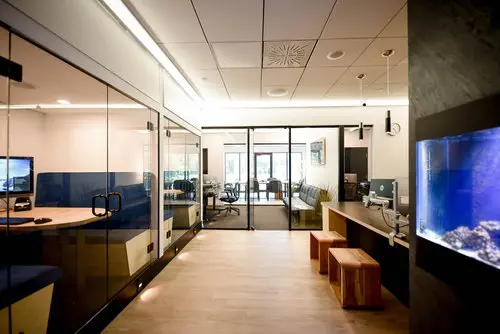
The correct comparison is total cost for the rights the project needs, over every period the contract makes payable. BDC recommends considering total occupancy cost, including incidentals, moving, renovations, downtime, and professional review when budgeting commercial space [30]. Coworking is not necessarily a commercial lease and often removes fit-out and utility burdens, but the total-cost discipline still applies.
Use this worksheet:
Total paid cost = recurring fees across billed periods + setup and activation charges + deposits that may remain at risk + room bookings + passes for overflow + equipment + transportation + insurance + taxes + paid notice periods + exit costs.
Refundable deposits are cash-flow requirements even if they are not ultimately expenses. Keep them in the funding plan and separately show the expected refund. Do not treat a setup fee as a deposit unless the agreement says it is refundable. Do not treat an onboarding charge as the last month’s rent unless the agreement explicitly applies it that way.
The following prices are invented solely to demonstrate the method. They do not describe 2727 Coworking or any other provider. Assume an illustrative operator charges $360 per month, a non-refundable $360 setup fee, and $60 for a day pass. All amounts are before tax. Assume each monthly scenario fits within the stated number of paid months and no other charges apply.
| Scenario | Monthly calculation | Day-pass calculation | Lower direct price under assumptions |
|---|---|---|---|
| One month, 20 attendance days | $360 + $360 setup = $720 | 20 × $60 = $1,200 | Monthly by $480 |
| Three months, 60 attendance days | 3 × $360 + $360 = $1,440 | 60 × $60 = $3,600 | Monthly by $2,160 |
| Three months, 12 attendance days | 3 × $360 + $360 = $1,440 | 12 × $60 = $720 | Passes by $720 |
The setup fee changes the break-even point. For one month, the monthly option costs the equivalent of 12 day passes: $720 divided by $60. For three months, it costs the equivalent of 24 day passes: $1,440 divided by $60. The project duration alone does not select the product. Twelve attendance days spread across three months remain cheaper on passes in this illustration, while 60 days strongly favour the monthly plan.
Now test sensitivity. If the one-month project slips into a second paid month, the monthly cost becomes $1,080. If notice causes one extra paid month after a three-month project, the monthly cost becomes $1,800. If a room is needed for four client sessions at an assumed $150 each, add $600 to either option unless one product includes those bookings. The purpose is not to predict a universal break-even. It is to expose which assumptions control the answer.
In Quebec, the standard rates are 5% GST and 9.975% QST, an arithmetic total of 14.975% when both apply to the pre-tax amount [7]. A $720 pre-tax amount becomes $827.82 after multiplying by 1.14975. A $1,440 pre-tax amount becomes $1,655.64. These are arithmetic examples. Actual tax treatment depends on the supply, the provider, and any applicable exemption or zero-rating.
Businesses claiming input tax credits or input tax refunds need adequate records. Revenu Québec explains that required invoice information scales with invoice value, including supplier registration numbers at $100 or more and additional buyer and payment information at $500 or more, using the total sale value including taxes [8]. Ask for invoices in the correct legal name and preserve the agreement, payment evidence, and tax numbers.
CRA states that a taxpayer can generally deduct a reasonable current expense incurred to earn business income, and its Form T2125 guidance includes a line for rent [6]. That does not make every coworking charge automatically deductible or determine its classification. Separate personal use, capital equipment, refundable deposits, and sales taxes. Consult an accountant for the organization’s actual treatment.
A temporary workspace can be attractive on a map and still fail during the season in which the team uses it. Evaluate the route for the actual dates and people, not an average summer day. The access plan should cover public transit, walking, cycling, driving, snow operations, mobility needs, and late or holiday schedules.
| Seasonal factor | What to verify | Why it changes the plan |
|---|---|---|
| Metro accessibility | Elevators at the stations each person will use, plus outage information | A nearby station is not automatically step-free |
| Fare zones | Departure, crossed, and arrival zones and permitted modes | A familiar fare may not cover a suburban trip |
| Winter parking | Temporary snow-removal signs and where a vehicle can move | A legal daytime space can become prohibited during operations |
| Cycling season | Whether the route is all-season or seasonal | A painted or mapped route may not be maintained in winter |
| Canal or park path | Maintenance dates and services | A year-round site does not mean a path is winter-maintained |
| Climate | Typical seasonal conditions plus the daily forecast | Normals help plan equipment, not predict a particular commute |
| Holidays | Public holiday and operator closure calendars | Access rights and transit service can differ |
The STM’s current elevator-access list covers 30 metro stations and does not list Charlevoix [13]. That supports a narrow conclusion: do not advertise Charlevoix as an elevator-equipped station based on the current list. It does not prove that a specific traveller cannot use the route, and elevator status can change. A person with mobility requirements should plan an accessible station and surface connection using current STM information.
Fare planning matters for workers arriving from outside the core. ARTM’s schedule effective July 1, 2026 states that a fare must be valid in the departure zone, every zone crossed, and the arrival zone, while also matching the modes used [14]. Use that source for the zone principle and the dated schedule, then recheck fares before the planned travel dates.
Drivers should build snow operations into the schedule. Montréal uses temporary signs to indicate no-parking periods during snow removal, and the city’s map helps users track operations and parking options [15]. A team that depends on street parking needs a backup lot, transit route, or remote-work rule for removal days.
Cycling requires route-specific checks. Montréal distinguishes an all-season network cleared of snow from a seasonal network open from April 1 to November 15 [16]. Parks Canada says the Lachine Canal path is maintained from April 15 to November 15 even though the historic site remains open year-round [17]. Therefore, “near the canal path” is not enough evidence for a winter cycling plan.
Environment and Climate Change Canada describes climate normals as summaries of average conditions [18]. Use them to choose broad seasonal controls such as coat storage, travel buffers, and remote fallbacks. Use forecasts and service alerts for specific days. Average conditions never guarantee a safe commute on a deadline day.
Quebec has eight statutory holidays under the general provincial framework [19]. That list does not prove that a coworking operator closes on every holiday or that federally regulated employees follow the same regime. Compare the employer calendar, operator calendar, and transit schedule explicitly.
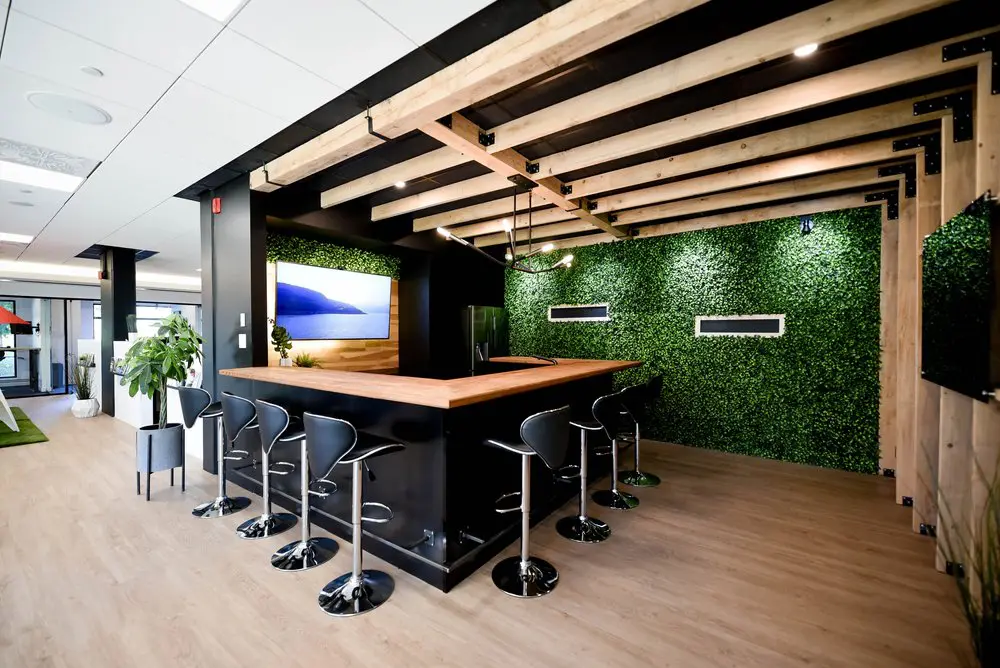
Moving work into coworking does not outsource the employer’s responsibility to plan safe, secure, and workable conditions. CNESST says telework risks must be included in prevention planning and describes responsibilities shared between employers and workers [29]. The exact legal obligations depend on the relationship and circumstances, but an employer should assess the real work rather than treating a membership receipt as a complete workplace policy.
Classify the work before choosing the space. Public information, routine internal work, personal information, privileged material, payment data, health information, and trade secrets require different controls. Map where people will view screens, hold calls, print, store paper, and leave devices. A quiet room can still leak sound. An enclosed office can still have an exposed glass wall or weak access control.
The Canadian Centre for Cyber Security recommends multi-factor authentication where possible and explains that a VPN can improve protection when using unsecured or public Wi-Fi [23]. Its baseline controls advise preferring corporate Wi-Fi or cellular connections, considering a VPN on public Wi-Fi, and keeping guest or public Wi-Fi separated from corporate networks [24]. A VPN does not cure every risk. Managed devices, encryption, patching, screen locking, strong authentication, safe printing, and incident procedures remain necessary.
Quebec private-sector organizations must assign privacy accountability. The Commission d’accès à l’information explains that the person exercising the highest authority is the privacy officer by default, though the role can be delegated in writing, and the officer’s title and contact details must be published on the enterprise’s website or, if it has none, made public by another appropriate means [22]. That responsibility does not move to the coworking operator merely because work happens on its premises.
The CAI also requires organizations to log all confidentiality incidents involving personal information, including those below the serious-risk threshold, and retain each incident’s register information for at least five years after becoming aware of it. Notice to the CAI and affected people is generally required when there is a risk of serious injury [21]. A seasonal plan needs an incident route that temporary staff understand: whom to call, how to secure a device or paper file, how to preserve facts, and who decides whether notification is required.
Temporary does not mean disposable. CCOHS gives 40 to 74 centimetres as a starting guideline for monitor viewing distance and emphasizes adjustment to the user and situation [25]. It also stresses that one chair does not fit everyone because fit depends on body dimensions, the workstation, and the tasks [26].
Before the peak, test chair adjustment, screen height, external keyboard and mouse needs, lighting, glare, and call duration. Decide whether equipment travels with the worker, stays at an assigned desk, or is supplied in a private office. A hot desk may be fine for short laptop sessions but unsuitable for a worker who needs two monitors, an adapted input device, or stable positioning every day. Record accommodation needs without disclosing more personal information than necessary.
Ask the operator what insurance the agreement requires and ask the organization’s broker what existing policies cover. Consider general liability, property, cyber coverage, professional liability, employer obligations, and equipment in transit. Do not assume the operator’s building insurance covers the member’s devices, records, visitors, or professional acts.
Visitors add access, safety, confidentiality, and capacity questions. Confirm whether guests may enter open coworking areas, whether meetings must occur in a reserved room or private office, who admits the guest, and who remains responsible. Include visitor names only where necessary and protect those records according to the organization’s privacy policy.
Workspace availability does not confer permission to work in Canada. IRCC explains that some narrow business-visitor activities can occur without a work permit, but duties and duration matter [27]. A visa or electronic travel authorization does not itself provide a right to work, and unauthorized work can carry serious consequences [28]. A visiting team should resolve immigration status separately before booking desks.
A desk or office can solve a place-to-work problem without solving a business-address or mail problem. Conversely, an organization may need address continuity after its seasonal workers leave. Treat physical attendance, legal registration, public address, mail handling, platform verification, and service of documents as separate requirements.
If the workspace address appears in the enterprise register, contracts, invoices, insurance, banking, tax accounts, payroll, websites, licences, or vendor records, create an address inventory before exit. Quebec’s Registraire guidance states that an address change generally requires a current updating declaration within 30 days [9]. Other records have their own rules and timelines.
Do not assume Canada Post forwarding will bridge every shared-address transition. Canada Post says it cannot forward mail received through a private mailbox company or mail addressed to customers using certain shared postal addresses [10]. Update senders directly, keep the old service long enough if the agreement permits, and assign someone to monitor the transition.
For a detailed exit workflow, use the guide to cancelling a coworking membership and changing a business address. For Quebec registration roles and terminology, use the guide to business addresses, head offices, and elected domiciles. This seasonal guide stays focused on workspace planning.
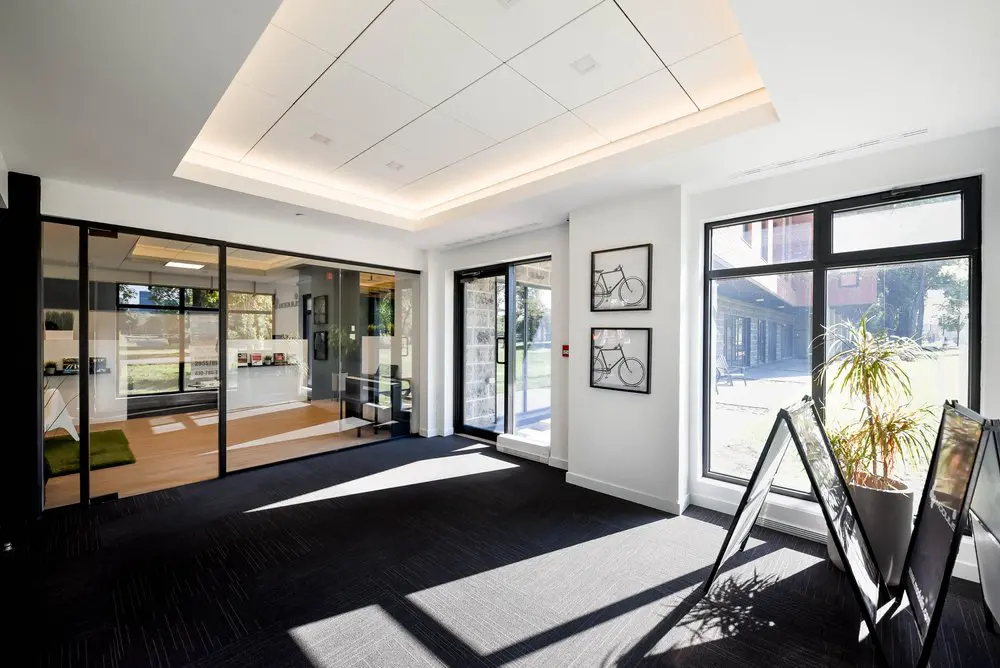
These examples are invented and do not describe actual prospects or 2727 customers. Their prices use the hypothetical $360 monthly plan, $360 setup fee, and $60 day pass introduced earlier, before tax.
Four named workers expect 60 attendance days each. At the illustrative rates, one monthly membership costs $1,440 across three months including setup, while 60 passes cost $3,600. For four people, the direct totals are $5,760 monthly versus $14,400 on passes. The monthly structure is much cheaper under these assumptions.
Price is not the only question. Four named open-desk memberships may still be inadequate if workers review personal financial records or hold client calls. The employer should assess whether the team needs a private office, booked rooms, privacy screens, managed connectivity, and secure paper procedures. It should also model a smaller tail after the main deadline rather than extending all four memberships automatically.
Six people support a twelve-week project, and each attends two days per month. The group therefore uses 36 person-days over three months, with no more than three people scheduled together. At $60, passes cost $2,160. Six monthly memberships would cost $8,640 including six setup fees. Even three monthly memberships would be invalid if the memberships are named and rotated among six people.
The workable design is 36 individual passes, or a provider product explicitly allowing a corporate pool. The employer should not infer pooling rights. If every person attends together for a kickoff and closeout, those dates need six valid admissions and enough room capacity.
The lead attends daily for three months and needs a monitor left in place. Four specialists each attend twice. One dedicated monthly desk for the lead plus eight passes for specialists may fit better than five monthly plans. The plan must still address confidential calls and where specialists sit. If the lead’s desk membership cannot be shared, specialists cannot use it when the lead works remotely.
Three visitors need ten consecutive weekdays. At the illustrative rate, each person’s ten passes cost $600, compared with $720 for one month including setup. Passes cost $120 less per person. If the monthly product includes rights the team needs, such as broader hours or a stable station, the extra $120 may still be worthwhile. If the visit spans a holiday or weekend, verify operating hours rather than counting calendar days as accessible workdays.
The employer must also confirm that each visitor is authorized to perform the intended work in Canada. Booking a coworking product does not answer that question [27] [28].
The need has no planned end, but attendance is low. Four passes a month cost $240 in the illustration, below the $360 recurring monthly price even after the setup fee has been amortized. This is not a seasonal requirement at all. It is a continuing low-frequency requirement. The consultant should compare pass availability, date-change rules, equipment, and rooms rather than buying a “temporary” monthly plan based on duration language.
Flexibility works when the organization assigns dates and owners. The following process is intentionally practical. Adapt it to the agreement and risk level.
For a private office, the short-term private office guide goes deeper on one-month and few-week stays. The coworking move-in cost guide provides a broader checklist for upfront charges. Use current operator terms if either guide conflicts with the proposed agreement.
During the first two weeks, compare scheduled and actual attendance. Track only what the business needs for capacity planning, and do so consistently with privacy duties. Record room conflicts, unavailable seats, call-space shortages, transit failures, access problems, and ergonomic adjustments. The goal is to identify whether the high case is arriving before a deadline makes change difficult.
Do not add memberships merely because the roster grew. Add rights when named users, attendance, concurrency, or task requirements justify them. Similarly, do not remove rights because average attendance is low if the peak still requires them.
Hold an extension review before the cancellation deadline. Ask whether deliverables moved, whether the tail needs daily or occasional access, whether the same people remain, and whether the address or equipment must stay. Reprice the new horizon rather than simply allowing renewal.
If the provider cannot guarantee the same capacity, request the extension early and retain a fallback. A team may keep one private office for records and leadership while moving occasional workers to passes. Any change must respect named-user and access rules.
Send notice by the method the contract requires and obtain acknowledgement. Remove access credentials on the correct date. Recover devices, fobs, keys, remotes, paper, signs, and stored property. Confirm the final invoice, tax documentation, deposit process, and any outstanding room or pass bookings. Do not cancel payment authority as a substitute for contractual notice [5].
Remove former users from internal systems and document any confidentiality incident. The CAI requires each incident’s register information to be retained for at least five years after the enterprise becomes aware of the incident [21]. Update public and legal addresses directly where applicable, since mail forwarding may not cover a private mailbox or shared business address [10].
Keep the planned and actual start, peak, finish, roster, attendance, room use, total cost, incidents, transport issues, and cancellation dates. Record what the organization would change. This is more useful than copying last year’s product because provider terms, team needs, transit conditions, and deadlines can change.
For the next cycle, verify official deadlines again, request current pricing, and re-check the agreement. Historical use supports a forecast but does not create availability or freeze terms.

A seasonal plan often stalls because finance, operations, managers, and workers compare different things. Finance sees the monthly rate. Operations sees the number of seats. A manager sees the delivery deadline. Workers see commute time, privacy, and whether their equipment fits. Put the decision on one page so every reviewer approves the same proposal.
The memo should name the work window, the roster, expected attendance, peak concurrency, selected product, access hours, room assumptions, equipment, privacy classification, commute fallback, full pre-tax cost, estimated taxes, cancellation deadline, and owner of the exit. Attach the operator quote and agreement rather than paraphrasing them. If the proposal depends on a right such as address use, 24/7 entry, guest access, or an included room, cite the clause or written confirmation.
Include rejected alternatives with one sentence each. A day-pass design might be rejected because the team attends above the calculated break-even and needs fixed monitors. A monthly hot-desk plan might be rejected because confidential calls require an enclosed room. A private office might be rejected because only two isolated attendance days are needed. This record prevents a later reviewer from replacing the choice with a cheaper headline product that does not carry the same rights.
Use a compact gate table:
| Gate | Evidence required | Stop condition |
|---|---|---|
| Duration | Start, finish, tail, notice deadline | End date or paid horizon is unknown |
| Capacity | Named roster and peak concurrency | Proposed memberships do not authorize all users |
| Workability | Hours, equipment, room and visitor plan | A required task has no suitable place |
| Security | Data class, network and physical controls | Confidential work lacks an approved control |
| Access | Seasonal route and accommodation check | A worker cannot reliably enter or use the site |
| Economics | Full invoice model with taxes and sensitivity | Setup, notice, or overflow cost is missing |
| Exit | Cancellation owner and address inventory | No one owns termination or record changes |
Approval should expire if a controlling fact changes. A different headcount, delayed finish, new category of personal information, office change, or provider-term revision triggers a fresh check. Small changes need not restart the whole procurement process, but they must update the parts of the decision they affect.
Maintain three columns throughout the project. The forecast is what the organization expects before signing. The commitment is what the contract makes payable even if plans change. Actual cost is what appears on invoices and related expense records. Confusing them creates bad lessons for the next season.
For example, a team can forecast three months at $360 per month plus a $360 setup fee, for $1,440 before tax. If it signs under a rule that requires another paid month unless notice is sent early, its commitment may be $1,800 once that deadline passes. If it also buys two $60 overflow passes, actual direct workspace cost becomes $1,920. The forecast was not dishonest. The plan failed to act on its cancellation gate.
The reverse can also happen. A team may budget a high case with one extension and ten overflow passes, then finish on time without using them. That does not mean the contingency was wasted. It means the organization understood the maximum exposure and avoided converting a possible cost into an unnecessary commitment.
Location, atmosphere, design, coffee, community, and brand can matter, but they should not compensate for a missing requirement. First remove options that fail access, identity, confidentiality, hours, capacity, or contract constraints. Then compare convenience and preference among the viable options.
This ordering is particularly useful for a short project because teams have little time to recover from a mismatch. A permanent office can improve a weak setup over months. A six-week team can lose a large share of its productive window while waiting for monitors, negotiating room access, or moving after discovering that evening work is excluded.
Send every shortlisted operator the same dated request. State the number of named users, expected attendance days, maximum simultaneous attendance, preferred start and finish, possible extension, required access hours, private-call demand, room dates, visitor needs, equipment, address use, and insurance constraints. Ask the operator to separate recurring charges, setup fees, refundable deposits, passes, rooms, taxes, and optional services. Request the quote’s expiry date and the agreement that would govern the purchase.
This prevents a false comparison in which one operator quotes an open hot desk, another quotes a dedicated station, and a third quotes an enclosed office. It also reveals assumptions early. An operator may quote four seats while believing they will serve four named people, while the buyer expects eight people to rotate. A buyer may request “three months” while expecting access for eleven weeks, while the operator bills four calendar periods. Write the schedule and identity model explicitly.
When the response arrives, classify each statement as a price, a contractual right, a current inventory fact, or an informal explanation. A quote can establish a price for a defined period without reserving the inventory. A salesperson’s explanation can clarify intent without changing a written contract. Ask for inconsistencies to be resolved in the final agreement or an incorporated written addendum.
Build a variance log during the term. Record only material differences between the approved baseline and reality: additional users, added days, room shortages, after-hours work, equipment changes, incidents, extension risk, and address use. Assign each variance an owner and a date by which it must be resolved. This keeps a seasonal workspace from expanding through a series of small, unpriced decisions.
At closeout, compare the final invoices and service received with the approved memo. Note why forecast and actual cost differed, whether controls worked, and whether any provider statement proved unclear. Keep this debrief factual. A lower-than-expected cost does not prove the original capacity plan was excessive if the unused amount was a deliberate contingency. A smooth season does not prove privacy or safety controls were unnecessary. The next plan should preserve controls that prevented problems and revise assumptions that evidence disproved.
For a broader product comparison, see day passes versus monthly memberships. For a full set of operator questions, use the Montreal office and coworking rental FAQ. Those guides support the decision, while the seasonal calendar and peak-capacity method here determine how their answers apply to a temporary cycle.
As of October 2026, 2727 Coworking offers month-to-month hot desks and private offices with no commitment and cancellation anytime, and dedicated desks with a 3-month minimum. Online checkout for a month-to-month private office adds a setup fee equal to one monthly charge (hot desks and dedicated desks have none). A one-month or few-week private-office stay is permitted, but the setup fee means one month costs two monthly charges before taxes. Memberships are for one person and cannot be shared. There is no part-time plan, pass pack, or free trial. A $55 day pass is credited toward a monthly plan signed within 14 days.
As of October 2026, prices in CAD start from $55 per weekday day pass before taxes, from $350 per month for a hot desk before taxes, and from $400 per month for a dedicated desk before taxes. Private-office prices and inventory vary, so check live booking and availability for the current offer. Day passes and hot desks operate Monday to Friday from 8:00 to 18:00 and are closed on weekends and holidays. Dedicated desks and private offices have 24/7 access.
Office and desk members can book the conference room free, subject to booking availability. Private offices include furniture, Wi-Fi, coffee, cleaning, printer access, phone booths, and use of the address with mail reception. Office tenants must carry at least $1,000,000 in civil liability insurance. A $75 key-fob deposit may apply. Desk plan changes take effect at the next billing date without a fee. A move to a larger private office can take effect at any time without penalty, subject to space availability, with the new rate starting on the move date. Offices are not held: the first signed agreement gets the office, otherwise use the waitlist. Tours are available Monday to Friday from 8:00 to 11:30, with weekday afternoons by arrangement. Weekend tours and walk-ins are not offered.

The answers below are provider-neutral. For 2727’s verified product terms, refer to the short section above and confirm the current offer on the booking page.
A seasonal need repeats around a known cycle, such as a filing period or annual production peak. A temporary need has a defined end but may occur only once, such as a renovation or project. The same day pass, desk, or office products can serve either. A recurring season benefits from preserving last cycle’s actual attendance and cost data, while a one-time project relies more heavily on scenario planning.
No. Temporary describes how long the arrangement lasts. Part-time describes how often someone attends. A worker can attend five days a week for one temporary month, or one day a week indefinitely. Calculate duration and attendance separately.
Some operators permit it and others set a longer minimum. Ask about setup fees, billing anchors, notice, and proration. A one-month stay with a setup fee equal to one month can cost two monthly charges before tax. Confirm inventory for the exact dates because permission to book a short term does not establish availability.
Compare the total number of attendance days with the full monthly cost, including setup fees. In the hypothetical example in this guide, 12 days across three months cost $720 on passes versus $1,440 on a monthly plan. Also compare sellout risk, hours, equipment, and room needs. Ask whether the operator offers a legitimate pass pack or corporate pool before assuming memberships can rotate.
Divide the full monthly cost for the planned horizon by the day-pass price. Include setup fees and any paid notice period. In the hypothetical one-month case, $720 divided by $60 equals 12 attendance days. That threshold belongs only to the invented example. Use the operator’s actual prices and rules.
Not necessarily. “Month-to-month” may describe recurring billing while the agreement still sets an initial minimum or notice period. Read the signed terms for the initial commitment, renewal, notice, and effective cancellation date.
It varies by agreement. Put the notice deadline on the project calendar before signing and confirm the permitted delivery method. Obtain acknowledgement from the operator. Absence does not replace notice.
Ask about setup and activation fees, deposits, access credentials, remote controls, the first recurring charge, advance rent, equipment, insurance, room bookings, taxes, and the conditions for refunds. Request a sample first invoice. Separate refundable deposits from non-refundable fees.
Only if the agreement explicitly says so. A setup fee usually pays for onboarding and may be non-refundable. A prepaid last month is applied to a future billing period. Never infer one from the other, and show them as separate rows in the budget.
Operators use different billing anchors. Ask whether billing runs from the activation date, the first of the month, or another cycle, and whether partial periods are prorated. Do not assume proration. Preserve the written start date and first invoice.
Hours usually follow the product, not the planned duration. Verify weekdays, evenings, weekends, holidays, building access, and whether a date-specific booking can be changed. Do not extend the hours of one product to another product at the same location.
Ask for a tour during the same time and season in which the team will work. Test noise, calls, lighting, chairs, monitor position, route accessibility, and visitor entry. Confirm whether tours require appointments and whether the tour schedule differs from member access hours.
Check once dates, peak concurrency, and product needs are credible, then confirm again before signing. Availability is inventory-specific and can change. If the exact office or desk count is essential, identify a fallback. No guide can promise that space will be available later.
Some may, but a hold exists only if confirmed in writing with its expiry, conditions, and any charge. A tour, quote, application, or verbal discussion does not by itself reserve inventory. Ask about the waitlist and maintain a fallback until the agreement is signed.
Do not assume so. Many plans are assigned to one named person even when the desk is physically empty. Another worker then needs a pass or separate plan. Build the budget from authorized users, not average occupied seats, and never share credentials.
Guest rules vary by product and area. Verify where visitors may go, who admits them, whether a room is required, and who remains responsible. Do not count a guest as a free overflow worker unless the agreement expressly permits work access.
Ask how additions start, whether they create new setup fees, and whether the same room or area is available. An operator can add only inventory it actually has. Keep a pass or remote-work fallback for an unexpected peak. Do not share named credentials while waiting.
Review the extension before the cancellation deadline. Confirm capacity, new end date, notice, named users, price, and any address or equipment continuity. Do not assume the existing space will remain available after a scheduled end. Reprice the full extended horizon.
Send valid notice immediately and calculate the remaining contractual cost. Stopping attendance or payment is not cancellation. If the arrangement is legally a service contract, Quebec Civil Code rules may be relevant, but termination can still leave actual expenses and other amounts payable [3] [4]. Have counsel assess any contractual waiver of the termination right [31], particularly for a material dispute.
Ask when a switch takes effect, whether fees apply, whether a new setup charge arises, and whether inventory is available. A contractual right to request a change does not guarantee the desired product will be open.
It depends on the product and booking rules. Ask whether use is included, limited by credits, or charged, and reserve peak meetings separately. Do not infer that a day pass, desk, and office include the same room rights.
Confirm accepted methods, invoice timing, and recurring authorization before signing. Keep payment administration separate from contract administration. Cancelling a PAD does not cancel the contract [5].
Only if the provider permits that use and the address suits the organization’s legal and operational needs. Plan what happens after the short term. If the address changes, update the Registraire and every other relevant record directly. Do not rely on forwarding from a shared business address [9] [10].
Verify storage and assigned-space rights. A hot desk usually needs to be cleared after use, while a dedicated desk or private office may better support stable equipment. Ask whether a monitor is guaranteed, whether personal equipment may remain, and what happens to property left after exit.
The agreement and the organization’s risk determine the answer. Ask the operator and the organization’s broker about liability, property, cyber, professional, and employee coverage. Obtain any required certificate before the start date.
When standard Quebec taxes apply, calculate 5% GST and 9.975% QST on the pre-tax amount, for an arithmetic total of 14.975% [7]. Ask whether displayed prices include taxes and obtain a compliant invoice.
Only after assessing the task and applying appropriate controls. Use a reserved enclosed room when acoustic or visual privacy matters, secure screens and paper, lock devices, use multi-factor authentication, and follow the organization’s network rules. A VPN can improve protection on public or unsecured Wi-Fi but does not replace the rest of the security program [23].
No general right to work follows from a desk booking, eTA, or visitor visa. Some narrow business-visitor activities may be permit-exempt, while many work activities require authorization. Check the actual duties and duration with IRCC guidance or qualified immigration counsel before travel [27] [28].
Check the actual route, dates, mobility needs, fare zones, snow-removal restrictions, and whether cycling paths are maintained in that season. Do not treat a year-round destination as proof that every approach is winter-maintained. Build a remote or alternate-route fallback for deadline days [13] [15] [17].
A temporary workspace succeeds when its contract, capacity, and controls end at the same time as the real need. Define the work window first, then model attendance, named users, peak concurrency, privacy, equipment, transport, and the extended tail. Compare complete rights and total paid cost rather than monthly labels.
The most valuable planning habit is to schedule the exit before entry. Put the notice deadline, extension review, access removal, equipment return, final invoice, and address transition on the calendar at signing. After the cycle, preserve actual attendance and cost data, then verify every deadline and provider term again before the next season.