What to Actually Check When Touring a Coworking Space in Montreal (Griffintown Edition)
Most coworking touring checklists are generic — they'd read the same in Austin or Toronto. This one isn't. It's built for Montreal's specific office market right now, sized to your team (1–2, 3–5, or 6–10 people), and grounded in what Griffintown itself is actually like to reach, walk, and work in through a full year, winter included.
Why a Generic Touring Checklist Doesn't Work in Montreal Right Now
Touring a coworking space here isn't happening in a neutral market. Two things are true at once, and both change what you should be checking for.
The supply split you're touring into
Greater Montréal's office vacancy sat around 17.2% as of Q1 2026, with net absorption of -174,069 sq ft — but that headline number hides a split. Class B space is being handed back at scale while Class AAA and Class A stock stays resilient and tight. [1] CBRE Canada's own tracking puts downtown vacancy around 17.8% through 2025, with over a million square feet of older stock pulled off-market for conversion in early 2026. [2] What that means for you touring a space today: "available" and "good" are no longer the same word in this market. A vacant Class B sublease and a well-run coworking floor are not competing on the same tier, even if they're priced close.
Why return-to-office makes this time-sensitive for some buyers
Return-to-office mandates accelerated through 2025–2026 across public and private employers in Canada, which is producing real, if uncalendared, demand pressure on office space generally. [3][4] If you're touring because your team just got called back in, you're not alone, and it's worth knowing you're touring into a market where the good stock goes first.
None of this tells you which space to pick. It tells you why the questions below are worth asking properly instead of taking the brochure at face value — the margin for a bad decision is narrower right now than "just try it for a few months" implies.
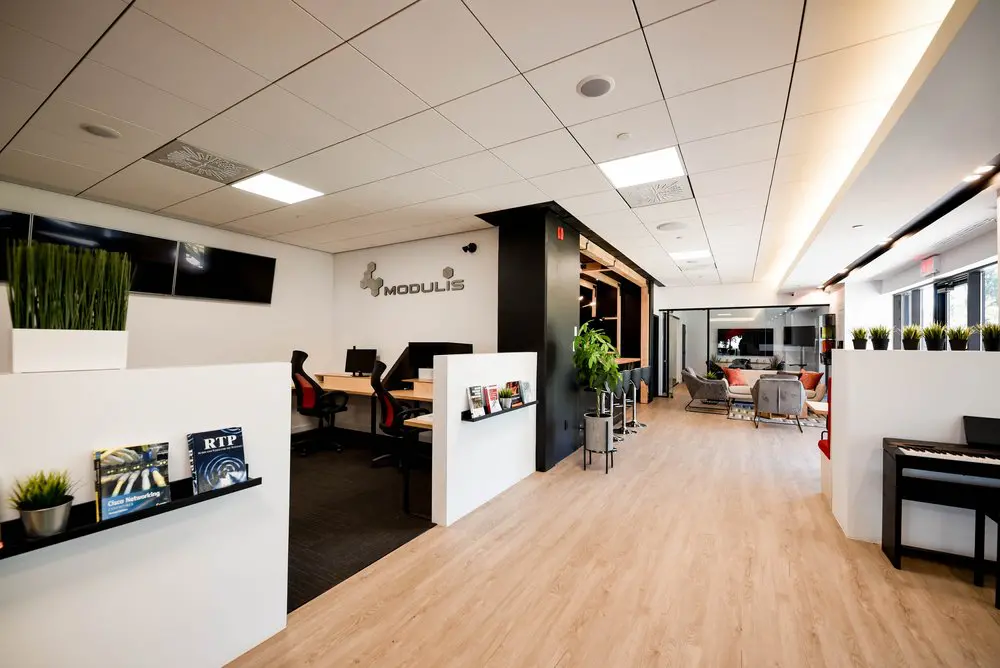
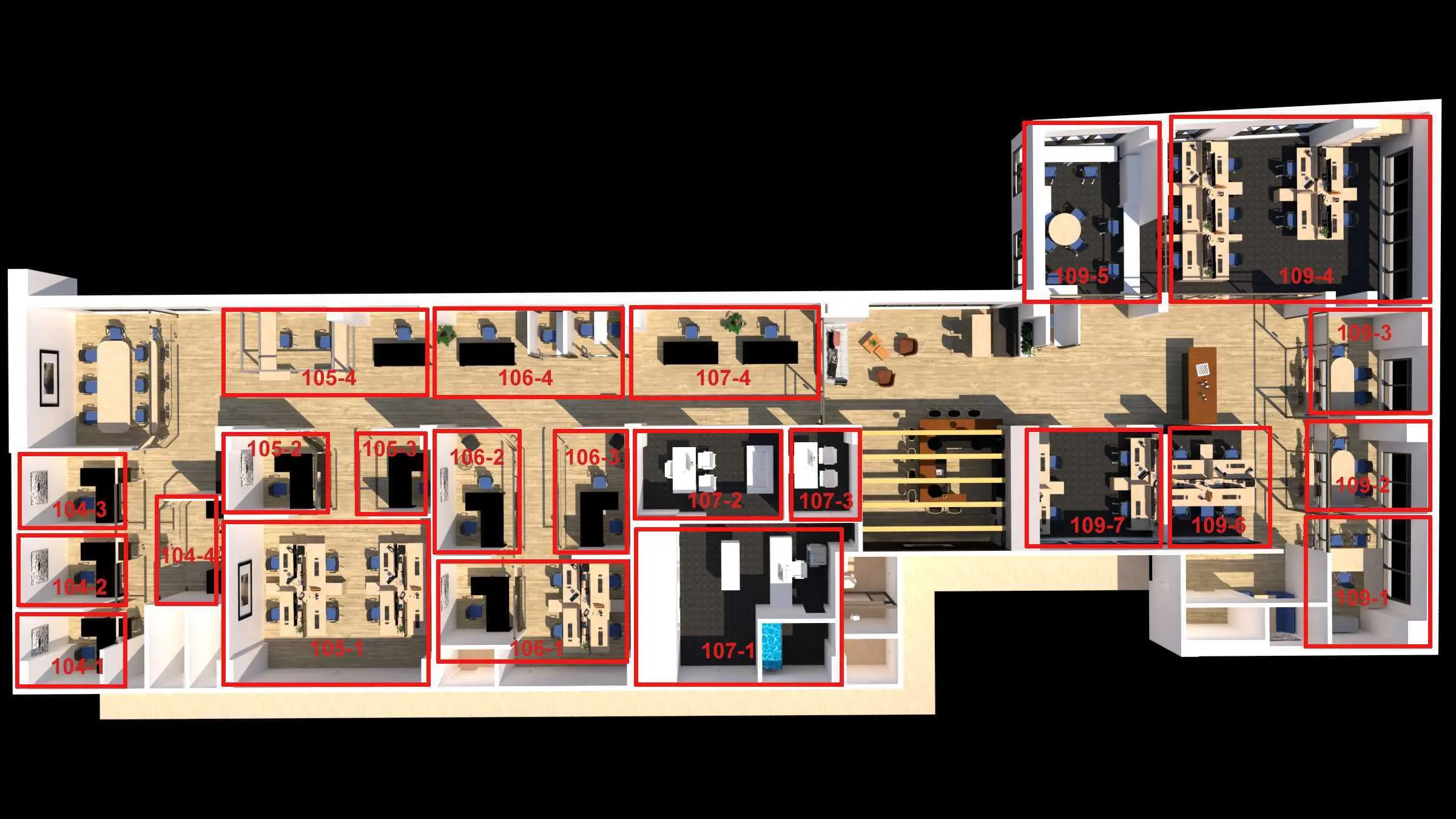
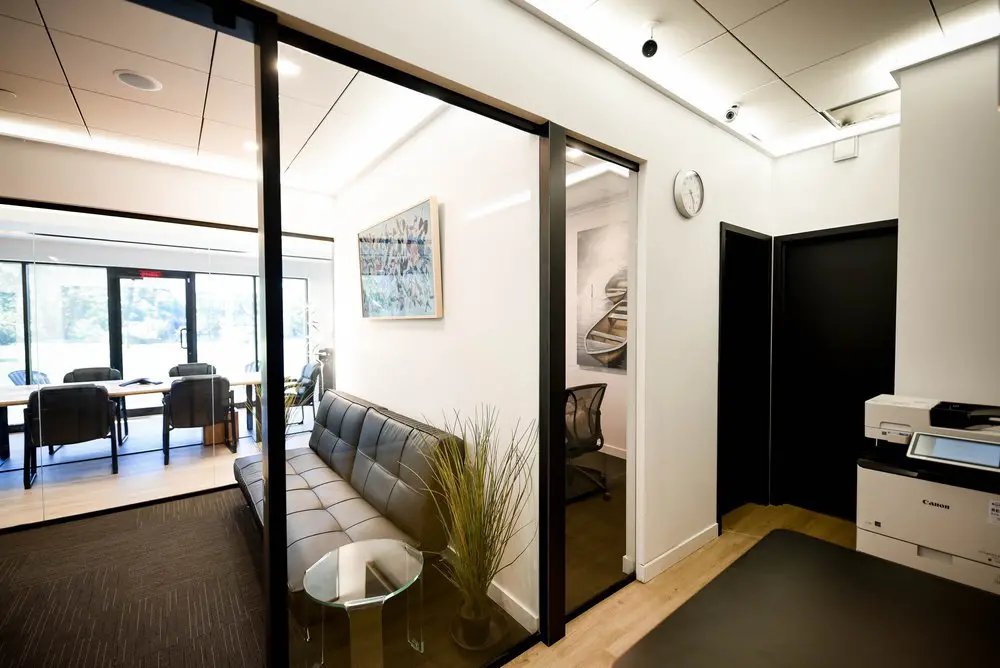
2727 Coworking space, 2727 Saint-Patrick, Montreal
Tour This Checklist by Your Team Size, Not a One-Size List
A solo founder and a ten-person team touring the same floor are evaluating almost entirely different things. 2727 structures its own private-office product this way — Solo & Duo (1–2 people), Small Team (3–5), and Growing Team (6–10) — because what matters genuinely changes at each size, not because it's a marketing segmentation exercise. The sections below follow that same split. Find your tier, but skim the others too — you may be touring for where you'll be in a year, not just where you are today.
Before You Even Book the Tour
The tour itself isn't actually the first step — general buyer-behavior guidance in the coworking industry describes a short, compressed research motion before anyone walks through a door: check the space's Google Business Profile rating and review volume, skim a few recent reviews for anything that reads as a recurring complaint rather than a one-off, and if you know anyone who already works out of a coworking space, ask them directly rather than relying only on the operator's own marketing. [29] This guidance is written from the POV of a provider, but for people looking for the service, the underlying buyer pattern it assumes is the useful part: review volume and rating are treated as the primary trust signal before a prospect ever books a visit, which means they're worth checking before you book yours.
Two practical filters worth applying before you shortlist a space at all: does the review volume look organic (a steady trickle over years reads differently than a cluster of five-star reviews all posted the same month), and do the negative reviews, if any, cluster around something fixable (slow Wi-Fi on a specific day) or something structural (the building itself, the noise, the management). The second category is the one worth weighting more heavily — a bad month is recoverable, a bad building generally isn't. [5]
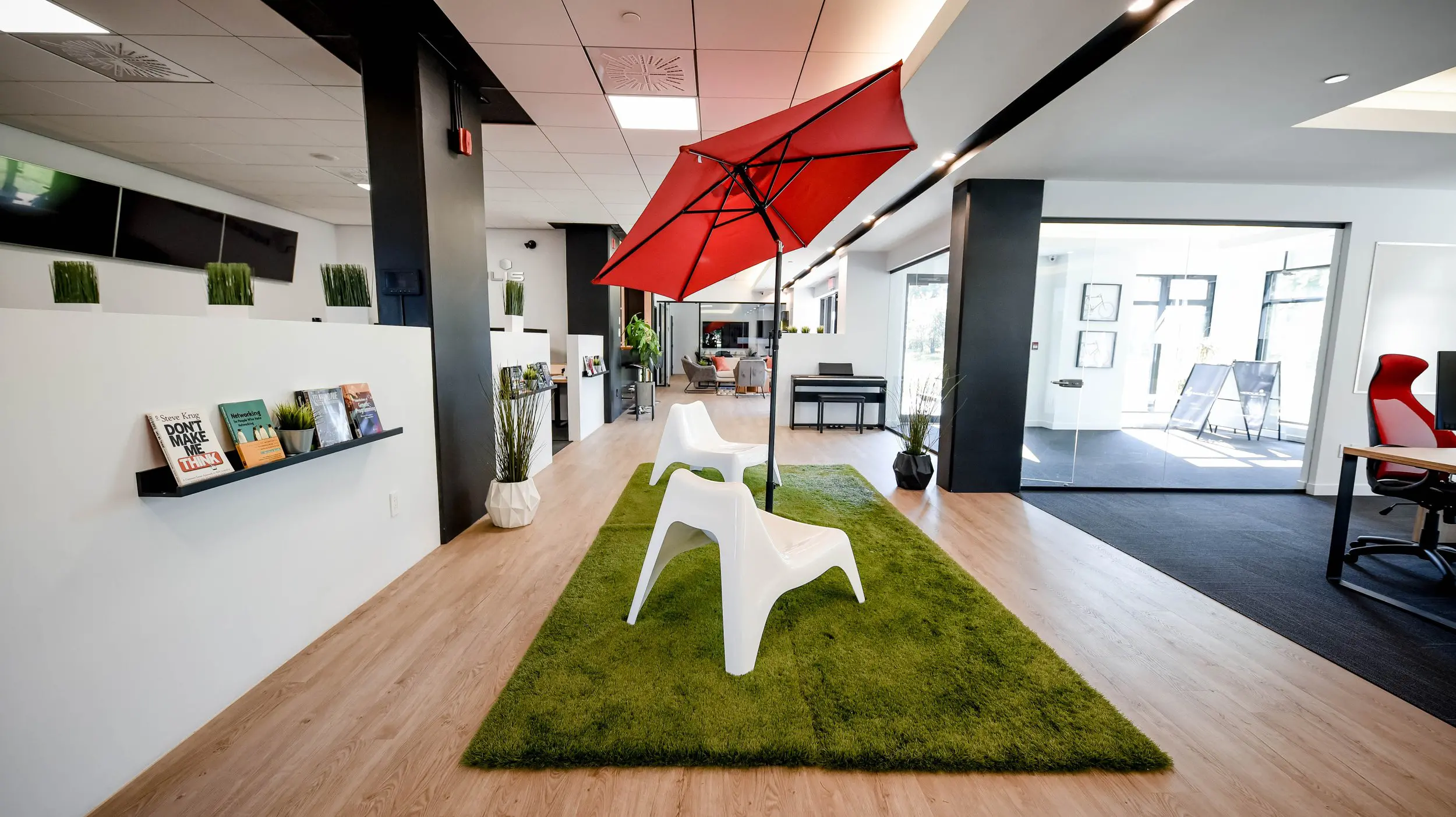
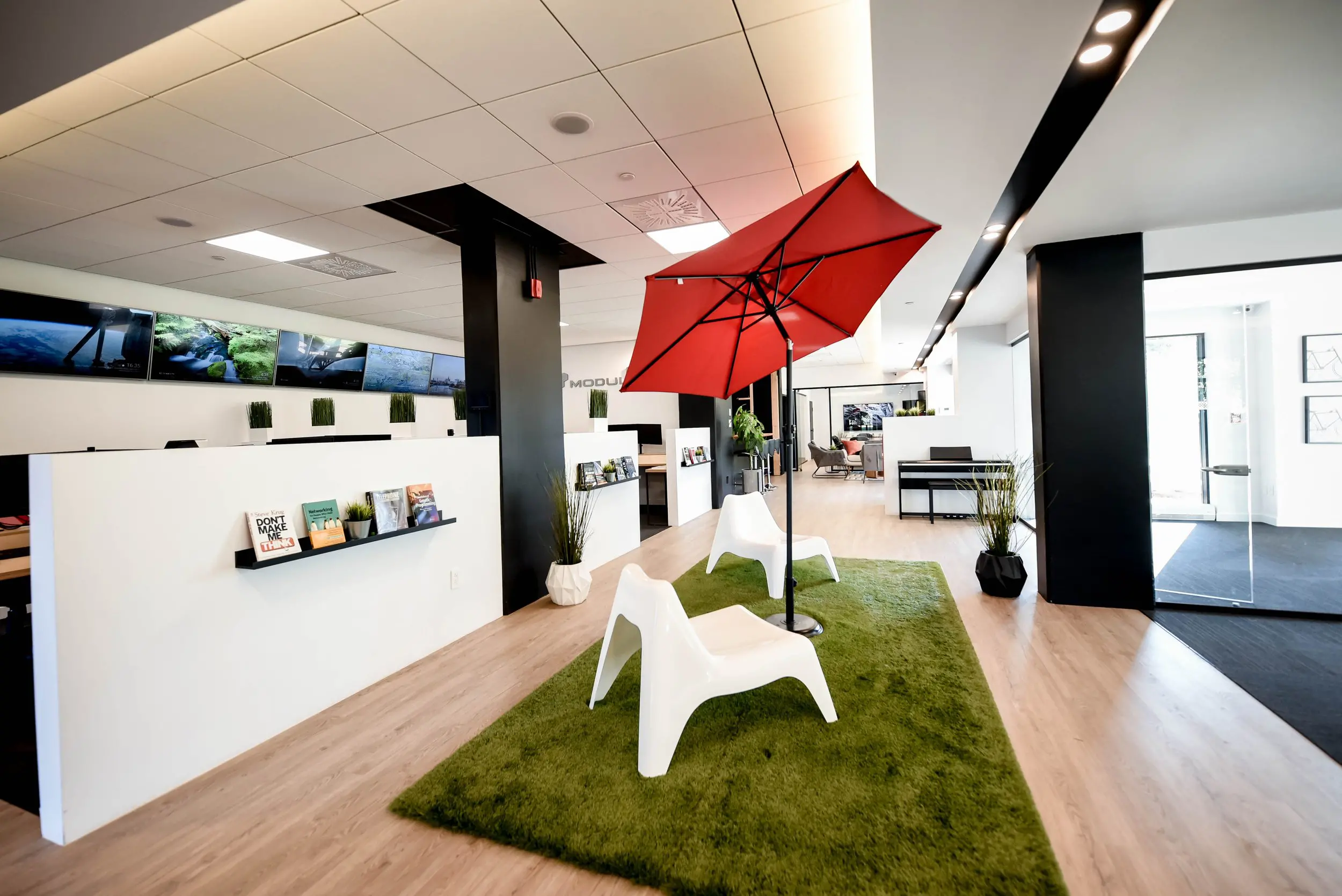
2727 Coworking space, 2727 Saint-Patrick, Montreal
Touring Solo (1–2 People): What Actually Matters When There's No One Else to Ask
Quiet and focus space — test it, don't take their word for it
"Quiet zone" on a floor plan means nothing until you've stood in it. The most useful single tactic from general coworking-touring guidance: if there's a phone booth, actually make a call from inside it during the tour, at whatever the room's ambient noise level normally is — don't just glance in. [5] A quiet zone is only real if it holds up when the rest of the floor is busy, not when it's empty during your 10am tour slot.
Business-address legitimacy — what to ask before you commit
If you're solo, the address itself may be doing more work for you than the desk is — it's often the only professional address you have. Confirm directly whether the space's address can be used as your registered business address, not just a mailing address, and what documentation they provide for that. If you only need the address and not daily desk access, it's worth comparing a dedicated virtual-office product against a full membership before you tour further — see our virtual office guide for that distinction, and registering a coworking address as your legal business address if that's the specific question you're trying to answer.
Month-to-month flexibility as the actual product you're buying
For a solo operator, the real product isn't the desk — it's the option to leave without penalty if your situation changes. The contrast is worth spelling out in real terms: a traditional commercial lease typically runs a 7–10 year minimum term with upfront capital equivalent to roughly six months' rent, while flexible/coworking space typically asks for around two months' minimum commitment and one month upfront. [31] That gap is the actual product a solo operator is buying when they choose coworking over a lease — not the desk itself, but the option to walk away without a multi-year capital commitment behind you. Ask for the actual notice period in writing during the tour, not after you've signed; see our breakdown of notice periods before you commit to anything. If you're not even sure you want a monthly membership yet, day passes vs. monthly membership is worth reading first.
The hidden-fees question
"Everything included" is the headline pitch of most flexible workspace, but it's worth testing rather than assuming. General industry guidance on common coworking complaints flags "flexible" plans that quietly require a 12-month commitment despite the marketing, and extra charges for everyday essentials like mail handling or printing that aren't obvious until you're already a member. [30] Before you sign anything, get a plain answer to what's actually bundled into the monthly rate — furniture, internet, utilities, and 24/7 access are the four items most often assumed rather than confirmed — and ask specifically what triggers an extra charge. An operator who can answer this without hesitation is telling you something about how they run the place; one who has to check is telling you something too.
A related set of contract questions worth asking before you sign, not after: what the minimum term and notice period actually are in writing, whether downsizing is treated the same as upsizing (it's often stricter), whether you can change product type later — hot desk to dedicated desk to private office — without starting a new contract, whether pricing can change at renewal, and whether there are one-time fees on top of the recurring rate: setup, deposit, or onboarding charges that don't show up in the advertised monthly figure. [38]
Touring for a Small Team (3–5 People): What Changes When Others Have to Live There Too
Informal input, not a committee
At this size there's usually no formal sign-off chain — no IT, legal, or facilities layer weighing in. But that doesn't mean you should tour alone. Bring whoever will actually share the space, even informally, and ask them what they notice that you don't. Comfort and commute complaints surface after move-in far more than before it, and a five-minute walkthrough with your actual teammates catches most of that early.
Peak-time desk and meeting-room availability — the question most people forget to ask
Ask specifically what the space looks like at its busiest hour, not its quietest. Industry data on coworking meeting-room usage backs this up directly: time slots in the 2–5pm range are, in most spaces, fully booked, since that's when the bulk of internal and client meetings happen. [6] A space that looks spacious on a Tuesday morning tour can be fully booked out by Thursday afternoon. One independently reported figure worth carrying into the tour: roughly one-third of coworking members report dissatisfaction with desk or meeting-room availability specifically during rush hours. [30] Ask how meeting rooms are actually booked day to day — see our meeting room rental guide — and what the shared-space booking norms are if multiple teams compete for the same rooms, covered in our booking etiquette guide.
Ask about the internet, not just the Wi-Fi password
A team of three to five people depends on shared infrastructure in a way a solo operator doesn't feel as acutely — if the connection drops during a client call, it's not just your afternoon that's disrupted. Reliable internet is reported as close to the top of the list of recurring coworking complaints: nearly half of coworking users report recurring internet issues, and more than a quarter say they've cancelled a membership over poor infrastructure specifically. [30] On the tour, don't just ask if there's Wi-Fi — ask what the actual speed is, whether there's a wired option for anyone who needs it, and what redundancy exists if the primary connection goes down. "We have Wi-Fi" and "we have Wi-Fi that holds up during a nine-person team's normal workday" are different claims.
Is there actually a community here, or just desks?
Noise is the single most commonly reported coworking complaint, and it isn't just an annoyance — general industry research places its productivity cost as high as a 66% reduction in output when it's a persistent problem, not an occasional one. [30] The flip side of noise, for a small team specifically, is isolation: a space that markets itself on "community" but doesn't actively build one — no onboarding for new members, no organized events, cliques that are hard for newcomers to break into — tends to leave members working alongside strangers rather than with a community at all. [30] For a 3–5 person team specifically, this matters more than it does for a solo operator, because the team is choosing to leave a quieter home-office setup for a shared one — ask what community-building actually looks like day to day, not just what's advertised, and notice whether the person giving you the tour can name specific things rather than gesturing at the lounge.
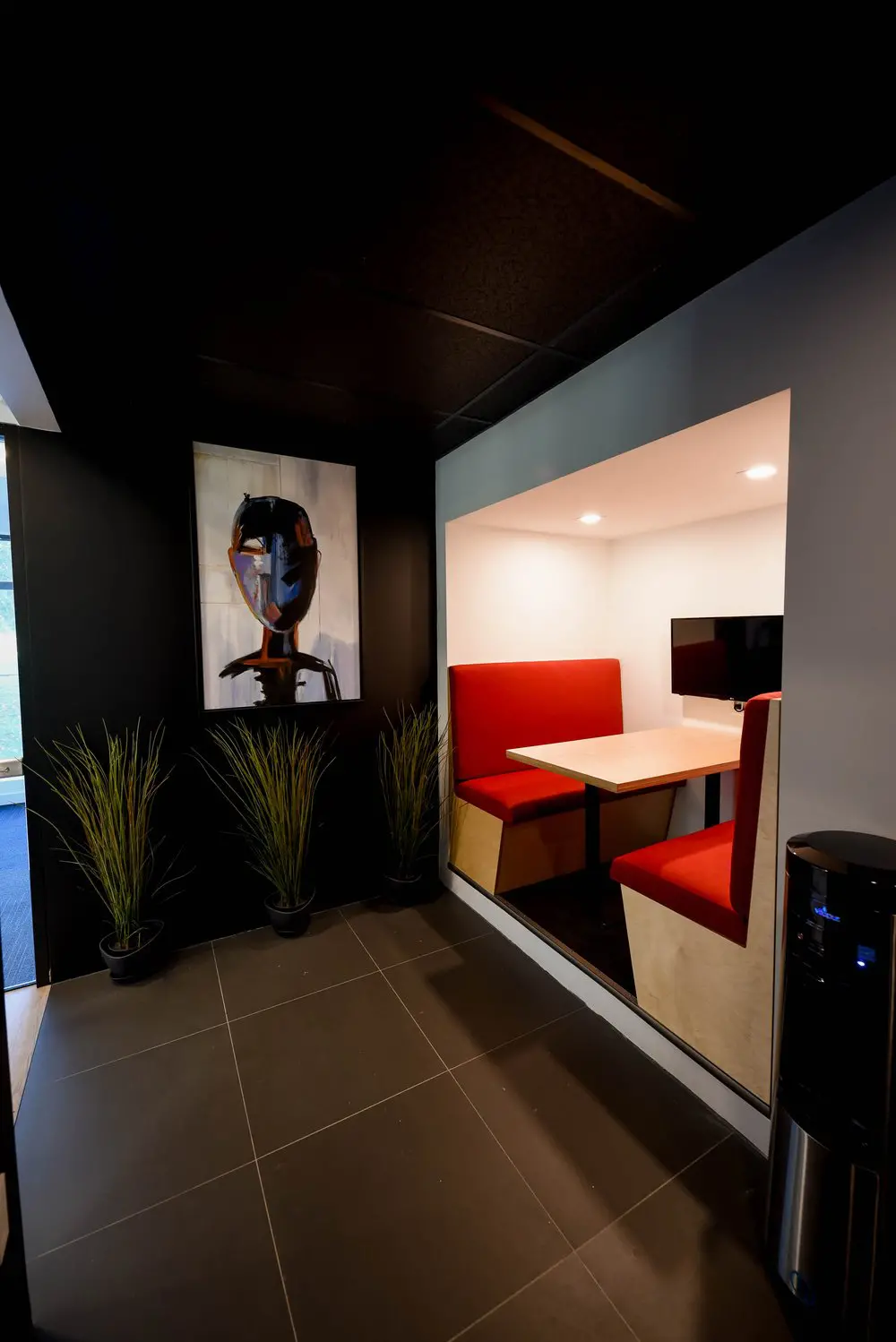
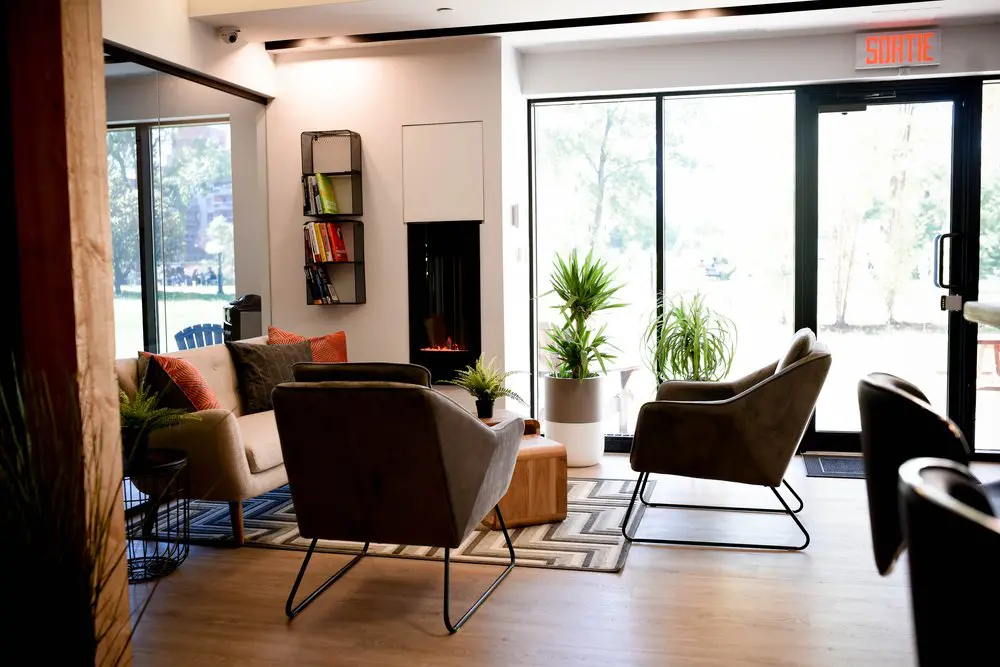
2727 Coworking space, 2727 Saint-Patrick, Montreal
Touring for a Growing Team (6–10 People): Ask About Runway, Not Just Room
The headcount-buffer question
General startup office-space guidance recommends planning for 15–20% headcount buffer beyond your current count, and explicitly flags locking into a long commitment during a growth or funding-uncertain phase as a common and avoidable mistake. [7] This is general industry guidance, not Montreal-specific, but the logic holds regardless of market: don't tour for exactly where you are today.
Can the space grow with you, or will you re-tour again in six months?
Ask directly what happens if you outgrow your current tier — is there a next tier available on-site, or does growth mean starting a new search? See our planning guide for teams that outgrow their current space, and if your team is more likely to split across locations than grow in one, hub-and-spoke coworking is worth a look before you commit to a single Griffintown floor.
Shared infrastructure gets less forgiving at this size, not more
Everything flagged for the 3–5 person tier above — internet reliability, peak-time meeting room access, actual (not advertised) community — compounds rather than resolves as headcount grows toward ten. A dropped connection or a fully-booked meeting room affects more people at once, and a team this size is more likely to be running simultaneous client calls that all depend on the same shared bandwidth. Ask specifically whether the building's infrastructure was sized for the current tenant mix or for a smaller one that's since grown — an operator who's thought about this will have a direct answer, not a reassurance.
Griffintown's Micro-Geography (Don't Tour It Like One Neighborhood)
Griffintown isn't uniform, and where exactly a space sits inside it changes the experience meaningfully.
Peel / Wellington is the edge most connected to downtown and major transit infrastructure — the corridor most people mean when they say Griffintown is "close to downtown." Ottawa / William / Young has seen the newest pedestrian and cycling investment: the City describes Ottawa Street specifically as an active-mobility corridor and has added a raised cycle track and widened sidewalks there. [14]Canal / Bassin is the neighborhood's best asset in warm weather and its most exposed edge in winter — the same open waterfront geography cuts both ways, a duality worth understanding before you assume "canal-facing" is unambiguously a good thing to look for on a tour in January. Notre-Dame is the commercial and food-forward strip, most useful for the "can I actually get lunch on foot" test below.
Knowing which micro-zone a space sits in tells you more about daily life there than "Griffintown" as a single label ever will.
2727 Coworking space, 2727 Saint-Patrick, Montreal
The Griffintown Transit Question (And Why the Answer Is More Complicated Than It Looks)
What's actually running today
Griffintown is served by STM's local bus network, including route 35 (Griffintown) along with 57 (Charlevoix), 61 (Wellington), and 74 (Bridge) running through or near the area. [8] The neighborhood also sits on Montréal's Express Bike Network, with the Peel corridor connecting the canal, ÉTS, the Bell Centre area, and downtown transit infrastructure directly. [9] BIXI has dedicated bike-rental infrastructure in the neighborhood as well. [10]
Walkable locally and transit-accessible are not the same claim, though, and it's worth being precise about which one you're actually getting. The nearest metro stations to most of Griffintown are Lionel-Groulx and Bonaventure — both a walk away, not inside the neighborhood — and residents discussing the area describe it as "slightly less metro accessible" than some older central neighborhoods, even while praising its cycling connections. [13] That's one resident's framing, not a verified metric, but it matches the structural fact that the metro genuinely isn't inside the neighborhood. If your team relies on the metro daily, walk the actual distance from Lionel-Groulx or Bonaventure to the specific building you're touring — don't estimate it from a map.
The REM station is not open yet
Some existing Montreal coworking content, including our own, has described the Griffintown–Bernard-Landry REM station as opened or opening in September 2025. That's no longer accurate as of this writing. The station's opening was delayed from its original 2024 target after the City requested an additional station in the nearby Bridge-Bonaventure sector in 2023, and CDPQ Infra is now targeting 2030 for both new stations, with no firm opening date announced. [11][12] Worth knowing plainly before you factor a not-yet-open station into a leasing decision: it isn't a near-term commute solution, however the design renderings look.
If you're driving: parking is the variable most checklists skip
Coworking-touring guidance generally treats "what parking options exist and what do they cost" as a standard commute question, right alongside transit access — not an afterthought for people who happen to drive. [38] Griffintown specifically makes this worth asking about directly rather than assuming: on-street metered parking along corridors like Peel and Ottawa runs roughly $3–5 CAD/hour, meters generally operate 9am–9pm Monday through Saturday, and much of the surrounding residential grid is permit-only for non-residents on weekdays — a real risk for a multi-hour tour or a regular commute if you park on the wrong block. [36] Monthly private-lot parking in the neighbourhood is reported to start around $200/month, which works out cheaper per day than daily street parking once you're using it regularly. [36] Treat these as a starting point rather than gospel — rates, time limits, and enforcement change often and vary block to block, so it's worth a quick check of the posted signage or a direct question to the building rather than budgeting off a number you picked up secondhand. On the tour itself, ask plainly whether the building has any dedicated or validated parking, since Griffintown's mixed street/permit/lot patchwork means "there's parking nearby" and "there's parking you can actually use on a Tuesday morning" are not the same claim.
Winter Is a Touring Variable Most Checklists Ignore
Montreal receives roughly 190cm of snow in an average winter, and the City's own standard is to plow once 2.5cm accumulates and run full loading operations at 10–15cm — a real, resourced operation, not a reactive one. [15] Some downtown buildings go further still: Place Ville Marie's snow-and-ice-melt system runs nearly 50 miles of heated tubing under its plazas specifically to keep pedestrian surfaces clear without plowing. [16] That's a useful benchmark for what a genuinely winter-serious downtown building can do — it isn't a claim about any specific Griffintown building's own system, and it's worth asking directly rather than assuming.
For Griffintown specifically, the honest read is narrower than a blanket "the sidewalks are impossible" complaint would suggest. One Griffintown-specific discussion describes leftover salt, gravel, and cleanup delays, with one commenter attributing part of it to the area sitting across two boroughs' service boundaries — a plausible explanation, not a confirmed one. [17] A separate discussion among cyclists noted that canal-path snow clearing varies by section rather than being uniformly good or bad along its length. [18] Neither of these amounts to strong, independent evidence that Griffintown's winter commute is uniquely bad — and it would be dishonest to claim that. What the evidence actually supports is narrower and more useful: exposure (the neighborhood's open, newer-built geography means more wind, especially near the canal), and variability (conditions can differ meaningfully block to block and right after a storm, more than the city-wide averages suggest).
On your tour, that translates to specific, checkable things rather than a mood: stand outside on the canal-facing side of the building for a few minutes and notice the wind directly; ask what the building's own entrance and loading-area snow clearing looks like, not just the public sidewalk; and if you can, walk the route you'd actually take from transit or parking, not the shortest line on a map.
2727 Coworking space, 2727 Saint-Patrick, Montreal
The Bilingual Service Question (Why It's Not a Nice-to-Have Here)
What Quebec law actually requires
If a business in Quebec has at least five employees, it must be able to serve customers in French — meaning enough staff on shift with adequate French to communicate — while still being free to serve a customer in English or another language if that's what the customer requests. [22] Separately, as of June 1, 2025, any business with 25 or more employees for six months or longer must register with the Office québécois de la langue française and begin a francization process, a threshold lowered from the previous 50. [23] That's a distinct obligation from Quebec's Law 25, which governs privacy, not language — worth keeping the two separate if you're researching either; see our Law 25 coverage if privacy compliance is the actual question you're trying to answer.
What to actually ask on the tour
The law tells you the floor. What matters more day to day is the lived service experience, and here's what we've seen in advertising performance rather than a third-party benchmark: French-language ads have outperformed comparable English-language ads by roughly five to one on click-through rate. That's a directional signal from our own numbers, not an industry-wide benchmark, but it points at something real: francophone service quality isn't a marketing afterthought in this market, it's a live differentiator. On your tour, ask plainly what language the day-to-day staff default to, and whether that matches what you and your team actually need.
What's Actually Around You in Griffintown
The honest version of "the neighborhood has amenities now"
Griffintown is still, by the City's own description, a former industrial area undergoing substantial transformation, with infrastructure and public-space work ongoing. [24] Residents discussing the neighborhood describe a real, noticeable improvement in restaurants and grocery options over recent years, alongside an acknowledgment that it historically felt short on both. [25] The accurate claim isn't "Griffintown lacks amenities" — that's now outdated — and it isn't "Griffintown has everything an established neighborhood does" either. It's narrower: the amenity base has grown considerably, but the neighborhood still feels newer and less organically settled than Montreal's older central districts, and that's likely to keep changing.
Food, coffee, and the "can I actually leave the building" test
Current, actively-maintained local dining directories list a real cluster within walking distance of most Griffintown addresses: Grinder, Alfred Café Buvette, ZIBO!, and La Bête à pain, with Restaurant Foxy noted as a nearby option. [28] Further along the Notre-Dame strip, a separate local list adds Mano Cornuto, Bird Bar, and Petros. [26] These are illustrative, not exhaustive or ranked — restaurants open and close, and the point isn't which specific spot is best. It's the underlying proposition: you can plausibly leave the building for coffee or lunch without that turning into a transit trip. That's worth testing directly on your tour rather than trusting a list, ours included — walk it yourself.
2727 Coworking space, 2727 Saint-Patrick, Montreal
Accessibility: What to Check, Not Assume
This is a section most coworking checklists skip entirely, and it shouldn't be — if anyone on your team uses a mobility aid, or might in the future, "accessible" is a claim worth verifying on the tour rather than taking from a listing photo. General workplace-accessibility guidance frames this in four categories worth carrying into a tour: physical (entrances, hallways, and workstation heights that actually accommodate a wheelchair or mobility aid, not just a ramp at the front door), digital (whether the booking portal and any member app actually work with a screen reader), and communication (whether building notices and emergency information come in more than one format). [37] On the physical side specifically, the practical checks are concrete: is there step-free access from the street to the front door, are interior doorways and hallways wide enough for a wheelchair to turn in, are desks height-adjustable or at a workable height as-is, and are washrooms actually sized for a wheelchair rather than just labelled accessible.
Worth noting directly: 2727 lists "Bike Parking and Wheelchair Accessible" among its published amenities for both its private offices and its day-pass/desk products — which is a useful starting claim, but the same rule applies here as everywhere else in this guide: ask to see it on the tour rather than taking the amenity icon as confirmation, since "wheelchair accessible" can mean anything from a single accessible entrance to a fully barrier-free floor.
What This Actually Costs, Tier by Tier
Touring is easier when you already know roughly what you're budgeting for, rather than discovering the numbers mid-tour. The figures below are 2727's own current published rates for its Griffintown space — useful as a real, current reference point for what this tier of Montreal coworking runs, whichever space you end up touring.
Day pass: $55/day, full-day access with no membership required. [33]
Hot/shared desk: $350/month, any available seat, month-to-month. [33]
Assigned desk: $400/month, a dedicated workstation reserved for one person. [33]
Private office: advertised from $650/month at the 1–2 person tier — worth flagging that this specific figure is stated as a limited-time promotional rate subject to availability, not a fixed baseline, so confirm the current rate directly rather than treating this as a permanent floor. [32] Private offices scale up to 10-person suites, with pricing that depends on size and headcount rather than a single published number past the entry tier.
Conference room / meeting room: a flat $300/day rate for an 8-person room, rather than an hourly rate — worth knowing before you assume meeting-room costs will scale with how long you actually need the room. [34]
Virtual mailbox / business address: starting at $35/month for a mailbox and registrable business address, up to $165/month for a fuller virtual-office plan bundling mail handling and some meeting-room time. [35]
The consistent theme across every tier: the published monthly and daily rates are described as inclusive of utilities, internet, and shared-space access in a single fee — which is exactly the "what's actually bundled" question worth asking of any space you tour, per the hidden-fees point above, not just this one. [32] Whatever operator you're touring, ask for these same categories broken out — day rate, monthly desk rate, private-office entry rate, meeting-room rate, and address/mailbox rate — so you're comparing like for like rather than a marketing headline against a different marketing headline.
2727 Coworking space, 2727 Saint-Patrick, Montreal
What to Bring and What to Ask on the Actual Tour
Don't just look at the space. Walk it like you'll actually live in it.
Arrival — walk the route from the nearest realistic transit stop to the door, not the shortest line on a map.
Winter route — separately, identify the most sheltered route, which may not be the same one.
Wind — stand outside on the canal-facing side, if there is one, for a few minutes.
Crossings — watch how pedestrians and vehicles actually interact at the nearest major intersection before you cross it yourself.
Construction — ask what's currently underway immediately around the building. The City's own Griffintown work-tracking page, last updated June 5, 2026, confirms active infrastructure and public-space work in the district, with mobility impacts including street closures and temporary pedestrian routes — and notably, permitted work hours on at least one project (the William retention basin) extending to 11pm on weekdays, well past the standard 7am–7pm construction window. [19] Ask specifically whether the building's entrance faces any active site, and what the noise level is like at 9am, noon, and 4pm — not just during your tour slot.
Coffee — test two or three actual coffee options on foot before you decide the "walkable amenities" claim is true for you.
Lunch — walk a 5–10 minute radius and count real lunch options, not map pins.
After hours — walk the same route again after business hours. A neighborhood's daytime and evening character aren't guaranteed to match.
The fees question — ask directly what's bundled into the rate versus billed separately (mail handling, printing, meeting-room credits) and whether any "flexible" plan quietly requires a minimum term longer than advertised. [30]
Move-in speed — if your trigger is urgent (a return-to-office mandate, sudden headcount growth), ask how fast you could actually move in, not just what's theoretically available.
Community, tested not asked — ask who else works there, whether there are regular events, and whether the person giving the tour can describe a specific recent one — a vague answer here is itself informative.
Phone-booth overflow — ask how many booths exist relative to headcount and what happens when they're all full: is there an overflow rule, or do calls just spill into common areas? [38]
Guest handling — if you'll have clients visiting, ask how guest arrivals actually work: staffed reception, self check-in, or member-managed, and whether there's a proper waiting area rather than an awkward hover by the door.
Lockers and storage — if you're not on a dedicated desk, ask whether secure storage exists for anything you don't want to carry home every day.
Accessibility, checked not assumed — if relevant to your team, verify step-free entry, interior door and hallway widths, and washroom accessibility directly rather than trusting an amenity icon.
Parking, if you're driving — confirm whether the building has dedicated or validated parking, and check the actual posted signage for time limits and permit rules on the surrounding blocks rather than assuming street parking is available.
On intersections specifically: one Griffintown pedestrian account describes a near-miss with a vehicle running a red light, alongside a broader claim of recurring driver-behavior issues in the area. [21] That's a single account and shouldn't be generalized into "Griffintown is dangerous" — but it's consistent with the City's own decision to add raised intersections, wider sidewalks, and traffic-calming measures on Ottawa Street specifically. [20] The practical takeaway isn't alarm — it's paying attention to how a specific intersection actually behaves rather than judging safety from sidewalk width alone.
Finally, on the tour itself: notice who's showing you around, and ask what they can actually tell you about the building's winter operations and construction schedule, not just its amenities list. A tour guide who knows the building's real day-to-day conditions is worth more than a glossy amenities sheet.
Frequently Asked Questions
Is the Griffintown REM station open yet?
No. Despite earlier reporting suggesting a 2025 opening, the station was delayed after Montreal requested an additional nearby station in 2023, and the operator is now targeting 2030 for both, with no firm date confirmed. Don't factor it into a near-term commute decision.
Do I need to speak French to tour or use a coworking space in Griffintown?
No, but service quality in French matters in this market. Quebec law requires businesses with five or more employees to be able to serve customers in French, and any well-run space in Montreal should be able to do this comfortably alongside English service.
What's the minimum team size for a private office vs. a hot desk in Griffintown?
This depends on your product tier more than a fixed rule — solo operators and duos are typically well served by a dedicated desk or small private office, while teams of five or more usually need a private office to have room to actually work together.
How does winter affect daily coworking in Montreal?
Mainly through exposure and variability rather than a uniformly bad commute — open, canal-adjacent areas see more wind, and conditions can differ block to block, especially right after a storm. It's worth walking your actual route in winter conditions before assuming it matches a summer tour impression.
What should I ask about meeting room availability before signing?
Ask what the space looks like at its busiest time, not its quietest — availability during a slow Tuesday morning tour doesn't tell you much about Thursday afternoon.
How much notice do I need to give before ending a coworking membership?
This varies by operator and plan — get the actual notice period in writing during your tour rather than assuming month-to-month means instant. See our full breakdown of notice periods for what to expect and how to plan around it.
What's actually included in the price?
This varies by operator, which is exactly why it's worth asking rather than assuming. At minimum, confirm whether furniture, internet, utilities, and 24/7 access are bundled into the quoted rate, and get a plain answer on what triggers an extra charge — mail handling and printing are common places where "all-inclusive" pricing quietly isn't.
How much should I expect to pay for coworking in Montreal?
Rates vary by operator and product, but as a current reference point: day passes commonly run in the $50–60 range, hot desks in the $300–400/month range, and private offices for a 1–2 person team commonly start in the $600–700/month range before scaling up with headcount. Meeting rooms are sometimes priced hourly and sometimes as a flat daily rate — ask which model a given space uses before comparing it to another.
2727 Coworking space, 2727 Saint-Patrick, Montreal