Virtual Office vs. Coworking Membership in Montreal: A Practical Decision Guide
Choose a virtual office for address and mail needs, coworking for a place to work, or both when those needs genuinely overlap.

Choose a virtual office for address and mail needs, coworking for a place to work, or both when those needs genuinely overlap.
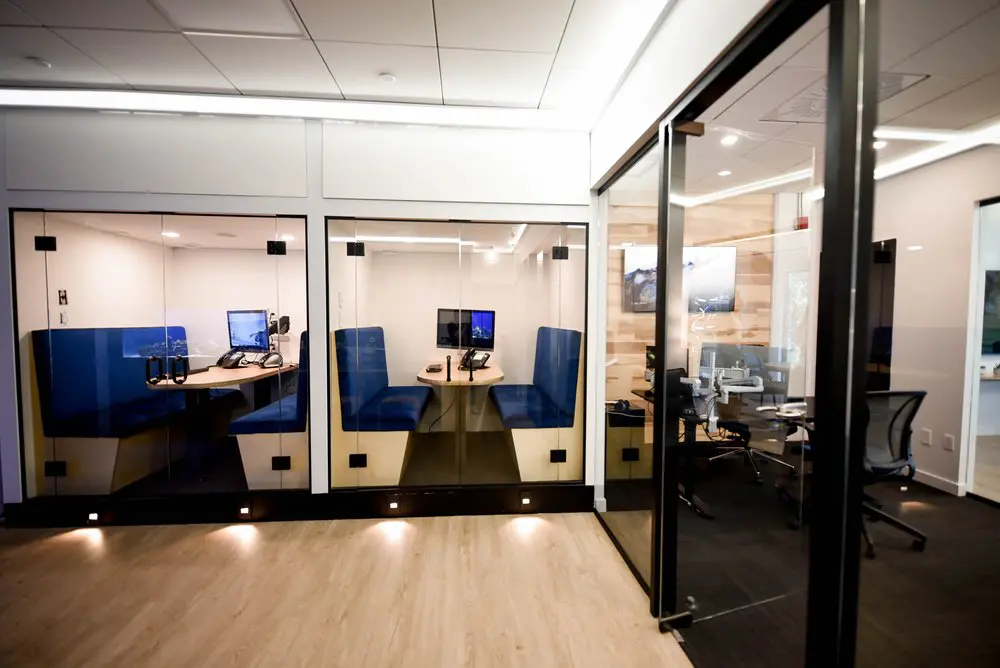
A virtual office and a coworking membership solve different problems. A virtual office is principally an address and mail-handling service. A coworking membership is principally permission to use a workspace. The right choice follows from the job the service must do, not from the product name. If you need a public business address and reliable letter handling but work elsewhere, begin with the virtual-office side. If you need a chair, desk, internet connection, quiet, meeting access or a dependable place for a team, begin with workspace. If both needs are real, compare a combined plan with two separate services and test every requirement against the written agreement.
The distinction matters because an address has several possible roles. A head office in a corporate record, a mailing address, a place of business, a Google Business Profile location and a bank's trading address are not interchangeable. Quebec's enterprise register is public, and the declaring enterprise remains responsible for the accuracy of what it files. [2] A service agreement can prove a contractual right to receive mail at an address. It cannot make a business operate there when it does not, guarantee acceptance by a bank or platform, or replace a legal requirement tied to actual activity.
Cost comparisons also fail when they compare only monthly stickers. A useful model includes setup fees, deposits, tax, mail scanning, day passes, commuting, meeting space, equipment, cancellation timing and the cost of changing an address later. Separate the first month from a normal renewal month. Then compare the options over the period you realistically expect to use them. A low monthly address fee can be efficient for a remote business, while an apparently higher coworking fee can be economical if it replaces frequent day passes, poor home ergonomics or paid meeting rooms.
This guide provides a decision framework rather than a universal winner. It explains what each category normally does, how to test address claims, how to model fixed and variable costs, and how to plan an exit without losing mail or leaving public records stale. Detailed legal registration, registered-mail, cancellation and day-pass questions are linked to dedicated guides rather than repeated here.
Write down what must be true on an ordinary Tuesday. The answer usually involves five distinct needs: an address role, a mail workflow, a work setting, access timing and proof for third parties. Product labels can obscure these needs because one operator's “virtual office” may be another operator's premium mailbox, while a “coworking membership” may mean anything from daytime hot-desking to a lockable private office.
| Need | Question to answer | Usually points toward |
|---|---|---|
| Public or contractual address | Which exact institution or filing asks for it, and what role does it play? | Virtual address, qualifying office, or another documented address |
| Mail operations | Letters only, content scans, parcels, signatures, forwarding, pickup or urgent legal documents? | Mailbox plan matched to the actual item types |
| Productive workspace | How many people, how often, and what privacy, equipment and call conditions? | Day pass, hot desk, dedicated desk or private office |
| Time and access | Business hours, evenings, weekends, holidays, recurring meetings or short visits? | A workspace whose written access rules fit the schedule |
| Verification | What document and factual evidence will a registry, bank, platform or client request? | The service that truthfully produces that evidence |
Do not merge those answers too early. A founder may need a head-office address but no desk. A consultant may need a desk three days a week but have no reason to change a registered address. A small employer may need a private office, mail receipt and a meeting room. An online seller may need letter scanning but discover that a marketplace applies its own location rules. Naming each requirement exposes gaps before a contract is signed.
A useful first decision is binary: are you buying a place where work will actually happen? If no, evaluate address and mail services. If yes, specify the physical workspace before considering address extras. The second decision is also binary: must a third party accept this address for a defined purpose? If yes, read that third party's current rule and ask the provider for the exact supporting document. Sales language such as “professional address” or “business presence” is too broad to answer either question.

Business mail services and shared workspaces developed around different operational tasks. Mail services separate correspondence from the place where an owner lives or works. Shared workspaces allocate desks, rooms and office infrastructure among several users. Digital notifications, booking systems and online agreements have made both easier to buy, and operators now place them in the same catalogue. That commercial convergence does not erase the functional difference.
The safest modern definition is therefore based on deliverables. A virtual-office product should be evaluated by the address rights stated in the agreement, accepted mail classes, notification method, pickup or scanning process, retention period and exit procedure. A coworking product should be evaluated by the usable work setting, hours, capacity, privacy, internet, furniture, meeting access, guest rules, security and term. Phone answering, mail forwarding, parcels, a dedicated suite, unlimited meeting rooms and registry acceptance are separate features. Never infer one from the words “virtual office” or “coworking.”
The categories overlap most clearly in a private office. A private office is a real workspace and may also include business-address rights and mail reception. A hot desk or dedicated desk may provide a real place to work without including any right to use the building address. Conversely, a premium virtual-office plan may include a small allowance of meeting time without becoming a daily workspace membership. The agreement, not the category name, controls.
For background on shared seating, read Hot Desking: Principles of a Flexible Workspace Model. Use it to understand the operating model, then rely on the current agreement for hours, address rights, capacity and price.
The following matrix is a screening tool. “Possible” means the feature exists in the market as an add-on or in some plans, not that it should be assumed. Obtain written terms from every provider under consideration.
| Function | Address or mailbox service | Hot desk | Dedicated desk | Private office |
|---|---|---|---|---|
| Receive ordinary letter mail | Core function when included | Possible, verify | Possible, verify | Common, verify |
| Use an address in a filing | Depends on the filing, facts and contract | Never assume | Never assume | Often documented, still verify the role |
| Work at a desk | Usually no | Shared unassigned seating | Assigned workstation | Enclosed room |
| Leave equipment overnight | Usually no | Usually no | Sometimes | Usually, subject to security rules |
| Confidential calls | Only if room time is added | Requires booths or rooms | Requires booths or rooms | Better control, walls are not a soundproof guarantee |
| Team occupancy | No | Individual seats | Individual seats | Capacity defined by the office |
| Mail scanning | Possible plan or add-on | Separate feature | Separate feature | Separate feature |
| Parcels and signatures | Operator-specific | Operator-specific | Operator-specific | Operator-specific |
| Meeting space | Possible allowance | Possible booking right | Possible booking right | Possible booking right |
| Evenings and weekends | Irrelevant to remote mail use, pickup may be limited | Plan-specific | Plan-specific | Plan-specific |
Ask providers to demonstrate the complete workflow. For mail, senders need the exact civic format, including an assigned unit number because Canada Post treats it as an integral part of the address. [15] Ask how the company name is matched, what happens to an unrecognized name, how quickly envelope notifications arrive, who may authorize opening, how content scans are delivered, how long originals remain, and what happens after cancellation. If registered mail matters, remember that the service is designed to capture the signature of the person who accepted delivery within Canada. [14] A provider that refuses signature items cannot support that workflow, regardless of whether its street address looks suitable.
For workspace, visit at the time you expect to use it. Count usable seats rather than relying on a maximum occupancy label. Try the chair, check monitor placement, make a normal call from the permitted area, test the route to a booth, inspect the door and storage arrangement, and ask what happens when every shared seat or meeting room is occupied. The Canadian Centre for Occupational Health and Safety says that office space should allow people to move safely and without obstruction. [19] A crowded plan can technically provide a desk while failing the user's practical requirement.
Contract terms deserve the same attention as physical features. Record the minimum term, notice deadline, renewal method, first billing date, setup fee, access credential deposit, damage deposit, taxes, price-change clause and refund rules. Ask whether an annual discount requires advance payment, a fixed commitment, or both. Confirm which charges recur. A first month can cost much more than a renewal month even when the advertised monthly price is accurate.
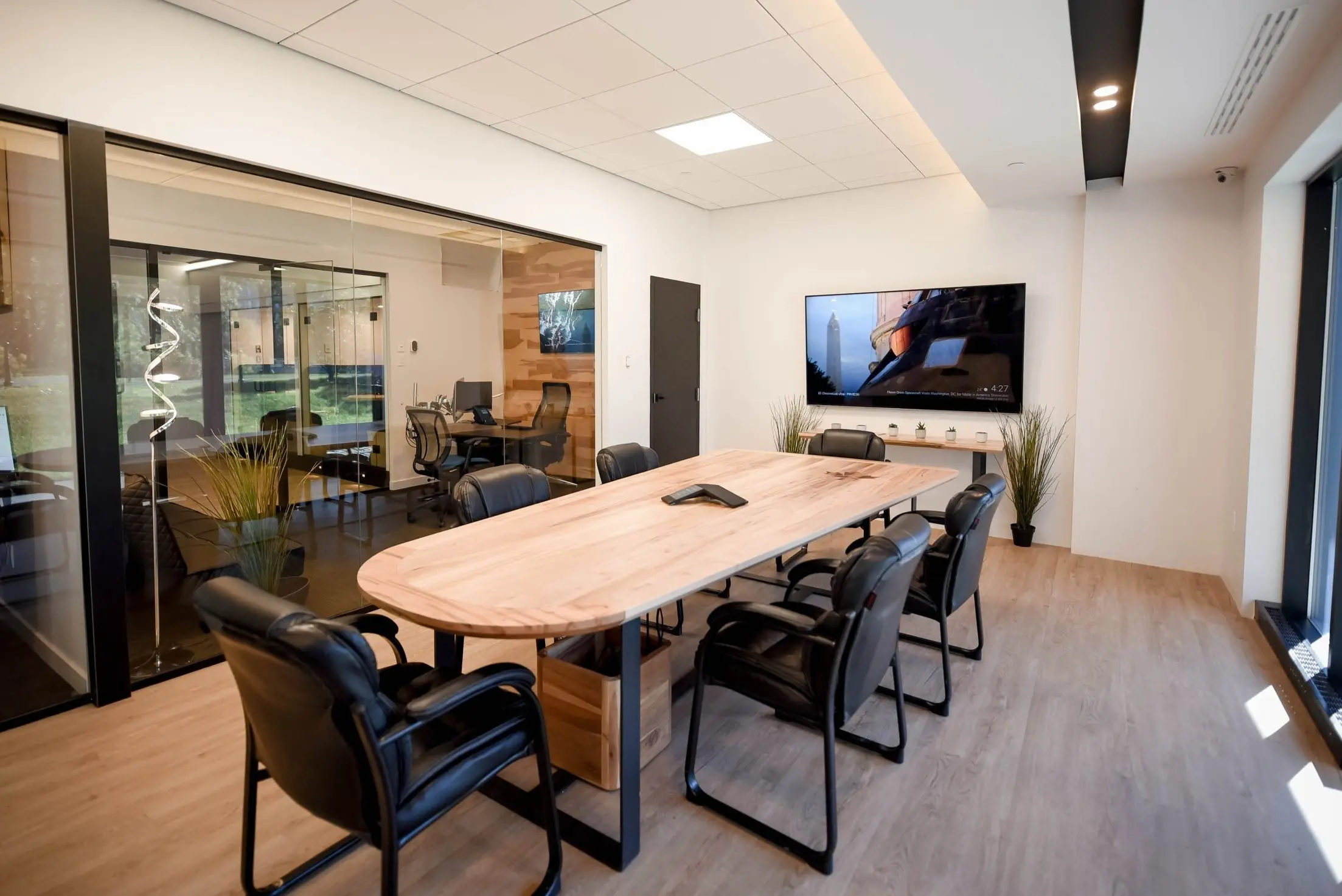
An address becomes risky when one label is copied into every system. Build an address-role table before purchasing anything.
| Address role | What must be verified | Typical evidence |
|---|---|---|
| Quebec head office or domicile | Entity type, governing statute, Quebec location requirement and exact REQ field | Agreement, corporate records, filing confirmation |
| Federal registered office | Province stated in articles, civic location and current corporate filing | Agreement and Corporations Canada filing |
| Mailing address | Who receives which classes of mail and how the business retrieves them | Service terms and operating procedure |
| Operating or trading address | Whether day-to-day business actually happens there | Workspace agreement plus genuine operations evidence |
| Public marketing address | Whether publication is truthful and permitted by the provider | Agreement, website and client-facing facts |
| Platform location | Platform-specific eligibility, verification and ongoing operating facts | Platform instructions and requested evidence |
For a legal person, Quebec describes the domicile field in the enterprise register as the head-office address. [1] A corporation governed by Quebec's Business Corporations Act must keep its head office permanently in Quebec. [5] Those rules do not answer every entity's situation or prove that any particular service qualifies. They identify the question to resolve. Read the governing statute and filing instructions, then ensure the contract grants the necessary use.
Federal corporations have their own framework. Corporations Canada's Form 2 instructions say a registered-office address cannot be a post office box. [6] Corporate records are not automatically required to sit in the mail room: Corporations Canada explains that certain records may be kept at the registered office or another location in Canada designated by the directors. [8] That distinction helps prevent a mailbox choice from silently becoming an unsuitable records-storage plan.
Do not transfer these corporation examples automatically to a non-profit. A Quebec non-profit and a federal non-profit can have different governing statutes, forms and address duties. Identify the entity and its governing regime first, then use that regime's current filing instructions.
Public visibility is part of the decision. Quebec says register information is public and that enterprises are responsible for declared accuracy. [2] Corporations Canada similarly warns that the registered-office address is public even when it is residential. [9] Quebec's corporate-transparency guidance explains that declaring a natural person's business address can prevent consultation of that person's home address in the enterprise register. [4] The natural person's business address must correspond to that person's principal place of work or business; a mail-only subscription does not establish that fact. [1] Do not turn that specific effect into a general promise that a virtual address hides every personal address. Directors, officers, beneficial owners, tax files, licences and financial institutions can involve different information.
Accuracy matters after signup too. Quebec's legal-publicity statute normally requires an updating declaration within 30 days of a covered change, unless the law prescribes a shorter period. [3] The Canada Business Corporations Act specifies notice within 15 days after a registered-office address change. [7] These are different regimes and deadlines. A provider's cancellation date does not update either registry for you.
For step-by-step treatment, use the Quebec head office, business address and elected domicile guide and the business-address registration guide. The practical rule here is simpler: write the role beside every address field, verify its rule, and describe the business truthfully.
No provider can guarantee a bank, payment service, marketplace or local-search platform will accept an address. The institution controls its own eligibility and verification. It may distinguish a registered address from a trading address, ask for formation documents or beneficial-owner information, compare several records, or request evidence of actual operations.
Wise provides a useful example of a narrow rule. Its business-address guidance says a coworking space can be a trading address when the business actually operates there day to day. [12] That does not mean every coworking invoice proves every address role, and it does not bind a bank. It shows why truthful use beats a label: a real coworking operation can satisfy a fact that a mail-only subscription cannot.
Google Business Profile applies another test. Google generally requires an eligible business to make in-person contact with customers during its stated hours, with limited exceptions described in its guidelines. [10] Its representation guidelines say a rented virtual-office mailing location where the business does not operate is ineligible. [11] Buying a higher-priced mail plan does not change the operating facts. For an office in a coworking space, Google also requires clear signage, customer reception at the location and staffing during business hours by the business's own staff. [11] A coworking agreement or a provider's reception service alone does not establish those facts. A service-area business should follow Google's separate service-area rules rather than display a mail-only address.
Prepare verification as a file rather than a single utility bill. Keep the signed agreement, formation documents, current registry extract, tax registration records, owner and signing-authority documents, invoices, operating evidence and consistent address formatting. Ask the institution which evidence it accepts before buying a plan solely for verification. If it rejects virtual offices, do not rename the service. If it requires operations, choose a workspace only when operations will genuinely occur there.

Mail needs should be expressed as events. What happens when an ordinary letter arrives? What happens when the envelope bears an unlisted company name? What happens when the sender requires a signature? How does an authorized person request a content scan? How quickly can an urgent original be collected? What happens after six months, after nonpayment, or after cancellation? A plan is useful only when each frequent event has a reliable answer.
Separate six mail functions: notification, opening authorization, content scanning, physical pickup, forwarding and delivery acceptance. An envelope photograph is not a content scan. A scan is not forwarding. A civic address does not imply parcel acceptance. Letter acceptance does not imply registered-mail acceptance. Pickup by appointment may be satisfactory for low-volume corporate notices and unworkable for time-sensitive operations.
Forwarding requires special care. Canada Post lists mail received through a privately administered mailbox company among the exclusions from its Mail Forwarding service. [13] Therefore, do not plan an exit around automatic Canada Post redirection from a private mailbox. Change the sender records, maintain overlap where practical, and arrange retrieval of residual mail under the provider's contract.
Mail can contain personal information, legal notices and financial data. Ask who may see envelope images and scans, how authorization is recorded, whether links expire, how files are deleted and how an incident is handled. Quebec's privacy regulator explains that enterprises must establish and implement privacy governance policies and practices. [18] Its guidance also addresses written mandates or contracts when personal information is entrusted in the described context. [17] Following a confidentiality incident, the regulator describes reasonable measures to reduce the risk of harm. [16] Ask concrete operational questions rather than accepting a generic claim that a portal is secure.
If legal notices, bailiff service, registered mail or parcels are central, consult the registered-mail and bailiff-service guide. It is better to use a service designed for the item than to discover a refusal after a deadline has started running.
Workspace value is created through repeated use. Count days, but also examine the kind of work performed on those days. A hot desk can suit individual laptop work when the user accepts changing seats and shared ambient noise. A dedicated desk adds continuity for equipment and routine. A private office adds control over access, calls, documents and team coordination. A day pass is useful for irregular visits, testing a location or bridging a short period.
Capacity means more than the number of chairs. List each person who will attend simultaneously, the equipment footprint, storage, visitor pattern and room needed for safe movement. CCOHS emphasizes enough space for people to move safely and unhindered. [19] A nominal four-person room may not fit four large monitors, confidential calls and a visitor at the same time.
Shared space does not automatically make work public, but it changes the controls required. Decide where calls happen, whether screens face circulation paths, where paper is stored, how print jobs are collected, and whether a conversation can be overheard. CCOHS notes that nearby conversation can distract and affect concentration. [21] Users who spend most of the day on calls should test booths and booking demand rather than assuming an open desk will work.
Do not evaluate “ergonomic furniture” as a binary amenity. CCOHS explains that a chair becomes ergonomic when it suits the individual worker's size, workstation and tasks. [20] Test seat height, lumbar support, armrests and desk relationship. Its monitor guidance warns that poor positioning can force awkward postures. [23] Ask whether monitors are included, whether personal equipment may remain, and whether the desk depth supports the intended setup.
Home is not a zero-standard alternative. CCOHS says a home office should offer the same level of safety and security as a conventional workplace. [22] Include the cost of a suitable chair, screen, lighting, secure storage and reliable internet when comparing coworking with home. For an employer, responsibilities and internal policies deserve separate professional review.
Map the whole trip. Record walking time, transit transfers, cycling storage, parking uncertainty and the latest workable departure. Then multiply a realistic round trip by expected attendance days. Commute time is not automatically wasted, but it is a real capacity cost. A cheap membership far from the people using it may be more expensive than a closer plan.
| Trip factor | What to record | Why it changes the decision |
|---|---|---|
| Door-to-door time | Typical and bad-weather range | Converts attendance into a time cost |
| Service hours | First arrival, last departure, weekends and holidays | Determines whether paid access matches the work schedule |
| Transfers and frequency | Number of connections and off-peak service | Affects reliability for meetings |
| Walking route | Distance, lighting, winter conditions and accessibility | Affects repeat use, not merely the first tour |
| Cycling | Secure parking, shower need and winter plan | Determines seasonal feasibility |
| Car access | Actual parking source, price and alternatives | Prevents an assumed parking benefit from driving the choice |
Use the official STM network map to validate route geography rather than relying on a provider's broad claim that a site is “near transit.” [33] Test the trip at the time you will travel. Transit proximity has modest purpose here: it helps estimate attendance friction. It is not proof that one product category is superior.
If occasional privacy matters more than open seating, the 2025 day-office overview offers background on on-demand private workspace. Treat its dated market material as context and obtain current terms directly from each provider.

The model below is a worksheet, not a Montreal market average. Replace every figure with a current written quote. Keep before-tax amounts separate from recoverable or nonrecoverable sales tax, and ask an accountant how the business should treat each cost.
Define:
An address-plus-day-use month is A + D × N + R + C. A monthly workspace month is M + any separate address cost + R + C. The first month adds F + P. Let B be any separate monthly address cost on the membership side. With equal meeting and commuting costs, the recurring break-even calculation is (M + B - A) / D, provided the options deliver the same required functions. If both retain the same address plan, B equals A and the threshold is M / D. If M already includes equivalent address service, B is zero and the threshold is (M - A) / D. Hours and workspace rights can still differ. A numerical crossing point is a prompt for closer comparison, not a product equivalence.
Build two columns of rights before entering a dollar amount. Give each option a row for address use, ordinary mail, scanning, signatures, parcels, workspace hours, reserved seating, room access, guests, storage, cancellation and proof documents. Mark each row included, excluded or unresolved. A cheaper bundle has not won if it omits a required function. Likewise, adding an address product to a workspace option is unnecessary when the business only needs a place to work. Resolve every required row, then compare totals that buy the same outcome.
Run a sensitivity model for the variables most likely to change. Start with expected attendance at two, six and ten days per month. Add a separate case in which one meeting room is needed, and another in which none is needed. Keep deposits outside recurring cost, while showing their first-month cash effect. If an address will be published, model the exit as well: registry filings, bank updates, revised invoices, sender notices and any overlap month. Those transition tasks can matter more than a small monthly difference.
Finally, compare two bundle structures. In the first, the business keeps the same address service while changing workspace use. In the second, the address is tied to a desk or office that may later be cancelled. The first structure can preserve continuity while attendance rises or falls. The second may be simpler, but leaving the workspace can trigger an address migration. Neither structure is inherently superior. The decision turns on which rights the agreement grants, how long the address is likely to remain useful and whether the business values one contract more than the ability to change workspace independently.
The following examples use explicit hypothetical inputs solely to show the arithmetic. They are before tax, are not Montreal market averages and do not imply availability.
| Hypothetical pattern | Calculation | Before-tax monthly amount | Important mismatch to check |
|---|---|---|---|
| Mailbox only | $35 | $35 | Ordinary mail workflow only, no workspace |
| Mailbox plus two day passes | $35 + 2 × $55 | $145 | Day-pass hours and mail features remain separate |
| Mailbox plus six day passes | $35 + 6 × $55 | $365 | Compare with $385 if the hot desk also needs the $35 mailbox |
| Monthly hot desk | $350 | $350 | Workspace access, address rights must be checked separately |
| Assigned desk | $400 to $480 | $400 to $480 | Equipment, access and address rights must be read separately |
| Virtual Office plan | $165 | $165 | Address and included room allowance are not daily workspace |
At $55 per day, six day passes cost $330. Adding a $35 mailbox makes the illustrative total $365. A $350 monthly hot desk alone is $15 lower before tax, but a hot desk plus the same $35 mailbox costs $385. With that address service retained in both options, six day passes remain $20 cheaper; seven passes plus the mailbox cost $420, which is $35 more than $385. If both functions are needed, add the actual address product to the workspace side unless the signed terms say otherwise. If only workspace is needed, do not add a mailbox merely to make the table symmetrical.
Suppose a provider's online monthly hot-desk checkout (2727's hot desk checkout has no setup fee) charges $350 for the membership, a one-month setup fee of $350 and a $75 refundable deposit if the member chooses a key fob. With that fob, the first-month cash requirement is $775 before considering tax treatment. The normal renewal is $350 before tax. The deposit is a cash-flow item and should not be described as a final cost if it remains refundable under the agreement. Confirm whether taxes apply to each line rather than taxing a deposit by assumption.
For budgeting, Quebec's GST and QST total 14.975 percent at the stated rates as of October 2026. Revenu Québec publishes the applicable GST and QST rates. [30] A $350 taxable charge would therefore require $402.41 in cash if both taxes apply and rounding follows the invoice. Whether a registered business can claim input tax credits or refunds depends on the expense, use and documentation. CRA distinguishes types of expenses for input tax credit purposes and provides allocation rules when property or services have mixed use. [28] [29] Revenu Québec separately explains GST input tax credits and QST input tax refunds for registrants acquiring eligible inputs for commercial activities. [37] Do not label the tax universally recoverable.
Compare the same twelve-month service. At a hypothetical $350 monthly rate, twelve ordinary monthly payments equal $4,200 before tax. An annual prepayment priced as ten months for twelve equals $3,500 before tax, requiring more cash at the start. A 12-month lease discount of 5 percent would produce $332.50 per month and $3,990 over twelve months. Do not stack those discounts unless the written offer expressly allows it. Include the value of flexibility: a discount can be uneconomic if the team stops using the space halfway through the term.
Use at least three horizons: first month, expected stay and one full year. Add likely day passes, rooms, commuting and equipment. Run a high-use and low-use scenario. Then identify which inputs are reversible. A day pass is easy to stop. A public address change creates registry, bank, vendor and client work even when the underlying service is month-to-month.
For sole proprietors and partnerships, CRA says rent for property used in the business can be deducted, subject to the specific rules and records. [25] That guidance neither decides a corporation's treatment nor makes every virtual-office or coworking charge universally deductible. Personal use, capital items, mixed use, entity form and supporting documents matter. Self-employed business-use-of-home expenses have their own conditions and calculations and cannot create or increase a business loss. [26] Employee home-office claims use separate eligibility rules and exclude expenses reimbursed or to be reimbursed by the employer. [27] An employee who rents office space needs the relevant T4044 rules rather than a business-owner analysis, including required payment under the employment contract, no employer reimbursement and the relevant T2200 documentation. [34] Keep invoices, agreements and use records; CRA's general recordkeeping rule is six years from the end of the last tax year to which the records relate, subject to exceptions. [32] Ask an accountant about the actual claimant and use.
The remote-work taxation overview provides broader orientation. For a filing decision, use the current CRA and Revenu Québec rules cited above and the facts of the actual claimant.
At 2727 Rue Saint-Patrick, Suite 109 in Montreal, the products remain functionally distinct. All amounts are in Canadian dollars. As of October 2026, virtual-mailbox plans start from $35 per month before taxes, with higher tiers at $85, $135 and $165 per month. The $35 plan covers ordinary letter-mail handling. Scanning begins with the $85 plan, and the $165 Virtual Office plan includes one hour of meeting-room use. All mailbox plans refuse parcels and signature-required mail, and there is no mail forwarding. Private-office tenants may receive registered mail and bailiff service. Ask 2727 separately about parcel handling for an office; the verified parcel refusal concerns mailbox plans. The address format uses the company name followed by 109-2727 Rue Saint-Patrick, Montréal QC H3K 0A8; there is no separate mailbox number or reception. A signed agreement provides the company, address and start date, while banks and platforms make their own decisions.
Workspace prices start at $55 before taxes for a day pass and $350 per month before taxes for a hot desk, as of October 2026. Dedicated desks start at $400 per month before taxes and range to $480. Private-office prices and availability change, so consult the booking page. Hot desks and day passes run Monday to Friday from 8:00 to 18:00 and close on weekends and holidays. Dedicated desks and private offices have 24/7 access. If address use matters with a desk, ask whether the chosen agreement permits it. Private offices include use of the business address and mail reception. Hot desk and office plans are month-to-month with no commitment and can be cancelled anytime, while dedicated desks have a 3-month minimum; online checkout for a month-to-month private office adds a setup fee equal to one month's rent (hot desks and dedicated desks have none). Each membership is for one person. Office and desk members may book the conference room free, subject to availability.
The practical choice is straightforward. Buy address service for the documented address and mail workflow. Buy workspace for actual attendance. Combine them only when both are useful. Review live prices, availability and terms at the 2727 booking site.

These scenarios are hypothetical and deliberately general. They show how the framework changes with facts.
The consultant works effectively at home, meets clients online and receives only occasional government or bank letters. The main need is a public business address and predictable mail notification. A mailbox or scanning plan is the starting point. A monthly coworking membership adds cost without solving a current problem. Day passes can cover rare changes of scenery, but they should not be purchased in advance unless the usage pattern supports them.
Before signing, the consultant identifies the exact registry field, checks public visibility, confirms ordinary mail and pickup rules, and asks the bank what evidence it accepts. If the consultant wants a Google Business Profile, the mail subscription cannot be used to manufacture eligibility. The operating facts must satisfy Google's rules.
Someone still defining the business can use the Montreal freelance-business guide as a broader planning checklist, while confirming current legal and tax requirements with the primary sources and advisers relevant to the chosen structure.
The professional needs concentrated work four days a week, makes frequent calls and cannot leave a large monitor in a shared seat. Address privacy matters, but productivity is the dominant requirement. A dedicated desk or private office deserves comparison with a hot desk. The user should test calls, equipment storage, after-hours access and screen privacy. Address rights remain a separate contract question.
The cost model includes avoided home equipment, commute time and the first-month setup charge. If confidential discussions are routine, the private office may offer better functional value even when its monthly price is higher. The professional should still avoid calling it soundproof without testing.
A three-person team attends together two days a week, stores no inventory and holds a client meeting twice a month. Buying three day passes per attendance day can grow quickly, but a hot-desk plan for each person may still fail the need for team continuity and calls. Compare a correctly sized private office with individual memberships, then add actual meeting and commuting costs.
The team also needs to decide whether the workspace is its genuine operating location and whether the contract includes address and mail rights. It should list authorized mail names, guest rules, insurance, door access, equipment and upgrade terms. A cheap plan that fragments the team across available seats can undermine the reason for meeting in person.
The business needs workspace intensely for eight weeks and address continuity all year. The sensible architecture may be a year-round address service plus day passes or a short workspace term during the busy period. The model separates twelve months of address cost from two months of workspace cost. It also checks setup fees, because a one-month setup fee can materially change a very short stay. The short-term private-office guide treats this case in more depth.
The company first distinguishes registration from actual operations. If it only needs a lawful address for a defined filing, it verifies that role and the service agreement. If employees will work in Montreal, it evaluates real workspace, payroll, tax, language and operating obligations with appropriate advisers. Quebec's French-language framework can matter to business operations; the Office québécois de la langue française says enterprises employing 25 people or more in Quebec for six months must register to begin a francisation process. [35] An address subscription alone does not establish a staffed Quebec operation.
This business wants local-search visibility and in-person appointments. A mail-only virtual office is a poor fit for that goal because Google focuses on real customer contact and excludes a rented virtual-office address where the business does not operate. The business needs a genuinely operated, eligible location with truthful hours, appropriate access and any municipal authorization. Montreal provides information on certificates of occupancy for activities conducted at premises. [36] Confirm the borough and activity-specific rule rather than treating coworking access as automatic authorization.
Write the entity name, address role, governing jurisdiction, mail types, expected monthly volume, scanning need, workspace days, simultaneous users, call pattern, meeting frequency, guests, required hours, equipment, accessibility, commute limit, planned start and expected exit. Mark each item must-have, useful or irrelevant. Send it to providers and ask them to answer against the current agreement.
Request a sample agreement with commercial details removed if necessary. Identify the legal provider, service address, permitted address use, term, notice, fees and mail limitations. Ask what document is issued after signature and how quickly it becomes effective. If a third party needs a utility bill, lease, occupancy proof or staffed location, establish whether the provider can truthfully supply that exact evidence. Never assume an invoice substitutes for a requested document.
Send a test letter after activation. Confirm notification timing and the displayed company name. Request a scan if included. Practise pickup. For workspace, visit during peak hours, join a call, connect the equipment and book a room. Then test failure cases: a lost access credential, a late courier, a full room calendar, a confidential scan sent to the wrong person, an invoice error and a cancellation near the notice deadline.
Classify charges as monthly recurring, usage-based, one-time nonrefundable or refundable. Calculate first-month cash, normal renewal, expected-stay total and annual total. Show taxes separately. Note the deadline needed to avoid another renewal. Ask whether a price is promotional, whether discounts can be combined and what happens when the team changes plans.
Businesses operating in Quebec should consider French-language obligations in their real context. The OQLF publishes enterprise francisation guidance. [35] A bilingual address or coworking agreement does not resolve all language duties. Obtain professional guidance where workforce size, public signage, contracts or client communications create specific questions.

Address continuity has more dependencies than workspace access. Maintain an address inventory: Quebec register, Corporations Canada, CRA, Revenu Québec, banks, insurers, payment services, marketplaces, licences, municipal records, invoices, website, clients, vendors and professional orders. Record the owner, update method and confirmation for each. The inventory also prevents one team member from cancelling a mailbox while another still relies on it.
Work backward from the proposed end date. Read the notice clause, choose the replacement address, sign and validate it, update public registries within their applicable deadlines, update private institutions, notify important senders and test delivery. Keep overlap when justified. Do not count on Canada Post Mail Forwarding for mail received through a private mailbox company because Canada Post lists that category as excluded. [13]
For workspace, export bookings, retrieve equipment and documents, return credentials, photograph the condition if a deposit is at stake, settle invoices and obtain written cancellation confirmation. Ask when access ends: notice date, billing date or final day. If a public address also came with a private office, treat leaving as both a workspace exit and an address migration.
The coworking cancellation and business-address guide provides a detailed continuity checklist. The key principle is to finish updates before old access disappears.
Score each option from zero to five against weighted requirements. Give must-have failures a veto instead of allowing a low price to compensate for them.
| Criterion | Weight | Option A score | Option B score | Evidence checked |
|---|---|---|---|---|
| Correct address role | 5 | Rule plus written agreement | ||
| Required mail types | 5 | Terms and test workflow | ||
| Workspace frequency | 4 | Attendance calendar | ||
| Privacy and calls | 4 | Peak-hour visit | ||
| Hours and reliability | 4 | Written access schedule | ||
| First-month cash | 3 | Itemized quote | ||
| Expected-stay cost | 4 | Scenario model | ||
| Commute burden | 3 | Tested trip | ||
| Exit continuity | 4 | Notice and address inventory | ||
| Verification evidence | 5 | Institution-specific confirmation |
Complete three forecasts. The base case reflects expected use. The low case tests whether a membership remains sensible when attendance falls. The high case tests whether day passes or room charges become expensive when attendance rises. Add a disruption case in which the business must change address or add a team member. A robust choice works in the base case and has an affordable response to plausible changes.
The final decision should fit in one sentence: “We choose this service because it supplies these verified functions for this period, and we will review it on this date.” If the explanation depends on a vague “professional presence,” return to the address-role and workspace questions.
Before using the questions below, run one final comparison meeting with every person affected by the choice. The person who receives mail may value scanning speed, while the person who travels to the space may care about evening access and the finance lead may focus on setup fees. Put those requirements in the same worksheet. A plan that looks complete to one person can transfer hidden work to another.
Read the order form and the full service terms together. The order form may show a monthly price while the terms contain notice, renewal, acceptable-use and liability provisions. Confirm the exact legal customer name, every authorized user, the service start date and the first date on which the address may be used. Record whether the agreement grants address use to one legal entity, several trade names or named individuals. If a provider explains an important exception by email, ask that it be incorporated into the agreement or a signed schedule.
For mail, build a sample month with actual item types. Include an ordinary government letter, a bank card, a large envelope, a courier parcel, registered mail and a document addressed to a trade name. Mark each accepted, refused or uncertain. Record notification timing, scan limits, pickup identity requirements, storage duration and disposal. This exercise is more reliable than asking whether the plan offers “mail handling,” because that phrase can describe radically different services. It also identifies senders who need a different delivery address before an urgent item is mailed.
For workspace, build a sample week. Place each worker, call, client visit and equipment need on the calendar. Note which work can occur in shared seating and which needs a room. Then compare the calendar with access hours, booking rights and guest rules. If two people require booths at the same hour, confirm that the facility has enough practical capacity. If a team must leave monitors or confidential paper overnight, confirm storage and access controls. A tour should validate the sample week, not merely show that the premises look attractive.
Run an evidence audit as well. For every institution that will see the address, write the claim the business intends to make. “Mail is delivered here” is different from “employees work here,” “customers visit here,” “corporate records are kept here” and “this is our registered office.” Attach the document supporting each true claim. Remove any claim that depends on presenting a mail service as physical operations. This protects the business from inconsistent answers during bank, platform, registry or client review.
Finally, assign ownership. One person should monitor mail notifications, one should maintain the address inventory, and one should track the notice date and renewal. Small organizations can assign all three jobs to the same person, but the jobs should still be written down. Set a review date 30 to 60 days before renewal. At that review, compare actual workspace days with the forecast, check missed or refused mail, confirm that public records remain accurate, and ask users whether the work setting still fits. A monthly plan should be reviewed as an operating system, not allowed to persist by inertia.
When future use is genuinely uncertain, buy information cheaply. A day pass can test commute, noise, chair fit and call workflow. A short overlap can test a mail service before the old address ends. A tour can reveal capacity limits. A written question to a bank or platform can prevent buying an address it will reject. These tests reduce uncertainty without creating a long dependency.
Avoid false precision. An estimate of five office days next month does not prove that five day passes are the optimal plan if a project could expand suddenly. Use a range and identify the trigger for switching. For example: remain on day passes from zero through five days, review at six, and move to monthly only when the following two months are likely to remain above that level. Add functional triggers such as needing stored equipment or taking daily confidential calls. The trigger should reflect both cost and work quality.
Also separate reversible and costly decisions. Changing from one desk tier to another may require little outside coordination. Changing a head-office address can touch public filings, tax accounts, banks, insurers and contracts. When the address need is stable but workspace demand is uncertain, keeping address service stable while varying workspace can reduce administrative churn. When actual operations move, however, records and representations must follow the facts. Stability is useful only while it remains accurate.
No scoring model removes judgment. A lower weighted score can still be the only valid option if it satisfies a legal or operational must-have that the higher-scoring option fails. Conversely, a product with many amenities should lose if its essential mail policy, hours or capacity do not work. Use the workbook to make assumptions visible, then make the decision based on verified constraints.
Document the rejected option too. Record the date, prices reviewed, missing function and evidence that drove the choice. This note prevents the same debate from restarting when a promotion appears or a new colleague sees only the monthly price. It also makes the next review faster: update the variables that changed rather than rebuilding the analysis. If the provider changes mail rules, access hours, pricing or contract terms, rerun the affected scenario before renewing. If the business changes its entity, staffing, customer contact or work pattern, revisit the address roles and operating claims rather than assuming the old decision still fits.
Keep the decision file with agreements, invoices, registry confirmations and cancellation correspondence. This is practical institutional memory. It gives the person handling an urgent letter the current procedure, gives finance the basis for recurring charges, and gives whoever manages an eventual move a complete dependency list. The best plan is not merely affordable at signup. It remains understandable and operable after the person who selected it is unavailable.

A virtual office primarily provides address and mail functions. A coworking membership primarily provides physical workspace. Features can overlap, but the written deliverables matter more than the label.
Do not assume so. Many virtual-office plans provide no daily desk. A meeting-room allowance is not a workstation membership. Buy workspace access if recurring work is the need.
No. Some private offices include address rights, while hot-desk and dedicated-desk plans may not. Verify the permitted use and mail service in the agreement.
It depends on the entity, governing law, facts and contract. Quebec defines the domicile of a legal person in the register as its head-office address. [1] Use the dedicated REQ address-role guide and obtain legal advice for uncertainty.
Corporations Canada's Form 2 instructions say the registered office cannot be a post office box. [6] Confirm that the service supplies a qualifying civic address and contractual right of use.
Only the bank can answer for the application. Ask which address role and documents it requires. Keep the agreement, registry record, formation documents, owner identification and genuine operating evidence consistent.
Google says a virtual-office mailing location where the business does not operate is ineligible. [11] An office in a coworking space must also have clear signage, receive customers and be staffed during business hours by the business's own staff. Service-area businesses follow their own rules. The plan price does not establish eligibility.
Rules are institution-specific. Wise says a coworking space can be a trading address when the business actually operates there day to day. [12] That does not bind another institution.
No. Address format and delivery policy are separate. Ask about ordinary letters, parcels, couriers, registered mail and bailiff service individually.
Do not rely on it. Canada Post lists mail through a privately administered mailbox company among its Mail Forwarding exclusions. [13] Update senders and plan overlap.
Notification shows that an item arrived, often with an image of the exterior. Content scanning requires authorization to open the envelope and digitize its pages. Confirm limits, fees, delivery security and original retention.
Operator rules vary. Ask whether listed names mean people, trade names or separate legal entities. Obtain the answer in writing for every company rather than inferring it from the number of authorized names.
Only if the agreement says so. Address, mail, telephone answering and reception are separate functions. This guide makes no telephone-service promise.
Divide the comparable monthly cost by the day-pass rate, then check functional differences. Using the illustrative inputs above, $350 divided by $55 is about 6.36 days. Address rights, hours, setup fees and room access can make the simple threshold misleading.
Choose a hot desk for flexible seating and minimal stored equipment. Choose a dedicated desk when the same setup, equipment continuity and routine justify the added price. Test privacy and call conditions for both.
It becomes more useful when several people attend together, calls are frequent, documents or equipment need controlled storage, visitors need a defined room, or the team needs a stable operating location. Compare actual capacity and first-month cost.
Only if the specific setup fits the person. CCOHS says a chair is ergonomic when it suits the worker, workstation and tasks. [20] Test the chair, desk and monitor position.
Multiply a realistic round trip by expected attendance days and include fares, parking and reliability. Test the trip during actual travel hours. A membership that is rarely used because of friction has poor value.
No universal answer applies. The claimant, business purpose, personal use, expense type and records matter. CRA's business-expense guidance for sole proprietors and partnerships is one starting point. [25] A corporation requires its own analysis. Ask an accountant about the facts.
Registration, commercial use, documentation and allocation matter. CRA provides input-tax-credit rules for operating expenses and mixed use. [28] [29] Revenu Québec's small-supplier rules can affect registration obligations. [31] Small suppliers can sometimes register voluntarily; small-supplier status alone does not determine credit eligibility. QST recovery is governed by Revenu Québec's input-tax-refund rules. [37] Seek accounting advice.
Add the first recurring charge, setup fee, deposits, taxes, equipment, parking or transit and any address service. Keep refundable deposits separate from nonrefundable cost. Request an itemized quote.
No. Compare the discount with cash tied up, cancellation rights and uncertain usage. Confirm whether annual prepayment and term discounts can be combined instead of assuming they stack.
Ask what the operator requires, what your own policy covers in shared premises, and how property, liability and remote work are treated. Conditions and exclusions depend on the coverage. [24]
Limit authorized recipients, review scan delivery and deletion, use secure storage, control screens and hold sensitive calls in an appropriate room. Ask the provider about access logs and incident response.
The provider stops granting service under its contract, but your registry, tax, bank, vendor and client records do not update automatically. Choose a replacement first, update every system and confirm residual-mail handling.
Quebec's legal-publicity statute normally requires an updating declaration within 30 days of a covered change, unless the law prescribes a shorter period. [3] Confirm which filing applies to the specific entity and change.
The Canada Business Corporations Act specifies notice within 15 days of a registered-office address change. [7] Follow the current Corporations Canada process.
For a federal corporation, Corporations Canada says certain records may be kept at the registered office or another location in Canada designated by the directors. [8] Other regimes and records can differ.
Do not assume either way. Municipal requirements depend on location and activity. Montreal publishes a process for obtaining an occupancy permit. [36] Ask the borough and operator about the intended activity.
Test the route, access, chair, desk, internet, call location, noise, room booking, washrooms, accessibility, security and visitor arrival. Tour during expected working hours rather than only when the space is quiet.
Yes, if separate services or a combined plan cover both needs. Model address cost plus expected day passes and meeting rooms, then compare a monthly workspace. Verify that address rights continue independently if workspace use changes.
List required functions, eliminate any option that fails a must-have, verify external rules, calculate first-month and expected-stay cost, test the workflow and document the exit plan. Choose the smallest service that completely solves the defined need.
A virtual office is strongest when the business needs a documented address and controlled mail process while work happens elsewhere. Coworking is strongest when people need a dependable place to work. The hybrid choice is justified only when both needs survive separate scrutiny. Treat address roles, platform eligibility and workspace access as facts to verify, not benefits implied by a product label.
The durable decision is rarely the plan with the lowest advertised month. It is the plan whose agreement matches the business's truthful use, whose first-month and renewal costs are understood, and whose exit can be completed without missed mail, stale public records or unusable workspace.

[1] [2] [3] [4] [5] [6] [7] [8] [9] [10] [11] [12] [13] [14] [15] [16] [17] [18] [19] [20] [21] [22] [23] [24] [25] [26] [27] [28] [29] [30] [31] [32] [33] [34] [35] [36] [37]