Coworking in Plateau-Mont-Royal: Cafes, Shared Offices & Pricing
The Plateau is the Montreal neighborhood most people picture when they picture Montreal: colorful triplexes with wrought-iron spiral staircases, cafe terraces spilling onto Saint-Denis and Avenue du Mont-Royal, and a bohemian, francophone character shaped by poets, playwrights, and generations of immigrant communities. For professionals looking for coworking space, the Plateau offers something distinct from the tech-and-canal energy of Griffintown, roughly 20-25 minutes away by metro: a cooperative, cafe-adjacent, deeply local working culture. This guide breaks down what coworking actually costs in the Plateau, what the neighborhood feels like day to day, and how it compares to Griffintown.
Executive Summary
The Plateau-Mont-Royal borough is Montreal's most walkable, with a 92 Walk Score (the highest of any Montreal borough), an 80 Transit Score, and a 94 Bike Score [1]
Coworking hot desks in the Plateau run from as little as $199/month at Halte 24-7 to roughly $255-350/month at ECTO and Montreal Cowork, comparable to Griffintown's $215-$400/month range [2]
The neighborhood's literary and cafe identity runs deep: playwright Michel Tremblay grew up on rue Fabre and set his celebrated "Plateau Mont-Royal Chronicles" here, while Café Cherrier has served the neighborhood's "faune créatrice" since October 1983 [3][4]
Montreal rents rose 7.2% in 2025, and the Plateau's average unfurnished rent had already climbed past $2,100/month by early 2025, a real cost pressure that also shows up in the neighborhood's coworking pricing [5]
Getting from the Plateau to Griffintown for a meeting takes roughly 20-25 minutes by metro via the Orange Line and a transfer to the Green Line at Lionel-Groulx, a longer but still manageable commute than the Mile End-to-Griffintown trip [6]
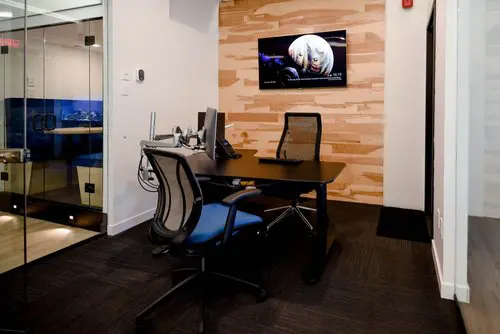
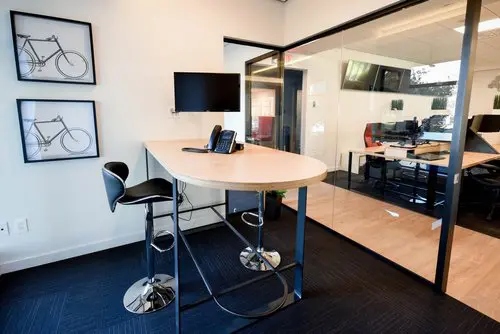
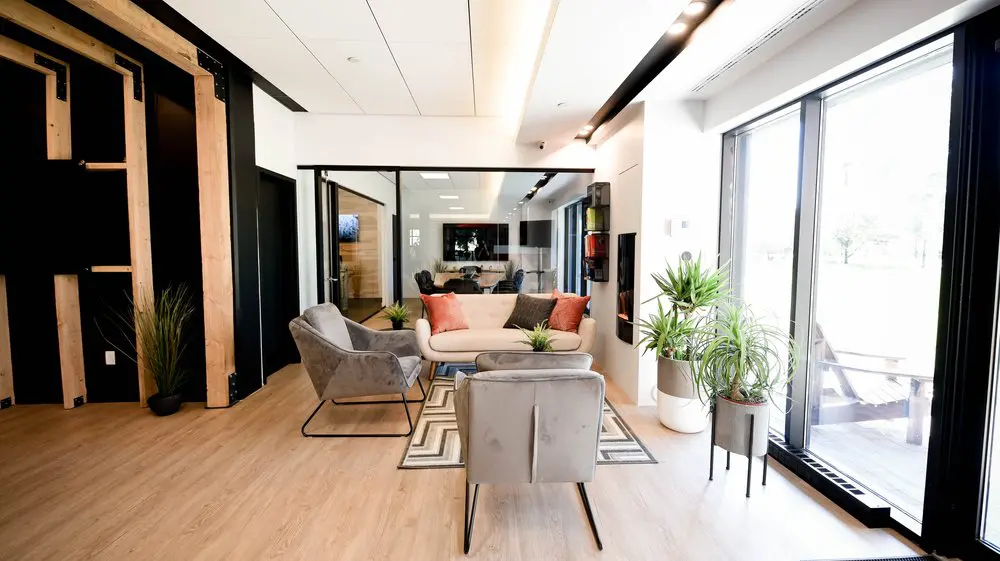
2727 Coworking space, 2727 Saint-Patrick, Montreal
A Neighborhood Shaped by Quarries, Immigration, and Iconic Staircases
From Quarry Villages to Montreal's Working-Class Heart
The Plateau's urban core began as a patchwork of small villages, Côteau Saint-Louis, De Lorimier, and Saint-Jean-Baptiste, that grew up around 19th-century stone quarries. As the quarries were depleted, these worker settlements were annexed by the City of Montreal between the 1880s and 1909, stitching the area into the city proper [7].
By the early 20th century, the Plateau was a solidly working-class, francophone neighborhood, sometimes nicknamed "le Petit-Paris" or "la Petite-France," that layered successive waves of Jewish, Greek, Portuguese, and later Vietnamese immigration on top of its French-Canadian base [8]. That layered immigrant history, distinct from but adjacent to Mile End's own Jewish and Greek history just to the north, gave the Plateau a cosmopolitan texture well before "diversity" became a marketing term.
Why the Plateau Has Spiral Staircases
No architectural feature is more associated with the Plateau than its exterior spiral staircases, built onto triplexes mainly between the 1900s and 1920s to house the neighborhood's growing working-class population. A popular legend holds that the Catholic Church discouraged shared indoor hallways between neighbors on moral grounds, forcing stairs outside. Historians and journalists who have investigated the claim consider it unproven; the more credible explanation combines late-19th-century building setback bylaws with the simple economics of heating, exterior stairs freed up interior floor space and reduced the heated volume of each unit [9].
The staircases were controversial enough that Montreal banned new exterior staircases starting in 1935, a prohibition that spread citywide by the mid-1950s, largely over concerns about winter safety. The city repealed the ban in 1980, and a 1994 rule now permits new exterior staircases only in areas, like the Plateau, where the style already predominates [10]. The result is a neighborhood where the staircases are not merely tolerated but actively protected as heritage character.
From Working-Class to Bohemian: The 1980s Transformation
The Plateau's shift from working-class immigrant neighborhood to the bohemian, artistic district it is known as today is generally dated to the 1980s, reinforced by the city's 1980 PIQA ("programme d'intervention dans les quartiers anciens") renovation program, which subsidized the restoration of the neighborhood's aging triplexes rather than their demolition [11]. Artists, writers, and students, drawn by low rents and the housing stock's character, moved in through the 1980s and 1990s, and the neighborhood's reputation as the creative heart of French Montreal was cemented.
Gentrification, Rent Pressure, and the 2024 Conversion Ban
That same desirability has, in recent years, become a genuine policy problem. In April 2024, the Plateau-Mont-Royal borough moved to ban the conversion of duplexes and triplexes into single-family homes, after losing roughly 100 rental units to conversion in a single year, according to borough councillor Marie Plourde [12]. Montreal-wide rents rose 7.2% in 2025, and by early 2025 the Plateau's average unfurnished rent had already climbed past $2,100 per month [5]. A 2026 study using Centraide and RUNWITHIT modelling ranked the Plateau among Montreal's ten boroughs most vulnerable to a further rent shock, with a modelled "extreme precarity" rate of 34% under a 6% rent-increase scenario [13]. For anyone considering coworking here, this is useful context: the Plateau's charm has a real, rising price tag attached to it.
A Neighborhood of Precarious, Independent Work
Academic research on Montreal's labour market has identified a segment of "precarious, poorly remunerated intellectual work," concentrated in and around the Plateau, made up of underemployed graduates and self-employed, multi-job creative workers who piece together income from freelance writing, translation, tutoring, and gig-economy platforms [42]. This is not a footnote; it is close to the demographic reality of the neighborhood's coworking market. Unlike Griffintown, where coworking members disproportionately work for funded startups or established tech employers, a meaningful share of the Plateau's coworking and cafe-based workforce is independently employed, often juggling multiple income sources, and correspondingly price-sensitive. This helps explain why the neighborhood's most successful coworking operator, ECTO, is structured as a cooperative rather than a conventional for-profit lease, and why Halte 24-7's sub-$200 hot desk finds a ready market here in a way it might not in a more corporate neighborhood.
The Vibe: Cafes, Poets, and a Uniquely Plateau Creative Identity
The Cafe Culture That Defines the Neighborhood
If Mile End's identity is built on record studios and indie rock, the Plateau's is built on cafes. Café Cherrier, at the corner of Saint-Denis and Cherrier, has operated since October 1983 as what its own history describes as a haven for the neighborhood's "faune créatrice," its walls lined with portraits of regulars that have included former Quebec premier René Lévesque and comedian Yvon Deschamps [4]. A few blocks away, Beauty's Luncheonette, founded in 1942 by Hyman and Freda Sckolnick as a snack bar serving the neighborhood's garment workers, has become a Montreal brunch institution, famous for its "Mish-Mash" omelette [14].
Café Paquebot, facing Jeanne-Mance Park at the foot of Mont-Royal, won Café of the Year at the Th3rdwave awards in 2017, and Saint-Denis Street's café terraces remain one of the most frequently cited images of the neighborhood's identity [15]. For remote workers and freelancers, this matters beyond ambiance: cafes like Café Myriade are specifically cited in laptop-friendly directories for reliable wifi and outlets, and the Plateau is consistently named, alongside downtown, as one of Montreal's best neighborhoods for informal cafe-based coworking [16]. That cafe culture is, in a real sense, the neighborhood's original coworking infrastructure, long before dedicated shared-office operators arrived.
Michel Tremblay, Gaston Miron, and Émile Nelligan: The Plateau's Literary Ghosts
Few Montreal neighborhoods carry as much literary weight as the Plateau. Playwright and novelist Michel Tremblay, born in 1942 and raised on rue Fabre, set his celebrated "Plateau Mont-Royal Chronicles," including The Fat Woman Next Door Is Pregnant (1978), directly in the neighborhood; a Plateau plaza-playground was named in his honor in 2024 [3]. Poet Gaston Miron, author of the landmark Quebec collection L'homme rapaillé, lived in the Plateau for nearly fifty years, based around Square Saint-Louis and its surrounding cafes [17]. Émile Nelligan, widely considered Quebec's first modern poet, grew up on Avenue Laval near the same square; a bronze bust erected in 2005 commemorates him there today [18].
Dance, Theatre, and the Balfour Building
The Plateau's creative reputation extends beyond literature into performance. In the 1980s, a cluster of influential contemporary dancers and choreographers, including Louise Lecavalier, Édouard Lock, Margie Gillis, and Marie Chouinard, worked out of the Balfour Building at Saint-Laurent and Prince-Arthur, on the neighborhood's southwestern edge [19]. The borough today remains home to the National Theatre School of Canada, the Conservatoire de musique de Montréal, and Les Grands Ballets Canadiens, a concentration of performing-arts institutions matched by few other Montreal neighborhoods [8].
Parc La Fontaine: The Plateau's Green Heart
Where Griffintown has the Lachine Canal and Mile End has nothing comparable, the Plateau has Parc La Fontaine, a roughly 34-40 hectare green space that anchors the neighborhood's eastern edge [20]. The land was originally Logan family farmland, used as a British garrison military training ground from 1845 to 1888, before opening as a public park in 1874 and being renamed in 1901 in honor of Sir Louis-Hippolyte La Fontaine [21].
The park's twin connected ponds, complete with a cascade and bridge, were built in 1900 and remain in use for pedal boats and canoes in summer and public skating in winter [21]. The Théâtre de Verdure, an open-air amphitheatre seating roughly 2,500, was inaugurated on July 8, 1956 and reopened in a renovated form in 2022, hosting free summer performances that draw much of the neighborhood [21]. For coworking members, the park provides exactly the kind of walkable, mid-day green space that Griffintown gets from its canal, a genuine, if different, quality-of-life advantage. Older monuments inside the park, including a 1920 memorial to Dollard des Ormeaux and a 1930 monument to Sir Louis-Hippolyte La Fontaine himself, add a layered historical character beyond the park's recreational use [21].
Beyond Cafes: The Saint-Denis and Mont-Royal Restaurant Corridors
While cafes define the neighborhood's daytime coworking-adjacent culture, Avenue du Mont-Royal and Saint-Denis Street both support dense, walkable restaurant corridors that extend the same convenience into lunch and dinner. Beauty's Luncheonette anchors the western end of Mont-Royal for brunch, while dozens of smaller bistros, bring-your-own-wine restaurants, and bakeries fill in the blocks between. This density means a coworking member in the Plateau can, in principle, eat at a different lunch spot every workday for weeks without repeating, and without ever needing to drive or take transit to reach it, reinforcing the same walkable, car-free lifestyle that drives the neighborhood's high Walk Score [1].
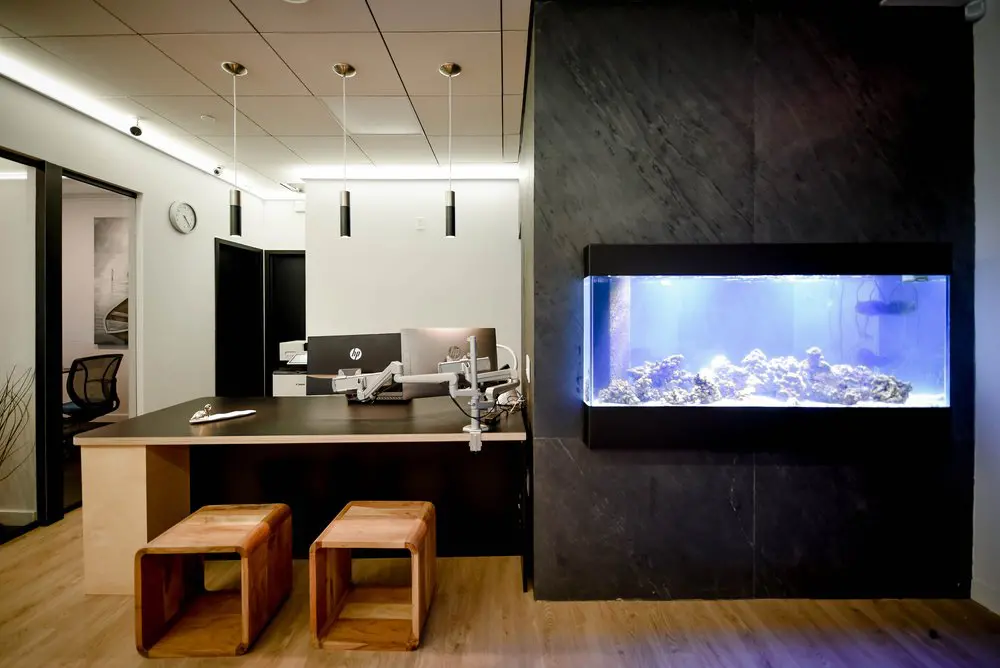
2727 Coworking space, 2727 Saint-Patrick, Montreal
Who Lives in the Plateau: Demographics
Note that Plateau-specific, sub-borough demographic data does not exist in any public source; the figures below describe the Le Plateau-Mont-Royal borough as a whole, which also includes Mile End (covered separately in our dedicated Mile End guide).
The borough recorded a population of 105,813 in the 2021 Census, at a density of 13,063 people per square kilometer, among the densest in Montreal [22]. Residents aged 18-34 make up 37% of the population, versus just 10% each for children and seniors, and 53% of households are single-person, with an average household size of 1.7 [23]. The borough's low-income rate sits at 17%, well above Montreal's citywide average of 11% [23]. An older but frequently cited figure from the 2006 Census found that 49.1% of borough residents aged 15 and older held a university degree, reflecting the neighborhood's long-standing draw for students and academics [22].
This combination, young, highly educated, disproportionately single, and living in small households, maps closely onto the profile of a professional who benefits from coworking rather than a traditional office: someone with the credentials for skilled freelance or remote work, living in a compact apartment without a natural home-office footprint, and drawn to a neighborhood dense enough that a coworking desk is never more than a short walk away. The borough is also home to institutional anchors that reinforce this profile, including the National Theatre School of Canada, the Conservatoire de musique de Montreal, and Les Grands Ballets Canadiens, a concentration of performing-arts training that feeds a steady stream of graduating artists, many of whom go on to freelance or self-employed careers, into the neighborhood's workforce [8].
Coworking and Shared Office Spaces in the Plateau
ECTO
Address: 936 Avenue du Mont-Royal Est, Montreal
One of Montreal's oldest coworking spaces, operating as a cooperative since 2008, ECTO offers day passes at $15 (among the cheapest in the city), hot desks around $250/month, and dedicated desks around $350/month, with a one-time $350 cooperative membership unlocking further discounts [24]. The space was renovated in 2023 and hosts a network of more than 200 members who participate in a cooperative governance model unusual among Montreal coworking operators [24]. Confirm current rates directly, as pricing can shift.
Montreal Cowork
Address: 4388 Rue Saint-Denis, Suite 200, Montreal
Roughly five minutes from Mont-Royal metro, Montreal Cowork offers hot desks from approximately $255/month in a space with a rooftop terrace, meeting rooms, bike storage, showers, on-site parking (125 spaces at $15/day), and a notable partnership with "Immigration à la Carte" supporting newly arrived immigrant entrepreneurs [25]. The space carries a 4.7 Google rating.
Halte 24-7
Address: 4284 Rue de la Roche, Montreal
Steps from Parc La Fontaine, Halte 24-7 offers some of the most affordable published pricing in the neighborhood: hot desks from $199/month, dedicated desks from $399/month, and private offices from $679/month, with a $30/month premium for 24/7 access on its base plans [2].
Centre des Affaires du Plateau Mont-Royal
Address: 4485 Rue Saint-Denis, Montreal
Adjacent to Mont-Royal metro, this operator offers private offices, open coworking space, and virtual office services, with two conference rooms, a terrace, and 24/7 access, from approximately $350/month [26].
Blabla Studio
Address: 5425 Rue de Bordeaux, Montreal
A twelve-desk coworking space combined with a podcast studio, Blabla Studio targets creatives and entrepreneurs specifically, with private offices from approximately $685/month and 24/7 access [27].
For comparison, in the Sud-Ouest (not the Plateau). 2727 Coworking is a Griffintown operator and does not belong in the table above, but readers pricing the Plateau usually want one out-of-neighbourhood benchmark. Its published rates are a $55 day pass, a $350/month hot desk, dedicated desks at $400-$480/month, private offices at $700-$4,000/month for 1 to 10 people, and a conference room at $300 for a full day with 8 seats, all before GST and QST, with 5% off on a 12-month commitment and 10 months charged instead of 12 on an annual prepayment. The honest travel cost is the real trade-off: it is roughly 20-25 minutes from the Plateau by metro, Orange line to Lionel-Groulx then Green line to Charlevoix, which is about 100 metres from the door. If you live in the Plateau, a Plateau space will almost always beat it on commute; if you are choosing a neighbourhood rather than a space, the canal side is the alternative. Live availability: booking.2727coworking.com.
Compared to Griffintown, where operators publish hot desks from $215-$400/month, the Plateau's range runs roughly comparable at the low end (Halte 24-7's $199/month undercuts most Griffintown options) but with fewer large, full-service operators [28].
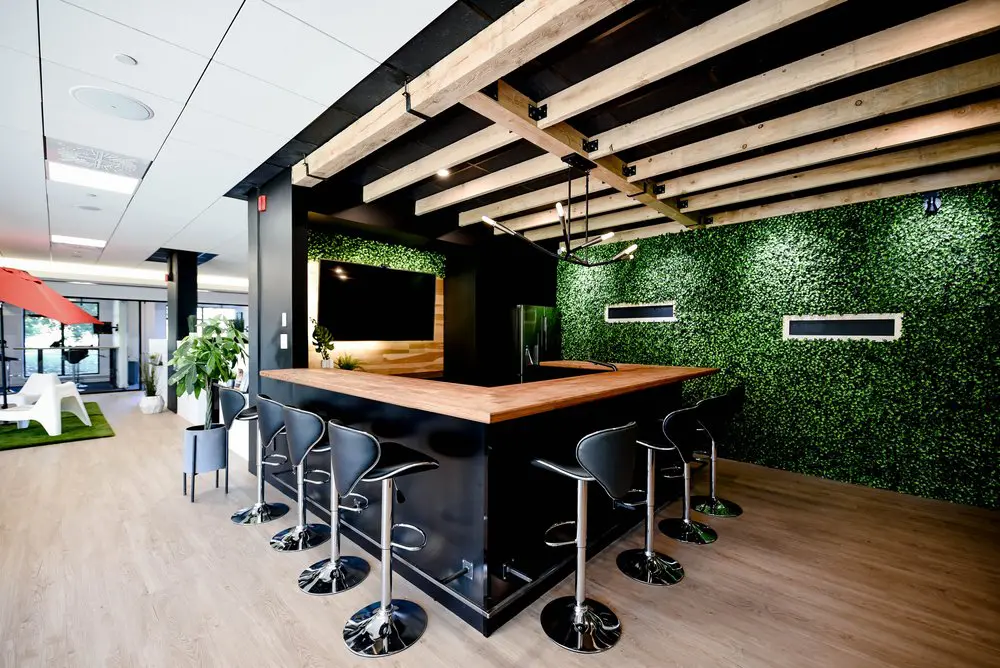
2727 Coworking space, 2727 Saint-Patrick, Montreal
Getting to and Around the Plateau
Metro: Mont-Royal, Sherbrooke, and Laurier
The Plateau is unusually well served by the Orange Line, with three stations touching or bordering the neighborhood. Mont-Royal station, at 470 Avenue du Mont-Royal Est, opened October 14, 1966, and sits directly on the neighborhood's main commercial strip, effectively no walk at all from most of its cafes and shops [29]. Laurier station, at 495 Gilford Street, also opened in 1966, sits roughly 500-550 meters, about a 7-8 minute walk, from Mont-Royal station and the same strip [30]. Notably, Laurier is the same station our Mile End coworking guide identifies as that neighborhood's primary metro access point, meaning the two neighborhoods effectively share a transit gateway. Sherbrooke station, at Rue Berri and Sherbrooke, is roughly 1.2 kilometers and a 14-18 minute walk from Mont-Royal station, serving the Plateau's southern edge [31].
Walk Score, Bike Score, and Transit Score
Le Plateau-Mont-Royal is Montreal's single most walkable borough, with a 92 Walk Score, an 80 Transit Score, and a 94 Bike Score, edging out even Mile End's own neighborhood-level scores in overall transit access [1]. Griffintown's home borough, Le Sud-Ouest, scores a comparatively modest 73 Walk Score, 76 Transit Score, and 81 Bike Score, though specific canal-adjacent addresses score considerably higher [32].
Cycling and Parking
The Plateau is dense with bike infrastructure, including protected lanes on de Brebeuf and Rivard, and BIXI bike-share stations throughout. Parking is genuinely difficult, among the tightest in the city, reflecting the neighborhood's dense triplex housing stock built long before car ownership was common; several coworking operators, including Montreal Cowork, offset this with dedicated on-site parking lots [25].
The Winter and Summer Experience
The Plateau's dense grid of narrow residential streets, lined by triplexes on both sides, offers meaningful wind shelter in winter compared to more exposed neighborhoods, though the same density means less direct sunlight reaches street level on short winter days. The neighborhood's exterior staircases, however photogenic in summer, become a genuine hazard in freezing rain, and building owners are legally responsible for clearing them; sidewalk and staircase ice is a recurring winter safety topic in the neighborhood's own community associations. Parc La Fontaine's ponds convert to a public skating rink in winter, giving coworking members a lunchtime option that Griffintown's canal, generally not maintained for skating, cannot match [21].
Summer flips the balance decisively in the Plateau's favor: café terraces along Saint-Denis and Avenue du Mont-Royal fill the sidewalks, the Théâtre de Verdure runs free evening programming in Parc La Fontaine, and the neighborhood's walkable density means a coworking member can move between a morning coffee, a midday work session, and an evening terrace dinner without ever needing transit or a car.
Choosing Between the Plateau and Mile End
Since both neighborhoods sit within the same borough and share a metro station at Laurier, professionals often ask which one to choose. As a rule of thumb: pick the Plateau if your work is literary, francophone-facing, or cooperative-minded, and you want proximity to Parc La Fontaine and Saint-Denis's cafe terraces. Pick Mile End if your work is more musical, visual-arts, or video-game-oriented, and Ubisoft's presence or the neighborhood's indie-rock legacy matters to your professional community; see our dedicated Mile End guide for the full comparison. In practice, the two neighborhoods are close enough, roughly 10-15 minutes apart on foot or by bike, that many freelancers treat them as a single extended catchment area rather than making an exclusive choice.
The Real Estate and Cost-of-Living Picture
Real estate figures for the Plateau vary meaningfully by source and should be read as ranges rather than precise numbers. RentCafe's April 2026 data put studio rents at $1,195-$1,325, one-bedrooms at $1,675-$1,969, and two-bedrooms at $2,339-$2,439 [33]. Zumper's March 2025 data placed the blended median across all unit types at $1,495/month [34]. For comparison, Zumper's July 2026 data for neighboring Mile End showed overall rents closer to $2,050/month, suggesting the two adjacent neighborhoods, despite sharing a borough, may command meaningfully different price points depending on exact unit type and building age [35].
At the ownership level, the Plateau's home borough posted a median condo price of $600,000 in Q2 2026, roughly $110,000 above Griffintown's home borough (Le Sud-Ouest) at $488,650 [36]. Montreal-wide, CMHC data shows the average two-bedroom asking rent reached $1,930 in Q1 2025, up a striking 70.8% from $1,130 in 2019, underscoring that the Plateau's rent pressure is part of a citywide trend, not an isolated phenomenon [37].
2727 Coworking space, 2727 Saint-Patrick, Montreal
How the Plateau Compares to Griffintown for Coworking
The Plateau's coworking prices skew slightly lower at the entry level than Griffintown's, Halte 24-7's $199/month hot desk undercuts every published Griffintown rate, but the neighborhood has fewer large, amenity-rich operators than Griffintown's canal corridor. The two neighborhoods' identities diverge sharply: the Plateau is built around francophone literary heritage, cooperative business models, and cafe culture, while Griffintown is built around technology, canal-side natural light, and industrial-loft architecture. Both offer genuine green space, but of different characters, Parc La Fontaine's ponds and formal gardens versus the Lachine Canal's linear, car-free waterway, and neither replaces the other.
A Day in the Life: The Plateau vs. Griffintown
The Plateau: 8:30 AM, walk to ECTO or Montreal Cowork past triplexes with wrought-iron staircases. 10:00 AM, a coffee break at Café Cherrier or Café Paquebot. Noon, lunch on a Saint-Denis terrace, or a walk through Parc La Fontaine if the weather cooperates. Afternoon, a work session interrupted by the sound of a nearby theatre rehearsal or the Théâtre de Verdure's summer programming. Evening, home is a short walk through some of Montreal's most photographed residential streets.
Griffintown: 7:45 AM, cycle in along the Lachine Canal. Mid-morning, a break at the water's edge. Noon, Atwater Market. Afternoon, a run along the canal path. Evening, a two-minute walk to Charlevoix metro or straight home by bike.
Which Founders and Freelancers Fit Where
Choose the Plateau if your work is literary, francophone-facing, or simply benefits from being embedded in Montreal's most walkable, cafe-dense neighborhood. Choose Griffintown if you want canal-side natural light, a tech-oriented community, and a neighbourhood hot-desk market running $215-$400/month with direct Green Line access (2727 Coworking's own hot desk is $350/month) [28].
Remote Work in Montreal: Why Neighborhood Choice Still Matters
Canada's return-to-commuting trend remains pronounced. As of November 2024, just 12.5% of employed Canadians worked exclusively from home, with a further 11.5% in a hybrid arrangement, and by May 2025 the share commuting to a workplace had risen for a fourth consecutive year to 82.6% [38]. Montreal specifically sits below the national curve for full remote work, at just 20.6% as of May 2024, compared to 34.2% in Ottawa-Gatineau [39]. For Plateau residents, this means a genuine, sustained demand for workspace close to home, whether cafe, coworking desk, or something in between, is not a passing pandemic-era trend but a durable feature of how Montrealers now work [40].
2727 Coworking space, 2727 Saint-Patrick, Montreal
The Economics of Coworking vs. a Plateau Home Office
With average unfurnished rent in the Plateau exceeding $2,100/month by early 2025, the marginal cost of carving out a dedicated home office in a Plateau apartment is real and rising [5]. A hot desk at ECTO or Halte 24-7, at $199-$250/month, delivers a dedicated internet connection, professional environment, and community for a fraction of what an equivalent home-office footprint costs to carry in rent, particularly for the borough's 53% single-person households who are precisely the demographic most likely to lack a spare room for a home office in the first place [23].
Consider a one-bedroom apartment renting at the Plateau's RentCafe-reported midpoint of roughly $1,822/month [33]. If a 100-square-foot corner is set aside as a home office in a typical 700-800 square-foot one-bedroom, that corner represents roughly 12-14% of the unit, or somewhere in the range of $220-$255 of the monthly rent, before accounting for the additional heating, furniture, and equipment costs of a proper workspace. That figure lands almost exactly on top of ECTO's $250/month hot desk price, meaning a Plateau coworking membership is frequently cost-neutral against a true home office, while adding a professional address, a change of scenery, and a built-in community that a spare bedroom corner cannot provide. For solo freelancers navigating the "precarious, multi-job" work pattern documented in Montreal labour research, that trade tends to favor coworking, particularly at Halte 24-7's sub-$200 price point [42].
For small teams, the calculation shifts further in coworking's favor. A two-person creative studio renting even a modest commercial storefront in the Plateau faces the same 3-10 year lease terms, security deposits, and buildout costs that make traditional leasing risky for early-stage businesses across Montreal [43]. A private office at Centre des Affaires du Plateau Mont-Royal or Blabla Studio, by contrast, comes with month-to-month flexibility, no buildout cost, and shared amenities already built in, at $350-$685/month depending on the operator.
Who Thrives in Plateau Coworking
Writers and francophone creative professionals: the neighborhood that produced Michel Tremblay, Gaston Miron, and Émile Nelligan still draws a disproportionate share of Montreal's literary and francophone media community, and coworking desks here put you a short walk from the cafes and bookstores that community still frequents
Cooperative-minded freelancers: ECTO's cooperative governance model, with members voting on the space's direction and a one-time buy-in unlocking further discounts, suits professionals who want a genuine stake in their workspace rather than a purely transactional membership
Cafe-culture professionals: anyone whose ideal workday includes a real espresso and a Saint-Denis or Avenue du Mont-Royal terrace, not a corporate kitchen, will find the Plateau's cafe density hard to match anywhere else in Montreal
Budget-conscious solo workers: Halte 24-7's $199/month hot desk is among the most affordable published rates in central Montreal, a meaningful advantage for the neighborhood's documented population of underemployed graduates and multi-job creative freelancers
Parc-adjacent lifestyle seekers: Parc La Fontaine provides a genuine green-space break, walking distance from every coworking option in the neighborhood, with pedal boats and picnics in summer and skating in winter
Francophone-first businesses: with the borough's population 67% French-at-home, the Plateau offers a naturally French working environment for businesses whose primary market or team language is French
2727 Coworking space, 2727 Saint-Patrick, Montreal
Choosing the Right Coworking Membership in the Plateau
Day Pass (from $15 at ECTO) — Best for occasional visitors and those testing the neighborhood before committing [24].
Hot Desk ($199-$255/month) — Best for freelancers and consultants working several days a week outside the home, particularly those drawn to ECTO's cooperative model or Halte 24-7's value pricing.
Private Office (from $350-$685/month depending on operator) — Best for small creative studios or growing consultancies wanting their own door at Centre des Affaires du Plateau or Blabla Studio, without a multi-year commercial lease.
The Trial Period Approach
Most Plateau coworking spaces, ECTO in particular, offer a free trial day for prospective members, and this is worth using deliberately rather than skipping. Spend at least a day or two actually working from the space before committing to a monthly plan, paying attention to noise levels during peak hours, how the neighborhood's cafe-and-terrace culture affects your own focus (a plus for some, a distraction for others), and whether the specific coworking space's community, cooperative at ECTO, more corporate at Centre des Affaires du Plateau, actually matches your working style. Because the Plateau's coworking market is smaller and more varied in character than Griffintown's, the right fit here depends more on cultural match than on amenities alone [44].
No, though they share a borough (Le Plateau-Mont-Royal) and a metro station (Laurier). The Plateau is the area around Avenue du Mont-Royal, Saint-Denis Street, and Parc La Fontaine, known for cafes, spiral staircases, and literary history. Mile End sits to the northwest, known for its indie music scene and Ubisoft's studio; see our dedicated Mile End guide for details.
How much does coworking cost in the Plateau?
Published rates range from $199/month for a hot desk at Halte 24-7 up to roughly $685/month for a private office at Blabla Studio. ECTO and Montreal Cowork sit in between, at $250-$350/month.
What is the best metro station for Plateau coworking?
Mont-Royal station sits directly on the neighborhood's main commercial strip. Laurier station, about a 7-8 minute walk away, also serves the northern Plateau and Mile End.
Why does the Plateau have spiral staircases?
The most credible explanation combines 19th-century building setback rules with heating economics, not the popular but unproven legend about the Catholic Church discouraging shared hallways. Montreal banned new exterior staircases from 1935 to 1980; today they are protected as neighborhood heritage character.
Is there a cooperative coworking option in the Plateau?
Yes. ECTO has operated as a cooperative since 2008, with a one-time membership fee unlocking further discounts on top of its already competitive day pass and desk pricing.
How does the Plateau compare to Griffintown for coworking?
The Plateau offers slightly lower entry-level pricing and a francophone, literary, cafe-driven culture; Griffintown offers more full-service operators, direct canal access, and a tech-oriented community. Both are roughly 20-25 minutes apart by metro.
Is Parc La Fontaine a good place to work outdoors?
Yes. At roughly 34-40 hectares, with ponds, gardens, and the Théâtre de Verdure's free summer programming, it is one of Montreal's best neighborhood parks for a midday break.
Are there francophone-first coworking spaces in the Plateau?
The neighborhood's overall culture is heavily francophone, and most Plateau coworking spaces operate comfortably in French, reflecting the borough's 67% French-at-home rate.
Is parking available near Plateau coworking spaces?
Parking is genuinely tight in the Plateau, among the most difficult in Montreal. Montreal Cowork is a notable exception, offering an on-site 125-space lot at $15/day.
What is the rent situation in the Plateau right now?
Rents have risen sharply: Montreal-wide rents grew 7.2% in 2025, and Plateau average unfurnished rent exceeded $2,100/month by early 2025. The borough introduced a ban on duplex-to-single-family conversions in 2024 in response to shrinking rental supply.
Which literary figures are associated with the Plateau?
Playwright Michel Tremblay, who grew up on rue Fabre and set his "Plateau Mont-Royal Chronicles" in the neighborhood; poet Gaston Miron, who lived near Square Saint-Louis for nearly fifty years; and poet Émile Nelligan, commemorated with a bronze bust near the same square, are the three most closely associated literary figures.
Is the Plateau walkable without a car?
Yes, more so than almost anywhere else in Montreal. The borough's 92 Walk Score is the highest of any Montreal borough, and daily errands, cafes, groceries, and coworking spaces are all reachable on foot from most addresses in the neighborhood.
What is the best coworking option for a small creative team in the Plateau?
Centre des Affaires du Plateau Mont-Royal and Blabla Studio both offer private offices suited to small teams, from roughly $350-$685/month, without the multi-year lease commitment of a traditional commercial space.
How far is the Plateau from Griffintown?
Roughly 20-25 minutes by metro, taking the Orange Line to Lionel-Groulx and transferring to the Green Line toward Charlevoix, Griffintown's primary station.
For professionals who want the canal-side, tech-oriented alternative to the Plateau, 2727 Coworking at 2727 Saint-Patrick Street in Griffintown offers a $55 day pass, a $350/month hot desk, dedicated desks at $400-$480/month and private offices from $700/month, with direct Lachine Canal views, 24/7 access, and a two-minute walk to Charlevoix metro on the Green line. Prices exclude GST and QST. Check what is actually free this week at booking.2727coworking.com, or book a visit. If you live in the Plateau, try a day pass before committing, the commute is the part worth testing.
2727 Coworking space, 2727 Saint-Patrick, Montreal