Parking and Commuting in Griffintown: A 2026 Guide for Office Workers Near Rue Saint-Patrick and the Lachine Canal
Griffintown parking and commuting in 2026: street rates, SRRR permits, snow towing, monthly lots, EV charging, BIXI, metro, and what each costs.
If you are about to take an office, a desk or a meeting room in Griffintown, the question that shapes your daily life is not the rent. It is how you, your team and your clients will get there, and what it will cost every month to do it. The answer in this part of Montreal is different from downtown. Griffintown and the neighbouring part of Pointe-Saint-Charles sit in the Sud-Ouest borough, on both banks of the Lachine Canal, with a residents-only permit system on many side streets, paid parking on the commercial arteries, a winter snow-loading regime that tows cars every season, a growing supply of private garages, a canal-side bike path that is now partly cleared in winter, and a metro station (Charlevoix) that is close but has no elevator. This guide explains each of those pieces with official sources, dated prices and a monthly cost comparison, so that you can choose between driving, transit and cycling with real numbers, and so that you know exactly what to tell a visitor who asks where to park.
Executive Summary
Street parking is paid, metered for turnover, and not designed for all-day commuters. Since February 1, 2026, the Agence de mobilité durable de Montréal charges $2.50 per hour in most of the Sud-Ouest and $4.25 per hour in the borough's East sector, and it notes that parking periods and maximum durations are set by the City "to encourage the rotation of vehicles during business hours" [1][2]. You pay at the pay station or with the Mobicité app, which cannot extend a session that is already running [3].
Residential permit (SRRR) streets are off limits to commuters, with one exception worth knowing. The resident sticker requires you to live in the zone and to provide two proofs of residence [6]. Separately, the Sud-Ouest sells a monthly sticker for zone 50 (Griffintown) and zone 113 (Pointe-Saint-Charles) at $120 taxes included, the City's page introduces its daily and monthly stickers to people "working in an area where parking is difficult," and the Sud-Ouest section lists no residency condition, only a registration certificate [5]. A sticker gives you the right to look for a space in the zone; it does not reserve one.
Winter changes everything. Temporary orange signs for a 7 p.m. to 7 a.m. ban generally go up the same day before 3 p.m., and if you ignore them "your vehicle will be towed and you will be fined" [9]. Info-Neige data is informational only; the street sign always prevails [13]. Towed cars are found with the City's online tool or by calling 514-868-3737 [14].
Monthly garage parking near Griffintown runs roughly $250 to $350 a month as of October 3, 2026. A marketplace page for Griffintown lists two nearby indoor spots at $315 and says prices near the commercial areas run about $250 to $350; downtown operator lots list $279.07 to $350 [17][18][19].
EV drivers have a public fast charger at Marché Atwater, priced at $13.80 an hour up to 20 kW and $0.38/kWh above that, on Hydro-Québec's Circuit électrique, whose level 2 stations cost $0 to $20 per session or $0.25 to $3 per hour [21][22].
Transit is the cheapest reliable option. The all-modes zone A monthly pass costs $110.00 since July 1, 2026 [34]. Employer programmes (OPUS & Cie, OPUS+ entreprise) give at least 8.33% off for a 12-month commitment [36][37]. The planned REM station at Griffintown-Bernard-Landry is not built; CDPQ Infra said in June 2026 that construction "could begin in 2028" [38].
Cycling is the cheapest of all in season. BIXI costs $24 every 30 days or $115 for the April 15 to November 15 season, before taxes [43], and the Lachine Canal path runs 13.5 km from the Old Port to Lake Saint-Louis [46].
Tax treatment differs between Ottawa and Quebec. Employer-paid parking is generally a taxable benefit at fair market value for both the CRA and Revenu Québec [54][59]. An employer-paid transit pass is taxable federally [56], but Revenu Québec says it is not a taxable benefit when the employer buys an eligible pass mainly for the home-to-work commute [58].
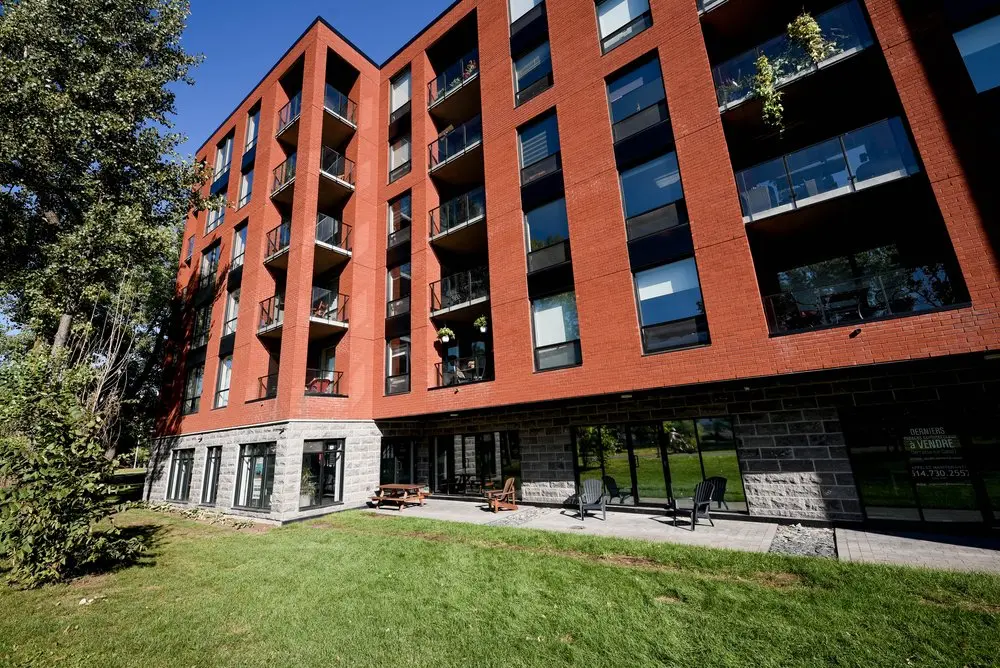
2727 Coworking space, 2727 Saint-Patrick, Montreal
How Parking Works in Griffintown: Who Sets the Rules
Most frustration with parking in Montreal comes from not knowing which authority is speaking. Four bodies matter for an office worker on Rue Saint-Patrick.
The sign on the pole is the law that applies to that space
Agence de mobilité durable de Montréal
Paid on-street parking, pay stations, the Mobicité app, City-owned lots, towing information
You pay the Agence, and you call it when your car has been moved
Service de police de la Ville de Montréal (SPVM)
Enforcement, exclusive towing zones on public streets
Illegal parking complaints go to the SPVM
Private lot owners and operators
Garages and surface lots in condo and office buildings
Their contract and their posted signs govern; towing from private lots is capped by City by-law
The Agence de mobilité durable states that "parking periods and maximum time allowances are determined by City of Montréal to encourage the rotation of vehicles during business hours" [1]. The Agence collects the money and manages the equipment; the City decides how long you may stay. That division explains why the price on the pay station and the maximum time on the sign can seem unrelated: they come from two different decisions.
Enforcement is the SPVM's job. A City notice about Griffintown roadworks reminds residents that the SPVM "a le mandat de faire respecter la réglementation relative au stationnement dans tous les arrondissements" and that illegal parking can be reported at 514 280-2222, 24 hours a day [8]. The same notice confirms that construction in the area regularly encroaches on residents-only (SRRR) sticker zones, which is a useful reminder that the supply of curb space in Griffintown changes from month to month as towers go up [8].
For context on the neighbourhood itself, its history, its coworking options and its restaurants, see our Griffintown coworking guide. This guide focuses only on getting there and parking.
On-Street Paid Parking: Rates, Hours and the Mobicité App
The 2026 rate grid
The Agence de mobilité durable applied new on-street rates on February 1, 2026, after the City council adopted them on January 28, 2026 [2]. The increase was capped at $0.25 per hour, and the Agence noted that the rate "will remain unchanged at $4.25 per hour in the Sud-Ouest, Plateau-Mont-Royal, and Ville-Marie (downtown area) boroughs" [2]. The published grid separates the Sud-Ouest into two sectors [1]:
Borough or sector
Hourly rate since Feb. 1, 2026
Sud-Ouest
$2.50
Sud-Ouest (East sector)
$4.25
Ville-Marie
$4.25
Ville-Marie (East sector)
$2.50
Verdun
$2.75
Plateau-Mont-Royal
$4.25
CDN/NDG (East sector)
$4.00
Lachine
$2.75
Source: Agence de mobilité durable de Montréal, rate grid in effect since February 1, 2026 [1].
The grid does not draw the boundary between the Sud-Ouest's ordinary sector and its East sector, and the Agence itself warns: "In order to verify the pricing of a parking space, we invite you to refer to the rates displayed on the parking signs or pay station" [1]. Griffintown is the eastern end of the borough, closest to downtown, so assume the higher rate until the pay station tells you otherwise. The same page adds a second instruction that matters more than the price: "At all times, check the City of Montréal parking signage where you are parked" [1].
What a full day on the street would cost, and why it rarely works
Paid on-street parking is built for errands and client visits, not for an eight-hour workday. The arithmetic shows why commuters give up on it quickly:
Scenario
Hourly rate
Hours paid
Daily cost
21 working days
Ordinary Sud-Ouest sector
$2.50
8
$20.00
$420.00
Sud-Ouest East sector
$4.25
8
$34.00
$714.00
Nordelec parcojour, day rate
$11.00 per day
Full paid period
$11.00
$231.00
Calculations by 2727 Coworking from the Agence's published rates [1]. The eight-hour scenarios assume the posted maximum duration allows you to stay that long, which is often not the case.
Even when the money is acceptable, the maximum duration posted on the sign usually is not. Because the City uses maximum durations to force turnover [1], an all-day commuter on a metered street either moves the car at lunch or risks a ticket. The Mobicité app does not solve this: the Agence's FAQ states that "it is not possible to extend your parking session, as each transaction is final," and that to add time "you must wait until your current session has ended before paying for a new one" [3]. Paying a second session does not reset a posted maximum.
Parcojour: the day-rate exception
The Agence operates a handful of "parcojour" sectors, where pay stations marked with a yellow "P" offer an hourly rate and a capped day rate [1]. Two are in the Sud-Ouest:
Parcojour sector
Paid periods
Hourly
Day rate
Nordelec (Pointe-Saint-Charles)
Mon. to Fri. 9 a.m. to 9 p.m.; Sat. 9 a.m. to 6 p.m.
$2.50
$11.00
Parc Angrignon
Mon. to Fri. 9 a.m. to 9 p.m.; Sat. 9 a.m. to 6 p.m.; Sun. 1 p.m. to 6 p.m.
$2.50
$11.00
Source: Agence de mobilité durable de Montréal [1].
The Nordelec sector, around the large converted industrial building in Pointe-Saint-Charles, is the closest day-rate option to the canal's south bank. It is a useful fallback for a visitor who will stay most of a day, and for an occasional driver who cannot justify a monthly garage. Supply is limited and first-come, first-served.
Paying with Mobicité
Mobicité is the Agence's payment app, and there is also a web version for those who cannot install it [3]. Its features, as described by the Agence [3]:
Pay in "Pay and Go" mode anywhere on the territory of the City of Montréal, on the street or in participating lots.
Visa, Mastercard and American Express are accepted.
View the parking regulations and a map of the paid parking offer before paying.
Receive a notification 10 minutes before the end of your session.
Pay for several sessions from one account and download your transaction history, which is useful for expense claims.
Two practical points follow. First, keep your receipts: if you are self-employed, the CRA allows you to deduct "the full amount of parking fees related to your business activities," so a client-visit session paid through Mobicité is documentation [62]. Second, the app's notification is a reminder, not a licence to stay: the posted maximum still applies.
City-owned lots
The Agence also runs off-street lots across the city. Most are pay-and-display, and 21 of them accept Mobicité in "Pay and Go" mode for numbered spaces [4]. The Agence says that to obtain a parking permit in one of its lots, or to "add your name to the waiting list if your selected lot is full," you call 514 868-3737 [4]. The lots listed for Pay and Go are mostly in Rosemont and Verdun, with one at Place-Saint-Henri and none in Griffintown, so for a Griffintown commuter the Agence's lots are mainly relevant in winter (see the snow section below).
2727 Coworking space, 2727 Saint-Patrick, Montreal
Residential Permit Zones (SRRR): Why Office Workers Cannot Use the Resident Sticker
What SRRR means
Many side streets in Griffintown and Pointe-Saint-Charles carry signs reserving parking for vehicles with a sticker during certain hours. These are SRRR zones (stationnement sur rue réservé aux résidents). The City describes the resident sticker as available everywhere in Montreal except Montréal-Nord, and says it lets you "park your vehicle in a defined zone around your home" [6].
Who qualifies for a resident sticker in the Sud-Ouest
In the Sud-Ouest, the City lists two eligibility conditions for the annual resident sticker: be the main driver of the vehicle, and "live in a residents-only parking zone" [6]. Proof is strict. You must attach two documents dated within the last three months, in your name and at your address, chosen from a list that includes a driver's licence, a utility bill, a bank statement and government correspondence, and the City adds that "a lease or municipal tax account will not be accepted" [6]. An office lease, a coworking agreement or a letter from your employer is not on the list. An office worker who lives elsewhere therefore cannot obtain a resident sticker for Griffintown, no matter how many days a week they work there.
The price structure explains why the City guards eligibility: the sticker is cheap compared with a garage. In the Sud-Ouest the resident price depends on the purchase period, the vehicle's net mass and the plate colour (green plates for electric and plug-in hybrid vehicles), and taxes are included [6]:
Purchase period (Sud-Ouest)
Valid until
First sticker
Additional sticker
January 1 to March 31
September 30 of the same year
$120 to $215
$182 to $324
April 1 to June 30
September 30 of the same year
$60 to $108
$90 to $162
July 1 to December 31
September 30 of the following year
$120 to $215
$182 to $324
Source: Ville de Montréal, resident sticker page, Sud-Ouest section [6]. Lower amounts apply to lighter vehicles (blue plate of 1,249 kg or less, green plate of 1,549 kg or less). People aged 65 or over get 50% off, and low-income residents pay the lowest rate for the first sticker [6].
The exception: the zone 50 monthly sticker
There is one door that many commuters do not know about. The City's page on daily and monthly stickers opens with the question "Working in an area where parking is difficult?" and explains that "some boroughs offer one-day or one-month stickers for parking on streets reserved for residents" [5]. In the Sud-Ouest, the monthly option covers exactly two zones [5]:
Item
Sud-Ouest monthly sticker
Zones
50 (Griffintown) and 113 (Pointe Saint-Charles)
Cost
$120, taxes included
Validity
Until the end of the month for which it is purchased, in the chosen zone
Advance purchase
"Purchases can be made several months in advance"
Refunds
"Stickers are neither refundable nor transferable"
Document required
Registration certificate
Ineligible vehicles
Over 3 tonnes net, commercial (X plates), farm, service vehicles, vans, tractors and trailer combinations
Where to apply
In person or by mail, Bureau Accès Montréal Le Sud-Ouest, 815 rue Bel-Air, 1st floor, H4C 2K4
Source: Ville de Montréal, updated May 13, 2026 [5].
The page lists only the registration certificate as the required document, and unlike the resident sticker it does not list proofs of residence [5]. Read the conditions carefully before relying on it:
A sticker is permission, not a space. It lets you park in zone 50's sticker spaces during restricted hours if you find a free one. On streets under construction, that supply shrinks [8].
Zone boundaries matter. The City directs you to its interactive map, under "Stationnement public et SRRR," with the "Secteur SRRR" box checked, to see zone numbers [5]. Confirm that the streets around your office are in the zone you buy; a zone 50 sticker does nothing in zone 113, and vice versa.
Every other sign still applies. Snow-loading bans, street-cleaning periods and no-parking signs override the sticker.
It is sold month by month, in person or by mail. There is no online purchase listed for the Sud-Ouest monthly sticker [5]. Buying several months in advance at the Accès Montréal office avoids a monthly trip.
Eligibility can change. If you have a doubt about whether you qualify, call 311 before paying; the sticker cannot be refunded [5].
At $120 a month, the zone 50 sticker costs well under half the price of a typical nearby garage. For someone who can arrive early, tolerate searching for a space and move the car during snow operations, it is the cheapest legal way to drive to Griffintown every day.
No visitor permit is listed for the Sud-Ouest
Some boroughs let residents of sticker zones buy visitor stickers or obtain free virtual visitor permits. The City lists those boroughs (Côte-des-Neiges and Notre-Dame-de-Grâce, LaSalle, Outremont, Pierrefonds-Roxboro and Saint-Léonard), and the Sud-Ouest is not among the visitor-permit boroughs on that page [5]. The only Sud-Ouest product on that page is the monthly sticker. In practice, a client who arrives by car in Griffintown should use paid street parking, a parcojour, a garage or a lot.
Tickets: Paying or Contesting a Statement of Offence
If you receive a parking ticket, the City's rules are short. "You must pay the full amount of the infraction within 30 days of receiving it," and paying means you "automatically plead guilty" [7]. If you disagree, "you must plead not guilty within 30 days after receiving the statement of offence" [7]. The amount is printed on the statement itself; fines vary by offence and are set by by-law, so this guide does not quote a single figure.
Three points save money in practice:
Photograph the sign and your car before you leave a space you are unsure about. If you contest, the question will be what the sign said.
Do not rely on an app as your defence. The Info-Neige service states that "in no case" can a ticket or a tow be contested on the basis of the information it provides [13].
Expense rules do not rescue tickets. The CRA lists "the cost of traffic infractions such as speeding tickets" among personal costs that employees cannot deduct [60].
2727 Coworking space, 2727 Saint-Patrick, Montreal
Winter: Snow Removal, Orange Signs and Towing
Snow is the single biggest source of parking costs for people who drive to Griffintown from November to April. Montreal distinguishes between clearing (plowing, which starts early in a storm) and loading (trucks and blowers removing the snow banks, which requires empty curbs). In the Sud-Ouest, the borough says clearing begins "à partir de 2,5 cm d'accumulation" and that each tow delays operations by an estimated 10 to 15 minutes [11]. Loading is when cars are towed.
"In general, signs prohibiting parking from 7 p.m. to 7 a.m. go up on the same day before 3 p.m."
"Signs prohibiting parking from 7 a.m. to 7 p.m. go up on the previous day before 8 p.m."
"Temporary parking signs take priority over permanent parking signs, which must still be obeyed."
"If you do not comply with signage, your vehicle will be towed and you will be fined."
For an office worker, the 3 p.m. rule is the trap. You park at 8:30 a.m. on a clear street; at 2 p.m. a crew installs orange signs for an overnight ban starting at 7 p.m.; if you work late or leave the car overnight, it is towed. Walk past your car in mid-afternoon on any day with snow on the ground, or set up notifications.
The City's snow-removal hub points to the 311 Montréal app to "track snow removal operations in real time and get notifications to move your car" [10]. Third-party services such as Info-Neige rely on data entered by the boroughs, and Info-Neige itself states that "c'est toujours la signalisation sur la rue qui prévaut" (the street sign always prevails), and that a ticket or a tow can never be contested on the basis of its information [13]. Use the apps as alarms, and the sign as the rule.
The Sud-Ouest also asks drivers not to park at an angle or on a street corner during operations, and warns that each tow slows the work for everyone [11].
Free overnight lots during loading operations
When the City launches snow loading, the Agence de mobilité durable opens some of its lots for free parking "from 7:00 p.m. to 7:00 a.m." in 16 lots, "nearly 2,500 spaces," with the caveat that "parking in spaces reserved for permit holders is not allowed" [12]. Two are in the Sud-Ouest [12]:
Lot
Location
Spaces listed
Restriction
No. 243
Des Trinitaires, north of de la Vérendrye
735
None listed
No. 361
Métro Place-Saint-Henri, Place Saint-Henri between Saint-Jacques and Notre-Dame West
37
Except reserved spaces
Source: Agence de mobilité durable de Montréal, snow-clearing page [12].
These lots help residents more than commuters, since they cover the overnight period. For a commuter, the relevance is the evening: if you are staying late during a loading night and your street is posted, moving to one of these lots is legal and free until 7 a.m.
If your car has been towed
Start with the City's "Find a towed car" tool, which lets you search "by license plate number or by finding the location where you parked it on the map," or call the Agence de mobilité durable at 514-868-3737 [14]. The page gives the Agence's number for this, not 311. If the car went to the pound rather than being relocated to a nearby street, the City states that "storage fees are payable by the vehicle owner" [14].
Exclusive towing on public streets
A different regime applies if your car breaks down or is in an accident on the way to the office. Since July 2021, the SPVM has assigned 10 exclusive towing zones on the island for vehicles that are broken down or in a collision and that obstruct traffic or create a danger; the driver calls 9-1-1 and the exclusive operator for that sector is dispatched, at rates set by the agglomeration's tariff by-law [15]. The SPVM's FAQ confirms that the same tariff applies even when the tow truck only moves your vehicle to a safe location, and that a breakdown in a private or public parking lot that does not obstruct traffic is not covered by the exclusive regime [15].
Private Lots and Garages: Your Rights When You Are Towed
Much of Griffintown's off-street parking is in private garages under condo and office towers and in surface lots. Two rules protect you when parking on private property that is open to the public.
First, signage. The Ombudsman de Montréal summarizes the agglomeration's towing by-law, in force since 2019: each entrance to the lot must display a towing warning, the name and 24-hour phone number of the towing company, and the maximum tow and storage fees, all charges included [16].
Second, price caps. The Ombudsman reported that for 2022 the third-party towing fee from a lot open to the public was $89, and storage was $0.00 for the first six hours after the tow [16]. It adds that the courts have recognized that these companies may not hold your vehicle until their bill is paid [16]. These figures are from 2022 and are indexed by by-law, so check the current tariff, but the principle stands: an unposted lot, or a bill far above the posted maximum, is worth disputing. The Ombudsman's page lists the recourses.
2727 Coworking space, 2727 Saint-Patrick, Montreal
Monthly Indoor and Outdoor Parking: What It Costs Near Griffintown
For a daily driver, the realistic choice is between a monthly garage or lot space and the zone 50 monthly sticker. Monthly garage pricing is not published by a public authority, so the figures below come from operators' and marketplaces' own pages, observed on October 3, 2026. Treat them as a snapshot.
Prices observed on October 3, 2026
Source
Location
Type
Monthly price
WhereiPark
688 Rue Notre-Dame Ouest
Underground, 24/7, elevator
$315.00
WhereiPark
La MARQ (Griffintown)
Multi-level covered, 24/7
$315.00
WhereiPark
Griffintown, general statement
Near commercial areas or downtown edge
"around $250 to $350"
Impark
555 Boulevard René-Lévesque Ouest
Non-reserved, 24/7
$279.07
Impark
2000 Rue Peel
Non-reserved, 24/7
$284.50
Impark
Tour Deloitte, 1190 Av. des Canadiens-de-Montréal
Outdoor monthly, 24/7
$350.00
SpotAngels
251 Rue Milton (garage)
Monthly
$205
SpotAngels
997 Rue Saint-Jacques (lot)
Monthly
$250
SpotAngels
605 Boulevard De Maisonneuve Ouest (garage)
Monthly
$285
SpotAngels
398 Boulevard René-Lévesque Ouest (garage)
Monthly
$300
Ville de Montréal
Zone 50 (Griffintown) street sticker
Permission to park in sticker spaces, no reserved space
$120, taxes included
Sources: WhereiPark Griffintown page [17]; Impark Montréal [18]; SpotAngels Montreal [19]; Ville de Montréal [5]. Prices as displayed on October 3, 2026; whether taxes are included varies by operator.
A few observations on these numbers:
The Griffintown marketplace page's "from $200" is not a Griffintown price. WhereiPark says "monthly parking in Griffintown starts at around $200," but the $200 listing shown on that page is in Laval; the two Griffintown-area listings are $315 [17]. For budgeting, use $300 to $350 for indoor, 24/7 access within walking distance.
Daily rates are where the money goes. The same page says daily parking "typically costs $10 to $20 per day," and elsewhere that "daily garage rates often reach $15 to $30" [17]. At 21 days a month, even $15 a day is $315, the price of a monthly space with no guarantee of availability.
Non-reserved is the norm downtown. Impark's downtown monthly products are labelled "Non-Reserved 24/7" [18], meaning you have the right to enter, not a numbered spot. Ask which one you are buying.
The citywide range is wide. SpotAngels reports Montreal monthly prices from $48.25 to $528.00 [19]; the low end is far from Griffintown.
Why downtown lots can cost more
Part of the gap between downtown and the Sud-Ouest is fiscal. The City levies a tax on parking spaces in non-residential buildings: "Dans les secteurs du centre-ville, elle est imposée tant pour les espaces intérieurs que extérieurs. Dans les autres secteurs, elle vise uniquement les terrains extérieurs de plus de 5000 m2," and the amount is the taxable area multiplied by a rate that varies by sector [20]. Operators pass this on in their prices. Whether a given Griffintown garage falls in a taxed sector depends on its exact location; the operator will know.
Questions to ask before signing a monthly parking agreement
Question
Why it matters
Reserved (numbered) or non-reserved?
Non-reserved can fill up; reserved costs more
24/7 access or business hours only?
Evening client events and weekend work
Are taxes included in the quoted price?
GST and QST add 14.975% when they apply
Deposit for remote, fob or card?
Often refundable; ask the amount and the return conditions
Notice period and minimum term?
Monthly spaces often require 30 days' notice
Clearance height and EV outlet?
SUVs, roof boxes, electric vehicles
Snow and cleaning closures?
Surface lots may close for snow removal
Can the space be transferred to a colleague?
Useful for part-time or hybrid teams
Parking at 2727 Coworking
2727 Coworking, at 2727 Rue Saint-Patrick, Suite 109, in Griffintown on the Lachine Canal, rents three parking spots on a 12-month lease, numbered indoor spots in the building's underground garage: spot 30, spot 31 and spot 82. Prices are $275 to $300 per month before GST and QST (as of October 2026), and a $150 deposit applies to the garage remote. Each spot's page shows its photos, its live price and whether it is free right now; the parking section of our spaces page lists all three. Three spots go quickly, so check the live status before you count on one, and plan a fallback from the options in this guide. Parking is priced separately from offices and desks; see /offices/ and /private-offices/ for workspace pricing.
2727 Coworking space, 2727 Saint-Patrick, Montreal
EV Charging Near Griffintown
Public charging nearby
The most useful public charger for Griffintown commuters and visitors is the Circuit électrique fast-charging site at Marché Atwater, 138 Avenue Atwater, open 24 hours, with CCS and CHAdeMO connectors [22]. Its posted tiered rate is $13.80 per hour from 0 to 20 kW (rising to $27.59 per hour once the battery is at 90% or more), then $0.38 per kWh between 20 and 50 kW [22]. The market is a short drive or a pleasant walk along the canal from Rue Saint-Patrick.
For a wider view, the City publishes an open dataset of public charging stations for electric cars, with locations, charging levels and pricing modes, updated regularly [23]. Apps built on the same data will show on-street and off-street stations near your office.
What Circuit électrique charges in 2026
Hydro-Québec's Circuit électrique is the largest public network in Quebec. Its rate page sets out the 2026 pricing [21]:
Charger type
Pricing
Level 2, per session
"Between $0 and $20 per charging session (without inactivity fees)"
Level 2, hourly
"between $0.25 and $3 per hour of charging, billed by the second"
Inactivity fee
Between $0 and $3 per hour once charging is complete and the car is still plugged in
Fast charger, 24 kW
$8.14 per hour, then $0.38/kWh
Fast charger, 50 kW
$13.80 per hour in the first tier, then $0.38/kWh
Fast charger, 100 kW
$17.00 per hour in the first tier, then $0.49/kWh and $0.44/kWh in higher tiers
Phone activation
$5 (taxes included) per session started through phone support
Roaming from a partner network
$0.75 standard, $1.25 fast (taxes included)
Source: Le Circuit électrique, rates page, consulted October 3, 2026 [21]. Fast-charge rates "are indexed at the start of every year" [21].
Level 2 pricing is set station by station within those ranges, which is why two chargers a block apart can cost different amounts. Start sessions with the app or a network card to avoid the $5 phone activation fee [21].
Charging at the office
If your building or employer is considering workplace chargers, Quebec's programmes changed in 2026. Since March 17, 2026, provincial assistance for charging stations has been part of the new Écorecharge programme [24]. Its normative framework runs until March 31, 2028. For businesses, municipalities and organizations, it covers 50% of eligible costs for buying and installing level 2 or DC fast chargers; for level 2 stations, total assistance cannot exceed twice the eligible purchase cost of the stations, and the overall cap is $500,000 per business per site for the life of the framework [25]. For individuals, the programme pays a flat $600 toward a home charger, and an electric-vehicle owner can receive up to $5,000 to buy and install a charger in the parking of a multi-unit building [24][25]. The framework states that meeting the criteria does not guarantee payment, so read its conditions, or have your electrician read them, before ordering equipment [25]. At the federal level, Natural Resources Canada lists its Zero Emission Vehicle Infrastructure Program as "Closed for applications" [26].
For a tenant in a shared building, the practical question is simpler: ask the landlord or coworking operator whether any space has an outlet or a charger, and who pays the electricity. 2727 Coworking does not publish an EV charging offer, so do not plan on charging at the building.
Cycling: BIXI, the Lachine Canal Path and Bike Parking
The Lachine Canal path
Griffintown's best commuting asset is the canal. Parks Canada describes the Lachine Canal National Historic Site's "13.5-kilometre path" running "between the Old Port and Lake Saint-Louis" [46]. For anyone living in Saint-Henri, Little Burgundy, Côte-Saint-Paul, Verdun, Lachine or the Old Port, it is a car-free route to Rue Saint-Patrick with no traffic lights for long stretches.
Winter is the question everyone asks. The answer improved recently. The Sud-Ouest borough's winter page, updated June 2, 2026, says the multi-use canal path "est maintenant déneigée sur une distance d'un peu plus de 5 km," from the Old Port to the Atwater footbridge on the north side, and from the Madeleine-Parent park area to the Côte-Saint-Paul footbridge on the south side, and that the borough has "plusieurs pistes cyclables accessibles quatre saisons" [48]. Local news reported in December 2025 that the borough council approved, on December 16, 2025, a formal two-year agreement with Parks Canada under which the borough takes charge of clearing the path on its territory, adding the south bank from rue Charlevoix to the Côte-Saint-Paul footbridge, for about 6 km available to cyclists and pedestrians that winter [47]. The south-bank stretch from Charlevoix is exactly the section closest to Rue Saint-Patrick. Outside the borough's territory, conditions depend on Parks Canada's own maintenance, so check before you ride in January.
BIXI pricing for commuters (2026)
BIXI, Montreal's bike-share, is useful for the "last kilometre" from a metro station, for one-way trips when the weather turns, and for people without a place to lock a bike. BIXI's posted prices, before taxes [43][44]:
Plan
Price
What you get
Monthly membership
$24 every 30 days
Regular bikes: 0 to 45 minutes included, then 19 cents per minute; e-bikes 19 cents per minute
Seasonal membership
$115, April 15 to November 15
Same member pricing; sold April 15 to May 31, 2026
One-way (no membership)
$1.60 to unlock
Regular bike 21 cents per minute; e-bike 36 cents per minute
Group memberships
10% off the seasonal plan
Minimum 20 colleagues, offered April to May
Sources: BIXI pricing pages, consulted October 3, 2026 [43][44]. BIXI states that "prices do not include taxes" [43].
A monthly member who rides a regular bike for under 45 minutes per trip pays only the membership. For a team, the group discount rewards an employer who organizes 20 or more colleagues in spring [43].
BIXI is no longer a summer-only service. Tourisme Montréal, in a page updated November 3, 2025, says a fleet of 2,300 bikes with studded tires is available all year in 10 boroughs, served by 234 stations, with station areas cleared by BIXI teams [45]. Winter coverage is smaller than summer coverage; the BIXI app shows which stations are open.
Where you may lock a bike
The City's rules are explicit: "If a parking meter is not equipped with a bicycle rack, you cannot park your bike there. It is also forbidden to tie your bike to a tree or street furniture. You must use the bicycle racks" [49]. Sidewalk racks "typically go up in April and are removed some time in October or November," although some boroughs have permanent racks, and a bike that breaks these rules or appears abandoned on public property "will be seized" [49]. Residents can ask the City to remove a bike attached to a tree or street furniture, or one that is visibly abandoned [50].
For winter commuters, this means the sidewalk rack you used in September may be gone in November. Indoor bike storage at your building matters more than it seems; ask about it during a tour. 2727 Coworking does not publish a bike storage policy, so ask us what applies to your office.
Protecting the bike
Bike theft is common in Montreal. The SPVM says that registering your bike "augmente énormément vos chances" of recovering it, and asks owners to record the serial number, brand, model and colour [51]. Since April 2021, the SPVM has used the 529 Garage registry, where owners create a free account, upload photos and the serial number, and apply a sticker [52]. Vélo Québec recommends a U-lock as the most effective deterrent and advises never locking only one wheel [53].
2727 Coworking space, 2727 Saint-Patrick, Montreal
Transit: Metro, Bus, REM and Commuter Trains
The metro: Charlevoix and Lionel-Groulx
2727 Rue Saint-Patrick is near Charlevoix station on the Green Line (Line 1), which runs from Angrignon to Honoré-Beaugrand [27]. A few facts about the station matter for daily use:
Station
Line(s)
Address
Elevator access
Notes
Charlevoix
Green
2600 rue du Centre
No
Lower platform 29.6 m below the surface, one of the deepest on the network; opened 1978
Lionel-Groulx
Green and Orange
620 Avenue Atwater
Yes
Cross-platform interchange between the two lines
Atwater
Green
Downtown, west
Yes
Served by the 57 bus from Charlevoix
Sources: Wikipedia station articles for addresses and history [32][33]; STM list of stations with elevators [28]; STM line pages [27][29].
The STM says elevators "sont situés dans 30 stations de métro," and its list includes Lionel-Groulx and Atwater but not Charlevoix [28]. For a visitor in a wheelchair, with a stroller or with heavy equipment, Charlevoix is not a good choice; Lionel-Groulx or Atwater combined with a short taxi or adapted transport ride is better.
Lionel-Groulx's cross-platform interchange means that a commuter on the Orange Line (from Laval, the Plateau or Côte-Vertu) changes to the Green Line by walking across the platform, then rides one stop toward Angrignon to Charlevoix, the adjacent station [32][33].
Buses
Three STM lines are the most relevant for the canal's south bank and Griffintown:
Line
Route summary
Useful for
35 Griffintown
Angrignon station to McGill station via Monk, Notre-Dame and Wellington [30]
A direct link through Griffintown to downtown
57
Serves Charlevoix, Atwater and Guy-Concordia stations, all with Green Line connections [29]
Pointe-Saint-Charles to the Green Line and downtown west
61 Wellington
Runs along Wellington and serves Charlevoix station [31][32]
Pointe-Saint-Charles and Verdun
Sources: STM line pages [29][30][31]; Charlevoix station article for the buses serving the station [32]. STM routes and names change; check the STM trip planner before you rely on a line.
The REM: what exists and what does not
The Réseau express métropolitain (REM) is relevant in two ways.
What runs today. The nearest REM station is Gare Centrale, at 895 rue De La Gauchetière Ouest, where the Deux-Montagnes, Anse-à-l'Orme and Brossard branches meet, with connections to the Orange Line (Bonaventure), exo trains, VIA Rail and Amtrak [40]. The Anse-à-l'Orme branch to the West Island opened on May 18, 2026, and the network runs from 5:30 a.m. to 1:30 a.m. [41]. For a commuter from Brossard, the West Island or the Deux-Montagnes line, the trip to Griffintown is REM to Gare Centrale, then the Orange Line to Lionel-Groulx and the Green Line one stop to Charlevoix, or a bus or BIXI from downtown.
What is planned. A Griffintown-Bernard-Landry station was part of the original REM plan. In 2020, the REM project unveiled it on the elevated structure between Ottawa and William streets, with an entrance on Dalhousie Street, two minutes from Central Station, and said it would open "by the end of 2024" [39]. That did not happen. On June 16, 2026, CDPQ Infra, the Quebec government and the City announced the launch of a planning phase for two stations: Griffintown-Bernard-Landry, serving the north side of the canal, and a new station near Bridge and Wellington streets on the south side [38]. The release says the project "is expected to be completed over an estimated four-year period, including both planning and construction phases," and that "construction could begin in 2028" [38]. Do not choose an office in 2026 on the assumption of a REM stop in Griffintown soon.
Commuter trains
For commuters from Vaudreuil-Hudson, Saint-Jérôme and Candiac, exo's Lucien-L'Allier station, at 1290 avenue des Canadiens-de-Montréal, is the downtown terminal [42]. From there, Lionel-Groulx and Charlevoix are a short metro ride on the Orange then Green Line.
Fares as of July 1, 2026
Fares in Greater Montreal are set by the ARTM (Autorité régionale de transport métropolitain), not the STM. The island of Montreal is zone A, and there are four fare zones in total [34]. The ARTM fare grid in effect since July 1, 2026 [34]:
Fare (all modes, zone A)
Regular
Reduced
Monthly
$110.00
$66.00
Weekly
$33.25
$20.00
1 trip
$3.75
$2.75
2 trips
$7.00
$5.00
10 trips
$35.00
$23.50
24 hours
$11.25
OPUS card
$6.00 (ages 16 to 64)
$15.00 photo card (students, 65+, children 12 to 15); $6.00 for children 6 to 11
Source: ARTM, fare grid, "Tarifs en vigueur le 1er juillet 2026" [34].
The ARTM describes the July 2026 change as "une indexation moyenne des tarifs de 3 %," with single and two-trip fares unchanged and the regular monthly all-modes pass up by $5.50 [35].
Employer transit programmes
Two employer agreements reduce the monthly pass for staff who commit for a year:
OPUS & Cie gives "un rabais mensuel d'au moins 8,33 %" on the all-modes A pass, and the employer "doit s'engager à contribuer un minimum de 4,16 %" of the pass cost; the commitment is at least 12 months [36].
OPUS+ entreprise offers the 8.33% discount after "une Période de 12 mois consécutifs d'Abonnement," for employees who work at an establishment of the employer located in the ARTM territory [37].
For a small company in a coworking space, the question is whether the employer is the one signing the agreement. A private office or dedicated desk at a Griffintown address in zone A is within the ARTM territory, and the agreement is between the employer and the transit authority, not the landlord.
Where to Tell Visitors and Clients to Park
Prospects often ask whether there is guest parking. At 2727 Coworking, there is no published visitor parking; the three spots are monthly rentals, not visitor parking. Here is a script you can paste into a meeting invitation for a client coming to Rue Saint-Patrick, followed by the reasoning.
Getting here: 2727 Rue Saint-Patrick, Suite 109, Montréal, QC H3K 0A8 (Griffintown, on the Lachine Canal).
By metro: Charlevoix station (Green Line) is the closest. Charlevoix has no elevator; if you need step-free access, use Lionel-Groulx or Atwater and take a taxi for the last stretch.
By car: Use paid street parking and pay at the pay station or with the Mobicité app. Do not park in spaces marked for sticker holders (SRRR) during the posted hours. For a long visit, the Nordelec parcojour in Pointe-Saint-Charles has a day rate. In winter, check for orange temporary no-parking signs before you leave the car.
By bike: The Lachine Canal path is a short ride away. Use a bike rack, not a tree or a post.
Why this advice:
Paid street parking is the default for short visits. At $2.50 or $4.25 an hour depending on the sector, a two-hour meeting costs $5 to $8.50 [1].
Mobicité lets the visitor pay without coins and get a reminder 10 minutes before the session ends [3].
SRRR spaces will cost them a ticket. The City lists no visitor permit for the Sud-Ouest [5], so a client cannot legally use a resident space during restricted hours without a sticker.
A day-long workshop needs a day rate. The Nordelec parcojour's $11.00 day rate is cheaper than eight metered hours [1].
Winter visitors need the 3 p.m. warning. Evening bans are posted the same day before 3 p.m. [9].
Step-free access is a real constraint. Charlevoix is not on the STM elevator list [28].
If a meeting involves several cars, consider booking the meeting at a time when street demand is lower, or reimbursing a nearby garage's daily rate.
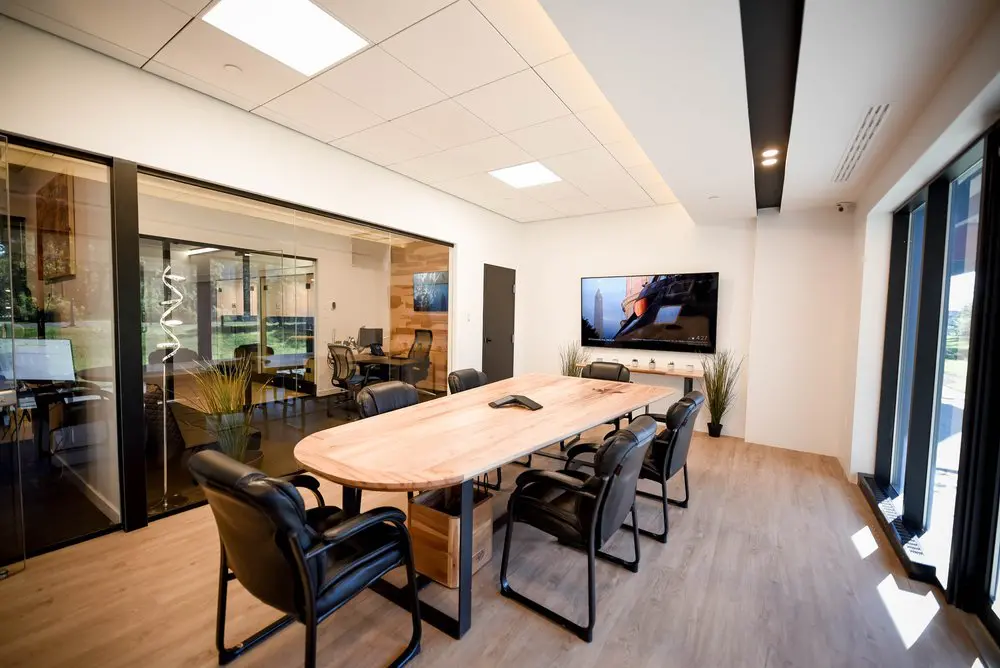
For a meeting room in Griffintown, the 2727 conference room seats 8 and is booked by the day (09:00 to 17:00) at $300 before taxes (as of October 2026) at booking.2727coworking.com/conference. Plan visitors' parking with the advice above.
2727 Coworking space, 2727 Saint-Patrick, Montreal
Cost Comparison: Driving vs Transit vs Bike for a Monthly Commuter
The numbers below compare what one person spends to get to an office in Griffintown for a month of 21 working days. Official prices are cited; the commuting assumptions are ours and are stated so that you can replace them with your own.
Assumptions
21 working days per month.
Driving: a 30 km round trip per day (630 km per month), a compact car using 7.5 L per 100 km (our assumption), and gasoline at 184.9 cents per litre, the Statistics Canada average for regular self-serve gasoline in Montreal in August 2026 [64].
Registration: in 2026 the SAAQ's base cost to register a passenger vehicle is $217.41 (registration duties $140.00, insurance contribution $66.01, tax on that contribution $5.95, fees $5.45), and the SAAQ notes that the transit contribution and the passenger-vehicle registration tax can be added to it [67]. In Greater Montreal those add $183.45: the ARTM registration tax of $153.45, in force since January 1, 2026, plus the $30 provincial contribution [66]. That makes about $400.86 a year. The ARTM tax was $59 in 2024 and $150 in 2025 [66].
Ownership beyond fuel: CAA's calculator gives $4,866.35 per year for a 2025 Nissan Sentra in Quebec, of which $1,635.88 is fuel and $186.97 is registration; the remainder (mostly depreciation) brings the non-fuel total to about $3,230 per year [65]. That calculator result does not show insurance or financing, so the true figure is higher.
Prices are before any employer contribution and before income tax effects (covered in the next section).
Calculations by 2727 Coworking. Fuel: 630 km × 7.5 L/100 km = 47.25 L × $1.849 [64]. Garage price as observed on October 3, 2026 [17]. Taxes on BIXI and on 2727's parking are GST 5% and QST 9.975%.
These monthly figures are marginal costs: they assume you already own the car. If the office is the reason you keep a car at all, add ownership costs beyond fuel (about $269 a month for CAA's compact, which already counts $186.97 a year for registration but not insurance [65]), plus about $18 a month to bring registration up to the Greater Montreal level of about $400.86 a year [67][66]. A garage commuter's full cost then comes to about $690 a month, before insurance.
Annual view
Option
Per year
BIXI seasonal (April 15 to November 15) plus 5 monthly transit passes in winter
about $682
Transit, monthly pass all year
$1,320
Transit with OPUS & Cie or OPUS+ entreprise
about $1,210 or less
Drive with zone 50 sticker plus fuel
about $2,488
Drive with $315 garage plus fuel
about $4,828
Drive with $315 garage, fuel, registration and ownership costs beyond fuel
about $8,273, before insurance
Calculations by 2727 Coworking from the monthly table, registration [67][66] and CAA ownership data [65].
The CRA per-kilometre benchmark
Another way to see the cost of driving is the rate the CRA considers a reasonable tax-free reimbursement when an employee uses a personal car for business: for 2026, $0.73 per kilometre for the first 5,000 km and $0.67 after that [63]. Applied to a 630 km month, the first-tier rate gives $459.90 before parking. This is not a deduction for commuting (commuting is personal, as explained below), but it is a fair estimate of what each kilometre really costs once depreciation, insurance and maintenance are counted.
What the comparison says
Transit wins on cost for almost everyone, and becomes cheaper again with an employer agreement.
The bike-plus-transit combination is the cheapest all-year option for people who live within cycling distance of the canal.
The zone 50 sticker halves the cost of driving compared with a garage, at the price of searching for a space and moving the car for snow.
The parking space is the largest single item in a driver's monthly budget. It is also the item an employer is most likely to offer, which brings us to tax.
Tax Treatment: Employer-Paid Parking and Transit
This section summarizes official CRA and Revenu Québec guidance as of October 2026. It is general information. For your own payroll or return, ask your accountant.
Employer-provided parking
Federal (CRA). "Generally, parking you provide or reimburse to your employees is a taxable benefit," including when the employee pays less than fair market value [54]. Fair market value is "the price that could reasonably be charged in the open market for a similar spot in the surrounding area," and "in most cases, the cost to the employer is not a factor" [54]. The T4130 guide adds that the benefit is the fair market value "minus any payment the employee makes to use the space" [55]. A spot bought by the company in a Griffintown garage at $315 a month, given free to an employee, is therefore generally a $3,780 annual taxable benefit, whatever the company actually paid.
The employee "regularly has to use a vehicle to perform their duties"; "regularly" means "an average of at least 3 days in a 5 day work week"
Scramble parking
"Not more than 2 parking spaces available for every 3 employees who want parking," not assigned
Disability
"If your employee has a disability, the parking benefit is generally not taxable"
The scramble rule has a limit: if there are enough unassigned spaces for everyone who wants one, "this is not scramble parking. You must add the benefit to the employee's remuneration" [55]. And the CRA is clear that "travel between work and home is not considered travel for business purposes" [54].
Quebec (Revenu Québec). The rule is parallel. A parking space provided free or below fair market value, "or any reimbursement you make to the employee for the cost of a parking space at their usual workplace, is considered a taxable benefit," reported in boxes A and L of the RL-1 slip [59]. Revenu Québec's exceptions include an employee who is blind or has a severe and prolonged mobility impairment, a space provided "mainly for your benefit" (the employer's), and the same unassigned two-for-three situation [59].
Employer-paid transit passes
Here Ottawa and Quebec diverge.
Federal (CRA). "If you pay for or provide your employee with public transit passes, it is usually a taxable benefit for the employee," reported in box 14 and under code 40 of the T4 [55]. The CRA's exception is narrow: free or discounted passes provided by a company "in the business of operating a bus, streetcar, subway, commuter train, commuter bus, or ferry service" to its own employees [56]. The federal 15% public transit tax credit for individuals was eliminated for transit use after June 2017 [57].
Quebec (Revenu Québec). "An employee's public transit pass is not a taxable benefit" when the employer purchases "an eligible transit pass ... provided to the employee primarily to commute between their usual place of residence and the workplace," or when the employee is reimbursed on supporting documents for an eligible pass valid for at least one month [58]. A cash allowance is different: "An allowance that you pay an employee to compensate them for the cost of their transit pass is a taxable benefit" [58].
The practical consequence for an employer in Griffintown: paying an employee's $110 monthly pass is, for Quebec purposes, a tax-free benefit when done by purchase or receipted reimbursement, while paying for a $315 parking spot is a taxable benefit in both systems. Structuring the transit benefit correctly (buy or reimburse on receipts, not a flat allowance) matters. An employer that also joins OPUS & Cie or OPUS+ entreprise lowers the pass price for the same benefit [36][37].
Can the employee or the self-employed deduct commuting?
Employees. No. The CRA states that "you cannot deduct the cost of travel to and from work," that it "considers driving back and forth between home and work as personal use," and that "you cannot deduct the cost of parking at your employer's office, such as monthly or daily parking fees" [60]. Parking costs can be deductible only for employees who meet the conditions for motor vehicle expenses, typically those "normally required to work away from your employer's place of business" [60][61].
Self-employed people and owner-managers. If you run your own business and rent a desk or office, the CRA allows you to "deduct the full amount of parking fees related to your business activities," and to deduct only "the portion of the expenses that relates to earning business income" when a vehicle has both business and personal use [62]. Parking for a client meeting downtown is a business expense. Whether the daily trip between your home and your own regular workplace counts as personal is a question to settle with your accountant; the CRA treats that trip as personal use in its guidance for employees [60].
Reimbursing an employee's business driving
When an employee drives their own car for business (not for the commute), a per-kilometre allowance at or below the CRA's reasonable rates, $0.73 for the first 5,000 km and $0.67 after in 2026, is generally considered reasonable [63].
2727 Coworking space, 2727 Saint-Patrick, Montreal
Practical Checklists
For someone choosing an office in Griffintown
Map your commute by transit first. If it is under 45 minutes door to door, the monthly pass at $110 is almost certainly your cheapest option [34].
If you will drive, price three options: a garage space (around $315 nearby as of October 2026 [17]), the zone 50 sticker ($120 [5]), and your office's own parking if any.
Check whether your street is zone 50 or zone 113 on the City's map before buying a sticker [5].
Ask the building about bike storage, showers and EV outlets. Do not assume.
Ask your employer about OPUS & Cie or OPUS+ entreprise [36][37], and about receipted transit reimbursement, which is not taxable in Quebec [58].
Install Mobicité for visitor and occasional parking [3], and the 311 app for snow alerts [10].
For a manager setting up a team in Griffintown
Decide which benefit you will offer: transit, parking, or a choice. Transit is cheaper and, in Quebec, can be a non-taxable benefit [58]; parking is generally taxable in both systems [54][59].
If you provide parking, document how fair market value was set (local monthly prices) and whether any exception applies [54].
Put visitor instructions in every calendar invitation (see the script above).
For events, budget for guests' parking or choose a day-rate option.
Remind drivers each November about snow-loading signs and the towed-car tool [9][14].
How 2727 Coworking Fits
2727 Coworking is at 2727 Rue Saint-Patrick, Suite 109, Montréal, QC H3K 0A8, in Griffintown on the Lachine Canal, near Charlevoix metro (Green Line) and Atwater Market. For people who commute by transit or bike, that location is the main advantage: the Lachine Canal path is close by and so is the Green Line. For drivers, be realistic: 2727 has only three monthly parking spots, from $275 before taxes (as of October 2026). Check whether one is free on our parking pages, which show live availability, rather than assuming one will be, and keep the zone 50 sticker, a nearby garage or transit as your fallback.
Workspace is priced separately: private offices from $700 a month before taxes for the cheapest unit currently available, dedicated desks from $400, a monthly hot desk at $350 and a day pass at $55, all before GST and QST, as of October 2026. See offices, private offices and live availability at booking.2727coworking.com. Tours are booked online, Monday to Friday 8:00 to 11:30, or by phone at (438) 796-0017; come by metro or bike and you will see the commute for yourself. For the neighbourhood itself, read the Griffintown coworking guide and, for the wider area, the Sud-Ouest and Lachine Canal guide.
2727 Coworking space, 2727 Saint-Patrick, Montreal
Frequently Asked Questions
Is there parking at 2727 Coworking?
2727 Coworking rents three monthly parking spots, priced from $275 to $300 per month before GST and QST (as of October 2026), with a $150 deposit for the garage remote. They are numbered indoor spots in the building's underground garage: spot 30, spot 31 and spot 82. Each page shows photos, the live price and whether the spot is free right now. 2727 does not offer free parking.
Is parking included in the price of a private office?
No. At 2727, parking is priced separately from offices and desks. Office prices are on /private-offices/ and the booking site; parking, when a spot is free, is an additional monthly charge.
How much does monthly parking cost near Griffintown?
As of October 3, 2026, a marketplace page for Griffintown showed two nearby indoor spots at $315 a month and described the range near the commercial areas as about $250 to $350 [17]. Downtown operator lots listed $279.07 to $350 [18], and other downtown garages $205 to $300 [19]. Budget $300 to $350 for indoor, 24/7 access within walking distance.
Is there indoor or secure parking in Griffintown?
Yes, private underground and covered garages exist in the area, including listings at 688 Rue Notre-Dame Ouest and La MARQ, both with 24/7 access, elevators and on-site staff according to the listing [17]. Ask whether the space is reserved or non-reserved before signing.
How much does street parking cost in Griffintown?
Since February 1, 2026, the Agence de mobilité durable charges $2.50 an hour in the Sud-Ouest and $4.25 an hour in the borough's East sector [1]. Check the pay station or sign for the rate that applies to your space.
Can I park on the street all day in Griffintown?
Rarely. The City sets maximum durations to encourage turnover [1], and Mobicité cannot extend a running session [3]. For a full day, use a parcojour day rate such as Nordelec ($11.00) [1], a garage, or the zone 50 monthly sticker.
What app do I use to pay for street parking in Montreal?
Mobicité, the Agence de mobilité durable's app, which also has a web version. It accepts Visa, Mastercard and American Express and sends a reminder 10 minutes before your session ends [3].
Can office workers get a residential parking permit in Griffintown?
Not the annual resident sticker: you must live in the residents-only zone and provide two recent proofs of residence [6]. The Sud-Ouest does sell a monthly sticker for zone 50 (Griffintown) and zone 113 (Pointe-Saint-Charles) at $120 a month, taxes included, with the registration certificate as the listed document [5].
Does a zone 50 sticker guarantee me a parking space?
No. It lets you use sticker spaces in that zone during restricted hours if one is free. Snow-loading bans and other signs still apply, and construction can remove spaces [8][9].
Where should my clients park when they visit?
On paid street parking for a short meeting, paying with Mobicité or at the pay station; at a parcojour or a garage for a long visit. They should never use SRRR sticker spaces during posted hours, since the City lists no visitor permit for the Sud-Ouest [5]. See the visitor script in this guide.
Is there guest parking at 2727?
2727 does not publish visitor parking: its three spots are monthly rentals, not visitor parking. Point guests to the street, parcojour and garage options in this guide.
What happens to my car during snow removal?
If temporary no-parking signs are posted and you do not move, "your vehicle will be towed and you will be fined" [9]. Evening bans are generally posted the same day before 3 p.m. [9]. Use the 311 app for alerts [10].
How do I find my car if it was towed in Montreal?
Use the City's "Find a towed car" tool with your licence plate, or call the Agence de mobilité durable at 514-868-3737. If the car went to the pound, storage fees apply [14].
Can a private lot in Griffintown tow my car?
Yes, if it posts the required signs at each entrance: a towing warning, the towing company's name and 24-hour number, and the maximum fees. Fees are capped by the agglomeration's by-law; the Ombudsman reported $89 for the tow and free storage for the first six hours in 2022 [16].
Where can I charge an electric car near Griffintown?
The Circuit électrique fast-charging site at Marché Atwater, 138 Avenue Atwater, has CCS and CHAdeMO connectors and is open 24 hours [22]. The City's open dataset lists other public stations [23].
How much does EV charging cost on the Circuit électrique?
Level 2 costs $0 to $20 per session or $0.25 to $3 per hour, billed by the second, plus possible inactivity fees; 50 kW fast chargers cost $13.80 an hour in the first tier, then $0.38 per kWh [21].
What is the nearest metro station to 2727 Rue Saint-Patrick?
Charlevoix, on the Green Line [27]. Lionel-Groulx, where the Green and Orange lines meet, is the adjacent station toward downtown [32][33].
Is Charlevoix metro station wheelchair accessible?
No. Charlevoix is not on the STM's list of 30 stations with elevators; Lionel-Groulx and Atwater are [28].
Which buses serve Griffintown and Pointe-Saint-Charles?
The 35 Griffintown runs from Angrignon to McGill via Monk, Notre-Dame and Wellington [30]; the 57 serves Charlevoix, Atwater and Guy-Concordia stations [29]; the 61 Wellington serves Charlevoix [31][32].
When will the REM station in Griffintown open?
Not soon. In June 2026, CDPQ Infra launched a planning phase for Griffintown-Bernard-Landry and a new station near Bridge and Wellington, said construction "could begin in 2028," and estimated a four-year horizon including planning and construction [38]. The nearest operating REM station is Gare Centrale [40].
How much is a monthly transit pass in Montreal in 2026?
$110.00 for the regular all-modes zone A monthly pass, $66.00 reduced, since July 1, 2026 [34].
Can my employer get me a discount on the monthly pass?
Yes. OPUS & Cie and OPUS+ entreprise give at least 8.33% off the all-modes A pass for a 12-month commitment; OPUS & Cie requires an employer contribution of at least 4.16% [36][37].
Is an employer-paid transit pass taxable in Quebec?
Not for Quebec income tax, when the employer buys an eligible pass mainly for the commute or reimburses an eligible pass of at least one month on receipts; a cash allowance is taxable [58]. Federally, an employer-paid pass is usually a taxable benefit [55].
Is free parking from my employer a taxable benefit?
Generally yes, at fair market value, both federally and in Quebec, unless an exception applies, such as regular business use of the car, scramble parking or a disability [54][59].
Can I deduct my parking or commuting costs?
Employees generally cannot: the CRA treats home-to-work travel and parking at the employer's office as personal [60]. Self-employed people can deduct parking related to business activities [62]; ask an accountant about your regular commute.
Are there BIXI stations near Griffintown, and what does BIXI cost?
BIXI operates throughout central Montreal, including year-round service with 234 stations in 10 boroughs in winter [45]; the app shows the nearest stations. Membership is $24 every 30 days or $115 for the April 15 to November 15 season, before taxes [43].
Is the Lachine Canal bike path cleared in winter?
Partly. The Sud-Ouest says just over 5 km of the canal path is cleared on its territory [48], and a December 2025 agreement with Parks Canada added the south bank from rue Charlevoix to the Côte-Saint-Paul footbridge, for about 6 km [47].
Can I keep a bike inside the office?
It depends on the building and the space. 2727 does not publish a bike policy; ask us during your tour. On the street, use a bike rack: locking to trees, street furniture or meters without a rack is forbidden and the bike can be seized [49].
Is it cheaper to drive or take transit to Griffintown?
Transit, by a wide margin: $110 a month for the pass [34], versus roughly $400 a month for a garage space plus fuel in our example, before ownership costs. The zone 50 sticker narrows the gap to about $207 a month plus the inconvenience of searching for a space.
Conclusion
Griffintown rewards commuters who do not bring a car. The Green Line is close, the canal path is nearby, BIXI works most of the year, and in Quebec an employer can pay for the monthly pass without creating a provincial taxable benefit. Driving is possible but deliberate: street parking is metered for turnover, SRRR spaces belong to residents, the winter signs come up by 3 p.m., and a garage space costs around $315 a month. The one under-used option is the zone 50 monthly sticker at $120, which suits a flexible driver who accepts that a sticker is permission rather than a guaranteed space.
For a team, the decision is usually a benefits decision: transit is cheaper and better treated by Revenu Québec; parking is more expensive and taxable in both systems. For visitors, a one-paragraph note in the calendar invitation avoids tickets and tows. When you compare offices, put the commute in the budget alongside the rent. To see Griffintown from the canal path, book a tour at 2727 Coworking or check what is free today at booking.2727coworking.com.
2727 Coworking space, 2727 Saint-Patrick, Montreal
References
[1] Paid on-street parking, Agence de mobilité durable de Montréal
[2] Increase in Street Parking Rates, Agence de mobilité durable de Montréal
[3] Mobicité, Agence de mobilité durable de Montréal
[4] Parking lots, Agence de mobilité durable de Montréal
[5] Get a daily or monthly parking sticker, Ville de Montréal
[6] Get a residents-only parking sticker, Ville de Montréal
[20] Demander une vérification du calcul de la taxe sur les parcs de stationnement (in French), Ville de Montréal
[21] Circuit électrique rates, Le Circuit électrique (Hydro-Québec)
[22] BRCC - Marché Atwater EV charging stations, ChargeHub
[23] Bornes de recharge publiques pour voitures électriques (open data), Ville de Montréal, données ouvertes
[24] Aide financière pour une borne de recharge (in French), Gouvernement du Québec
[25] Cadre normatif du programme Écorecharge (in French), ministère de l'Environnement, de la Lutte contre les changements climatiques, de la Faune et des Parcs